What the Clinton Depositions Actually Are (and Why They Matter)
When the House Committee on Oversight and Government Reform released videotaped depositions of Bill Clinton and Hillary Clinton connected to its Epstein-focused inquiry, the immediate reaction online was predictable: clips, hot takes, and a rush to declare “gotcha” moments before most people watched anything end-to-end.
But stripped of the viral editing and partisan framing, the depositions are something more mundane—and more consequential—than internet theater: recorded sworn testimony captured in a setting that is both controlled and inherently political. Unlike a prime-time hearing, a deposition is often long, repetitive, and built around establishing a record: names, dates, relationships, and what a witness did or did not know at the time. That’s why, even when no single line “breaks” the story, depositions can still shape it.
The Oversight Committee’s public framing is that releasing the footage adds transparency to its broader effort to scrutinize who enabled, ignored, or financially supported Jeffrey Epstein and his network. In practice, the release also accomplishes a second objective: it allows lawmakers and media outlets to highlight moments they believe resonate—whether those moments relate to a witness’s tone, memory gaps, or sharp exchanges with members.
The timing and context matter, too. Reporting indicates the Clintons had resisted cooperating at first but ultimately complied after pressure and escalating committee threats. That backdrop fuels two competing narratives at once:
Narrative A (committee allies): powerful people don’t want questions asked; video proves accountability.
Narrative B (committee critics): the process is selective and performative, aimed at generating clips rather than facts.
If you’re trying to write or talk about this responsibly, the key is to separate what’s being investigated from what’s proven. The deposition record (as described by multiple outlets) centers on: how Bill Clinton met Epstein, the nature of their contact, whether Clinton knew of Epstein’s crimes, and Hillary Clinton’s claimed lack of contact with Epstein and limited acquaintance with Ghislaine Maxwell.
Bill Clinton’s Testimony: Distance, Definitions, and the “I Didn’t Know” Core
Across coverage, the spine of Bill Clinton’s deposition is consistent: he portrays his Epstein association as philanthropy-adjacent and time-bounded, and he emphasizes that he did not know about Epstein’s criminal conduct while they had contact.
How Clinton says the relationship began
According to Reuters (and echoed elsewhere), Clinton testified that he was introduced to Epstein through Larry Summers, describing Epstein as someone interested in supporting Clinton’s post-presidency foundation work—particularly travel logistics connected to global health initiatives. Clinton acknowledged using Epstein’s plane for international travel related to foundation activities.
“I cut ties” and when
Clinton’s timeline claim—reported repeatedly—is that he cut ties around 2003, well before Epstein’s later legal crises became widely known.
The most talked-about admissions
A few points from reported testimony consistently drive headlines because they’re concrete and visual:
Clinton acknowledged flights on Epstein’s jet (framed as foundation-related travel).
He denied sexual activity tied to Epstein or Maxwell, but Reuters reports he did describe receiving a neck massage from a woman later identified as an Epstein abuse survivor.
He stated he was unaware of Epstein’s criminal behavior, and also said he did not know about reported visits Epstein made to the White House.
Those details matter because they illustrate how these stories often move: not through new proof of crimes by famous figures, but through evidence of proximity and access—planes, introductions, social settings—and the credibility battle over what that proximity meant.
The Trump comment that went everywhere
Reuters also reports Clinton testified that Donald Trump once mentioned having “some great times” with Epstein—described as a remark from a golf-tournament conversation in the early 2000s—and that Clinton said Trump did not indicate anything inappropriate at the time.
It’s a headline magnet because it connects two presidents to the same disgraced figure in a single sound bite. But it’s also a good example of why depositions can be tricky: witnesses may repeat others’ statements without firsthand knowledge of what those statements imply. The deposition record, as reported, doesn’t convert that line into proof of criminal conduct; it’s simply one more data point in the web of elite associations.
The sober takeaway from Clinton’s testimony, based on available reporting, is that he is attempting to anchor his Epstein connection to a narrow window (early 2000s), a functional purpose (foundation travel), and a lack of knowledge about crimes—while acknowledging that the association, in hindsight, looks terrible.
Hillary Clinton’s Deposition: “I Didn’t Know Him,” the Photo Leak Blow-Up, and the Politics of Process
Hillary Clinton’s deposition, as described in multiple reports, plays out on two tracks at the same time: substance (what she says she knew about Epstein) and procedure (her anger at how the deposition was handled, including an incident involving a photo).
The core claim: no meaningful connection to Epstein
Hillary Clinton’s central position in these accounts is straightforward: she said she never knowingly met Jeffrey Epstein and had no relevant knowledge of his criminal activity. Reuters similarly notes she testified she did not recall ever meeting Epstein.
The flashpoint: “I am done!”
The moment that traveled fastest wasn’t a revelation about Epstein—it was a confrontation about an unauthorized photo and the way the proceeding was being run. People reports Clinton became angry after learning a photo from the deposition had been shared publicly and said, “I am done,” threatening to leave. The Guardian also notes she reacted strongly to learning a representative had shared an unauthorized photo and threatened to end her participation.
If you’re writing “hot take” commentary, it’s tempting to treat that as mere drama. But it’s also a window into the modern reality of congressional investigations: witnesses increasingly assume the room is not just a room—it’s content production. And once everyone believes clips are the point, the incentives shift for everyone involved.
The bigger question critics raise: why these witnesses, why this structure?
Coverage (including The Washington Post) notes criticism that the committee’s approach appears selective and politically motivated, with questions about who is and isn’t being pursued as aggressively. Hillary Clinton, per The Guardian, criticized the process and the lack of public, formal hearings.
What’s “new” here?
Based on the reporting above, the videos don’t appear to deliver a single definitive bombshell. Instead, they consolidate a familiar set of facts and claims in a sworn format: how introductions happened, what travel occurred, when ties allegedly ended, and repeated denials of knowledge of crimes.
And that may be the real point: depositions rarely produce cinematic reveals. They produce a record—and that record becomes the battlefield.
Taylor Swift and Travis Kelce’s high-profile romance continues to capture global attention, but recent news adds unexpected drama.
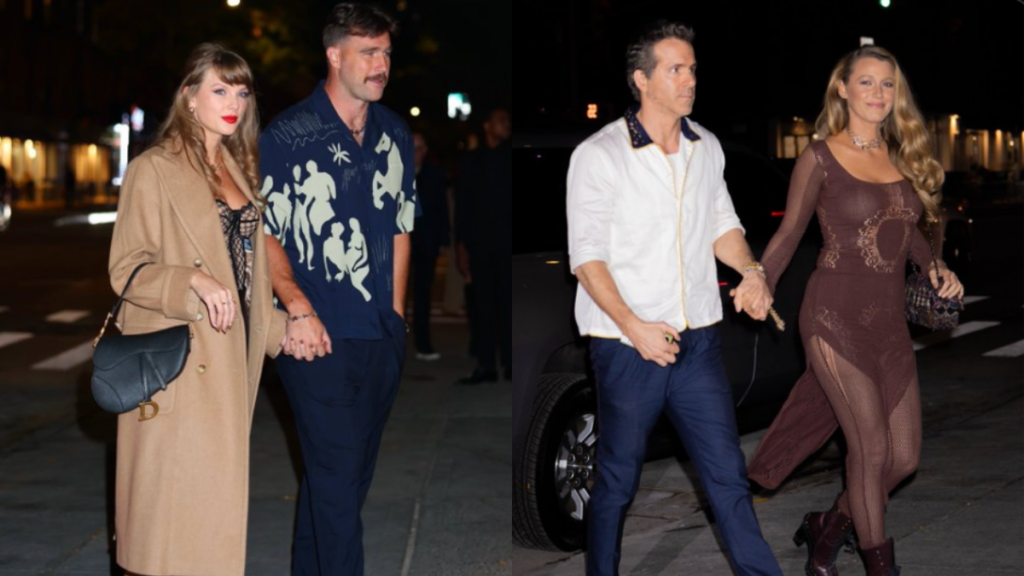
According to a report from The Times of India, Swift’s wishes have reportedly created tension between Kelce and Hollywood couple Blake Lively and Ryan Reynolds. The article claims that Kelce struggled to bond with the actor couple during shared outings. Insiders said he felt “forced” into spending time with Lively and Reynolds rather than naturally connecting with them.
The report suggests this uncomfortable dynamic stems from Swift’s influence in Kelce’s social circle and from broader celebrity tensions. It hints that Kelce may not have felt at ease during double dates, red-carpet events, or group outings. This has fueled speculation about cracks beneath the surface of glossy celebrity photos.
Meanwhile, fans are watching closely as Swift and Kelce prepare for a highly anticipated wedding, rumored to be a million-dollar event. The article raises questions about who might attend, especially given reported strains with Lively and Reynolds. As always, celebrity social dynamics get dissected more intensely than ordinary friendships.
This narrative expands the Swift-Kelce story beyond romance and sport. It shows how personal relationships intersect with public image, reputation, and loyalty among high-profile figures.
Backstory: Swift, Lively & Reynolds
Taylor Swift and Blake Lively built a long-standing friendship over more than a decade. Swift served as godmother to Lively and Ryan Reynolds’ children, further intertwining their personal lives. The trio often appeared together at major events, social gatherings, and parties. These public ties suggested a deep friendship rooted in shared values and experiences.
However, things reportedly changed amid the Hollywood legal drama surrounding the film It Ends With Us. According to court filings in that case, Lively’s legal team was accused of using Swift’s name to gain leverage in the dispute. Swift’s spokesperson denied any involvement, stressing she had no creative role in the movie.
This episode reportedly strained Lively and Swift’s bond, especially after media surfaced text messages and leaked claims. Some insiders told PEOPLE that the friendship “halted” after Swift was dragged into the dispute. Others said the tension wasn’t absolute but marked a difficult period of distance and misunderstanding.
Meanwhile, Reynolds often supported both sides of these high-profile social crossroads. His charm and humor sometimes softened tension, but they did not erase reported awkwardness during group outings.
This complex backdrop helps explain why Kelce may have struggled to bond with the acting power couple in recent social settings.
Kelce’s Struggle to Connect
Inside sources described Kelce’s discomfort with Lively and Reynolds as more than casual awkwardness. According to the Times of India report, Kelce felt “forced” into spending time when socializing with them. His interactions lacked the natural ease expected among friends. Instead, he experienced tension that made group gatherings feel strained.
Observers say this dynamic may arise from different social styles and personal preferences. Kelce, raised in the athletic world, often focuses intensely on football and close family ties. Lively and Reynolds, highly experienced in Hollywood’s curated social circles, navigate celebrity interactions differently. These contrasting social habits might have amplified awkward moments among them.
Some entertainment commentators suggest their pairing at events may be strategic rather than organic. Kelce’s discomfort could reflect a lack of shared history with the Hollywood couple. Meanwhile, Swift’s long-term ties with Lively made the situation even more complicated.
Reports also hint that Kelce sometimes questions Reynolds’ intentions and persona. Rumors on social platforms claim Kelce didn’t feel a natural connection with Reynolds in past double dates. These perceptions may have added to recent social discomfort.
Ultimately, Kelce’s reported struggle to connect reflects the complex social landscape surrounding this celebrity triangle.
What This Means for the Power Circle
Public reactions to this story vary widely. Some fans sympathize with Kelce, arguing that forced social situations rarely foster genuine bonds. Others think high-profile friendships naturally change over time. They note that shared history, not celebrity status, often sustains relationships.
Commentators also highlight how celebrity legal dramas can test friendships. The It Ends With Us controversy reportedly brought stress to Swift’s friendships. Swift’s team had to publicly clarify her non-involvement. This may have caused ripples in personal ties with Lively and Reynolds.
For Kelce, navigating this dynamic while maintaining a high-visibility NFL career adds additional strain. Athletes often rely on stable, predictable social circles to balance intense schedules. Sudden shifts in those circles can create discomfort or unease.
Meanwhile, Swift is allegedly trying to balance old friendships with new life chapters. Her long friendship with Lively may not be over, but it has reportedly cooled. Swift appears focused on prioritizing relationships that feel supportive and genuine.
In the end, this story highlights how celebrity friendship dynamics can shift significantly with life changes.
Beyond the Drama: What’s Next
As the spotlight remains on Taylor Swift and Travis Kelce, speculation continues about their future. Fans eagerly await details about their highly anticipated wedding, which insiders say may reflect more personal priorities than public spectacle. Swift has joked that she wants to invite everyone she’s ever talked to, hinting at her inclusive vision. While she says this lightheartedly, it reveals her broader philosophical approach to relationships.
Amid the Hollywood drama and NFL spotlight, the couple continues to focus on loyalty, love, and support. They share daily conversations, support each other’s careers, and plan future family life together. Their relationship timeline shows them navigating both professional pressures and personal milestones.
Regardless of public speculation about awkward interactions with Lively and Reynolds, Swift and Kelce have remained publicly united. Their communication and shared goals seem to anchor them during social twists and turns.
At its heart, this story reflects the universal truth that relationships evolve over time, especially when life changes fast. Celebrity or not, friendships can shift, grow, or quietly fade as people move forward.
As the world watches their wedding plans and future milestones, Swift and Kelce continue writing their shared story amid public curiosity and personal loyalty.
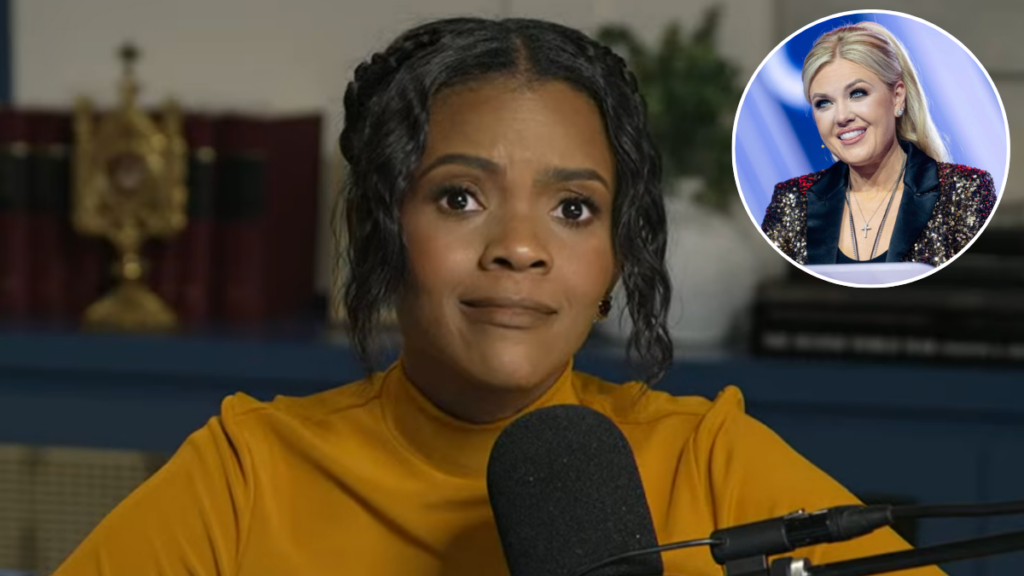
Conservative commentator Candace Owens recently released a new episode in her YouTube series Bride of Charlie. In this episode, Owens targeted Erika Kirk, widow of the late Charlie Kirk, with startling questions about her early life. Specifically, she claimed that Erika’s birth records and childhood documentation show inconsistencies that cannot be easily explained. Owens argued that these discrepancies suggest intentional deception rather than simple clerical errors.
Owens pointed to court documents from Erika’s parents’ divorce as evidence. These records, she said, contain conflicting details about Erika’s birth and upbringing that don’t align with public accounts of her childhood. Owens claimed these contradictions raise questions about who Erika really is and what she might be hiding.
This episode marked a shift for Owens. She usually tackles political topics, yet she turned her attention to Erika’s personal life and background. Critics note that this pivot expands Owens’ focus from policy and ideology to personal investigation and controversy.
Owens did not stop with birth records. She suggested that clerical mistakes often dismissed by others might indicate a deliberate pattern. By framing the inconsistencies as potentially intentional, she escalated the conversation from simple curiosity to possible conspiracy.
The episode has since drawn widespread attention online. Many supporters of Owens praise her for digging deeper. Others condemn the episode as invasive and inappropriate. The debate over Erika Kirk’s past continues to polarize audiences across social media and political circles.
Erika Kirk’s Public Profile
Erika Kirk is a political activist and nonprofit leader widely known for her role as CEO of Turning Point USA. The organization was founded by her late husband, Charlie Kirk, before his assassination in September 2025.
Born Erika Lane Frantzve in Ohio, she grew up in Scottsdale, Arizona after her parents divorced. Most public profiles show that her mother, Lori, raised her with strong family values and a focus on community engagement.
Erika achieved recognition early in life as Miss Arizona USA in 2012 and appeared in the Miss USA competition that same year. After pageantry, she pursued nonprofit work and leadership roles tied to public service.
She married Charlie Kirk in 2021 and held leadership roles in several conservative initiatives. Her public image emphasized strength, faith, and resilience, especially after her husband’s tragic death.
Erika also became a mother to two young children, adding to her public narrative of family and service. Her life story, as presented in media and interviews, has resonated with many on the right.
Despite this detailed public profile, Owens’ episode claims current documentation may not fully match earlier accounts of Erika’s history. This contrast forms the basis for the controversy surrounding Erika’s early years.
Owens’ Claims and Evidence
In Bride of Charlie, Candace Owens presented what she called documentary evidence suggesting Erika’s birth records raise serious questions. Owens referenced divorce filings and public documents allegedly containing disparities.
She claimed these discrepancies are not minor. According to Owens, they go beyond typical clerical mistakes and could indicate that Erika’s birth and identity story might be misrepresented.
Owens did not produce Erika’s actual birth certificate during the episode. Instead, she cited court evidence and public records she says point to contradictions. These claims have sparked debate among viewers and critics alike.
Owens also suggested that clerical errors might mask something deeper. She implied that the inconsistencies might be intentional, though she offered no direct proof of that intent.
Critics of Owens argue that questioning a person’s official birth records on public media is deeply invasive. They note that without solid documentation and corroboration, such claims risk spreading misinformation or harming reputations without cause. Nonetheless, Owens stands by her presentation and insists the public deserves transparency.
Public Reaction and Controversy
The release of the episode ignited intense online discussion. Some supporters praised Owens for her bold approach, seeing her work as uncovering hidden truths. Others condemned it as a personal attack on Erika Kirk’s character and privacy.
Critics especially objected to the way the series has portrayed Erika’s family and personal life. A separate episode preview sparked backlash for focusing on Erika’s mother during her reported illness, which many viewers found insensitive.
Social media users and commentators have debated whether Owens crossed ethical lines by digging into private family matters. Many argue it sets a troubling precedent when public figures scrutinize personal histories without clear evidence.
Meanwhile, others support Owens’ right to investigate and speak freely. They argue that public figures must face scrutiny and that transparency is essential in political life. This divide reflects broader tensions in online political discourse.
In many ways, the episode has transcended the original subject. It now fuels broader debates about accountability, free speech, and the role of documentary-style political media in shaping public opinion.
What Comes Next
As this debate continues, both supporters and critics are watching closely for new developments. Candace Owens has indicated that future episodes will dig even deeper into Erika’s life story and background.
Owens has not publicly released all underlying documentation she discussed. Some viewers and journalists are calling for transparency from both sides, urging Owens to provide verifiable proof of her claims.
Erika Kirk has not issued a comprehensive public response to the birth record claims. So far, her public statements have focused on her work and legacy with Turning Point USA.
Political analysts note that this episode could influence broader discussions about leadership, reputation, and credibility in high-profile conservative circles. The implications extend beyond Erika’s personal story.
Meanwhile, audiences remain divided. Some await fresh evidence, others view this as a distraction from more pressing issues. One thing is clear: the conversation sparked by this episode will not fade quickly.
Whether future episodes confirm Owens’ claims or lead to new revelations, this unfolding narrative continues to grip both political observers and online communities.
Demi Lovato recently shared a deeply personal reflection on her eating disorder recovery journey. The singer and actor posted a heartfelt message on social media. She wrote that her younger self would never believe the person she is today. Lovato explained that at times, food felt frightening and confusing in her past life. But now, she honors progress she once never thought possible.
Lovato noted that recovery has not come easily or quickly. She said day-to-day healing takes persistence and courage. In her post, she acknowledged that some people still struggle or are in active recovery. She reminded those readers that they are not alone in their journeys. Her message emphasized hope and solidarity above all.
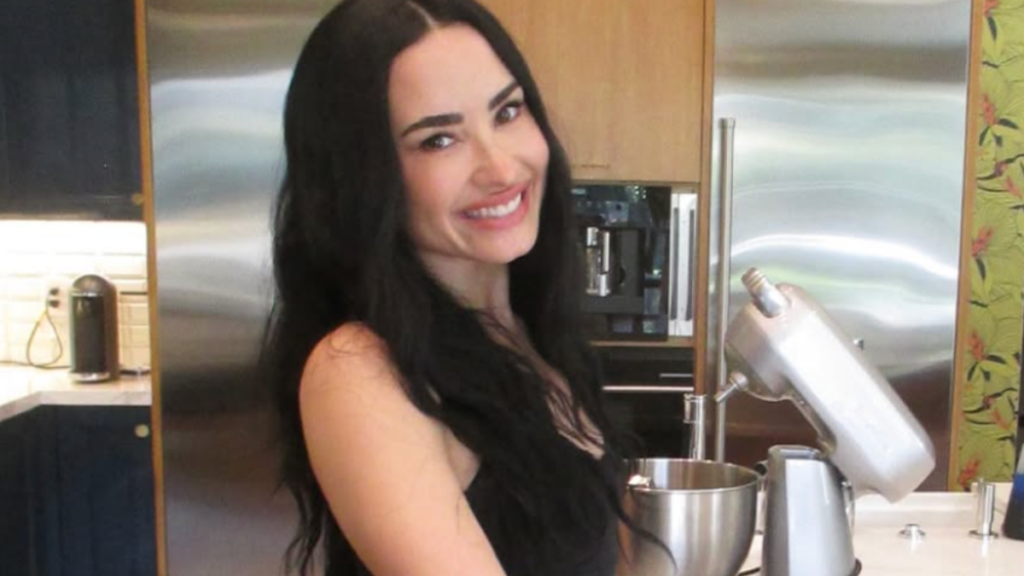
In recognition of National Eating Disorder Awareness Week this year, Lovato offered this note of encouragement. She spoke openly about how intimidating the kitchen once felt to her. Now, she creates in that space with peace instead of stress. Lovato called this shift life-changing and deeply meaningful.
Lovato also connected her healing to something deeply practical — cooking. She revealed that her upcoming cookbook One Plate at a Time symbolizes her commitment to self-nourishment and growth. The title represents her belief that healing starts with small, meaningful steps.
This moment feels historic not because the world watches her, but because she reflects honestly about her own struggles. Lovato’s transparency shines in a world where people often hide pain. Her words remind others that recovery can be a personal victory, not just a public moment.
From Struggle to Strength: The Healing Process
Lovato’s past battles with eating disorders are well documented, beginning in her teen years. She first spoke publicly about anorexia and bulimia after entering treatment in her early career. Those early struggles shaped her relationship with food and her body image.
In her social post, Lovato described that healing her relationship with food took concentrated effort. She spoke about small milestones that mattered day by day. Instead of overwhelming goals, she focused on one plate at a time. This slowed pace helped her reassess food as nourishment, not fear.
Lovato also encouraged those still struggling to keep going. She reminded people that healing might take time, but it can get better with support. Her message emphasized that recovery does not have a fixed timeline. This message gives permission for imperfection and ongoing growth.
Her Instagram post explicitly thanked the National Eating Disorders Association (NEDA) for resources and advocacy. She acknowledged the importance of education and community support in recovery. This highlights how collective awareness can make a difference for individuals who feel alone.
By speaking candidly, Lovato challenges stigma around eating disorders and mental health. Her reflection links personal milestones with public advocacy. She invites people to see recovery not as a finish line but as a meaningful ongoing journey.
The Healing Power of Cooking
A remarkable part of Lovato’s recovery narrative centers on food and cooking. Once afraid of what meals meant, she learned to see the kitchen as healing ground. Food, once an enemy, became a symbol of nourishment. This mindset shift transformed her relationship with eating.
Lovato explained that cooking helped her rebuild trust with food. She described how overwhelming grocery stores used to be. For someone in recovery, the sensory experience of food triggered fear and anxiety. Over time, she learned to approach food with compassion instead of dread.
Her cookbook One Plate at a Time directly reflects this transformation. Lovato said she designed the book for people who once saw eating as a challenge. She hopes the recipes and stories offer encouragement and simplicity for those healing alongside her.
This culinary perspective highlights an important insight: cooking can be more than preparing meals. It can be an act of self-care, old-world ritual, and self-acceptance. When someone learns to nourish themselves, they often learn to nourish their emotional wellbeing too.
Lovato’s journey reframes food from foe to ally. It shows that recovery can include reclaiming everyday experiences — like eating — with joy. This part of her story inspires people to seek healing in everyday moments.
Supporting Others Through Vulnerability
When stars speak about mental health, their influence extends beyond entertainment. Lovato’s words encourage people worldwide to understand eating disorders more deeply. Her advocacy echoes a larger movement of transparency and support.
In the context of National Eating Disorder Awareness Week, Lovato’s message carries extra weight. Celebrities sharing their stories helps lessen stigma. People who once suffered in silence feel seen and understood. This collective visibility nurtures compassion and action.
Lovato’s emphasis on progress over perfection changes the narrative around recovery. Rather than framing recovery as a final event, she views it as ongoing. This resonates with professionals who see recovery as an evolving process, not a milestone with a strict endpoint.
Her open message also underscores that no one needs to struggle alone. Sharing resources and support networks helps people take tangible steps forward. Lovato uses her platform to remind others that healing can be communal, not solitary.
This advocacy mirrors broader efforts to redefine strength. Strength includes vulnerability, honesty, and resilience. By uplifting this message, Lovato contributes meaningfully to awareness and encouragement in mental health conversations.
Looking Ahead With Hope
Lovato’s personal reflection reminds people that recovery is ongoing, but possible. She continues to work on her healing every day. This honest perspective models perseverance that extends far beyond celebrity life.
Her story emphasizes that progress often happens through small choices. Whether it’s cooking a meal or sharing a message of hope, recovery can take many forms. Each step forward deserves celebration, no matter how modest.
Looking forward, Lovato also encourages others in similar positions. Her words tell people that recovery can improve their quality of life. She highlights that others living through challenges should hold on to the possibility of healing.
Her cookbook launch becomes both a creative milestone and a symbol of personal triumph. It represents how far she’s come and how far others can go. Lovato’s experience shows that people can redefine difficult chapters of their past into sources of strength.
Above all, Lovato’s message of hope speaks to anyone touched by eating disorders. Through her vulnerability and advocacy, she inspires more understanding, awareness, and collective courage for all those on the recovery journey.
Celebrity gossip took an unexpected turn at the 2026 Actor Awards. During a red carpet interview, Zendaya’s longtime stylist, Law Roach, dropped a bombshell. He claimed that Zendaya and her Spider-Man co-star Tom Holland had already tied the knot. Roach casually told Access Hollywood, “The wedding has already happened. You missed it.”
The stylist did not reveal when or where the event occurred. He only confirmed the celebration had taken place. His tone blended humor and certainty, leaving fans puzzled and excited. News outlets and social platforms immediately began reporting the remark. Some interpreted it as fact, while others seen it as playful banter from someone close to Zendaya.
Zendaya and Holland have long guarded their private life. They first met on the set of Spider-Man: Homecoming and kept their relationship mostly out of the spotlight. The couple went public in 2021, revealing their romance to fans and the media. Following that, speculation about engagement built up over time.
Zendaya was seen wearing what appeared to be a gold wedding band in early 2026. Fans quickly linked that to Roach’s sudden announcement. Earlier engagement reports surfaced when she debuted a large diamond ring at the 2025 Golden Globes. These hints fueled belief that something serious was happening.
Despite the buzz, neither Zendaya nor Holland has confirmed a private wedding publicly. Representatives for the actors have stayed silent so far. This lack of official confirmation has kept fans debating the truth behind the stylist’s claim. Social media exploded with reactions ranging from excitement to skepticism.
Zendaya’s Mom Responds
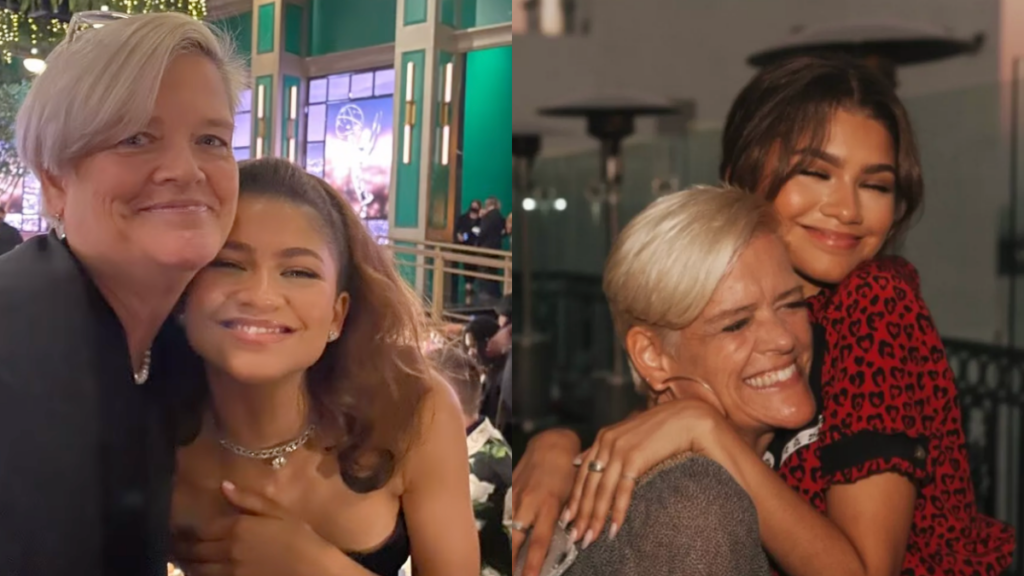
After Law Roach’s bold comment about a secret wedding, Zendaya’s mother, Claire Stoermer, jumped into the conversation. Stoermer reposted the clip of Roach’s comment on her Instagram Story. She added only a laughing emoji. Her reaction seemed light-hearted.
Stoermer’s use of humor sparked widespread interpretation. Some believed she was hinting the rumor might be true. Other fans thought she simply found Roach’s remark funny. Neither interpretation confirms or denies a marriage. Her response added to the mystery, not resolved it.
By choosing a laugh emoji, Stoermer appeared amused instead of dismissive. Fans quickly shared her story across social platforms. Some commented that she was enjoying the attention. Others suggested she was carefully avoiding any concrete statement.
Mom reactions can carry weight in celebrity news. When a family member reacts publicly, audiences often read between the lines. In this case, Stoermer’s response added fuel to fan curiosity rather than quelling speculation. The internet soon buzzed with theories based on her single emoji.
Throughout the years, Zendaya’s family has respected her privacy. They have rarely addressed her personal life in public. Their silence on major life events speaks volumes to some followers. If a wedding did occur privately, the family would likely cherish that secret as much as the couple would.
Meanwhile, viewers continue to watch social media and red carpet moments for subtle signs. Fans hope for some confirmation, whether playful or formal. Until then, Stoermer’s short but telling response remains one of the most intriguing reactions.
The Couple’s Relationship Journey
Zendaya and Tom Holland first crossed paths in 2016. They worked together on Spider-Man: Homecoming. Back then, no one expected their on-screen chemistry to lead to a lasting real-life romance.
Their friendship gradually grew stronger over months and years. By 2021, they publicly acknowledged their romantic relationship. Fans welcomed the pairing with enthusiasm. The duo’s chemistry sparked joy in the Marvel community and beyond.
Rumors about a deeper commitment emerged over time. In January 2025, Zendaya appeared at the Golden Globes wearing a large diamond ring. That appearance sparked widespread engagement speculation. No official announcement came at the time, but observers widely interpreted the ring as confirmation.
Reports also suggested that Tom Holland’s father mentioned the proposal in an online post. He described how Holland planned a thoughtful engagement. These details added legitimacy to the engagement rumors. Fans celebrated what looked like a romantic milestone.
Even amid rising fame, the couple has consistently emphasized privacy. Both have spoken about the challenge of balancing public life and personal moments. They avoid sharing most details about their relationship publicly.
This pattern of privacy makes Roach’s recent claim even more intriguing for fans. The suggestion that they quietly married aligns with how they have handled past milestones. Many believe the couple would choose privacy over spectacle. Until either Zendaya or Holland officially announces it, their fans will keep guessing.
Why Fans Are So Invested
When celebrities reach a certain level of fame, fans feel emotionally invested. Zendaya and Tom Holland have millions of followers around the world. Their work in blockbuster films like Spider-Man solidified fan interest.
Fans track every public appearance, interview, and social media post. A single gold band on a finger can trigger widespread speculation. For stars like Zendaya and Holland, small moments become headline news.
Social media platforms amplify fan reactions. Thousands of posts, tweets, and videos spread within minutes of any juicy news. Roach’s comments became a trending topic in hours. People shared memes, speculation, and theories.
Celebrity weddings have cultural impact. People root for love stories, especially ones that began on screen. Zendaya and Holland’s journey feels like a modern fairy tale for many. The thought that they secretly married added romantic intrigue to the story.
Yet some fans express caution, reminding others that no official statement exists. They argue that speculation should not be treated as fact. Others point out that the stylist may have joked. This blend of excitement and skepticism fuels ongoing online conversations.
Ultimately, fan attachment shows how much people care about celebrity narratives. Whether the marriage rumor proves true or not, Zendaya and Holland will likely remain beloved figures for many years.
What Happens Next
As the world waits for confirmation, attention turns to upcoming projects. Both Zendaya and Tom Holland have busy 2026 schedules. They will appear together in Spider-Man: Brand New Day later this year.
Zendaya also stars in other major productions like The Odyssey. Holland’s film slate continues to grow too. Fans expect big performances and red carpet moments ahead.
If Zendaya and Holland choose to make their marriage public later, the announcement is bound to break headlines. They could reveal photos, share a story, or keep it private forever. How they handle it will shape the next wave of media coverage.
Until then, celebrity watchers will scrutinize every public appearance. A changed ring, a subtle caption, or a cryptic reaction could spark fresh discussion. Each small detail contributes to the evolving narrative of their lives.
Meanwhile, Zendaya’s mom and Law Roach’s comments remain key pieces of the story. Whether playful or revealing, both remarks keep the spotlight on this couple. The world now watches, waits, and wonders what comes next.
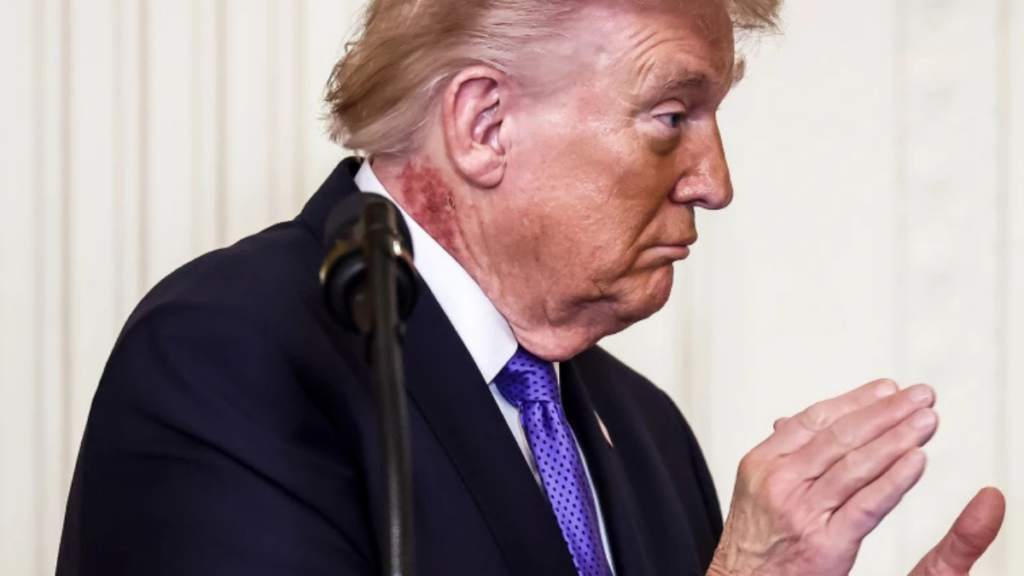
In early March 2026, media outlets and social platforms lit up with images showing President Donald Trump with a noticeable rash on the side of his neck during an official ceremony at the White House. The unusual mark, visible beneath his collar during a Medal of Honor event, quickly prompted questions about what it was, why it appeared, and how the White House was responding.
At 79 years old, Trump is the oldest person ever to serve as U.S. president. As his second term continues, observers and commentators have paid close attention to various signs of aging and health issues — from recurring bruises on his hands to speculation over other health signals captured in public appearances. The neck rash added another visible element to these ongoing discussions, prompting analysis from journalists, medical experts, and the public.
Below, we break down the facts reported so far, the White House’s explanation, expert reactions, and broader implications around public health transparency for sitting presidents.
What Happened: The Neck Rash at the White House
The story began on March 2, 2026, when photos surfaced of President Trump speaking at a Medal of Honor ceremony in the East Room of the White House. The images showed a patch of red, irritated skin extending from behind his ear down the side of his neck — an area that caught the eye of journalists and social media users alike.
Photographers and news outlets noted the rash’s visibility as Trump engaged in official duties, including greeting honorees and speaking from the podium. Along with the rash, some coverage also pointed out that Trump’s previously noted bruise on his right hand was visible despite makeup coverage.
This wasn’t the first time the president’s health or physical appearance generated public attention. Earlier in his term, Trump’s frequent bruising on his hands and instances of apparent swelling had sparked discussion and commentary from medical analysts. The White House has addressed some of those issues in the past, attributing them to benign causes such as frequent handshaking and aspirin use.
What made the rash notable was not just its appearance but the lack of immediate explanation from the White House at first. That vacuum of official information created space for speculation online and among observers, increasing interest in understanding its cause.
The White House Response and Official Explanation
As public curiosity grew, the White House physician, Lieutenant Commander Sean Barbabella, offered an explanation. According to statements reported by outlets including Fox and local news affiliates, the rash was likely a temporary effect of a topical skin cream the president was using as a preventive treatment.
Dr. Barbabella characterized the topical cream as “very common,” noting that Trump would be using it for about a week and that any redness or irritation associated with it was expected to persist for a few weeks. The statement did not clarify the underlying reason for the preventive treatment — for example, whether it was tied to a specific dermatological condition or part of a broader skin-care regimen.
While the White House physician’s statement provided some context, it left several questions unanswered, especially regarding the medical purpose of the treatment. As is often the case with the health of senior political leaders, limited disclosure of details has fueled both legitimate curiosity and speculation.
In the past, the White House has addressed health questions about Trump. For example, when images of persistent bruising appeared on his hands, officials explained it was a result of frequent handshakes and aspirin use — framing it as a benign side effect of common activities and preventive medication.
Despite these explanations, some observers have expressed skepticism or concern over how much information is being shared publicly. The degree of transparency with which presidential health issues are communicated is an ongoing point of discussion in U.S. political discourse, and any visible health sign tends to attract heightened attention.
Medical Commentary and Public Reaction
Once images of the rash circulated widely, the response from medical analysts and social commentators was mixed. Some health professionals emphasized that visible rashes can have many benign causes — including allergic reactions, irritation from topical creams, or common skin conditions such as eczema or dermatitis — and do not necessarily indicate a serious underlying problem.
However, other commentators urged caution. In particular, some media figures and medical analysts highlighted that when high-profile individuals — especially senior political leaders — show unexpected physical signs, it invites careful observation. The fact that the treatment’s purpose was not fully explained led to speculation among critics about possible alternate causes or about the adequacy of the public explanation.
For instance, a medical analyst cited by some outlets suggested that the rash could be a sign of something more serious, such as a pre-cancerous condition, although that view was offered within the context of ongoing commentary rather than as an official medical diagnosis.
Public reaction was similarly varied. On social media, the rash drew humorous commentary and memes, while others debated what it might signal about the president’s overall health and age. Still others questioned whether medical transparency for U.S. presidents should be greater, especially given that the health of a sitting president can factor into public confidence and leadership concerns.
Health, age, and fitness have been recurring themes in discussions about Trump’s presidency. As noted in earlier reporting, questions have arisen around bruising, reports of fatigue or age-related slips, and the broader narrative around how senior presidents’ health is evaluated and communicated.
Understanding the Broader Context of Presidential Health Transparency
When a president shows a visible physical sign — such as a rash, bruise, or other noticeable condition — it naturally draws attention for several reasons:
1. Symbolic Role of the President
The president is not only a political leader but also a public figure whose physical presence and demeanor are under constant observation. Visible marks or changes can trigger public curiosity and varied interpretations, sometimes unconnected to actual medical significance.
2. Age and Leadership
At 79, Trump is the oldest person to have held the U.S. presidency. With age can come visible physical changes and a higher likelihood of chronic conditions, routine skin irritations, or other non-serious ailments. However, age also amplifies public interest in leaders’ health, given concerns about stamina, cognitive sharpness, and general well-being.
3. Balancing Privacy and Public Interest
There is a perennial tension between personal medical privacy and the public’s interest in knowing about a leader’s health. While a president is entitled to medical confidentiality, the office carries a level of public accountability that often prompts calls for more transparency, especially when unexplained or unusual symptoms appear in public.
4. Communication Practices
How the White House communicates about health matters influences the narrative. Clear, proactive explanations tend to reduce speculation, while sparse or unclear information can lead to uncertainty and a proliferation of theories, ranging from benign to worrying.
In this case, the White House physician provided a brief explanation centered on a topical preventive treatment, but without detailing its purpose, leaving some gaps in the public narrative. Observers on all sides interpreted the explanation differently, reflecting broader debates about transparency and trust.
Conclusion: What This Means Going Forward
The red neck rash seen on President Trump during a March 2026 White House ceremony is a visible and noticeable sign that attracted widespread attention, but at this point, there is no evidence that it represents a serious medical condition. The White House’s explanation — that it is a temporary reaction to a common preventive skin cream — frames it within the context of routine treatment, with expectations that the redness may persist for a few weeks.
Medical experts and commentators have different views on what to make of the mark, ranging from reassurance that rashes are common and often harmless, to reminders that public scrutiny increases when health signals appear on leaders. The broader issue of how much medical detail should be shared about a sitting president remains an open question in U.S. public life.
Ultimately, while the rash is noteworthy because it was visible on camera and sparked discussion, it should be understood within the larger — and often unpredictable — world of public appearances, health reporting, and the natural curiosity that accompanies visible signs on high-profile figures.
The one who compared venues, color palettes, catering menus.
The one who said, “Dad deserves something beautiful.”
No one argued.
That’s the role I’ve always had in our family.
The reliable one.
The calm one.
The planner.
My younger brother sent thumbs-up emojis.
My mom said, “Whatever you think is best, sweetheart.”
So of course I took charge of dad’s retirement party.
Forty years at the same company.
The kind of career people build their identities around.
The kind of milestone that calls for speeches and old photos and a slideshow that makes everyone cry.
A loving tribute.
That’s what I wanted.
What I didn’t know was that I was planning a night that would split our family in two.
The box in the hall closet
It started with the photo albums.
Mom keeps them in the hall closet, stacked in those clear plastic bins with the white lids.
I pulled them out one Sunday afternoon while she was at her book club.
I wanted pictures from every phase of his life.
Young dad with the mustache.
Dad holding me in a hospital blanket.
Dad teaching us how to ride bikes.
The usual.
I climbed up on a chair to reach the top shelf and that’s when I saw the other box.
Plain cardboard.
No label.
I almost didn’t open it.
It didn’t look like ours.
Everything my mom owns is carefully marked in her neat, rounded handwriting.
This box was just… there.
Inside were envelopes.
Not bills.
Not documents.
Photos.
At first I thought they were work pictures.
My dad at conferences, shaking hands, standing in front of hotel banners.
But then I saw one where he wasn’t wearing a suit.
He was in jeans and a navy sweater I had never seen before.
And his arm was around a little girl.
She looked about five.
Dark hair in two messy ponytails.
Missing front teeth.
Grinning at the camera like she belonged there.
Like she belonged with him.
I actually smiled for a second.
I thought — Oh, this must be a coworker’s kid. Or a charity thing. Or—
Then I turned the photo over.
There was a date.
And a word written in blue pen.
“With Dad. Sunday at the lake.”
I sat down on the floor of the hallway.
Because that wasn’t possible.
The version of him we all knew
My dad was the steady one.
Up at six.
Coffee in the same chipped mug.
The evening news at exactly seven.
Every birthday remembered.
Every school event attended.
He didn’t even have friends we didn’t know.
He was home.
Always home.
That’s the story we told about him.
That’s the story I built the slideshow around.
So I went back to the box.
There were more photos.
The same girl.
Getting older.
A woman I had never seen before.
Standing next to him at what looked like a park.
Sitting across from him at a restaurant.
Her hand resting near his on a table — not touching, but close enough that you could see the intention.
In one picture they were both laughing at something outside the frame.
He looked… different.
Relaxed in a way I didn’t recognize.
I checked the dates again.
Weekdays.
Weekends.
Random afternoons.
Years of them.
My chest felt tight, but my brain kept trying to solve it like a puzzle.
There had to be an explanation.
There is always an explanation.
Asking without asking
That evening I brought the photo albums to the kitchen table.
Mom came home, kissed the top of my head, and asked if I’d eaten.
Normal.
Everything normal.
“Do you remember if Dad ever mentored someone at work? Like… someone with a kid?” I asked, keeping my voice light, flipping through pages like I was just sorting pictures.
She didn’t even look up from her tea.
“Your father barely had time for us, let alone mentoring,” she said, and laughed a little.
Barely had time for us.
That’s not true, I wanted to say.
But I didn’t say anything.
Because suddenly I was calculating.
If he had been somewhere else… when we thought he was working late… when we thought he was traveling…
The timeline began rearranging itself in my head.
All those evenings.
All those “last-minute meetings.”
All those Saturdays when he said he had to “check something at the office.”
The phone call that changed the air in the room
Two days later I was at my parents’ house again, measuring the dining table to see if we could fit a memory display there.
Dad was in the living room on the phone.
His voice was softer than usual.
Not the firm, practical tone he uses with everyone.
This was gentle.
“Yeah, of course I’ll be there,” he said. “I wouldn’t miss it. Tell her I’m proud of her.”
Tell her.
I froze in the hallway.
“I know, I know. Soon. We just have to get through this month.”
A pause.
Then, quieter: “I love you too.”
He ended the call and when he turned and saw me standing there, he flinched.
It was small.
Most people wouldn’t have noticed.
But I’ve been reading his face my whole life.
“Who was that?” I asked.
“Work,” he said too quickly. “Just tying up loose ends before I retire.”
He smiled.
The same smile that had always meant safety.
This time it felt like a door closing.
The way denial sounds in your own head
For a week I did nothing.
I worked on the party.
I confirmed the cake design.
I ordered the custom banner.
I collected video messages from his colleagues.
I told myself I was being ridiculous.
People have pictures.
People take phone calls.
People live whole lives we don’t see.
It doesn’t mean anything.
But late at night I kept seeing the blue pen on the back of that photo.
With Dad. Sunday at the lake.
Not with John.
Not with Uncle.
With Dad.
The drive I didn’t plan to take
The address was in one of the envelopes.
I didn’t go there on purpose.
I was “in the area.”
That’s what I told myself as I parked across the street and sat with my hands gripping the steering wheel.
It was a small house.
Yellow.
A swing set in the yard.
There were drawings taped to the inside of the front window.
Childish ones.
Stick figures.
A sun in the corner.
A man came out to take the trash bins to the curb.
Not my dad.
I almost laughed from the relief.
See? I thought. See how dramatic you’ve been?
Then the front door opened again.
And my father stepped out.
He turned back toward the doorway, saying something to someone inside.
The little girl — older now, maybe ten or eleven — ran out after him and hugged him around the waist.
“Bye, Dad!” she shouted.
He kissed the top of her head.
The woman followed them to the porch.
She touched his arm the way people do when they are used to touching someone.
He looked back at the house the way he looks back at ours when he leaves for work.
Like it belonged to him.
I didn’t realize I was crying until I couldn’t see the house anymore.
Rewriting every memory
After that, everything I knew about my childhood became unstable.
All those nights we waited for him to get home so we could start dinner.
All those school plays where he slipped into the seat just before the lights went down.
All those mornings he made pancakes and we thought, He’s the best dad in the world.
He was.
Just not only to us.
That was the part my brain couldn’t hold.
You can be a bad man or a good man.
You can make one terrible mistake.
But you cannot live two entire lives for over a decade and have it mean nothing.
The speech I started writing
The party program needed a closing speech.
Everyone assumed I would give it.
“You’re the writer,” my mom said. “You’ll make it beautiful.”
So I opened a blank document and wrote:
“My father has always been a man of quiet dedication…”
I stared at the sentence for a long time.
Because it was still true.
That was the worst part.
He had been dedicated.
Just not in the way we thought.
I began to collect stories for the speech.
From his colleagues.
From his friends.
From my brother.
And then, one night, I drove past the yellow house again.
This time I didn’t stop across the street.
I parked at the end of the block and walked.
I told myself I just wanted to see if the swing set was still there.
That’s all.
The girl was in the yard, doing homework on a little plastic table.
She looked up when she saw me.
For a moment we just stared at each other.
We had the same eyes.
That’s when I knew the speech wasn’t going to be a tribute.
Not the kind I had planned.
The decision I didn’t say out loud
I didn’t tell my mom what I found.
Not yet.
I didn’t confront my dad.
Not yet.
Instead, I kept planning.
I finalized the guest list.
I chose the music.
I ordered the printed programs with the gold lettering.
And I kept writing the speech.
Carefully.
Gently.
Line by line.
Because I wasn’t trying to destroy him.
I was trying to tell the truth in a room where everyone believed the same story.
The night of the party got closer.
Relatives started arriving from out of town.
My mom bought a new dress and asked me if I thought Dad would cry when he saw the slideshow.
“Yes,” I said.
And for the first time in my life, I knew something she didn’t.
I knew exactly when the room would go quiet.
I knew the moment his two lives would meet.
And I knew I was the one who was going to bring them together.
The night everything looked perfect
The venue lights were warm and soft, the way I’d planned.
Gold balloons.
White tablecloths.
The memory table near the entrance with framed photos from every decade of his life.
Our life.
People kept stopping me to say how beautiful it all was.
“You did an amazing job.”
“He’s going to be so proud of you.”
I smiled.
I thanked them.
I adjusted place cards and checked on the cake and made sure the slideshow technician had the right file.
I moved through the room like this was just another event.
Like my chest wasn’t tight enough to crack.
Across the room my dad had his arm around my mom, introducing her to one of his former colleagues.
She was glowing in her new dress, leaning into him the way she always has.
He looked exactly like the man I had built the tribute around.
That was the hardest part.
Nothing about him looked like a lie.
The two empty chairs
The yellow-house family wasn’t supposed to come.
I had told myself that.
I had repeated it like a rule.
But when I walked past the last table near the back, I saw the place cards I had printed that morning.
Two names.
Her name.
And the girl’s.
I had put them there without letting myself think about it.
Not at the front.
Not in the shadows.
Just… in the room.
An acknowledgment.
A door left unlocked.
I kept walking.
If I stopped, I might not start again.
The slideshow
The music started — the slow piano piece my dad loves.
Baby photos.
His wedding day.
Me on his shoulders at the zoo.
My brother in a Halloween costume he helped build.
People laughed in the right places.
Wiped their eyes in the right places.
My mom reached for his hand when their younger faces appeared on the screen.
He leaned over and kissed her temple.
I watched from the side of the room and thought: This is all real.
That was the part no one prepares you for.
The fact that the lie doesn’t erase the love.
It just sits next to it.
When he saw them
They arrived during the applause.
The woman first, one hand resting lightly on the girl’s shoulder like she wasn’t sure she was allowed to guide her.
The girl seemed to have grown since the last time I saw her.
A bit taller.
Hair pulled back.
A dress that looked like it had been chosen for a special occasion.
She was looking around the room with open curiosity.
Like she had no idea she was walking into a fault line.
My dad turned toward the entrance because everyone else did.
And then he stopped moving.
I have never seen a human face go that still.
It wasn’t guilt.
It wasn’t fear.
It was recognition.
And something like resignation.
My mom followed his gaze.
At first she didn’t understand what she was looking at.
Why would she?
To her, they were just guests she didn’t recognize.
She smiled politely.
The girl smiled back.
And my dad didn’t breathe.
The moment my name was called
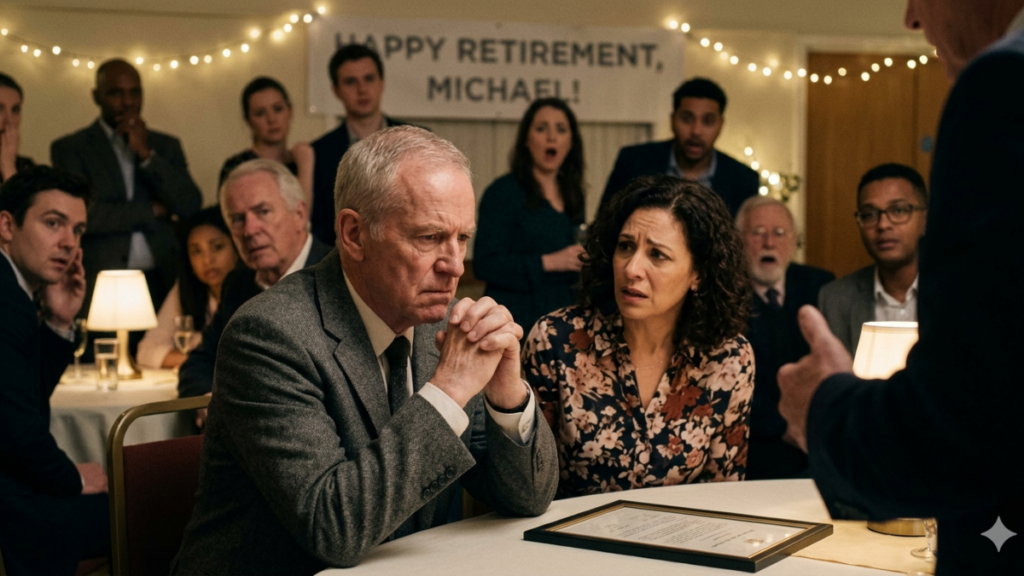
“Now,” the host said, tapping the microphone, “we’ll hear from someone who knows our guest of honor better than anyone — his daughter.”
The room turned toward me.
All those faces.
All that love.
All those shared assumptions.
I stood up and walked to the stage.
My hands were steady.
That surprised me.
I unfolded the paper even though I didn’t need to.
I had memorized every word.
For a second I looked at my dad.
He was already looking at me.
There was a plea in his eyes.
Not don’t hurt me.
More like: Don’t do this here.
And I understood.
I really did.
But there was no other place where the truth belonged.
The tribute that stayed true
“My father,” I began, “is a man who taught me what consistency looks like.”
Smiles.
Nods.
“He never missed a school play. He never forgot a birthday. He showed up, over and over again, in ways that made our lives feel safe.”
My mom’s hand went to her chest.
My dad closed his eyes for a moment.
“All my life, I believed that what made him extraordinary was his loyalty. His ability to build something and stay inside it.”
The words were calm.
Gentle.
Careful.
“And as I started putting this evening together, I realized something else.”
The room was quiet now.
“I realized how much of a person’s life we never see. Even when we think we know them completely.”
A shift in the air.
Not discomfort yet.
Just attention.
The truth, spoken softly
“A few weeks ago, while I was looking for old photos, I found a part of my father’s life I didn’t know existed.”
No one moved.
“I found out that the man who taught me how to ride a bike… also taught another little girl how to ride hers.”
A sound came from somewhere in the room.
A small, confused laugh that died immediately.
“I learned that the consistency I admired wasn’t an illusion.”
I turned slightly, not fully, just enough that my gaze passed over the table at the back.
“It was multiplied.”
My mom’s fingers tightened around my dad’s sleeve.
He still hadn’t looked at her.
“He didn’t just build one family,” I said. “He built two.”
The words didn’t echo.
They landed.
Heavy and final.
The sound that broke everything
My mom made a noise I had never heard before.
Not a sob.
Not a gasp.
It was like the air had been knocked out of her in one motion.
She pulled her hand away from him.
Actually pulled it back like he had burned her.
And then she looked at the back of the room.
At the girl.
At the woman.
At the shape of the truth.
The girl was staring at me, eyes wide, not understanding the language but understanding the impact.
The woman had gone pale.
My dad was still sitting down.
Like if he didn’t move, time might reverse.
Finishing what I started
“My father’s retirement,” I said, and my voice didn’t shake, “is the end of a long career defined by commitment.”
I paused.
“But tonight is also a beginning.”
No one was pretending anymore.
“Because the people in this room deserve to know each other. Not as secrets. Not as separate stories. But as the full reality of the man we are here to honor.”
I looked at him then.
“I am not telling this to punish you,” I said quietly. “I am telling it because silence is what made this possible.”
And then, softer:
“I still love you. That hasn’t changed. But love without truth is just a performance.”
After the microphone
I don’t remember putting the paper down.
I don’t remember stepping off the stage.
I remember my brother standing up so fast his chair fell over.
I remember my mom sitting perfectly still, like movement would shatter her.
I remember the girl at the back starting to cry because everyone else was.
My dad finally stood.
Not to come to me.
To go to my mom.
She didn’t look at him.
Not once.
The conversations that followed
People left in small clusters.
No one knew where to stand or who to comfort.
Some relatives came to me and held my hands and said my name like it was a question.
My brother hugged me so tightly I couldn’t breathe.
“You knew?” he whispered.
I nodded.
The woman from the yellow house never approached the stage.
She stayed near the exit, one arm around her daughter, as if she was ready to run.
Before she left, she looked at me.
Not with anger.
With something like recognition.
Like we were both standing in the same wreckage.
The end of the night
My mom didn’t go home with my dad.
She left with my aunt, her face blank, her dress still perfect.
My dad sat alone at one of the round tables long after the staff started clearing plates.
I walked over eventually.
We didn’t hug.
“I was going to tell you,” he said.
I believed that he believed it.
“I know,” I replied.
That was all.
Because there was nothing else that would make it better.
What remains
The next morning our family group chat was silent.
No good-morning messages.
No photos from the party.
Just the absence of the story we used to live in.
I don’t know what our family will look like now.
There will be separate holidays for a while.
Awkward conversations.
Long pauses.
There will be grief for something that didn’t technically die but isn’t what it was.
But there will also be a girl who no longer has to pretend her father only exists on certain days.
There will be a woman who doesn’t have to stay invisible.
There will be my mom, who now gets to decide what truth she can live with.
And there will be me.
The daughter who planned a tribute.
And told the whole story instead.
Because love built on a lie is a beautiful room full of closed doors.