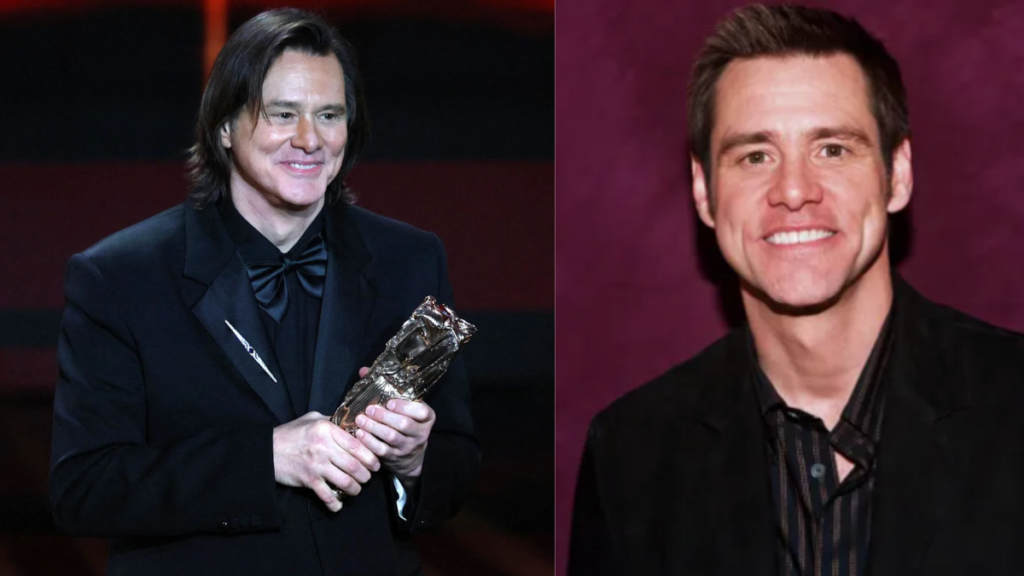
Jim Carrey recently made a rare public appearance that surprised fans and media alike. The actor attended the 51st César Awards in Paris, where he received an honorary prize for his film career. During the ceremony, he delivered an emotional acceptance speech in French and thanked his family and partner. His presence marked his first significant appearance of the year after a long period away from the cameras.
Carrey’s unexpected visibility quickly drew attention on social media. Videos of him on the red carpet showed what some viewers said was an “unrecognizable” look compared with his past appearances. Clips circulated widely, leaving fans debating whether they were seeing Carrey or someone else. A few social media posts insisted the person on camera looked unfamiliar and unusual.
Some observers commented on changes in his facial features, including his eyebrows, cheek shape, and overall appearance. Others discussed what they perceived as a different voice or mannerisms. These observations quickly shifted into speculation about plastic surgery, aging, or cosmetic procedures. The unusual reactions show how strongly fans associate specific physical traits with public figures.
In many ways, the reaction reflects modern fan culture’s fascination with every detail of celebrity life. Carrey has been largely withdrawn from public life in recent years, making this rare moment all the more striking to viewers. That rarity amplified the reaction and encouraged deeper scrutiny.
Ultimately, the attention Carrey received highlights how quickly the internet elevates unusual details into viral conversation. Even after decades in show business, a single appearance can reignite massive online interest. Whether heartfelt or odd, Carrey’s moment in Paris captivated audiences across platforms.
What Happened at the César Awards
On February 26, 2026, Jim Carrey stood onstage at the 51st César Awards in Paris to accept a lifetime achievement prize. He delivered his speech entirely in French. He praised his daughter, grandson, and partner whom he called his “sublime companion.” The moment moved the audience, with applause greeting his heartfelt words.
Carrey’s public presence was notable because he has stepped back from Hollywood life. In recent years, the actor chose peace, art, and spiritual pursuits over frequent red carpet events. Those choices made his César appearance feel exceptional. This context added to the strong reaction when viewers saw him in person again.
Following the speech, video clips showed Carrey answering reporters on the red carpet. In these moments, many viewers commented on what they saw as an altered look. Small viral posts focused on his facial features, including eyebrow shape and apparent eye color. These visuals spread quickly across social platforms.
Some viewers even joked about conspiracy theories. A few posts claimed he’d been replaced by a body double or a clone. Others suggested extensive cosmetic procedures had changed his face. These comments amplified discussions far beyond the original ceremony coverage.
Despite all speculation, Carrey remained confident and poised during public interactions. He smiled for cameras and expressed gratitude for his honor. His demeanor reaffirmed to many that he was fully present and authentic in the moment. The event thus became a flashpoint for global discussion, blending human interest with online debate.
Online Reactions and Conspiracy Claims
Within hours of Carrey’s appearance, social media users shared varying opinions about what they saw. Many people commented that the actor looked different from the Jim Carrey they remembered in movies like The Mask and Ace Ventura. Some claimed his features were “off” or “changed.”
Those reactions sparked conspiracy theories that the man on camera might not be the real Jim Carrey. A handful of online posts suggested a clone or body double delivered the speech. These claims spread with sensational imagery, despite having no factual basis.
Other fans focused on supposed cosmetic changes instead of conspiracy theories. They asked whether he had undergone treatments like Botox or fillers. These debates show how public expectation around celebrity photos and video remains intensely judgmental.
Meanwhile, the César Awards event organizer publicly rejected any clone rumor, emphasizing that Carrey prepared his speech personally and participated fully in the ceremony. The statement aimed to dispel the wild speculation that followed.
The rapid spread of these theories reflects how quickly social media turns moments into narratives. From conspiracy to vanity speculation, reactions ran the gamut. People often struggle to accept natural changes in appearance as normal aging or personal transformation. That struggle became clear in the varied responses to Carrey’s appearance.
How Carrey’s Appearance Became a Cultural Moment
Jim Carrey has been a beloved entertainer for decades, celebrated for unique comedy and dramatic roles. Yet the conversation around his recent look shows how the public views physical change. Audiences often expect celebrities to remain frozen in time, despite age and life experience.
The chatter largely centered on photos and video that circulated quickly online. Clips of Carrey’s interview after the awards showed him in a tuxedo with longer black hair. Some posts suggested those elements made him seem unfamiliar or “unrecognizable.”
This moment reflects a broader cultural trend. In recent years, many celebrities have faced intense scrutiny over appearance changes. Aging, lifestyle, or cosmetic procedures often spark rich debate, even when evidence is minimal. Carrey’s situation highlights that trend clearly.
Some observers argued that Carrey’s unique face has always been part of his charm. His expressive look contributed to iconic roles and comedic moments. Those viewers felt that any change, subtle or obvious, would trigger reactions simply because audiences are so familiar with his earlier image.
Ultimately, Carrey’s appearance became a cultural moment not because of facts, but because of perception. When a beloved figure appears in a public space after a hiatus, audiences interpret every feature and gesture. The discussion around his look shows how celebrity culture and digital speculation now intersect.
Why the Story Resonates Beyond Hollywood
The responses to Jim Carrey’s appearance at the César Awards reveal broader truths about public fascination with celebrity. People often personalize their attachment to cultural figures, expecting consistency in looks and persona. When changes occur, even natural ones, fans feel unsettled.
This particular moment also highlighted how social media accelerates reactionary discussion. Within minutes, videos circulated, and diverse opinions emerged. Some tweets and posts veered toward harmless humor, while others adopted extreme theories. That instantaneous spread demonstrates the power and volatility of digital platforms.
Theories about cloning or impersonation, though unsubstantiated, show how narratives can distort public perception. Without evidence, rumors became emotional, with some users doubling down on wild explanations. This pattern reveals how storytelling in the digital age can outpace facts quickly.
Yet positive responses also emerged. Many users celebrated Carrey’s award and spoke fondly of his legacy. They defended his right to a private, personal life while honoring his contributions to cinema. These voices reminded others that celebrity respect can coexist with curiosity.
In the end, Jim Carrey’s recent public appearance became more than a celebrity sighting. It became a reflection of how modern culture reacts to change, perception, and narrative creation. Whether through conspiracy or celebration, the moment shows how public figures continue to influence and engage audiences worldwide.
A Lip Reader’s Claim Sparks Fresh Attention at the State of the Union
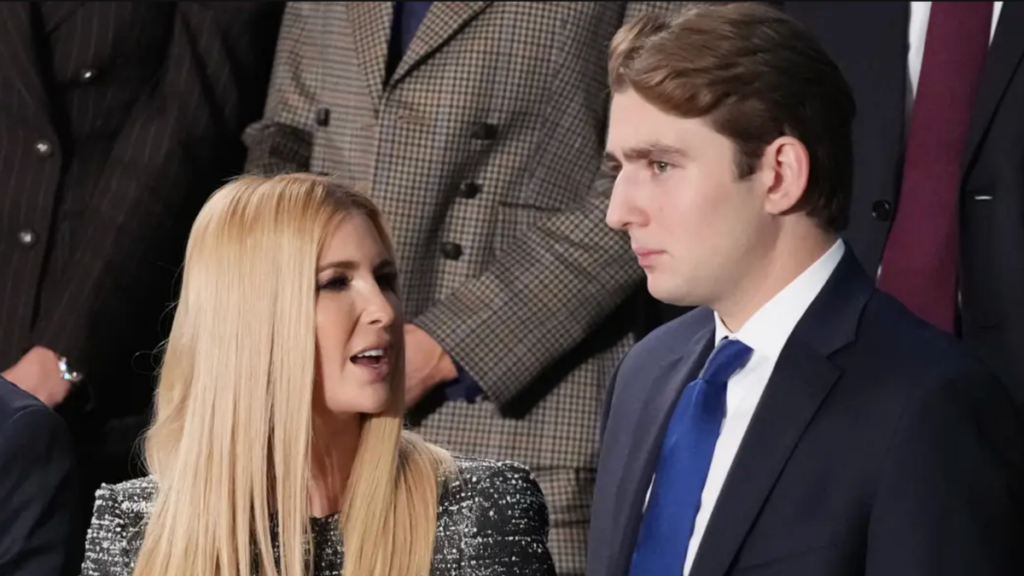
A lip reader has sparked online debate after analyzing a moment at the State of the Union. The article from UNILAD highlights a brief exchange involving Barron Trump and Ivanka Trump. Viewers quickly circulated the clip across social media platforms. Many users speculated about the words spoken during the event. The report centers on what the lip reader believes Barron said.
The televised address drew national attention for political reasons. However, this subtle family moment captured unexpected public interest. Cameras briefly focused on the Trump family during the speech. That brief focus allowed viewers to study facial expressions and gestures. Social media users quickly began sharing slowed-down versions of the clip.
The lip reader claimed Barron made a quiet comment to Ivanka. According to the report, Ivanka responded with a composed expression. The analysis fueled curiosity about private conversations during public events. Many readers questioned how accurate lip reading can be. Others focused on the family dynamic displayed in the moment.
Public fascination with political families often extends beyond policy discussions. Viewers tend to analyze body language and silent exchanges. This situation followed that familiar pattern. The article explains how quickly the clip gained traction online. Within hours, users debated the meaning behind the exchange.
The State of the Union often produces viral highlights. Most moments involve applause or partisan reactions. This time, a quiet exchange created the buzz. The article emphasizes how minor gestures can dominate headlines. Even subtle interactions can shift online conversations overnight.
The Role of Lip Reading in Public Events
Lip reading often attracts attention during high-profile broadcasts. Analysts frequently examine footage from political speeches and royal events. These experts attempt to interpret silent conversations. Their interpretations sometimes spark controversy. Accuracy depends heavily on camera angles and lighting.
In this case, the lip reader offered a confident interpretation. The claim immediately circulated through news outlets. Viewers replayed the clip to test the analysis. Some agreed with the interpretation. Others argued that lip reading can produce misleading conclusions.
Professional lip readers stress that context matters. Facial angles and partial obstructions affect clarity. Even slight head movements distort visible syllables. Despite those limitations, audiences enjoy decoding hidden dialogue. The mystery element drives engagement.
The article notes how quickly speculation replaced certainty. Social media users began crafting their own interpretations. Each repost generated fresh commentary. This pattern highlights the viral nature of political family coverage. Audiences remain eager for behind-the-scenes insight.
Lip reading has influenced headlines before. Similar analyses have followed global summits and royal ceremonies. In many cases, experts later clarify their claims. This event follows that tradition. The discussion reflects modern media’s appetite for micro-moments.
Barron Trump’s Public Presence
Barron Trump rarely appears in political headlines. He has largely maintained a low public profile. When he does appear, public interest spikes immediately. Observers often comment on his height and reserved demeanor. This recent clip added another layer of curiosity.
The article suggests that Barron leaned toward Ivanka during the speech. Cameras captured a brief exchange between them. That short interaction became the focus of the report. Viewers analyzed his expression frame by frame. The scrutiny reflects ongoing interest in political families.
Barron has grown up under intense public attention. Despite that attention, he avoids frequent media appearances. His limited presence makes each appearance more notable. The lip reader’s claim amplified that effect. News outlets quickly picked up the story.
Public reactions varied widely. Some users defended Barron’s privacy. Others treated the moment as harmless curiosity. The discussion illustrates the challenge of balancing public interest and personal boundaries. Political families often navigate that tension.
The article frames the moment as a viral curiosity rather than a major controversy. Still, it shows how quickly attention shifts online. A brief whisper can dominate headlines for days. That dynamic defines modern political media coverage.
Ivanka Trump’s Reaction and Public Interpretation
Ivanka Trump’s reaction also drew attention. Cameras captured her composed expression following the alleged comment. Viewers studied her response for hidden meaning. Some described her reaction as amused. Others interpreted it as neutral.
The lip reader’s claim added context to her expression. Without that claim, viewers might have ignored the exchange. Interpretation shapes perception in moments like this. Once a narrative emerges, audiences view footage through that lens. That process fuels viral speculation.
Ivanka has long navigated public scrutiny. Her presence at major political events often generates commentary. Analysts frequently examine her body language. This event continued that trend. A simple exchange became headline material.
The article highlights how online platforms magnify brief interactions. Clips circulate within minutes of broadcast. Commentary spreads across multiple channels simultaneously. This rapid distribution intensifies reactions. It also blurs the line between fact and interpretation.
Public fascination with political families remains strong. Audiences often seek emotional cues from televised events. Ivanka’s composed demeanor fit the formal setting. Still, speculation persisted. The moment demonstrates how viewers project meaning onto limited footage.
Viral Moments and the Power of Digital Media
This incident underscores the influence of digital platforms. A short clip transformed into a trending topic within hours. News outlets amplified social media reactions. That amplification created a feedback loop. Each mention increased visibility.
Modern political coverage extends beyond speeches and policy. Cameras capture every gesture and glance. Viewers analyze those details intensely. This dynamic changes how public figures behave. Even private whispers risk public interpretation.
The article from UNILAD reflects this evolving landscape. It documents how a lip reader’s claim drove conversation. The report avoids definitive conclusions. Instead, it presents the claim and public reaction. That approach leaves room for debate.
Viral moments often overshadow substantive issues. A speech may address major national concerns. Yet audiences may remember a single whispered exchange. Digital culture prioritizes shareable moments. Emotional intrigue often wins attention.
Ultimately, this story illustrates the power of perception. A brief exchange sparked national curiosity. A lip reader’s interpretation shaped the narrative. Social media ensured rapid circulation. Together, these forces turned a quiet moment into headline news.
Photo Credit: Abich Financial Services / Youtube; ZUMAPRESS.com / MEGA
Alleged Ex Claims Pageant Warnings
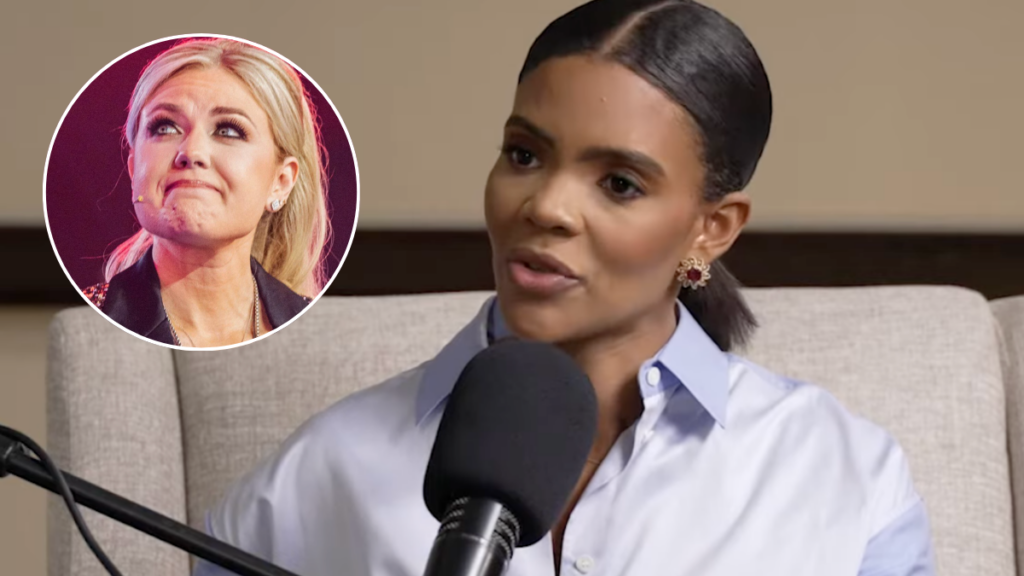
Candace Owens’ recent docuseries Bride of Charlie re-examined Erika Kirk’s past pageant involvement. In episode three, Owens said one of Erika’s former partners spoke to her. According to Owens, that ex said someone in pageantry warned him about Erika’s ambition. The warning reportedly described how Erika would “do anything to get to the top.” Owens also said the ex claimed Erika’s mother supported her drive. This became a major point in Owens’ critique of Kirk’s pageant origin story.
Owens used the ex’s alleged comments to argue that Erika’s public narrative might be incomplete. Erika once described her entry into pageants as random, stating someone sent her a nomination letter. Owens challenged that account as unlikely for minors, who typically need parental consent to enter pageant contests.
The unnamed ex’s alleged warning was framed as corroboration of Owens’ theory that Erika’s pageant involvement was part of a long-standing pursuit of visibility. Owens asserted that family ties and personal ambition drove Kirk’s early public life. This perspective is controversial, as few concrete details about the ex or the relationship have surfaced.
Some former competitors in the beauty world agreed that Kimberly’s story seemed improbable, noting minor pageant entrants usually require photo submissions and parental signatures. Owens seized on this as support for the ex’s warning. However, critics argue that pageant culture varies widely by state and organization.
Social media bounced back with mixed reactions. Some users assumed Owens’ narrative was credible because it included “insider” testimony. Others said anonymous sources rarely prove anything. Many commenters questioned how much weight an unnamed ex’s warning should carry in a complex personal history.
The Ex’s Warning and Pageant Ambition
Owens framed the alleged ex’s warning as evidence of Erika’s long-term ambition. The warning supposedly came from someone familiar with pageant circles. This person allegedly told the ex that Erika would “do anything to get to the top.” That phrasing became a much-quoted line in online discussions.
According to Owens, the warning also included a claim about Erika’s mother. Owens said the mother would “do anything to help her get to the top.” This added a family dimension to the accusation. Owens used this to question whether Erika’s involvement in pageants was as coincidental as she once suggested.
If true, the warning from pageant contacts challenges Kirk’s explanation that she entered contests randomly. Critics could interpret the ex’s claim as confirmation that parental influence was central to Erika’s pageant history. This reinforces the idea that her competitive participation was intentional from a young age.
However, the accuracy of these warnings remains uncertain. Owens did not name the ex or the pageant contact. Without identified sources, critics argue the comments function more as narrative fuel than verified fact. This raises questions about how much weight to place on anonymous recollections.
Regardless of the controversy, the alleged ex’s warning became a focal point in online debates. For some, it affirmed suspicions about ambition behind Kirk’s early public path. For others, it exemplified how easily unverified claims can spread in the internet age.
Dating History Under Scrutiny
Candace Owens also attacked Kirk’s personal history beyond pageants. She claimed Erika lied about dating anyone before meeting her late husband, Charlie Kirk. Owens highlighted photos of Erika with past partners, contradicting her statement that she did not date for five years.
Owens noted Erika once lived in New York for five years and reportedly said she stayed single during that period. However, Owens said resurfaced media showed Erika with a boyfriend named JT Massey in 2014, when they auditioned for The Amazing Race. That timeline overlaps with what Erika described as her single phase.
The ex’s warning about her drive and ambition tied into Owens’ claims about Erika’s romantic life. Owens suggested Erika pursued high-status partners rather than average individuals. She said Erika “never dated a normal guy with a nine-to-five job.”
Whether dating scenes influence how someone advances professionally is a matter of personal interpretation. Owens framed it as documentary evidence of calculated ambition. Others saw it as Owens overreaching to build a narrative about personality and intent.
The resurfaced evidence from Erika’s past generated more debate about what constitutes a reliable test of truth. Anonymous warnings, Instagram posts, and casting tapes complicate the line between real history and online speculation.
What the Ex’s Warning Means in Context
The ex’s warning has implications beyond pageants. Some commentators tied it to larger questions about public authenticity. They asked whether early ambition naturally leads to later prominence. In that sense, the warning about doing “anything” might be hyperbolic rather than literal.
Owens leans on the ex’s anonymous statements to build a theory of calculated progression. She argues that early signs of ambition foreshadowed Erika’s later public prominence. However, critics say ambition is a common trait many public figures share. They argue ambition does not equate to unethical behavior.
Some observers note that pageantry itself encourages competitiveness and self-presentation. Participating in pageants does not automatically prove a person will pursue fame at any cost. The ex’s warning might reflect personal bias rather than objective observation.
Moreover, anonymity of the ex means the comment cannot be verified independently. Owens’ reliance on unnamed sources makes the claim a talking point rather than an established fact. This distinction matters when shaping public narratives.
Despite these uncertainties, many discussions about Erika’s past incorporate the alleged warning. It has become a shorthand for critics who believe underlying motives shape public figures. Others view it as a reminder to evaluate anonymous claims with skepticism.
Reactions and Broader Impacts
Reaction to the ex’s warning and Owens’ documentary has been deeply divided online. Some social media users appreciated Owens for drawing attention to details about Erika’s pageant and romantic history. They felt anonymous sourcing was acceptable for raising questions.
Other commenters condemned the approach. They argued that attacking a grieving widow with unverified anecdotes was inappropriate. Critics noted that Erika’s husband was assassinated in 2025, and public scrutiny since then has been intense. Many online observers called for empathy over speculation.
Some defended Erika’s involvement in pageants as a legitimate part of her past without moral implications. They pointed out that many people use pageantry as a platform for self-confidence and networking. The ex’s warning was cast by defenders as common gossip rather than proof of intent.
Still, the debate reflects larger cultural tensions about evidence and narrative. Anonymous claims can gain traction quickly, especially when amplified by influential figures. The ex’s warning, even without verification, influenced conversations about ambition and authenticity.
In the end, Erika Kirk’s alleged ex remains unnamed, and her response to these claims has been limited. Whether individuals choose to believe the ex’s warning or see it as speculation, it has added a persistent thread to the story of her public life.
Benny Blanco’s new podcast episode made headlines for reasons beyond its content. In the first episode of Friends Keep Secrets, he appeared barefoot with visibly dirty feet on camera. Viewers immediately noticed the state of his soles while he lounged on a couch. The clip spread quickly and ignited social media reactions across platforms. What seemed like a typical casual moment turned into a full-blown internet frenzy about personal hygiene.
Online commentary did not hold back. Some fans mocked his feet and the casual way he presented them. Others focused on the fact that he even passed gas deliberately during the recording. His relaxed posture and lack of concern stirred both humor and disgust in comments sections. The moment resonated especially among followers of his wife, Selena Gomez, who appeared in some discussions.
People shared strong opinions about what they saw. Many joked about the situation, while others expressed genuine discomfort. Some followers even took aim at Blanco’s marriage. They urged Gomez to reconsider her relationship over something as simple as exposed dirty feet. Criticism ranged from light banter to harsh personal takes.
Not all reactions centered on hygiene alone. Fans debated whether public figures should be scrutinized for casual behavior. Some suggested the moment was genuine and funny. Others argued that fans overreacted. The conversation soon expanded beyond the podcast itself and into celebrity culture.
Blanco’s unexpected show of bare feet captured attention in part because it felt relatable. Many people have casual moments caught on camera that spark unexpected reactions. His choice to share this unfiltered clip made audiences question where the line between honesty and over-sharing lies. That debate kept the topic trending long after the episode aired.
Social Media Backlash and Public Criticism
After the podcast clip went viral, social media erupted with opinions. Fans and casual viewers alike took to X and other platforms to share their thoughts. Many users criticized Blanco’s hygiene, focusing on the dirt visible on his feet. The visual spectacle became meme fuel almost instantly.
Some commenters didn’t stop at hygiene. They encouraged Gomez to leave Blanco, claiming she deserved someone with “better habits.” These remarks quickly spread under various posts featuring screenshots from the episode. Fans questioned why Gomez would tolerate such behavior.
Others took a lighter tone. They joked about the relatability of dirty feet and even defended Blanco. These supporters pointed out that feet can appear dirty after normal everyday activity. Some suggested that lighting and camera angles might have exaggerated the look.
Still others focused on the fart moment during the podcast. That clip amplified the discussion, allowing critics to argue that Blanco was unaware of how his behavior came across publicly. Viewers especially pointed out that gassy jokes sometimes make for poor public impressions.
Despite the mixed reactions, the episode succeeded in generating significant online engagement. Comments ranged from humorous to critical. The backlash also demonstrated the intensity of fan culture when celebrities share unfiltered content. Many people weighed in on issues far larger than a pair of unclean feet.
Benny Blanco’s Response on National Television
In response to online criticism, Benny Blanco addressed the controversy on Jimmy Kimmel Live! during a recent appearance. Host Jimmy Kimmel brought up the viral debate about his feet directly. Blanco laughed and took it in stride.
To prove a point, Blanco removed his shoe and sock on live television. He invited the audience and cameras to inspect his feet. When the camera zoomed in, his feet appeared clean and well-kept. The audience reacted with applause and laughter. Blanco joked, “I have great feet!” to emphasize his point.
Blanco and co-host Lil Dicky explained that the filming environment had contributed to the earlier appearance. They said crew members had moved in and out of the podcast space all day. That activity reportedly kicked up dust and made the floors look messier than usual.
Kimmel humorously suggested Blanco should consider starting an OnlyFans account dedicated to his feet. Blanco embraced the joke, thanking Kimmel for the idea with enthusiasm. His playful response revealed confidence and ease in handling the unexpected media storm.
The television segment helped shift the narrative somewhat. Instead of focusing solely on backlash, audiences saw Blanco take control of the conversation. His willingness to confront the topic head-on charmed many and reminded others that celebrities often endure scrutiny over trivial moments.
The Hygiene Debate and Personal Preferences
Part of the online conversation grew from Blanco’s previously stated hygiene philosophy. In interviews, he openly admitted he does not shower every day. Blanco explained he prefers to let natural skin oils rejuvenate rather than strip them away with frequent showers.
He described his approach as personal and intentional. Blanco emphasized that his choices are not a sign of poor cleanliness in general. Instead, he said he believes less frequent showers allow his body to maintain a natural scent and balance.
This unconventional stance surprised many who equate daily showers with good personal hygiene. Some fans criticized the idea, linking it to the feet controversy. Others defended Blanco’s right to manage his body the way he prefers.
The discussion also sparked broader debates about societal norms around cleanliness. Internet users weighed in on daily routines, body odor, and cultural expectations of hygiene. The conversation revealed how deeply ingrained certain standards are in public consciousness.
Ultimately, Blanco’s openness about his habits reminded audiences that personal preference does not always align with public perception. What one person considers normal, another might find unusual. That contrast helped fuel the viral nature of the story and kept it alive in social discourse.
Selena Gomez’s Support and the Future Ahead
Amid the criticism, Selena Gomez’s response drew attention and admiration. Instead of distancing herself, Gomez publicly defended Blanco. She shared a video of them kissing on Instagram and wrote that she falls more in love with him each day.
Her gesture offered a strong contrast to online calls for divorce. Many viewers saw she stood firmly by Blanco despite the backlash. Her reaction grounded the conversation in loyalty rather than judgment and highlighted their strong personal bond.
Both Gomez and Blanco have built successful careers in entertainment. Their relationship began years before their 2025 wedding and has weathered intense public scrutiny. Episodes like the podcast moment reflect the ups and downs of celebrity life in the digital age.
Rather than shy away from laughter and real life, Blanco continues to embrace authenticity. Whether through podcasts, talk show appearances, or social interactions, he remains unapologetically himself. That approach resonates with some fans and irritates others, but it undeniably keeps the spotlight on him.
As the conversation evolves, this episode stands as a reminder of how quickly online narratives can form and change. Blanco’s handling of the moment, combined with Gomez’s public support, demonstrates that love and humor can outweigh even the most bizarre controversies.
Photo Credit: UKinUSA / Flickr; Vianney Le Caer/Shutterstock
A Surprise Announcement Shocks Hollywood
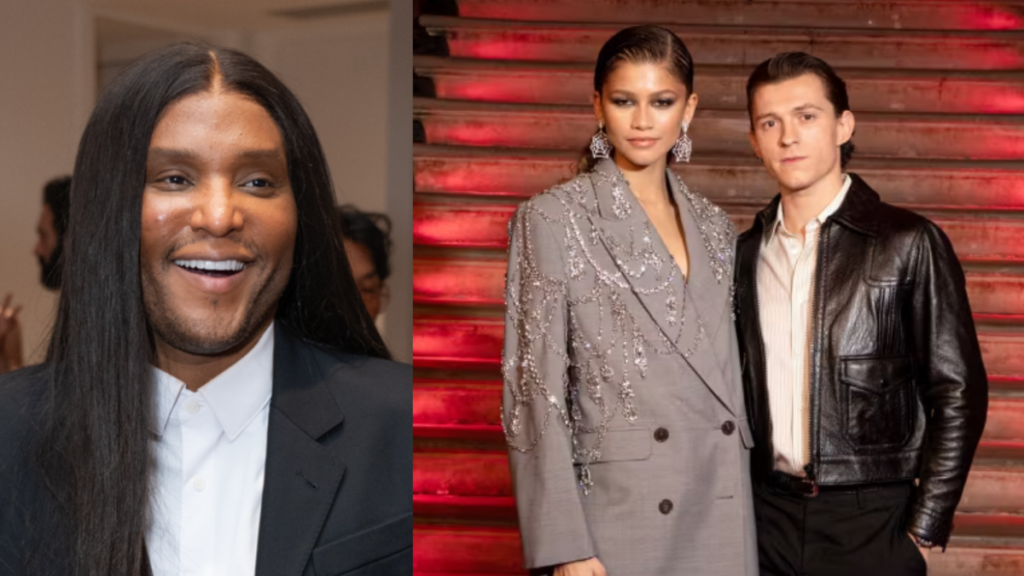
Hollywood buzzed with excitement after a surprising claim about Zendaya and Tom Holland. Reports suggested the couple secretly married before the public noticed. The revelation came from their longtime stylist, Law Roach, during a red carpet interview. He casually told reporters that the wedding had already happened. His remark instantly sparked global headlines and fan reactions. According to Variety, Roach made the statement confidently and without hesitation.
Roach shared the comment while speaking at the 2026 Actor Awards. Reporters quickly pressed him for clarification about his statement. He smiled and repeated that the wedding had already taken place. He offered no further details about the ceremony. Neither Zendaya nor Holland released an official confirmation afterward. Their silence intensified curiosity across entertainment media.
Zendaya and Holland first met while filming Spider-Man: Homecoming in 2016. They built a strong friendship before romance rumors surfaced. Fans speculated about their relationship for years. They denied dating rumors several times early on. In 2021, they confirmed their romance publicly.
The couple later fueled engagement rumors when Zendaya wore a diamond ring publicly. She displayed the ring at the Golden Globe Awards. Observers immediately speculated about a proposal. Reports later confirmed that Holland proposed during the holidays. The engagement strengthened public interest in their relationship.
Because they value privacy, fans never expected a public wedding spectacle. The possibility of a secret ceremony matched their personal style. They consistently guarded intimate details of their lives. This approach made Roach’s comment even more surprising. Now audiences wonder when the couple will address the rumors directly.
From Co-Stars to Real-Life Romance
Zendaya and Tom Holland built their connection through shared work. They portrayed MJ and Peter Parker in the Spider-Man franchise. Their on-screen chemistry impressed audiences worldwide. Off-screen, they developed mutual respect and admiration. They maintained professionalism during early filming years.
Dating rumors began circulating in 2017 after public sightings. Photographs showed them spending time together outside work. Both actors denied romantic involvement at that time. They focused on career growth and avoided fueling gossip. Their discretion preserved their professional reputations.
In 2021, their relationship became public knowledge. Paparazzi captured affectionate moments between them. They no longer avoided acknowledging their bond. Fans embraced their romance enthusiastically. Many praised their authenticity and warmth.
The couple often supported each other at major premieres. They attended award shows together when schedules allowed. Holland publicly praised Zendaya’s talent in interviews. Zendaya expressed admiration for Holland’s dedication to his craft. Their mutual encouragement strengthened public affection.
When engagement rumors surfaced, excitement surged again. Zendaya’s ring drew attention immediately. Reports confirmed Holland proposed privately. The couple avoided sharing proposal details publicly. Their consistent privacy reinforced their reputation as grounded stars.
The Red Carpet Revelation
Law Roach delivered the unexpected statement during a red carpet conversation. He spoke casually but clearly about the wedding. Reporters reacted with visible shock. Cameras captured the moment instantly. Social media amplified his comment within minutes.
Roach enjoys a close professional relationship with Zendaya. He styled her for major events throughout her career. He understands her preferences and personal boundaries. His credibility added weight to his claim. Many fans believed his words carried authenticity.
Despite his comment, no official confirmation followed immediately. Representatives for the couple remained silent. Entertainment outlets scrambled to verify the statement. Speculation spread rapidly across platforms. The lack of clarity fueled ongoing debate.
Some observers believed Roach joked playfully with reporters. Others interpreted his tone as sincere. His smile created ambiguity around the announcement. Media outlets analyzed his phrasing repeatedly. The story dominated entertainment headlines for days.
Regardless of intent, the moment changed the narrative instantly. Fans celebrated the possibility of marriage online. Supporters shared congratulatory messages across social platforms. The couple’s relationship once again captured global attention. Their silence continued to maintain suspense.
Protecting Love in the Public Eye
Zendaya and Holland consistently protect their personal lives. They rarely disclose intimate details publicly. They manage fame carefully and intentionally. Both actors expressed discomfort with intrusive media attention. They prioritize emotional boundaries over publicity.
Holland openly discussed challenges of dating under scrutiny. He acknowledged that constant attention can feel overwhelming. Zendaya echoed similar sentiments in interviews. She emphasized the importance of safeguarding meaningful experiences. Their shared perspective strengthened their partnership.
Many celebrity couples choose private ceremonies for similar reasons. Public weddings often attract intense media coverage. A secret event allows intimacy and authenticity. Zendaya and Holland appear to value these qualities deeply. Their rumored decision aligns with past actions.
Fans speculated about subtle clues in recent appearances. Some noticed jewelry changes on Zendaya’s hand. Observers interpreted these details as possible confirmation. However, speculation remained unverified. The couple offered no clarifications.
Their approach reflects a broader trend among young stars. Many celebrities reclaim control over personal narratives. Zendaya and Holland demonstrate that balance effectively. They share joy selectively while maintaining boundaries. This strategy preserves authenticity in a demanding industry.
Career Success and What Lies Ahead
Amid wedding rumors, both actors continue thriving professionally. Zendaya leads several major film and television projects. She commands attention with each performance. Industry leaders consistently praise her versatility. Her schedule remains packed for 2026.
Holland also balances demanding roles across franchises. He explores diverse characters beyond superhero films. Directors recognize his range and dedication. He commits fully to challenging scripts. His momentum shows no signs of slowing.
The couple will reunite on screen in Spider-Man: Brand New Day. Fans eagerly anticipate their on-screen dynamic. Their real-life bond enhances audience excitement. The franchise continues expanding its cultural impact. Their partnership remains central to its success.
A secret wedding would fit naturally within their busy lives. A private ceremony requires less media coordination. It allows them to focus on meaningful connection. Such timing would reflect careful planning. Their careers demand flexible scheduling.
Whether married or not, their relationship inspires many fans. They demonstrate maturity and mutual respect. Supporters celebrate each milestone wholeheartedly. The public eagerly awaits official confirmation. Until then, their story continues captivating audiences worldwide.
When Lara’s husband left, I was the first person she called.
It was just after midnight.
I remember because I had already turned off the lights and was halfway asleep when my phone started vibrating on the nightstand.
Her name filled the screen, and I knew before I even answered that something had broken.
She didn’t say hello.
She just said, “He’s gone.”
And then she started crying in that quiet way that hurts more than screaming.
So I got up.
Put on real clothes.
Drove across the city with my hair still damp from the shower and my heart already in her living room.
That was the beginning of me becoming her safe place.
I sat on her kitchen floor while she talked in circles.
I made tea she didn’t drink.
I brought groceries she didn’t eat.
I answered messages for her because she couldn’t stand the sound of her phone.
I told her the same thing over and over: “You’re going to be okay. You’re not alone.”
And I meant it.
Because I knew what it felt like to be left.
That was the part she never had to ask about.
She had been there for my divorce three years earlier.
She knew the late-night crying, the paperwork, the silence in the apartment that used to be shared.
We had survived each other’s worst days.
Or at least, that’s what I thought.
Becoming Her Routine
After the first week, I started bringing overnight bags.
It was easier that way.
If she woke up at 3 a.m. and panicked, I was already there.
If she forgot to eat, I was in the kitchen making pasta.
If she started blaming herself again, I knew exactly which words to use to stop the spiral.
“You did everything you could,” I would say.
“You loved him well.”
“You deserve better.”
Sometimes she would just stare at me like I was holding her together with my hands.
“You’re the only person I trust,” she told me once.
And that sentence stayed with me.
It made the exhaustion feel worth it.
The missed work deadlines.
The laundry piling up at my own place.
The way my life had quietly shifted into the background while hers took center stage.
Because that’s what best friends do.
Right?
The First Small Change
The first time something felt off was over something small.
She stopped talking about her ex with anger.
At first, every sentence about him was sharp.
Every memory was proof of how badly he had treated her.
Every text from him was an invasion.
Then one night, while we were sitting on her couch eating takeaway, she said, very casually, “I think I’m ready to let go of the past.”
It should have been a good thing.
It was a good thing.
But the way she said it felt rehearsed. Like a line she had practiced.
“Already?” I asked, smiling so it wouldn’t sound like a question.
She shrugged. “I’ve been doing a lot of thinking.”
And then she changed the subject.
That was the first time I noticed she was holding her phone face down.
The Private Smiles
After that, she started disappearing into other rooms to answer messages.
Not for long. Just long enough.
She would come back with this calm expression, like someone who had just received good news but didn’t want to share it yet.
“You look better,” I told her one afternoon.
“I feel better,” she said.
And she did. Her shoulders were lighter. She started wearing lipstick again. She began talking about the future in actual sentences instead of “I don’t know.”
I should have been happy.
I was happy.
But there was a strange new distance between us, like she had built a small, invisible wall and was standing behind it.
The New Place
The day she told me she was moving out of the apartment she had shared with her husband, she brought wine.
We sat at my table this time, because she said she wanted a fresh environment for big news.
“I found a house,” she said, trying to sound casual and failing.
“A house?” I laughed. “That’s not a small step.”
“I know. It just… happened.”
She slid her phone across the table and showed me a photo.
It was beautiful.
Wooden floors.
Big windows.
A kitchen with enough space for two people to cook without bumping into each other.
“You’re moving into this alone?” I asked.
She hesitated.
“Not exactly alone.”
The pause was short.
But it was there.
My chest tightened, just a little.
“Oh?” I said, keeping my voice light. “There’s someone?”
She smiled in that careful way she had started using.
“I’ll tell you everything soon. I just don’t want to jinx it.”
And then she reached for my hand.
“You’re going to love it. I want you there all the time.”
All the time.
The words should have made me feel included.
Instead, they made me feel like I was being prepared for something.
The Address
A week later, she sent me the address so I could help her move.
I was at work when the message came in.
Just a street name and a number, followed by a heart emoji.
I copied it into my maps without thinking.
And then I froze.
Because I knew that street.
I knew that exact building.
I had stood in front of it dozens of times, holding keys, holding the hand of the man I had been married to for eight years.
It was my ex-husband’s property.
Not the apartment we had lived in — he had sold that after the divorce.
This was the investment house he had kept.
The one he rented out.
The one he always said was “too good to let go.”
I stared at the screen for a long time.
Then I checked the number again.
Same.
I told myself it was a coincidence.
Cities are big.
Streets repeat.
People rent from people they don’t know.
It didn’t have to mean anything.
I opened the property website and typed in the address.
The listing came up immediately.
Owner: his name.
My hands started to shake.
The Call I Didn’t Make
I almost called her.
My finger hovered over her contact.
I imagined saying, “Hey, funny story — you’re renting from my ex.”
We would laugh.
She would say she had no idea.
We would turn it into one of those strange coincidences life throws at you.
But something stopped me.
Because she knew his name.
She had sat with me through the divorce.
She had heard every story.
She had helped me pack boxes out of the apartment he left.
She knew.
So I didn’t call.
Instead, I scrolled back through our messages, looking for the moment when she had first mentioned the house.
Looking for any sign.
There was nothing.
Just her telling me she had found “the perfect place.”
Helping Her Move
On moving day, I showed up with coffee and boxes like I always did.
She hugged me at the door, glowing in a way I hadn’t seen in years.
“You’re going to love it,” she said again.
I stepped inside.
The smell was new paint and something familiar I couldn’t place.
The layout was exactly the same as in the photos.
Open living room. The staircase to the left. The big kitchen in the back.
My chest felt tight.
“You okay?” she asked.
“Yeah,” I said. “Just… it’s beautiful.”
I walked through the space slowly, touching the walls like I was trying to confirm they were real.
Because I had been there before.
Not inside.
But outside.
Waiting in the car while my ex met tenants.
Listening to him talk about rent and contracts and returns.
I had sat ten meters from this front door.
And now my best friend was carrying her life into it.
The Thing I Wasn’t Supposed to See
We were unpacking dishes when her phone lit up on the counter.
She was in the other room, arguing with a delivery driver.
I didn’t mean to look.
I just saw the name.
My ex-husband’s name.
Followed by a message preview:
Can’t wait to see you tonight. Our place finally feels real.
Our place.
I put the plate down very carefully so it wouldn’t make a sound.
The room felt suddenly too small.
She walked back in, still talking about the wrong address the driver had used, completely normal, completely calm.
Like my entire world hadn’t just shifted.
I smiled at her.
I helped her unwrap the last box.
And I didn’t say a word.
Because in that moment, one thought kept repeating in my head:
She didn’t accidentally move into his house.
She moved in with him.
And she had let me carry her through her divorce while she was building a life with my ex-husband behind my back.
The Invitation
That evening, as I was leaving, she hugged me at the door.
“Housewarming next Friday,” she said. “Small group. Just people who matter.”
I nodded.
“You have to come. You’re my person.”
My person.
I smiled.
“Of course I’ll be there.”
And as I walked down the path to my car, I realized something with a kind of cold clarity I had never felt before:
She was going to introduce him to everyone.
Publicly.
In that house.
And she thought I would stand there and clap.
I got into my car and closed the door.
For the first time since her divorce started, I didn’t feel like the person holding someone else together.
I felt like I had been carefully, patiently moved into position.
And next Friday, she was going to find out that I knew.
I just hadn’t decided yet how.
The Toast
I didn’t sleep the night before the housewarming.
I lay in bed and watched the light from passing cars move across the ceiling.
Every time I closed my eyes, I saw the message again.
Our place finally feels real.
Our place.
Three words that rewrote the last year of my life.
By morning, I had stopped asking why and started thinking about how.
Not how to hurt her.
That would have been easier.
How to stand in that room without falling apart.
Getting Ready Like It Was Normal
I dressed carefully.
Not for him. Not for her.
For myself.
A simple black dress. The one I wore to work events when I needed to feel steady. Low heels so I wouldn’t wobble. Hair tied back so I wouldn’t keep touching it.
Control.
That was the only thing I wanted.
While I was getting ready, she sent me a voice message.
“I can’t wait for tonight. You’ve been with me through everything. Having you there means the world to me.”
Her voice was warm. Soft. The same voice that had cried into my shoulder for months.
I listened to it twice.
Then I put my phone down and left the apartment without replying.
The Room Full of People Who Didn’t Know
The house looked different at night.
Lights in the windows.
Music drifting into the street.
Coats piled on a chair near the door.
Inside, there were about fifteen people.
Some mutual friends.
Some from her job.
Two neighbors.
Everyone smiling.
Everyone holding a glass.
Everyone believing the same story.
She came toward me immediately and wrapped me in a hug.
“You’re here,” she said into my hair.
“Of course,” I answered.
And for a moment, I let myself hug her back the way I always had.
Because this was the last time.
The Missing Person
I noticed he wasn’t there.
That almost made me laugh.
Of course he wasn’t.
The reveal needed timing.
She moved through the room like a host in a movie.
Touching arms.
Refilling glasses.
Introducing people to each other.
Every now and then her eyes came back to me, checking.
Making sure I was still in place.
“Big announcement later,” she whispered when she passed me with a tray of drinks.
My stomach turned.
“I figured,” I said.
The Stories People Tell
I stood near the kitchen and listened.
“She’s so strong,” someone said. “The way she rebuilt her life after the divorce.”
“You were amazing,” another friend told me. “Always there for her.”
I nodded and smiled and said the right things.
Inside, it felt like I was watching my own life from across the street.
Because they were talking about a version of events that had never been real.
And I was the only one in the room who knew.
The Moment He Walked In
The front door opened behind me.
I didn’t turn around right away.
I heard his voice first.
That same calm tone that used to talk to bankers and tenants and waiters like the world belonged to him.
“Sorry I’m late.”
The room shifted.
Not in a loud way.
Just that subtle change when someone new arrives and everyone registers it at once.
Then I turned.
He looked older.
Or maybe I just saw him more clearly.
And he stopped when he saw me.
Not dramatically.
Just a small break in his step.
Long enough to confirm everything.
He knew I knew.
The Performance Begins
She went to him like it was the most natural thing in the world.
Her hand sliding into his.
Her body turning toward his.
“Everyone,” she said, her voice bright, “there’s someone I want you to meet.”
I watched our friends’ faces.
Confusion.
Recognition.
Shock.
Because they knew him too.
Not well.
But enough.
“He and I…” she started, laughing a little, “we didn’t plan it. It just happened.”
She looked at me when she said it.
Just for a second.
As if checking whether I would play along.
The Glass in My Hand
I realized I was still holding a drink.
I had no memory of picking it up.
My hand was steady.
That surprised me.
Because inside, something had gone completely still.
Not broken.
Just… quiet.
The Toast
She raised her glass.
“I want to thank the people who carried me through the hardest year of my life,” she said.
Her eyes found me again.
“You showed me what real love and friendship look like.”
There was a soft murmur in the room. People smiling at me. Someone touching my arm.
“And I’m so happy,” she continued, “that I found love again in a place I never expected.”
She leaned into him.
“Our home. Our new beginning.”
Glasses lifted.
The room waited.
For the moment when I would lift mine too.
The Thing I Had Decided
I set my glass down on the table.
The sound was small.
But in that pause before everyone drank, it was enough.
“I actually want to say something,” I said.
My voice came out calm.
Clear.
The way it does when you’ve rehearsed a sentence in your head for two days straight.
She blinked.
“Of course,” she said. “You of all people—”
I picked up my glass again.
Turned toward the room.
“I’m really glad you’re all here to celebrate this house,” I said. “It’s a beautiful place.”
A few people nodded.
“And it means a lot to me,” I continued, “because I used to stand outside this exact building waiting for my husband while he met with tenants.”
The silence landed instantly.
No music.
No movement.
Just the sound of someone setting their glass down too hard.
I looked at him.
Then at her.
“Back when he and I were married.”
The Phones
No one spoke.
But I saw it happen.
That modern reflex.
Two people near the back lifted their phones.
Not in a rude way.
In that stunned, is this really happening way.
She let go of his hand.
“Wait—” she started.
I didn’t raise my voice.
“I helped you pack after your divorce,” I said to her. “I slept on your floor. I answered your messages. I told you every day that you deserved honesty.”
Her face had gone pale.
“I didn’t know how to bring it up,” she said, and even she seemed to hear how small that sounded.
“He texted you in front of me,” I said quietly. “You moved into his house. You called it a coincidence. And then you asked me to toast your new beginning.”
The room wasn’t just silent anymore.
It was watching.
His Turn to Speak
He stepped forward like he used to in arguments.
Measured.
Reasonable.
“We didn’t plan for it to happen this way,” he said.
I almost smiled.
Because it was the same sentence he had used when he told me he wanted a divorce.
“I believe you,” I said.
And I did.
That was the strange part.
“I just thought,” I added, looking at her, “that after everything we had been to each other, you would tell me the truth before you built a life in front of me and asked me to celebrate it.”
The Reaction
Someone near the window whispered, “Oh my God.”
Another friend put a hand over her mouth.
The two people with phones didn’t lower them.
But I wasn’t looking at them anymore.
I was looking at Lara.
Because for the first time since this started, she looked like I had seen her on that kitchen floor months ago.
Lost.
“I was going to tell you,” she said.
“When? Now? In front of everyone?” I asked.
She didn’t answer.
Leaving the Room
I picked up my coat.
No one tried to stop me.
As I reached the door, she said my name.
Not loudly.
Not dramatically.
Just my name.
The way she used to say it when she needed me.
I turned.
Not because I was going back.
Because I wanted the last image of us to be honest.
“I hope you’re happy,” I said.
And I meant that too.
Because this wasn’t about taking something from her.
It was about taking myself back.
Outside
The night air was cold.
I stood on the path for a moment, listening to the muffled sound of voices inside.
My phone buzzed.
A message from an unknown number.
A video thumbnail.
A preview.
The room.
The toast.
My voice saying, Back when he and I were married.
I didn’t open it.
I didn’t need to.
Because the important part had already happened.
Not the exposure.
Not their faces.
The moment when I realized I had walked into that house on my own terms.
And walked out the same way.
The Aftermath
She sent messages that night.
Long ones.
Then shorter ones.
Then just: I’m sorry.
I didn’t reply.
Not because I wanted to punish her.
Because I didn’t know who she was anymore.
And I wasn’t ready to learn.
What Stayed With Me
People asked later if I regretted doing it in public.
If I wished I had handled it differently.
But the truth is, she had made it public.
She had turned it into a toast.
All I did was tell the missing part of the story.
The Last Thing I Let Go Of
A week later, I drove past the house.
I didn’t plan to.
It just happened.
The lights were on.
Two silhouettes moved in the kitchen.
Close together.
For a second, I felt that old pull.
That old life.
Then it passed.
Because that house had never really been mine.
And neither had the version of her I had been holding onto.
I kept driving.
And for the first time in a long time, I wasn’t carrying anyone else’s weight with me.
Photo Credit: im Urquhart / Reuters; Theresa Williams Hudson / Facebook
What Candace Owens Is Saying About Erika Kirk
Candace Owens is making strong claims about Erika Kirk and her mother. Owens said both women pursued fame relentlessly. She shared these accusations in episode two of her docuseries Bride of Charlie, which launched online on February 26, 2026. Owens argued that Lori Frantzve, Erika’s mother, actively coached Erika on seeking attention and success at social events. She said Lori encouraged Erika to “work the room” and target powerful individuals to advance her career. Owens claims this behavior existed long before Erika married Charlie Kirk, the late conservative activist whose death in September 2025 shocked many.
Owens also said Erika personally wanted fame and social standing. She referenced statements from a former boyfriend, who reportedly said Erika “would do anything to get to the top.” Owens said both Lori and Erika share this drive. She explained to viewers that various videos and images of Erika over the years support her view. The claims link Erika’s early social ambitions to her current visibility after Charlie’s death. This narrative suggests attention seeking played a large role in Erika’s public life.
On top of the “fame” claims, Owens pointed to past relationships in Erika’s life. She highlighted connections that she believes reveal a pattern of strategic partnership choices. Owens argued Erika never dated someone with a typical nine-to-five job. Instead, she allegedly focused on men with public status or potential visibility. Owens used this to argue that Erika’s personal life was always aligned with ambition and notoriety.
Owens did not stop there. She also referenced moments from Erika’s past, like an audition tape for The Amazing Race. Owens suggested these examples show consistent interest in public attention. Critics say Owens’ logic exaggerates normal life choices into something more manipulative. Still, Owens maintains she is exposing truth rather than gossip.
Owens’ criticisms have stirred debate across social media and conservative circles. Her sharp tone and layered accusations have drawn both supporters and detractors. As a result, public interest in the docuseries and its claims continues to grow.
The Context Behind the Claims
To understand Owens’ accusations, it helps to know the wider context surrounding Erika Kirk. Erika Kirk is a businesswoman, podcaster, and nonprofit leader. She became chairwoman and CEO of Turning Point USA after her husband Charlie Kirk was fatally shot at a public event in September 2025. Erika has also hosted her own podcast and worked on charitable initiatives before assuming her current leadership role.
The conservative nonprofit Turning Point USA advocates for limited government, free markets, and traditional values on American college campuses. After Charlie’s assassination, Erika took over the organization and vowed to continue his mission. Since then, she has appeared on television numerous times representing the group’s agenda and priorities.
Ella, a New York Times profile about Erika, said she was raised by her mother after her parents divorced in 1998. Owens disputes this narrative, saying Erika’s father was actively involved for many years and was not absent as public stories suggest. She also claimed Lori Frantzve remarried several times, which she believes complicates the “single mother” backstory.
Owens argues that examining these details helps the public understand Erika’s motivations. She believes public storytelling about Erika’s past may be superficial or misleading. By contrast, Owens insists she is unveiling deeper truths rather than merely relaying rumors. Her series pulls in voices from Erika’s past, including former acquaintances, to bolster her narrative.
Still, many observers caution against drawing firm conclusions from such claims. Erika holds a prominent position in political activism, and disputes over her biography and motives are inherently sensitive. Critics argue that attacking a grieving widow in public media can be harmful and disrespectful.
The Docuseries That Sparked Controversy
Candace Owens’ project Bride of Charlie is the docuseries at the center of this controversy. The series aims to dive into the life of Erika Kirk and question her public persona. Owens released the first episode on February 25, 2026, which examined alleged inconsistencies in Erika’s narrative. The second episode followed on February 26, deepening Owens’ claims about fame and ambition.
In Bride of Charlie, Owens not only questions Erika’s motivations but also challenges certain biographical claims. For example, Owens disputes the description that Erika was raised solely by her mother. She said that Erika’s father and stepfather played significant roles in her upbringing. Owens presented old school photos and yearbook entries as part of this argument.
The format of the series blends personal narrative with investigative claims. Owens places emphasis on conversations she had with classmates and past relationships. She says these voices challenge widely told versions of Erika’s life timeline. Owens argues this scrutiny reveals “wrinkles” in Erika’s public story.
However, the series has sparked intense backlash. Some critics have labeled it exploitative or harmful to Erika and her children. Conservative commentators have also pushed back, calling Owens’ approach inappropriate. Media figures like Meghan McCain and Ben Shapiro have publicly denounced the project’s tone and intent.
Despite criticism, the series has generated millions of views online. Supporters claim it raises important questions. Detractors say it magnifies speculation without evidence. The heated reaction shows how deeply divided public opinion is on this story.
Reactions From Public and Political Circles
The claims in Owens’ docuseries have stirred reactions across the political spectrum. Some conservative commentators have refused to support her attacks on Erika. They argue that targeting a widow who lost her husband to violence crosses ethical lines. Others believe probing public figures’ motivations is fair game.
Critics such as Meghan McCain took to social media to condemn Owens’ approach. McCain called the series “pure evil” for turning grief into a spectacle. She questioned why Owens would focus on Erika’s personal life so soon after tragedy. This public backlash reflects concerns about decorum and empathy in political discourse.
Some observers within the conservative movement have also voiced discomfort. They fear the feud could fracture alliances within their community. Many see Erika as a respected leader who stepped up after her husband’s death. They prefer unity over internal conflict.
Online reaction extends beyond political media. Social media users debate whether the claims reflect legitimate scrutiny or unfounded attacks. Some express sympathy for Owens’ point of view, while others criticize her motives. This polarized public response underscores the unpredictability of viral media narratives.
Meanwhile, Erika herself has not publicly responded at length to these accusations. She continues to focus on her nonprofit work and her family. Supporters rally behind her, emphasizing her commitment to her late husband’s legacy. The ongoing debate underscores the intersection between personal grief, political activism, and public speculation.
Broader Implications and What Comes Next
Owens’ claims raise broader questions about public scrutiny of political figures. In the age of online media, personal histories can become topics of investigation and debate. Bride of Charlie shows how documentary formats can blend opinion and allegations into influential narratives.
The series also highlights the risks of intertwining political activism with personal controversy. Erika Kirk’s role at Turning Point USA places her in the public eye, and Owens’ criticisms amplify attention. This dynamic illustrates how leadership positions can become targets for both praise and skepticism.
For Owens, the project represents a new direction in her career. She remains a divisive figure with a large online following. Her commentary persuades some and alienates others. The reaction to her docuseries could shape her future influence in political and media spheres.
For Erika, navigating this intense scrutiny adds a new dimension to her leadership challenges. She carries on her late husband’s work while also facing personal attacks. How she responds publicly — or chooses not to — may shape public perception going forward.
As the series continues, audiences will likely see more claims and reactions. Whether these stories lead to further division or clarity remains uncertain. One thing is clear: the intersection of politics, media, and personal narrative shapes modern celebrity culture.
The chairs were set in a circle, like a support group.
Soft lighting.
A plastic pelvis on the table.
A basket of knitted baby hats by the wall.
I remember thinking this was the first place where it all felt real.
My husband squeezed my hand when we sat down.
His palm was warm and a little sweaty.
He had been like that since we found out I was pregnant — overly attentive, always touching me, always asking if I needed water.
It made me feel safe.
We were late by two minutes, and everyone looked at us when we walked in.
That quiet, polite smile people give other couples who are clearly in the same life stage.
We belonged there.
Or at least, I thought we did.
Then the instructor walked in.
And my husband dropped my hand.
Her Voice
She introduced herself as Lola.
She had that calm, practiced voice that makes you think she’s seen everything.
The kind that says you are safe here without actually saying it.
She was visibly pregnant.
Not just a small bump — she was close to the end, like me.
“First babies?” she asked the group.
There was laughter.
Nervous nodding.
When her eyes landed on my husband, something changed.
It was quick.
So quick I almost missed it.
Recognition.
Not the polite kind.
Something warmer.
Something that had history.
He didn’t look at her.
He stared at the floor like it had suddenly become very interesting.
I told myself I imagined it.
The First Crack
We went around the circle introducing ourselves.
Names.
Due dates.
Whether we had chosen a stroller yet.
Normal things.
When it was our turn, my husband spoke first.
“I’m Martin. This is my wife, Jenny. We’re due in six weeks.”
His voice sounded normal.
Too normal.
Lola smiled at me, but when she spoke to him, her tone shifted — softer, almost teasing.
“Six weeks already? Time flies, doesn’t it?”
I waited for him to answer.
He didn’t.
He just nodded.
It was a small moment.
Nothing you could point to and say this is wrong.
But it sat in my chest like a stone.
We’ve Met Before
The class moved on to breathing techniques.
Lola walked around the circle, adjusting our posture, placing hands on shoulders, demonstrating how partners should support us during contractions.
When she reached us, she didn’t explain anything to my husband.
She just handed him the tennis ball and said quietly, “You still do it too hard.”
Still.
The word slipped into the room and stayed there.
He froze.
I turned to look at him, but he was already rolling the ball against my lower back like nothing had happened.
I wanted to ask.
I didn’t.
The Car Ride Home
I waited until we were in the car.
“Do you know her?”
It came out casual.
Almost light.
He laughed.
“No. Why would I?”
“Because she talks to you like she does.”
He shrugged and started the engine.
“She talks like that to everyone.”
But she didn’t.
She had explained things to every other partner.
With him, she skipped the explanations.
Like he didn’t need them.
The Way She Looked at Him
At the next class, I watched.
Not the breathing.
Not the videos about newborn care.
I watched them.
She never stood directly in front of him.
Always slightly to the side, like she was avoiding a straight line of sight.
But she always knew where he was.
When she demonstrated how to hold a baby for skin-to-skin contact, she looked at him while she spoke.
Not the group.
Him.
And once — just once — when everyone else was focused on a doll and a diaper, she said under her breath as she passed behind us: “You didn’t tell me.”
My husband whispered back, “I know.”
I felt the baby move inside me.
A slow, heavy roll.
Like even she knew something was wrong.
Intimate Knowledge
That was the moment I stopped explaining it away.
Because Lola knew things.
Not general things.
Specific things.
During a session about birth plans, she said to me, “You’ll probably want music. You said silence makes you anxious.”
I had never spoken to her alone.
Never filled out any personal form except a due date and a phone number.
I turned to Martin.
He was staring straight ahead.
Then she added, “And he faints at the sight of blood, so make sure he sits down early.”
The group laughed.
I didn’t.
Because my husband had fainted once.
Three years ago.
In our bathroom.
And we had never told anyone.
Denial Is a Comfortable Place
That night I told myself there had to be a logical explanation.
Maybe they had mutual friends.
Maybe he had taken some kind of course before.
Maybe she was just good at reading people.
You can build a whole house out of maybes if you’re scared of the truth.
He was extra gentle that evening.
He made me tea.
He rubbed oil on my stomach and talked to the baby.
“This little one is going to be so loved,” he said.
I almost believed him again.
The Message
It happened by accident.
I was looking for a recipe on his phone while mine was charging.
A notification popped up.
Lola:We need to talk before next week. I can’t keep pretending.
My heart didn’t race.
It didn’t do anything dramatic.
It just slowed down.
Like the world had been placed underwater.
I opened the chat.
There weren’t many messages.
Just enough.
Enough to see the shape of it.
Enough to see the photo she had sent a few months earlier — a pregnancy test in her hand.
And his reply:
Are you sure it’s mine?
The Timeline
I sat on the kitchen floor and counted backwards.
My pregnancy.
Her pregnancy.
The dates.
The nights he had said he was working late.
The weekend he went to “help his brother move.”
The way he had insisted on this specific class because it was “the best in the city.”
He hadn’t found it online.
He already knew where she worked.
The Performance
The next class felt like a theater.
He held my hand.
She explained how to recognize early labor.
We were three people acting in a play no one else knew they were watching.
Every time she said the word baby, I wondered which one she meant.
Mine.
Or hers.
Or both.
At one point, she handed out printed worksheets.
When she placed ours on my lap, her fingers brushed mine.
She looked straight into my eyes for the first time.
And there it was.
Not guilt.
Not apology.
Something else.
Fear.
The Mirror
I went to the bathroom during the break and looked at myself.
Swollen face.
Tired eyes.
My body no longer mine.
I had never felt more vulnerable in my life.
And that was when he chose to build another life with someone else.
I pressed my hand against my stomach.
The baby kicked, strong and steady.
A reminder that this wasn’t just about me.
The Decision
When I came back to the room, the partners were practicing how to support us while we “pushed.”
He knelt behind me and wrapped his arms around my shoulders.
Exactly like the worksheet showed.
Exactly like he had probably done with her.
The realization didn’t break me.
It did something worse.
It made me calm.
Because I understood, suddenly, that I didn’t want a private confrontation.
Not at home.
Not in whispers.
If this had started in this room — in front of other couples, in front of shared joy and shared fear — then it would end here too.
Lola clapped her hands and said, “Next week we’ll begin with group introductions again, since we have two new couples joining.”
Group introductions.
A circle.
Everyone watching.
A place where people told the truth about who they were and why they were there.
I sat down slowly.
Smoothed my hands over my stomach.
And for the first time since I saw the message, I felt something like control.
Because I knew exactly what I was going to ask.
And I knew I was going to ask it out loud.
The Circle Closes
The chairs were already in a circle when we arrived.
They always were.
But that night they felt tighter.
Closer together.
Like there was less air in the room.
Martin carried my bag and helped me sit down, one hand resting on my shoulder a second longer than necessary.
Anyone watching would have thought he was the perfect husband.
Lola stood by the whiteboard, flipping through her notes.
She didn’t look at us.
Not once.
That told me she knew.
New Couples, Same Script
Two new pairs joined the class.
They had that same nervous glow we must have had on the first night.
The careful smiles.
The way their hands kept finding each other.
I wondered how long it would take before the glow turned into something else for them.
Lola clapped her hands.
“Let’s start with introductions again, so everyone feels comfortable.”
Her voice was steady.
Professional.
Only someone who didn’t know her secret would have believed it.
My Turn Was Coming
The circle began to move.
Names.
Due dates.
Small jokes about sleepless nights.
One woman started crying halfway through her sentence, and her partner kissed her temple while the rest of us smiled in that soft, understanding way people do in pregnancy spaces.
I used to find those moments beautiful.
Now they felt fragile.
Like glass about to crack.
Martin’s knee bounced next to mine. He hadn’t noticed he was doing it.
He always did that when he was anxious.
His Version of Us
When it was our turn, he spoke first again.
“I’m Martin. This is my wife, Jenny. We’re due in six weeks.”
The same line.
The same calm tone.
The same performance.
But his hand didn’t reach for mine this time.
It stayed on his own leg.
The Room Waiting
Lola turned to me.
“And how are you feeling this week?”
The question was routine.
She asked it every time.
But this time she held my gaze.
There was a flicker in her eyes.
Not fear.
Resignation.
Like she knew the moment had arrived and there was nothing she could do to stop it.
The room was quiet.
Everyone was looking at me.
That was when I spoke.
The Question
“Do instructors normally date married clients?”
It came out calm.
Almost curious.
The way you’d ask about stroller brands or epidurals.
For a second, no one reacted.
Not even Martin.
It was like the words didn’t make sense together.
Then the silence changed.
You could feel it.
The First Break
One of the new partners laughed, unsure.
“I’m sorry — what?”
A woman across from us stopped rubbing her stomach.
Lola didn’t move.
Martin turned to me slowly.
“Jenny,” he said, in that warning tone he used when I was about to embarrass him in front of friends.
But this wasn’t dinner.
This was a room full of people learning how to bring new life into the world.
No More Private Conversations
“I just want to understand how this works,” I continued, still looking at Lola. “Because it seems like you and my husband know each other very well.”
Someone gasped.
A chair creaked.
The circle that had always felt safe now felt like a stage.
Lola opened her mouth.
Closed it again.
Her hand moved to her stomach.
The same unconscious gesture I made when I was overwhelmed.
And that was when the room understood.
The Truth Has a Shape
“Martin?” one of the men said, half-laughing, like he wanted this to be a joke.
Martin stood up so fast his chair fell over.
“This isn’t the place for this.”
His voice was sharp.
Embarrassed.
Not sorry.
That was the moment the last piece of me that still hoped for an explanation disappeared.
The Other Women
The woman who had cried earlier started crying again.
Not for me.
For herself.
For all of us.
Because we had all come here believing the same story — that the person sitting next to us was our partner in this.
Her boyfriend wrapped his arms around her like he was afraid she might vanish.
Another pregnant woman whispered, “Oh my God,” over and over.
Lola Speaks
“I didn’t know he hadn’t told you.”
Her voice broke on the word told.
That was her first mistake.
Because it meant there was something to tell.
Martin ran a hand through his hair.
“Stop,” he said to her. “Just stop.”
But she didn’t.
She looked at me.
And for the first time, she wasn’t the calm instructor.
She was just another pregnant woman.
“I’m due in five weeks,” she said quietly.
The timeline landed in the middle of the circle like something heavy and irreversible.
The Collapse
Someone stood up and walked out.
Then another.
The safe little world we had built in that room — the breathing exercises, the baby name discussions, the shared snacks — cracked open.
Martin tried to take my arm.
“Let’s go home and talk about this.”
I moved my arm away.
Not dramatically.
Just enough.
“I am talking about it. Right here, right now.”
The Thing I Needed to Say
I hadn’t planned a speech.
I hadn’t imagined this moment in detail.
But there was one thing I needed to say, and it came out without effort.
“I sat here every week thinking we were preparing for the same baby. The same life. And you were sitting in the same room with another woman carrying your child.”
No shouting.
No tears.
Just the truth.
It hung in the air, simple and complete.
The Way He Looked at Me
That was when he finally looked scared.
Not when I found the messages.
Not when I asked the question.
Now.
Because he realized I wasn’t going to protect him.
Not in front of strangers.
Not anywhere.
The End of the Class
Lola told the remainder of the class we could take a break.
Her professional script, falling apart one sentence at a time.
People gathered their things in silence.
No one looked at us directly, but everyone looked.
That strange, sideways way.
The way you watch something you know you’ll remember for the rest of your life.
Outside the Building
The air was cold.
I hadn’t brought a jacket.
Martin followed me out.
“Please,” he said. “Don’t do this here.”
I kept walking until I reached the bench by the entrance.
The same bench where we had once sat eating ice cream after the first class, talking about baby names.
I lowered myself down slowly.
The baby shifted inside me.
Strong.
Alive.
Mine.
Not Revenge
“I’m not doing anything,” I said. “I’m just not hiding it for you.”
That was the difference.
I didn’t want to hurt him.
I didn’t want to destroy Lola.
I just didn’t want to carry their secret in my body along with my child.
The Question He Couldn’t Answer
“Was any of it real?” I asked.
He didn’t know which part I meant.
The marriage.
The pregnancy.
The classes.
That was his answer.
Walking Away
My sister arrived twenty minutes later.
I had texted her during the class.
One sentence.
Can you come get me?
She didn’t ask anything when she saw my face.
She just helped me into the car.
Martin stood on the pavement, smaller than I had ever seen him.
For the first time, I felt no need to turn back.
A Different Kind of Preparation
I didn’t go to the class again.
I found a new one across the city.
A smaller room.
Different couples.
Different instructor.
On the first night, when we sat in a circle and introduced ourselves, I said:
“I’m Jenny. I’m doing this on my own.”
And the room didn’t break.
It held me.
Closure Isn’t Clean
He still texts.
About the baby.
About appointments.
About how we should “handle this like adults.”
Lola sent one message.
I’m sorry.
I believe she is.
But belief and forgiveness are not the same thing.
The Last Thing I Learned There
Sometimes I think about that first circle.
How safe it felt.
How certain I was of the future.
And I understand now that the class did teach me something important.
Not how to breathe through contractions.
Not how to swaddle a newborn.
But how to sit in a room full of people, speak the truth in a calm voice, and survive the moment when everything changes.
When My Child Asks
One day my child will ask about their birth.
About who was there.
About what it was like.
And I will say this: “You were the moment I stopped being afraid of losing everything. Because I realized you were everything.”
Nicole Kidman’s Reported Dating Rules After Divorce
Nicole Kidman reportedly plans to reenter the dating world carefully. Sources claim she wants strong privacy protections before meeting new suitors. According to recent reports, she may require potential partners to sign non-disclosure agreements. This alleged rule aims to protect her personal life from leaks and gossip. After decades in the spotlight, she values discretion more than ever. Friends reportedly encouraged this cautious approach following her divorce. They believe privacy agreements would filter out insincere attention seekers. Kidman allegedly wants serious and trustworthy companionship moving forward.
Her reported guidelines also include introductions through trusted friends. She prefers meeting people within a close circle rather than through random encounters. Sources say she wants emotionally mature and professionally stable partners. This method reduces unpredictability and public embarrassment. Celebrity relationships often attract intense speculation and rumor. Kidman hopes to avoid unnecessary headlines this time. She understands how quickly private details can become public stories.
Some observers see the NDA requirement as extreme or intimidating. Others view it as a smart boundary for a global star. Hollywood culture often blurs lines between romance and publicity. Kidman reportedly wants to separate genuine affection from opportunism. She refuses to let curiosity dictate her romantic life again.
Although she has not confirmed these details personally, insiders insist she remains thoughtful. She values her reputation, children, and long-term peace. These priorities shape her reported dating conditions. Her strategy reflects emotional growth after a significant life change.
Kidman’s approach highlights how divorce reshapes personal standards. She no longer tolerates chaos or unpredictability in romance. Instead, she prioritizes clarity, respect, and emotional security. Her alleged rules demonstrate a protective mindset. This next chapter centers on intention rather than impulse.
Life After a Long Marriage to Keith Urban
Nicole Kidman’s reported dating shift follows her divorce from Keith Urban. The couple shared nearly nineteen years of marriage. They built a life together while raising two daughters. Public appearances often showed unity and affection. However, long marriages can change in private ways. Their divorce finalized quietly earlier this year.
After the split, Kidman reportedly spent quiet time in Australia. She focused on family, reflection, and personal balance. Friends say she felt calmer after stepping away from marital pressures. She embraced space to evaluate her future priorities. Divorce allowed her to reassess long-term happiness.
Co-parenting remains central in her daily life. She continues to prioritize stability for her daughters. This commitment shapes her cautious dating philosophy. She refuses to introduce unnecessary complications into their routine. Stability now outweighs spontaneity in her decision-making.
Kidman also immersed herself in work during this transition. She maintains a demanding acting schedule across film and television. Creative focus offers distraction and emotional grounding. Work provides structure during uncertain seasons. She channels energy into performance rather than public speculation.
Rumors have circulated about potential romantic links since her divorce. However, sources insist she moves slowly and intentionally. She allegedly values emotional readiness over immediate companionship. This measured approach contrasts sharply with tabloid narratives. Her post-divorce life centers on balance, not urgency.
Privacy, NDAs, and Modern Celebrity Dating
Celebrity relationships operate under relentless scrutiny. Cameras and online commentary magnify every gesture and rumor. Kidman reportedly learned hard lessons about public romance. She allegedly views privacy contracts as protective tools. NDAs create legal boundaries around personal disclosures.
Many celebrities quietly use similar agreements in relationships. These contracts discourage leaks and opportunistic storytelling. Kidman’s reported strategy fits this broader trend. Hollywood culture rewards sensational revelations. Privacy agreements attempt to counteract that dynamic.
Critics argue that legal documents feel transactional in romance. Supporters claim they protect emotional safety. Kidman’s reported choice reflects self-preservation, not distrust. She understands how narratives spiral without warning. Control over information provides psychological comfort.
Her cautious dating method also includes trusted introductions. Friends reportedly screen potential partners before meetings occur. This practice reduces exposure to random attention seekers. It reinforces community support in romantic decisions. Kidman relies on loyalty within her inner circle.
Modern celebrity dating often blends legal awareness with emotional intention. Kidman’s rumored guidelines reflect this evolution. Fame complicates ordinary romantic exploration. She adapts by setting structured boundaries. Her approach shows how experience shapes new standards.
Personal Growth and Emotional Reinvention
Divorce often sparks deep personal reflection. Kidman reportedly embraced that reflective process. She examined past patterns and clarified future expectations. Friends say she feels more self-aware than before. Growth followed emotional challenge.
She reportedly seeks meaningful connection over fleeting attraction. Emotional maturity now outweighs glamour or status. She values respect, communication, and shared stability. This mindset reveals confidence in her worth. She refuses to compromise for convenience.
Her daughters remain central to her emotional landscape. She models resilience and thoughtful decision-making. By setting boundaries, she teaches self-respect through action. Family security influences every personal choice she makes. Stability remains her guiding principle.
Kidman also credits close friendships for support. Trusted confidants offer advice and perspective. They encourage patience rather than impulsive decisions. This supportive network strengthens her independence. She balances vulnerability with wisdom.
Reinvention after long marriage requires courage. Kidman reportedly embraces this transitional stage. She redefines love on her own terms. Her boundaries reflect clarity rather than fear. This phase emphasizes healing and intentional living.
Public Reaction and What the Future Holds
Reports about Kidman’s dating conditions sparked strong reactions. Many fans applauded her emphasis on privacy. They praised her for prioritizing emotional safety. Supporters argue that boundaries protect mental health. Her approach resonates with those valuing discretion.
Some critics questioned whether NDAs create emotional distance. They wonder if paperwork complicates romance. However, others believe clarity prevents future conflict. Kidman’s alleged rules highlight evolving relationship norms. Fame requires unconventional safeguards.
Public fascination with celebrity dating never fades. Headlines often blur fact and speculation. Kidman reportedly remains unbothered by outside commentary. She focuses on her children and professional commitments. This grounded attitude shapes her reputation.
Looking ahead, she will likely continue acting and producing. Her career remains dynamic and respected. She balances ambition with motherhood and personal reflection. When she chooses to date publicly, she will control the narrative. That autonomy defines her current chapter.
Ultimately, Kidman’s reported strategy reflects empowerment after transition. She transforms experience into practical boundaries. Divorce reshaped her perspective on love and trust. She now seeks calm rather than chaos. Her future appears intentional, private, and self-directed.