

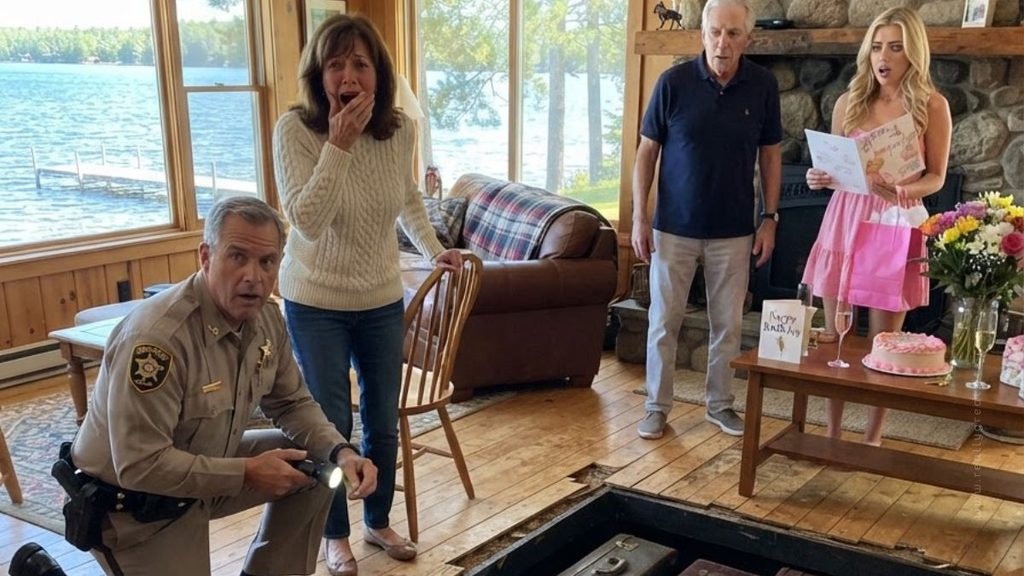
I found out my husband had given our lake house to another woman when she called me to ask when I planned to remove my dead mother’s furniture.
It was a Tuesday morning in September.
I was standing in my kitchen, peeling apples for a pie, when my phone rang.
The woman on the other end sounded young.
Cheerful.
Almost embarrassingly excited.
“Hi! Is this Evelyn?”
“Yes, speaking.”
“Oh, wonderful! This is Tiffany. I’m calling about the lake house.”
I stopped peeling.
“What lake house?”
She laughed.
“The one on Silver Lake! I’m so sorry to bother you, but I wanted to ask about the furniture before I start decorating.”
I stared at the apple in my hand.
“Decorating?”
“Yes! I’m having the floors refinished next week, and I wasn’t sure whether you wanted to keep the old bedroom sets. They’re beautiful, but they’re a little dated for what I’m planning.”
I slowly set down the peeler.
“Young lady, who exactly are you?”
There was a pause.
Then she giggled.
“Oh my goodness. Walter didn’t tell you?”
My stomach tightened.
“Tell me what?”
She hesitated.
Then said:
“He gave me the house for my birthday.”
My name is Evelyn Mercer.
I’m sixty-nine years old, and I’ve been married to Walter Mercer for forty-six years.
We have two grown children, four grandchildren, and a marriage that I believed had survived just about everything.
Walter is seventy-two.
He retired from commercial real estate six years ago.
He’s the sort of man who remembers everyone’s birthday, tips generously at restaurants, and insists on opening car doors for women.
People adore him.
At church, he’s the first person to volunteer when someone needs help.
At the country club, everyone calls him Walt.
And for forty-six years, I thought I knew him better than anyone.
Apparently, I didn’t even know what he was doing with our property.
The lake house wasn’t just another piece of real estate.
My grandfather built it in 1948.
My mother spent her childhood summers there.
I learned to swim from its little wooden dock.
Walter proposed to me beneath the enormous white pine beside the boathouse.
Our children learned to fish there.
Our grandchildren slept in the same upstairs bedroom where I’d once slept with my sister.
When my mother died eight years earlier, she left the property to me.
Not to Walter.
To me.
She’d been very particular about that.
“Evelyn,” she’d told me, “this house belongs to our family. Don’t ever let anyone convince you it’s just a building.”
I’d promised her I wouldn’t.
And now a woman I’d never met was asking whether she could throw away my mother’s furniture.
I gripped the telephone.
“Tiffany, I think there’s been a misunderstanding.”
She laughed nervously.
“Oh, I don’t think so. Walter gave me the deed and everything.”
I felt cold.
“What deed?”
“The property deed.”
I swallowed.
“Young lady, that house belongs to me.”
Silence.
Then she said, “Well, Walter said it was his.”
I stared at the wall.
“He said what?”
“He said he’d owned it for years.”
I closed my eyes.
Then asked:
“Tiffany, how old are you?”
She hesitated.
“Twenty-nine.”
Twenty-nine.
Forty years younger than me.
I took a slow breath.
“And what exactly is your relationship with my husband?”
There was a long pause.
Then she whispered:
“I’m his girlfriend.”
I sat down.
For a moment, the entire kitchen seemed to tilt.
I stared at the family photograph on the refrigerator.
Walter and me.
Our children.
Our grandchildren.
All of us standing on the lake house dock the previous Fourth of July.
I swallowed.
“How long?”
Tiffany sounded uncomfortable.
“I’m sorry?”
“How long have you been sleeping with my husband?”
She hesitated.
Then said:
“Almost three years.”
Three years.
Three Christmases.
Three anniversaries.
Three summers at the lake.
Three years of Walter kissing me goodnight while another woman believed she was building a future with him.
I closed my eyes.
Then asked:
“Does he know you’re calling me?”
Tiffany went quiet.
“No.”
I swallowed.
“Then why did you call?”
She hesitated.
Then said something that made my blood run cold.
“Because Walter told me you died.”
I stopped breathing.
“What?”
Tiffany started crying.
“He told me you passed away in February.”
I stared at the wall.
“February?”
She nodded, though I couldn’t see her.
“He said you’d been sick for a long time.”
I felt physically ill.
“Then why did you ask for Evelyn?”
She hesitated.
“Because he said his late wife’s sister was handling the furniture.”
I couldn’t speak.
Tiffany continued.
“He said her name was Evelyn too.”
I stared at the telephone.
My husband hadn’t simply given his mistress my lake house.
He’d told her I was dead.
And he’d invented a sister with my name to explain why I was still answering questions about the property.
I swallowed.
“Tiffany, listen carefully.”
She sniffled.
“Okay.”
“My name is Evelyn Mercer.”
“I know.”
“I’m Walter’s wife.”
There was silence.
Then I said:
“And I’m very much alive.”
Tiffany began sobbing.
I listened for several seconds.
Then she whispered:
“Oh my God.”
I didn’t answer.
She continued.
“He told me you died.”
“I heard you.”
“He showed me pictures from your funeral.”
I stopped breathing.
“What?”
She started crying harder.
“He said it was private. Just family.”
I gripped the edge of the table.
Then asked:
“Tiffany, whose funeral pictures did he show you?”
She hesitated.
“I don’t know.”
I swallowed.
“Was there a coffin?”
“Yes.”
“Flowers?”
“Yes.”
“And a photograph of me?”
She went quiet.
Then whispered:
“Yes.”
I closed my eyes.
Walter had shown another woman photographs of my funeral.
A funeral that had never happened.
I looked toward the hallway.
At the wedding portrait hanging above the staircase.
At the man smiling beside me.
And for the first time in forty-six years, I felt afraid of my own husband.
I asked Tiffany to send me everything.
The photographs.
The deed.
The birthday card.
Any messages Walter had sent about the house.
She agreed.
Then she said, “Evelyn, I really didn’t know.”
I believed she was shocked.
But I wasn’t ready to comfort her.
I swallowed.
“Send the documents.”
She sniffled.
“Okay.”
“And Tiffany?”
“Yes?”
“Don’t tell Walter we spoke.”
She hesitated.
Then whispered:
“Why?”
I stared at the wall.
“Because I want to find out what else he’s been giving away.”
The first photograph arrived five minutes later.
It showed Tiffany standing on the front porch of my lake house.
She wore a short white dress.
Held a bouquet of pink roses.
And smiled beside Walter.
My husband had one arm around her waist.
In his other hand was a large gold gift bag.
A banner hung across the porch.
HAPPY 29TH BIRTHDAY, TIFFANY!
I stared at the photograph.
The front door was painted blue.
My mother had painted it that color in 1976.
I’d repainted it every few years because she loved it so much.
Tiffany was standing beneath that blue door.
Smiling.
While my husband handed her the home my family had cherished for generations.
The next photograph showed the two of them inside.
Walter had decorated the living room with balloons.
There was a cake on the dining table.
Champagne.
Candles.
And a large framed document propped against the fireplace.
I enlarged the image.
It was a deed.
My heart began pounding.
Then I noticed something else.
Behind Tiffany, near the staircase, was my mother’s rocking chair.
The one she’d sat in every summer evening.
Someone had tied a pink ribbon around it.
As though it were part of the birthday decorations.
I started crying.
Then Tiffany sent the birthday card.
It was written in Walter’s handwriting.
I recognized every letter.
To my beautiful Tiffany,
You deserve a place where we can finally make memories without looking over our shoulders.
This house is yours now, sweetheart.
Every sunrise over the lake belongs to you.
Love always, Walter.
I stared at the words.
Without looking over our shoulders.
My husband had spent forty-six years building a life with me.
And now he was giving away my family’s history so he could stop feeling inconvenienced by my existence.
But the worst photograph was the last one.
It showed a funeral program.
Cream-colored paper.
A photograph of me on the cover.
And beneath it:
IN LOVING MEMORY OF EVELYN MERCER
June 14, 1957 – February 9, 2026
I stopped breathing.
My birthday.
My full name.
A death date.
Walter had created a funeral program for me.
I stared at the screen.
Then opened the next image.
Inside was a list of surviving family members.
Walter.
Our son, David.
Our daughter, Rebecca.
And our four grandchildren.
At the bottom was a paragraph about my devotion to family and my lifelong love of Silver Lake.
I felt sick.
Then I noticed a sentence in the final paragraph.
In accordance with Evelyn’s final wishes, her beloved lake property will remain in Walter’s care until he chooses its next chapter.
I read it twice.
Then whispered:
“You lying son of a bitch.”
I called my daughter Rebecca.
She answered immediately.
“Hi, Mom!”
I tried to sound normal.
“Sweetheart, are you busy?”
“Not really. What’s up?”
I swallowed.
“Have you spoken to your father today?”
She hesitated.
“No. Why?”
I looked at the funeral program.
Then asked:
“Rebecca, has your father ever told you I was seriously ill?”
She laughed.
“What?”
I swallowed.
“Just answer me.”
She went quiet.
“No, Mom.”
I closed my eyes.
Then asked:
“Has he ever asked you to sign paperwork about the lake house?”
There was a pause.
Then she said:
“Actually, yes.”
I sat up.
“When?”
“Last spring.”
My heart pounded.
“What paperwork?”
She hesitated.
“He said you were updating the estate plan.”
I felt cold.
“What did you sign?”
Rebecca sounded confused.
“Some family trust documents.”
I closed my eyes.
Then asked:
“Did David sign them too?”
She hesitated.
“I think so.”
I swallowed.
“Rebecca, did you read them?”
There was a long silence.
Then she whispered:
“Mom, what’s going on?”
I told her.
Not everything.
Just enough.
The mistress.
The birthday gift.
The deed.
The fake funeral program.
By the time I finished, Rebecca was crying.
“Mom, that’s impossible.”
I stared at the photographs.
“I wish it were.”
She swallowed.
“Dad would never do that.”
I felt something break inside me.
“Sweetheart, I’m looking at the pictures.”
She started crying harder.
Then whispered:
“Mom, there’s something you need to know about the lake house.”
I stopped breathing.
“What?”
Rebecca hesitated.
Then said:
“Dad told David and me you wanted to sell it.”
I stared at the wall.
“Sell it?”
She nodded.
“He said it was getting too expensive to maintain.”
I felt sick.
“I never said that.”
Rebecca started crying.
“I know that now.”
I swallowed.
“What else did he tell you?”
There was a long pause.
Then she whispered:
“He said you were having memory problems.”
I closed my eyes.
Of course.
The oldest trick in the book.
Tell everyone an older woman is confused.
Then when she denies it, say she’s proving the point.
I swallowed.
“Rebecca, I need you to listen carefully.”
“Okay.”
“Do not sign anything else.”
She sniffled.
“I won’t.”
“And don’t tell your father we’ve spoken.”
She hesitated.
“Mom, are you safe?”
I looked toward the driveway.
Walter’s car wasn’t there.
He’d told me he was golfing.
I swallowed.
“For now.”
I called an attorney next.
Her name was Margaret Ellis.
She’d handled my mother’s estate.
And she knew exactly how the lake house had been transferred to me.
When I explained what had happened, she was silent for several seconds.
Then she said:
“Evelyn, are you certain Walter claims to have given the property away?”
I looked at the deed Tiffany had sent.
“Yes.”
Margaret took a breath.
“Send me everything.”
I did.
Twenty minutes later, she called back.
Her voice was serious.
“Evelyn, this document is troubling.”
I swallowed.
“Why?”
She hesitated.
Then said:
“Because the deed appears to have been recorded.”
I stopped breathing.
“What?”
Margaret continued.
“According to the county records, the property was transferred three weeks ago.”
I felt sick.
“To Tiffany?”
“Yes.”
I gripped the phone.
“But Walter doesn’t own the house.”
“I know.”
I swallowed.
“Then how could he transfer it?”
Margaret paused.
Then said:
“Because the document identifies you as the grantor.”
I stared at the wall.
“What?”
She continued.
“Your name is on the deed.”
I felt cold.
“And my signature?”
“Yes.”
I closed my eyes.
“I never signed it.”
Margaret was quiet.
Then said:
“That’s what I suspected.”
I felt sick.
“Can we reverse it?”
She took a breath.
“We can challenge a fraudulent transfer, but we need to move quickly.”
I nodded.
Then she asked:
“Evelyn, do you know whether Walter has access to your original property documents?”
I swallowed.
“Of course. He lives here.”
She hesitated.
“And does he have access to your mother’s old estate files?”
I thought for a moment.
“Yes.”
There was a pause.
Then Margaret said:
“I want you to check whether anything is missing.”
I went upstairs to the small room we used as an office.
Walter kept most of our financial documents in a large oak filing cabinet.
I opened the drawer labeled Property.
Inside were folders for our primary residence.
Insurance policies.
Tax records.
And the lake house.
Or at least, there should have been.
I searched again.
Nothing.
The entire lake house folder was gone.
I checked the desk.
The closet.
The safe.
Nothing.
Then I noticed something.
A small manila envelope tucked behind a stack of old tax returns.
It had my mother’s handwriting on the front.
SILVER LAKE — PRIVATE
My heart began pounding.
I opened it.
Inside was a handwritten note.
Dated October 1999.
Twenty-seven years earlier.
It read:
Evelyn, if anything happens to me, please remember that the things beneath the house belong to the people whose names are written inside.
I stared at the words.
Beneath the house?
What things?
Then I noticed another sentence.
Do not let Walter remove them.
I stopped breathing.
Walter.
My mother had written my husband’s name.
Twenty-seven years earlier.
I read the note again.
Then again.
Why would my mother warn me about Walter?
Why would she hide something beneath the lake house?
And what did she mean by the people whose names are written inside?
I called Margaret.
Read her the note.
She was quiet.
Then said:
“Evelyn, do you know what your mother was referring to?”
I shook my head.
“No.”
Margaret hesitated.
Then asked:
“Has Walter been doing any work at the lake house recently?”
I thought about Tiffany’s call.
The refinished floors.
The new furniture.
The decorating plans.
Then I remembered something.
Walter had mentioned replacing the flooring in the lake house kitchen last month.
He said there was water damage.
I’d told him we could wait until spring.
He’d insisted it was urgent.
I swallowed.
“Margaret, Tiffany said she’s having the floors refinished next week.”
There was a pause.
Then Margaret said:
“Evelyn, I think you need to get someone out to that property before any work begins.”
I called the county sheriff’s office.
At first, I felt ridiculous.
How exactly was I supposed to explain that my husband had given away my lake house and my dead mother had left a mysterious note about something buried beneath it?
But the deputy who answered listened carefully.
He asked whether I believed someone had entered the property without permission.
I said yes.
He asked whether there was an ongoing property dispute.
I explained the forged deed.
Then he asked whether I had reason to believe evidence was being destroyed.
I looked at my mother’s note.
And said:
“I think my husband is trying to remove something hidden beneath the floorboards.”
The deputy took my information.
He said the sheriff would review the situation.
Margaret also contacted the county recorder’s office and began preparing an emergency court filing to challenge the transfer.
By late afternoon, a deputy had agreed to meet me at the lake house to document the situation and speak with anyone on the property.
I called Rebecca.
She insisted on coming.
Then I called my son David.
He answered on the fourth ring.
“Mom?”
I swallowed.
“David, I need you to meet me at the lake house.”
He hesitated.
“Why?”
I took a breath.
“Your father has given it away.”
There was silence.
Then David said:
“Mom, I know.”
I stopped breathing.
“What?”
He sighed.
“Dad told me.”
I stared at the wall.
“When?”
“Last week.”
I felt sick.
“And you didn’t tell me?”
He hesitated.
“Mom, he said you’d agreed.”
I closed my eyes.
“David, I never agreed to give away my mother’s house.”
He went quiet.
Then said:
“That’s not what Dad told me.”
I swallowed.
“What did he tell you?”
There was a long pause.
Then David whispered:
“He said you were going to die before Christmas.”
I stopped breathing.
“What?”
David sounded miserable.
“He said you’d been diagnosed with something.”
I felt cold.
“What?”
He hesitated.
“Early-onset Alzheimer’s.”
I almost laughed.
“David, I’m sixty-nine.”
He swallowed.
“I know.”
I stared at the wall.
“Your father told you I was dying of Alzheimer’s?”
He sighed.
“He said it was progressing quickly.”
I closed my eyes.
“And you believed him?”
David started crying.
“Mom, he showed me medical records.”
I felt sick.
Fake medical records.
A fake funeral program.
A forged deed.
My husband had been building an entire imaginary death around me.
And my children had been caught inside it.
I swallowed.
“David, meet me at the lake house.”
He hesitated.
“Mom, Dad told me not to go there.”
I felt cold.
“Why?”
There was a pause.
Then he whispered:
“He said the floors weren’t safe.”
I stared at the wall.
The floors.
My mother’s note.
Tiffany’s renovation.
Walter’s insistence that the kitchen needed repairs.
I took a breath.
“David, I’m going there with a deputy.”
He went quiet.
Then said:
“Okay.”
At five-thirty, I pulled into the lake house driveway.
Rebecca was already there.
So was a sheriff’s deputy named Paul Jensen.
The house looked exactly as it always had.
Blue front door.
White porch railing.
Stone chimney.
The enormous pine beside the boathouse.
I felt tears filling my eyes.
Then I noticed something.
A moving truck.
Parked beside the garage.
Two men were carrying boxes out of the house.
And standing on the porch, directing them, was Tiffany.
She wore a pink sweater.
White jeans.
And the diamond bracelet Walter had given me for our fortieth anniversary.
I stopped walking.
Rebecca followed my gaze.
“Mom.”
I stared at the bracelet.
Then whispered:
“That’s mine.”
Tiffany saw us.
Her face went white.
“Evelyn?”
I walked toward her.
She looked terrified.
“I didn’t know you were coming.”
I stared at the bracelet.
“Take that off.”
She looked confused.
“What?”
I pointed.
“That bracelet belongs to me.”
Tiffany looked down.
Then started crying.
“Walter gave it to me.”
I swallowed.
“Of course he did.”
She unclasped it.
Handed it over.
I took it without speaking.
Then looked past her.
The front door was open.
Inside, the living room furniture had been moved.
The rugs were rolled up.
And several floorboards near the kitchen had already been removed.
My heart began pounding.
I turned toward Deputy Jensen.
Then said:
“I think we’re too late.”
The deputy asked the workers to stop.
He spoke with Tiffany.
Then examined the exposed flooring.
The men explained that they’d been hired to remove damaged boards before the refinishing crew arrived.
One of them said they’d discovered an unusual compartment beneath the kitchen.
My heart stopped.
“What compartment?”
The worker looked uncomfortable.
He pointed toward the floor.
Then said:
“There’s something under there.”
I walked closer.
The kitchen floor had always been old pine.
My grandfather installed it himself.
When I was little, my mother used to tell me the boards creaked because the house was settling.
Now several of those boards had been lifted.
Beneath them was a narrow space between the joists.
And inside that space were several large objects wrapped in heavy plastic.
I stared.
Deputy Jensen crouched.
He shined his flashlight into the opening.
Then looked up.
“Ma’am, did you know these were here?”
I shook my head.
“No.”
He reached carefully toward one of the objects.
Then stopped.
He looked at the workers.
“Nobody touch anything else.”
I swallowed.
“Deputy, what is it?”
He hesitated.
Then said:
“It looks like luggage.”
I stared at him.
“Luggage?”
He nodded.
“Suitcases.”
I felt cold.
“How many?”
He shined the flashlight farther beneath the floor.
Then called for another deputy.
The workers stepped back.
Tiffany covered her mouth.
Rebecca grabbed my hand.
And I watched as the sheriff’s department began documenting what was hidden beneath my family’s lake house.
The first suitcase was brown leather.
Old-fashioned.
With brass corners.
The second was black.
The third was a small blue case.
Each was wrapped in plastic.
Each had a luggage tag.
And each was secured with a small padlock.
The deputies carefully removed them.
One by one.
Four.
Seven.
Ten.
Thirteen.
By the time they finished, there were seventeen suitcases lined up across the kitchen floor.
Seventeen.
I stared at them.
Then whispered:
“What on earth did my mother hide?”
Deputy Jensen examined the tags.
Some were faded.
Others were still legible.
He read the first name aloud.
“Margaret Whitcomb.”
I frowned.
I didn’t recognize it.
Then he read another.
“Elaine Porter.”
Another.
“Judith Keller.”
I felt sick.
All women’s names.
I looked at Rebecca.
She was pale.
Then the deputy picked up the smallest suitcase.
A little blue case with a broken handle.
He examined the tag.
His expression changed.
He looked at me.
“Mrs. Mercer?”
I swallowed.
“Yes?”
He hesitated.
Then asked:
“Did you have a sister named Caroline?”
I stopped breathing.
Caroline.
My younger sister.
She’d disappeared in 1987.
Thirty-nine years earlier.
She was twenty-six.
She’d left the lake house one evening after an argument with my mother.
At least, that’s what I’d always been told.
Her car was found abandoned near a bus station two counties away.
Police searched for weeks.
But nobody ever found her.
Eventually, my mother accepted that Caroline had chosen to leave.
She’d never spoken about her much afterward.
And when she died, she left me the lake house.
I stared at the blue suitcase.
Then whispered:
“Yes.”
Deputy Jensen looked down.
Then said:
“This suitcase has her name on it.”
I couldn’t breathe.
My sister’s name.
On a suitcase hidden beneath the floorboards.
I stepped forward.
Rebecca grabbed my arm.
“Mom.”
I shook my head.
“That’s Caroline’s.”
The deputy looked at me.
“Are you certain?”
I nodded.
“She had a blue suitcase.”
My voice broke.
“She took it everywhere.”
I stared at the faded luggage tag.
Then whispered:
“That’s the suitcase she had the night she disappeared.”
The deputy immediately contacted the sheriff.
Within forty minutes, additional officers arrived.
The workers were interviewed.
The house was secured.
And the suitcases were treated as potential evidence.
I stood on the porch, shaking.
Rebecca wrapped a blanket around my shoulders.
Tiffany sat on the steps crying.
Then David arrived.
He looked at the police vehicles.
Then at me.
“Mom, what happened?”
I swallowed.
“They found something.”
He frowned.
“What?”
I looked toward the house.
Then whispered:
“Caroline’s suitcase.”
David went pale.
“Aunt Caroline?”
I nodded.
He stared at me.
“But she disappeared before I was born.”
“I know.”
He looked toward the kitchen.
Then asked:
“Why would her suitcase be here?”
I shook my head.
“I don’t know.”
Then I remembered my mother’s note.
The things beneath the house belong to the people whose names are written inside.
Do not let Walter remove them.
I felt cold.
My mother had known.
She’d known those suitcases were there.
And she’d specifically warned me not to let my husband touch them.
At seven-fifteen, Sheriff Thomas Whitaker arrived.
He was in his late fifties.
Broad-shouldered.
Gray-haired.
And he’d been with the county sheriff’s department for more than thirty years.
He knew our family.
He’d attended my mother’s funeral.
And he’d been a young deputy when Caroline disappeared.
When he saw me, his expression changed.
“Evelyn.”
I started crying.
“Tom.”
He stepped closer.
“I’m sorry you’re going through this.”
I shook my head.
“Tom, why is Caroline’s suitcase under my kitchen floor?”
He looked toward the house.
Then back at me.
“We’re going to find out.”
The sheriff examined the scene.
He asked questions about the house.
Who had access.
When the floors were last renovated.
Whether my mother had ever mentioned hidden storage.
I told him everything.
Including the note.
When I showed it to him, his expression became serious.
He read it twice.
Then asked:
“Did your mother ever tell you she suspected Walter was involved in Caroline’s disappearance?”
I stopped breathing.
“What?”
He looked at me.
I shook my head.
“No.”
The sheriff nodded slowly.
Then said:
“Evelyn, your mother came to see me in 1999.”
I stared at him.
“What?”
He looked uncomfortable.
“She had questions about Caroline’s disappearance.”
I felt sick.
“What questions?”
He hesitated.
Then said:
“She believed your husband knew more than he was telling.”
I stopped breathing.
“Walter?”
The sheriff nodded.
I stared at him.
“Why?”
He looked toward the kitchen.
Then said:
“Because Caroline was last seen with him.”
I couldn’t breathe.
“No.”
The sheriff looked grim.
“Your mother told us she’d discovered that Walter drove Caroline somewhere the night she disappeared.”
I stared at him.
“Where?”
He shook his head.
“She didn’t know.”
I felt sick.
“Then why didn’t you investigate?”
The sheriff looked pained.
“We did follow up, but there wasn’t enough evidence to establish what happened.”
I swallowed.
“And you never told me?”
He hesitated.
“Your mother asked us not to involve you until we had something concrete.”
I stared at him.
For twenty-seven years, my mother had carried a secret about my husband.
And she’d left a warning I didn’t discover until today.
Then the sheriff’s radio crackled.
A deputy called from inside.
“Sheriff, we need you in the kitchen.”
Tom looked at me.
“Stay here.”
He went inside.
I stood beside Rebecca.
My heart pounded.
Five minutes passed.
Then ten.
Finally, the sheriff returned.
His face was pale.
“Evelyn.”
I swallowed.
“What?”
He hesitated.
Then said:
“We opened the first suitcase.”
I stopped breathing.
“What was inside?”
He looked at me.
Then whispered:
“Photographs.”
I frowned.
“Photographs?”
He nodded.
“And documents.”
I swallowed.
“What kind of documents?”
The sheriff looked toward the house.
Then said:
“Marriage certificates.”
I stared at him.
“Marriage certificates?”
He nodded.
I felt sick.
“Whose?”
He hesitated.
Then whispered:
“Walter’s.”
I stopped breathing.
“What?”
The sheriff looked grim.
“Your husband’s name appears on several of them.”
I stared at him.
“But Walter and I have been married for forty-six years.”
He nodded.
I swallowed.
“Then how could he have other marriage certificates?”
There was a long silence.
Then the sheriff said:
“Evelyn, some of these marriages appear to have taken place while he was married to you.”
I couldn’t breathe.
My husband.
Other wives.
Seventeen locked suitcases.
All bearing women’s names.
And my sister’s suitcase among them.
I stared at the sheriff.
Then whispered:
“How many women?”
He hesitated.
Then said:
“We don’t know yet.”
I looked toward the kitchen.
The suitcases.
The names.
The padlocks.
The secrets my mother had hidden.
Then I asked the question I was terrified to hear answered.
“Tom, are those women still alive?”
The sheriff didn’t answer.
He looked toward the house.
Then back at me.
And said:
“That’s what we’re trying to determine.”
I stood there shaking.
Then my phone rang.
Walter.
I stared at his name on the screen.
My husband.
The man who’d given away my lake house.
The man who’d told his mistress I was dead.
The man whose name appeared on marriage certificates hidden beneath my kitchen floor.
I answered.
“Hello?”
Walter sounded cheerful.
“Hi, sweetheart. I’m just finishing up at the club. What are you doing?”
I looked toward the sheriff.
Then said:
“At the lake house.”
There was silence.
Then Walter whispered:
“Why are you there?”
I swallowed.
“The sheriff is here.”
Another silence.
Then Walter said:
“Put him on the phone.”
I felt cold.
“Why?”
His voice changed.
“Evelyn, listen to me carefully.”
I gripped the phone.
He continued:
“Whatever they found beneath that floor, it doesn’t belong to you.”
I stopped breathing.
“Walter.”
He lowered his voice.
“Don’t let them open anything else.”
I stared at the kitchen.
Then whispered:
“They already have.”
There was a long silence.
Then my husband asked:
“Did they open the blue one?”
I couldn’t breathe.
Caroline’s suitcase.
My missing sister.
I swallowed.
“Why?”
Walter didn’t answer.
I looked at the sheriff.
Then whispered:
“Walter, what happened to Caroline?”
My husband was silent.
For several seconds, I thought he’d hung up.
Then he said something that made my blood run cold.
“Evelyn, your sister didn’t disappear.”
I stopped breathing.
“What?”
Walter’s voice trembled.
Then he whispered:
“She was the first woman who found out what I was doing.”
I couldn’t speak.
I stared at the sheriff.
Then Walter continued.
“And your mother helped me keep her quiet.”
The line went dead.
I stood on the porch, holding my phone.
Seventeen suitcases.
Seventeen women’s names.
Marriage certificates.
My missing sister.
And a secret my mother had apparently helped bury beneath the house she’d left me.
I looked toward the blue front door.
The home where I’d spent every summer of my life.
The place I’d always believed held nothing but happy memories.
Then I looked at Sheriff Whitaker.
And whispered:
“Tom, I think my husband has been hiding women for forty years.”
My husband had just admitted that my missing sister knew his darkest secret.
Then he told me my mother had helped him keep her quiet.
For thirty-nine years, I’d believed Caroline had walked away from our family.
I’d spent birthdays wondering whether she was alive.
I’d searched crowds for her face.
I’d imagined her living somewhere far away, perhaps married, perhaps with children of her own.
And every summer, I’d returned to the lake house where we’d grown up, never knowing her suitcase was hidden beneath the kitchen floor.
Now Sheriff Whitaker was standing beside me, and seventeen locked suitcases were being examined inside my family’s home.
I looked at him.
“Tom, you heard what Walter said.”
He nodded.
“Yes.”
“He said my mother helped him.”
“I heard.”
I swallowed.
“Then tell me what that means.”
The sheriff looked toward the house.
Then said:
“Evelyn, I think we need to find out why your mother kept those suitcases instead of destroying them.”
I stared at him.
“Destroying them?”
He nodded.
“If she was protecting Walter, why preserve the evidence?”
I hadn’t thought about that.
My mother had been a stubborn woman.
Practical.
Proud.
And fiercely protective of her daughters.
She could be difficult.
She could hold a grudge longer than anyone I’d ever met.
But I couldn’t imagine her helping someone hurt Caroline.
I shook my head.
“She wouldn’t.”
The sheriff looked at me.
“Wouldn’t what?”
“Help Walter hurt my sister.”
He didn’t answer.
I swallowed.
“She loved Caroline.”
Tom’s expression softened.
“I know she did.”
Then he said something that made me stop.
“Evelyn, sometimes people keep evidence because they’re afraid of what will happen if they use it.”
Before I could answer, a deputy approached.
“Sheriff, we found something else.”
Tom turned.
“What?”
The deputy glanced at me.
Then said:
“There’s a second compartment beneath the pantry.”
My heart began pounding.
“Another one?”
The deputy nodded.
“Yes, ma’am.”
I followed them inside.
The kitchen was crowded with officers.
The seventeen suitcases had been photographed and carefully moved to one side.
Several floorboards were still missing.
And near the pantry, another section of flooring had been lifted.
Beneath it was a narrow wooden box.
Long.
Shallow.
Wrapped in oilcloth.
I stared at it.
The deputy opened the outer wrapping.
Inside was a metal document case.
And taped to the lid was a piece of yellowed paper.
My mother’s handwriting.
FOR EVELYN — ONLY WHEN WALTER IS GONE
I stopped breathing.
My mother had left me another message.
Not in a drawer.
Not in her will.
But hidden beneath the floor of the house she’d built her life around.
I looked at the sheriff.
“Can I open it?”
He hesitated.
“We need to document everything first.”
I nodded.
He photographed the case.
Then carefully opened it.
Inside were several folders.
A small cassette recorder.
A stack of letters.
And a photograph.
The sheriff lifted the photograph.
His expression changed.
Then he looked at me.
“Evelyn, do you recognize these women?”
I stepped closer.
The photograph showed six women standing on the lake house porch.
It was taken sometime in the 1980s.
I recognized my mother immediately.
She stood near the blue front door.
Beside her was Caroline.
My sister.
Young.
Smiling.
Wearing a yellow sundress.
And next to Caroline stood a woman I didn’t recognize.
She had dark hair.
A serious expression.
And one hand resting on Caroline’s shoulder.
I stared at her.
Then whispered:
“Who is that?”
The sheriff turned the photograph over.
There were names written on the back.
My mother.
Caroline.
Margaret Whitcomb.
Elaine Porter.
Judith Keller.
And a sixth woman named Ruth Dawson.
I felt cold.
Those names.
I’d heard three of them less than an hour earlier.
They were written on the suitcase tags.
I looked at the sheriff.
Then whispered:
“Those women were here.”
He nodded.
“At some point, yes.”
I stared at the photograph.
Then said:
“My mother knew them.”
The sheriff began examining the folders.
The first contained copies of newspaper clippings.
Missing-person notices.
Marriage announcements.
Property records.
And handwritten notes.
The second contained letters addressed to my mother.
Some were decades old.
Others were more recent.
And the third folder was labeled:
WALTER MERCER — WOMEN
I felt sick.
The sheriff opened it.
Inside were photographs.
Dozens of them.
Walter standing beside different women.
Walter at restaurants.
Walter at weddings.
Walter on boats.
Walter in front of houses I’d never seen.
Some photographs were from the 1980s.
Others from the 1990s.
A few appeared to be from the early 2000s.
In several, Walter wore a wedding ring.
In others, he didn’t.
I stared at the images.
Then noticed something.
In one photograph, Walter was standing beside a woman in a white wedding dress.
He looked about forty.
She looked twenty-five.
And behind them was a sign.
JUST MARRIED
I stared at the picture.
Then whispered:
“That isn’t me.”
The sheriff looked at the photograph.
“No.”
I swallowed.
“Who is she?”
He turned it over.
A name was written on the back.
Margaret Whitcomb.
I felt cold.
The first suitcase.
The first name the deputy had read aloud.
I stared at the picture.
Then asked:
“Did Walter marry her?”
The sheriff hesitated.
“We’ll need to verify the documents.”
I looked at the marriage certificate.
Walter’s name.
Margaret’s name.
A date.
June 18, 1985.
Seven years after Walter and I married.
I stopped breathing.
In 1985, our son David was four.
Rebecca was two.
I remembered that summer.
Walter had told me he was traveling for work.
He’d been gone nearly three weeks.
I’d stayed at the lake house with the children.
And every evening, I’d waited for his telephone call.
Now I was looking at a photograph of him marrying another woman.
While I was home raising our babies.
I sat down at the kitchen table.
My legs wouldn’t hold me.
Rebecca came toward me.
“Mom.”
I shook my head.
“I don’t understand.”
She knelt beside me.
I looked at the photograph.
Then whispered:
“How many wives did he have?”
Nobody answered.
Over the next several hours, investigators began identifying the women named on the suitcases.
The records suggested Walter had maintained relationships with multiple women over several decades.
Some believed he was divorced.
Others believed he was widowed.
At least three had apparently married him in ceremonies while he was still legally married to me.
Some of the marriage documents appeared authentic.
Others were questionable.
And several women had disappeared from the communities where they’d lived.
I listened as the sheriff explained what they knew.
Then asked:
“Are they all dead?”
He shook his head.
“We don’t know.”
I swallowed.
“But some are missing?”
“Yes.”
I stared at him.
“How many?”
He hesitated.
Then said:
“At least five names match unresolved missing-person reports.”
I stopped breathing.
Five.
Five women.
And my sister Caroline.
I looked toward the suitcases.
Then whispered:
“Walter has been collecting trophies.”
The sheriff didn’t answer.
But his expression told me he was considering the same possibility.
Then one of the deputies approached.
“Sheriff, we found something in the second folder.”
Tom turned.
“What?”
The deputy held up a small cassette tape.
There was a label.
My mother’s handwriting.
CAROLINE — AUGUST 1987
I couldn’t breathe.
August 1987.
The month my sister disappeared.
I stood.
“Can we listen to it?”
The sheriff hesitated.
“We need to preserve the original recording.”
I nodded.
“Of course.”
He looked at the deputy.
“See if we can arrange a copy.”
While they worked, I walked into the living room.
Everything looked wrong.
My mother’s rocking chair.
The stone fireplace.
The family photographs.
The curtains she’d sewn herself.
I’d spent my entire life believing this house was filled with love.
Now I wondered whether it had been hiding terrible secrets all along.
Rebecca followed me.
“Mom, sit down.”
I shook my head.
“I can’t.”
She reached for my hand.
“You’re shaking.”
I looked at her.
Then whispered:
“Your father has been lying to us since before you were born.”
Rebecca started crying.
“I know.”
I stared at her.
Then asked:
“Did you ever suspect?”
She shook her head.
“No.”
I swallowed.
“Not even a little?”
She hesitated.
Then said:
“Mom, there was something strange about Dad when I was little.”
I looked at her.
“What?”
She wiped her cheeks.
“He used to get phone calls late at night.”
I nodded slowly.
“He traveled constantly.”
“I know.”
Rebecca continued.
“And sometimes he’d come home with gifts that didn’t make sense.”
I frowned.
“What gifts?”
She hesitated.
“Jewelry. Perfume. Expensive handbags.”
I stared at her.
“For me?”
She shook her head.
“No.”
I felt cold.
“What do you mean?”
She swallowed.
“He kept them in the garage.”
I stopped breathing.
“The garage?”
Rebecca nodded.
“I found a box once.”
I stared at her.
“What was inside?”
She looked down.
“Women’s things.”
I swallowed.
“What kind?”
“Scarves. Earrings. A watch.”
I felt sick.
Then she whispered:
“And a wedding veil.”
I stared at her.
“When?”
She thought for a moment.
“I was about twelve.”
That would have been 1995.
Eight years after Caroline disappeared.
I swallowed.
“What did Walter say?”
Rebecca looked miserable.
“He told me they belonged to a client.”
I closed my eyes.
Of course he did.
Then she said:
“Mom, I think Dad has been keeping pieces of these women’s lives for decades.”
I felt sick.
And suddenly, the suitcases seemed even more frightening.
At nine-thirty that evening, Sheriff Whitaker returned to the living room.
He carried a small digital recorder.
“Evelyn, we have a copy of the cassette.”
I stood.
He looked serious.
“I want to warn you that this may be upsetting.”
I swallowed.
“I understand.”
Rebecca took my hand.
David stood beside the fireplace.
Tiffany sat quietly near the window.
The sheriff pressed play.
At first, there was static.
Then my mother’s voice.
Older.
Tired.
But unmistakable.
Caroline, tell me again what Walter said.
My heart stopped.
Then I heard my sister.
Caroline.
Her voice.
After thirty-nine years.
Mom, I already told you.
I covered my mouth.
The sheriff let the recording continue.
My mother spoke again.
I need you to say it clearly.
Caroline sounded frightened.
Walter told me if I went to the police, he’d make sure nobody believed me.
I started crying.
Then my mother asked:
What did you find?
Caroline hesitated.
Then said:
“The women, Mom. I found out about the women.”
I couldn’t breathe.
The recording continued.
Caroline explained that she’d discovered Walter was using different names and addresses.
He’d been meeting women through business connections.
Convincing them he was single.
Sometimes marrying them.
Sometimes persuading them to invest money with him.
And when the relationships ended, their belongings disappeared into storage.
My mother asked whether Walter had hurt anyone.
Caroline was quiet.
Then she said:
I don’t know.
A pause.
Then:
“But I think one of them is dead.”
I stopped breathing.
My mother asked:
Which one?
Caroline whispered:
“Margaret Whitcomb.”
The room went silent.
The recording continued.
Caroline explained that she’d found a letter from Margaret.
A letter accusing Walter of stealing money.
Threatening to expose him.
And demanding that he return something he’d taken.
My mother asked what he’d taken.
Caroline hesitated.
Then whispered:
“Her baby.”
I couldn’t breathe.
“A baby?”
Rebecca covered her mouth.
The sheriff looked grim.
On the recording, my mother asked the same question.
What baby?
Caroline began crying.
Then said:
“Walter told Margaret their daughter died. But I found paperwork showing he gave her away.”
I stopped breathing.
A child.
Walter had taken a woman’s baby.
And told her the child was dead.
I stared at the recorder.
Then heard Caroline say:
Mom, I think he’s been doing this for years.
My mother sounded horrified.
Doing what?
Caroline whispered:
“Taking children from women who trust him.”
I couldn’t breathe.
The recording ended.
For several seconds, nobody spoke.
Then David said:
“What does that mean?”
The sheriff looked at him.
“We’re going to investigate.”
I stared at the recorder.
Then whispered:
“Walter wasn’t just marrying these women.”
The sheriff looked at me.
I swallowed.
“He was stealing their children.”
The next morning, investigators returned to the lake house.
They brought specialists to examine the suitcases and document their contents.
I wasn’t allowed to participate in the searches.
But Sheriff Whitaker kept me informed.
The first suitcase contained photographs, correspondence, and a marriage certificate.
The second contained clothing and jewelry.
The third held bank records.
The fourth contained baby clothes.
A hospital bracelet.
And a birth certificate.
The fifth contained letters addressed to a child.
The sixth held photographs of a young boy.
And the seventh contained a small pink blanket.
I listened as the sheriff described the evidence.
Then asked:
“How many children?”
He hesitated.
“We don’t know yet.”
I swallowed.
“But more than one?”
He nodded.
“Possibly.”
I felt sick.
Then he said:
“Evelyn, we found something in Caroline’s suitcase.”
I stopped breathing.
“What?”
The sheriff looked serious.
“A journal.”
My heart pounded.
“Her journal?”
He nodded.
I started crying.
Caroline had always kept journals.
She wrote everything down.
Her dreams.
Her frustrations.
Her plans.
When we were girls, she used to hide them beneath her mattress.
I swallowed.
“Can I read it?”
The sheriff hesitated.
“Not yet. We need to examine it.”
I nodded.
Then he said:
“But there’s an entry dated the day she disappeared.”
I couldn’t breathe.
“What does it say?”
The sheriff looked at his notes.
Then read:
Walter says he’ll take me to see the woman who knows where the children are.
He says if I come alone, he’ll tell me everything.
Mom thinks it’s dangerous.
But I have to know.
I closed my eyes.
Then the sheriff continued.
If I don’t come back, Evelyn needs to know that Walter is not the man she thinks he is.
I started sobbing.
My sister had known.
She’d tried to uncover the truth.
And she’d vanished.
The sheriff looked at me.
Then said:
“There’s another entry.”
I swallowed.
“What?”
He hesitated.
Then read:
Walter says the children are being placed with good families.
He says nobody is getting hurt.
But I found out about Margaret.
And I don’t believe him anymore.
I stared at the wall.
Then asked:
“Did Caroline write where she was going?”
The sheriff nodded.
“Yes.”
My heart pounded.
“Where?”
He looked at me.
Then said:
“A property outside Marquette.”
I stopped breathing.
Marquette.
Hundreds of miles north.
I stared at him.
“What property?”
The sheriff hesitated.
Then said:
“A farmhouse Walter owned under another name.”
I felt sick.
“Another name?”
He nodded.
“William Mercer.”
I stared at him.
Walter’s middle name was William.
He’d apparently been using it as part of another identity.
The sheriff continued.
“We’ve contacted authorities in that area.”
I swallowed.
“And?”
He looked serious.
“They’re checking the property.”
By that afternoon, the investigation had expanded.
The state police were involved.
So were investigators from neighboring jurisdictions.
The financial records suggested Walter had operated under multiple identities.
He’d used different business names.
Different addresses.
And different explanations for his absences.
Some women believed he was a traveling businessman.
Others thought he worked in banking.
One believed he was a widower with no children.
Another believed he was divorced.
And at least one had been told he was a physician.
I stared at the list.
Then whispered:
“I married a stranger.”
Rebecca sat beside me.
“Mom.”
I shook my head.
“Forty-six years.”
She squeezed my hand.
I continued.
“Forty-six years of birthdays, anniversaries, holidays.”
My voice broke.
“And I never knew.”
Rebecca started crying.
I looked at her.
Then whispered:
“What kind of woman doesn’t know her own husband?”
She shook her head.
“Mom, he lied to everyone.”
I stared at her.
Then she said:
“You loved the man he pretended to be.”
I started crying.
And for a moment, I allowed myself to grieve.
Not just the marriage.
But the person I’d believed Walter was.
Then the sheriff called.
It was just after six.
“Evelyn?”
I sat up.
“Tom?”
His voice was serious.
“They found the farmhouse.”
My heart began pounding.
“And?”
He hesitated.
Then said:
“There’s a basement beneath the property.”
I stopped breathing.
“A basement?”
“Yes.”
I swallowed.
“What did they find?”
The sheriff paused.
Then said:
“A room that appears to have been used to keep someone confined.”
I couldn’t breathe.
“Someone?”
He continued.
“There are locks on the outside of the door.”
I felt sick.
“And?”
He hesitated.
Then said:
“There are names written on the walls.”
I stopped breathing.
“What names?”
The sheriff looked at his notes.
Then said:
“Several.”
I swallowed.
“Is Caroline’s name there?”
There was a long silence.
Then he whispered:
“Yes.”
I started sobbing.
My sister.
The farmhouse.
The locked room.
I gripped the phone.
“Tom, is she dead?”
He hesitated.
“We don’t know.”
I swallowed.
“Did they find remains?”
“Not at this stage.”
I closed my eyes.
Then he said:
“Evelyn, there’s something else.”
I felt cold.
“What?”
He hesitated.
Then said:
“They found a photograph.”
I swallowed.
“Of Caroline?”
“Yes.”
My heart pounded.
“When was it taken?”
The sheriff paused.
Then said:
“According to the date written on the back, 2004.”
I stopped breathing.
2004.
Seventeen years after Caroline disappeared.
I stared at the wall.
Then whispered:
“She was alive.”
The sheriff nodded, though I couldn’t see him.
“At least at the time that photograph was taken, assuming the date is accurate.”
I started crying.
My sister had been alive.
For years after we believed she’d vanished.
I swallowed.
“Where was the photograph taken?”
The sheriff hesitated.
Then said:
“At the farmhouse.”
I couldn’t breathe.
Then he added:
“She’s holding a little girl.”
I stopped breathing.
“A little girl?”
“Yes.”
I swallowed.
“How old?”
“Maybe four or five.”
I stared at the wall.
Then whispered:
“Who is she?”
The sheriff hesitated.
Then said:
“We don’t know.”
I looked at Rebecca.
She was watching me.
I whispered:
“Caroline was alive in 2004.”
Rebecca covered her mouth.
Then I said:
“And she was holding a little girl.”
My daughter started crying.
Then asked:
“Mom, did Aunt Caroline have a child?”
I couldn’t answer.
Because suddenly, I remembered something.
Something my mother had said shortly before she died.
We’d been sitting on the lake house porch.
Watching the sunset.
She’d looked toward the water.
Then said:
Some families have children they never get to raise.
I’d thought she was talking about Caroline.
About the life my sister might have had.
Now I wondered whether she meant something else.
That evening, I went through my mother’s old letters.
I found birthday cards.
Christmas notes.
Recipes.
And a small photograph album.
Near the back was a picture I’d never noticed.
My mother standing beside a little girl.
The child had dark curly hair.
A pink dress.
And bright blue eyes.
On the back, my mother had written:
LILY — AGE 5
I stopped breathing.
Lily.
I didn’t recognize the name.
I turned the photograph over.
Studied the little girl’s face.
Then felt my heart stop.
Because she looked like Caroline.
The same eyes.
The same smile.
The same dimple in her left cheek.
I stared at the photograph.
Then whispered:
“Oh my God.”
I called Sheriff Whitaker.
“Tom, I found something.”
He listened.
Then asked me to send a photograph.
I did.
Several minutes passed.
Then he called back.
His voice was different.
“Evelyn.”
I swallowed.
“Yes?”
He hesitated.
Then said:
“That’s the little girl in the farmhouse photograph.”
I couldn’t breathe.
“The same girl?”
“Yes.”
I started crying.
My mother had known her.
She’d held her.
She’d taken photographs with her.
And she’d never told me.
I swallowed.
“Tom, who is Lily?”
The sheriff paused.
Then said:
“We believe she may be Caroline’s daughter.”
I stopped breathing.
My sister had a daughter.
A child I never knew existed.
A niece who might still be alive.
I sat down.
Then whispered:
“Where is she?”
The sheriff hesitated.
“We’re working on identifying her.”
I swallowed.
“Please find her.”
He sounded gentle.
“We will do everything we can.”
Two days later, Walter was arrested.
He’d been located at a motel near the state line.
He had cash.
Two passports.
And a suitcase containing jewelry, documents, and photographs.
He’d apparently been preparing to leave.
The arrest related initially to suspected fraud, identity offenses, and evidence connected to the missing-person investigation.
Additional allegations were being investigated.
I watched the news coverage from my living room.
Walter’s face appeared on the screen.
My husband.
Handcuffed.
Escorted into a police vehicle.
He looked older than I’d ever seen him.
And for the first time in forty-six years, I felt nothing when I looked at him.
Not love.
Not pity.
Not even anger.
Just a terrible emptiness.
Then my phone rang.
Unknown number.
I answered.
“Hello?”
A woman spoke.
Her voice was quiet.
“Is this Evelyn Mercer?”
“Yes.”
She hesitated.
“My name is Margaret Whitcomb.”
I stopped breathing.
Margaret.
The first suitcase.
The woman in the wedding photograph.
The woman Caroline believed Walter had stolen a baby from.
I gripped the phone.
“Margaret?”
She started crying.
“I heard about Walter.”
I swallowed.
“Are you safe?”
She took a shaky breath.
“Yes.”
I closed my eyes.
Thank God.
Then she said:
“Evelyn, I think your sister saved my daughter’s life.”
I couldn’t breathe.
“What?”
Margaret started crying harder.
“Caroline found out where Walter had taken her.”
I swallowed.
“And?”
She hesitated.
Then said:
“She brought my baby back to me.”
I stopped breathing.
“She did?”
Margaret sobbed.
“Yes.”
I covered my mouth.
Then asked:
“When?”
She whispered:
“1987.”
The year Caroline disappeared.
I felt sick.
Then Margaret continued.
“Caroline told me she was going to help the other women.”
I swallowed.
“What other women?”
Margaret hesitated.
Then said:
“The women Walter had trapped at the farmhouse.”
I couldn’t breathe.
I stared at the wall.
Then Margaret said:
“Evelyn, your sister didn’t disappear because she found out about Walter.”
I swallowed.
“Then why?”
There was a long silence.
Then Margaret whispered:
“Because she stayed behind to get the others out.”
I stopped breathing.
Caroline.
My sister.
The woman I’d spent thirty-nine years mourning.
Hadn’t simply vanished.
She’d been trying to save people.
I started crying.
Then asked:
“Margaret, do you know what happened to her?”
She hesitated.
Then said:
“I know where she was taken after the farmhouse.”
I couldn’t breathe.
“Where?”
Margaret took a shaky breath.
Then whispered:
“To a private property near the Canadian border.”
I stared at the wall.
Then she added:
“And Evelyn, I don’t think she’s dead.”
I stopped breathing.
“What?”
Margaret started crying.
“Because I received a letter from her last year.”
I couldn’t speak.
Last year.
2025.
Thirty-eight years after Caroline disappeared.
I gripped the telephone.
“Margaret, are you sure?”
She sobbed.
“Yes.”
I swallowed.
“What did it say?”
There was a long pause.
Then she whispered:
“It said Walter was finally going to be exposed.”
I felt sick.
“And?”
Margaret hesitated.
Then said:
“It said Caroline had been waiting for the right moment to come home.”
I stared at the wall.
My sister.
Alive.
Possibly.
After thirty-nine years.
I swallowed.
“Margaret, where is she now?”
There was a long silence.
Then Margaret whispered:
“Evelyn, I think she’s closer than you realize.”
I stopped breathing.
“What?”
She took a shaky breath.
Then said:
“Because Caroline was the one who told Tiffany to call you.”
I couldn’t breathe.
Tiffany.
Walter’s mistress.
The birthday gift.
The lake house.
The phone call that started everything.
I stared at the wall.
Then whispered:
“Caroline knows Tiffany?”
Margaret hesitated.
Then said:
“Evelyn, Tiffany isn’t Walter’s mistress.”
I stopped breathing.
“What?”
Margaret’s voice trembled.
Then she whispered:
“She’s Caroline’s daughter.”
The room went silent.
I stared at the telephone.
Tiffany.
Twenty-nine.
The woman who’d called to ask about my mother’s furniture.
The woman Walter had supposedly given the lake house to.
The woman who’d stood beside him on the porch, smiling beneath the birthday banner.
I swallowed.
“Margaret, that’s impossible.”
She started crying.
“I know how it sounds.”
I felt sick.
“Caroline disappeared in 1987.”
“Yes.”
“Tiffany is twenty-nine.”
“Yes.”
I stared at the wall.
Then whispered:
“Then Caroline had her years after she disappeared.”
Margaret nodded, though I couldn’t see her.
“Yes.”
I couldn’t breathe.
I looked toward the photograph of Tiffany.
The blue front door.
The pink roses.
The diamond bracelet.
And suddenly, I noticed something.
Her eyes.
Bright blue.
The same shape as Caroline’s.
The same little dimple in her left cheek.
I covered my mouth.
Then whispered:
“Oh my God.”
Margaret continued.
“Tiffany was raised under another name.”
I swallowed.
“By whom?”
She hesitated.
Then said:
“Walter.”
I stopped breathing.
“What?”
Margaret started crying.
“He’s been controlling her life since she was a child.”
I felt sick.
“Then why would he tell her I was dead?”
Margaret hesitated.
Then whispered:
“Because he didn’t want her to know you were her aunt.”
I couldn’t breathe.
I stared at the photograph.
Then asked:
“Does Tiffany know who she is?”
Margaret was quiet.
Then said:
“Not yet.”
I felt sick.
Then she added:
“But Caroline does.”
I stared at the wall.
“Where is Caroline?”
Margaret hesitated.
Then whispered:
“She’s coming to see you.”
I stopped breathing.
“When?”
There was a long silence.
Then Margaret said:
“Tomorrow.”
I couldn’t speak.
My sister.
Thirty-nine years.
The woman I’d mourned.
The woman whose suitcase had been hidden beneath my kitchen floor.
The woman who’d apparently spent decades trying to expose Walter.
Was coming home.
I sat there shaking.
Then Margaret said something that made my blood run cold.
“Evelyn, there’s one thing you need to understand before Caroline arrives.”
I swallowed.
“What?”
She hesitated.
Then whispered:
“Your mother didn’t help Walter hide the women.”
I closed my eyes.
“Then what did she do?”
Margaret started crying.
Then said:
“She helped Caroline hide them from Walter.”
I stopped breathing.
The suitcases.
The photographs.
The letters.
The marriage certificates.
My mother’s warning.
Do not let Walter remove them.
She hadn’t been protecting him.
She’d been preserving the evidence.
Protecting the women.
Keeping their belongings safe.
Waiting for someone to finally uncover the truth.
I started crying.
Then Margaret whispered:
“And Evelyn, your mother knew exactly where Caroline was.”
I couldn’t breathe.
“What?”
She hesitated.
Then said:
“She visited her every year until she died.”
I stared at the wall.
My mother.
The woman who’d told me Caroline was gone.
Had been seeing her.
For years.
I felt sick.
Then asked:
“Why didn’t she tell me?”
Margaret was quiet.
Then whispered:
“Because Walter threatened to kill you if Caroline ever contacted you.”
I stopped breathing.
My husband.
The man I’d slept beside for forty-six years.
Had threatened my life to keep my sister away.
And my mother had spent the rest of her life protecting me from a secret I never knew existed.
I stared at the photograph of Tiffany.
Then toward the hallway.
At the wedding portrait.
Walter smiling beside me.
And I realized something that made my blood run cold.
My husband hadn’t given his mistress our lake house for her birthday.
He’d given my missing sister’s daughter the very house where the evidence against him was hidden.
And somehow, Caroline had arranged for that birthday gift to expose everything.
For thirty-nine years, I’d believed my sister Caroline was gone.
I’d mourned her.
Searched for her.
Spent birthdays wondering whether she was alive.
And now a woman named Margaret Whitcomb was telling me Caroline would be standing on my doorstep tomorrow.
I sat in my living room with the telephone pressed to my ear.
“Margaret, I need you to tell me where she is.”
There was a pause.
“Evelyn, she’s safe.”
I swallowed.
“Then let me speak to her.”
“She’s afraid.”
I closed my eyes.
“Of Walter?”
“Yes.”
I stared at the wedding photograph hanging above my fireplace.
My husband.
The man I’d loved for forty-six years.
The man who’d apparently spent decades keeping my sister away from me.
I swallowed.
“Walter’s been arrested.”
“I know.”
“Then what’s she afraid of?”
Margaret hesitated.
Then whispered:
“Because Walter wasn’t the only person involved.”
I stopped breathing.
“What?”
Margaret took a shaky breath.
“Caroline doesn’t know who she can trust.”
I felt sick.
“She can trust me.”
“I know that.”
“Then why hasn’t she called?”
There was a long silence.
Then Margaret said:
“Because she thinks you helped Walter.”
I couldn’t speak.
“Me?”
Margaret sounded miserable.
“She’s been told things about you.”
I stared at the wall.
“What things?”
She hesitated.
Then whispered:
“That you knew about the women. That you knew about the children. That you chose to stay with Walter anyway.”
I felt physically ill.
For thirty-nine years, my sister had believed I was part of the reason she couldn’t come home.
I shook my head.
“No.”
Margaret was quiet.
I continued.
“I didn’t know anything.”
“I believe you.”
Tears rolled down my cheeks.
“Margaret, I spent thirty-nine years wondering whether my sister was dead.”
“I know.”
“I would’ve gone anywhere to find her.”
Margaret started crying.
Then whispered:
“That’s what Caroline needs to hear from you.”
The next morning, I woke before sunrise.
I hadn’t slept.
Every time I closed my eyes, I saw Caroline’s face.
Twenty-six years old.
Laughing on the dock.
Wearing that yellow sundress.
I wondered what she’d look like now.
She would be sixty-five.
Would her hair be gray?
Would she still have the little dimple in her left cheek?
Would she recognize me?
And what would I say to a sister who’d been missing for nearly four decades?
At nine-thirty, Sheriff Whitaker called.
“Evelyn?”
I sat up.
“Tom.”
His voice was serious.
“We’ve confirmed that the woman Margaret told you about is your sister.”
I started crying.
“She’s alive?”
“Yes.”
I covered my mouth.
Then he added:
“And she’s agreed to give a statement.”
I swallowed.
“Where?”
“At the sheriff’s office.”
I felt sick.
“Can I see her?”
There was a pause.
Then he said:
“She’s asked to speak with you.”
I don’t remember driving to the sheriff’s office.
Rebecca came with me.
David followed in his truck.
My hands shook so badly that Rebecca insisted on driving.
When we arrived, Sheriff Whitaker met us at the entrance.
He looked exhausted.
“Evelyn.”
I swallowed.
“Where is she?”
He nodded toward a hallway.
“Come with me.”
We walked past several offices.
A conference room.
A row of chairs.
Then Tom stopped outside a small interview room.
He looked at me.
“Are you ready?”
I started crying.
“No.”
He smiled gently.
“That’s understandable.”
I took a breath.
Then nodded.
“Open the door.”
The woman sitting inside had silver hair.
She wore a blue cardigan.
Her hands were folded in her lap.
And when she looked up, I saw the same bright blue eyes I’d known my entire childhood.
My sister.
Caroline.
She stood slowly.
For a moment, neither of us moved.
Then she whispered:
“Evie?”
Nobody had called me Evie in thirty-nine years.
I covered my mouth.
“Caroline?”
Her face crumpled.
Then she started crying.
I crossed the room.
And we fell into each other’s arms.
I held her so tightly I could barely breathe.
She was smaller than I remembered.
Thinner.
Her hair smelled like lavender.
And she was shaking.
I kept saying her name.
Over and over.
“Caroline.”
She cried against my shoulder.
“I’m sorry.”
I pulled back.
“Don’t.”
She shook her head.
“Evie, I’m so sorry.”
I held her face between my hands.
“You’re alive.”
She nodded.
I started sobbing.
“You’re alive.”
We sat together for nearly an hour before either of us could explain anything.
Caroline kept looking at me.
Touching my hand.
As though she couldn’t quite believe I was real.
Finally, she whispered:
“Did you really not know?”
I shook my head.
“Not a thing.”
Her eyes filled with tears.
“About Walter?”
“No.”
“The women?”
“No.”
“The children?”
I shook my head again.
She covered her face.
Then whispered:
“He told me you were helping him.”
I felt sick.
“Caroline, I swear to you—”
She reached for my hand.
“I know now.”
I started crying.
She continued.
“Margaret showed me the photographs from the lake house.”
I swallowed.
“The suitcases?”
She nodded.
“And the police showed me what Walter did with the property.”
I stared at her.
Then asked:
“Why did he give Tiffany the house?”
Caroline’s expression changed.
She looked down.
Then whispered:
“Because I told him I’d found the evidence.”
I stopped breathing.
“What?”
She took a shaky breath.
“I contacted Walter three months ago.”
I stared at her.
“After all these years?”
She nodded.
“I told him I had copies of the documents our mother kept.”
I swallowed.
“And?”
“He didn’t believe me.”
She looked toward the window.
“Then I sent him a photograph of the blue suitcase.”
My heart pounded.
“Your suitcase?”
She nodded.
“He called me within ten minutes.”
I felt cold.
“What did he say?”
Caroline looked at me.
Then whispered:
“He said he’d burn the lake house down before he let anyone open those cases.”
I covered my mouth.
“Caroline.”
She nodded.
“I knew then that the evidence was still there.”
I swallowed.
“So you sent Tiffany?”
Caroline hesitated.
“Not exactly.”
I frowned.
“What do you mean?”
She looked miserable.
“Evie, Tiffany doesn’t know everything.”
I stared at her.
“She thinks Walter is her boyfriend.”
Caroline nodded.
I felt sick.
“Then why would you let her get involved with him?”
Caroline started crying.
“I didn’t know they were involved until six months ago.”
I stopped breathing.
“What?”
She wiped her cheeks.
“I’d been trying to find Tiffany for years.”
I stared at her.
Then she said:
“Walter took her from me when she was a baby.”
I couldn’t speak.
Caroline looked down.
“She was born in 1997.”
Ten years after my sister disappeared.
Caroline continued.
“I was living under another name. I thought I’d finally gotten away from him.”
I swallowed.
“Where?”
“Outside Sault Ste. Marie.”
She nodded toward the window.
“I was working at a small motel. I had a little apartment. I thought nobody knew where I was.”
Her voice broke.
“Then Walter found me.”
I felt sick.
She continued.
“He told me he’d leave you alone if I did what he wanted.”
I swallowed.
“What did he want?”
Caroline closed her eyes.
“Access to the women I’d helped escape.”
I stared at her.
She continued.
“He wanted to know where they’d gone. Whether they’d spoken to police. Whether they still had documents.”
I felt cold.
“And you refused?”
She nodded.
“Of course.”
Her eyes filled with tears.
“Then he took Tiffany.”
I started crying.
Caroline looked at me.
“She was six months old.”
I covered my mouth.
“He told me he’d found a family for her.”
I swallowed.
“Did you go to the police?”
She nodded.
“More than once.”
Her voice broke.
“But he had papers claiming I was an unfit mother. He’d used false names, false addresses, and people who were willing to lie for him.”
I felt sick.
Caroline continued.
“Every time I got close to finding her, she disappeared again.”
I stared at her.
Then whispered:
“And Walter kept her?”
Caroline shook her head.
“He placed her with a couple who believed they were adopting a child through a private arrangement.”
I swallowed.
“Did they know?”
“Not at first.”
She looked down.
“They raised her as their daughter.”
I felt sick.
“And Walter?”
Caroline’s expression hardened.
“He stayed involved.”
I swallowed.
“How?”
“He told them he was a family friend. Later, when Tiffany became an adult, he presented himself as a wealthy businessman who wanted to help her.”
I covered my mouth.
Caroline started crying.
“By the time I found her again, he’d convinced her they had a romantic relationship.”
I couldn’t breathe.
“Caroline, that’s her father.”
She nodded.
Tears rolled down her face.
“Biologically, yes.”
I stared at her.
“Does Tiffany know?”
Caroline shook her head.
“Not yet.”
I felt sick.
“Then we have to tell her.”
She nodded.
“I know.”
For several minutes, neither of us spoke.
Then I asked the question I’d been afraid to ask.
“Caroline, did Walter know Tiffany was his daughter?”
She looked at me.
“Yes.”
I stopped breathing.
“He knew?”
She nodded.
“He’s always known.”
I covered my mouth.
Then Caroline whispered:
“That’s why I finally decided to expose everything.”
I felt sick.
Walter hadn’t simply been cheating.
He’d deliberately pursued a romantic relationship with his own daughter.
A young woman who didn’t know who he was.
A woman he’d helped separate from her mother.
I stared at Caroline.
Then whispered:
“How could he?”
She shook her head.
“I’ve spent thirty-nine years asking myself that question.”
Sheriff Whitaker later explained that investigators were examining the full circumstances of Tiffany’s placement and relationship with Walter.
They were also trying to determine whether other children had been separated from their mothers through similar arrangements.
Some records were incomplete.
Some documents were forged.
And some people who’d helped Walter were already dead.
The investigation was going to take time.
But Caroline had brought something the sheriff hadn’t expected.
A list.
Names.
Addresses.
Dates.
And details about women she’d helped escape.
She’d spent decades collecting information.
Some women had been persuaded to marry Walter.
Others had been financially exploited.
Several had been isolated from their families.
And some had been threatened when they tried to leave.
Caroline had helped them obtain identification.
Contact relatives.
And relocate.
She’d also preserved documents.
Marriage certificates.
Photographs.
Letters.
And belongings that could help establish their identities.
The seventeen suitcases weren’t trophies Walter had collected.
They were evidence Caroline and my mother had gathered.
I stared at her.
“Then why hide them beneath the floor?”
Caroline looked down.
“Because Walter was looking for them.”
I swallowed.
“And Mom knew?”
She nodded.
“She helped me.”
I started crying.
Caroline continued.
“She told me she’d keep everything safe until we could find someone willing to investigate.”
I stared at her.
“Why didn’t she tell me?”
Caroline’s face crumpled.
“Because Walter threatened you.”
I swallowed.
“I know.”
She shook her head.
“No, Evie. You don’t understand.”
I looked at her.
Then she whispered:
“He threatened your children.”
I stopped breathing.
“David and Rebecca?”
She nodded.
“They were little.”
I covered my mouth.
“He told Mom that if you learned the truth, he’d make sure you lost everything.”
I felt sick.
Caroline continued.
“Your home. Your children. Your life.”
I started crying.
“Why didn’t she go to the police?”
“She did.”
I stared at her.
Caroline nodded.
“More than once.”
She looked toward the door.
“But Walter had money, connections, and a talent for making everyone think the women were unstable.”
I closed my eyes.
Then Caroline said:
“Mom thought keeping the evidence hidden was the only way to protect you until we had enough to stop him.”
I sat there crying.
My mother.
The woman I’d believed had abandoned Caroline.
Had spent years secretly helping her.
Preserving evidence.
Protecting women.
And trying to keep my family safe.
I wished I’d known.
I wished she’d trusted me.
But I understood how frightened she must have been.
Then I remembered something.
“Caroline, what happened at the farmhouse?”
Her expression changed.
She looked away.
I swallowed.
“They found the room.”
She nodded.
“The locked one.”
Her hands began shaking.
I reached for them.
“Caroline.”
She took a breath.
“Walter kept me there after I found out about Margaret.”
I felt sick.
“For how long?”
She looked down.
“Almost four months.”
I covered my mouth.
She continued.
“He wanted to know who I’d told.”
I swallowed.
“And?”
“I wouldn’t tell him.”
Her voice trembled.
“He kept saying if I cooperated, I could go home.”
I started crying.
Then she whispered:
“But I knew he wasn’t going to let me go.”
I squeezed her hands.
“How did you escape?”
Caroline looked at me.
Then smiled sadly.
“One of the women helped me.”
I frowned.
“Who?”
“Ruth Dawson.”
I remembered the photograph.
Ruth.
One of the women standing on the lake house porch.
Caroline continued.
“She worked for Walter at the farmhouse.”
I swallowed.
“Did she know what he was doing?”
“Not at first.”
Caroline looked down.
“When she found out, she helped me.”
I felt tears filling my eyes.
Then she said:
“She left a door unlocked one night.”
I closed my eyes.
Caroline continued.
“I ran.”
I squeezed her hand.
“I didn’t stop until I reached the highway.”
I started crying.
She looked at me.
“Evie, I wanted to come home.”
I nodded.
“I know.”
She shook her head.
“I wanted to see you so badly.”
I pulled her into my arms.
She started sobbing.
Then whispered:
“But I couldn’t risk bringing him back to you.”
I held her.
And for the first time, I understood that my sister hadn’t abandoned us.
She’d spent thirty-nine years trying to survive.
And trying to keep Walter away from the people she loved.
Tiffany learned the truth three days later.
The sheriff arranged for her to receive the information privately, with a counselor available.
Caroline was there.
So was I.
Tiffany sat across from us in a small conference room.
She looked exhausted.
Her eyes were swollen.
She’d spent days being interviewed about Walter.
About the lake house.
About the birthday gift.
About their relationship.
Then the counselor gently explained that investigators had uncovered information about her birth family.
Tiffany looked confused.
“My birth family?”
Caroline started crying.
The counselor continued.
“There is strong evidence that the woman sitting beside you is your biological mother.”
Tiffany stared at Caroline.
Then at me.
Then back at Caroline.
“What?”
Caroline reached for her hand.
“Tiffany.”
The young woman pulled back.
“No.”
Her face went white.
“That’s impossible.”
Caroline started sobbing.
“I’ve been looking for you for twenty-nine years.”
Tiffany shook her head.
“No.”
Then she whispered:
“Walter told me my mother didn’t want me.”
Caroline covered her mouth.
Tiffany started crying.
“He said she gave me away.”
Caroline shook her head.
“I never wanted to give you away.”
Tiffany looked terrified.
Then asked:
“Who is my father?”
Nobody spoke.
Her expression changed.
She looked at the counselor.
Then at me.
Then back at Caroline.
And whispered:
“No.”
Caroline started crying harder.
Tiffany stood.
“No.”
She backed away from the table.
Then whispered:
“Please tell me it isn’t Walter.”
I felt my heart break.
The counselor spoke gently.
“We have evidence indicating Walter Mercer is your biological father. Genetic testing can confirm that.”
Tiffany covered her mouth.
Then she began sobbing.
Not the kind of crying I’d heard on the telephone when she discovered Walter was married.
This was different.
This was the sound of a young woman realizing that someone she’d trusted had deliberately destroyed her understanding of her own life.
I wanted to hold her.
But I didn’t move.
She needed space.
She needed answers.
And she needed time.
The DNA results later confirmed that Caroline was Tiffany’s mother and Walter was her father.
Tiffany stopped speaking to Walter immediately.
She began counseling.
And slowly, carefully, she started getting to know Caroline.
Their relationship wasn’t magically repaired.
Twenty-nine years couldn’t be returned.
There were birthdays Caroline had missed.
First days of school.
Graduations.
Illnesses.
Holidays.
And countless ordinary moments a mother should have been able to share with her child.
But they had something they hadn’t had before.
The truth.
And a chance to build something new.
As for Walter, the investigation grew far beyond our family.
The financial records connected him to multiple fraudulent marriages and property transactions.
The suitcases contained documents that helped identify women he’d deceived.
Several of those women were still alive.
Some had remarried.
Some had children.
Some had spent decades believing they’d been abandoned or betrayed.
And some had never stopped searching for the children they’d lost.
Investigators also uncovered evidence of unlawful confinement at the farmhouse and other offenses.
Walter faced numerous charges.
The criminal proceedings lasted almost three years.
He denied nearly everything.
Claimed the women were lying.
Claimed Caroline was unstable.
Claimed I’d become confused because of my age.
But the documents told a different story.
So did the women.
So did the financial records.
And so did the evidence preserved in seventeen locked suitcases.
Walter was eventually convicted of multiple serious crimes and sentenced to spend the rest of his life in prison.
I filed for divorce.
After forty-six years of marriage, I never imagined I’d be sitting in an attorney’s office discussing fraudulent deeds and hidden identities.
But there I was.
The lake house transfer was challenged and set aside.
The forged documents were examined.
And the property remained mine.
Tiffany didn’t fight me for it.
She apologized for what had happened, though I told her she hadn’t known the truth when Walter gave it to her.
I couldn’t blame her for accepting a gift she believed was legitimate.
She’d been deceived too.
One afternoon, several months after the investigation began, Tiffany came to see me.
She stood on my front porch holding a small jewelry box.
I invited her inside.
She looked nervous.
“Evelyn, I wanted to give you something.”
I opened the box.
Inside was my diamond bracelet.
The one Walter had given me for our fortieth anniversary.
The one Tiffany had worn at the lake house.
I stared at it.
Then looked at her.
“Tiffany, you already returned this.”
She nodded.
“I know. But I had it cleaned.”
I felt tears filling my eyes.
She swallowed.
“And I wanted to apologize again.”
I reached for her hand.
“Sweetheart, you don’t have to keep apologizing.”
She started crying.
“I feel terrible.”
I nodded.
“I know.”
She looked down.
Then whispered:
“I thought he loved me.”
I felt my heart break.
I sat beside her.
“For forty-six years, so did I.”
She started crying harder.
I put my arm around her.
And for a moment, we were simply two women who’d trusted the same man.
In very different ways.
And been terribly deceived.
The following summer, Caroline and I returned to the lake house together.
It was the first time we’d spent a full weekend there since 1987.
We drove up on a Friday afternoon.
The lake was calm.
The pine trees swayed in the breeze.
And the blue front door looked exactly as it had when we were girls.
Caroline stood on the porch.
Her eyes filled with tears.
“Evie.”
I smiled.
“What?”
She looked around.
“I never thought I’d see this place again.”
I took her hand.
“Well, you’re here now.”
We spent the weekend remembering.
Our grandfather teaching us to fish.
Our mother making blueberry pancakes.
The summer Caroline fell off the dock and blamed me.
The time we tried to build a raft out of old boards and nearly sank it before we reached the end of the pier.
We laughed.
We cried.
And sometimes we simply sat together.
Because after thirty-nine years apart, being in the same room felt like enough.
On Saturday evening, Caroline asked if we could go into the kitchen.
I hesitated.
The floor had been repaired.
The hidden compartments were empty.
And the seventeen suitcases had been taken into evidence.
But I still felt uneasy standing there.
Caroline walked toward the pantry.
Then knelt beside the newly installed boards.
She touched the floor gently.
I watched her.
“What are you thinking?”
She looked up.
Then said:
“Mom kept her promise.”
I swallowed.
“What promise?”
Caroline smiled through her tears.
“She promised she’d keep everything safe.”
I started crying.
Caroline continued.
“She said someday the truth would come out.”
I nodded.
“And it did.”
She looked around the kitchen.
Then whispered:
“I just wish she were here to see it.”
I knelt beside her.
“Me too.”
We held each other.
And for the first time, I felt something other than fear when I thought about the suitcases.
They weren’t simply reminders of what Walter had done.
They were evidence of the women who’d refused to disappear quietly.
Women who’d kept letters.
Saved photographs.
Written down names.
Protected one another.
And found ways to survive.
My mother had helped preserve their stories.
And now those stories could finally be told.
Later that evening, Tiffany arrived.
Caroline had invited her.
She came carrying a homemade lemon cake.
She looked nervous when she stepped onto the porch.
“Hi.”
Caroline smiled.
“Hi, sweetheart.”
Tiffany’s eyes filled with tears.
Then she said something that made all three of us cry.
“I thought maybe we could make some new memories here.”
Caroline pulled her into her arms.
I stood beside them.
And for a moment, I imagined my mother watching from the kitchen window.
Her daughter home.
Her granddaughter found.
And the house she’d loved still standing.
Two years later, we held a family reunion at Silver Lake.
David came with his children.
Rebecca brought her family.
Caroline came with Tiffany.
And several relatives we hadn’t seen in years joined us.
There were folding chairs on the lawn.
Hamburgers on the grill.
Children running down the dock.
And a huge birthday cake for Caroline.
Her first birthday celebration at the lake house in nearly four decades.
At one point, Rebecca stood and raised her glass.
“Everybody, can I have your attention?”
The conversations quieted.
She smiled.
“I just want to say how grateful I am that we’re all here.”
I looked at Caroline.
She was holding Tiffany’s hand.
Rebecca continued.
“Two years ago, we thought we’d lost so much.”
She paused.
“But we’ve gained something we never expected.”
Her eyes filled with tears.
“Family.”
I started crying.
Caroline squeezed my hand.
Then Tiffany stood.
She looked nervous.
“I wanted to say something too.”
Everyone turned toward her.
She took a breath.
“For most of my life, I didn’t know where I came from.”
Caroline started crying.
Tiffany continued.
“I thought my family didn’t want me.”
Her voice broke.
“But now I know that wasn’t true.”
She looked at Caroline.
Then at me.
And whispered:
“I was wanted. I was loved. And people were looking for me.”
I covered my mouth.
Tiffany smiled through her tears.
“And I finally know where I belong.”
Caroline stood.
They hugged.
And everyone began applauding.
That night, after the guests left, I sat on the dock with Caroline.
The lake was quiet.
The sky was filled with stars.
We’d spent so many childhood evenings sitting in that exact spot.
I looked at her.
“Do you ever think about all the years we lost?”
She nodded.
“Every day.”
I swallowed.
“Does it make you angry?”
She thought for a moment.
“Sometimes.”
I nodded.
“Me too.”
She looked toward the water.
Then said:
“But I don’t want to spend whatever time we have left being angry.”
I smiled.
“Neither do I.”
She took my hand.
Then whispered:
“We have a lot of catching up to do, Evie.”
I laughed through my tears.
“We certainly do.”
People sometimes ask whether I regret my marriage.
Forty-six years.
A lifetime.
A husband who wasn’t the man I believed him to be.
I tell them I regret the lies.
I regret the years my sister was kept away.
I regret what happened to Tiffany.
And I regret that so many women suffered because of one man’s choices.
But I don’t regret my children.
I don’t regret my grandchildren.
And I refuse to let Walter take every happy memory I ever had.
Those moments were real to me.
Even if the man standing beside me wasn’t.
The lake house is still mine.
The blue front door is still blue.
My mother’s rocking chair is back beside the fireplace.
And every summer, Caroline and I spend at least two weeks there together.
Sometimes Tiffany joins us.
Sometimes the grandchildren fill the upstairs bedrooms.
And sometimes it’s just the two of us, sitting on the porch, talking until the sun goes down.
Last summer, Caroline found an old photograph in one of my mother’s albums.
It showed the two of us standing on the dock.
I was about twelve.
She was eight.
We were wearing matching swimsuits.
Our hair was wet.
And we were laughing so hard we could barely stand.
On the back, my mother had written:
My girls. Always together.
Caroline stared at it for a long time.
Then handed it to me.
“Evie?”
I smiled.
“What?”
She looked toward the lake.
Then whispered:
“We made it back.”
I started crying.
“Yes, sweetheart.”
I put my arm around her.
“We did.”
My husband gave his mistress our lake house for her birthday.
He thought he was handing her a beautiful property.
A place where he could continue his lies.
A house he believed he could control.
But beneath the floorboards were seventeen locked suitcases.
Seventeen pieces of a secret he’d spent decades trying to bury.
And inside them was the truth about the women he’d deceived, the children he’d separated from their mothers, and the sister I’d spent thirty-nine years believing was gone.
Walter thought those suitcases would destroy my life.
In a way, they did destroy the life I’d known.
But they also gave me something I thought I’d lost forever.
My sister.
My niece.
And the truth.
I still have the photograph of Caroline and me on the dock.
It sits on the mantel beside my mother’s rocking chair.
And every time I look at it, I remember something important.
Some secrets are buried to protect the guilty.
Others are hidden until someone is brave enough to bring them into the light.
My mother kept those seventeen suitcases safe for decades.
And when they were finally opened, they didn’t just expose my husband’s crimes.
They brought my family home.
