

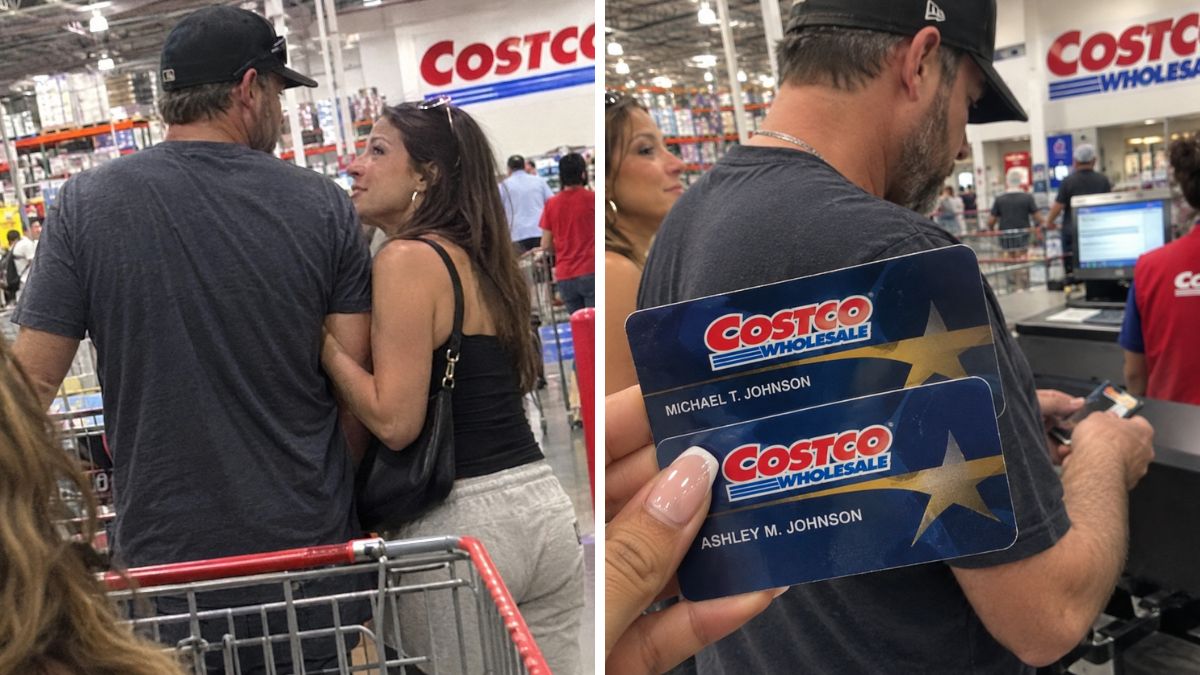
The Second Card
I found the second Costco card on a Tuesday evening while looking for my husband’s wallet.
Mark had asked me to check his jacket pocket because he thought he had left his membership card inside.
I reached into the pocket and pulled out two cards.
The first had his name on it.
The second had a woman’s name.
Melissa Carter.
I knew that name immediately.
Melissa was one of my closest friends.
We had known each other for nearly eight years.
She had been at my wedding, stayed at my house, and listened to me complain about the ordinary problems of married life.
I stared at the card, waiting for a reasonable explanation to come to mind.
Maybe she had lost hers.
Maybe Mark had picked it up by mistake.
Maybe they had gone shopping together and the cards had gotten mixed up.
But none of those explanations made sense.
I turned the card over, checking the membership details.
It looked perfectly normal.
It was not damaged or expired.
It was a real card, with Melissa’s name and photograph.
I put both cards on the kitchen counter and waited for Mark to come home.
When he walked through the door, he looked tired.
He dropped his keys into the bowl and started telling me about a problem at work.
I let him finish.
Then I held up the second card.
“Why do you have Melissa’s Costco card?”
His face changed for just a moment.
Then he laughed.
“Oh, that. She asked me to pick something up for her.”
“What did she need?”
“Some things from the store. I don’t remember exactly.”
He took the card from my hand and slipped it into his wallet.
The conversation was over, as far as he was concerned.
But I had noticed his reaction.
The brief pause.
The quick answer.
The way he put the card away instead of explaining why he had it.
That night, I lay beside him in bed and listened to him breathe.
I wanted to believe him.
I also knew I was going to check.
The First Lie
The next morning, I asked Mark whether he and Melissa had been shopping together.
He looked up from his coffee.
“What?”
“Did you go to Costco with her?”
“No. Why are you asking me that again?”
“Because I found her membership card in your jacket.”
He sighed as if I were making his morning unnecessarily difficult.
“I told you she needed something. I picked it up for her. That’s all.”
“What did you pick up?”
“I don’t know. Household stuff.”
“You don’t remember?”
“Do we really have to turn this into an interrogation?”
I stopped asking questions.
That was something I had learned over the years.
When Mark felt uncomfortable, he made the conversation about my behavior instead of his own.
If I asked too many questions, I was controlling.
If I noticed something unusual, I was imagining things.
If I wanted a clear answer, I was starting an argument.
Usually, I apologized just to make the tension disappear.
This time, I didn’t.
Later that day, I checked our shared credit card account.
There was a Costco purchase from the previous Saturday.
I remembered that Saturday clearly.
Mark had told me he was helping a colleague move furniture.
He had left early and returned late, saying the job had taken longer than expected.
The purchase was large enough to notice.
I checked the date again.
It matched.
I opened our family calendar.
There was nothing unusual recorded, but I remembered Mark mentioning that he had stopped for gas before going to help his colleague.
I called the gas station on the receipt to confirm the transaction time.
I did not learn anything useful from the call, and I felt foolish for trying.
Still, the Costco charge bothered me.
When Mark came home, I asked him about the Saturday purchase.
He barely glanced at the account.
“That was for things we needed.”
“What things?”
“Groceries. Cleaning supplies. Whatever.”
“We didn’t go to Costco that day.”
“I went by myself.”
I watched him closely.
“You said you were helping your colleague move.”
He set his phone down.
“I did both. Is that a crime?”
“No. But you told me you were gone all day because of the move.”
He shook his head.
“I can’t believe we’re doing this over a store membership.”
He walked away before I could respond.
I stood in the kitchen, looking at the account on my phone.
The problem was no longer the card.
It was that every explanation created another question.
The Woman I Thought I Knew
I called Melissa the following afternoon.
I tried to sound casual.
I asked about her work, her family, and a dinner we had talked about having together.
She answered normally, but I noticed that she did not ask much about me.
Eventually, I mentioned Costco.
“Oh, Mark has been there a lot lately,” I said.
There was a pause.
“Has he?”
“I found your membership card in his jacket.”
Another pause followed, longer this time.
“Oh, right. I must have left it with him.”
“How did that happen?”
“We went shopping together.”
Her answer came quickly, as though she had already prepared it.
I felt my stomach tighten.
“Which day?”
“I don’t remember. A couple of weeks ago, maybe.”
“Mark told me he hadn’t gone shopping with you.”
Melissa went quiet.
Then she laughed, but it sounded forced.
“He probably just forgot.”
I wanted to ask whether they had gone shopping on the Saturday he claimed to be helping his colleague.
Instead, I thanked her for explaining and ended the call.
For several minutes, I sat at the kitchen table without moving.
I had spent years trusting Melissa.
I had shared private worries with her that I had never told anyone else.
She knew how hard Mark and I had worked to build our marriage.
She knew what I feared losing.
I called her again that evening.
This time, I asked her to meet me for coffee.
She agreed.
We met at a small café near her office.
She arrived ten minutes late and kept her coat on.
When the waitress came, Melissa ordered quickly and checked her phone.
I waited until we were alone.
“Are you having an affair with my husband?”
Her face went pale.
She looked down at the table.
“No,” she whispered.
But she did not look me in the eye.
I waited.
Finally, she said, “I didn’t mean for this to happen.”
The words seemed to drain the air from the room.
I gripped my cup.
“How long?”
She started crying.
“About four months.”
Four months.
Four months of dinners, messages, excuses, and ordinary conversations in which she had looked me in the face and pretended nothing was wrong.
“Does Mark know that I know?”
She shook her head.
“Please don’t tell him I told you. I need to talk to him first.”
I stared at her.
“Are you serious?”
She wiped her face and said nothing.
I left the café before she finished her coffee.
Outside, the street looked exactly as it had when I arrived.
People hurried past with shopping bags.
Cars moved through the intersection.
Someone was laughing on the other side of the road.
The world had not changed.
But my marriage had.
The Truth at Home
Mark was watching television when I returned.
I stood in front of the screen until he looked up.
“I met Melissa.”
His expression hardened.
“Why?”
“Because I asked her whether she was having an affair with you.”
He stood.
“What did she say?”
“She told me it has been going on for four months.”
For a moment, he did not speak.
Then he rubbed his face and sat down again.
“This is more complicated than you think.”
I almost laughed.
“Then explain it.”
He told me that our marriage had been difficult for a long time.
He said we had become distant, that we argued about small things, and that he had felt lonely.
Some of it was true.
We had been busy.
We had both been tired.
There had been periods when we barely talked about anything beyond bills, work, and household responsibilities.
But none of that explained why he had lied to me.
“You could have talked to me,” I said.
“I tried.”
“When?”
He looked away.
I asked him whether he had told Melissa that our marriage was over.
He hesitated.
“She knew things weren’t good between us.”
“That isn’t what I asked.”
He finally admitted that he had told her we were practically separated.
He had said I was only staying because I did not want to make a change.
None of it was true.
We had never discussed separation.
We had never agreed to end our marriage.
I had been making plans for our future while he was telling another woman that our relationship was already finished.
“Did you tell her you were going to leave me?”
He nodded.
“Were you?”
“I don’t know.”
That answer hurt more than I expected.
I had wanted him to say he was sorry.
I had wanted him to admit that he had made a terrible choice and understood what he had done.
Instead, he seemed confused that I was asking him to take responsibility for it.
He said the affair had been a mistake.
He said he loved me.
He said he wanted to fix things.
I asked him why he had kept Melissa’s membership card.
He looked toward the kitchen.
“I don’t know.”
I realized then that I was unlikely to receive an explanation that would make sense of everything.
The card had been a small object, but it had exposed a much larger truth.
Mark had been living two versions of his life.
In one, he was my husband, making plans and sharing a home with me.
In the other, he was telling Melissa a different story about our marriage.
I could not make those versions fit together.
That night, I slept in the spare room.
When the Story Spread
Over the next few days, Mark tried several approaches.
First, he apologized repeatedly.
Then he became defensive.
After that, he blamed stress, loneliness, and the problems in our marriage.
Finally, he suggested that we keep everything private.
“I don’t want everyone involved,” he said. “This is between us.”
I agreed that our marriage was private.
But I also knew that he had already shared his version of our relationship with Melissa.
I had no reason to believe he would suddenly become honest with everyone else.
I told two people what had happened: my sister and a close friend who lived nearby.
I did not post anything online or contact Mark’s workplace.
I simply needed support while I figured out what to do.
A few days later, I learned that Melissa had been talking to mutual friends.
She had apparently said that Mark and I had been unhappy for years and that she had believed our marriage was ending.
She presented the affair as something that had happened after our relationship was already broken.
I was angry, but I did not respond publicly.
Then Melissa sent me a message.
She said she wanted to clear the air and asked whether we could speak again.
I declined.
A few minutes later, another message arrived.
This one included a screenshot of a conversation between Melissa and Mark.
I read it once.
Then I read it again.
In the exchange, Mark had told Melissa that he would never leave me because separating would be too expensive and complicated.
He had also said that he needed more time before making any decisions.
The messages were dated weeks after he had told me the affair was a mistake and that he wanted to save our marriage.
There was no mention of loneliness or confusion.
No suggestion that he believed our marriage had ended.
He had simply been trying to keep both options open.
I saved the screenshot and put my phone down.
I did not need to send it to anyone.
I did not need to prove that I had been right.
The messages had confirmed what his changing explanations had already shown me.
He had not been honest with either of us.
Later, a mutual friend asked me whether Mark and I were separating.
I answered that we were working through a serious breach of trust and that I was not ready to discuss the details.
I did not give her the screenshot.
I did not ask anyone to take sides.
The people closest to me eventually learned enough to understand why I had stepped away.
Some were surprised.
Others admitted they had noticed that Mark and Melissa seemed unusually close.
I let them draw their own conclusions.
For the first time since finding the card, I stopped trying to control what everyone believed.
Choosing What Came Next
A week after I learned about the affair, I asked Mark to stay somewhere else while I decided what I wanted.
He argued that we should try counseling first.
I told him that counseling might help us understand what had happened, but it would not erase the lies or obligate me to stay.
He packed a bag and left.
The house felt strange without him.
His shoes were still beside the door.
His coffee mug remained in the cupboard.
I kept expecting to hear his key in the lock.
Some mornings, I felt certain I was doing the right thing.
On others, I wondered whether I was throwing away years of marriage over something that could have been repaired.
Those doubts were difficult, but they did not change the facts.
I had asked direct questions and received lies.
I had given him opportunities to tell the truth, and he had chosen to protect himself instead.
Even after the affair came out, he had continued presenting different stories to different people.
I could not rebuild trust by myself.
Melissa sent several more messages.
She apologized and said she had never wanted to hurt me.
She explained that she had believed Mark’s claims about our marriage and that things had become complicated before she understood what she was doing.
I believed that she might regret what had happened.
But regret did not restore our friendship.
I told her I needed distance and would contact her if that changed.
Then I stopped responding.
There was no dramatic confrontation and no public announcement.
I did not want to spend months trying to make either of them feel as hurt as I had felt.
I wanted my life back.
Over the following weeks, I spoke with a lawyer about my options and began sorting out our finances.
I made practical decisions one at a time.
I told my family what they needed to know and kept the rest private.
Mark continued asking for another chance.
I did not give him an immediate answer.
I needed time to consider what I wanted without his promises, explanations, or disappointment influencing every decision.
Eventually, I understood that I was not required to make the marriage work simply because we had spent years building it.
Those years mattered.
The good memories were real.
The life we had shared had not been entirely false.
But the good parts did not cancel out the betrayal.
I could care about the person Mark had been to me and still recognize that I could no longer trust the person he had become in our marriage.
That was enough to guide my next steps.
The Card I Kept
Several weeks later, while clearing out a drawer, I found the Costco card again.
Mark had apparently left it behind when he packed his things.
Melissa’s name was still printed across the front.
I held it for a moment, remembering the evening I had first found it in his jacket.
At the time, I had hoped the card would turn out to be nothing.
I had wanted a simple explanation that would allow me to put it back in his wallet and forget the entire thing.
Instead, it had led me to ask questions I had been avoiding and hear answers I had never wanted.
I placed the card in an envelope with a few other things that belonged to Mark.
I would return them when we arranged the remaining details of our separation.
Then I closed the drawer.
I still did not know every detail of the affair.
I might never know exactly what Mark had told Melissa, what she had believed, or how many times either of them had discussed me when I was not there.
For a while, I thought knowing everything would help me move on.
It would not.
I already knew the things that mattered.
My husband had betrayed my trust.
My friend had helped him do it.
When given the chance to be honest, both had chosen to protect themselves.
I did not need another confession to make those facts real.
My future would involve difficult conversations, practical arrangements, and days when I missed the life I thought I had.
Moving forward would not happen all at once.
But I was no longer waiting for Mark to tell me which version of our marriage was true.
I knew what had happened, and I could decide what came next.
The second Costco card had belonged to Melissa.
The choice about my future belonged to me.
