Home Blog Page 45

I Helped My Friend Pick Her Wedding Dress — Until I Realized She Was Marrying My Ex While Dating My Husband

The Friend Who “Had Everything Under Control”

When Lara asked me to come wedding dress shopping with her, I didn’t even let her finish the sentence.

“Of course I’ll be there,” I said.

I was the organized friend. 

The calm one. 

The one who brought tissues, snacks, safety pins, and backup phone chargers. 

I had a shared spreadsheet for her vendors and a color-coded timeline for her fittings.

She kept telling everyone she didn’t know what she’d do without me.

At the time, I believed her.

Looking back, that might have been the first lie.

The Role I Was Proud To Play

I liked being the supportive one.

After my divorce, I had rebuilt my life carefully. 

New apartment. 

New routines. 

New marriage that felt steady and safe. 

Helping Lara plan her wedding made me feel like I had finally moved into a softer chapter.

No drama. 

No chaos. 

Just champagne, fabric swatches, and group chats full of heart emojis.

And Lara leaned on me constantly.

She sent me mirror selfies from fittings. 

Late-night voice notes about centerpieces. 

Screenshots of conversations with her fiancé that she called “so cute I might die.”

I never noticed she never used his name.

Not once.

At the time, it felt like a quirk.

Now it feels like a warning.

The First Small Shift

The first moment something felt off wasn’t dramatic.

It was a restaurant receipt.

My husband had left his jacket on the chair, and the receipt slipped out when I picked it up to hang it. 

Two entrées. 

Two cocktails. 

A dessert we never order together because he says it’s “too sweet.”

The date was a Tuesday.

He had told me he worked late that night.

I didn’t confront him. 

I didn’t even ask.

I just folded the receipt and put it back in the pocket.

Because denial is quiet. 

It doesn’t scream. 

It whispers that you’re overthinking.

And I wanted peace more than I wanted answers.

Lara’s New “Privacy Phase”

Around the same time, Lara stopped sharing details about her fiancé.

She used to show me everything. 

Screenshots. 

Photos. 

Even the way he texted good morning.

Then suddenly, she said she wanted to “keep some things just for herself.”

It sounded healthy. 

Mature. 

Boundaries.

I supported her.

I always supported her.

But when we were at brunch and her phone lit up, she flipped it face down so fast it almost fell off the table.

Her hand stayed on it for the rest of the conversation.

Like she was guarding it.

From me.

The Name I Wasn’t Supposed To Hear

A week later, I heard it by accident.

We were in her car, and she asked me to grab her lip balm from her bag. 

Her phone lit up as I opened it.

A message preview.

“Can’t stop thinking about last night. — M.”

My husband’s name starts with M.

So did my ex-husband’s.

I remember staring at that single letter like it was written in a different language.

It didn’t mean anything.

It couldn’t.

There are millions of men with that initial.

I put the phone back without saying a word.

But something inside me had already started counting.

Overlapping Timelines

That night, I did something I had never done in my new marriage.

I checked.

Not his phone. 

I wasn’t ready for that.

Just our calendar.

Work trips. 

Gym nights. 

“Dinner with clients.” 

All the evenings he wasn’t home.

Then I opened my messages with Lara.

Voice notes. 

Outfit photos. 

“Miss you tonight, let’s catch up tomorrow.”

Same dates.

Same time stamps.

I sat there with both screens glowing in the dark, feeling like I was looking at two versions of the same life.

One where I was the wife.

One where I was the friend.

Neither of them included the truth.

The Past That Should Have Stayed Closed

The ex-husband realization came slower.

Lara had told me her fiancé lived “out of town” and traveled a lot for work.

So did my ex.

She said they met through mutual friends.

That’s how I met my ex too.

But the real moment — the one that made my stomach drop — was when she showed me a photo of his hand.

Not his face.

His hand, holding a coffee cup.

She was talking about his watch. 

Something about it being vintage.

I knew that watch.

I had given it to him for our fifth anniversary.

There was a tiny scratch on the metal clasp from when we dropped it on a hiking trip.

The scratch was still there.

I smiled and told her it looked expensive.

Then I went to the bathroom and locked the door and sat on the floor until my breathing slowed down.

Because now the letter M had a body.

And a history.

The Moment I Almost Walked Away

I thought about canceling the dress appointment.

I had the text typed out.

“Something came up, I can’t make it tomorrow.”

My finger hovered over send for a long time.

If I didn’t go, I wouldn’t have to see anything. 

I could stay in the version of reality where all of this was a misunderstanding.

But another thought kept pushing through:

If it was real, I deserved to know the full shape of it.

So I deleted the message.

And set my alarm for the morning.

The Group Chat That Shouldn’t Have Existed

That night, my husband fell asleep on the couch.

His phone buzzed.

Just once.

I wasn’t planning to look.

I want that on record.

But the screen lit up with a name I knew.

Lara 💍

There was a preview underneath.

“She has no idea. Tomorrow will be so much fun.”

For a second, I thought it was about me helping pick the dress.

A surprise. 

A joke.

Then another message came through.

“Don’t text me here. Use the other chat.”

Other chat.

I stood there in the dark, the room feeling suddenly too small.

Because secrets need compartments.

And they had built an entire system to keep me out.

Practicing My Face

The next morning, I did my makeup more carefully than usual.

Neutral tones. 

Steady hands. 

A soft lipstick that didn’t smudge when I pressed my lips together.

I practiced smiling in the mirror.

Not a big smile. 

Just the polite, supportive one.

The kind you wear when you’re watching someone else’s life unfold.

I chose an outfit Lara had once said made me look “like the calmest person in the room.”

That was the role I was going to play.

Calm.

Observant.

Present.

Because if there was going to be a moment where everything broke open, I didn’t want to be the one who lost control.

The Bridal Boutique

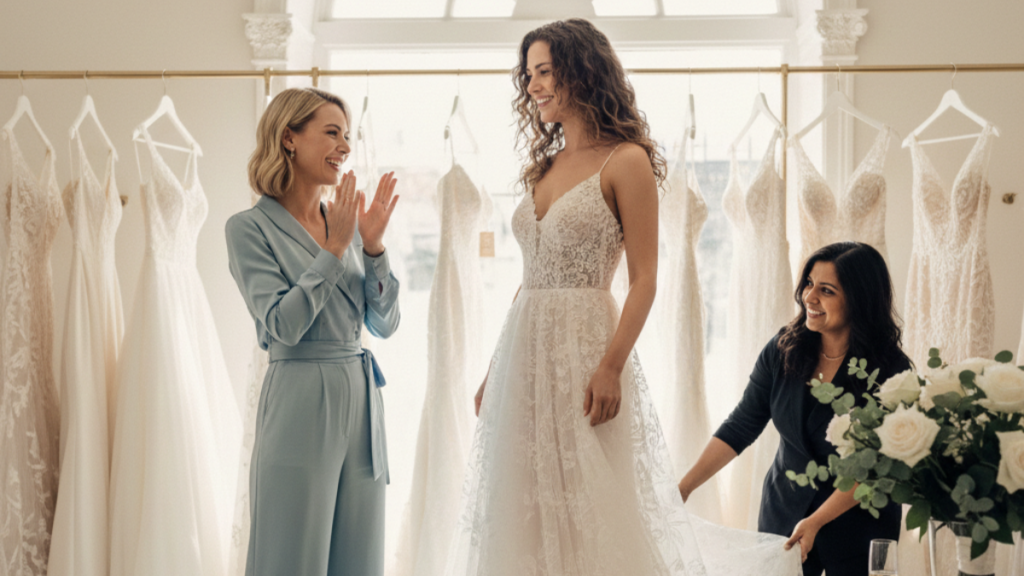
The boutique was full of light and mirrors and women with phones already in their hands.

Champagne flutes. 

White couches. 

A pedestal in the center where brides stepped out and everyone gasped on cue.

Lara ran to hug me when I walked in.

“You’re here,” she said, like she was relieved.

For a second, I almost believed the version of her that loved me.

Then I saw the consultant walk over with a garment bag.

There was a tag attached.

A name.

A full name.

His full name.

My ex-husband’s.

Printed neatly for the fitting schedule.

I felt the room tilt, just slightly.

Lara followed my eyes and then looked back at me.

Her smile didn’t disappear.

But it changed.

Like she knew.

Like she had been waiting for this exact second.

And that’s when I realized something worse than the affair.

This wasn’t a coincidence.

This was a performance.

And I had been cast in it from the beginning.

When the Door Opened the First Time

Lara was still on the pedestal when the boutique door chimed.

She didn’t look surprised.

That was the first thing I noticed.

Not the sound. 

Not the movement behind me.

Her face.

Like she had been waiting for that exact moment in the music.

I turned.

My husband walked in.

He slowed when he saw me, but not in confusion. 

In recognition.

And in shock.

The Script I Wasn’t Given

“You came,” Lara said softly to him.

Not you’re here.

You came.

Planned.

Agreed.

My husband’s eyes kept moving between us.

“Why are you here?” he asked me.

It was such a strange question that one of the brides actually let out a small laugh before she realized no one else was.

“Lara invited me,” I said.

And for the first time, the room shifted.

Because now he knew I hadn’t just stumbled into their scene.

The Circle Closing

The consultant looked like she wanted to disappear.

The other brides had stopped pretending not to stare. 

Phones were out, but lower now, like they weren’t sure yet if this was a happy surprise or something else.

Lara stepped down from the pedestal and walked toward us, gathering the dress in her hands.

“I thought we should stop hiding,” she said.

Stop hiding.

Not tell the truth.

Not explain.

Like secrecy had just become inconvenient.

His Voice, Her Silence

“How long?” I asked my husband.

He didn’t answer.

He looked at Lara.

That was the answer.

“Since last year,” she said.

Last year.

The same year she had helped me choose anniversary gifts for him.

The same year she had held my hand and said, You two are so solid.

The Second Door

The bell chimed again.

This time Lara turned.

And she smiled.

Really smiled.

“Perfect timing,” she said.

I didn’t need to look.

I already knew.

But I did anyway.

My ex-husband walked in like he belonged there.

No hesitation.

No confusion.

His eyes found mine immediately, and for a second — just one — I saw the old version of him. 

The one who used to read my face faster than I could speak.

Then it was gone.

Two Lives in One Room

The boutique suddenly felt too small for the amount of history inside it.

My husband to my left.

My ex to my right.

Lara between us in a white dress.

It would have been absurd if it wasn’t my life.

One of the brides whispered, very loudly, “What is happening?”

And someone else said, “Oh my god keep filming.”

The Truth With Nowhere to Go

“You knew,” I said to Lara.

Not a question.

She nodded.

“I didn’t at first,” she said. “But when we got close… and you talked about your past… I realized.”

“You realized,” I repeated.

“That he was your ex,” she said, gesturing to him.

“And you kept going,” I said.

She didn’t look ashamed.

“I loved him.”

The word landed in the air like it had been waiting for permission.

The Marriage That Continued Anyway

“And you?” I asked my husband.

He looked wrecked now. 

Pale. 

Sweating.

“I never meant for this to—”

“Overlap?” I said calmly.

Because that was the word.

Not mistake.

Not accident.

Overlap.

He nodded.

“Yes.”

“While you were sleeping next to me every night?”

He didn’t answer.

The Affair That Connected Them

“And the two of you?” I asked, looking between him and Lara.

Silence.

That was all I needed.

Lara spoke first.

“We didn’t plan that part,” she said.

Like it made a difference.

Like betrayal comes with categories.

The Moment the Room Turned

That was when the first bride lifted her phone fully.

No pretending now.

This wasn’t a fitting anymore.

This was a scene.

The consultant tried to say something about privacy again, but someone else said, “This is insane,” and moved closer.

The mirrors reflected us from every angle.

There was no way to stand that didn’t include all three of them.

My Past Speaking

I looked at my ex.

“You told me you didn’t believe in marriage anymore,” I said.

“I didn’t then,” he replied quietly.

“But you do now.”

He didn’t look at Lara when he said, “Yes.”

Because this wasn’t about love.

This was about winning.

And for the first time, I saw it clearly.

The Question for Her

“Did you ever tell me the truth about anything?” I asked Lara.

Her eyes finally softened.

“I did love you,” she said.

Past tense.

That was the cleanest cut of the day.

No Raised Voices

I never shouted.

That seemed to disappoint the room.

They wanted a scene.

Tears. 

Throwing something. 

Running out.

But calm is louder than chaos when everyone expects the opposite.

“You built an entire life using mine as the blueprint,” I said to her.

She flinched.

That was the only reaction I got.

The Choice

My husband took a step toward me.

“We can fix this,” he said.

Not I’m sorry.

Not I’ll leave.

Fix.

Like I was a damaged project.

My ex stayed where he was.

Lara looked at both of them.

Waiting.

Because in her version, this was still about being chosen.

The Only Decision That Mattered

“I’m not competing,” I said.

And suddenly the entire performance collapsed.

Because there was no triangle without me.

No drama.

No final selection.

Just three people standing in a bridal boutique with nowhere to put their eyes.

Walking Away From All of Them

I picked up my bag.

No rush.

At the door, I stopped and turned back once.

Lara was still in the dress.

My husband was staring at the floor.

My ex was staring at me like he was trying to memorize my face.

For the first time, none of them had control of the story.

And I didn’t want it either.

The Aftermath That Wasn’t Loud

The video spread. 

Of course it did.

Friends sent it.

Numbers I didn’t know sent it.

People called me strong for staying calm.

They called me cold for not crying.

They called it iconic.

But the truth is, the most important part happened later.

At home.

In silence.

When I took off my makeup and realized I didn’t have to be a wife or an ex-wife or a supportive friend anymore.

I could just be someone who walked out.

What Closure Actually Looked Like

Divorce papers — again.

But this time, no long conversations.

No trying to understand.

No asking why.

Because I had seen the full picture in one room.

I didn’t need their explanations.

I had my own ending.

The Last Realization

People still ask me which hurt more.

My husband.

My ex.

Or my friend.

And the truth is — it wasn’t any of them.

It was the version of my life I thought I was living.

But here’s the thing about that day in the boutique:

I didn’t lose everything.

I walked in as someone holding three different roles together.

I walked out as just myself.

And that’s the only part that was ever real.

Erika Kirk “Unrecognizable” in Resurfaced Pics

Photo Credit: Brian Cahn & Charles-McClintock Wilson/ZUMA Press Wire/Shutterstock/Splash News

Erika Kirk’s Resurfaced Photos Spark Viral Reaction

Erika Kirk, widow of conservative figure Charlie Kirk, recently became a viral topic online. Recent discussions center around her appearance in resurfaced older photos, which show a different look compared to today. Many people noticed that her makeup style has changed significantly over the years. In the past, she appeared in photos with lighter makeup and more minimal beauty routines. In contrast, recent public appearances show heavier makeup and a more glamorous aesthetic.

Erika first gained attention locally long before becoming a national political figure. She once won Miss Arizona in 2011 and appeared on reality television. She hosted her own faith-based podcast and ran a clothing line. She also maintained a lively social media presence back then.

When older photos began circulating again online, many commenters expressed surprise. They felt her earlier look showed more of her natural facial features with less makeup. Most of those photos featured light foundation, a simple brow fill, and some mascara.

Today, she often appears at events, speaking publicly with heavier eyeshadow, eyeliner, and thicker foundation. This bolder presentation has prompted fans and critics alike to contrast her previous and current looks. The difference surprised many people and sparked widespread discussion online.

The resurfacing of these older images ignited conversation about how public figures present themselves. Many people feel makeup can enhance confidence. Others argue heavy makeup can hide a person’s natural look. fans debate whether one look suits her more than another.

Social Media Reacts to Erika Kirk’s Makeup Transformation

The resurfaced photos triggered many reactions across social media platforms like Facebook, Instagram, and X. Commenters shared strong opinions about her changing beauty choices. Some insisted she looked more natural and appealing with minimal makeup. Other users argued that heavier makeup better suited her public persona.

Many commentators referenced what they called “Mar-a-Lago face,” a phrase they use to describe heavy glam makeup associated with certain political circles. They noted that Erika’s look in recent events seemed aligned with this aesthetic. Some commenters said that the bold makeup made her dramatically different from her earlier photos.

One social media user wrote that “less makeup is always better for young women who have natural beauty.” Others added that they preferred her previous, simpler style. Some said her makeup transformation made her look “editorial” rather than natural.

The reactions highlight how public perception of personal style can shift over time. People often attach certain beauty styles to specific social or cultural groups. In Erika’s case, some online critiques linked her look to political identity. That commentary drew both agreement and pushback.

While not all reactions were negative, many voices emphasized nostalgia for her earlier look. This discussion highlights how social media today magnifies even small changes in celebrity and influencer style.

The Context Behind the Look Change

Understanding Erika Kirk’s current look involves more than resurfaced photos. Her life changed dramatically after the murder of her husband, Charlie Kirk, last year. Since then, she has taken on the role of CEO of Turning Point USA, a major conservative organization.

That role thrust her into the national spotlight nearly overnight. With that new visibility came expectations around public presentation. As many public figures know, a professional makeup look often becomes part of how one is seen on stage, television, and at events. Some argue these standards influence how people like Erika choose to present themselves.

Her older public image—lighter makeup and casual style—aligned with earlier phases of her personal life. In those years, she appeared at smaller events and focused on community and lifestyle projects. Her earlier days as a pageant winner, podcaster, and clothing creator often reflected that simpler aesthetic.

In contrast, her recent public role places her in front of cameras frequently. Conservative influencers and social media audiences alike expect a polished look. Makeup artists and stylists now often work with public figures to develop a signature appearance. Erika’s current style likely reflects that professional push.

Whether driven by personal choice or professional advice, Erika’s current makeup style represents her place in a new public role. That shift raises questions about the pressure public figures face to conform to certain beauty standards.

What Fans Wish for Erika Kirk’s Style

Many social media users have expressed different hopes for Erika’s makeup and beauty choices. Some say they appreciate her often glamorous makeup and confident public image. They argue that a bold look supports her visibility as a leader. Others say Erika should consider lighter makeup to showcase her natural beauty more.

Several commenters also described Erika’s older photos as showing warmth and relatability. They said her earlier beauty routine made her appear more accessible and authentic. This view resonates with those who value natural beauty.

Critiques of her current style often include comparisons to other public figures known for heavier glam looks. Some believe that Erika’s current makeup style aligns her with specific political circles. They noted how beauty trends can become associated with social groups or ideologies.

However, not all responses have been positive or respectful. Some commentators used harsh language or personal criticism tied to political disagreements. In today’s online culture, discussions around appearance can sometimes cross into broader social debates.

Despite the polarized reactions, many fans simply hope Erika feels comfortable with her choices. Whether she chooses lighter makeup or a glam look, supporters want her to feel confident and true to herself. The focus for many remains her emotional well-being.

Broader Conversations on Appearance and Identity

Erika Kirk’s makeup debate ties into larger themes about appearance, identity, and public scrutiny. Public figures often face intense analysis of even small details. When old photos resurface, online audiences compare past and present versions intensely. This phenomenon reflects how digital culture treats personal transformation.

The resurfacing of earlier photos also speaks to nostalgia in online communities. Social media users often idealize a “before” period and compare it to the “after” image. This dynamic can influence how public figures are perceived and discussed.

Erika’s journey from pageant winner and lifestyle personality to political CEO is dramatic. That transformation involves both personal growth and public expectations. As a widow and mother, she balances personal grief with public presence. That complexity influences how audiences interpret her appearance.

Ultimately, the conversation around her makeup choices reveals how society debates beauty standards. Some voices call for natural looks, while others embrace glam and confidence. Both perspectives reflect genuine preferences without needing to diminish the other.

Erika Kirk’s resurfaced photos reminded many that people evolve over time. What once was familiar may transform due to life changes, career demands, or personal growth. In a world of online commentary, that evolution becomes a topic of debate.

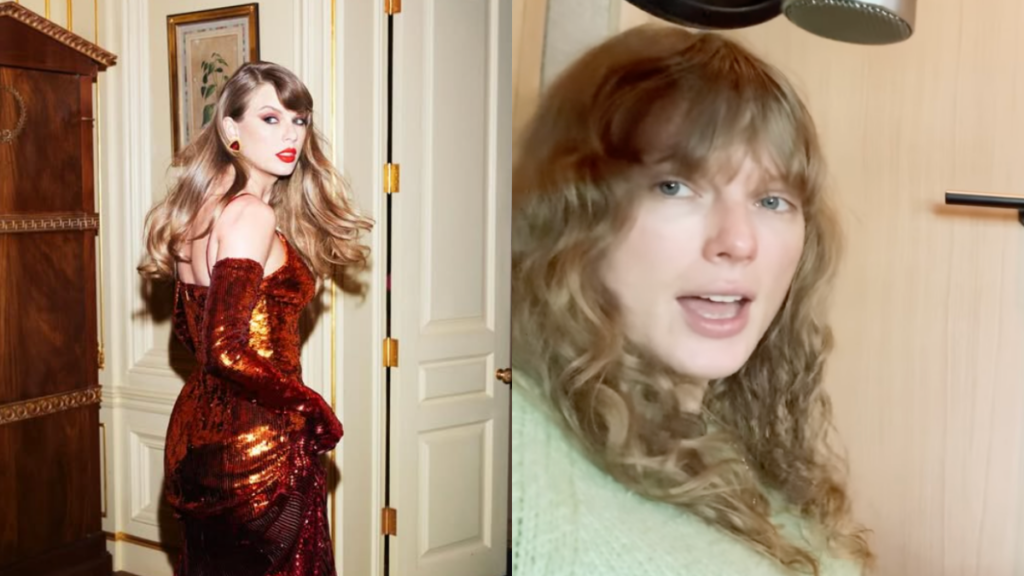
Taylor is Unrecognizable in New Pic

Photo Credit: Taylor Swift / Instagram

Taylor Swift Celebrates a Landmark Moment

Taylor Swift marked a major career milestone in a deeply personal way. She went makeup-free to celebrate her latest chart achievement. She shared a behind-the-scenes Instagram carousel on February 23. The post showed her inside the recording studio without her signature glam look. Fans immediately noticed her natural appearance and relaxed energy. Many praised the authenticity of the moment.

Swift celebrated her 14th number-one song on the Billboard Hot 100. Her track “Opalite” reached the top position and tied her with Rihanna. This achievement places her third in Hot 100 history. Only The Beatles and Mariah Carey rank above her. Swift expressed gratitude and excitement in her caption. She thanked fans for their unwavering love and support.

“Opalite” appears on her album The Life of a Showgirl. The album already produced another chart-topping single. Swift has not achieved two number-ones from one album since 1989 in 2014. This milestone highlights both her longevity and continued dominance. Her celebratory post felt intimate rather than staged. She chose authenticity over polish for this career-defining moment.

Her choice to go makeup-free reinforced the message of confidence and comfort. Swift showed that vulnerability can coexist with success. Fans responded with admiration and warmth. Many commented that her natural glow matched the joy of the achievement. This celebration reflected growth, gratitude, and genuine happiness.

A Closer Look at “Opalite” and Its Chart Success

Opalite” quickly became a standout track among fans. Swift released the album in October 2025. The song climbed steadily before reaching No. 1 on the Hot 100. This milestone marked her 14th chart-topper. She now shares the third-place record with Rihanna. The accomplishment reinforces her lasting impact on pop music.

The song explores themes of healing and self-forgiveness. Swift wrote lyrics that focus on reclaiming independence after heartbreak. Listeners connected deeply with its emotional honesty. Critics praised its polished production and relatable storytelling. Swift collaborated with producers Max Martin and Shellback. Their creative partnership shaped the song’s energetic yet reflective tone.

“Opalite” also marks her first album with two number-one hits since 2014. That gap underscores how rare this achievement truly is. Swift has consistently evolved while maintaining commercial appeal. She balances experimentation with signature songwriting strength. The track demonstrates both maturity and musical confidence.

The music video complements the song’s message of renewal. It blends retro aesthetics with modern pop sensibilities. Swift used vibrant visuals to emphasize transformation. Behind the scenes, she appeared joyful and engaged. Her makeup-free studio clips aligned perfectly with the song’s raw sincerity. The authenticity strengthened the song’s emotional resonance.

Breaking From Beauty Norms

Taylor Swift’s bare-faced appearance quickly sparked conversation online. She typically favors bold red lipstick and defined eyeliner. Fans often associate her look with polished glamour. In this post, she embraced a softer and more natural image. The contrast felt intentional and refreshing.

Her relaxed studio setting amplified the authenticity. She laughed, sang, and collaborated freely with her team. The absence of heavy makeup highlighted her confidence. Many fans applauded her willingness to share unfiltered moments. Some said the post inspired them to embrace their own natural beauty.

Celebrities often present carefully curated images. Swift challenged that expectation through simplicity. She demonstrated that major achievements do not require flawless styling. Her natural look emphasized comfort rather than perfection. The message resonated strongly with her audience.

Beauty standards in entertainment frequently demand constant polish. Swift disrupted that norm with ease. She showed that vulnerability enhances rather than diminishes star power. Her decision sparked conversations about self-acceptance and authenticity. The moment aligned perfectly with the emotional core of “Opalite.” Fans celebrated both the milestone and the message behind it.

Behind-the-Scenes Creativity and Joy

Swift’s Instagram post also provided rare studio access. She shared clips of vocal takes and creative discussions. Fans watched her sing the chorus with genuine emotion. She laughed alongside producers Max Martin and Shellback. These candid moments revealed her passion for the craft.

The footage showed the collaborative energy behind “Opalite.” Swift actively shaped melodies and refined lyrics. She celebrated breakthroughs with visible excitement. The environment felt supportive and playful. Fans appreciated seeing the artistry unfold naturally.

Swift also included clips from the music video set. She wore retro costumes inspired by 1980s style. The visuals contrasted with her makeup-free studio scenes. This contrast highlighted her range as both performer and storyteller. She transitions seamlessly between character and authenticity.

By inviting fans into the creative process, Swift strengthened their connection. She transformed a milestone announcement into a shared celebration. The behind-the-scenes footage felt like a personal gift. Fans responded with enthusiasm and heartfelt messages. Swift reminded everyone that music begins with genuine moments of inspiration.

What This Milestone Means for Taylor Swift

Taylor Swift’s 14th number-one hit reinforces her enduring legacy. Few artists sustain this level of success over decades. She continues to evolve without losing her core identity. This milestone confirms her place among pop music’s elite. Tying with Rihanna further highlights her global impact.

Achieving two number-ones from one album underscores creative strength. The Life of a Showgirl resonates across diverse audiences. Swift balances vulnerability with confident production. She consistently adapts while honoring her storytelling roots. This balance fuels both critical acclaim and commercial success.

Her makeup-free celebration added emotional depth to the achievement. She chose sincerity over spectacle. That decision strengthened her bond with fans. She emphasized gratitude rather than competition. Her message focused on shared success and appreciation.

Swift’s journey continues to inspire both artists and listeners. She proves that authenticity fuels longevity. Her celebration showed that real moments matter most. As she climbs higher in chart history, she remains grounded. This milestone reflects not only numbers, but growth, confidence, and enduring connection.

Why Miley & Bruno are fighting over “Flowers”

Photo Credit: Miley Cyrus / Instagram

The “Flowers” Lawsuit — What’s Happening Now

Miley Cyrus is pushing to end a major lawsuit over her hit song “Flowers.” The legal battle began nearly two years ago when Tempo Music Investments sued her. Tempo claims that “Flowers” copied key elements from Bruno Mars’ 2013 song “When I Was Your Man.” Instead of waiting for trial, Miley’s lawyers filed a motion to dismiss the case.

In the February 2026 filing, Cyrus’s legal team argued the lawsuit has no legal basis. They said that the similarities between the two songs are common in many breakup tracks. Those common elements involve words like “flowers” and phrasing about independence. The lawyers claimed no one can own such basic lyrical tropes.

Tempo Music Investments bought part of the copyright to “When I Was Your Man” from co-writer Philip Lawrence. Because Mars is not part of the lawsuit, Cyrus’s team argues Tempo lacks proper standing. Standing means having the legal right to sue based on ownership.

Cyrus, her co-writers, and Sony Music deny copying protected elements. They said the legal complaint only points to unprotectable ideas. Many of those ideas are basic lyrical and musical building blocks.

By removing the case early, Miley hopes to save time and avoid expensive trial preparation. Her team said the judge should grant summary judgment. That means ruling without a full trial. Critics say the case may still continue even if dismissal fails.

The Heart of the Copyright Argument

At the core of the lawsuit is the claim of copyright infringement. Lawsuits of this kind analyze whether one song directly copies another’s protected elements. Tempo argues “Flowers” has too many similarities to ignore. They say the pacing, bass structure, and lyrics mirror Bruno Mars’ hit.

Tempo’s complaint listed melodic and harmonic elements they believe overlap. They claim specific chord progressions have a strong resemblance. Tempo also disputes Miley’s upbeat pop style and simple language. They feel the similarities exceed mere coincidence.

Miley’s legal team sharply disagrees. They said the only similarities are isolated words or common themes. Those include basic breakup concepts like flowers, hands, and personal reflection. Her attorneys argue such concepts cannot be copyrighted. “No one owns these words,” they wrote in the dismissal motion.

In addition, Miley’s team argues that the songs’ structures differ completely. “When I Was Your Man” is a slow piano ballad filled with regret. “Flowers” is a self-empowerment break-up anthem full of upbeat rhythms. Cyrus’ lawyers emphasized the chorus contrast. They said this difference shows originality.

The dispute highlights how copyright law interprets creative expression. Cases often hinge on whether a similarity involves protectable material. Courts recognize common musical trends that all artists use. Miley’s team sees this case as one of those.

How “Flowers” and “When I Was Your Man” Compare

The songs at the center of the lawsuit have an interesting relationship. “Flowers” was released in January 2023 to massive success. It became one of Miley’s most iconic songs, earning critical acclaim and awards. “When I Was Your Man,” released in 2013, topped charts and reached deep emotional resonance.

Public and industry comparisons began as soon as “Flowers” came out. Many listeners noted how similar the lyrical themes felt. They pointed out mirrored phrases about purchasing flowers and holding hands. Yet that surface similarity doesn’t prove copyright infringement.

Tempo argued those parallels were more than superficial. They said even the pitch pattern and bass line show clear overlap. Miley’s lawyers responded that those components alone aren’t enough. They noted that many pop songs use similar tools and progressions. A simple chord progression rarely meets the legal test for originality.

The defense also cited other breakup songs that use similar phrases. They pointed to tracks by other artists that include “flowers,” “dancing,” and reflective lyrics. Her team argued these words and motifs are part of everyday pop lexicon.

Musicologists often debate what qualifies as a protectable musical pattern. Cyrus’ experts claimed the alleged overlaps are not original to Mars. They said these are musical ideas that no artist can exclusively own.

This legal battle now hinges on whether courts view the similarities as protectable or commonplace. Miley’s team insists “Flowers” stands apart.

Legal Counterarguments and Fair Use Debate

Miley’s motion to dismiss didn’t just argue common elements. Her lawyers also raised “fair use” as a legal defense. Fair use allows certain creative borrowings when the work comments on the original. Cyrus’ side said a reasonable person could see “Flowers” as commentary.

This is a complex argument that goes beyond pure similarity. They said “Flowers” celebrates independence after a failed relationship. That contrasts strongly with the remorse in “When I Was Your Man.” The idea of answering one song with another has precedent in music.

Tempo has rejected the notion that fair use applies here. They maintain Cyrus’ hit borrows too much of “When I Was Your Man.” Tempo has described the lawsuit as necessary to protect copyright owners. Their legal team continues pushing the case forward.

Even when a song becomes iconic, it doesn’t make it immune from challenges. The fact that “Flowers” soared in popularity doesn’t guarantee legal protection. Miley’s lawyers argued the case lacked standing on procedural grounds once before. That motion failed, leading to this broader defense strategy.

Ultimately, judges decide these matters by applying legal tests. Courts examine whether the plaintiff has proper ownership. They also consider if the alleged similarities constitute protected expression.

What This Means for Artists and the Industry

The “Flowers” copyright lawsuit has larger implications for music creators. Copyright disputes often shape how artists write and release songs. If Miley’s dismissal succeeds, it may strengthen defenses against similar claims. It could set a precedent for how courts evaluate everyday musical ideas.

On the other hand, if the case survives dismissal, the lawsuit could go to trial. A trial might clarify where courts draw the line on songwriting elements. Artists and writers could face greater legal risks. They may need to adapt their creative approaches.

The industry watches closely whenever high-profile music faces legal challenges. Leaders in music publishing, production, and law all observe these outcomes. Fans also become engaged when beloved songs are questioned.

Miley’s case shows that even chart-toppers are not immune to scrutiny. The result could influence negotiations over future collaborations. It might encourage clearer copyright protections for creators.

For now, both sides wait for the judge’s ruling on the dismissal. The decision could come later this year. Whatever happens, this case reminds us how complex copyright law remains.

I Volunteered at My Husband’s Political Fundraiser — And Exposed the Staffer He Was Sleeping With

It Was All About Optics

The fundraiser wasn’t about policy.

It was about presentation.

Every detail had been curated weeks in advance, from the lighting to the floral arrangements to the exact shade of navy on the campaign banners.

Image was everything.

My husband thrived in rooms like this.

Polished, controlled, ambitious.

He told me it would mean a lot if I volunteered at the check-in table.

He said it would “look good.”

And that phrase stayed with me longer than it should have.

I Agreed Because I Always Did

I ironed my dress carefully and practiced a supportive smile in the mirror.

Donors would expect warmth.

I’d done this before.

Shaken hands, thanked contributors, handed out name tags.

We were a team in public.

At least, that’s what we presented.

He kissed my cheek before the doors opened and told me we’d make a strong impression tonight.

I didn’t realize I would.

The Staffer Was Already There

She was younger than I expected, but confident in a way that didn’t feel inexperienced.

Headset on, clipboard in hand.

She moved through the room like she belonged at the center of it.

Not on the edges.

When my husband approached her, their interaction was brief.

But not formal.

She didn’t smile the way staffers smile at candidates.

She smiled like someone who already knew him well.

I Noticed the Familiarity Immediately

He leaned in closer than necessary when she showed him something on her tablet.

Their shoulders touched.

She laughed quietly at something he said.

He didn’t step back.

I’ve been married long enough to recognize chemistry when I see it.

And this wasn’t political.

It was personal.

Check-In Gave Me a Front-Row Seat

From behind the registration table, I could see the entire room.

Every exchange.

Donors arrived in waves, handing over envelopes and posing for photos.

Everything looked seamless.

Meanwhile, she stayed near him almost constantly.

Adjusting his jacket, whispering reminders.

At one point, she placed her hand briefly on his back while guiding him toward a group of investors.

Like it was habit.

No one else seemed to notice.

But I did.

The Donor List Told Me More Than He Had

As I checked names off the list, I saw patterns.

Late-night strategy meetings.

Private dinners labeled as “campaign prep.”

Events he’d said ran long.

Her name appeared next to more than just logistics.

She was attached to everything.

When I glanced up and saw them laughing again near the bar, the pieces aligned quietly.

Too quietly.

She Avoided Me Until She Didn’t

Eventually, she approached the check-in table with a stack of updated seating cards.

Professional smile in place.

She introduced herself formally, as if we hadn’t already made eye contact three times that night.

Her handshake was firm.

But her eyes flickered briefly toward him before meeting mine.

And that flicker was not professional.

It was territorial.

He Asked If Everything Was Running Smoothly

He came over just before the keynote speech to check on me.

Publicly attentive.

He thanked me for helping.

He squeezed my shoulder lightly.

She stood just behind him, listening.

Too close.

I looked at the two of them framed by the campaign banner and realized something unsettling.

They were comfortable.

The Speech Was About Integrity

When he took the stage, he talked about trust and transparency.

Accountability.

He spoke about serving the community with honesty.

With unwavering values.

Donors nodded along.

Applause echoed cleanly through the hall.

From the check-in table, I watched the staffer clap proudly.

Like she was invested in more than his campaign.

And that was when I decided I wasn’t going to let integrity stay theoretical.

I Picked Up the Microphone After Him

The program called for a brief thank-you from volunteers.

That included me.

I walked toward the stage calmly, holding the donor ledger in my hand.

No one suspected anything.

I smiled at the crowd the same way I had all evening.

Polished.

Then I thanked everyone for their generous contributions.

For investing in something they believed in.

And I told them it was impressive how much money could be raised in a room built on trust.

I Connected the Dots Out Loud

I said transparency matters, especially when people are writing checks in good faith.

That honesty isn’t selective.

I mentioned how interesting it was that some partnerships extend beyond campaign strategy.

That some investments are more personal.

The room shifted subtly.

Whispers started.

I looked directly at the staffer standing near the edge of the stage.

Then at my husband.

And I said that if donors were funding deception along with policy, they deserved to know.

The applause didn’t come this time.

The silence did.

And suddenly, the optics weren’t controlled anymore.

The Room Didn’t Know How to React

For a moment, the donors looked at each other instead of at us, as if waiting for someone else to decide whether this was a misunderstanding or a scandal.

The campaign banner behind me suddenly felt ironic.

A few people let out awkward laughs.

Most didn’t.

My husband stepped toward me with a smile that didn’t reach his eyes.

Damage control had already begun.

He Tried to Reframe It Instantly

He thanked me for my “passion” and gently took the microphone from my hand.

He said emotions run high during long campaigns.

He called it a misunderstanding.

A private matter.

He said the focus tonight should remain on policy and progress.

He always knew how to redirect a room.

But redirection only works when the audience believes you.

The Staffer Didn’t Look Surprised

She didn’t panic.

She didn’t cry.

She stood there with her clipboard, watching the donors carefully instead of looking at me.

Like she was calculating.

When one of the larger contributors stepped forward and asked what exactly I meant, she didn’t interrupt.

She let him answer.

And that told me she was used to him handling fallout.

A Donor Asked the Wrong Question

An older man near the front cleared his throat and asked whether campaign funds had been used inappropriately.

That shifted everything.

This wasn’t about marriage anymore.

It was about money.

My husband assured him absolutely not.

His voice was steady.

But the fact that the question had been asked at all meant the damage had already begun.

I Didn’t Back Down

I stepped forward again, even without the microphone, because the room was still listening.

I said deception doesn’t require stolen funds.

It just requires misrepresentation.

And image.

I gestured toward the check-in table where donation envelopes were stacked neatly.

Then toward the staffer.

I said voters and donors deserve full transparency about the character of the person they’re investing in.

The silence deepened.

The Optics Cracked

A few donors quietly picked up their coats.

One woman whispered something to her husband before walking toward the exit.

The carefully curated atmosphere began to dissolve.

Conversations shifted from campaign promises to personal judgment.

The photographer lowered his camera.

Even he seemed unsure what to capture.

Because image control only works until reality interrupts it.

He Finally Looked Angry

Not embarrassed.

Not defensive.

Angry.

He said I was jeopardizing years of work.

That I was being reckless.

I reminded him that integrity isn’t reckless.

Exposure just feels that way to people who rely on secrecy.

And for the first time that night, he didn’t try to spin it.

The Staffer Spoke for the First Time

She said this was inappropriate.

That I was conflating personal issues with public service.

Her tone was calm, but clipped.

Controlled.

She said her role was strictly professional.

That anything else was speculation.

I asked her if she wanted to repeat that under oath.

The room shifted again.

The Treasurer Walked Over

He didn’t say much, but his presence changed the atmosphere instantly.

He asked quietly whether there was anything he needed to know.

My husband said no.

Too quickly.

The staffer stayed silent this time.

Which was new.

Because silence, in rooms like this, often speaks louder than confession.

Donors Started Asking for Clarification

Not loudly.

Not dramatically.

But quietly, in clusters.

About oversight.

About internal controls.

About leadership stability.

The campaign manager began moving from group to group, trying to contain the narrative.

But narratives spread faster than strategy.

And once donors begin questioning character, the damage isn’t limited to marriage.

I Stepped Off the Stage First

I didn’t wait for him to dismiss me.

I didn’t apologize.

I walked past the check-in table, past the envelopes, past the banner with his smiling campaign photo.

The image now felt hollow.

As I reached the exit, I heard raised voices behind me.

Urgent.

Because once trust fractures publicly, it rarely repairs privately.

My Phone Buzzed Before I Got to the Car

A reporter’s name flashed across the screen.

Someone had already tipped them off.

I didn’t answer.

Not yet.

Inside the venue, I could still see silhouettes moving quickly through the windows.

Meetings forming in real time.

And I realized something important as I stood there in the parking lot.

The fundraiser hadn’t just raised money.

It had raised questions.

He Came Outside Five Minutes Later

His tie was loosened now.

His composure thinner.

He asked if I had any idea what I’d just done.

I told him yes.

He said donors might pull funding.

That endorsements could disappear.

I told him that credibility disappears faster.

He looked back at the building like he was calculating the damage.

And for the first time all night, he looked uncertain.

I Made One Thing Clear

I told him this wasn’t about revenge.

It was about alignment.

If he wanted to campaign on trust and accountability, he needed to live it.

Even when it was inconvenient.

He asked what I wanted.

A separation.

An apology.

Silence.

I said I wanted honesty, in every room, not just on stage.

And as another car pulled into the lot, likely someone arriving late to a fundraiser that no longer existed in its original form, I understood something final.

Optics can be managed.

Integrity can’t.

Selena Deserves Better” After Benny Shows Off Filthy Feet

Photo Credit: Friends Keep Secret

Fans React Strongly to Benny Blanco’s Podcast Premiere

Fans expected light entertainment when music producer Benny Blanco launched his new show, “Friends Keep Secrets.” Instead of laughs and big guests, many viewers were distracted by one bizarre detail in the opening episode.

Blanco sat casually on a sofa. Within seconds, viewers noticed his bare feet covered in dark dirt and grime. The uncomfortable detail immediately lit up social media. People joked and recoiled at how unclean his appearance looked.

Reactions weren’t limited to Blanco alone. Fans quickly tied their criticism back to his marriage with Selena Gomez. Many expressed shock that someone so famous would appear so unconcerned about hygiene.

This online reaction shows how closely fans watch celebrity behavior. Many comments focused on how Blanco’s image reflected on Selena, not just the podcast itself. Social media can amplify every detail of public figures’ lives, as this incident made clear.

Hygiene Drama Turns to Relationship Scrutiny

When Blanco’s feet became the main topic of discussion, things escalated fast. Followers were quick to question how the Grammy-nominated producer had captured Gomez’s heart.

On X (formerly Twitter), some fans openly expressed disgust and frustration at Blanco’s appearance. One wrote that his dirty feet were the “most disgusting” they’d ever seen, wondering aloud why Gomez stayed with him.

Others accused Blanco of embarrassing Selena during interviews. Fans cited past moments where he reportedly made jokes at her expense.

Calls poured in for Gomez to reconsider her relationship altogether. Some online commentators even encouraged her to divorce Blanco, saying she “deserved better.”

This escalation shows how quickly public perception can shift. What began as a minor detail turned into a broader commentary on how a celebrity is treated in a relationship.

The Internet’s Love–Hate Relationship with Selena Gomez

Selena Gomez has long lived in public view. Her journey from child star to global pop icon has been both celebrated and criticized. She has spoken candidly about her growth, health struggles, and evolving identity in front of millions of fans.

Yet, the internet can be unforgiving. Gomez has publicly addressed how negative comments affect her. She acknowledged that bitter social media remarks can “bring her down.”

Fans’ reactions to Blanco’s podcast incident show a blend of affection and fierce protectiveness. Some see Gomez as a resilient figure who deserves respect. Others, however, get caught up in online narratives that shift quickly from praise to criticism.

This contrast highlights the complicated ways celebrity culture operates in the digital age, where boundaries blur between private life and public spectacle.

The Podcast That Wasn’t Meant to Be About Feet

Blanco described “Friends Keep Secrets” as more than a podcast. He envisioned a hybrid show with celebrity guests, conversations, and spontaneous music creation. The intention was a relaxed space for artists to talk and collaborate.

However, the debut episode failed to deliver that promise for many viewers. Instead of discussions with stars like Ed Sheeran and Gwyneth Paltrow, the spotlight was on Blanco’s unwashed feet.

This early backlash could affect the show’s future reception. It highlights how first impressions—especially in visual media—matter. When expectations are high, anything unexpected can overshadow a creative concept.

Whether Blanco’s project recovers or not, this moment stands as a lesson in how easily public response can derail even well-intended ideas.

Why Fans Want Better for Selena Gomez

At the heart of this drama is one recurring theme: fans’ deep attachment to Gomez. They want her to be happy and respected. When something seems to undermine her dignity, they react strongly.

Many followers see Gomez as someone who deserves kindness, not derision. Their comments reflect a broader call for empathy in the celebrity sphere. This also connects to Gomez’s own messages about kindness and mental health. She has urged compassion in the past.

Yet, online spaces can twist even well-meaning sentiments into harsh debates. Gomez’s fans may want her to “have it all,” but social media dynamics often complicate that wish.

At its core, this episode shows how deeply personal celebrity narratives become when millions of people feel invested in them.

I Found Out My Roommate Was Secretly Recording Me — So I Confronted Her On TV

Something Felt Off Before I Ever Saw It

Living with my roommate had always felt easy at first.

We weren’t best friends, but we were comfortable enough to share groceries, complain about work, and watch reality TV together most nights.

She was organized in a way I admired.

Everything had a place, every surface stayed clean, and she always seemed strangely aware of what was happening in the apartment even when she wasn’t home.

At the time, I thought it meant she was attentive.

Later, I realized it meant she was watching.

The feeling started small, almost dismissible.

Objects slightly moved, conversations she referenced that I didn’t remember telling her about, little details she shouldn’t have known.

She would casually ask how my phone call with my sister went.

Or mention something I’d said while cooking alone in the kitchen.

I assumed I must have told her earlier and forgotten.

Until I realized I definitely hadn’t.

That was the first moment doubt crept in.

But doubt still isn’t proof.

The Charger That Didn’t Belong

I found it on a Tuesday morning while cleaning behind the bookshelf in the living room.

I had dropped an earring and was crawling around on the floor looking for it.

Behind the shelf sat a small black cube plugged into an extension cord.

At first glance, it looked like a phone charger.

But neither of us owned anything that used that type of plug.

I pulled it out carefully, expecting dust or maybe an old adapter.

Instead, I saw a tiny dark circle embedded in the plastic.

A lens.

My stomach dropped instantly, though my brain tried to argue otherwise.

Maybe it was a smart device.

Maybe security equipment.

Maybe something harmless.

But deep down, I already knew.

Because it was pointed directly at the couch.

I Told Myself I Was Overreacting

I unplugged it and sat there on the floor for almost ten minutes just staring at it.

My hands were shaking, but I kept trying to rationalize what I was seeing.

People don’t secretly record their roommates.

That’s something that happens in documentaries, not normal apartments.

I even plugged it back in briefly, convincing myself I needed confirmation before accusing anyone of something so extreme.

A faint blinking light appeared.

The realization hit all at once.

Someone had been watching this room.

Watching me.

And there was only one other person who had access to the apartment.

I Didn’t Confront Her Right Away

Every instinct told me to text her immediately.

To demand an explanation.

But something stopped me.

If she had hidden one camera, there could be more.

If she was recording, she might already know I’d found it.

So instead, I put the device back exactly where it had been.

Same angle, same cord placement.

Then I sat on the couch pretending everything was normal.

Waiting.

That evening, she came home unusually cheerful.

And she looked directly at the bookshelf before saying hello.

The Way She Watched Me Changed

Once suspicion entered my mind, everything she did felt different.

Her questions sounded rehearsed.

She asked what I’d done all day.

What time I woke up.

Whether I’d stayed home the whole afternoon.

Each question felt less like conversation and more like verification.

Like she already knew the answers.

I started noticing how often her phone was positioned facing me when we talked.

How she smiled slightly when I shared personal details.

It wasn’t warmth.

It was observation.

And I suddenly felt like I was performing inside my own home.

I Started Looking Everywhere

The next morning, I checked every outlet, smoke detector, and shelf in my bedroom.

I felt ridiculous doing it.

But then I found a second device.

This one was smaller, hidden inside a decorative plant facing my desk.

My chest tightened so quickly I had to sit down.

Two cameras meant intention.

Planning.

This wasn’t paranoia anymore.

This was surveillance.

The Worst Part Was Realizing How Long

When I searched the device model online, my hands trembled so badly I kept mistyping.

The listing described remote viewing and cloud storage.

Continuous recording capability.

Audio included.

I thought about every private phone call I’d taken.

Every moment I’d cried after work.

Every conversation about relationships, money, family — things I believed were safe inside my own walls.

And suddenly my memories didn’t feel like mine anymore.

They felt stolen.

I Needed Proof Before Accusing Her

I knew confronting her without evidence would only give her time to deny everything.

So I started documenting.

Photos of devices.

Serial numbers.

Videos showing placement angles and timestamps.

I even filmed myself discovering the second camera, whispering explanations so I wouldn’t forget details later.

The more evidence I gathered, the clearer one thing became.

This wasn’t accidental curiosity.

It was systematic.

The Opportunity Came Unexpectedly

A week later, she mentioned something casually over dinner.

A local lifestyle show was doing a segment featuring shared living spaces.

She had applied without telling me.

Apparently, they wanted to film a short home tour.

She laughed and said it would be fun exposure.

That we should clean up and make the apartment look perfect.

I smiled and agreed instantly.

Because suddenly, I realized I wouldn’t need a private confrontation at all.

I would have an audience.

I Decided Then

I spent the next few days acting completely normal.

Laughing at her jokes.

Cooking dinner together.

Pretending I trusted her.

Meanwhile, I copied every piece of evidence onto a flash drive and kept it hidden in my bag.

I rehearsed what I might say without sounding hysterical.

I didn’t want revenge.

I wanted truth.

And the cameras she installed were about to give it to me.

Because during that TV tour, she expected to show viewers our home.

She didn’t realize I planned to show them what she had really built inside it.

The Cameras Arrived Before I Was Ready

The production crew showed up early Saturday morning with lights and microphones.

Suddenly our apartment felt crowded and official.

She was glowing with excitement, guiding them from room to room like a proud host.

Explaining how well we lived together.

How much trust mattered between roommates.

I stood just off-camera, smiling politely while my heart pounded harder with every minute that passed.

The host eventually turned toward me and asked if I wanted to say anything about sharing the space.

And I realized the moment had finally arrived.

I Reached Into My Bag

The flash drive felt heavier than it should have.

My hands were steady now.

Calm in a way that surprised me.

She watched me curiously as I stepped closer to the production monitor.

Still smiling.

Still confident.

Because she thought this was her story to tell.

She didn’t know I had brought receipts.

And as the cameras continued rolling, I asked the producer one simple question that changed the entire room.

“Can we play something before we continue the tour?”

The Room Went Quiet Before Anyone Understood Why

The producer hesitated when I handed over the flash drive.

He asked what it contained.

I told him it was footage related to the apartment.

Something viewers should probably see before we continued filming.

He looked unsure but curious, glancing toward my roommate for confirmation.

She laughed lightly and shrugged, assuming it was some kind of surprise joke.

“Sure,” she said. “This should be fun.”

That word — fun — almost made me lose my composure.

Because nothing about the last two weeks had felt fun.

The crew connected the drive to a nearby monitor.

The screen flickered as files loaded.

And for a brief moment, the apartment felt completely still.

The First Clip Started Playing

It showed the living room exactly as it looked now.

Same couch, same lighting, same angle.

Except the perspective was wrong.

Too high, too fixed.

The cameraman frowned immediately.

“That’s not our shot,” he said quietly.

The footage continued.

There I was on screen, sitting alone days earlier, talking on the phone with my sister about work stress.

Completely unaware I was being recorded.

Someone behind the crew muttered, “Wait… what is this?”

My roommate stopped smiling.

Recognition Hit Her All At Once

Her posture changed before she said anything.

Shoulders stiffening, eyes darting toward the bookshelf.

The exact bookshelf where I had found the first camera.

She laughed again, but this time it sounded forced.

“Okay, what is this supposed to be?”

I didn’t answer immediately.

I let the footage continue.

Another clip loaded automatically — this one from my bedroom desk, showing me studying late at night.

The room filled with uncomfortable silence.

Because everyone realized at the same moment what they were watching.

I Finally Spoke

I kept my voice calm, almost conversational.

“I found two hidden cameras in our apartment last week.”

The host blinked, unsure whether this was part of the show.

The cameraman slowly lowered his equipment.

My roommate shook her head quickly.

“That’s not true.”

I pointed toward the screen.

“That footage came from devices hidden in our living room and my bedroom.”

Her face lost color instantly.

And the crew stopped treating this like entertainment.

The Producer Asked the Question No One Wanted To

“Are you saying someone here installed these?”

His tone shifted from casual to cautious professionalism.

Legal awareness creeping in.

I nodded.

“There are only two people who live here.”

Every camera in the room turned slightly, instinctively reframing the scene.

Even the ones not meant to capture drama.

My roommate’s breathing became visible — shallow, uneven.

She looked toward the exit like she might leave.

But there was nowhere to go without passing through the crew.

She Tried to Laugh It Off

“It’s probably a misunderstanding,” she said quickly.

“Maybe old equipment from a previous tenant.”

The producer asked gently, “Do you recognize the devices?”

She hesitated.

That pause lasted less than two seconds.

But it was enough.

Because hesitation only happens when the truth needs editing.

I Played the Second File

This one showed her.

Entering the apartment alone one afternoon.

Walking directly to the plant in my room.

Adjusting something inside it.

The timestamp appeared clearly in the corner of the screen.

Someone behind the camera whispered, “Oh my god.”

She covered her mouth instantly.

And the denial ended right there.

The Energy in the Room Shifted Completely

The host stepped back, visibly uncomfortable.

Crew members exchanged looks, unsure whether filming should continue.

But no one stopped recording.

Because reality had replaced production.

My roommate turned toward me, eyes wide with panic.

“You went through my stuff?”

The question stunned me.

Not because it accused me — but because she still thought she was the victim.

She Finally Admitted Part of It

“I was worried about safety,” she said quickly.

“I just wanted to know what was happening when I wasn’t home.”

Her explanation sounded rehearsed, like something she’d already justified to herself many times.

But hearing it out loud made it sound worse.

“You recorded my bedroom,” I said quietly.

Her silence answered for her.

The crew shifted again, the weight of the situation settling heavily over everyone present.

The Cameras Kept Rolling

No one had yelled cut.

Maybe because no one knew how.

The producer stepped forward and gently asked if we should pause filming.

I shook my head.

I didn’t want editing.

I wanted clarity.

“For weeks,” I said, “you listened to private conversations and watched me without permission.”

She looked around desperately, searching for someone to side with her.

No one did.

Because intent is hard to defend when proof is playing on a monitor.

The Truth Came Out in Pieces

She admitted she had started recording months earlier.

At first just the living room.

Then more rooms.

She said she felt insecure living with someone she didn’t fully trust.

That she wanted control.

The word control echoed louder than anything else she said.

Because suddenly everything made sense — the questions, the knowledge, the constant awareness.

She hadn’t been observant.

She’d been surveilling.

The Crew Finally Stepped In

The producer quietly told everyone filming would stop for legal reasons.

Microphones were lowered.

But phones had already come out among assistants and staff.

The moment was no longer contained.

My roommate sat down heavily on a chair, face buried in her hands.

The confidence she’d carried all morning was gone.

And for the first time since discovering the cameras, I felt something unexpected.

Relief.

After the Crew Left

The apartment felt unfamiliar once they packed up.

Too quiet.

She tried apologizing then, voice small and shaky.

Saying she hadn’t meant to hurt me.

But intention didn’t erase violation.

I told her I would be moving out immediately.

That I needed distance — and safety.

She nodded without arguing.

Because there was nothing left to defend.

The Part I Didn’t Expect

Later that night, the producer called me privately.

He said the network’s legal team had reviewed the footage.

They wanted permission to air portions of what happened.

With my consent.

Not as entertainment.

As a story about privacy and boundaries.

I stared at my phone for a long time before answering.

Because suddenly the confrontation wasn’t just personal anymore.

It was public.

What Happened After

I moved out within a week.

Changed passwords, routines, even coffee shops.

For a while, I jumped whenever I noticed a camera in public spaces.

Trust takes longer to rebuild than people realize.

But something shifted too.

I stopped second-guessing my instincts.

Stopped apologizing for protecting my own space.

Because the moment I pressed play on that footage, I took control back.

The Last Thing She Said to Me

As I carried my final box out of the apartment, she stood quietly by the door.

“I never thought you’d expose me like that,” she said.

I paused before leaving.

“You exposed yourself,” I replied.

And as the door closed behind me, I realized something important.

The cameras she installed were meant to watch me.

But in the end, they revealed her instead.

I Found Out My Sister Was Secretly Raising My Husband’s Child — So I Told the Truth at Thanksgiving

My sister had always been close to me.

Close enough that her presence in my marriage never felt strange at first.

She stopped by often, sometimes unannounced, bringing leftovers or offering to help clean.

She said she just wanted to support us.

When my husband worked late, she would text to check if I needed company.

When we argued, she somehow already knew before I told anyone.

I told myself that was what sisters were supposed to do.

Show up when life got messy.

Looking back now, I realize she wasn’t just showing up for me.

She was already part of something I didn’t understand yet.

The First Small Discomfort

It started with little moments that didn’t quite fit together.

The way my husband and sister shared private jokes I didn’t remember being part of.

Sometimes they would exchange looks across the room, quick and subtle.

Gone before I could question them.

I convinced myself I was imagining things.

Jealousy felt irrational when it involved family.

And honestly, I trusted them both too much to even consider another explanation

Trust makes you ignore instincts longer than you should.

She Knew Too Much About Our Marriage

Whenever my husband and I had disagreements, my sister seemed unusually informed.

She offered advice that referenced conversations I hadn’t shared.

At first I assumed he was venting to her.

That felt normal enough.

But she didn’t just know facts — she knew emotions.

Details only someone present would have understood.

She often defended him gently when I complained.

Encouraging patience.

Telling me he was “going through a lot.”

I didn’t realize then how personal that understanding really was.

The Pregnancy Announcement

The day she told us she was pregnant, the entire family celebrated.

She said the father wasn’t involved and wanted privacy.

We rallied around her immediately.

That’s what families do.

My husband stepped up especially fast.

Offering to help with doctor appointments and errands.

I thought it showed kindness.

Proof I had chosen a compassionate partner.

He attended ultrasounds when I couldn’t.

Built furniture for the nursery without being asked.

Everyone praised him for supporting his sister-in-law during a difficult time.

I praised him most of all.

The Timeline That Didn’t Sit Right

Months later, while helping her organize baby photos, I noticed something small.

A date printed in the corner of an ultrasound image.

I counted backward automatically.

Then counted again.

The conception window overlapped perfectly with a period when my husband and I had briefly separated after a rough argument.

A separation my sister had comforted me through constantly.

I felt a flicker of unease but pushed it away immediately.

Coincidences happen.

Still, the thought lingered longer than I wanted to admit.

The Baby Looked Familiar

When the baby was born, everyone commented on how beautiful he was.

Family traits became a game — whose nose, whose eyes.

Someone joked he had my husband’s smile.

We all laughed.

But the joke stuck with me.

The resemblance grew stronger as weeks passed.

Same dimples.

Same expressions.

I told myself babies often look alike.

That grief and exhaustion were making me paranoid.

But doubt, once planted, doesn’t disappear easily.

The Moment That Changed Everything

One evening I stopped by her apartment unexpectedly to drop off groceries.

The door was slightly open.

Inside, I heard my husband’s voice.

Soft.

Comforting.

Not unusual — except for the way he said her name.

There was intimacy in his tone I had never heard directed at her before.

Or maybe I had, and only now recognized it.

I didn’t walk in immediately.

I stood frozen outside, listening.

And what I heard next rearranged every memory I had.

Words I Was Never Meant to Hear

She told him she was tired of hiding.

That it was getting harder as the baby grew.

He responded quietly, telling her they just needed more time.

That the truth would destroy everyone.

My breathing stopped completely.

I wanted to believe I misunderstood.

That context would fix what I thought I heard.

But then the baby cried.

And he said, softly, instinctively, “I’ve got him.”

Not “the baby.”

Him.

I Left Without Letting Them Know

I backed away from the door slowly, heart pounding so loudly I felt dizzy.

Every step toward my car felt unreal.

The world outside looked exactly the same.

People walking dogs, traffic moving normally.

Meanwhile, my entire life had shifted without warning.

I sat in my car for almost an hour trying to construct another explanation.

Any explanation.

But every memory began rearranging itself into something undeniable.

The late nights.

The shared looks.

The timing.

Proof Came Faster Than I Expected

That night, I searched old messages between my sister and me.

Patterns emerged immediately.

Times she insisted I give my husband space.

Moments she encouraged me to stay overnight elsewhere after arguments.

She had positioned herself perfectly between us.

Comforting both sides.

Creating opportunities I never noticed.

I realized with horrifying clarity that I hadn’t just been betrayed once.

I had been managed.

I Needed Confirmation

Accusing them without proof would only let them deny everything.

So I waited.

I watched interactions more carefully.

Noticing how naturally he held the baby.

How the baby calmed instantly in his arms.

One afternoon, while helping fold laundry, I saw paperwork partially tucked inside a drawer.

Medical documents.

His name listed as emergency contact.

Not mine.

The Truth Became Impossible to Ignore

I photographed everything quietly.

Dates, signatures, hospital forms.

Each piece removed another layer of denial.

By the time I finished, my hands were steady again.

Shock had turned into clarity.

They hadn’t planned to tell me.

They had planned to let me live beside the lie forever.

And strangely, the anger didn’t arrive first.

Grief did.

Thanksgiving Was Already Planned

Our family hosted Thanksgiving every year.

Same traditions, same long table, same gratitude speeches before dinner.

This year, I was responsible for organizing everything.

Cooking schedules, seating arrangements, decorations.

My sister asked if she could bring the baby.

My husband offered to help carve the turkey.

They acted completely normal.

As if I still didn’t know.

And that was when I realized something important.

If they could build a secret inside family gatherings…
then the truth belonged there too.

I Made My Decision Quietly

I didn’t confront them privately.

I didn’t scream or accuse.

Instead, I finalized the Thanksgiving plans carefully.

Making sure everyone would be present.

Parents.

Aunts.

Cousins.

The people who believed our family was built on honesty.

Because betrayal that deep doesn’t just break a marriage.

It fractures an entire family story.

The Morning of Thanksgiving

I woke up calmer than I expected.

Almost peaceful.

The food prepared, the table set perfectly, the house filled with familiar smells.

Everything looked warm and normal.

My sister arrived carrying the baby.

My husband followed behind her.

They smiled at me the same way they always had.

And for the first time, I understood how easy deception becomes when people assume love equals safety.

Dinner began exactly as it always did.

Laughter.

Stories.

Gratitude.

Until my mother asked me to start the annual thankfulness speech.

I Stood Up Holding My Glass

Everyone quieted immediately.

Forks paused mid-air.

I looked around the table at faces I had loved my entire life.

People who believed they knew our family completely.

My sister smiled warmly, bouncing the baby on her knee.

My husband avoided my eyes.

I took a slow breath.

Because they thought this was just another Thanksgiving tradition.

They didn’t realize it was the moment everything would finally change.

And as I raised my glass, I began with the words no one expected to hear.

I Started the Way I Always Did

“I’m grateful for family,” I said, lifting my glass slightly.

Everyone nodded, smiling politely.

The room felt warm, safe, familiar — exactly the way Thanksgiving was supposed to feel.

I thanked my parents for keeping traditions alive.

My aunts for always bringing too much dessert.

Laughter moved gently around the table.

My sister relaxed visibly, bouncing the baby as she listened.

My husband focused on his plate, carving turkey carefully.

For a moment, I almost wished I could stop there.

But truth doesn’t disappear just because silence feels easier.

The Tone Shifted Slowly

“I’m also grateful for honesty,” I continued.

The word lingered longer than the others.

A few people glanced up, sensing something different in my voice.

I spoke about how families survive hard things when they tell the truth.

How secrets can quietly reshape relationships without anyone realizing.

My husband finally looked at me then.

Confusion flickering across his face.

My sister’s smile faded just slightly.

And the air in the room began to tighten.

I Mentioned This Year Specifically

“This year taught me a lot about trust,” I said carefully.

Forks stopped moving.

Conversations faded into silence.

I explained how grateful I was for support during difficult moments in my marriage.

How lucky I felt to have a sister who was always there.

My sister nodded slowly, uncertain.

Relieved, maybe, that the speech still sounded loving.

Then I added, softly, “Sometimes the people closest to us know our lives better than we do.”

My mother shifted uncomfortably in her chair.

Someone cleared their throat.

The room sensed the turn before understanding it.

I Introduced the Timeline

“I learned something recently,” I said, keeping my voice calm.

“About how timing matters.”

I described helping my sister during her pregnancy.

How proud we all were when the baby arrived.

Everyone smiled again briefly, assuming sentimentality had returned.

Then I mentioned finding an ultrasound while organizing photos.

And noticing dates that didn’t quite make sense.

My sister froze completely.

My husband set down the carving knife.

The First Crack Appeared

“I thought it was a coincidence at first,” I continued.

“I really wanted it to be.”

The baby babbled softly, unaware of the tension building around him. 

The sound made the moment feel almost unreal.

I explained counting backward.

Checking calendars.

Remembering when my husband and I had briefly separated.

My father frowned, trying to follow along.

My mother whispered my name cautiously.

But I kept going.

Because stopping halfway would only protect the lie.

I Told Them About That Night

“I stopped by her apartment one evening,” I said.

“And I heard a conversation I wasn’t meant to hear.”

My sister shook her head immediately.

“Please don’t,” she whispered.

My husband stared at the table, unmoving.

I described standing outside the door.

Hearing them talk about hiding the truth.

Gasps spread quietly around the table as realization began connecting the pieces.

Someone dropped a fork.

The sound echoed louder than it should have.

The Words That Changed Everything

“I heard my husband comfort my sister,” I said slowly.

“And I heard him call the baby his son.”

Silence crashed into the room.

Not confusion.

Understanding.

My mother covered her mouth instantly.

My father looked between them, searching for denial.

My sister began crying before anyone spoke.

And my husband finally said my name — not loudly, just desperately.

I Finished the Truth

“I checked the dates,” I continued gently.

“I saw the paperwork. The emergency contact forms.”

My voice never rose.

That somehow made it heavier.

“The baby isn’t just my nephew,” I said.

I looked directly at them both.

“He’s my husband’s child.”

The Table Exploded Into Noise

Questions came from every direction at once.

My aunt stood up abruptly.

My mother started crying openly.

My father demanded an explanation.

My sister sobbed uncontrollably, repeating that she never meant for this to happen.

My husband tried to speak but couldn’t finish a sentence.

Chairs scraped loudly against the floor.

The baby began crying too, startled by the chaos.

Thanksgiving dissolved into disbelief.

The Truth They Couldn’t Deny

My father asked directly if it was true.

No one answered immediately.

That silence said everything.

Eventually my husband nodded once, barely visible.

My sister buried her face in her hands.

The confirmation hit the room like a physical force.

Years of shared memories suddenly looked different through new understanding.

Family photographs.

Holidays.

Every interaction rewritten in real time.

Someone Asked Why I Did It This Way

Through tears, my mother asked why I would reveal something so painful at dinner.

Why not privately.

I swallowed before answering.

“Because the lie lived here,” I said quietly.

“At family gatherings. At holidays. Right in front of all of us.”

My voice shook for the first time.

“They let me sit at this table beside them while hiding the truth.”

No one argued.

Because everyone understood that part.

My Sister Finally Spoke

She apologized through sobs, saying it started during a vulnerable time.

That feelings grew when my marriage struggled.

She said she never planned for a child.

Never planned for it to go this far.

But intention didn’t soften impact.

The betrayal wasn’t just romantic.

It was familial.

And that cut deeper than anything else.

My Husband Tried to Explain

He spoke about confusion, mistakes, guilt.

Words that sounded hollow against reality.

He said he planned to tell me eventually.

The table reacted immediately — disbelief, anger, frustration.

Because “eventually” often means never.

I realized then that explanations weren’t what I needed anymore.

Truth had already done its work.

Dinner Never Happened

The food sat untouched as people gathered in small emotional clusters.

Some comforting my parents.

Others arguing quietly in corners.

The traditions we followed every year dissolved completely.

Turkey went cold.

Candles burned low.

And the family I thought I knew no longer existed in the same way.

The Moment I Finally Felt Something Different

As chaos continued around me, I felt an unexpected calm.

Not happiness.

Not even relief.

Just certainty.

For weeks I had carried the truth alone.

Now it belonged to everyone.

The weight shifted off my shoulders.

And for the first time since discovering everything, I could breathe fully again.

What Happened After

I left before dessert, grabbing my coat while conversations still echoed behind me.

No dramatic exit.

Just quiet separation.

Outside, the cold air felt grounding.

Real.

My phone buzzed repeatedly with messages I didn’t read yet.

Because some endings need silence before answers.

The Last Thing I Saw

Through the window, I watched my family gathered inside — crying, talking, trying to rebuild understanding from shattered pieces.

The baby sat in a high chair, unaware of the storm surrounding him.

Innocent in a story he never chose.

And I realized something painfully clear.

The truth didn’t just end my marriage.

It changed every relationship at that table forever.

What I Understand Now

People think betrayal is loud when it happens.

But most of the time, it grows quietly inside trust.

Hidden behind kindness.

Behind familiarity.

Until one day the timeline stops making sense.

And when the truth finally comes out, it doesn’t just reveal what was hidden.

It reveals who everyone really was all along.

My Boss Asked Me to Train My Replacement — So I Exposed His Lies at the Company Town Hall

The Meeting That “Wasn’t About Me”

The calendar invite came in at 8:12 a.m.

“Quick sync – restructuring updates.”

That was all it said.

No context. 

No agenda. 

Just my manager’s name and a 15-minute slot that sat in the middle of my morning like a loose tooth.

I told myself it was nothing. 

We had been hearing the word restructuring for weeks. 

It floated through Slack threads and hallway conversations. 

People said it in lowered voices, like it might trigger something if spoken too loudly.

Still, I brought my notebook.

He didn’t look up when I walked into his office. 

Just kept typing, smiling at his screen like he was answering a message that mattered more than I did.

“Hey,” he said finally, like he had just remembered I existed. “So, big picture — some changes are coming.”

Not your role is changing.

Not we need to talk about your future.

Just… changes.

I nodded. 

Calm. 

Professional. 

The version of me that had survived every performance review without ever giving him a reason to criticize me.

He folded his hands. “You’ve been doing solid work. No issues there.”

That should have reassured me.

It didn’t.

Because he said it the way you tell someone their flight is delayed, not canceled.

Then he added, “We’re going to bring in someone new. Different skill set. Fresh perspective.”

I waited.

He smiled.

“And I’d like you to train them.”

For a second, I thought I had misunderstood the sentence.

Train them.

My replacement.

But he hadn’t used that word.

Not yet.

The Language of Almost

I asked what this meant for my role.

He leaned back in his chair, steepled his fingers like he had practiced this in a mirror.

“It’s not about replacing you,” he said. “It’s about evolving the team.”

Evolving.

Such a clean word.

“So I stay?” I asked.

“We’ll figure out where you fit after the transition.”

After.

That word landed heavier than anything else.

He started talking about timelines, onboarding plans, documentation. 

He spoke in bullet points. 

Deliverables. 

Milestones.

Like my job had already become a project plan.

And the strangest part?

He never once said my position was safe.

The Slack Message

The announcement went out that afternoon.

“Excited to welcome Steve to the team!”

A smiling headshot.

A list of achievements that sounded suspiciously similar to my job description.

Cross-functional collaboration. 

Process optimization. 

Client reporting.

I stared at the screen long enough for the green dot next to my name to turn yellow.

Then gray.

My coworker Mia sent me a private message.

“Wait… isn’t that literally what you do?”

I typed back: “Looks like I’m training him.”

She sent one word.

“WHAT?”

I didn’t respond.

Because I didn’t have an answer that didn’t make me feel small.

Denial, the Professional Way

The next morning I built an onboarding plan.

Shared drive access. 

Workflow walkthroughs. 

Weekly checkpoints.

I even added a section called “Tips for success in this role.”

That was the moment I almost laughed.

Because I was documenting how to be me.

But I told myself a story.

Maybe they were creating a new role for me.

Maybe this was a promotion in disguise.

Maybe my manager was just bad at communication.

That last one was the easiest to believe. 

It required the least amount of pain.

So I scheduled the training sessions.

And when Steve walked in for his first day, I smiled like none of this was strange.

The First Crack

He was nice.

That made it worse.

Friendly. 

Grateful. 

Eager.

“I’ve heard so much about how you’ve built this system,” he told me.

From who?

Not from my manager. 

He had never once credited me in a meeting.

But Steve said it casually, like it was common knowledge.

Then he added, “Yeah, Mark and I go way back, so when he told me about this opportunity…”

Mark.

My manager.

Go way back.

The sentence didn’t finish in my head. 

It just hung there, unfinished and loud.

I kept the training moving. 

Showed him dashboards. Introduced him to stakeholders. 

Walked him through the reporting cadence.

My voice sounded steady.

But something had shifted.

Because this wasn’t a restructure.

This was a handoff.

Performance Concerns

Two days later, HR scheduled a “check-in.”

That phrase again. 

Soft. 

Harmless.

The HR rep smiled too much.

“We’ve received some feedback about your recent performance,” she said.

Recent.

My last review had been the strongest of my career.

I asked what kind of feedback.

She glanced at her notes. “Concerns about missed deadlines. Communication gaps. Difficulty adapting to new processes.”

Each sentence felt like it belonged to someone else.

“Can you give examples?” I asked.

She said she’d follow up.

She never did.

But she did say something else.

“Your manager wants to support you through this transition.”

Transition.

So now there was a narrative.

And I hadn’t been part of writing it.

The Document

That night I opened my performance files.

Every review. 

Every quarterly goal. 

Every email where a client had thanked me for fixing something that had been broken for months before I joined.

I wasn’t looking for proof.

I was looking for reality.

Because I could feel it slipping.

There was one folder I had almost forgotten about. 

A shared project archive from the previous year.

Inside it were the original process maps. 

The ones I had built from scratch.

The metadata still had my name on them.

Creation date: 11:48 p.m.

I remembered that night. 

Ordering takeout. 

Working past midnight because the system kept crashing and no one else knew how to fix it.

That was the moment I stopped feeling confused.

And started feeling… alert.

Because if my performance was suddenly a problem, someone had decided it needed to be.

Training My Replacement

Steve learned fast.

Of course he did.

I had built everything to be teachable.

Every time he thanked me, I said, “No problem.”

Every time my manager joined our sessions, he praised Steve’s “fresh ideas.”

Ideas that were, word for word, the same suggestions I had made six months earlier.

Back then, he had called them “premature.”

Now they were “exactly the direction we need to go.”

I started taking notes.

Not the kind you share.

The kind you keep.

Dates. 

Phrases. 

Meeting summaries.

Little things.

Like how my access to one reporting tool suddenly disappeared.

Like how my name stopped appearing on recurring client calls.

Like how Steve was introduced as the new point of contact before anyone had officially told me my role was changing.

Mia’s Question

We were in the communal kitchen when she asked it.

“So… are you going to say something?”

I poured coffee I didn’t want.

“I don’t have anything to say yet.”

“You trained him,” she said quietly. “You built all of it. Everyone knows that.”

Not everyone.

Not the people who mattered.

Because the story was being rewritten in real time.

And I was the only one who still had the original version.

The Town Hall Announcement

A company-wide meeting popped up on the calendar.

Quarterly all-staff.

CEO hosting.

“Open Q&A at the end.”

That part was new.

Our CEO liked transparency.

That was the brand.

“Ask me anything,” he always said.

Most people never did.

Because questions have consequences.

I closed the invite and went back to my onboarding checklist.

But the words stayed with me.

Open Q&A.

Ask me anything.

The Email I Wasn’t Supposed to See

It came to me by accident.

Or maybe not.

A forwarded thread. 

Sent to the wrong distribution list. 

Deleted two minutes later.

But not before I opened it.

Subject line: “Backfill plan.”

Backfill.

Not restructure.

Not evolve.

Backfill.

My role.

Mark had written it.

“Given ongoing performance concerns, we’ll transition responsibilities to Steve over the next four weeks.”

Ongoing.

Concerns.

There was a bullet point underneath.

“Need to manage messaging carefully – she’s well liked.”

I read that line three times.

Not valued.

Not essential.

Well liked.

Like I was a mood.

The Shift

The next morning, I stopped trying to be agreeable.

Not outwardly.

On the surface, nothing changed.

I trained Steve. 

Updated documentation. 

Joined meetings.

But inside, something had gone very still.

I wasn’t trying to save my job anymore.

I was trying to understand the story that was being told about me.

And who was telling it.

Because if performance issues had been fabricated, there would be a trail.

There is always a trail.

Calendar edits.

Version histories.

Messages sent late at night when people think no one is watching.

I knew where everything lived.

I had built the system.

The Question I Couldn’t Unhear

At the end of the week, my manager Mark stopped by my desk.

“Really appreciate how professional you’re being about all this,” he said.

All what?

He still hadn’t said the words.

He still hadn’t told me my job was gone.

He gave my shoulder a quick, friendly squeeze.

“We’ll find a place for you,” he added.

Find.

Like I was something misplaced.

That was the moment I realized something else.

He thought this was already over.

Deciding What to Do

That night I sat at my kitchen table with my laptop open and the town hall invite on the screen.

I replayed the past month in my head.

Every meeting.

Every sentence.

Every document.

I had two choices.

Leave quietly.

Or ask one question in a room where the entire company would hear the answer.

Not emotional.

Not accusatory.

Just factual.

A question about restructuring.

About performance metrics.

About hiring decisions.

A question that only made sense if you knew the truth.

And I did.

I closed the laptop.

Because for the first time since that 8:12 a.m. calendar invite, I wasn’t wondering what was happening to me.

I was wondering what would happen when I said it out loud.

And the town hall was in three days.

The Room Where Transparency Lived

The town hall was standing room only.

Rows of chairs for the speakers filled the center. 

People lined the walls with laptops pressed to their chests like shields. 

The leadership team sat in the front row, relaxed in the way people are when they believe the script has already been approved.

Mark waved when he saw me.

A small, friendly wave.

Like we were on the same side of something.

I waved back and took a seat near the aisle.

Close enough to reach a microphone.

Far enough that no one would think I had planned this.

Because I hadn’t planned it.

I had prepared.

There’s a difference.

The Performance Slide

The CEO walked through the usual updates. 

Revenue. 

Growth. 

Future vision. 

Words like alignment and efficiency floated across the screen in large, confident fonts.

Then came the restructuring slide.

“Some roles are evolving to better match our strategic direction,” he said. “And we’re proud of how professionally everyone has handled these transitions.”

Handled.

I wrote the word down.

Because my transition had never been announced.

My manager Mark clapped.

So did everyone else.

It sounded like approval.

Open Q&A

The CEO smiled. “Let’s open it up. Ask me anything.”

The microphones were placed in the aisles.

No one moved at first.

They never do.

You could feel the room doing that silent math. 

Is my question safe? 

Is it worth it? 

Will it follow me back to my desk?

Then someone asked about office parking.

A soft laugh rolled through the room. 

The kind that releases tension without changing anything.

Another question about hybrid work.

Safe. 

Contained.

Mark leaned back in his chair, one ankle resting on his knee, completely at ease.

That’s when I stood up.

Walking to the Microphone

The walk felt longer than it was.

I could hear my own steps.

I could also hear Mia’s voice in my head from the kitchen.

Are you going to say something?

When I reached the microphone, the CEO smiled at me.

I had worked directly with him on two projects. 

He knew my name.

“Hi,” I said. My voice came out steady. “I have a question about restructuring and performance evaluations.”

Mark stopped leaning back.

Just slightly.

“Of course,” the CEO said. “Go ahead.”

The Question

“I’m trying to understand how performance concerns are documented before a role is backfilled,” I said. “Specifically, what the process is for communicating those concerns to the employee, and how that aligns with the decision to hire someone who already has a personal relationship with the higher-ups.”

Silence.

Not shocked.

Focused.

The kind of silence where people start replaying their own experiences.

I kept my eyes on the CEO.

“This matters,” I added, calm, “because in my case, the first time I heard about any performance issue was after I was asked to train the person who was hired to take over my responsibilities. And the documentation I’ve seen doesn’t match my last formal review.”

You could feel the room shift.

Not loudly.

But physically.

The First Crack in the Story

The CEO’s smile didn’t disappear.

But it changed.

He looked down at the front row. 

At HR.

At Mark.

“Is this something we can follow up on later?” HR said quickly, already half-standing.

I shook my head.

“I’d prefer clarity on the process,” I said. “So everyone understands how these decisions are made.”

I didn’t raise my voice.

I didn’t say the word friend.

I didn’t have to.

Because half the room had already opened Slack.

The Receipts Without Showing Them

“I built the current reporting system,” I continued. “Every version is time-stamped. My last performance review rated me as exceeding expectations. So I’m trying to understand when the concerns began, and how they were measured.”

The CEO looked at Mark.

Not aggressively.

Just… waiting.

Markleaned forward. “We’ve had ongoing conversations—”

“We haven’t,” I said.

Still calm.

Still controlled.

“If there are records of those conversations, I’d welcome seeing them.”

That was the moment.

Because there were no records.

And everyone who had ever worked with me knew how obsessive I was about documentation.

The Room Chooses

No one clapped.

This wasn’t that kind of moment.

But people were looking.

At me.

At Mark.

At the CEO.

At each other.

And in that looking, the original story started to fall apart.

Because it wasn’t about me anymore.

It was about process.

Fairness.

The quiet fear that this could happen to anyone.

The CEO’s Answer

“Thank you for raising this,” he said finally.

Formal. 

Careful.

“Our policy is that performance concerns are documented and communicated clearly before any staffing changes are made. If that hasn’t happened, we need to review it immediately.”

He didn’t look at me when he said the last part.

He looked at Mark.

And HR.

Which told me everything.

After the Applause That Wasn’t Applause

The meeting moved on.

Someone asked about the holiday party.

People laughed too loudly.

But the energy had changed.

When it ended, no one rushed for the exits.

They clustered in small groups.

Mia found me near the door.

“You just…” she started, then stopped. “You were so calm.”

“I know,” I said.

That was the only way it would work.

The Conversation in the Glass Office

An hour later, I was in a conference room with the CEO and HR.

Mark wasn’t there.

That was the first sign.

The second was the stack of printed documents in front of them.

My reviews.

My project timelines.

The original process maps.

“I didn’t bring these,” I said.

“We pulled them,” the CEO replied.

There was a long pause.

“The hiring relationship wasn’t disclosed,” HR said carefully.

Of course it wasn’t.

“That’s a problem,” the CEO added.

What I Got Back

They didn’t offer me my old role.

That would have made the story too clean.

But they did offer me a choice.

Stay, in a newly defined position that reported to a different department.

Or leave with a severance package that came with words like recognition and contribution and thank you for everything you’ve built.

I took the package.

Not because I lost.

But because I was finished.

Mark

He didn’t speak to me again.

His name disappeared from Slack two weeks later.

No announcement.

Just gone.

Someone told me he had “decided to pursue other opportunities.”

That seemed like a nice way to put it.

The Last Day

I packed my desk slowly.

Not because there was a lot.

Because I wanted to feel it.

The ending that wasn’t an ending.

Mia hugged me.

“You changed something,” she said.

I shook my head.

“I just asked a question.”

But we both knew that wasn’t true.

Closure

On my last walk out of the building, I didn’t feel victorious.

I felt steady.

The story they had tried to write about me wasn’t the one people remembered.

That was enough.

Because I hadn’t exposed him to ruin him.

I had done it to keep my reality intact.

And as the elevator doors closed, I realized something that hadn’t been true for months.

I wasn’t wondering what was going to happen to me anymore.

I already knew.

I was going somewhere I wouldn’t have to prove I existed in a system I built with my own hands.

I Helped My Best Friend Through Postpartum Depression — Until I Found Out Why My Husband Was Always There

The Way We Carried Her

When Emma stopped answering messages, I knew something was wrong.

She had been the loudest one in our group chat during her pregnancy. 

Sending photos of tiny socks. 

Asking if stretch marks ever fade. 

Laughing about how she cried over a sandwich.

Then Leo was born, and she disappeared.

Not fully. 

Just enough to make you uneasy.

I brought her soup the first time. 

She didn’t open the door right away. 

I could hear the baby crying inside. 

A thin, tired sound that went straight through my chest.

When she finally let me in, she looked like someone had taken the color out of her.

“I’m fine,” she said.

She wasn’t.

That was the day I decided she wasn’t going to do this alone.

I just didn’t realize I would be the one who ended up alone instead.

The Three of Us

At first, it made sense that Tom wanted to help.

He had always been kind to Emma. 

We both had. 

She was my best friend since university. 

He called her “family” long before the baby came.

So when he offered to pick up groceries for her, I thought it was sweet.

When he fixed the loose cabinet in her kitchen, I thought it was thoughtful.

When he started stopping by after work to “check if she’d eaten,” I told myself this was what good people do.

“You’re a lifesaver,” she texted him once while I was sitting next to her on the couch.

I saw the message pop up on his phone.

He didn’t hide it.

That should have meant something.

Instead, I smiled and said, “You really are.”

Because at that point, we were all on the same team.

Or so I thought.

The Night She Cried Into His Shoulder

The first time it felt strange was a Thursday.

I came over later than usual. 

I had stayed at work to finish a deadline. 

Tom had gone ahead without me.

The apartment was dim when I walked in.

Emma was sitting on the floor next to the couch. 

The baby monitor humming softly. 

Tom was next to her.

She was crying.

Not the quiet, exhausted crying I had seen before.

This was deep. 

Shaking.

And she was leaning into him.

His arm around her shoulders. 

His hand moving slowly up and down her back.

Neither of them noticed me right away.

I stood there longer than I should have.

Not because of what they were doing.

Because of how natural it looked.

Like this was something they had done before.

Tom looked up first.

“Hey,” he said, too quickly. “You’re here.”

Emma pulled away and wiped her face.

“I’m a mess,” she laughed.

I knelt down next to her. 

Took her hand.

But something had shifted in the room.

I felt like I had walked into a moment that already had its own shape.

And I didn’t quite fit into it.

The Language They Shared

After that, I started noticing small things.

Not secrets.

That would have been easier.

It was the way they spoke to each other.

Short sentences. 

Half jokes. 

A kind of rhythm.

He knew when Leo had a doctor’s appointment without asking.

She knew when Tom had a stressful day at work.

“You told her?” I asked once, lightly.

“I mentioned it when I dropped off the food,” he said.

Dropped off the food.

Like it was routine.

Like I hadn’t been there.

I told myself I was being ridiculous.

This was what support looked like.

This was what friendship looked like.

This was what love looked like, even — the safe, extended kind.

Still, I started arriving earlier than I said I would.

Just to see.

The Messages That Didn’t Feel Wrong — Until They Did

One evening, Tom was in the shower and his phone lit up on the kitchen counter.

Emma’s name.

A photo.

I didn’t open it at first. I just saw the preview.

Leo, asleep on her chest.

His tiny hand curled into her shirt.

The caption: We survived today. Thank you for earlier. I don’t think I would have eaten without you.

My chest warmed.

Of course she thanked him. 

He had been helping so much.

Then another message came in.

You’re the only one who gets it.

That was the first time something inside me went still.

Not angry.

Not even hurt.

Just… quiet.

Like when you walk into a room and forget why you came there.

I put the phone back exactly where it had been.

When Tom came out, I kissed him.

I even told him he smelled nice.

That night, I lay awake longer than usual.

Not thinking.

Just replaying the sentence.

You’re the only one who gets it.

The Mommy Group

I was the one who suggested Emma join the local mommy group.

She needed more people. 

More air. 

More reasons to leave the apartment.

The meetings were every Tuesday morning at the community center.

Soft mats on the floor. 

Lukewarm coffee. 

Women speaking in low, tired voices.

Tom started coming sometimes too.

“Just to carry the stroller,” he said.

The other women smiled at him. 

Called him “husband of the year.”

I laughed along.

But I noticed he didn’t sit next to me.

He sat next to Emma.

Always angled slightly toward her.

Like his attention had a default setting.

One morning, while I was talking to another mom about sleep schedules, I looked over.

Emma was showing him something on her phone.

Their heads close together.

Their shoulders touching.

Not moving apart.

It was such a small thing.

So small that I hated myself for seeing it.

The Day I Wasn’t Needed

The real crack came on a Sunday.

I woke up with a migraine. 

The kind that makes light feel like a blade.

“I’ll go to Emma’s and drop off the food,” Tom said. “You sleep.”

I nodded. 

Grateful.

When I woke up hours later, the apartment was quiet.

His side of the bed was still empty.

There was a message on my phone.

From Emma.

Don’t worry about today ❤️ Tom’s already here. He made us lunch. Go back to sleep.

Us.

I stared at that word for a long time.

Not because it was wrong.

Because it sounded right.

Too right.

Like I had been gently edited out of a sentence.

The Smell of Her Shampoo

That evening, when he finally came home, he hugged me from behind while I was making tea.

“You’re feeling better?” he asked.

I nodded.

He kissed my neck.

And for a second, I smelled something that wasn’t mine.

Not perfume.

Something softer.

Familiar.

Emma’s shampoo.

I had bought it for her after the baby was born because she said she didn’t have the energy to shop.

I didn’t pull away.

I didn’t ask anything.

I just stood there, holding the edge of the counter, while my mind tried to find a normal explanation.

There are a lot of normal explanations in a life like ours.

That’s the problem.

Compassion

If you had asked me then what I felt, I would have said pride.

Pride that my husband was such a good man.

Pride that my best friend trusted us so much.

Pride that we were the kind of people who showed up.

Compassion was the center of everything.

That was the story I told myself.

Even when I noticed that Emma texted him first when something happened.

Even when he started saying, “I’ll just run by her place quickly,” without looking at me.

Even when I realized he knew her medication schedule better than I did.

Compassion.

It’s a beautiful word.

It’s also very easy to hide inside.

The Photo I Wasn’t Supposed to See

The actual moment — the one I can trace everything back to — was stupidly ordinary.

Laundry.

His phone on the bed.

A notification from the cloud.

A shared album I didn’t recognize.

Not with a name.

Just a date.

I opened it because I thought it was ours.

At first, it was.

Pictures of our dog. 

Our kitchen. 

A blurry selfie.

Then Emma’s living room.

Leo on the play mat.

Emma laughing — head thrown back, hair messy, eyes closed.

Tom behind the camera.

Then one where the camera was set down somewhere.

A timer, probably.

Emma sitting on the couch.

Tom next to her.

Closer than friends sit when someone else is in the room.

Her hand on his arm.

Not crying.

Not falling apart.

Just looking at him.

The kind of look that doesn’t ask for help.

The kind that already knows it has it.

I kept scrolling.

There were more.

Different days.

Same distance between them.

Or less.

My first clear thought was not they’re having an affair.

It was:

This has been going on for a while.

The Sound of the Key in the Door

I was still sitting on the bed when I heard him come home.

Keys in the hallway.

His familiar footsteps.

My heart wasn’t racing.

That surprised me.

I felt calm.

Like when you finally understand a sentence in a language you’ve been struggling to learn.

Everything clicks.

And you almost wish it hadn’t.

He walked into the bedroom, smiling.

“Hey,” he said.

Then he saw my face.

Then he saw the phone in my hand.

And in that tiny space between those two moments —

before either of us spoke —

I realized something that made my stomach drop.

I wasn’t the only one who had known for longer than I admitted.

He had been waiting for this moment too.

And suddenly, every act of kindness, every grocery run, every Tuesday morning at the mommy group looked different.

Like compassion had been the cover story.

For something that had already crossed a line.

I just didn’t know yet how far past that line they had gone.

The Question I Didn’t Ask

He didn’t start with an apology.

He started with my name.

Soft. 

Careful. 

The way you speak to someone standing too close to an edge.

“Listen,” he said.

That word. 

Like there was a reasonable version of this.

I placed the phone on the bed between us. 

Screen still lit. 

The photo of them on the couch glowing up at the ceiling.

“I didn’t know you had a shared album,” I said.

My voice sounded steady. Almost polite.

He sat down slowly, like sudden movement might break something.

“It’s not what you think.”

Of course it wasn’t.

It never is in the beginning.

So I nodded.

And asked the smallest question I could find.

“How long?”

He closed his eyes.

That was my answer.

The Shape of the Truth

“It started as nothing,” he said.

Which meant it didn’t stay that way.

“After Leo was born, she was so low. You remember. You saw it.”

I had. 

I had carried it with her. 

Sat on her bathroom floor while she cried. 

Held the baby so she could shower.

“We were just talking,” he went on. “About you. About how worried we both were.”

About me.

That almost made me laugh.

“Then it became… more emotional,” he said, like he was describing a change in the weather.

The words emotional affair floated into the room without being spoken.

“And physical?” I asked.

He didn’t answer right away.

That was answer number two.

The Way Betrayal Looks When It’s Tired

He didn’t defend himself the way people do in movies.

No raised voice. 

No dramatic speeches.

Just exhaustion.

“We didn’t plan it,” he said. “It just happened one night when she was really bad and I stayed late and—”

I held up my hand.

Not because I didn’t want to know.

Because I suddenly saw it.

All those nights I told him to go help her.

All the times I said, She needs you.

All the meals I packed for him to take over there.

I had been building the bridge.

Plank by plank.

The Strange Calm

I expected to cry.

To shake.

To feel something loud.

Instead, there was a quiet clarity.

Like walking through a house after a storm and noticing which things are still standing.

“I’m going to the mommy group on Tuesday,” I said.

He blinked.

“Why?”

“Because Emma will be there.”

That was the first time fear crossed his face.

The Message

I didn’t confront her right away.

I texted her like I always did.

Are you coming on Tuesday?

Three dots appeared.

Disappeared.

Appeared again.

Yes ❤️

A normal answer.

A normal heart.

I stared at it for a long time.

Then I typed:

Good. I’ve missed you.

That part was true.

Which made everything worse.

The Meeting

Tuesday morning looked exactly like every other Tuesday morning.

Soft mats.

Paper cups.

The smell of weak coffee.

Babies making small, unpredictable sounds.

Emma walked in five minutes late, Leo strapped to her chest.

She smiled when she saw me.

Relief. Real relief.

She came straight toward me and hugged me.

And for a second — just one — my body hugged her back.

Because muscle memory is stronger than betrayal.

“You look better,” I said.

“You too,” she answered.

We sat down in our usual circle.

Tom wasn’t there.

That had been my one request.

The Moment Before

The group leader was talking about sleep regression.

Someone’s baby started crying.

A mother across from me was describing a new teething gel.

Normal sounds.

Normal life.

I watched Emma bouncing Leo gently on her knee.

Her hair pulled into the same messy bun.

The shampoo I had bought her.

Compassion, I thought.

Weaponized.

Not by her alone.

By all of us.

The Words

“I know,” I said.

I didn’t raise my voice.

I didn’t say her name.

Just those two words.

She looked at me and smiled automatically.

Then she saw my face.

And the smile fell.

The room didn’t go silent right away.

It took a few seconds for the shift to move through the circle.

“What do you mean?” she asked.

Her voice was already shaking.

“I saw the photos,” I said. “I talked to Tom.”

Leo made a small, sleepy sound against her chest.

No one else spoke.

The group leader froze mid-sentence.

The mother with the teething gel lowered it slowly into her bag.

Stunned silence.

The kind that presses against your ears.

Her Version

She started crying immediately.

Not loud.

Just steady.

“I didn’t mean for this to happen,” she said.

The same sentence.

Different mouth.

“You were the one who saved me,” she went on. “Both of you. I was drowning.”

I nodded.

I knew.

That was the worst part.

“We didn’t want to hurt you,” she said.

The Circle

No one interrupted.

No one told us to take it outside.

We were still sitting in the circle, like this was just another topic.

Sleep schedules.

Feeding routines.

Infidelity.

One of the babies laughed. 

A bright, sudden sound that didn’t belong.

Emma reached for my hand.

I moved it away.

Not dramatically.

Just enough.

“I loved you,” I said.

Past tense.

Her face broke in a way I will never forget.

After

I didn’t stay until the end of the meeting.

I stood up. 

Picked up my bag. 

Walked out.

No one followed me.

In the hallway, I could finally hear my own breathing.

It sounded unfamiliar.

Like it belonged to someone who had been running.

Outside, the air was cold.

Sharp.

Clean.

For the first time in months, there was no one to take care of.

The Apartment

Tom was sitting at the kitchen table when I got home.

He stood up the moment he saw me.

“Well?” he asked.

“It’s done,” I said.

He looked like he wanted to ask more.

I walked past him.

Into the bedroom.

Opened the closet.

Took out a suitcase.

That was when my hands finally started shaking.

The Last Conversation

“I’m not leaving because you love her,” I told him later.

We were sitting on opposite ends of the couch.

“I’m leaving because you let me build a life around a lie.”

He cried then.

Really cried.

I watched him the way you watch a stranger on a train.

With a kind of distant sympathy.

“I do love you,” he said.

“I know,” I answered.

That was true too.

Love had never been the problem.

Emma

She texted me that night.

Long messages.

Apologies.

Explanations.

Memories.

Photos of the three of us from years ago.

I didn’t reply.

Not because I hated her.

But because I finally understood something.

My compassion had always been immediate.

Automatic.

This time, it needed distance.

What Stayed

I moved into a small apartment across the city.

It’s quiet.

There are evenings when I still reach for my phone to tell Emma something.

There are mornings when I wake up and think I hear Tom making coffee.

Grief is like that.

It doesn’t follow the new rules right away.

But there is also something else.

Space.

A life that is not built around being needed.

The New Shape of Care

Last week, one of the women from the mommy group saw me at a café.

She hesitated before coming over.

“I’m sorry,” she said.

I smiled.

“It’s okay,” I told her.

And it was.

Not because it didn’t matter.

But because it no longer defined the whole story.

Closure

People think closure is a clean ending.

A door shutting.

It isn’t.

It’s more like a room you can walk through without holding your breath.

I still think about Emma sometimes.

I hope she got better.

I hope Leo is sleeping through the night.

I hope Tom learned what it means to be honest before kindness.

As for me…

I am learning that compassion is not something you give until you disappear.

It’s something you offer with both feet still under you.

And the last thing I carried out of that old apartment wasn’t anger.

It was the quiet understanding that I had been strong in all the wrong directions.

Now, for the first time in a long time…

I am strong for myself.