

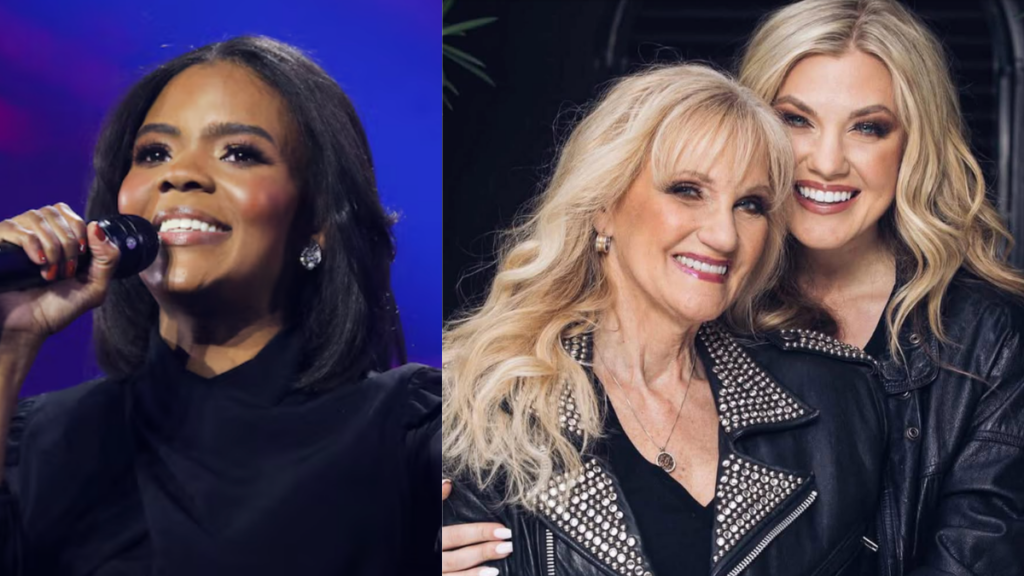
Photo Credit: im Urquhart / Reuters; Theresa Williams Hudson / Facebook
What Candace Owens Is Saying About Erika Kirk
Candace Owens is making strong claims about Erika Kirk and her mother. Owens said both women pursued fame relentlessly. She shared these accusations in episode two of her docuseries Bride of Charlie, which launched online on February 26, 2026. Owens argued that Lori Frantzve, Erika’s mother, actively coached Erika on seeking attention and success at social events. She said Lori encouraged Erika to “work the room” and target powerful individuals to advance her career. Owens claims this behavior existed long before Erika married Charlie Kirk, the late conservative activist whose death in September 2025 shocked many.
Owens also said Erika personally wanted fame and social standing. She referenced statements from a former boyfriend, who reportedly said Erika “would do anything to get to the top.” Owens said both Lori and Erika share this drive. She explained to viewers that various videos and images of Erika over the years support her view. The claims link Erika’s early social ambitions to her current visibility after Charlie’s death. This narrative suggests attention seeking played a large role in Erika’s public life.
On top of the “fame” claims, Owens pointed to past relationships in Erika’s life. She highlighted connections that she believes reveal a pattern of strategic partnership choices. Owens argued Erika never dated someone with a typical nine-to-five job. Instead, she allegedly focused on men with public status or potential visibility. Owens used this to argue that Erika’s personal life was always aligned with ambition and notoriety.
Owens did not stop there. She also referenced moments from Erika’s past, like an audition tape for The Amazing Race. Owens suggested these examples show consistent interest in public attention. Critics say Owens’ logic exaggerates normal life choices into something more manipulative. Still, Owens maintains she is exposing truth rather than gossip.
Owens’ criticisms have stirred debate across social media and conservative circles. Her sharp tone and layered accusations have drawn both supporters and detractors. As a result, public interest in the docuseries and its claims continues to grow.
The Context Behind the Claims
To understand Owens’ accusations, it helps to know the wider context surrounding Erika Kirk. Erika Kirk is a businesswoman, podcaster, and nonprofit leader. She became chairwoman and CEO of Turning Point USA after her husband Charlie Kirk was fatally shot at a public event in September 2025. Erika has also hosted her own podcast and worked on charitable initiatives before assuming her current leadership role.
The conservative nonprofit Turning Point USA advocates for limited government, free markets, and traditional values on American college campuses. After Charlie’s assassination, Erika took over the organization and vowed to continue his mission. Since then, she has appeared on television numerous times representing the group’s agenda and priorities.
Ella, a New York Times profile about Erika, said she was raised by her mother after her parents divorced in 1998. Owens disputes this narrative, saying Erika’s father was actively involved for many years and was not absent as public stories suggest. She also claimed Lori Frantzve remarried several times, which she believes complicates the “single mother” backstory.
Owens argues that examining these details helps the public understand Erika’s motivations. She believes public storytelling about Erika’s past may be superficial or misleading. By contrast, Owens insists she is unveiling deeper truths rather than merely relaying rumors. Her series pulls in voices from Erika’s past, including former acquaintances, to bolster her narrative.
Still, many observers caution against drawing firm conclusions from such claims. Erika holds a prominent position in political activism, and disputes over her biography and motives are inherently sensitive. Critics argue that attacking a grieving widow in public media can be harmful and disrespectful.
The Docuseries That Sparked Controversy
Candace Owens’ project Bride of Charlie is the docuseries at the center of this controversy. The series aims to dive into the life of Erika Kirk and question her public persona. Owens released the first episode on February 25, 2026, which examined alleged inconsistencies in Erika’s narrative. The second episode followed on February 26, deepening Owens’ claims about fame and ambition.
In Bride of Charlie, Owens not only questions Erika’s motivations but also challenges certain biographical claims. For example, Owens disputes the description that Erika was raised solely by her mother. She said that Erika’s father and stepfather played significant roles in her upbringing. Owens presented old school photos and yearbook entries as part of this argument.
The format of the series blends personal narrative with investigative claims. Owens places emphasis on conversations she had with classmates and past relationships. She says these voices challenge widely told versions of Erika’s life timeline. Owens argues this scrutiny reveals “wrinkles” in Erika’s public story.
However, the series has sparked intense backlash. Some critics have labeled it exploitative or harmful to Erika and her children. Conservative commentators have also pushed back, calling Owens’ approach inappropriate. Media figures like Meghan McCain and Ben Shapiro have publicly denounced the project’s tone and intent.
Despite criticism, the series has generated millions of views online. Supporters claim it raises important questions. Detractors say it magnifies speculation without evidence. The heated reaction shows how deeply divided public opinion is on this story.
Reactions From Public and Political Circles
The claims in Owens’ docuseries have stirred reactions across the political spectrum. Some conservative commentators have refused to support her attacks on Erika. They argue that targeting a widow who lost her husband to violence crosses ethical lines. Others believe probing public figures’ motivations is fair game.
Critics such as Meghan McCain took to social media to condemn Owens’ approach. McCain called the series “pure evil” for turning grief into a spectacle. She questioned why Owens would focus on Erika’s personal life so soon after tragedy. This public backlash reflects concerns about decorum and empathy in political discourse.
Some observers within the conservative movement have also voiced discomfort. They fear the feud could fracture alliances within their community. Many see Erika as a respected leader who stepped up after her husband’s death. They prefer unity over internal conflict.
Online reaction extends beyond political media. Social media users debate whether the claims reflect legitimate scrutiny or unfounded attacks. Some express sympathy for Owens’ point of view, while others criticize her motives. This polarized public response underscores the unpredictability of viral media narratives.
Meanwhile, Erika herself has not publicly responded at length to these accusations. She continues to focus on her nonprofit work and her family. Supporters rally behind her, emphasizing her commitment to her late husband’s legacy. The ongoing debate underscores the intersection between personal grief, political activism, and public speculation.
Broader Implications and What Comes Next
Owens’ claims raise broader questions about public scrutiny of political figures. In the age of online media, personal histories can become topics of investigation and debate. Bride of Charlie shows how documentary formats can blend opinion and allegations into influential narratives.
The series also highlights the risks of intertwining political activism with personal controversy. Erika Kirk’s role at Turning Point USA places her in the public eye, and Owens’ criticisms amplify attention. This dynamic illustrates how leadership positions can become targets for both praise and skepticism.
For Owens, the project represents a new direction in her career. She remains a divisive figure with a large online following. Her commentary persuades some and alienates others. The reaction to her docuseries could shape her future influence in political and media spheres.
For Erika, navigating this intense scrutiny adds a new dimension to her leadership challenges. She carries on her late husband’s work while also facing personal attacks. How she responds publicly — or chooses not to — may shape public perception going forward.
As the series continues, audiences will likely see more claims and reactions. Whether these stories lead to further division or clarity remains uncertain. One thing is clear: the intersection of politics, media, and personal narrative shapes modern celebrity culture.