

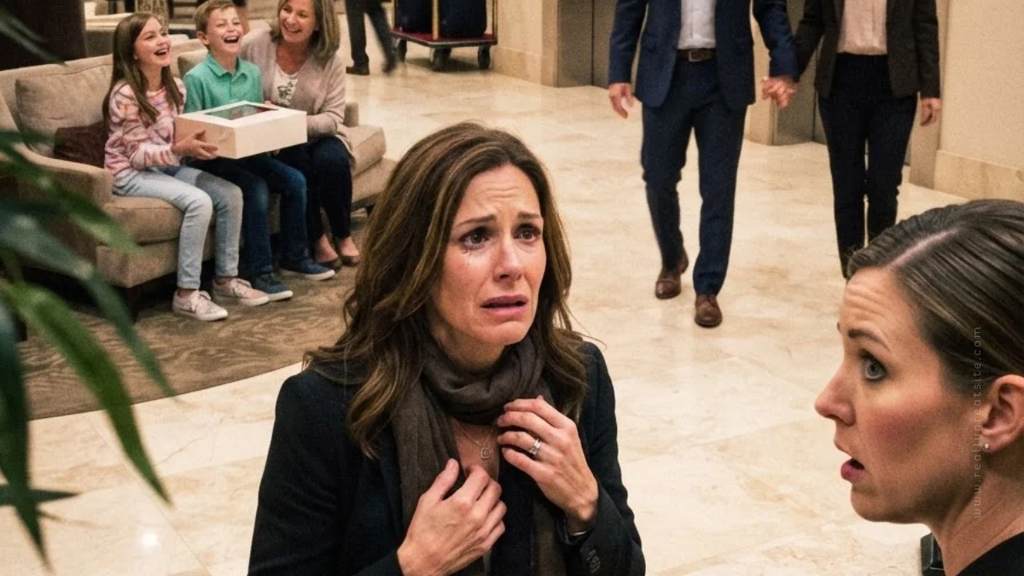
If anything, that was why my son suggested we surprise him.
My husband, Tom, had been complaining for weeks that his company had him running all over the state helping with a regional systems upgrade. He was sixty-two and supposedly three years from retirement, and lately every conversation about work ended with him saying some version of, “I am getting too old to sleep in hotels.”
That particular week had been worse than usual. He had left Tuesday morning, come home Wednesday afternoon long enough to change clothes and repack his suitcase, then left again Thursday for an overnight meeting in Grand Rapids.
He was supposed to be home Friday.
Thursday also happened to be his sixty-third birthday.
We had already celebrated the previous Sunday because he said he would be away, but our son Michael thought it would be funny to drive down and surprise him anyway.
Michael was thirty-four. His younger sister, Emily, was thirty-one.
We had another daughter too.
Her name was Claire.
Claire would have been thirty-seven.
She died when she was nineteen.
Even after eighteen years, I still have trouble writing that sentence without wanting to add unnecessary explanations around it, as though enough words might somehow soften what happened.
There really was not much to explain. Claire was driving home from college for Thanksgiving break. It had started snowing. A truck crossed the center line on a rural highway, and my daughter died before we could reach the hospital.
She was our first child.
For a long time after she died, our family divided time into before Claire and after Claire.
Eventually that stopped being the first thing I thought about when I woke up.
Michael got married. Emily finished graduate school. We had grandchildren. Tom and I learned how to laugh without feeling guilty about it. Claire’s photographs stopped making me cry every single time I passed them.
You do not “get over” losing a child, but you learn how to carry the fact that they are gone without dropping everything else you are holding.
At least I thought we had.
Michael called me around four that Thursday and asked if I wanted to drive down to Tom’s hotel with him and Emily.
Emily had already bought a ridiculous birthday cake from a bakery near her office. It had a photograph of Tom asleep in a lawn chair printed on top because apparently humiliating your father on baked goods is what adult children are for.
Michael’s wife was staying home with their boys, and Emily’s husband was working late, so it would just be the three of us.
I hesitated because I knew Tom had meetings, but Michael said we could call from the lobby and take him to dinner if he was free.
If he was busy, we would leave the cake at the desk.
It seemed harmless.
We left around five.
I texted Tom from the car and asked how his meetings were going.
He replied about ten minutes later.
“Long. Just got back to hotel. Going to order something and crash.”
Michael laughed when I read it aloud.
“Perfect.”
I remember thinking how genuinely happy Tom was going to be.
That is one of the details I keep returning to, because there was no suspicion in that car.
I was not checking up on my husband.
My children were not helping me catch their father.
Nobody was tracking anybody’s location or looking for inconsistencies.
We were carrying a stupid cake into a hotel because it was their dad’s birthday.
The hotel was nicer than I expected, one of those renovated downtown places with a restaurant on the first floor and a big fireplace in the lobby.
Emily was holding the cake. Michael had a bottle of bourbon in a gift bag. I had brought the card we had forgotten to give Tom on Sunday.
We walked up to the front desk grinning like idiots.
I gave the woman Tom’s name and said, “We’re here to surprise him for his birthday. Would you mind calling his room?”
She smiled and asked for the last name.
I gave it to her.
She typed something.
Then she looked at me.
“Are you Mrs. Bennett?”
I said yes.
Her expression changed slightly.
Not dramatically. Just enough that I noticed.
She looked back at the computer.
“Can I see your ID?”
That seemed strange, but I handed it over.
She looked at my license, then at me, then at the screen again.
Michael asked, “Is something wrong?”
The woman said, “I’m sorry. Give me just one second.”
She walked through a door behind the desk.
Emily looked at me.
“What was that?”
“I don’t know.”
A man came out with the desk clerk about a minute later. He introduced himself as the hotel manager.
He asked again who we were there to see.
I repeated Tom’s name.
He asked how I was related to him.
I actually laughed because the whole thing was becoming absurd.
“I’m his wife.”
The manager did not laugh.
He asked, “And these are his children?”
Michael said, “Yes.”
The manager looked uncomfortable enough that I finally asked him directly what was happening.
He said there appeared to be an issue with the reservation.
My first thought was credit card fraud.
I asked whether Tom’s card had been declined.
He said no.
Then he asked, very carefully, “Is there another member of your family named Claire Bennett?”
I cannot adequately describe what hearing that name did to the three of us.
Emily stopped smiling.
Michael lowered the gift bag.
I said, “Why?”
The manager looked from me to Michael.
Then he said, “Mr. Bennett checked in yesterday afternoon with a Claire Bennett.”
For several seconds, none of us said anything.
I thought I had misheard him.
I said, “What did you say?”
He repeated it.
“According to the reservation, the second guest in the room is Claire Bennett.”
I stared at him.
Then Michael said, “That’s not possible.”
The manager apologized and said perhaps there was another Claire Bennett.
Emily finally spoke.
“Our sister’s name was Claire.”
The manager nodded as though that solved something.
Then Emily finished.
“She died eighteen years ago.”
The poor man looked like he wanted the floor to open underneath him.
I remember putting my hand on the counter because suddenly I felt unsteady.
There are certain names that stop functioning like ordinary names after someone dies.
Claire was not just a collection of letters to me.
Claire meant my daughter laughing so hard milk came out of her nose when she was twelve. Claire meant a blue prom dress. Claire meant the little scar underneath her chin from falling off her bike. Claire meant identifying jewelry at a hospital because they would not let me see her immediately.
You could have told me Tom checked into that hotel with another woman.
I would have been devastated.
You could have told me he had a girlfriend.
You could have told me he had another wife.
I would have understood the words.
But my husband had checked into a hotel with our dead daughter’s name on his reservation.
My brain could not find anywhere to put that information.
Michael asked whether the manager was sure it was our father.
The manager turned the monitor slightly, although not enough for us to read everything.
He confirmed Tom’s full name, home address, and the last four digits of the credit card.
It was our address.
It was our card.
Emily asked, “Did you actually see the woman?”
The manager glanced at the desk clerk.
She said she had not personally checked them in, but she could ask the employee who had.
Michael said, “Please.”
A young man came out from the back office.
The manager asked whether he remembered checking in Thomas Bennett the previous afternoon.
He did.
Then the manager asked whether Mr. Bennett had been alone.
The young man thought about it.
“No. He was with his daughter.”
I felt something inside me drop.
I asked how he knew she was his daughter.
He said, “He introduced her that way.”
Emily made a sound beside me.
Not quite a laugh.
Not quite a gasp.
Michael said, “What did she look like?”
The employee hesitated, probably realizing he was standing in the middle of something he absolutely did not want to be involved in.
He said she was maybe in her twenties.
Brown hair.
Average height.
Pretty.
Then he added, “She looked like him.”
I asked what he meant.
He said, “I don’t know. I just assumed they were related. They had similar eyes.”
My daughter Claire had brown hair.
So did Emily.
So did I.
That meant nothing.
I kept telling myself that.
It meant nothing.
There were millions of brown-haired women.
There were probably thousands of women named Claire Bennett.
Maybe Tom had brought a coworker and there had been some reservation mistake.
Maybe the employee misunderstood an introduction.
Maybe my husband was having an affair with a woman who happened to have our daughter’s name, which was such a grotesque coincidence that for about thirty seconds I actually preferred it.
Then the employee said something that made Emily grab my arm.
“He called her Claire Bear.”
That had been Tom’s nickname for our daughter.
Nobody called her that except him.
Not even me.
When she was little, Tom called her Claire Bear so often that Michael, who was only three years younger, genuinely thought her middle name was Bear.
He stopped saying it after she died.
At least, I thought he did.
Michael leaned across the counter.
“What room?”
The manager immediately said he could not give us the room number.
Michael got angry.
I don’t blame the hotel for that. They were following privacy rules, and for all they knew we were three lunatics trying to get access to a guest.
I asked them to call Tom.
The manager did.
Nobody answered.
He tried again.
Nothing.
I called Tom’s cell.
It rang twice and went to voicemail.
Then I texted him.
“Are you in your room?”
He responded almost immediately.
“Yes. Why?”
I stared at the message.
He was answering me while refusing the hotel’s call.
I typed, “Just wondering.”
He sent back a heart.
Michael saw it.
“Mom, call him on FaceTime.”
I did.
Tom declined it.
Then he texted, “In bathroom lol. Everything okay?”
Emily whispered, “Oh my God.”
I typed, “Yes. Love you.”
He replied, “Love you too.”
The hotel manager had been watching my face.
I asked whether there was any way he could simply tell Tom his family was in the lobby.
The manager agreed to send someone upstairs.
Michael said we should wait by the elevators.
We did.
I cannot tell you exactly how long we stood there.
Maybe four minutes.
Maybe ten.
The elevator doors opened twice.
The first time, an older couple came out.
The second time, a man with a suitcase.
Then the stairwell door at the far end of the lobby opened.
Emily saw her first.
She grabbed my forearm so hard her nails hurt.
A young woman walked quickly across the hallway toward a side exit.
She had brown hair pulled into a ponytail.
She was wearing jeans, sneakers, and an oversized gray sweatshirt.
For one horrible second, my mind did something I still cannot explain.
It recognized my daughter.
Not literally.
I knew Claire was dead.
I had buried her.
But grief apparently stores people somewhere below logic, because the shape of that woman’s face hit me before reason did.
The nose.
The eyebrows.
The way she carried her shoulders.
She looked enough like Claire at nineteen that my entire body reacted.
Emily whispered, “Mom.”
The woman turned toward us.
She froze.
Her face went white.
Then she ran.
Michael went after her.
I yelled his name, but he was already through the side door.
Emily and I followed.
By the time we reached the sidewalk, Michael was standing near the parking lot entrance.
The woman was gone.
He said she had gotten into a dark SUV that had been waiting near the curb.
He had not seen the driver.
Emily was crying now.
She kept saying, “She looked like Claire.”
I told her I knew.
Then my phone rang.
Tom.
I answered.
His voice sounded perfectly normal.
“Hey, what’s going on? You tried to FaceTime me.”
I looked at Michael.
He mouthed, “Don’t tell him.”
I said, “Nothing. We were just being stupid. The kids wanted to say happy birthday.”
Tom laughed.
“Tell them I love them. I’ll see everybody tomorrow.”
I asked where he was.
“In my room.”
I looked directly at the hotel.
“What are you doing?”
“Watching TV.”
“What are you watching?”
There was a pause.
“Some documentary. Why are you interrogating me?”
I said I wasn’t.
Then I heard something in the background.
A door.
Tom said, “Hang on.”
His voice became muffled.
Then I heard him say, “Did you get it?”
A woman’s voice answered.
I could not understand the words.
Tom came back.
“I’ve got to go. Room service is here.”
He told me he loved me.
I told him I loved him too.
Then he hung up.
Emily stared at me.
“That was her.”
I said I didn’t know.
Michael said, “Mom, Dad is not here for work.”
We went back to the desk.
The manager was considerably more concerned now, probably because one of his registered guests had just sprinted out of the building after seeing us.
I asked whether the reservation had any notes.
He would not show me the reservation, but he eventually confirmed something I wish he hadn’t.
Tom had booked a package.
Not business rate.
Not corporate.
A weekend package.
Two nights.
Champagne.
Dinner credit.
Late checkout.
And under special requests, he had written:
“Birthday trip with my daughter.”
My birthday gift bag was still sitting beside the front desk.
I remember staring at it while the manager spoke.
Tom had told me his company booked the hotel.
He had told me he was leaving Friday morning.
He had booked through Saturday.
Michael asked when the reservation had been made.
The manager checked.
Seven weeks earlier.
Seven weeks.
This was planned.
We left the hotel.
Not because we were done, but because I needed to think somewhere Tom could not unexpectedly walk into the lobby and see us.
We went to a restaurant across the street and sat in a booth without ordering anything.
Michael immediately started searching social media.
Emily was still fixated on the woman’s face.
She said, “She didn’t just kind of look like Claire.”
I knew.
The resemblance had been wrong in a way I could not articulate.
She was not identical.
If you put photographs beside each other, nobody would mistake one for the other.
But it looked deliberate.
That was the thought I could not shake.
Her hair was styled the way Claire wore hers during college.
The sweatshirt was too large in the same way Claire used to wear Tom’s old college sweatshirts.
Even the woman’s eyebrows were shaped similarly.
Michael asked whether Dad could have another daughter.
The possibility was horrible, but it was also the first explanation that made any sense.
Maybe Tom had fathered a child years ago.
Maybe he had discovered her recently.
Maybe she resembled Claire because they shared a father.
Maybe he had named her Claire.
Emily immediately pointed out the obvious problem.
Who fathers another daughter and gives her the same name as his dead daughter?
Nobody normal.
Michael started calculating ages.
The woman looked twenty-five or twenty-six.
If she was Tom’s biological daughter, she would have been born roughly eleven or twelve years after Claire died.
That would mean another relationship during our marriage.
Still horrible.
Still possible.
I found myself almost hoping for it.
That sounds insane, but at that point, “your husband had an affair and fathered a secret daughter” felt reassuringly understandable compared with what we had just seen.
Then Michael found her.
He had searched one of Tom’s old usernames combined with Claire’s name.
A private Instagram account appeared.
The profile picture was the woman from the hotel.
Her name was Claire Bennett.
There were only forty-three followers.
The account was private.
Her bio said:
“Daddy’s girl. Always.”
Emily stared at it.
Michael said, “What the fuck?”
I asked how he knew it was her.
He enlarged the profile picture.
It was absolutely her.
Then Emily noticed the username.
It included the number 1989.
Claire was born in 1989.
I felt sick.
Michael requested to follow her.
She blocked him within a minute.
That told us she knew exactly who he was.
Emily searched the username on Facebook.
Nothing.
TikTok.
Nothing.
Then she searched the woman’s photograph using an image search.
That did not immediately produce anything useful.
Michael tried variations of the name.
Eventually he found a Pinterest account.
Same first name.
Different last name.
Claire Morgan.
The profile photograph was several years old, but it was clearly the same woman.
The account had public boards.
Most were ordinary.
Recipes.
Clothes.
Apartments.
Hair.
Then Emily opened one called “C.”
It was full of photographs of women with shoulder-length brown hair.
Vintage jeans.
White sneakers.
Oversized college sweatshirts.
Small gold hoop earrings.
Nineties makeup.
Michael said, “This is fucking weird.”
Then Emily stopped scrolling.
She turned the phone toward me.
Pinned between photographs of Winona Ryder and old Gap advertisements was a photograph of my daughter.
My actual daughter.
Claire.
It was a picture I had taken in our kitchen in 2006.
She was seventeen, sitting on the counter eating cereal directly from the box.
That photograph had never been published anywhere that I knew of.
It had been in an album at our house.
Emily opened another pin.
Claire again.
Prom.
Another.
Claire at Lake Michigan.
Another.
Claire holding Michael when they were children.
The board contained dozens of photographs of my dead daughter.
Some came from Facebook.
Some could only have come from our house.
Mixed among them were photographs of the woman we had just seen.
Same hairstyles.
Similar clothes.
Same poses.
In one, she was standing beside Tom.
The caption underneath said:
“Dad & me. Trying to recreate one of his favorites.”
The photograph beside it was Claire and Tom in 2007.
Same location.
Same pose.
My husband had recreated a photograph with another woman.
Emily started crying again.
Michael looked physically ill.
We kept scrolling.
There were photographs from places we knew.
The beach where we spent summers when the kids were young.
The restaurant where Claire had her sixteenth birthday.
The university Claire attended.
The bench outside her freshman dorm.
The cemetery.
I took the phone from Emily.
There was a photograph of this woman kneeling beside my daughter’s grave.
Tom was standing behind her.
The caption said:
“Finally met her.”
That photograph was dated three years earlier.
My husband had brought this woman to our daughter’s grave.
I had no idea she existed.
Michael said we needed to call Dad immediately.
I told him not yet.
I wanted to know what I was looking at before Tom had the opportunity to explain it away.
We kept digging.
The Pinterest account linked to an old public photography page under the name Claire Morgan.
That gave us a last name.
Michael searched it.
Within ten minutes, we had found her real identity.
Her name was not Claire.
It was Natalie Morgan.
She was twenty-seven years old.
She lived about an hour from us.
She had graduated from a community college with a degree in graphic design.
She had worked at several restaurants and, more recently, apparently freelanced.
Nothing in the public information suggested any biological connection to Tom.
Then Emily found a photograph from five years earlier.
Natalie had blond hair.
Not brown.
Her eyebrows were different.
Her clothes were completely different.
She looked nothing like Claire.
The resemblance we had seen in the hotel lobby had not been coincidence.
She had made herself look like my daughter.
We sat there staring at photographs of Natalie gradually changing over several years.
First the hair became darker.
Then shorter.
Then the style changed.
The makeup changed.
The clothes changed.
The resemblance became stronger.
There was even a photograph where she was wearing a tiny gold pendant I recognized immediately.
It had belonged to Claire.
I had given it to her for her eighteenth birthday.
After Claire died, I kept it in a jewelry box in our bedroom for years.
About four years earlier, I noticed it was missing.
Tom helped me look for it.
We emptied drawers.
We moved furniture.
He hugged me while I cried because I thought I had lost one of the few pieces of jewelry Claire wore regularly.
Natalie Morgan was wearing it around her neck.
I stood up so quickly I hit the table.
I called Tom.
This time he answered immediately.
“Hey.”
I said, “Who is Natalie?”
Nothing.
Not confusion.
Not “Natalie who?”
Silence.
That silence told me more than anything he could have said.
I asked again.
“Who is Natalie Morgan?”
Tom said, “Where are you?”
I said, “Who is she?”
His voice changed.
“Janet, where are you?”
That was when I knew he understood exactly how serious this was.
I said, “I’m at your hotel.”
Another silence.
Then he said, “You shouldn’t be there.”
Michael was watching me.
Emily had both hands over her mouth.
I asked, “Why did you check into a hotel with a woman using Claire’s name?”
Tom said, “Please don’t do this over the phone.”
“Why is she wearing Claire’s necklace?”
“Janet.”
“Why does she have photographs from our house?”
He said, “I can explain everything.”
I asked him to explain one thing.
“Is she your daughter?”
“No.”
The answer came immediately.
“Are you sleeping with her?”
He hesitated.
That was enough.
I felt strangely relieved.
That sounds grotesque.
My husband was having sex with a twenty-seven-year-old woman who had apparently transformed herself to resemble our dead daughter, and some part of me was relieved because at least I had finally found a recognizable category.
Affair.
Disgusting, horrifying, marriage-ending affair.
I could understand an affair.
Then Tom said something that destroyed even that explanation.
“It didn’t start that way.”
I asked what that meant.
He said Natalie had contacted him almost six years earlier.
She had been nineteen.
She found an old memorial page for Claire.
She said she had lost her older sister and connected deeply with something Tom had written about grief.
They started messaging.
Tom said it was innocent.
He said he helped her through a difficult period.
He said Natalie reminded him of Claire.
I looked at Michael.
He could hear Tom through the phone.
Tom kept talking.
He said Natalie had struggled with her own family.
Her father was not involved.
Her mother had addiction issues.
She started calling Tom when she needed advice.
Eventually they met.
He said he became a “father figure.”
I asked when he started calling her Claire.
He did not answer.
I asked again.
He said, “She asked me to.”
Emily whispered, “Bullshit.”
I asked why.
Tom said Natalie became interested in Claire.
She wanted to know about her.
She wanted to see photographs.
She started visiting places Claire had loved.
According to Tom, it helped both of them.
I asked whether he gave Natalie our daughter’s necklace.
He admitted he had.
I asked whether he stole it from my jewelry box.
He said, “I borrowed it.”
I almost laughed.
“For four years?”
He said he knew how it sounded.
I told him I did not think he did.
Then I asked the question I was terrified to ask.
“When did you start sleeping with her?”
Tom said nothing.
I asked whether Natalie was nineteen.
“No.”
Twenty?
“No.”
Twenty-one?
“No.”
He finally admitted it started when she was twenty-three.
By then they had known each other for almost four years.
He had spent four years telling himself and apparently everyone else that she was like a daughter.
Then he started having sex with her.
I had to put the phone down for a second.
Michael picked it up.
He said, “Dad, what the fuck is wrong with you?”
Tom told him to give the phone back to me.
Michael refused.
“What the fuck is wrong with you?”
Tom said, “Michael, you don’t understand.”
Michael said, “Then make me understand why you’re fucking a woman you trained to look like my dead sister.”
Tom shouted that he had not “trained” anybody.
People at neighboring tables were looking at us.
I did not care.
Michael asked why Natalie used Claire’s name at hotel.
Tom said it was “a private thing.”
Emily leaned toward the phone.
“What does that mean?”
Tom refused to answer.
Michael asked whether he called Natalie Claire during sex.
Tom hung up.
None of us spoke for several seconds.
Then my phone began ringing again.
I didn’t answer.
Tom called Michael.
Michael declined.
Then Emily.
She declined too.
Texts started arriving.
“Please come upstairs.”
“Please let me explain this in person.”
“This is not what you think.”
“Please don’t contact Natalie.”
That last message got my attention.
I replied:
“Why?”
He did not answer.
Michael said we should call Natalie ourselves.
We had no phone number.
Then Emily remembered the Pinterest account.
She searched Natalie Morgan’s name plus graphic design.
She found a small freelance website.
There was an email address.
Emily wrote a message.
“My name is Emily Bennett. I believe you’re with my father right now. I need you to tell me why you are using my dead sister’s name.”
We expected nothing.
Natalie replied seven minutes later.
“I am so sorry.”
Then another email came.
“Your father told me you knew about me.”
Emily replied:
“Knew WHAT?”
Natalie wrote:
“That I was part of the family.”
Michael actually stood up.
He walked away from the table and came back.
Emily typed:
“You are not part of our family. We didn’t know you existed until an hour ago.”
Natalie did not respond for several minutes.
Then:
“He told me your mother couldn’t handle meeting me yet.”
I took Emily’s phone.
I wrote:
“This is Janet. What exactly did my husband tell you about me?”
The typing indicator appeared.
Disappeared.
Appeared again.
Then Natalie sent a message long enough that we had to scroll.
She said Tom had told her I knew about their relationship.
Not the sexual relationship initially.
Their “father-daughter relationship.”
According to Natalie, Tom told her he had explained to me years earlier that he had met a young woman who reminded him of Claire and that helping her had become part of his grief process.
He said I found the whole thing painful and did not want to participate.
That was why Natalie had never come to our house while I was there.
That was why she never contacted me.
That was why she stayed away from Michael and Emily.
Tom had framed me as a grieving mother who could not tolerate seeing another young woman occupying any emotional space associated with Claire.
I had never heard Natalie’s name.
Then she said something worse.
She had been inside my house.
Many times.
I asked when.
She replied:
“When you visited your sister.”
My sister lives in Arizona.
I usually visit her for a week every February.
For years, Tom claimed he hated Arizona and stayed home.
Natalie had apparently spent those weeks in my house.
Sleeping there.
Eating there.
Looking through our family albums.
Wearing Claire’s clothes.
I asked what she meant by clothes.
She said Tom had kept boxes of Claire’s things.
That was true.
After Claire died, I could not bear to get rid of everything. Eventually I packed several boxes and put them in our basement storage room.
About six years ago, Tom told me he had moved them to a storage facility because our basement had gotten damp.
I had never checked.
Natalie said Tom brought the boxes home when I traveled.
She had worn Claire’s college sweatshirt.
Her winter coat.
A blue dress.
Her jewelry.
She had slept in Claire’s old bedroom.
Except Claire’s bedroom had become my sewing room years ago.
Apparently Tom transformed it back whenever I left.
He kept photographs showing where everything belonged.
He moved my sewing equipment out.
He brought Claire’s bedding back.
He put photographs on the dresser.
He recreated the room.
Natalie slept there.
Then before I came home, he dismantled it.
Every February.
For years.
I read the message three times.
Emily said, “Mom?”
I handed her the phone.
Her face changed as she read.
Michael said, “What?”
Emily gave it to him.
I thought about all the Februaries I had flown home from Arizona and found the house immaculate.
Tom would pick me up at airport.
Sometimes there were flowers waiting.
Once he told me he had spent the week reorganizing basement.
Another year he said he barely left couch because he had flu.
One year I came home and thought I smelled Claire’s perfume in hallway.
I actually mentioned it.
Tom hugged me and said grief did strange things to memory.
He knew exactly what I smelled.
Natalie had been wearing it.
Then another email arrived.
“I need to tell you something else because I don’t think he ever did.”
I typed:
“What?”
Her response took almost five minutes.
“He has videos.”
I asked what kind of videos.
She wrote:
“Of me being Claire.”
I felt cold.
Emily took phone again.
“What does that mean?”
Natalie replied:
“He would ask me questions and I would answer the way he thought she would.”
I could not understand.
Emily asked her to explain.
Natalie said Tom recorded hundreds of videos over the years.
Sometimes she wore Claire’s clothes.
Sometimes she sat in Claire’s recreated bedroom.
Tom would ask questions.
“How was school?”
“Do you remember our trip to Mackinac?”
“Do you remember when Michael broke his arm?”
“What did Mom make for Christmas?”
Natalie would answer using stories Tom had taught her.
If she got details wrong, he corrected her.
He had given her journals.
Photographs.
Home movies.
Letters.
He created timelines of Claire’s life.
Natalie said that at first she thought it was grief therapy.
She was young.
She loved having an older person care about her.
She had lost people too.
She wanted to help him.
Eventually, she said, it became something else.
Tom wanted her to dress like Claire more often.
He paid for her hair.
He bought clothes based on old photographs.
He encouraged her to use Claire as her middle name online.
Then he started calling her Claire outside their “sessions.”
Then Claire Bear.
Then daughter.
Natalie admitted she liked it.
She had never had a stable father.
Tom gave her money.
Helped with rent.
Paid tuition.
Bought her a car.
He told her she had saved his life.
By the time the relationship became sexual, she said, she no longer understood what they were.
Michael said, “Jesus Christ.”
Then Natalie sent us a photograph.
It was taken inside our house.
My kitchen.
Tom was sitting at our table.
Natalie was beside him.
She was wearing Claire’s old green sweater.
On table was a birthday cake.
It said:
HAPPY 30TH CLAIRE.
My Claire never turned thirty.
She died at nineteen.
The photograph was dated seven years earlier, which made no sense because Natalie had said they met six years ago.
Emily noticed first.
She typed:
“You said you met him six years ago. This picture is seven years old.”
Natalie did not answer.
Emily sent another message.
“When did you actually meet our father?”
Nothing.
Then Tom called me again.
I declined.
A message came from Natalie.
“I don’t know.”
Michael said, “What does that mean?”
Emily asked her.
Natalie replied:
“I don’t remember meeting him the first time.”
That was the moment the entire story changed again.
She said she had always believed she contacted Tom through Claire’s memorial page when she was nineteen.
That was what Tom told her.
But about a year earlier, while looking through one of his old hard drives, Natalie found photographs of herself.
She was sixteen.
Then fifteen.
One photograph showed her leaving high school.
Another showed her at a restaurant where she worked.
Another showed her sitting with friends at a park.
She confronted Tom.
He told her he had seen her accidentally several years before they officially met because she looked remarkably like Claire.
He said he never approached her.
He said he occasionally saw her around town and the resemblance comforted him.
Natalie believed him.
At least initially.
Then she found something else.
A photograph of herself at thirteen.
Taken from across the street.
She had never lived anywhere near us.
Tom had driven almost an hour to where she lived.
She asked how he knew where she lived.
He claimed he didn’t remember.
Natalie said she became frightened and tried to end relationship last year.
Tom convinced her she was overreacting.
He reminded her how much he had done for her.
He reminded her that her apartment was in his name.
Her car was in his name.
Much of her freelance work came through people he knew.
She owed him money.
He also had hundreds of intimate photographs and videos from their relationship.
She stayed.
I asked her where she was now.
She said she had returned to hotel.
I asked why.
“Because he called and said if I left, he would come find me.”
Michael immediately said we were calling police.
I agreed.
Then Natalie sent one more message before we could do anything.
“Before you call anyone, you need to know why he picked me.”
I stared at screen.
I wrote:
“Because you looked like Claire.”
Natalie replied:
“No.”
Then she sent us another photograph.
It was old enough that image quality was terrible.
Two teenage girls stood outside a high school.
One was Natalie.
The other girl looked so much like her that I assumed they were sisters.
Emily enlarged it.
Then she looked at me.
“Mom, that’s not Natalie.”
I took phone.
The second girl was Claire.
My daughter.
Except that was impossible.
Claire had died years before Natalie was old enough to attend high school.
I checked the date.
Claire was seventeen.
Natalie would have been seven.
The girl beside Claire was not Natalie.
She was someone who looked almost exactly like the adult Natalie we had seen at hotel.
Natalie sent another message.
“That is my mother.”
Her mother’s name was Rachel Morgan.
She had been twenty-eight in photograph.
I did the arithmetic.
Then I stopped.
Claire had known Natalie’s mother.
I asked how.
Natalie said she did not know.
Her mother refused to discuss it.
According to Natalie, Rachel had become hysterical the first time she learned Tom Bennett was in contact with her daughter.
She told Natalie never to speak to him again.
Natalie assumed her mother was being controlling.
Tom told Natalie Rachel disliked him because he had tried to help her years earlier and she had misunderstood his intentions.
Natalie believed Tom.
Then Rachel disappeared.
Not eighteen years ago.
Not when Claire died.
Four years ago.
Natalie had been told her mother left voluntarily after relapsing.
There were occasional texts.
A birthday card once.
An email every few months.
Tom helped Natalie through it.
He told her some people were simply incapable of being parents.
He told her she deserved better.
He became even more involved in her life after Rachel disappeared.
Natalie had accepted that explanation for almost three years.
Then six months ago, she received an envelope with no return address.
Inside was the photograph of Rachel and Claire.
There was also a note.
Four words.
ASK TOM ABOUT YOUR MOTHER.
Natalie confronted him.
He said someone was trying to manipulate her.
She asked who.
He would not say.
Then she asked why her mother knew Claire.
Tom finally admitted Rachel and Claire had worked together briefly during Claire’s senior year.
That did not make sense either.
Claire’s high school job had been at a local bookstore.
Rachel lived almost an hour away.
I knew most of Claire’s coworkers.
I had never heard Rachel’s name.
Natalie sent us another photograph.
This one showed Rachel standing in our backyard.
Tom was beside her.
Claire was between them.
I recognized date immediately because photograph had been taken at Claire’s high school graduation party.
There had been more than sixty people at our house that afternoon.
Apparently Rachel Morgan had been one of them.
I had no memory of her.
Then Natalie sent a cropped image from same day.
Tom and Rachel were standing behind garage.
Tom had his hand around Rachel’s wrist.
Rachel looked angry.
Claire was nowhere in frame.
Natalie wrote:
“My mother knew your husband before I was born.”
That sentence made me look at Michael.
Natalie was twenty-seven.
Tom was sixty-three.
Twenty-seven years earlier, Tom had been thirty-six.
We were married.
Claire was ten.
I typed:
“Was your mother involved with him?”
Natalie responded:
“I think so.”
Michael swore.
Emily asked whether Natalie thought Tom might be her biological father.
She said no.
She had done a DNA test secretly.
Tom was not her father.
But that was not why she sent us photographs.
Natalie had recently found a box among Tom’s things.
Inside were photographs of Rachel dating back to 1998.
Some were ordinary.
Some were taken without Rachel apparently knowing.
There were notes.
Schedules.
Places Rachel worked.
Her address.
Names of people she dated.
Then, after Natalie was born, the notes changed.
There were photographs of Natalie as a baby.
A toddler.
Starting school.
Playing soccer.
At birthday parties.
Tom had been watching Natalie almost her entire life.
Long before Claire died.
Long before Natalie supposedly reminded him of Claire.
Long before she contacted him online.
And suddenly, sitting across the street from the hotel where my husband was pretending to spend his birthday on a work trip, I understood something that made every explanation he had given us meaningless.
Tom had not found a grieving young woman who happened to resemble our dead daughter.
He had known Natalie’s mother.
He had watched Natalie grow up.
He had photographs of her from childhood.
Then our daughter died.
Years later, Tom took this young woman he had been watching since she was a little girl and slowly remade her in Claire’s image.
And now the mother who had once known both Tom and Claire had vanished.
Michael was already dialing 911 when Natalie sent one final photograph.
It was a picture of Rachel.
Recent.
Rachel was standing beside a newspaper whose front page showed a story from three weeks earlier.
She was alive.
Behind her was a concrete wall.
Natalie wrote:
“He sent me this last month.”
Then another message appeared.
“He told me if I ever left him, my mother would disappear for real.”
And suddenly the question was no longer why my husband had checked into a hotel with a twenty-seven-year-old woman using our dead daughter’s name.
The question was what Tom had done to Rachel Morgan, why he had been watching her daughter since childhood, and what any of it had to do with Claire before she died.
Michael had already started explaining the situation to the 911 dispatcher when Natalie sent another message.
“Please don’t tell them about my mother yet.”
I reached across the table and grabbed his wrist.
“Wait.”
Michael looked at me like I had lost my mind.
“Mom, he threatened her with a picture of her missing mother.”
“I know. Give me one second.”
I asked Natalie why she did not want us to tell the police about Rachel.
Her answer came quickly.
“Because I don’t know where she is, and Tom told me the police can’t find out she’s alive.”
That made no sense.
I asked why.
Natalie wrote that Tom claimed Rachel had committed a serious crime shortly before she disappeared and that he had helped her avoid prosecution. According to him, Rachel had stolen money from an employer, forged documents, and fled after realizing investigators were closing in.
For years, Natalie had believed her mother abandoned her because she was afraid of going to prison.
I asked whether Natalie had ever verified any of that.
“No.”
“Why not?”
“Because every time I tried to look for her, Tom told me I was putting her in danger.”
I read that sentence aloud.
Michael ended the call before giving the dispatcher our location. He said we needed to understand what we actually knew before we made accusations that could send police charging into the wrong place.
Emily was already searching Rachel’s name.
There was no arrest warrant.
No news coverage about an embezzlement.
No criminal case we could find.
Rachel Morgan had not even been officially reported missing.
That surprised all of us.
Natalie explained why.
Tom had convinced her not to report it.
Rachel was an adult. She had struggled with addiction when Natalie was younger. She had disappeared for days at a time before, although never for years. When Natalie became worried, Tom told her that involving police would expose the financial crimes Rachel had supposedly committed.
Then messages began arriving from Rachel’s phone.
They were short.
“I need some time.”
“I’m okay.”
“Please don’t look for me.”
“I love you.”
Natalie had wanted to hear her mother’s voice, but Rachel always had an excuse.
Bad service.
Broken microphone.
Not safe to talk.
Eventually the texts became emails.
Then occasional cards.
Natalie said Tom sometimes knew a message was coming before it arrived.
She had noticed that.
She had even asked him about it once.
Tom told her Rachel contacted him separately because she trusted him to look after Natalie.
At twenty-three, scared and angry and embarrassed by a mother who seemed to have abandoned her, Natalie accepted it.
Michael said, “He was sending the messages.”
Probably.
But there was still the recent photograph.
I asked Natalie exactly how she received it.
“Tom showed it to me on his phone.”
That was different.
She had never received the file herself.
He showed her the photograph after she threatened to leave him.
I asked if she had seen any proof that the newspaper was real.
She had not.
Emily immediately searched the front page Natalie remembered.
The headline existed.
The photograph Tom showed her could have been taken three weeks earlier.
It also could have been created three weeks earlier using an old photograph of Rachel.
We had no idea.
Then Natalie wrote:
“I have something else.”
She sent a photograph of a handwritten note.
The paper was yellowed and folded.
The handwriting looked familiar.
I knew why before Emily said it.
“That looks like Claire’s.”
I enlarged it.
It was Claire’s handwriting.
Not similar.
Not maybe.
My daughter had a distinctive way of writing lowercase Gs, with a large loop that dipped far below the line. She also dotted her Is with tiny circles until she went to college and decided she was too mature for it.
The note had both.
It had been written when she was younger.
It said:
“Rachel,
I don’t care what he says. I believe you. I copied everything before I put it back. Please don’t call the house anymore because he checks caller ID and Mom doesn’t know any of this. I’ll figure out what to do.
C.”
For a few seconds, I forgot how to breathe.
Emily read it twice.
Michael asked Natalie where she got it.
Natalie said she found it in her mother’s things after Rachel disappeared.
That meant Rachel had kept it for years.
I asked Natalie what “everything” meant.
She did not know.
I asked whether there were more letters.
“Yes.”
There were eleven.
All from Claire.
Natalie had never shown them to Tom.
She had found them taped inside the bottom of an old sewing box that belonged to Rachel’s mother.
She had read them only after receiving the anonymous photograph six months earlier.
I asked her to send every one.
The first few were from 2006.
Claire was seventeen.
They started cautiously.
Rachel had apparently come into the bookstore where Claire worked and asked to speak with her privately.
Claire initially thought Rachel was having an affair with Tom.
That was what I thought too as I read.
Rachel denied it.
At least, she denied that anything was happening then.
One letter made clear that something had happened years earlier.
Claire wrote:
“I understand that you were young and that Dad told you things about Mom that weren’t true. I’m angry at him, not you.”
Rachel would have been twenty-one or twenty-two when Natalie was born.
Tom would have been thirty-five.
I would have been thirty-four.
We had three children under ten.
Rachel had apparently worked at the hardware store where Tom was assistant manager.
That was the first part of my husband’s life with Rachel that I had never known existed.
Tom had always described those years as boring.
Work.
Mortgage.
Little League.
Dance lessons.
Bills.
He had been sleeping with a twenty-one-year-old employee.
According to Claire’s letters, Rachel ended the affair when she became pregnant by her boyfriend, the man Natalie later knew as her father.
Tom did not accept the ending.
He started showing up.
He called Rachel at work.
He drove past her apartment.
When Natalie was born, he began sending gifts.
Rachel returned them.
Tom continued.
Then he started photographing them.
Rachel moved twice.
He found both addresses.
She changed jobs.
He found the new one.
Eventually, he stopped approaching her directly.
Rachel believed he had finally moved on.
He had not.
He watched from farther away.
That explained the photographs.
It did not explain Claire.
I kept reading.
In 2006, Rachel saw Tom outside Natalie’s elementary school.
Natalie was seven.
Tom was sitting in his car across the street.
Rachel confronted him.
He claimed he happened to be in the neighborhood.
She did not believe him.
A week later, Rachel went to the hardware store where she knew Tom still occasionally consulted after moving into corporate management.
He was not there.
Someone mentioned that his daughter worked at a bookstore nearby.
Rachel went looking for Claire.
My seventeen-year-old daughter.
Rachel told her everything.
Claire did not believe her at first.
Then Rachel showed her photographs.
Not photographs Tom had taken.
Photographs Rachel had taken of Tom watching them.
His car outside school.
His car near her apartment.
Tom at a playground.
Tom sitting in a restaurant across the street from Natalie’s dance studio.
Claire recognized her father’s car.
She recognized his coat.
She recognized him.
Instead of coming to me, Claire confronted Tom.
I learned that from the fourth letter.
She wrote:
“He said you are unstable and obsessed with him. He said you followed him first. I don’t believe him anymore because he knew things about Natalie that you never told me.”
I felt physically ill reading that.
Claire had been seventeen years old, trying to determine whether her father was stalking a woman and her little girl.
She did not tell me.
Rachel did not tell me.
They tried to solve it themselves.
That was exactly the kind of thing Claire would have done.
She had always been protective of me.
Even as a child, she hated upsetting people.
If Tom told her that revealing an old affair would destroy our family, I could imagine her deciding she needed proof before she detonated my marriage.
The next letters showed that Claire started searching Tom’s office.
She found photographs.
Hundreds of them.
Rachel.
Natalie.
Their house.
Their car.
Natalie’s school.
She found printed emails.
Maps.
Receipts from restaurants near Rachel’s home.
A small notebook documenting dates and locations.
Claire copied what she could.
She told Rachel she had hidden copies somewhere outside our house.
That was the “everything” mentioned in the note.
Then the letters became frightened.
Claire wrote that Tom knew somebody had been in his office.
He started locking it.
He asked Claire strange questions about whether she had borrowed anything.
He asked if she had spoken to “that woman from the bookstore.”
Claire lied.
She told him no.
Then one letter contained a sentence that made Michael stand up and walk away from the table again.
“Dad asked me yesterday whether I thought Mom could survive losing one of us.”
I read it several times because I did not want it to mean what it seemed to mean.
Emily began crying.
She said, “Mom, no.”
I told her we did not know what it meant.
That was true.
A frightening sentence is not proof of murder.
It is not even proof of a threat.
People say terrible, strange things in arguments.
Context matters.
I kept telling myself that because the alternative was unbearable.
The final letter was dated eleven days before Claire died.
She wrote that she had found something “much worse” than photographs.
She did not describe it.
She told Rachel she was going to tell me everything over Thanksgiving break.
Claire died driving home for Thanksgiving.
Nobody at the table spoke after we read that.
Eventually Michael said, “We have to call the police.”
This time I did not stop him.
While he made the call, I asked Natalie where the original letters were.
She said they were at her apartment.
I told her not to go there.
She asked why.
I did not know whether Tom had access.
She said he did.
Of course he did.
He paid the rent.
His name was on lease.
He had a key.
Michael was speaking to dispatcher now, explaining that we had discovered correspondence possibly connecting his father to a woman who had disappeared and to circumstances surrounding his sister’s death eighteen years earlier.
It sounded insane when spoken aloud.
The dispatcher sent officers to restaurant.
I told Natalie to stay somewhere public.
She said she was still in hotel.
I asked where Tom was.
She did not know.
That frightened me more than if she had said he was beside her.
She said she returned to room after Tom threatened her over phone, but he was gone when she arrived.
His suitcase was still there.
His laptop was gone.
I looked through restaurant window toward hotel.
Tom had known for almost an hour that we were there.
He knew we had found Natalie.
He knew Natalie was communicating with us.
Now nobody knew where he was.
The police arrived quickly.
There were two officers initially, followed by a supervisor after they heard enough of story to realize this was not a normal domestic dispute.
We showed them messages.
Photographs.
Claire’s letters.
Natalie’s email.
The officers contacted hotel.
Another officer went across street.
I remember thinking that Tom might simply walk into restaurant.
He knew where we were.
He knew my car.
Every time door opened, I looked up.
Then my phone rang.
Unknown number.
One officer told me to answer on speaker.
I did.
A woman’s voice said, “Janet?”
I did not recognize it.
“Yes?”
She started crying.
Then she said, “It’s Rachel.”
Everything around me seemed to go quiet.
I asked her where she was.
She said, “I’m sorry.”
I asked again.
“Where are you?”
She gave us an address.
Not another state.
Not another country.
Twenty-six minutes from hotel.
It was a small town outside Grand Rapids.
The officer wrote it down.
Rachel said she was safe.
She was not being held anywhere.
That was the first surprise.
Tom had not kidnapped her.
He had not imprisoned her in some hidden room.
Rachel had disappeared voluntarily.
But not for the reason Natalie believed.
She said, “Tom told me Claire was alive.”
I thought I had misunderstood.
I said, “What?”
Rachel repeated it.
“He told me Claire didn’t die.”
I could not speak.
Rachel explained.
Four years earlier, Tom contacted her after years of almost no direct communication.
He told her he knew she still had Claire’s letters.
He said Claire’s accident had not killed her immediately.
That part was true.
Claire was alive when paramedics arrived.
She died at hospital.
At least, that was what we had been told.
Tom told Rachel that after the accident, Claire survived with severe brain injury.
He claimed he had made a decision while I was unconscious from sedation at hospital.
He said Claire was transferred to a private long-term neurological facility under another identity because he could not bear for me to see what she had become.
It was completely insane.
Rachel knew that.
She told him so.
Then Tom showed her a video.
A young woman lay in a medical bed.
Her face was partially turned away.
She had brown hair.
Tom spoke to her.
He called her Claire.
The woman moved.
Rachel said the resemblance was enough to destroy her certainty.
Tom told Rachel he had spent years secretly paying for Claire’s care.
He said only a handful of people knew.
He said if I discovered truth after eighteen years of believing my daughter was dead, it would destroy me.
Rachel asked why he was telling her.
He said because Claire had started speaking.
And she had asked for Rachel.
I actually laughed when Rachel told me that.
Not because it was funny.
Because it was so monstrous and absurd that my body apparently could not decide what else to do.
Rachel believed enough of it to meet him.
Tom took her to a house.
There was a young woman there.
Brown hair.
Thin.
Quiet.
She called herself Claire.
Rachel immediately knew something was wrong.
The woman was too young.
Claire would have been thirty-three at time.
This woman looked early twenties.
Tom claimed neurological trauma and years of medication made her appear younger.
Rachel did not believe him.
Then woman said something only Claire and Rachel should have known.
She referenced the letters.
She mentioned the bookstore.
She mentioned copies Claire had hidden.
Rachel panicked.
She thought there was some possibility, however impossible, that Tom was telling truth.
She agreed not to contact me until she understood.
That was exactly what Tom needed.
The woman was Natalie.
Natalie had been twenty-three.
Tom had spent years teaching her Claire’s memories.
He knew about letters because he had apparently found some of Claire’s original correspondence after her death.
He taught Natalie enough details to convince Rachel that the impossible might be possible.
Rachel said she spent almost two weeks meeting “Claire.”
Tom controlled every meeting.
He told Rachel not to ask questions about accident because it caused distress.
He said Claire’s memory came in fragments.
Natalie sometimes got things wrong.
Tom explained it as brain damage.
Rachel wanted DNA test.
That was when entire performance collapsed.
Tom became angry.
He accused Rachel of upsetting Claire.
Rachel secretly took a drinking glass Natalie had used.
She sent it for testing against a sample she had from one of Claire’s old envelopes.
No match.
Natalie was not Claire.
Rachel confronted Tom.
He did not deny it for long.
Instead, he told her the truth was “more complicated.”
Rachel threatened to go to me.
Tom threatened Natalie.
Not physically.
He told Rachel he had enough fabricated evidence to make it appear Rachel had been stalking our family for years.
He had photographs of Rachel outside Claire’s workplace.
Letters between Rachel and Claire.
Records of Rachel contacting minor Claire without parental knowledge.
Old evidence of Rachel’s affair with Tom.
He said he could make it look as though Rachel had obsessed over his daughter, interfered with our family, and later manipulated a vulnerable young woman into impersonating Claire.
He had already been building that version of events.
Rachel believed him because she had seen how meticulously he documented things.
Then Tom offered her a deal.
Disappear.
Not forever, he said.
Just long enough for him to “fix Natalie.”
He told Rachel that if she exposed him immediately, Natalie would be dragged into scandal, possibly prosecuted for fraud, and publicly humiliated for impersonating a dead woman.
Rachel’s guilt won.
She left.
She told herself she was protecting her daughter.
Tom arranged an apartment under another name.
He paid cash.
He gave Rachel a phone.
He told Natalie her mother had fled because of financial crimes.
He told Rachel that Natalie was undergoing treatment and slowly separating from him.
Neither was true.
For four years, Tom maintained two separate realities between mother and daughter.
Natalie believed Rachel had abandoned her.
Rachel believed Natalie was recovering somewhere and wanted no contact with her mother because she blamed Rachel for exposing the “Claire therapy.”
Tom occasionally showed Rachel photographs of Natalie looking healthy.
He told her Natalie was dating someone.
Working.
Doing better.
He occasionally showed Natalie photographs of Rachel to prove she was alive.
The two women were less than thirty miles apart.
Neither knew where other lived.
The officer asked Rachel why she had finally called me.
Rachel said because Tom called her twenty minutes earlier.
He was furious.
He told her “everything was falling apart.”
He ordered her to leave apartment immediately.
He said he would pick her up.
Rachel refused.
Then he said something that finally broke whatever control he still had over her.
“He told me Janet had found Claire.”
I felt sick hearing it.
Not Natalie.
Claire.
Even after everything had been exposed, Tom was still calling her by my daughter’s name.
Rachel asked whether Natalie was with us.
I said no.
She started crying again.
She asked if her daughter was safe.
I told her Natalie was at hotel with police on way to her.
Rachel said she wanted to see her.
The officers took over arranging that.
Then I asked Rachel the question that had been sitting inside me since I read Claire’s final letter.
“What did Claire find?”
Rachel became quiet.
I asked again.
“The thing she said was worse than photographs. What was it?”
Rachel said she never knew.
Claire never told her.
But Claire told Rachel where copies were hidden.
Not exactly.
She gave her a clue.
Rachel had forgotten about it until years later because grief swallowed everything after Claire died.
The line was in one of letters Natalie had not photographed for us yet.
Rachel recited it from memory.
“If anything happens, tell Mom to look where Dad never does.”
That could have meant anything.
Our house had a thousand places Tom never looked.
My sewing supplies.
Kitchen cabinets.
Laundry room.
Claire’s old things.
Then Emily said, “Books.”
I looked at her.
“Dad never reads.”
It sounded almost ridiculous.
Tom was famous in our family for refusing to read anything longer than an instruction manual.
Claire loved books.
She had worked at bookstore.
After she died, I kept her favorite books.
They were still in our house.
Michael said we needed to go home.
Police strongly advised us not to.
Tom’s location was unknown.
An officer was sent to house.
Another contacted local department near our home.
We waited.
It was nearly eleven at night when an officer called.
Tom was not at house.
Nothing appeared disturbed.
We were allowed to return with police meeting us there.
The drive home felt longer than the drive to hotel.
Nobody spoke much.
The birthday cake was still in Emily’s car.
At some point she looked at it in back seat and started crying.
She said, “We were going to surprise him.”
That sentence broke me more than almost anything else had.
We had driven forty minutes with cake because we loved him.
By midnight, police were standing in our living room while I pulled Claire’s books from shelves.
There were three boxes in basement and another shelf upstairs.
We checked bindings.
Dust jackets.
Pages.
Nothing.
Then I remembered one book Claire hated.
Tom gave it to her for Christmas when she was sixteen because he had heard somebody recommend it.
She teased him for years because it was completely wrong for her.
After she died, Tom wanted to keep it.
That struck me as strange at time.
He said it was the last book he ever gave her.
It was in his office.
On the top shelf.
I had dusted around it for eighteen years.
I took it down.
It was heavier than I remembered.
Inside back cover, cardboard had been carefully separated and glued back.
An officer used a knife to open it.
There was a small key inside.
No note.
Just a key.
Michael recognized it as old safe-deposit-box key.
The bank name was stamped on it.
The branch had closed years earlier, but bank had merged with larger institution.
The next morning, after almost no sleep, we went there with police.
Records showed box had been rented jointly.
Not by Claire and Tom.
By Claire Bennett and Rachel Morgan.
My seventeen-year-old daughter had rented a safe-deposit box with woman my husband had stalked.
Because Claire was minor, that should not have been possible without adult co-signer.
Rachel had signed.
The bank had transferred box contents when branch closed.
Rachel had apparently forgotten it existed.
Or perhaps convinced herself contents no longer mattered after Claire died.
The bank required paperwork before releasing anything.
Police expedited process after explaining potential connection to an investigation.
By early afternoon, box was opened.
Inside were photographs.
The notebook Claire mentioned.
Copies of emails.
Receipts.
A disposable camera.
Two cassette tapes.
A flash drive.
And an envelope addressed to me.
“Mom.”
I opened that first.
Claire had written it eleven days before she died.
She apologized for not telling me sooner.
She said she had discovered Dad had been lying about “a woman named Rachel” and watching Rachel’s daughter.
She said she was afraid I would confront him before she could prove everything.
She wrote that Dad had become “different” after realizing someone searched his office.
Then she told me what she had found that was worse than photographs.
Tom had been accessing Rachel’s house.
He had copied her keys.
He had installed listening devices.
He had obtained school records about Natalie by falsely claiming to be family.
He had created email accounts pretending to be Rachel’s former boyfriend.
He had been interfering in Rachel’s relationships for years.
Whenever Rachel started dating someone seriously, strange things happened.
Anonymous accusations.
Messages suggesting infidelity.
Calls to employers.
One boyfriend’s car was vandalized.
Another received photographs of himself with another woman that Rachel later believed were staged or misleading.
Tom had not merely watched Rachel.
He had quietly dismantled parts of her life whenever she appeared to be moving farther away from him.
Claire had found evidence.
But there was something else.
A folder labeled with my name.
Inside were notes about me.
My schedule.
My friends.
Arguments Tom and I had.
Things I said privately.
Copies of emails I had sent from my own account.
Claire realized her father had been monitoring me too.
He had installed software on our home computer that copied my messages.
He recorded telephone conversations.
He kept notes about which friends encouraged me to be independent and which ones he considered “safe.”
He had interfered with at least one friendship I thought had simply faded.
My husband had spent years managing the women around him like pieces on a board.
Rachel was not unique.
I was not exempt.
Claire had discovered that at seventeen.
Her letter ended:
“I don’t think Dad is who we think he is. I don’t think he hurts people because he’s angry. I think he moves things around until he gets the result he wants, and then he tells himself nobody got hurt because he never touched them.”
That sentence described Tom better than anything I had heard in thirty-eight years.
Then Michael found a photograph.
It was from disposable camera.
Tom standing beside Claire’s car.
Date stamp was two days before accident.
He was crouched near front wheel.
We gave photograph to officer immediately.
I need to be careful about what happened next because for several hours all of us believed we had discovered proof that Tom caused Claire’s crash.
We had not.
The original accident investigation was pulled.
Truck driver had crossed center line.
There were witnesses.
Claire’s car had been inspected.
There was no evidence of mechanical sabotage.
Tom being near her car two days earlier was disturbing, but it did not change how accident happened.
That mattered.
I do not want to turn coincidence into something it was not simply because everything else about my husband had become monstrous.
Claire’s death was still an accident.
In some ways, learning that made everything worse.
Tom had not killed our daughter.
He had simply allowed her accidental death to solve a problem for him.
After Claire died, he destroyed evidence in his office.
He told Rachel that Claire had been confused and emotionally unstable before accident.
He convinced Rachel that involving me would only compound my grief.
Then he resumed watching Natalie.
The girl Claire had tried to protect.
That was the part I could not comprehend.
You would think Claire’s death would have shocked him into stopping.
Instead, over next decade, his fixation shifted.
Rachel aged.
Natalie grew up.
And Natalie began to resemble her mother at age when Tom first met Rachel.
That was why he picked Natalie.
Not because she looked like Claire.
That came later.
At first, Natalie reminded him of Rachel.
We found proof on flash drive.
There were photographs arranged by year.
Rachel at twenty-one.
Natalie at eighteen.
Rachel at twenty-two.
Natalie at nineteen.
Side by side.
Comparisons.
Hair.
Smile.
Profile.
Then something changed in files after Natalie turned nineteen.
Tom began adding Claire.
Three women.
Rachel.
Claire.
Natalie.
He started identifying similarities between Natalie and both of them.
Claire’s hair.
Rachel’s mouth.
Claire’s clothing.
Rachel’s mannerisms.
He was not trying to recreate one person.
He was combining two women he had lost control over into a third woman who depended on him.
That was the real purpose of the transformation.
Natalie was not simply a substitute daughter.
She was not simply a mistress.
She was a person Tom believed he could finally get right.
He could make her love him like a daughter.
Need him like Rachel once had.
Dress like Claire.
Listen when he spoke.
Accept his money.
Live where he chose.
And eventually sleep with him.
There were documents on flash drive that made this explicit enough that none of us had to speculate.
Tom kept journals.
Not emotional journals.
Records.
He wrote about people as projects.
Natalie’s entries began before she ever contacted him.
He watched her social media.
Learned which memorial pages she followed.
Learned that she had recently lost an older cousin she considered a sister.
Then he created circumstances for her to find Claire’s memorial page.
He commented from an account he knew Natalie followed.
He shared one of Claire’s memorial posts into grief group Natalie belonged to.
Natalie did not randomly discover Tom.
Tom placed himself where she would discover him.
Then he waited for her to initiate contact.
That way, he could always tell himself she came to him.
Michael read that part aloud.
None of us said anything.
Then Emily found an entry from day Natalie first messaged him.
Tom had written:
“She reached out tonight. Better this way.”
Three words underneath had been underlined.
“Let her choose.”
Except she had not chosen anything.
He had constructed hallway and congratulated her for choosing door.
That afternoon, police found Tom.
He had not fled state.
He was sitting in his car outside Rachel’s apartment.
He had been there for almost three hours.
He had laptop with him.
He had Rachel’s old phone.
He had several envelopes of cash.
He also had two new prepaid phones.
What he intended to do with them became subject of investigation, and I cannot tell you he was planning some dramatic act because there was no evidence of that.
What investigators could establish was disturbing enough.
He had been trying to convince Rachel to leave with him before Natalie and police reached her.
He wanted to move Rachel again.
He had already booked a motel under another name.
He had drafted messages from Rachel to Natalie saying she needed to disappear permanently and asking Natalie not to search for her.
He was going to make Rachel vanish from Natalie’s life a second time.
And he apparently believed he could still talk Rachel into cooperating.
That was Tom’s defining delusion.
He believed everybody could be managed if he had enough information.
Rachel with fear.
Natalie with love and money.
Me with marriage.
Michael with guilt.
Emily with grief.
Claire with responsibility.
He knew exactly which emotional lever belonged to each person.
For decades, he had been pulling them.
The strangest discovery came from Natalie herself.
Police reunited her with Rachel that evening.
I was not there.
Emily eventually spoke to Natalie by phone afterward.
Natalie said the first thing her mother did was apologize.
Then Natalie apologized.
They spent hours comparing what Tom had told each of them.
Almost nothing matched.
Tom told Rachel that Natalie hated her.
He told Natalie that Rachel was ashamed of her.
He told Rachel that Natalie had chosen the name Claire herself.
He told Natalie that Rachel had once said she wished Natalie were more like Claire.
Rachel had barely known Claire.
He told Natalie that I knew about their father-daughter relationship.
He told me nothing.
He told Rachel that I had become unstable after Claire died.
He told Natalie I was fragile and jealous.
He told both women that Michael was violent and should never be contacted.
Michael has never been violent in his life.
He told them Emily had severe mental-health problems and could not tolerate discussion of her sister.
None of that was true.
Every lie served same purpose.
Do not contact each other.
Do not compare stories.
Do not ask Janet.
Do not ask Michael.
Do not ask Emily.
Ask Tom.
Always ask Tom.
Then Rachel told Natalie something even she had never known.
The anonymous envelope containing photograph of Rachel and Claire had come from Rachel.
Rachel had sent it six months earlier.
She had finally stopped believing Tom’s claims that Natalie wanted nothing to do with her.
She could not contact Natalie openly because Tom monitored accounts he knew about.
So she mailed photograph anonymously.
“ASK TOM ABOUT YOUR MOTHER.”
Rachel hoped Natalie would start questioning him.
She did.
What Rachel had not expected was how much Tom had already prepared Natalie to distrust her.
So Natalie confronted Tom, accepted another explanation, and stayed.
Rachel sent second package.
Natalie never received it.
Police later found it in Tom’s car.
He had intercepted it.
Inside was another photograph and a copy of Claire’s letter.
On envelope, Rachel had written:
“Your mother did not leave you.”
Tom had been carrying it around for almost five months.
That detail bothered me more than it probably should.
He could have destroyed it.
Burned it.
Thrown it away.
Instead, he kept it.
Like everything else.
Tom kept evidence of his own lies.
Photographs.
Letters.
Phones.
Notes.
Recordings.
He seemed incapable of discarding proof that he had successfully controlled somebody.
That habit was ultimately what exposed the full scale of it.
Because Natalie was not first young woman he had tried to manipulate after Claire died.
She was simply the one who lasted.
Investigators found records involving four others.
None became sexual relationships as far as anyone could establish.
All were young women Tom encountered through grief forums, mentorship programs, or acquaintances.
All had unstable family situations.
All reminded him, in his notes, of either Rachel or Claire.
With one, contact lasted three months.
Another lasted almost year.
One became uncomfortable when Tom offered to pay her rent and blocked him.
He created new account to contact her.
She threatened police.
He stopped.
Another accepted money for school, then cut contact after Tom became possessive.
He kept photographs of all of them.
Then he found Natalie.
Or, more accurately, he selected Natalie.
She had the right face.
The right history.
The right vulnerabilities.
And a mother he already knew how to control.
That was why she became centerpiece of his second life.
The hotel birthday was not first time they had celebrated as father and daughter.
It was not even first time they used Claire’s name.
Every year since Natalie turned twenty-one, Tom celebrated a second birthday with her.
Not Natalie’s birthday.
Claire’s.
He bought cake.
He gave her one of Claire’s belongings.
He took her somewhere Claire had once loved.
He photographed it.
Natalie said she initially found ritual moving.
Later it became uncomfortable.
After sexual relationship began, she asked him to stop.
He refused.
That year’s hotel trip had been planned around Claire’s birthday, not Tom’s.
That was another lie.
Tom’s birthday was Thursday.
Claire’s birthday would have been Saturday.
The hotel reservation ran through Saturday because Tom intended to celebrate both.
On Friday, they were supposed to visit Claire’s college.
On Saturday morning, he had booked brunch at restaurant where we took Claire after her freshman orientation.
Then he planned to take Natalie to cemetery.
The hotel reservation listed her as Claire Bennett because Tom had begun insisting that during these trips, she use Claire’s name everywhere possible.
Natalie told us that was one reason she had been preparing to leave.
The fantasy had stopped being private.
Tom wanted strangers to participate without knowing it.
Hotel clerks.
Servers.
Photographers.
He wanted to hear someone say, “Mr. Bennett and his daughter Claire.”
He wanted reality to confirm the version he had built.
And for years, nobody challenged it because nobody knew enough to recognize how wrong it was.
Until three people carrying a birthday cake walked into hotel lobby.
That stupid cake did what Rachel’s warnings, Claire’s hidden evidence, Natalie’s doubts, and decades of lies had failed to do.
It put two versions of Tom’s life in same room.
His actual wife.
His actual children.
And the woman he had spent years turning into the daughter we buried.
For eighteen years, I thought the worst thing that had ever happened to our family occurred on a snowy highway when Claire was nineteen.
I was wrong about one part of that.
Claire’s death was still the worst thing.
But it was not the beginning of what happened to us.
It was the moment Tom realized that when someone disappeared from a family, everyone else became desperate enough to accept explanations that made the pain survivable.
Rachel accepted that Natalie wanted nothing to do with her.
Natalie accepted that her mother abandoned her.
Michael and Emily accepted that their father grieved differently.
I accepted business trips, locked office drawers, missing jewelry, strange moods, and the occasional smell of my dead daughter’s perfume in my own hallway.
Every one of us had been given a different story.
And because the stories were painful, private, and just plausible enough, none of us compared them.
Claire had been the only person who tried.
She was seventeen years old when she figured out that her father depended on everyone around him knowing slightly different versions of the truth.
She hid copies.
She rented a safe-deposit box.
She wrote letters.
She planned to come home for Thanksgiving and tell me everything.
Then an unrelated truck crossed a center line.
For almost two decades, Tom benefited from the cruelest coincidence imaginable.
The one person who had put his entire pattern together died before she could expose him.
He could have taken that as a chance to stop.
Instead, he used her death to become better at hiding.
Then he took the little girl Claire had been trying to protect and spent years turning her into a replacement for the daughter whose silence had saved him.
That was the part I never found a way to make ordinary.
The affair was disgusting.
The lies were enormous.
The surveillance was criminal.
What he did to Rachel and Natalie was unforgivable.
But whenever I tried to explain the story later, people inevitably focused on the hotel.
They would ask what it felt like to hear a hotel clerk say my husband had checked in with my dead daughter.
For a long time, I did not know how to answer.
Eventually I realized the answer.
It felt impossible.
For about an hour, it was the strangest thing that had ever happened to me.
Then we found out why.
The investigation lasted much longer than the discovery did.
That was something I had never understood about stories like ours until I was living inside one.
It took less than twenty-four hours for my children and me to go from carrying a birthday cake into a hotel to learning that my husband had spent decades monitoring women, interfering in their lives, lying to them about one another, and grooming a young woman into a grotesque combination of her mother and our dead daughter.
Understanding exactly how he had done it took months.
The first thing investigators established was that Tom had not caused Claire’s accident.
I have already said that, but it matters enough to say again because for several weeks I could not look at him without wondering.
The photograph of him crouched beside Claire’s car had an explanation.
Claire had caught him searching it.
Two days before she died, Tom realized she had removed documents from his office. He suspected she had hidden them in her car, so he searched it while she was at work.
He admitted that eventually.
He denied knowing about the safe-deposit box.
Police believed him on that point because after Claire died, he spent years searching for whatever she had copied.
His journals contained references to “missing material” and speculation about where Claire might have put it.
He searched her bedroom.
Her college dorm room after her death.
Our basement.
Her computer.
Even the boxes I packed years later.
He never found the key because Claire had hidden it inside a book he had given her, apparently understanding her father well enough to know that the safest hiding place was somewhere he would assume he already understood.
Tom also admitted that he knew Claire intended to tell me something when she came home for Thanksgiving.
The last conversation they ever had was an argument.
He told her Rachel was unstable.
Claire told him she had proof.
He told her that exposing an affair from years earlier would destroy me for no reason.
Claire said it was not about the affair anymore.
That sentence appeared in Tom’s own notes.
He had written it down after she died because he was trying to determine how much she knew.
I did not learn that until months later.
It was one of the few times during the investigation when I had to leave the room.
For eighteen years, Tom had talked about his final conversation with Claire.
He told me they discussed Thanksgiving.
He said she teased him about buying the wrong kind of pie.
He said she told him she loved him.
He had given me that memory because I needed it.
None of it happened.
His last conversation with our daughter was about her trying to expose him.
I asked him once, through attorneys, why he invented the pie story.
His answer was that he wanted me to have something nice.
That was Tom in one sentence.
He could lie to you for eighteen years and call it kindness because he had decided the truth would hurt you.
The police also confirmed something that had bothered me from the beginning.
Claire had not introduced Rachel to our family.
Rachel’s presence at Claire’s graduation party was deliberate.
Claire invited her.
That photograph Natalie found of the three of them had been taken because Claire wanted proof that Rachel and Tom knew each other.
She had apparently started documenting interactions herself.
The cropped photograph of Tom holding Rachel’s wrist was taken by one of Claire’s friends.
Police located her.
She remembered the party.
She remembered Claire giving her a disposable camera and asking her to take pictures whenever she saw her father talking to “the woman with the red purse.”
At seventeen, my daughter had recruited another teenager to help document her father’s behavior.
Her friend had never understood why.
After Claire died, she assumed it no longer mattered.
That was how many pieces of this story survived.
Individually, nobody knew enough.
One person remembered a camera.
Another remembered an argument.
Rachel had letters.
I had books.
Natalie had photographs.
Tom had journals.
Claire had put the important pieces somewhere none of us knew existed.
It took her death, eighteen years, and a hotel clerk saying the wrong name to finally bring them together.
The other young women investigators identified were contacted.
That was when we learned Tom’s behavior had evolved gradually.
He had not begun with some master plan to recreate his dead daughter.
Before Claire died, his fixation centered on Rachel.
After Claire died, grief became something he could use.
Tom joined online support communities under several names.
Sometimes he presented himself honestly as a father who had lost a daughter.
Sometimes he pretended to be a counselor.
Once, he claimed to be a widower.
That was particularly interesting to me, considering I was upstairs asleep in our bedroom at the time he was telling strangers his wife had died.
He sought out young women who were grieving, estranged from family, or struggling financially.
Most interactions went nowhere.
Some women thought he was strange and stopped responding.
One blocked him after he became angry that she had started dating someone.
Another said he offered to pay her tuition after knowing her for less than two months.
She refused.
Natalie was different because Tom already knew her history.
He knew Rachel.
He knew where the fractures were before he ever presented himself as someone who could help repair them.
That was why his relationship with Natalie lasted.
He did not stumble upon a vulnerable person.
He had watched the vulnerabilities develop.
One question remained that bothered everyone.
Why Claire?
Why turn Natalie into our daughter instead of simply continuing the fixation he already had on Rachel?
The answer came from one of Tom’s recorded sessions with Natalie.
Police found hundreds.
I listened to very few.
I could not tolerate them.
Emily listened to more than I did, although she eventually stopped too.
In one recording, Natalie asked Tom almost exactly the same question.
She sounded irritated.
She said she did not understand why he kept correcting the way she laughed.
Tom told her Claire laughed “from her stomach.”
Natalie said, “I’m not Claire.”
There was a long pause.
Then Tom said:
“You could have been.”
Natalie asked what that meant.
He did not answer directly.
He started talking about second chances.
He said sometimes life gave you the wrong ending and you had to decide whether to accept it.
That was apparently how he thought about people.
Rachel had rejected him.
Claire had discovered what he was doing and turned against him.
Then both became unavailable to him in different ways.
Rachel moved farther outside his control.
Claire died.
Natalie gave him a way to rewrite both endings.
She was Rachel’s daughter, which kept him permanently attached to Rachel’s life.
She was young enough to be his daughter, which allowed him to reconstruct what he had lost with Claire.
She depended on him financially.
She trusted him.
She did not know our family.
And most importantly, Tom met her emotionally before anyone else could tell her who he really was.
He got to write the first version.
Everything after that had to compete with it.
That was why, even after she discovered photographs of herself as a child, Natalie stayed.
It is easy to ask why someone does not immediately run when they discover something horrifying.
It is harder when the person who frightened you is also the person you have been taught to call when you are frightened.
Tom had built himself into both sides of Natalie’s problem.
He was the danger and the person she went to for protection from it.
Rachel and Natalie eventually gave formal statements.
Their reunion was not magical.
I think people wanted it to be.
They had lost four years to lies, but the damage started much earlier than that.
Natalie was angry that Rachel disappeared.
Rachel was angry that Natalie kept returning to Tom even after warning signs became obvious.
Natalie blamed Rachel for introducing chaos into her childhood.
Rachel blamed herself for the original affair with Tom.
They loved each other.
They also had a lot to repair.
What mattered was that, for the first time in years, they were arguing about things that had actually happened.
Tom was no longer standing between them translating one woman’s feelings for the other.
Natalie stopped using Claire’s name immediately.
She cut her hair.
Not because it made her look less like my daughter, she later told Emily, but because she wanted to make a decision about her appearance without wondering whether Tom had planted it.
She returned Claire’s necklace to me.
It arrived in a padded envelope.
There was a note.
She apologized for wearing it.
I wrote back that she did not owe me an apology for what Tom had turned it into.
That did not mean I was comfortable with everything Natalie had done.
She was an adult during the sexual relationship.
She knew Tom was married.
By the later years, she knew he was lying to me.
There were choices she made that hurt my family.
I never needed to turn her into an innocent child in order to understand that Tom had spent years shaping the circumstances in which she made those choices.
Both things could be true.
We never became close.
I think that was healthier for both of us.
Emily maintained occasional contact with her.
Michael did not want any.
I respected both decisions.
Rachel and I met once.
She asked.
I almost refused.
Then I realized I had spent nearly thirty years unknowingly sharing pieces of my life with this woman, and I wanted to look at her without Tom standing between us.
We met in a diner.
She looked older than the photographs.
Of course she did.
So did I.
She apologized for sleeping with Tom when she was twenty-one.
I told her I was angry about that, but it had become one of the least important things he had done.
She laughed sadly.
“So am I.”
Rachel told me something about Claire that I had never known.
During their final meeting, Claire asked whether Rachel thought I would believe her.
Rachel said yes.
Claire apparently said, “Good, because Mom always knows when Dad is full of shit.”
I laughed so hard I cried.
That sounded like my daughter.
Not the memorial version of Claire.
Not Tom’s carefully reconstructed Claire.
Not Natalie dressed in her clothes.
My actual daughter.
Funny.
Nosy.
Stubborn.
Occasionally inappropriate.
Absolutely convinced she could solve an adult problem by herself.
For years, Tom had turned Claire into something sacred and fragile.
Rachel gave me back a seventeen-year-old girl who swore about her father and thought she was smarter than everybody.
I needed that more than I knew.
As for Tom, there was no single dramatic charge that captured everything he had done.
That frustrated people when they heard the story.
They expected the ending to be simple.
Man does monstrous thing.
Police discover monstrous thing.
Man goes to prison forever.
Real life is usually messier.
Investigators separated conduct that was disturbing from conduct that was criminal.
Unauthorized access to accounts.
Electronic surveillance.
Identity-related fraud.
Interception of communications.
Harassment.
Financial coercion.
The use of other people’s information and accounts.
Some conduct was too old to prosecute.
Some was difficult to prove.
Some had happened across jurisdictions.
The investigation also uncovered financial activity involving Natalie and Rachel that neither woman had fully understood.
Tom had opened accounts, moved money, and used identifying information in ways that created additional legal problems for him.
He eventually faced multiple charges.
He did not go away for the rest of his life.
He did lose the life he had constructed.
His employer fired him.
His professional reputation collapsed.
Michael stopped speaking to him.
Emily communicated only through attorneys for a long time.
I filed for divorce.
The house was sold.
I could not stay there.
Not because I thought Tom had hidden some final horror behind another wall.
I simply could not live in a place where I had learned not to trust my own memories.
The hallway where I once smelled Claire’s perfume was no longer a hallway.
It was the place where Natalie had walked wearing my daughter’s clothes while I was in Arizona.
Tom’s office was not the room where he paid bills.
My bedroom was not the place where my husband comforted me after I lost Claire’s necklace.
Every room had acquired a second history.
I wanted a house with only one.
Before we sold it, Michael helped me empty basement.
We found the boxes containing Claire’s belongings.
Tom had returned most of them after using them with Natalie.
Some things were missing.
Some had been moved.
I expected that to destroy me.
Instead, I found myself getting angry at how much power we had allowed objects to accumulate.
Claire was not a green sweater.
She was not a necklace.
She was not a college sweatshirt.
She certainly was not a hairstyle Tom could reproduce on somebody else.
I kept what mattered to me.
Emily took a few things.
Michael took one of Claire’s ridiculous ceramic frogs that she bought at a craft fair when she was fourteen and everybody else hated.
We donated the rest.
The safe-deposit box contents stayed with investigators for a long time.
Eventually, I got Claire’s letter back.
I still have it.
I do not read it often.
For a while, I treated it like her final message to me.
Eventually I realized it wasn’t.
Claire did not know she was going to die when she wrote it.
She thought she was coming home for Thanksgiving.
She thought we were going to sit at kitchen table and deal with her father’s mess together.
The letter was not goodbye.
It was evidence.
That distinction mattered to me.
There was one last thing I learned about the hotel.
Almost a year after everything happened, I was sorting through documents my attorney had obtained when I found the original reservation confirmation.
I already knew Tom booked the birthday package.
I already knew why it ran through Saturday.
I already knew Natalie was registered as Claire.
What I had not seen was the request Tom submitted to hotel several days before arrival.
He asked whether staff could place a small birthday card in room.
The hotel had emailed him back asking what he wanted written inside.
Tom’s response was still attached.
“Happy Birthday, Claire Bear. Dad is so glad he got another chance.”
I stared at that sentence for a long time.
A year earlier, it would have destroyed me.
Instead, I found myself thinking about what Claire wrote.
“I don’t think Dad is who we think he is.”
She was right.
But Tom had been wrong about something too.
He believed people were replaceable if you reproduced enough details.
He believed memories could be reconstructed.
He believed relationships were collections of information that could be learned, copied, rehearsed, and transferred to someone else.
He believed if Natalie knew enough stories, wore enough clothes, visited enough places, and answered enough questions correctly, he could manufacture another Claire.
He never understood the most obvious thing.
Claire had already existed.
There was nothing to recreate.
The last photograph I have of all three of my children together was taken the summer before Claire died.
Michael is making a face.
Emily is sunburned.
Claire has one hand over the camera because she did not want her picture taken.
It is objectively a terrible photograph.
Nobody is posed correctly.
Nobody looks particularly good.
Tom would have hated it.
For years, I kept prettier pictures framed.
Now that one sits on my dresser.
Sometimes I think about the afternoon at the hotel and the young woman who came through the side door wearing my daughter’s hair, my daughter’s necklace, and my daughter’s old way of dressing.
For one terrible second, my body believed the impossible.
Then Natalie turned toward me.
She was not Claire.
She never had been.
She was a real person whose own life had been buried underneath somebody else’s memories.
In the end, that was what Tom did to all of us.
He told each of us who everyone else was.
He told Rachel what Natalie felt.
He told Natalie what I knew.
He told me what Claire’s last conversation had been.
He told my children how he grieved.
He even tried to tell a twenty-seven-year-old woman who she was supposed to become.
Once we finally started talking directly to one another, his entire world collapsed in less than a day.
People still ask me whether I wish we had never gone to the hotel.
I understand the question.
If Michael had not suggested surprising his father, I would have gone to bed that Thursday believing my husband was watching television forty minutes away.
Emily would not have seen Natalie.
Michael would not have searched her name.
We would not have found the Pinterest board.
Natalie might not have contacted us.
Rachel might have moved again.
Claire’s key might still be inside that book.
Maybe Tom could have kept everyone separated for another year.
Maybe five.
I do not know.
What I do know is that I am grateful we went.
We brought bourbon.
We brought a card.
We brought a cake with a stupid photograph of Tom asleep in a lawn chair.
We walked into that hotel expecting to embarrass him for his birthday.
Instead, a stranger behind the front desk looked at me and asked whether there was another member of our family named Claire Bennett.
I said yes.
Then he told me my husband had checked in with her.
For about five minutes, I thought I had heard the most impossible sentence anyone could ever say to me.
I had no idea that it was the first true thing anyone had told me about my husband in years.
