

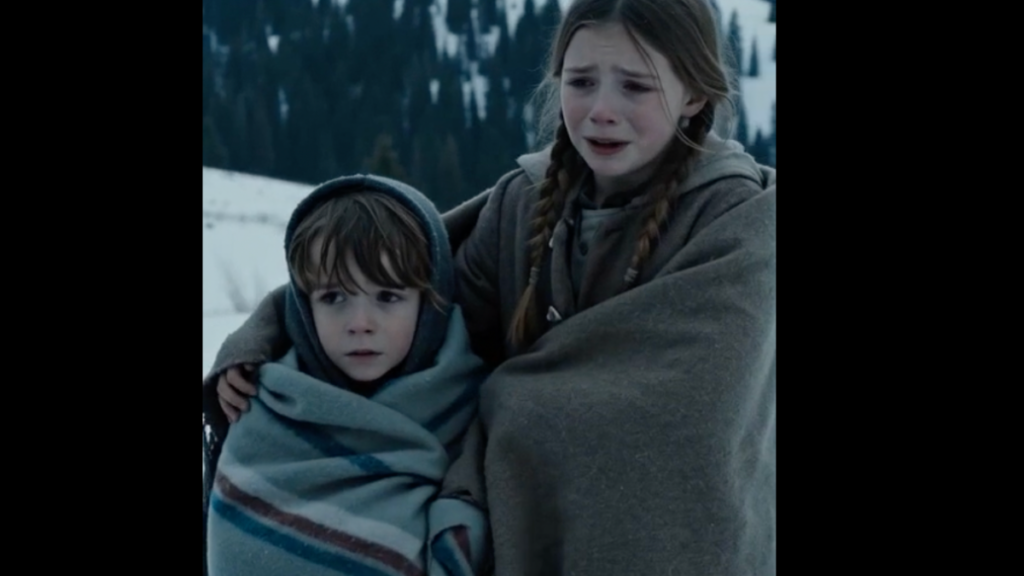
The first snowfall arrived three days before Christmas.
By dawn, Copper Creek had disappeared beneath a blanket of white.
Fence posts became ghosts.
Roads vanished.
The world seemed quieter somehow.
As if winter had convinced everyone to speak softly.
Everyone except the wind.
The wind never stopped.
It howled across the plains.
Rattled windows.
Shook rooftops.
And reminded every rancher in the valley that nature didn’t care whether they were lonely.
Especially Tomás Herrera.
Every morning began the same way.
Before sunrise.
Before coffee.
Before the world woke up.
Tomás pulled on his coat, stepped onto the frozen porch, and stared across the ranch.
Two hundred acres.
Three barns.
A herd worth more money than most people in town would earn in ten years.
And nobody to share any of it with.
Five years earlier, the ranch had been loud.
Clara singing in the kitchen.
A nursery being painted.
Plans.
Dreams.
Arguments over baby names.
Life.
Then one terrible night at the hospital took everything.
Clara never came home.
Neither did the baby.
And the silence that followed settled into the ranch like a permanent resident.
At first people tried helping.
Neighbors brought food.
Friends stopped by.
The pastor visited.
But grief has a way of isolating people.
Especially stubborn men.
Eventually the visits became less frequent.
Then they stopped altogether.
Only the animals remained.
Tomás preferred it that way.
Or at least that’s what he told himself.
Then one January morning, five years later, he stood beside Clara’s grave.
The cemetery sat on a hill overlooking the valley.
Snow covered everything.
Including the small stone beside Clara’s.
The stone that marked a son who’d lived less than an hour.
Tomás brushed snow from both names.
The way he always did.
Then he stood there in silence.
Hands buried in his coat pockets.
Breath hanging in the cold air.
Then he spoke.
The same words he’d spoken every year.
“I still don’t know how.”
The wind answered.
Nothing else.
Then he laughed softly.
A sad sound.
Then:
“You always handled people better than I did.”
The confession disappeared into the snow.
Then Tomás turned.
Walked back to his truck.
And drove home.
Completely unaware that before the winter ended…
Everything would change.
It started with a storm.
A real storm.
The kind old ranchers talked about for decades afterward.
By noon the sky had turned gray.
By two o’clock visibility disappeared.
By three, the sheriff was advising everyone to stay off the roads.
Then at four-thirty, Tomás heard knocking.
Not on the front door.
On the barn.
The sound was almost lost beneath the wind.
Almost.
Then it came again.
Louder.
Desperate.
Tomás frowned.
Nobody should have been out in this weather.
Nobody.
Then he pulled on his coat and headed outside.
The snow immediately slapped against his face.
The cold bit through his gloves.
Then he rounded the corner of the barn.
And stopped.
Three children stood there.
A boy.
Two girls.
All covered in snow.
All shivering.
The oldest couldn’t have been more than thirteen.
The youngest maybe six.
Then the boy stepped forward.
Trying very hard to be brave.
Failing.
Then he spoke.
“Our mom died this morning.”
The words vanished into the storm.
Yet somehow hit harder than thunder.
Tomás stared.
Certain he’d heard wrong.
Then the boy swallowed.
Eyes red.
Face pale.
And repeated:
“Our mom died this morning.”
A pause.
Then:
“We have nowhere to go.”
The world seemed to stop.
The wind still blew.
The snow still fell.
Yet everything felt strangely quiet.
Then Tomás looked at the three children.
Really looked at them.
The little girl clutching a torn backpack.
The older sister trying not to cry.
The boy carrying more responsibility than any child should.
Then something deep inside him shifted.
Something frozen.
Something he’d buried beside Clara five years earlier.
Then the boy asked the question.
The question that would change all of their lives.
“Do you know where we can sleep tonight?”
Tomás looked at the storm.
Then at the children.
Then at the long driveway leading to the ranch house.
And before he could think himself out of it…
He answered.
“You already have.”
The three children stared at him.
Snow whipped around them.
The storm howled.
Yet for a moment, nobody moved.
Because none of them seemed to understand what he’d just said.
Then the oldest boy blinked.
“What?”
Tomás looked toward the ranch house.
The lights glowing warmly through the storm.
Then back at the children.
And repeated:
“You already have a place to sleep.”
The little girl immediately started crying.
Not loudly.
Not dramatically.
The quiet kind.
The kind that happens when a child has been trying to be brave for too long.
Then the older sister wrapped an arm around her.
Holding herself together by sheer force of will.
Then the boy nodded.
Once.
Quickly.
Like if he moved too slowly he’d fall apart.
Then Tomás opened the barn door.
“Get inside before you freeze.”
That was all it took.
The spell broke.
The children hurried inside.
The warmth hitting them immediately.
Then Tomás noticed details he’d missed in the storm.
The boy’s jacket was two sizes too small.
The older girl’s boots had duct tape around one sole.
The little girl’s gloves didn’t match.
None of them looked like children who had anywhere to go.
Then the boy spoke again.
“My name’s Daniel.”
Tomás nodded.
Then pointed.
“Hot chocolate first.”
The answer confused them.
Then:
“Questions later.”
The little girl looked ready to trust him immediately.
Daniel looked ready to trust nobody.
Tomás understood that.
Then thirty minutes later, they sat around the kitchen table.
Three oversized mugs.
Three bowls of stew.
Three children eating like they hadn’t had a real meal in days.
Tomás quietly pretended not to notice.
Then finally Daniel spoke.
“Our mom’s name was Sarah.”
The room grew quiet.
Then:
“She got sick.”
A pause.
“Cancer.”
The word settled heavily over the kitchen.
Then Daniel continued.
“She hid it for a while.”
The older sister immediately looked down.
Then he corrected himself.
“She tried.”
The truth seemed more complicated.
Then:
“By the time she told us…”
He didn’t finish.
He didn’t have to.
Then Tomás asked gently:
“Family?”
Daniel laughed once.
A harsh sound.
Too old for thirteen.
“Not anymore.”
Silence.
Then:
“Mom was all we had.”
The words hit harder than he expected.
Because five years earlier…
Clara had been all he had too.
Then the little girl finally spoke.
Her voice barely above a whisper.
“Are we gonna get split up?”
The question froze the room.
Immediately.
Then Daniel looked away.
The older sister started crying.
And suddenly Tomás understood.
That wasn’t the fear.
The storm wasn’t the fear.
The future was.
Then the little girl asked again.
More quietly this time.
“Because people keep saying that.”
The room became silent.
Then Tomás set down his coffee mug.
And answered carefully.
“Not tonight.”
The little girl nodded.
Then leaned against her sister.
Satisfied for now.
Then later that evening, after the children were asleep upstairs, Tomás sat alone in the living room.
Staring into the fireplace.
Thinking.
The house felt different.
Not full.
Not yet.
But different.
Then he heard footsteps.
Daniel.
Unable to sleep.
The boy hovered awkwardly in the doorway.
Then asked:
“Can I sit here?”
Tomás nodded.
Then the two sat in silence.
Watching the fire.
Then Daniel finally spoke.
“I know we’re probably leaving tomorrow.”
Tomás didn’t answer immediately.
Because the truth was…
He didn’t know.
Then Daniel continued.
“We won’t cause trouble.”
The sentence nearly broke his heart.
Because no child should feel obligated to earn kindness.
Then:
“We can work.”
Another pause.
“Mom taught us.”
Tomás looked over.
Really looked over.
Then asked:
“How old are your sisters?”
“Emma’s eleven.”
A nod toward the older girl upstairs.
Then:
“And Lucy’s six.”
Tomás nodded.
Then silence returned.
Until Daniel asked the question he’d clearly been holding back.
“Why did you help us?”
The fire crackled.
The wind rattled the windows.
Then Tomás looked toward a photograph sitting on the mantle.
Clara.
Smiling.
Always smiling.
Then he answered honestly.
“Because somebody should have.”
Daniel followed his gaze.
Then noticed the photograph.
Then another.
Then another.
Pictures everywhere.
All the same woman.
Then the boy quietly asked:
“Your wife?”
Tomás nodded.
The room softened.
Then:
“She died?”
Another nod.
Then neither spoke for a while.
Because grief recognizes grief.
Even when it wears different faces.
Then Daniel surprised him.
“Mom used to say something.”
Tomás looked over.
Then the boy smiled sadly.
“Home isn’t where you’re born.”
A pause.
“It’s where somebody leaves the porch light on.”
The room fell completely silent.
Because outside…
In the middle of the storm…
The porch light was still shining.
And for the first time in five years…
The old ranch house didn’t feel empty anymore.
For a long moment, neither of them spoke.
The fire crackled softly.
The storm continued outside.
And Daniel’s words lingered in the room.
Home isn’t where you’re born.
It’s where somebody leaves the porch light on.
Then Tomás looked toward the front window.
The porch light glowed against the snow.
Steady.
Warm.
Waiting.
Then he found himself wondering when he’d stopped leaving it on for visitors.
Or whether he’d ever really been leaving it on for himself.
Then the next morning arrived.
And with it came reality.
The storm passed.
The roads reopened.
The world started moving again.
Which meant decisions had to be made.
Then the county social worker arrived.
Her name was Karen.
Kind eyes.
Practical shoes.
A woman who’d spent years delivering bad news gently.
Then she sat at the kitchen table with a folder in front of her.
The children immediately looked terrified.
Tomás noticed.
Then Karen sighed.
The kind of sigh that comes before difficult conversations.
“There aren’t many placement options available right now.”
The room grew quiet.
Then Daniel’s shoulders tightened.
Emma looked down.
Lucy grabbed her brother’s hand.
Then Karen continued.
“We may have to separate them temporarily.”
The words hit exactly as hard as everyone expected.
Lucy immediately burst into tears.
Emma’s face crumpled.
Daniel looked like someone had punched him.
Then Tomás stood up.
The movement surprised everyone.
Including himself.
Then Karen looked up.
Confused.
Then Tomás spoke.
“That’s not happening.”
The room froze.
Then Karen blinked.
“Mr. Herrera—”
“No.”
His voice wasn’t loud.
It didn’t need to be.
Then:
“They stay together.”
Silence.
Then Karen carefully chose her next words.
“Keeping siblings together isn’t always possible.”
Tomás nodded.
Then:
“It is now.”
The room became completely silent.
Because suddenly everyone understood what he was saying.
Then Karen stared.
Then Daniel stared.
Then Emma covered her mouth.
Then Lucy whispered:
“What?”
Tomás looked at the children.
The three kids who’d somehow turned an empty ranch into something else overnight.
Then he answered.
“You can stay here.”
Nobody moved.
Nobody breathed.
Then Karen spoke first.
“Mr. Herrera, that’s a very serious commitment.”
“I know.”
“There’s paperwork.”
“I know.”
“Background checks. Foster certifications. Home evaluations.”
“I know.”
The answer came every time.
Steady.
Certain.
Then Karen asked the question that mattered.
“Why?”
The room turned toward him.
Waiting.
Then Tomás looked toward Clara’s photograph.
Then back toward the children.
And finally told the truth.
“Because five years ago…”
His voice caught.
Then:
“When I lost my family…”
Silence.
Then:
“I spent every day wishing somebody would give me a reason to keep opening the front door.”
Nobody spoke.
Then Tomás looked directly at Lucy.
At Emma.
At Daniel.
Then finished:
“Now I have one.”
The room shattered.
Emma started crying openly.
Lucy launched herself across the kitchen.
Straight into Tomás.
The six-year-old wrapped her arms around him before he could react.
Then he froze.
Because nobody had hugged him unexpectedly in years.
Then slowly…
Awkwardly…
He hugged her back.
And something inside him broke loose.
Something old.
Something heavy.
Something he’d been carrying far too long.
Then Daniel stood.
Trying very hard not to cry.
Failing.
Then Emma joined them.
Then somehow all four ended up standing in the middle of the kitchen.
Holding onto each other.
A strange little family.
Not official.
Not yet.
But becoming something.
Then Karen quietly closed her folder.
Smiling through tears.
Because after years in social services, she knew what she was seeing.
Not charity.
Not pity.
Home.
Then the following weeks transformed the ranch.
The house filled with noise.
Real noise.
Footsteps.
Laughter.
Arguments over cereal.
Lucy singing badly.
Emma practicing homework aloud.
Daniel helping with chores.
Life.
The kind of life that had been missing for years.
Then one evening, nearly two months later, Tomás walked into the barn and stopped.
Daniel stood inside.
Working.
Fixing a fence panel.
Concentrating.
Then Tomás watched quietly.
The boy didn’t notice.
Then eventually Daniel looked up.
Embarrassed.
“Sorry.”
The apology came automatically.
Then:
“I know I’m not supposed to be using the tools alone.”
Tomás frowned.
“Why are you apologizing?”
The question confused him.
Then Daniel shrugged.
“People usually get mad.”
The answer hit harder than expected.
Then Tomás looked at the repaired fence.
Then smiled slightly.
“Looks good.”
Daniel blinked.
“What?”
“The fence.”
Silence.
Then:
“You did good work.”
The boy froze.
Completely.
Because sometimes the words children need most aren’t dramatic.
Sometimes they’re simply:
You did good.
Then Daniel looked away quickly.
Trying not to show emotion.
Trying not to hope.
Then Tomás pretended not to notice.
Because some things deserve privacy.
Even happiness.
And outside, beyond the barn doors, the ranch stretched toward the horizon.
For the first time in years…
It finally felt alive again.
Then one afternoon, almost a year after the storm, Emma found a box.
It was hidden in the back of a closet beneath old winter coats.
The cardboard was worn.
The tape yellow with age.
And written across the top in black marker were two words.
SARAH’S THINGS.
The discovery immediately stopped the entire house.
Because nobody had touched those belongings since the day their mother died.
Then Emma carried the box downstairs.
Carefully.
Like it might break.
Then Daniel saw the handwriting.
And froze.
Lucy immediately started crying.
Then all three children sat on the living room floor.
Just staring at it.
Nobody wanting to be the first to open it.
Then Tomás quietly sat beside them.
And waited.
Finally Daniel took a breath.
And lifted the lid.
Inside were photographs.
Birthday cards.
School drawings.
Recipes.
A dozen tiny pieces of a life.
Then Emma found an envelope.
Her name written on the front.
Another.
Daniel.
Another.
Lucy.
The room became completely silent.
Because suddenly they understood.
Their mother had known.
Maybe not exactly when.
Maybe not exactly how.
But she’d known.
Then Daniel opened his letter first.
His hands shaking so badly he could barely unfold it.
The words were written in Sarah’s familiar handwriting.
My sweet boy,
If you’re reading this, then I’m sorry I couldn’t stay longer.
I know you’ve been trying to be brave.
I know you’ve been trying to take care of your sisters.
But Daniel…
You were never supposed to carry all of that alone.
You’re allowed to be a child.
You’re allowed to laugh.
You’re allowed to let someone help you.
The tears started immediately.
Then Emma opened hers.
Then Lucy.
Soon the room filled with crying and laughter and stories.
Then Daniel reached into the bottom of the box.
And pulled out one final envelope.
Unlike the others, it wasn’t addressed to a child.
It was addressed to:
THE PERSON WHO HELPS MY CHILDREN WHEN I CAN’T.
Tomás stared.
Speechless.
Then slowly opened it.
Inside was a single page.
If you’re reading this, then you’ve done something I prayed someone would do.
You’ve stayed.
Thank you.
Thank you for feeding them when they’re stubborn.
Thank you for listening when they’re hurting.
Thank you for loving them when they’re difficult.
Most of all, thank you for keeping them together.
Please don’t feel guilty for becoming important to them.
That isn’t replacing me.
That’s answering a prayer I couldn’t stay long enough to finish.
The room disappeared.
Tomás couldn’t see.
Couldn’t breathe.
Then he lowered the letter.
And found three children staring at him through tears.
Then Lucy quietly climbed into his lap.
Emma leaned against his shoulder.
Daniel sat beside him.
And for a long moment nobody spoke.
Because somehow a mother who was gone had just given all of them permission to become a family.
And from that day forward, the adoption hearing stopped feeling like a rescue.
It started feeling like a promise finally being fulfilled.
Then two months later, the adoption hearing finally arrived.
The entire drive into town felt strangely quiet.
Lucy bounced in the backseat for the first twenty minutes.
Then nerves finally caught up to her.
Emma stared out the window.
Daniel kept checking the folder containing all the paperwork.
As if the documents might disappear if he stopped looking at them.
Then Tomás drove.
One hand on the wheel.
The other resting on the worn leather seat beside him.
Trying not to think too much.
Because if he did, he might not make it through the day without crying.
And he was already losing that battle.
Then they arrived at the courthouse.
The old brick building sat in the center of Copper Creek.
Small.
Unremarkable.
Yet somehow it felt more important than any place Tomás had ever been.
Because families weren’t always born in hospitals.
Sometimes they were built here.
One choice at a time.
Then they stepped inside.
And immediately stopped.
The courtroom was packed.
Neighbors.
Teachers.
Ranch hands.
The grocery store owner.
The pastor.
Even Mrs. Delgado from the diner.
Every person who had watched the four of them slowly become a family had shown up.
Then Lucy gasped.
“All these people came for us?”
The answer came from behind her.
“Of course they did.”
Karen.
The social worker.
Smiling.
Then she knelt beside Lucy.
And whispered:
“Everybody loves a happy ending.”
The little girl immediately nodded.
As though that made perfect sense.
Then the hearing began.
The judge reviewed paperwork.
Asked questions.
Verified signatures.
The official parts.
The boring parts.
Yet nobody in the room seemed bored.
Then the judge looked toward Daniel.
The oldest.
The protector.
The boy who had carried too much for too long.
Then asked gently:
“Daniel, do you wish to be adopted by Mr. Herrera?”
The room became silent.
Then Daniel looked toward Tomás.
Not for permission.
For reassurance.
Then Tomás gave him a small nod.
And Daniel smiled.
The kind of smile that only appeared when he forgot to protect himself.
Then he answered:
“Yes, ma’am.”
The judge smiled.
Then turned to Emma.
“Do you wish to be adopted by Mr. Herrera?”
Emma started crying before she could answer.
The courtroom laughed softly.
Then through tears she nodded.
“Yes.”
Then came Lucy.
The easiest witness in the history of family court.
The judge barely finished the question.
“Yes.”
The room erupted.
Then Lucy frowned.
“What?”
More laughter.
Then finally the judge looked toward Tomás.
The room immediately quieted.
Then she asked:
“Mr. Herrera, do you understand that adoption is a lifelong commitment?”
Tomás nodded.
“Yes.”
“Do you understand that from this day forward these children will legally be your responsibility?”
“Yes.”
“Do you accept that responsibility willingly?”
The question hung in the air.
Then Tomás looked at the three children beside him.
The kids who arrived during a blizzard carrying grief and garbage bags full of belongings.
The kids who filled an empty ranch with life.
The kids who somehow gave him back a future he thought he’d lost forever.
Then he smiled.
And answered:
“They’ve been my children for a long time already.”
The courtroom dissolved.
Completely.
People cried openly.
Even the judge wiped her eyes.
Then she laughed at herself.
And finally signed the documents.
The sound of the pen seemed impossibly loud.
Then she looked up.
Smiling.
And announced:
“It is my honor to officially recognize Daniel Herrera, Emma Herrera, and Lucy Herrera as the legal children of Thomas Herrera.”
The room exploded.
Applause.
Laughter.
Tears.
The kind of joy that arrives after surviving something difficult.
Then Lucy immediately launched herself at Tomás.
Again.
Apparently that was tradition.
Then Emma joined.
Then Daniel.
And for a moment all four of them simply held on.
Not because they were afraid of losing each other anymore.
Because they finally didn’t have to be.
Then later that evening, after the celebration ended and the guests went home, the four of them sat on the front porch together.
Blankets wrapped around their shoulders.
Watching the sunset paint the fields gold.
The ranch stretched endlessly before them.
Home.
Real home.
Then Daniel looked toward the porch light.
Already glowing even though the sky wasn’t fully dark yet.
Then he smiled.
And quietly said:
“Mom would’ve liked this.”
Nobody corrected him.
Because they all knew exactly which mom he meant.
Sarah.
The woman who loved them first.
The woman whose prayers somehow led them here.
Then Emma leaned against Tomás’s shoulder.
Lucy curled up beside him.
And for a while nobody spoke.
They simply watched the light.
The porch light.
The one that had guided three frightened children through a snowstorm.
The one Tomás never forgot to turn on anymore.
Then as darkness settled across the ranch, Daniel smiled.
And whispered:
“Home is where somebody leaves the porch light on.”
Tomás looked at the three children beside him.
His children.
Then at the light shining warmly against the night.
And for the first time in a very long time…
The future felt bigger than the past.
Ten years later, the porch light still came on every night.
Nobody really talked about it anymore.
It was simply part of the ranch.
Like the red barn.
Like the creek.
Like the old oak tree beside the house.
The light came on at dusk.
Every single evening.
Without fail.
Then one autumn afternoon, Tomás stood on the porch watching a pickup truck bounce down the long gravel driveway.
A familiar pickup truck.
Daniel’s.
The young man climbed out carrying a duffel bag and wearing the same grin he’d had as a boy.
Only taller now.
Broader.
Confident.
Home from college.
Then before Daniel could even reach the steps, the front door burst open.
Lucy.
No longer six years old.
No longer little.
Yet somehow still exactly the same.
She sprinted across the yard.
Daniel barely had time to brace himself before she crashed into him.
The reunion nearly knocked them both over.
Then Emma appeared.
Laughing.
Shaking her head.
Then suddenly all three of them stood together in the driveway.
The same three children who arrived during a snowstorm carrying everything they owned in backpacks.
Tomás felt his throat tighten.
It happened more often these days.
The older they got, the more emotional he became.
Nobody warned him about that part of parenthood.
Then Daniel spotted him.
And immediately walked over.
The young man stopped beside him on the porch.
Then looked toward the light already glowing beside the front door.
Even though sunset was still an hour away.
Then he smiled.
“Still turning it on early?”
Tomás shrugged.
“Old habit.”
Daniel nodded.
Then they stood quietly for a moment.
Watching Emma and Lucy argue about something ridiculous.
Then Daniel spoke.
“Do you remember that storm?”
Tomás laughed softly.
“How could I forget?”
The young man looked out across the ranch.
The place that had become home.
Then he smiled.
“I thought we were done that night.”
The confession came quietly.
“Mom was gone.”
A pause.
“We had nowhere to go.”
Then Daniel looked toward the house.
Toward the light.
Toward the life waiting inside.
Then he shook his head.
“I had no idea we were actually arriving.”
Tomás couldn’t speak for a moment.
Because sometimes the simplest truths hit the hardest.
Then the front door opened again.
Lucy appeared.
“Dinner!”
The shout echoed across the property.
Then she pointed dramatically toward the house.
“Move it, old people.”
Daniel laughed.
Emma groaned.
Tomás rolled his eyes.
Then together they headed toward the porch.
Toward the warmth.
Toward the light.
Toward home.
And as the sun disappeared behind the hills, the porch lamp continued shining across the darkening fields.
Just as it always had.
A promise.
A welcome.
A reminder.
That somewhere in the world, there would always be a place where somebody left the light on for you.
