

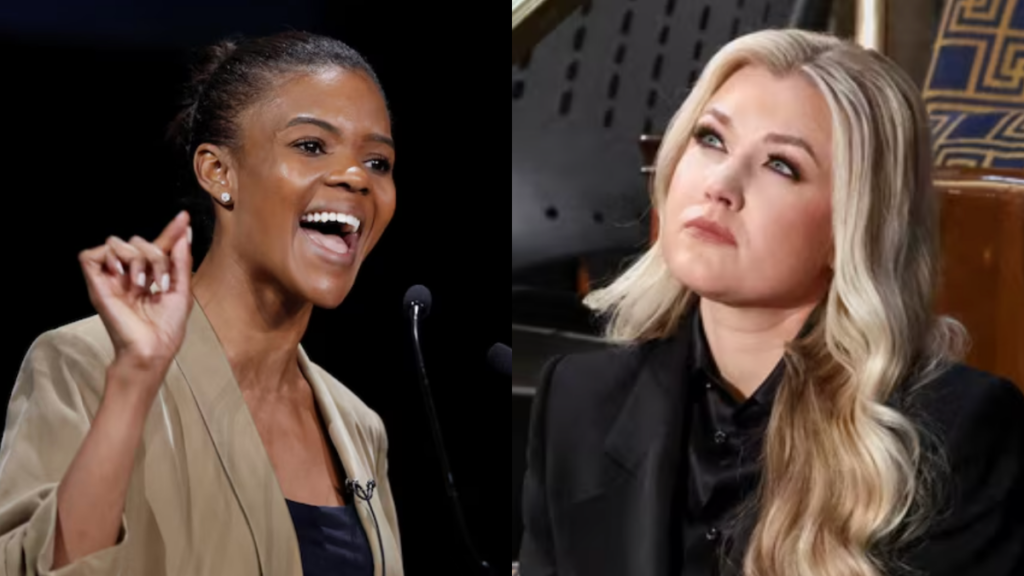
Photo Credit: Reuters: Benoit Tessier; Reuters
Candace Owens’ New Claims Shake Conservative Circles
Conservative commentator Candace Owens recently renewed a heated feud involving Erika Kirk. Candace Owens questioned Kirk’s background in public posts. Owens claimed Kirk may have had links to Jeffrey Epstein. These statements appeared without clear evidence from authorities. The claims have sparked strong reactions online across political and news platforms.
Owens made her remarks on X while discussing an ongoing series of investigations. She referenced what she described as “Epstein’s orbit in New York.” Owens asked why Erika Kirk was at a modeling firm tied to alleged Epstein associates. She urged followers to demand answers about possible connections.
Erika Kirk is the widow of conservative activist Charlie Kirk. She now leads Turning Point USA as its CEO following her husband’s death. Owens has openly criticized her leadership and roles in conservative spaces. The focus on Kirk’s private life has unsettled many political observers.
News outlets described Owens’ attempt to link Kirk to Epstein as controversial. Many analysts called the claims irresponsible without evidence. Critics said spreading unverified associations damages public discourse. The story has generated questions about accountability in public commentary.
Owens’ remarks also triggered discussions about how personal reputations are affected online. Independent fact finders reported no official investigation or arrest connected to Kirk regarding these claims. No law enforcement agency has publicly linked her to Epstein. The controversy continues to evolve on social platforms.
What Owens Has Alleged and Public Reaction
Candace Owens framed her assertions around cryptic social media posts and historical connections. She suggested that current records should clarify Kirk’s past work and associations. Owens wrote that questions surrounding Kirk’s history demand answers from the public and press.
Social media users amplified Owens’ posts, adding speculation about whether Kirk’s name appeared in released legal files. Some asked whether historical documents linked her to Epstein’s network. These discussions often lacked any verifiable documentation or official records.
Many observers pushed back against Ow ens’ remarks. They called the claims “utterly immoral” and criticized them as baseless speculation. Some commentators said spreading rumor prompts harm to individuals’ reputations without cause.
In reaction, fact checkers stressed that there is no public evidence supporting any criminal investigation involving Kirk. No federal court filings or law enforcement announcements confirm such allegations. Fact-check reports made clear that unverified claims should not be treated as fact.
Beyond the Epstein narrative, social media conversation has also involved other unverified accusations against Kirk, including grooming claims. These, likewise, have no official confirmation from credible sources. Public responses underline the dangers of presenting rumors as substantiated claims.
The overall reaction highlights how social platforms magnify unverified narratives. It also reveals increased scrutiny toward public figures who engage in controversial speculation. Many commentators urged more responsible discourse moving forward.
Owens, Kirk, and Conservative Politics
The public feud between Candace Owens and Erika Kirk extends beyond these latest allegations. Owens has previously made conspiratorial claims related to the death of Charlie Kirk. These past theories drew sharp criticism from both political allies and opponents.
Owens rose to prominence as a conservative commentator aligned with the MAGA movement. Over time, she has publicly distanced herself from some former allies while pursuing independent investigative commentary. Her evolving role has drawn major media attention.
Erika Kirk’s position in conservative circles grew after her husband’s death. She now leads Turning Point USA, a prominent political advocacy group. Her role continues to draw scrutiny from political commentators and factional critics.
The focus on Kirk also extends to her previous career history in real estate. Some speculation emerged around her work with firms that handled properties once owned by Epstein. However, reputable sources note that official records do not list her name in any Epstein‑related case files.
This broader context reveals how reverberations from national controversies can touch many linked figures. Public disagreement now involves issues of leadership, credibility, and political influence. Analysts say such disputes underscore divisions within conservative movements.
The continuing dialogue also highlights challenges faced by public figures who are thrust into speculation. Experts emphasize the importance of fact over conjecture in political discourse, especially when reputations hang in balance.
Media Literacy and the Spread of Unverified Claims
The controversy around Candace Owens’ latest claim underscores a larger issue: the spread of unverified information. On social media, speculation can gather momentum even without evidence. Public figures often spark rapid amplification. Critics say this can distort public understanding.
Many experts stress the need for media literacy in the digital age. They encourage audiences to verify information with reliable sources before accepting it as fact. This approach helps protect individuals from undue harm. Fact checking organizations play an essential role in clarifying rumors.
Political commentators also bear responsibility for maintaining accuracy. Influential voices have the power to shape public perception. When they share unverified assertions, they risk spreading misinformation widely and damaging trust in public discourse.
Public reaction to Owens’ claims reflected this concern. Many users and commentators urged restraint, emphasizing that serious allegations demand factual backing. They highlighted the potential harm of insinuations without substantiation.
This episode also illustrates how polarized political landscapes can accelerate rumor circulation. When narratives align with preexisting biases, audiences may accept them without critical evaluation. Experts say that education in information evaluation helps counteract this trend.
Ultimately, this situation offers a case study in why evidence matters. Journalists, influencers, and everyday readers alike benefit when they apply skepticism and rely on trustworthy sources. Responsible engagement with news promotes a healthier information environment for all.
Impacts and Lessons from the Controversy
The fallout from Candace Owens’ claims shows how quickly narratives can evolve on social platforms. What began as commentary spiraled into broader speculation involving public figures’ reputations. The speed of this spread illustrates modern media dynamics.
Experts say this type of controversy highlights the need for evidence‑based discussion. Public figures who voice bold claims should support them with verifiable information. Audiences should demand accountability from those who shape influential narratives.
Another lesson from this episode will likely be the ongoing debate around online discourse and political polarization. As social media platforms amplify diverse voices, the lines between fact and conjecture often blur. Users must navigate these spaces with care.
For Erika Kirk, the intense scrutiny has attached her name to narratives without legal basis. Independent fact checks have confirmed that law enforcement has not arrested or investigated her in relation to the allegations. This highlights how rumor can overshadow verified reality.
Moving forward, the public conversation will continue to grapple with questions about free speech and responsibility. Commentators, journalists, and audiences play a role in promoting a culture grounded in truth rather than rumor. If done thoughtfully, this can strengthen civic discourse.
This controversy serves as a reminder that in an age of rapid information exchange, truth and accountability remain essential to meaningful public debate.