

The Night I Followed Her
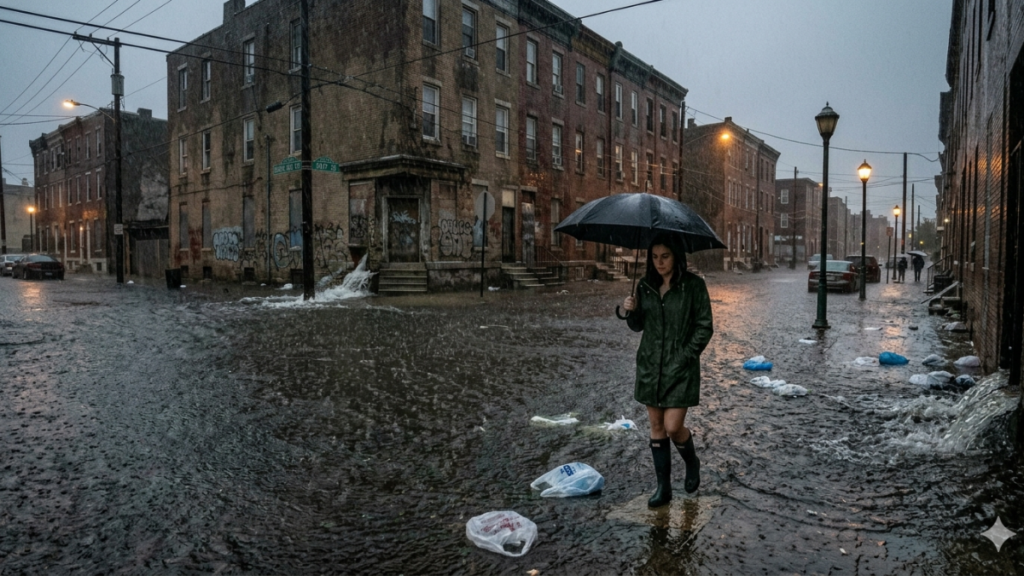
Rain had been falling for three days straight.
Not the soft kind either.
This rain hit the city like punishment.
The streets on the south side were flooded again.
Gutters overflowed.
Plastic bags floated through the alleyways like dead fish.
I should not have been there that night.
People like me usually stayed far away from that part of the city.
My stores were there because rent was cheap and labor was cheaper.
But I never walked those streets myself.
At least not until the security guard called me personally.
“Sir,” he said quietly over the phone. “We caught a child stealing.”
I almost told him to handle it himself.
Then he added something strange.
“She only took baby formula.”
That made me pause.
I drove there myself through the rain.
Even now, I still do not fully understand why.
Two Cans in Her Arms
The convenience store smelled like wet cardboard and bleach.
The little girl stood near the back office while two employees argued about calling the police.
She could not have been older than ten.
She was soaked from head to toe.
Her oversized shirt clung to her thin arms.
Mud covered her legs.
And pressed tightly against her chest were two cans of formula powder.
Not candy.
Not money.
Not cigarettes.
Formula.
She looked terrified.
The security guard whispered to me, “She tried to run when we stopped her.”
But the strange thing was this:
Even while crying, she never loosened her grip on those cans.
Like letting go would kill someone.
I crouched down slightly.
“You stole these from my store?”
She nodded once.
No excuses.
No fake story.
Just fear.
Then she whispered something that stayed with me long after that night ended.
“Please forgive me. I’ll pay you back when I grow up.”
The employees laughed quietly behind me.
I did not.
Because her eyes were wrong for a thief.
I had spent twenty years building businesses.
I knew what manipulation looked like.
I knew how people lied when they wanted money.
But this little girl looked completely exhausted.
Like life had already beaten her down.
And then she said something else.
“My little brothers and sisters are hungry.”
Something inside me shifted after that.
I just did not know it yet.
The Shack at the End of the Alley
I should have let her go.
That would have been the normal thing to do.
Instead, I asked her where she lived.
She hesitated for a long time before finally turning toward the door.
I followed her through the rain.
The employees looked confused, but nobody stopped me.
The deeper we walked into the neighborhood, the quieter things became.
Streetlights disappeared.
Most of the buildings looked abandoned.
Water dripped through broken roofs.
People watched us from dark windows.
The girl never looked back at me once.
Then she stopped in front of a collapsing shack made from rusted metal sheets and old wood panels.
I remember staring at it and thinking nobody could possibly live there.
But she pushed the door open.
And I heard coughing inside.
Four Children and No Food
The smell hit me first.
Mold.
Wet clothes.
Rotting wood.
The fluorescent light hanging from the ceiling flickered every few seconds.
Rainwater leaked through holes in the roof into metal bowls on the floor.
Three small children sat together under a torn blanket.
The youngest looked barely old enough to walk.
All of them stared at the formula cans in the girl’s hands like she had returned carrying treasure.
I asked where their parents were.
The little girl stayed quiet.
One of the younger boys answered instead.
“Mommy went away.”
I asked when.
He shrugged.
“A long time ago.”
No anger in his voice.
Just fact.
That bothered me more.
The girl quickly opened one can of formula while trying to avoid looking at me.
Her hands shook as she mixed powder into cloudy water.
I noticed there was no food anywhere inside the shack.
Nothing.
Not even bread.
I suddenly realized those children had probably been hungry for days.
And somehow the oldest one had decided it was her job to fix it.
At ten years old.
I stood there listening to rain hit the metal roof while the children drank formula from cracked plastic cups.
Nobody spoke.
Then I noticed something else.
There were bruises on the little girl’s arm.
Old ones.
And fresh ones too.
That was the moment I understood this story was much bigger than stolen formula.
Some People Should Never Be Parents
I asked again where their mother was.
This time the girl answered.
“She comes sometimes.”
Her voice stayed flat.
No emotion.
That scared me more than crying would have.
“When?”
“When she needs money.”
The room suddenly felt colder.
I looked around again and noticed empty beer bottles in the corner.
Cigarette burns marked the wooden table.
But there was no sign of any adult actually caring for those children.
Then the girl quietly added one more sentence.
“She gets angry when we eat her food.”
I remember feeling something sharp rise in my chest.
Not pity.
Anger.
I had grown up poor myself. Not this poor, but enough to know hunger changes people.
Still, there was something especially cruel about leaving children alone like this.
And somehow expecting them to survive.
The youngest child suddenly started coughing hard.
The girl rushed to hold him.
She did it automatically.
Like a mother would.
That image stayed with me all night.
A child comforting another child while rain leaked through the roof above them.
I went home after midnight.
But I could not sleep.
Because every time I closed my eyes, I saw her holding those formula cans against her chest like they were life itself.
And I realized something disturbing.
Nobody had ever come looking for those children.
Nobody.
I Went Back the Next Day
I told myself I was only going back to deliver food.
That was the excuse I used anyway.
I bought rice, bread, canned soup, medicine, clean clothes, blankets, and enough groceries to fill my car.
When I arrived, the little girl looked terrified again.
Like she thought I had come to punish her.
The younger children hid behind her immediately.
I told her softly, “You do not need to steal anymore.”
She stared at me without speaking.
Then she asked the strangest question.
“Why are you helping us?”
I did not know how to answer.
Because honestly, I was starting to ask myself the same thing.
I had passed homeless people my entire life without stopping.
I donated money sometimes.
Signed checks.
Sponsored charities.
But this felt different.
This felt personal.
And I hated how quickly those children had entered my thoughts.
Especially her.
She watched everything carefully while I unpacked groceries.
She never smiled.
Never relaxed.
Like she had learned a long time ago that kindness usually came with conditions.
That realization hurt more than I expected.
Then I heard a loud banging outside.
The little girl froze instantly.
Pure fear crossed her face.
And suddenly every child in the shack went silent.
Their Mother Came Home
The woman stumbled through the door smelling like alcohol and cigarettes.
Her eyes landed on me first.
Then the food.
Then the formula cans.
I watched her expression change almost immediately.
Not embarrassment.
Calculation.
“Well,” she said slowly. “Looks like my daughter found herself a rich man.”
The little girl lowered her head instantly.
I understood everything in one second.
This woman was dangerous.
Not because she screamed.
Not because she hit anyone while I was there.
Because she saw opportunity before she saw her own starving children.
She walked toward me smiling in a way that made my skin crawl.
“You want to help us?” she asked. “We could really use money.”
The little girl quietly whispered, “Mom…”
The woman snapped toward her so fast the child flinched before being touched.
That reflex told me enough.
I left soon after.
But before I walked out, the little girl grabbed my sleeve for half a second.
Very lightly.
Almost like she was afraid to be seen doing it.
Then she whispered something so quietly I barely heard it.
“Please don’t leave us here.”
I still hear that sentence sometimes.
Especially late at night.
I Started Digging
The next morning I made a few calls.
Then a few more.
By the end of the week, I knew far more than I wanted to.
The mother had a long record.
Drug use.
Neglect complaints.
Violence.
Neighbors had reported screaming from the shack for years.
But every investigation somehow disappeared.
No follow-up.
No intervention.
Nothing.
One social worker even admitted to me quietly, “There are too many cases. Children slip through.”
Slip through.
As if they had fallen between couch cushions.
Meanwhile that little girl had become mother, cook, protector, and provider before finishing elementary school.
And nobody had stopped it.
I started visiting regularly after that.
At first the children barely spoke to me.
Then slowly things changed.
The youngest boy began running toward the door when he saw my car.
One of the girls started showing me drawings she made from broken crayons.
But the oldest girl stayed cautious.
Always watching.
Always waiting for something bad to happen.
I realized trust was foreign to her.
And honestly?
That broke my heart more than the poverty itself.
The Bruises Got Worse
One evening I noticed dark marks near her collarbone.
Fresh ones.
I asked quietly what happened.
She immediately said, “I fell.”
Too quickly.
Too rehearsed.
Then I saw the mother sleeping drunk in the corner while the children quietly ate rice beside her.
The little girl kept glancing nervously toward the woman while speaking to me.
Like every word carried danger.
That was the night I made my decision.
I contacted a lawyer.
Then child protection services again.
This time I did not ask politely.
I pushed.
Hard.
And suddenly people started listening.
Funny how quickly systems move when wealthy people become involved.
That realization disgusted me.
Because those children had needed help long before I arrived.
But apparently suffering only mattered once someone important noticed it.
The investigation began quietly.
The mother had no idea.
At least not yet.
But secrets never stay buried for long in neighborhoods like that.
And eventually she found out.
That was when things became dangerous.
She Accused Me of Everything
The mother arrived at one of my stores screaming.
Customers stopped shopping just to watch.
She pointed at me from across the aisle.
“You think you can steal my kids?”
People stared.
Phones came out immediately.
I stayed calm.
Mostly because I noticed something strange.
The little girl was not with her.
None of the children were.
That told me more than the screaming did.
The mother accused me of manipulating her family.
She claimed I wanted attention.
Claimed I was using poverty for publicity.
The wild part?
Some people believed her.
Online videos spread quickly.
Complete strangers called me a predator.
A fake hero.
A rich man exploiting poor children.
For a few days, my name was everywhere.
And honestly, I almost backed away.
Not because of the insults.
Because I realized public attention could make things worse for the children.
Then the oldest girl appeared at my office unexpectedly.
Alone.
And when she spoke, everything changed.
“Please Don’t Let Her Take Us Back”
She stood near the doorway holding her youngest brother’s hand.
Both looked exhausted.
I asked where their mother was.
“She left yesterday,” the girl whispered.
Then she handed me something.
A school notebook.
Inside were pages filled with dates.
Descriptions.
Records of beatings.
Days without food.
Times the younger children got sick.
The handwriting was small and messy, but detailed.
Ten-year-old children should not document survival like investigators.
I felt sick reading it.
Then I reached the final page.
“If something happens to us, please tell people we tried to be good.”
I had to stop reading after that.
Because suddenly I understood why she wrote everything down.
She thought nobody would believe them otherwise.
And maybe she was right.
The Internet Changed Overnight
The notebook became evidence.
Then the photographs surfaced.
Then neighbors started speaking publicly.
Teachers too.
One by one, people admitted they had suspected abuse for years.
But nobody wanted involvement.
That part angered the public most.
Not just the mother.
The silence around her.
News channels picked up the story within days.
The little girl who stole formula suddenly became national news.
People donated money.
Companies offered support.
Child welfare offices faced investigations.
And through all of it, the girl stayed painfully quiet.
One reporter asked her during an interview, “What did you wish for most?”
She answered without hesitation.
“A lock on the door.”
The studio went silent after that.
Because everyone understood exactly what she meant.
The Day They Left the Shack
The children were finally removed officially two months later.
I was there when social workers packed their things.
There was almost nothing to take.
A few clothes.
Broken toys.
The notebook.
That was about it.
Rain started falling again while they walked away from the shack for the last time.
The oldest girl turned back once.
Not emotional.
Not dramatic.
Just thoughtful.
Then she asked me quietly, “Do you think my mom ever loved us?”
I could not answer immediately.
Because the truth was complicated.
And children deserve better answers than complicated truths.
So I finally told her this instead:
“What happened to you was never your fault.”
She nodded slowly.
Like she had already known that somewhere deep down.
But maybe needed permission to believe it.
Some Endings Stay Messy
The children were placed together with a foster family outside the city.
A good family.
Patient people.
The oldest girl still struggles sometimes.
Loud noises make her nervous.
She hides food in drawers even now.
Trauma does not disappear just because life improves.
But she smiles more.
That matters.
As for their mother, she lost custody permanently.
Last I heard, she disappeared into another part of the city.
Sometimes I wonder if she thinks about those children.
Sometimes I wonder if they think about her too.
Probably both.
People online still message me about the story.
Some call me a hero.
I do not feel like one.
Because the truth is uncomfortable.
I only stopped because one little girl stole formula from my store.
That was the thing that finally forced me to look directly at suffering I had ignored for years.
And I still think about how close those children came to disappearing completely.
Not through death.
Through invisibility.
That is what almost happened to them.
The world had simply stopped seeing them.
Until one rainy night when a little girl stood trembling under fluorescent lights, holding two cans of milk powder against her chest like they were the last pieces of hope left on earth.
And in many ways, they were.
