

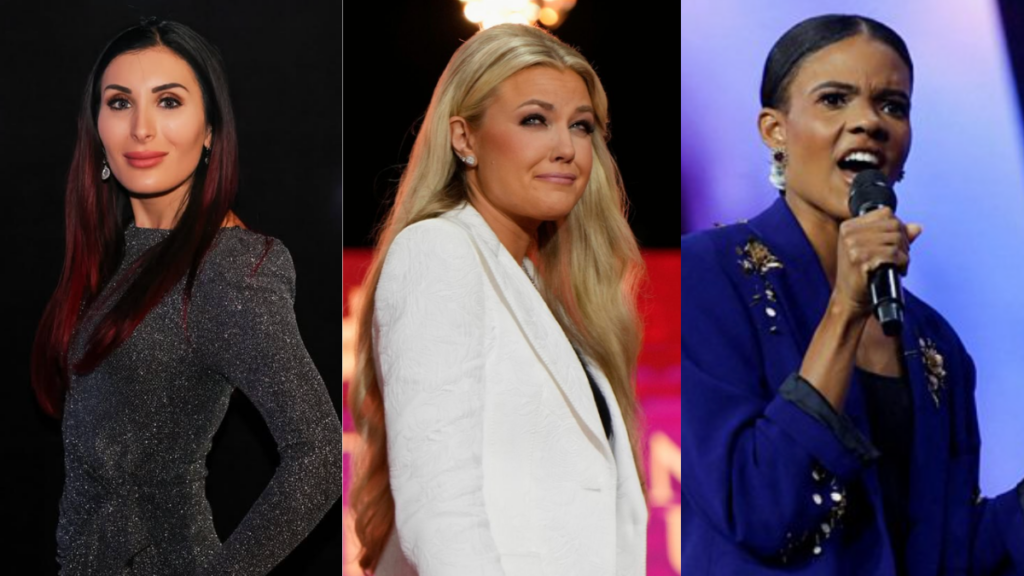
Photo Credit: Laura Loomer / Instagram; AP; BBC
A Valentine’s Day Post Sparks a Media Firestorm
Conservative commentator Laura Loomer stirred controversy on Valentine’s Day. She posted a message supporting Erika Kirk, the widow of late activist Charlie Kirk. In the same post, Loomer fiercely criticised fellow commentator Candace Owens online. Loomer’s message went viral across social and political media. Her comments did not directly name Owens, but many observers interpreted her target without hesitation. This confrontation reignited a longer-running feud within conservative media circles.
Loomer wrote that some women online behaved like “jealous and spiteful women” who wished they had what Erika Kirk had. Her message supported Erika and framed online critics as harmful and malicious. She claimed these critics wish they looked like Kirk and enjoyed her life. Critics note that such language may inflame divisions rather than resolve disputes.
The post also praised Erika Kirk’s resilience and offered support for her amid ongoing public debate. Loomer urged others to “stand with you” and “root for your success,” showing full backing. The tone mixed empathy with sharp rebukes of unnamed critics online. Some interpreted this as bordering on personal attack rather than strategic commentary.
Owens’ own commentary has drawn attention online, though Loomer accuses her of creating controversy. Owens often examines details publicly, including aspects of Erika and Charlie Kirk’s relationship and personal life. Critics of Owens argue her approach has fueled online speculation and tensions around the family tragedy. Loomer believes Owens’ commentary went beyond legitimate inquiry into personal harm.
This Valentine’s Day exchange illustrates how personal grief intersects with political commentary. It also highlights the intense scrutiny conservative figures face from their own ideological allies.
The Roots of a High-Profile Conservative Feud
The feud between Laura Loomer and Candace Owens did not begin with a Valentine’s Day message. It has stemmed from ongoing disagreements over how to discuss Erika Kirk and the late Charlie Kirk’s assassination. Owens has publicly questioned aspects of the couple’s life and their reactions to Charlie’s death.
Charlie Kirk, founder of Turning Point USA, was killed in a 2025 shooting at Utah Valley University. That tragic event sent shockwaves through conservative circles and turned family tragedy into public discourse. Owens seized the moment to raise questions about interview remarks and personal details from the couple’s life. Many of her comments appeared speculative.
Owens’ scrutiny focused on details such as Erika’s statements in interviews and Charlie’s wedding band. She framed these observations as peculiar, sparking debate among her followers. Critics note that Owens’ approach sometimes veers toward conjecture without confirmed evidence.
Loomer’s reaction to Owens reflects frustration with that style of commentary. Loomer sees any questioning of personal choices during grief as unfair and invasive. She believes such critiques add harm rather than constructive insight. This belief explains the intensity of Loomer’s Valentine’s Day message.
Some observers view the feud as part of broader tensions within conservative media. Influencers often compete for audience attention and cultural relevance. Personal attacks, allegations of jealousy, and public disputes have become part of this competition. Critics worry that such infighting distracts from substantive policy debates.
Public Reactions and Social Media Fallout
Once Laura Loomer’s Valentine’s Day post gained visibility, public reaction exploded. Supporters praised her for defending Erika Kirk and rejecting online attacks. Others criticised Loomer for personal language and aggressive tone. Many debates unfolded on X (formerly Twitter), Reddit, and other platforms.
Some viewers argued Loomer misunderstood Owens’ intention. They say that Owens aims to explore questions surrounding Charlie Kirk’s death. They contend that scrutiny of public figures is standard political debate. These supporters believe open discussion strengthens accountability, not weakens it.
Conversely, Loomer’s defenders claim Owens repeatedly escalates sensitive topics for attention or influence. They point to instances where Owens linked controversial theories with the official events. Some critics believe these tactics blur the line between commentary and rumor-mongering.
Others worry this feud reflects wider fractures in conservative media. Not all commentators agree on strategy, tone, or focus. Some wish commentators would prioritise unity over internal criticism. They argue internal strife distracts from shared goals.
This online storm has also drawn reactions from commentators outside the immediate dispute. Some public figures have weighed in on ethics, empathy, and decorum in political discussion. These reactions show how high-profile disputes can influence broader norms of media conduct.
Disputes Within Conservative Commentary
The Loomer–Owens exchange is not an isolated incident. Recent events have shown more internal disputes among conservative commentators. These disputes range from differing views about Turning Point USA’s direction to accusations of exploitative commentary. A recent controversy involved claims that a major donor to Erika Kirk’s outfit was a Scientologist, stirring further debate.
Another dispute involved the alleged erasure of Erika Kirk’s social media posts, prompting speculation online. This demonstrated how digital footprints often factor into public controversies.
Some commentators have also publicly criticised Candace Owens for her approach. They argue that certain narratives can intensify division and generate profit from outrage culture. These voices warn that relentless speculation might harm public discourse.
The feud also reflects deeper questions about how media personalities handle grief, tragedy, and public responsibility. Erika Kirk’s position as a public figure complicates these issues. Observers note that grieving family members often face harsher public judgement than ordinary figures.
Amid these internal debates, a broader conversation continues about the role of commentators in shaping political narratives. Whether through podcasts, X posts, or interviews, personalities like Owens and Loomer have influence far beyond traditional journalism.
What This Feud Reveals About Today’s Media Climate
The ongoing feud between Laura Loomer and Candace Owens highlights modern media’s intense dynamics. Commentators now compete for attention in a fragmented digital space. Personal brands often mix advocacy, personality, opinion, and controversy. This blend can produce polarising content at scale.
The public reaction to Loomer’s Valentine’s Day post reflects how quickly online audiences amplify disputes. Supporters and critics alike reacted within minutes. Social platforms reward high engagement, often without verifying context or motivation. This environment can encourage sensationalism over thoughtful discourse.
Additionally, the feud suggests that personal relationships matter in public political debate. Accusations of jealousy or spite can overshadow policy discussions. Observers worry that internal rivalries may erode cohesion within movements or ideological groups.
Experts on media culture note that online platforms incentivise conflict. Algorithms often amplify content that provokes strong emotional reactions. This dynamic can trap commentators into cycles of retaliation and escalation. Critics advocate for more responsible engagement.
Ultimately, this feud underscores a larger shift in how political commentary operates. Media personalities must balance influence with accuracy, empathy, and responsibility. The ongoing exchanges between Loomer, Owens, and others show the challenges of maintaining that balance in today’s digital media landscape.