

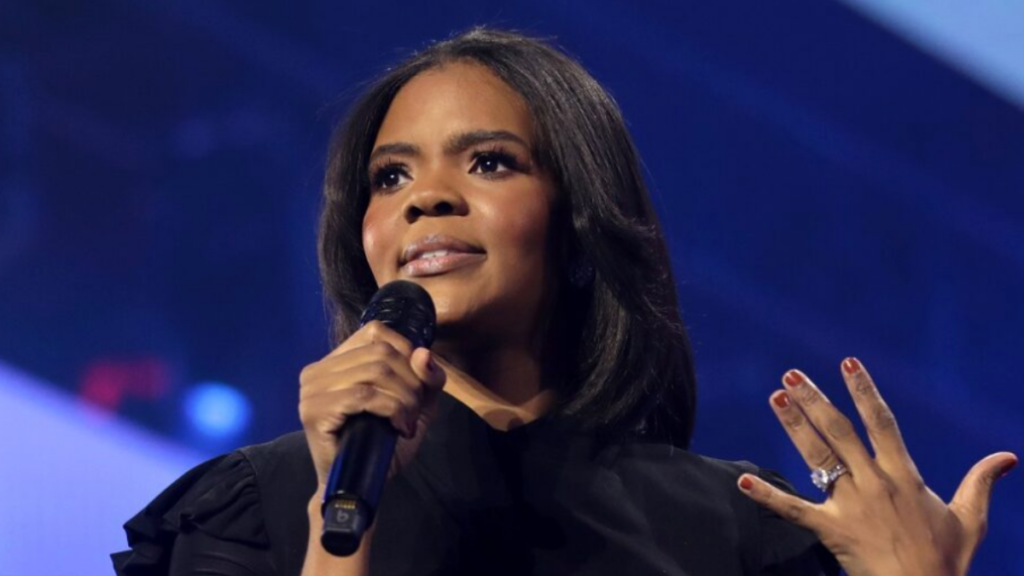
Photo Credit: Gage Skidmore/Creative Commons
Candace Owens Turns Against Trump and MAGA Leadership
Conservative commentator Candace Owens recently ignited controversy after criticizing Donald Trump and parts of the MAGA movement. Her comments quickly spread across political media and social networks. The statements surprised many supporters because Owens previously stood among Trump’s most vocal allies.
Owens argued that the movement faces internal conflict and growing dissatisfaction among supporters. She suggested that many loyal MAGA followers feel frustrated with recent political decisions. According to Owens, some of those actions contradict promises that energized voters during earlier campaigns.
The commentator also delivered strong criticism about national security and foreign policy issues. She argued that certain military and geopolitical decisions could betray the values of the movement. Owens even urged U.S. soldiers who disagreed with those policies to consider resigning from service. Her statement immediately sparked intense backlash across political circles.
Owens described the situation as evidence that the MAGA coalition faces serious fractures. She warned that the political movement could lose unity if leaders ignore supporters’ concerns. Critics quickly accused her of exaggerating the situation and stirring controversy for attention. Supporters, however, praised her willingness to challenge powerful political figures.
The debate highlights Owens’s increasingly independent approach to political commentary. In recent years, she has shifted away from strict loyalty to any single political figure. Instead, she now frames herself as a commentator who criticizes both allies and opponents when she believes they betray conservative values.
The controversy also reflects the broader tension within modern political movements. Large coalitions often struggle to maintain unity when leaders adopt policies that divide their supporters. Owens’s comments therefore sparked a larger discussion about the future direction of Trump-aligned politics.
Rising Infighting Within the MAGA Movement
Political observers have noticed increasing tension among influential voices inside the MAGA media ecosystem. Conservative influencers, commentators, and activists often debate the movement’s priorities publicly. Those disagreements sometimes escalate into open feuds on social media and podcasts.
Candace Owens now sits at the center of several of those disputes. Her outspoken criticism of Trump surprised many fellow commentators who previously worked alongside her. Some supporters accused her of betraying the movement she helped promote. Others believe her criticism reflects deeper ideological disagreements among conservative voices.
Analysts argue that the MAGA movement relies heavily on a network of media personalities. Podcasters, political commentators, and online influencers help shape the message for millions of supporters. When those voices disagree publicly, the conflict quickly spreads across digital platforms.
Some commentators describe the situation as a “civil war” among pro-Trump personalities. Influencers now challenge each other’s motives, political views, and personal credibility. This internal conflict sometimes overshadows the broader policy debates within conservative politics.
The disputes reveal how modern political movements operate differently from traditional party structures. Influencers now hold enormous power in shaping public opinion. When those figures disagree, their audiences often divide into competing factions.
Owens’s criticism of Trump therefore became more than a personal disagreement. It symbolized a wider struggle for influence among conservative media personalities. The debate highlights the challenge of maintaining unity in a movement driven by independent voices rather than centralized leadership.
Candace Owens’ Controversial Evolution as a Political Voice
Candace Owens rose to prominence during Donald Trump’s presidency. She gained attention as a young conservative commentator who criticized progressive activism and cultural movements. Many supporters admired her outspoken defense of conservative ideas.
Her rapid rise in political media brought opportunities within influential conservative organizations. Owens worked with prominent activist groups and media platforms that supported Trump-aligned politics. Over time, she built a large audience across social media platforms and podcast networks.
However, Owens’s career has also involved frequent controversy. Critics have challenged several of her public statements and conspiracy theories. Some former allies accuse her of promoting provocative narratives to attract attention and expand her audience.
Her departure from conservative media outlet The Daily Wire intensified those disputes. The split followed disagreements about foreign policy and discussions about Israel. The conflict demonstrated how political alliances within conservative media can shift rapidly.
Since leaving traditional conservative media networks, Owens has embraced a more independent approach. She now runs her own online platforms and podcasts, where she speaks directly to millions of followers. This independence allows her to criticize political figures without editorial restrictions.
Owens’s evolving position illustrates a broader trend in modern media. Influencers increasingly build personal brands that operate outside traditional institutions. This model allows commentators to challenge allies and opponents alike while maintaining a loyal audience.
The Influence of Political Influencers in Modern Media
The controversy surrounding Owens highlights the growing influence of political influencers in shaping public discourse. Social media platforms allow commentators to reach millions of people instantly. A single video or post can spark nationwide political debates within hours.
Political influencers now compete with traditional journalists and party leaders for public attention. Their audiences often trust them more than mainstream media organizations. This trust gives influencers significant power to shape political narratives and mobilize supporters.
However, this influence also creates intense competition for attention. Commentators frequently use provocative statements or dramatic claims to attract viewers. Political conflict and controversy often generate the highest engagement online.
Analysts note that ideological battles between influencers can drive enormous online traffic. Debates, accusations, and rivalries often attract millions of views. These conflicts sometimes encourage commentators to escalate disputes rather than resolve them.
Owens’s criticism of Trump fits into this evolving media landscape. Her statements generated headlines precisely because they challenged expectations within the MAGA movement. Supporters and critics alike shared the clips widely across digital platforms.
The incident demonstrates how modern political communication differs from traditional campaign messaging. Instead of controlled press releases, political narratives now emerge through decentralized networks of influencers. Each personality competes to shape the story for their audience.
What the Debate Means for the Future of MAGA Politics
The clash between Candace Owens and pro-Trump supporters raises questions about the future of the MAGA movement. Political movements often struggle when prominent voices begin disagreeing publicly about strategy and leadership.
Owens argues that internal criticism could strengthen the movement by forcing leaders to address supporters’ concerns. She believes open debate helps prevent political complacency. In her view, movements collapse when leaders ignore dissenting voices within their own ranks.
Critics, however, warn that public infighting could weaken the coalition that once rallied behind Trump. Political movements rely heavily on unity and shared messaging. When prominent voices disagree, voters may become confused about the movement’s direction.
Some analysts believe the conflict reflects a transition within conservative politics. The MAGA movement originally formed around Trump’s leadership and personality. As time passes, influencers and activists now debate how the movement should evolve.
Political commentators argue that the future of the movement may depend on whether its leaders can reconcile these disagreements. If divisions deepen, the coalition could fragment into competing factions with different priorities.
For now, Candace Owens remains one of the most controversial voices in conservative media. Her criticism of Trump sparked a fierce debate about loyalty, leadership, and the direction of modern conservatism. The discussion also highlights how political movements continue to transform in the age of social media influence.