Home Blog Page 9

A Homeless Boy Claimed He Could Help Her Walk Again

He Said He Could Help My Daughter Walk Again

I almost told Daniel to keep rolling.

The boy had stepped right into the middle of the sidewalk, thin arms spread wide like he could stop traffic with his body alone. 

People walking around us stared for half a second and kept moving. 

Nobody wanted to get involved.

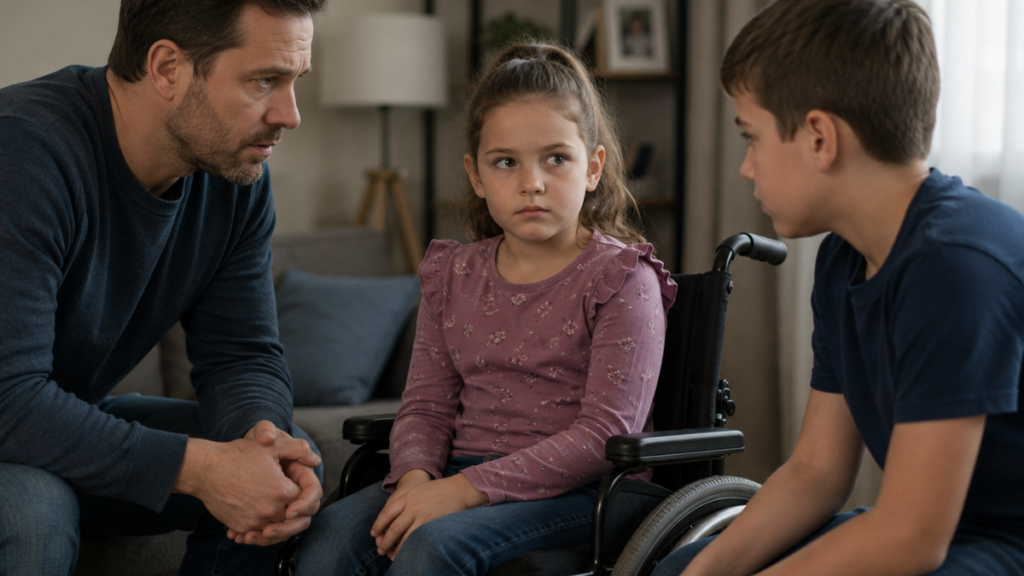
Sophie’s wheelchair jerked hard when Daniel stopped.

“Stay away from my daughter,” he said.

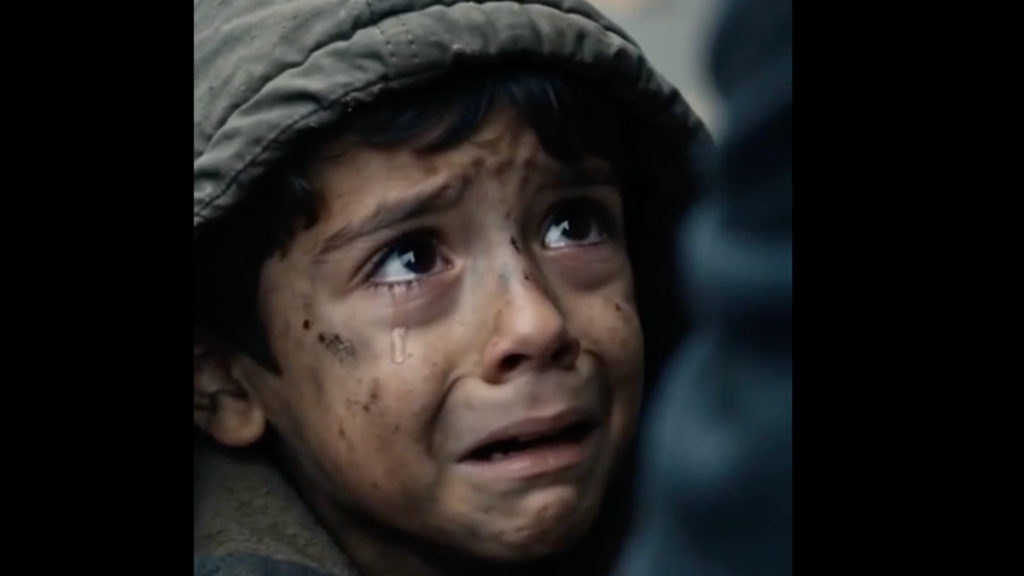
The boy looked filthy. 

His hoodie hung off one shoulder. 

His shoes were soaked through. 

He smelled like rain and cold pavement.

But he wasn’t looking at Daniel.

He was staring at Sophie like he knew her.

That was the first thing that unsettled me later, when I replayed the moment over and over in my head.

Not the strange thing he said.

The way Sophie looked back at him.

The Boy Who Wouldn’t Move

“I can make her walk again,” he said quietly.

Daniel snapped immediately.

“For God’s sake,” he muttered. “Not this again.”

I understood why he reacted that way.

After the accident, and after my sister died, I moved in to help with Sophie.

And the advice?

It was relentless.

Someone recommended crystals. 

Another woman handed me oils in a grocery store parking lot. 

One man told Daniel that Sophie’s condition was “spiritual.”

Every desperate parent learns something ugly very quickly.

Hope attracts predators.

And Daniel had become protective in a way that bordered on frightening.

“Doctors couldn’t cure her,” he said sharply. “You think you can?”

The boy flinched.

But he still didn’t move.

“I don’t need to cure her,” he whispered.

Something about the way he said it made Sophie finally lift her head.

She had been crying before he stepped in front of us.

Quietly. 

Trying not to let her father notice.

That yellow sweater she wore became her armor after the accident. 

She wore it constantly because it had belonged to her mother.

When she looked up at the boy, her face changed completely.

Not fear.

Recognition.

“Owen?” she whispered.

The boy’s eyes filled immediately.

“You remember me.”

Daniel stepped in front of Sophie so fast her wheelchair bumped backward.

“How do you know my daughter?”

Owen reached inside his hoodie slowly, like he expected Daniel to hit him.

Then he pulled out a dirty yellow ribbon.

I still remember the sound Sophie made when she saw it.

Not a gasp.

Something smaller.

Like the air left her body all at once.

The Ribbon

The ribbon had belonged to her mother.

I knew that because Sophie used to sleep with it wrapped around her wrist every night after the accident. 

Then one day it disappeared.

We searched the house for hours.

Sophie cried herself sick over it.

Daniel eventually told her maybe it had been lost at the hospital.

But now here it was.

Mud-stained and wrinkled in a homeless boy’s shaking hand.

“I found her after the crash,” Owen said.

Daniel went completely still.

“No,” he said. “You’re lying.”

“She wasn’t alone.”

Daniel’s face changed so fast it scared me.

For eighteen months, he had repeated the same story to everyone. 

The police. 

The doctors. 

Family. 

Insurance people.

His wife died instantly.

Sophie survived.

End of story.

That was the official version of what happened on that highway.

But Owen kept talking.

“Her mother was alive when I got there.”

Sophie grabbed the arms of her wheelchair so tightly her knuckles turned white.

Daniel stared at the boy.

“My wife died on impact.”

Owen shook his head slowly.

“She talked to me.”

Nobody moved.

Traffic hummed behind us. 

A bus hissed at the curb nearby. 

Somewhere down the block, someone laughed.

And suddenly all of it felt very far away.

Then Owen said the sentence that changed everything.

“She made me promise something before the men took them away.”

The Word That Changed Everything

Men.

Not paramedics.

Not police.

Men.

Daniel grabbed Owen’s shoulder hard enough that I saw the boy wince.

“What men?”

Owen looked terrified now. 

Not of Daniel.

Of the memory.

“She told me to tell Sophie she could still walk,” he whispered.

Sophie started crying silently.

Then Owen said something that made my stomach drop.

“She was standing beside me when they put Sophie in that wheelchair.”

Daniel let go of him instantly.

For a second, nobody spoke.

Then Daniel said the thing I think he regretted the moment it came out.

“You’re confused.”

Owen shook his head.

“No.”

“You were a child. You still are.”

“I still remember.”

“You saw an accident. Trauma changes memory.”

Owen looked straight at him.

“She was walking.”

The street suddenly felt too small.

Too loud.

Too exposed.

And the strangest part was this:

Sophie didn’t look surprised.

She looked scared.

Sophie Knew More Than We Did

That night, Sophie refused to sleep.

I heard Daniel pacing downstairs until nearly three in the morning. 

Cabinet doors opening and closing. Ice dropping into glasses.

He did that when he was trying not to lose control.

Around two, I heard Sophie call my name.

When I walked into her room, she was sitting upright in bed holding the ribbon.

“He found me,” she whispered.

I sat beside her carefully.

“What do you remember about him?”

She stared at the ribbon for a long time before answering.

“I thought he was a dream.”

That sentence stayed with me.

Not because it sounded dramatic.

Because she said it so plainly.

Like she had spent a year and a half trying to convince herself of it.

“He was there after the crash,” she said quietly. “Mom talked to him.”

I felt cold all over.

“Sophie…”

“She told me not to tell Dad.”

I stopped breathing for a second.

“What?”

Sophie’s eyes filled with tears again.

“She said Dad would get angry.”

The Story Started Cracking

The next morning, Daniel acted like none of it happened.

He made breakfast. 

Answered emails. 

Took calls from work.

Too normal.

That was what frightened me most.

People think grief always looks emotional.

Sometimes it looks controlled.

Too controlled.

Sophie barely touched her food.

Finally she asked, “Why did Mom say not to tell you?”

Daniel set his coffee down slowly.

“She didn’t.”

“She did.”

“You were confused after the accident.”

Sophie stared at him.

“So was Owen confused too?”

Daniel looked exhausted suddenly.

“He’s homeless, Sophie. He probably needs money.”

But Owen had never asked us for anything.

Not once.

That detail sat heavily in the room.

Then Sophie asked the question none of us wanted to touch.

“If Mom was alive… why did nobody help her?”

Daniel stood up immediately.

“That’s enough.”

But it wasn’t enough anymore.

Not even close.

We Went Looking For Owen

Two days later, Owen disappeared.

Daniel claimed he probably moved on.

Sophie cried harder over that than I had seen her cry in months.

Which told me something important.

She trusted him.

I couldn’t stop thinking about that.

Children know when someone feels safe.

And Sophie never looked afraid around Owen.

Only sad.

Then, three days later, Sophie asked me to take her downtown.

She said she wanted fresh air.

Instead, she led me straight to the alley behind a closed bakery.

Owen was there.

Curled beneath cardboard beside a heating vent.

He looked smaller asleep.

You forget how young homeless children are until you see them resting. 

The dirt and survival instincts disappear for a minute.

Then they just look like kids.

Sophie rolled toward him slowly.

“Owen,” she whispered.

He woke instantly like someone used to danger.

When he saw us, he relaxed.

“You came back,” Sophie said.

Owen looked down.

“I wasn’t supposed to.”

The Thing He Was Afraid Of

We brought him food first.

He ate carefully. 

Fast, but controlled.

Like someone used to having meals taken away.

Daniel would have hated that I met him again without telling him. 

I knew that.

But something felt wrong.

Not with Owen.

With the story.

Finally I asked the question directly.

“What happened after the accident?”

Owen’s face changed immediately.

“I can’t.”

“Why?”

He looked over his shoulder toward the street.

Because he was checking if someone followed him.

That was when I realized this fear had lasted longer than a few days.

Longer than a few months.

Maybe eighteen months.

“They told me not to talk,” he whispered.

“Who?”

“The men.”

Sophie’s breathing became uneven beside me.

“What men?” I asked again.

Owen rubbed his hands together nervously.

“The ones who took your mom.”

The way he said it made my skin crawl.

Not your mother’s body.

Your mom.

Present tense.

Like part of him still saw her alive.

Then he whispered something that nearly stopped my heart.

“She was trying to stand when they carried Sophie away.”

Daniel Finally Broke

I confronted Daniel that night.

Not angrily.

Quietly.

Sometimes quiet questions scare people more.

“What really happened after the crash?”

He stared at me for a long time before answering.

“Exactly what I told you.”

“Then why is Sophie remembering things differently?”

“She was injured.”

“And Owen?”

“He’s lying.”

I watched him carefully.

“You never told me there were other people there before paramedics arrived.”

Something flickered across his face.

Just for a second.

“There were probably bystanders.”

Probably.

Not definitely.

That single word cracked something open inside me.

Then I asked the question I had been avoiding.

“Why did your wife tell Sophie not to trust you?”

Daniel slammed his hand against the kitchen counter so hard I jumped.

“She didn’t.”

The silence afterward felt dangerous.

Then he said quietly:

“You need to stop talking to that boy.”

Not “he’s confused.”

Not “he needs help.”

Stop talking to him.

That was different.

And Daniel knew it.

Sophie Started Trying to Stand

Three nights later, I heard a crash upstairs.

I ran into Sophie’s room and found her on the floor beside her wheelchair.

She looked terrified.

Not because she fell.

Because she had almost stood.

“I felt my leg move,” she whispered.

Daniel arrived seconds later.

The moment he heard what happened, his entire face drained of color.

Sophie looked up at him with tears in her eyes.

“I felt it.”

Daniel knelt beside her too quickly.

“No,” he said immediately. “No, sweetheart. Don’t do this to yourself.”

But Sophie kept shaking her head.

“I felt it.”

Then something happened that I still replay in my head.

Daniel looked afraid.

Not hopeful.

Afraid.

The Medical Files

The next day, while Daniel was at work, I searched through the office closet for Sophie’s records.

I wasn’t even fully sure what I was looking for.

Maybe inconsistencies.

Maybe reassurance.

Instead, I found a folder I had never seen before.

Inside was a report from the first hospital after the crash.

One line had been circled heavily in black ink.

Patient demonstrates intermittent lower-limb response to stimulus.

Below that, another note.

Further neurological observation recommended before permanent mobility prognosis.

The date was two days after the accident.

Two days.

I sat there staring at the paper while my hands shook.

Because Sophie had been declared permanently unable to walk less than a week later.

There were more pages missing from the folder.

Torn out cleanly.

That was when I realized something horrible.

Someone had edited the story long before Owen appeared.

And I was starting to understand who.

The Video Sophie Was Never Meant to See

Everything changed because of an old phone.

Owen showed up outside the house one evening soaked from rain. 

Sophie spotted him first through the front window.

Daniel wasn’t home yet.

Owen held something inside his hoodie like it mattered more than staying dry.

“It finally turned on,” he said.

It was a cracked phone with half the screen blacked out.

He said he had taken it from the accident site after everyone left because he thought somebody would come back for it.

Nobody ever did.

“There’s a video,” he whispered.

Sophie looked at me.

I already knew I shouldn’t press play.

But I did.

The Last Minutes Before Everything Changed

The video was shaky and dark.

At first it only showed pieces of the dashboard and windshield.

Then Sophie’s mother appeared briefly, laughing about something off camera.

Alive.

Healthy.

Walking.

My chest tightened immediately.

The timestamp showed twenty minutes before the crash.

Then the argument started.

Daniel’s voice filled the car.

Not yelling at first.

Cold.

Sharp.

I couldn’t hear every word clearly, but I heard enough.

“You tell them and everything falls apart.”

Then Sophie’s mother answered:

“She deserves the truth.”

The video ended suddenly after loud movement and Sophie screaming from the back seat.

That alone would have been devastating.

But there was more.

At the very end, after the screen went dark, one sentence was still audible.

Daniel saying:

“You’re not taking Sophie from me.”

The Story Went Public By Accident

I wish I could say we made a smart plan.

We didn’t.

Sophie uploaded the clip herself.

Not the whole thing. 

Just the audio.

She posted it late at night from her bedroom because she said she was tired of everyone telling her what she imagined.

By morning, thousands of people had shared it.

Then reporters started calling.

Then police.

Then Daniel came home early.

I will never forget his face when he realized the story was public.

Not anger first.

Fear.

Pure fear.

“What did you do?” he asked Sophie.

She looked terrified.

But she didn’t back down.

“I remembered.”

The Version of Daniel I Had Never Seen

For the first time since I met him, Daniel stopped pretending to be calm.

He started pacing.

Shouting.

Demanding the phone.

Demanding Owen’s location.

That frightened me more than anything else.

Because innocent people usually want answers.

Daniel wanted control.

At one point Sophie quietly said, “Did Mom try to leave?”

Daniel froze.

The silence afterward felt endless.

Then he whispered:

“You don’t understand what happened.”

Not “no.”

Not denial.

Just that.

And Sophie noticed it too.

I saw the realization hit her in real time.

The Investigation Reopened

Within forty-eight hours, the case reopened officially.

A retired paramedic came forward after hearing the audio online. 

He said he remembered arriving at the crash scene and seeing Sophie’s mother conscious for several minutes.

Another witness claimed there had been an argument before the car left the road.

Then questions started piling up around the hospital records.

Missing scans.

Changed notes.

Conflicting timelines.

The internet did what it always does. 

Some people turned Daniel into a monster immediately. 

Others defended him aggressively.

But Sophie stopped reading everything after the first day.

“I don’t want revenge,” she told me quietly. 

“I just want the truth.”

Owen Told Us the Rest

A week later, Owen finally explained why he disappeared after the crash.

One of the men had given him money.

Not much.

Just enough to scare a hungry kid into silence.

“He told me nobody would believe me anyway,” Owen said.

The worst part was how normal he sounded saying it.

Like adults failing him was expected.

Then he looked at Sophie carefully.

“Your mom kept trying to move her legs.”

Sophie started crying immediately.

Because deep down, she had already begun understanding something impossible.

Maybe she never lost the ability completely.

Maybe she lost the belief first.

The First Step

Physical therapy restarted slowly after that.

New doctors. 

New scans. 

New evaluations.

Nobody promised miracles.

But they also didn’t tell Sophie “never” anymore.

That mattered.

The first time she stood with support bars, the room went completely silent.

Sophie looked shocked.

Like she had spent eighteen months living inside someone else’s conclusion.

Then she took one shaking step.

Just one.

And started sobbing.

Not dramatic movie sobbing.

Quiet crying.

The kind that comes from finally letting yourself hope again.

Daniel’s Last Conversation With Sophie

Before the court hearings began, Daniel asked to speak with Sophie alone.

She agreed.

I waited outside the room for nearly an hour.

When Sophie finally came out, her eyes were swollen but calm.

I asked what he said.

She stared ahead for a long moment before answering.

“He said he thought he was protecting me.”

I didn’t know what to say to that.

Maybe neither did she.

Because sometimes people destroy things while convincing themselves they’re saving them.

And sometimes the damage takes years to fully uncover.

Owen Got a Bed By the Window

The state eventually placed Owen with a foster family two towns away.

Good people.

Quiet people.

He still visits Sophie every few weeks.

The first thing he asked for when he saw his new room was a bed near the window.

He said he liked waking up where he could see the sky.

That sentence broke me a little.

Sophie walks short distances now.

Not perfectly.

Not easily.

But she walks.

And every time she does, I think about that freezing morning when a homeless little boy stepped in front of a wheelchair and refused to move.

Most people walked around him without looking twice.

They saw dirty clothes.

A street kid.

A problem.

But he carried the truth in his pocket for eighteen months.

And if Sophie hadn’t recognized him that day, he probably would have carried it alone forever.

He Thought She Would Stay Silent. He Was Wrong.

The Night Everything Broke Open

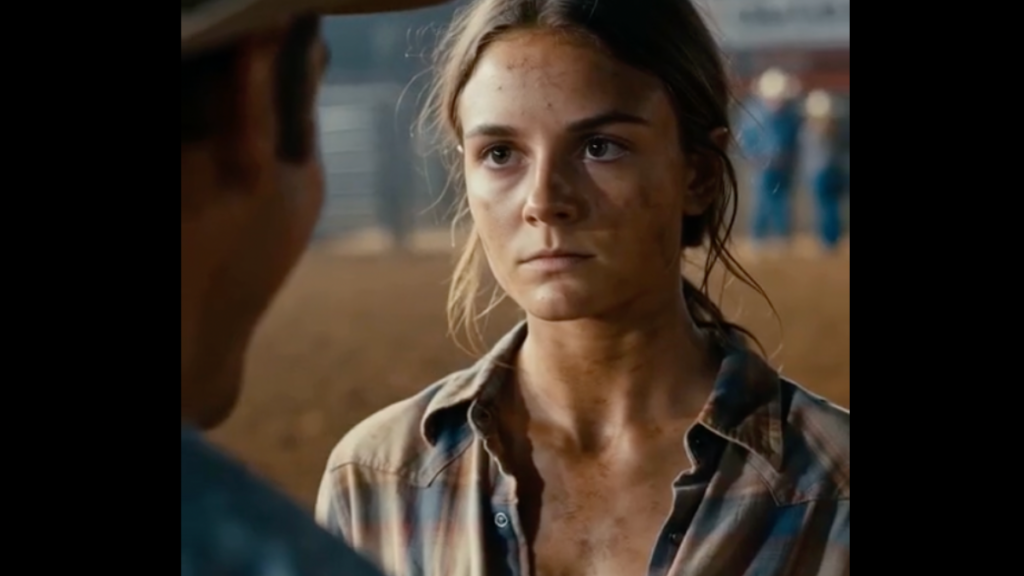
The rodeo crowd was loud enough to shake the metal bleachers.

People were stomping their boots, yelling over each other, throwing peanut shells into the dirt. 

The lights over the arena made everything look dusty and gold. It felt like every person in that town had shown up that night.

And right in the middle of it all stood Clay.

Perfect white hat. 

Pressed jeans. 

Easy smile.

The kind of man people trusted before he even spoke.

He lifted the microphone and pointed toward me.

“Sing,” he said, grinning at the crowd, “and I’ll marry you.”

Everybody laughed.

I didn’t.

I remember staring at the dirt because it felt easier than looking at him. 

My boots were coated in dust from cleaning stalls all afternoon. 

The hem of my dress was dirty.

 I could already hear women in the crowd whispering.

Poor thing.

Still following him around.

Still embarrassing herself.

But they didn’t know the whole story.

Clay did.

That was the part that made his smile start to crack.

Three months earlier, he had held my face in both hands behind his father’s horse barn and whispered, “I don’t care what anybody thinks.”

At the time, I believed him.

That was my first mistake.

And standing there in that arena, with hundreds of people laughing around us, I realized he was counting on me to make another one.

He thought I would stay quiet.

He was wrong.

Before Everyone Started Watching

I met Clay during rodeo season.

Not officially. 

Not in some movie kind of way.

I was cleaning out a water trough behind the livestock pens when he walked over and asked if I had a wrench. 

That was it. 

No sparks. 

No dramatic moment.

Just a rich rancher’s son standing in polished boots beside a girl covered in mud.

I almost laughed when he kept talking to me.

Men like Clay didn’t notice women like me. 

Everybody in town knew that.

His family owned half the land outside the county line. 

Mine rented a tiny place with a leaking roof and a porch that leaned sideways after heavy rain.

My mother cleaned motel rooms.

His mother hosted charity dinners.

Those worlds did not mix.

But somehow, we did.

At first it was small things.

He would bring me coffee during early mornings at the arena. 

Sometimes he’d stay after events and help stack hay bales even though he clearly had never done real work in his life.

He asked questions nobody else asked.

What music I liked.

Why I always wore my grandfather’s old silver necklace.

Why I looked sad whenever people mentioned Nashville.

Nobody usually noticed things like that about me.

Clay did.

And that made him dangerous.

The First Time He Said He Loved Me

It happened in his truck parked near Miller’s Creek.

I remember because it had rained earlier that evening, and the windows kept fogging up while we talked.

He looked nervous.

Actually nervous.

“I think I’m in love with you,” he said quietly.

I should’ve known then how badly it would end.

Not because I doubted him.

Because I believed him too fast.

After that night, everything between us moved quickly. Secretly.

Always secretly.

He kissed me behind barns. 

Called late at night. 

Met me on empty back roads where nobody could see us together.

At first, I told myself it was romantic.

Then I started noticing something strange.

He never touched me in public.

Not once.

At the diner, he’d sit across from me instead of beside me.

If somebody walked by, he’d lean back like we were strangers.

One night I finally asked him why.

He stared through the windshield for a long time before answering.

“You know how people around here are.”

That sentence sat heavy in my chest.

Because I did know.

And deep down, I knew exactly what he meant.

The Name My Family Couldn’t Escape

In small towns, people remember your family longer than they remember your face.

My mother made mistakes when she was young. 

The kind people never let go of.

By the time I was born, her reputation had already become mine.

People smiled at me politely. 

Then warned their sons about girls like me.

Meanwhile, Clay’s family was treated like royalty.

Especially his father.

Wade Bennett had the kind of power that made people straighten their backs when he walked into a room. 

He donated money to schools, churches, rodeos. 

Everybody called him generous.

But generous men can still be cruel.

I found that out the day he learned about me.

Clay came to my trailer that night pale as paper.

“He knows,” he said.

That was all.

Just two words.

But I felt my stomach drop anyway.

I asked what happened.

He sat down slowly and rubbed both hands over his face.

“He asked who your mama was.”

I didn’t say anything.

I didn’t need to.

Because we both already knew what came next.

The Change Was Immediate

After that, Clay became someone else.

Not all at once.

That would’ve been easier.

Instead, it happened in pieces.

He stopped calling during the day.

Then he stopped coming by my place.

Then came the excuses.

Dad’s watching me.

People are talking.

Just give it time.

One night I waited nearly two hours for him near the old feed store before realizing he wasn’t coming.

I drove home crying so hard I had to pull over twice.

The next morning, he sent a short text.

Sorry. Things are complicated right now.

Complicated.

I stared at that word for a long time.

Because what he meant was simple.

He was embarrassed of me.

Still, when he showed up at my door a week later apologizing, I let him in.

That was another mistake.

The Thing I Didn’t Tell Him Right Away

I found out I was pregnant in late spring.

The drugstore cashier wrapped the test in a paper bag like she was hiding contraband. 

Even then, I think she knew.

Everybody in town always knew things before they were spoken out loud.

I took the test in the tiny bathroom beside my bedroom.

Then I sat on the floor staring at the result while the sink dripped beside me.

I wasn’t scared at first.

Just stunned.

Because a part of me honestly believed Clay would finally stop hiding once he knew.

I thought maybe this would force him to become the man he kept promising he was.

When I told him, he looked like all the air had left his body.

For a second, I saw joy in his face.

Real joy.

Then fear replaced it.

“We can’t tell anybody,” he whispered immediately.

Not we should wait.

Not let’s figure this out.

We can’t tell anybody.

That was the moment something inside me started cracking.

Keeping Someone Else’s Secret

The hardest part wasn’t the pregnancy.

It was pretending.

Pretending not to notice the distance growing between us.

Pretending not to hear whispers when I walked through town.

Pretending it didn’t hurt every time Clay acted cold around other people.

At night he’d hold me and talk about our future.

During the day, he barely looked at me.

Sometimes I’d catch him watching me from across the rodeo grounds with this awful guilty expression on his face.

But guilt and courage are not the same thing.

And Clay only had one of those.

Then came the rodeo banquet.

That was when I realized how far he was willing to go.

The Joke That Changed Everything

I almost didn’t attend that night.

But my boss needed help cleaning up after the event, so I spent hours carrying trays and wiping tables while people drank beer and danced.

Clay avoided me most of the evening.

Around midnight, a group of drunk men started teasing him near the arena gates.

One of them pointed toward me.

“What about stall girl over there?” he joked loudly. “You planning to marry her?”

Everybody laughed.

Even before Clay answered, I knew what he would say.

Still, hearing it felt different.

He smirked and grabbed the microphone.

“Sing,” he called toward me, “and I’ll marry you.”

The crowd exploded laughing.

And suddenly I understood something clearly for the first time.

He was performing.

Not just for them.

For his father.

For the town.

For the life he was too scared to lose.

Then his eyes met mine.

And I think he realized I was done protecting him.

Walking Toward The Microphone

The arena got quieter with every step I took.

I remember hearing my heartbeat louder than the crowd.

An older guitarist near the fence started softly playing something slow and sad. 

I still don’t know if he understood what was happening or if he just sensed it.

Clay’s smile faded immediately.

“Mara,” he muttered under his breath when I reached him. “Don’t do this.”

Don’t do this.

Not please.

Not are you okay.

Just don’t embarrass me.

I looked at him and suddenly saw everything clearly.

The late-night promises.

The hidden phone calls.

The fear.

The weakness.

The way he loved me only in private.

My hands were shaking when I touched the microphone stand.

For a second, no sound came out.

Then I looked directly at him.

“You told me never to tell them,” I said softly.

His face went completely white.

The guitarist stopped playing.

And for the first time all night, nobody in that arena made a sound.

I placed my hand against my stomach.

“But I’m done letting our baby be your shame.”

The Silence After

People think moments like that feel dramatic.

Honestly, they feel slow.

Like time stretches.

Nobody moved.

I could hear metal creaking in the bleachers somewhere behind me.

Clay stared at me like he didn’t recognize me anymore.

Then the whispers started.

Small at first.

Then everywhere.

His father stood up so fast his chair tipped backward onto the concrete.

I’ll never forget the look on Wade Bennett’s face.

Not anger.

Panic.

Because secrets only work when one person keeps carrying them.

And I had just dropped ours into the middle of the arena.

Clay Tried To Follow Me

I left before anyone could stop me.

I heard people shouting my name behind me while I walked toward the parking lot, but I kept going.

Halfway there, Clay grabbed my arm.

“Mara, please.”

I turned around slowly.

Under the floodlights, he suddenly looked younger. Smaller somehow.

“I was going to tell them,” he said.

That almost made me laugh.

“When?” I asked quietly.

He didn’t answer.

Because we both knew the truth.

There was never going to be a right time.

He would’ve kept waiting forever.

The Story Spread Overnight

By morning, everybody knew.

The grocery store.

The church.

The feed shop.

Women who had ignored me for years suddenly stared too long when I walked past.

Some people treated me like a victim.

Others treated me like a liar.

A few acted like I had planned the whole thing to trap him.

That part hurt more than I expected.

Not because strangers believed ugly things about me.

Because Clay stayed silent while they did.

For three days, he said nothing publicly.

Nothing.

And that told me everything I needed to know.

The Call From His Mother

I wasn’t expecting her voice.

“Can we meet?” she asked quietly over the phone.

We met at a small diner outside town where fewer people would recognize us.

She looked exhausted.

Not polished and perfect like usual.

Just tired.

For a long time, she stirred her coffee without drinking it.

Then she finally looked at me.

“He told me the baby is his.”

There was no apology attached to it.

Just a statement.

I nodded once.

She swallowed hard and asked, “Why didn’t you tell us sooner?”

I almost answered politely.

Then I stopped myself.

Because I was tired of protecting everybody else’s comfort.

“Your son begged me not to.”

That landed hard.

She looked down at the table for a long time after that.

Before leaving, she said something I still think about.

“He’s more afraid of his father than he is of losing you.”

And honestly, she was right.

Wade Bennett Finally Spoke

Not publicly.

Men like him rarely do their own dirty work.

Instead, rumors started appearing everywhere.

That I was chasing money.

That I had been with other men.

That I wanted attention.

The town turned ugly fast.

One afternoon, I found my mailbox knocked onto the ground.

Another day, someone spray-painted LIAR across the side of our fence.

My mother cried while scrubbing it off with an old rag.

That was the first time I almost regretted speaking up.

Not because I thought I was wrong.

Because I was tired.

There’s a difference.

The Thing Clay Said Too Late

About two weeks later, he came to my trailer during a thunderstorm.

Rain was pouring so hard I could barely hear the knocking.

When I opened the door, he looked wrecked.

No hat.

No polished smile.

Just soaked clothes and red eyes.

“I told him I’m marrying you,” he said immediately.

I stared at him.

“And?”

“He cut me off.”

There it was.

The real cost.

Not me.

Not the baby.

The money.

The land.

The inheritance.

For the first time, Clay looked like someone who understood what fear actually felt like.

He stepped closer carefully.

“I should’ve chosen you from the start.”

I believed he meant it.

That was the worst part.

But some truths arrive too late to fix anything.

What I Chose Instead

I didn’t marry Clay.

A lot of people expect that part to end differently.

They think love should survive if somebody finally says the right thing.

But love without courage turns into something lonely.

And I had already lived enough lonely years.

Clay still sees our child.

He shows up consistently now. 

Quietly. 

Without excuses.

In some ways, becoming a father forced him to grow up.

I’m grateful for that.

But growth after damage is still damage.

People forget that.

What Stayed With Me

The town eventually moved on.

Small towns always do once fresher gossip arrives.

The whispers faded.

The stares softened.

Some people even apologized.

Not all of them.

Enough.

And strangely, the person who changed most was me.

For years, I spent my life trying to take up less space.

Speak softer.

Need less.

Stay grateful for scraps of love.

That night in the arena changed something permanent.

Not because I exposed him.

Because I finally stopped hiding myself.

Sometimes I still think about the silence right before I spoke into that microphone.

The moment where I could’ve backed down.

Could’ve protected him again.

Could’ve swallowed the truth one more time.

If I had, my whole life would look different now.

Smaller.

Quieter.

Built around somebody else’s fear.

Instead, I walked forward.

And even now, I think that was the bravest thing I ever did.

The Little Girl Hugged the Homeless Boy — Then Her Mother Saw His Face

The Boy in the Alley

I almost kept walking.

That’s the part I still think about.

Not because I’m proud of it. 

Just because it’s true.

It was cold that afternoon. 

One of those sharp winter days where the wind sneaks under your coat no matter how tightly you wrap it around yourself. 

My daughter Sophie and I had just left the bakery downtown. 

She was six at the time and walking beside me in her little white coat, swinging the paper bag with both hands like it weighed nothing.

She had a blue bow clipped into her blonde hair that morning. 

I remember that detail clearly because later, when everything changed, I kept staring at that bow like it belonged to another life.

We were halfway back to the car when Sophie stopped walking.

I took three more steps before I noticed.

“Mom,” she whispered.

I turned around, already distracted, already ready to tell her we were late.

Then I saw where she was looking.

There was a narrow alley between two buildings beside the bakery. 

Most people passed it without noticing. 

Trash bins near the back. 

Broken crates. 

Graffiti on the brick wall.

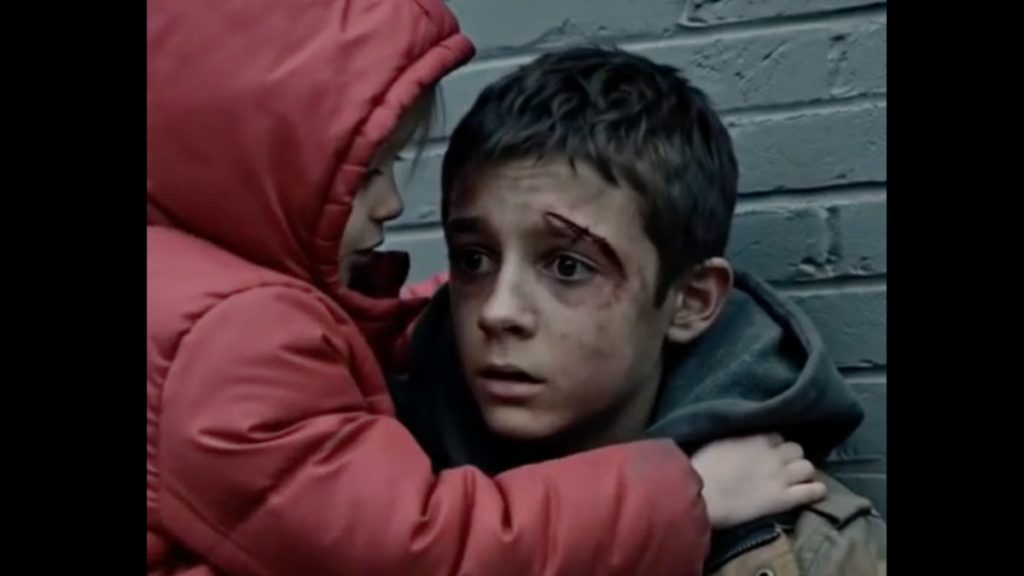
And sitting against that wall was a little boy.

At first glance, he looked older than Sophie by maybe two or three years. 

Thin.

Covered in soot and dirt. 

His clothes looked too big for him and badly torn at the sleeves.

But it was the way he sat that stopped me.

Like he was trying to disappear into the wall behind him.

People walked past the alley without even turning their heads.

Sophie stared at him quietly.

Then she reached into the bakery bag before I could stop her.

“Sweetheart—”

She already had the sandwich in her hand.

The boy looked up fast when she stepped toward him.

His whole body tensed.

I remember thinking he looked like a stray dog someone had kicked too many times.

“Here,” Sophie said softly. “Take it.”

The sandwich shook slightly in her small hand.

The boy just stared at her.

For one awful second, I thought he might run.

Then he slowly reached forward with both dirty hands and took it from her like he couldn’t believe it was real.

“Thank you,” he whispered.

His voice sounded rough. 

Small.

Sophie smiled.

Then she did something I never expected.

She hugged him.

Not carefully. 

Not politely.

A real hug.

The boy froze.

His eyes closed for half a second, and I saw something pass over his face so quickly it almost hurt to look at.

Relief.

Like he had forgotten what warmth felt like.

Then I screamed.

I didn’t mean to.

The sound tore right out of me before I even understood why.

“No! Get away from him!”

Sophie jumped as I rushed forward and pulled her back by the shoulders.

“Mom!” she cried. “He’s hungry!”

But I wasn’t listening anymore.

I was staring at the boy.

Because when he looked up at me, I saw his eyes.

Blue.

Bright blue.

And beneath his left eyebrow was a tiny curved scar.

My handbag slipped from my shoulder and hit the ground.

The alley suddenly felt too small.

Too loud.

Too bright.

The boy stared at me with frightened eyes.

Then his lips parted slightly.

And in a tiny trembling voice, he said one word.

“Mom?”

Everything inside me stopped.

Four Years Earlier

My son disappeared on a Thursday.

There are dates people remember forever. 

Weddings. 

Birthdays. 

Funerals.

For me, it was October 14th.

Liam was four years old.

He loved dinosaurs, hated carrots, and insisted on sleeping with three stuffed animals every night even though there was barely room left in the bed.

That morning felt normal.

That’s what haunted me afterward.

Nothing felt wrong.

I had taken both kids grocery shopping. 

Sophie was still a baby then, asleep in the cart seat while Liam walked beside me holding onto the edge of my coat.

I remember him asking for cereal shaped like sharks.

I remember saying no.

I remember him laughing when I pretended to be serious.

Those were the last normal moments of my life.

We were loading groceries into the trunk when Sophie started crying inside the car.

Just for a second, I turned around.

One second.

Maybe two.

When I looked back, Liam was gone.

At first, I thought he was hiding.

He liked games.

I called his name calmly at first.

Then louder.

Then louder.

People started turning around in the parking lot.

Within ten minutes, police arrived.

Within an hour, search teams spread across the area.

By nighttime, helicopters were circling overhead.

But my son was gone.

No witnesses.

No answers.

Nothing.

The police eventually started using careful words around me.

“Likely abduction.”

“Possible trafficking.”

“Runaway scenarios.”

As if a four-year-old had packed a bag and left town.

Days turned into weeks.

Weeks into months.

My husband Daniel changed first.

At the beginning, we stayed awake every night together waiting for the phone to ring.

Then eventually he stopped talking about Liam altogether.

I think it was the only way he could survive it.

But I couldn’t stop.

I checked every missing child report.

Every blurry photo online.

Every rumor.

Every possible sighting.

I kept Liam’s room exactly the same.

Even when people told me it was unhealthy.

Even when Daniel begged me to move on.

Move on.

I hated those words.

Because mothers don’t move on.

They just learn how to carry pain quietly.

And the worst part?

A small part of me always believed Liam was still alive.

I had no proof.

No reason.

Just a feeling I couldn’t kill.

Turns out I was right.

I just never imagined where I would find him.

The Scar

Back in that alley, I couldn’t breathe properly.

The scar beneath his eyebrow was tiny.

Most people wouldn’t notice it.

But when Liam was two, he had fallen against the corner of our coffee table chasing bubbles around the living room.

Three stitches.

A tiny curved scar.

I knew every inch of my son’s face.

Even after four years.

The boy looked terrified now.

Like he thought he’d done something wrong.

Sophie clung to my coat, confused.

“Mom…?”

I dropped to my knees in front of him.

My hands were shaking so badly I could barely touch his face.

“Liam?” I whispered.

The boy stared at me.

Up close, I could see how thin he was.

His cheeks hollow.

His lips cracked from cold weather.

But his eyes…

Those were my son’s eyes.

“I finally found you,” I whispered.

Then I broke apart completely.

People started gathering near the alley entrance.

Someone called the police.

Someone else filmed with their phone.

But none of that felt real.

The only thing real was the little boy in front of me.

And the horrible thought slowly rising in my chest.

Where had he been?

He Didn’t Remember Everything

At the hospital, Liam barely spoke.

Doctors examined him for hours.

Malnourished.

Minor injuries.

Signs of neglect.

But no obvious physical abuse.

That detail mattered to people for some reason.

As if starvation and abandonment somehow counted less.

The police asked questions carefully.

“Do you know who took you?”

“Do you remember where you lived?”

“Do you know your full name?”

Liam answered some things.

Not others.

He remembered being moved between places.

Different apartments.

Different adults.

Sometimes alone for days.

Sometimes told to stay hidden and quiet.

One woman apparently called him “Luke.”

Another called him “kid.”

No one called him Liam.

That part shattered me more than anything else.

At night in the hospital, he barely slept.

Every sudden sound made him jump.

Every time a nurse entered the room, he watched the door like he expected trouble.

And once, around two in the morning, he asked me something quietly.

“Am I in trouble now?”

I had to leave the room after that.

Because I couldn’t stop crying.

Daniel Knew Before I Did

When Daniel arrived at the hospital, he froze in the doorway.

For a second, he just stared.

Then he crossed the room and hugged Liam so tightly I thought they both might collapse.

But something felt strange almost immediately.

Small things.

Daniel asked very few questions.

Too few.

He didn’t seem shocked by details that horrified everyone else.

And every time the police entered the room, his whole body stiffened.

At first, I told myself he was overwhelmed.

Trauma changes people.

But then I noticed something else.

Liam barely looked at him.

Not fear exactly.

Something stranger.

Recognition.

That thought hit me so hard I almost felt sick.

A few days later, detectives asked to speak with me privately.

The moment I saw their faces, I knew something was wrong.

One detective slid a file across the table slowly.

Inside were bank statements.

Phone records.

Photos.

And Daniel’s name highlighted again and again.

I stared at the pages without understanding.

Then the detective spoke carefully.

“We believe your husband may have known where Liam was.”

I laughed.

Actually laughed.

Because the sentence sounded impossible.

Then the detective showed me another photo.

Daniel.

Standing outside an apartment building.

Three years earlier.

The same building where witnesses later confirmed Liam had been seen.

I stopped breathing.

The Truth Came Out Slowly

Daniel didn’t confess immediately.

At first, he denied everything.

Then partially admitted things.

Then changed his story again.

The truth came out in pieces so ugly I still struggle to hold them together.

He hadn’t sold Liam.

He hadn’t planned for him to disappear forever.

According to him, it started as a custody scare during a collapsing period in our marriage that I barely even realized was happening.

He had taken Liam during the grocery store trip.

A friend helped him.

The plan was supposedly temporary.

A few days.

Maybe a week.

Then things spiraled.

Panic.

Fear.

Bad decisions layered on worse ones.

And somehow four years disappeared.

Four years.

I kept replaying that number in my head while detectives talked.

Meanwhile I had searched every face in every crowd believing strangers had taken my son.

But Liam had spent years hidden by his own father.

When the story broke publicly, people reacted exactly how you’d expect.

News vans outside the house.

Headlines everywhere.

Neighbors staring.

Strangers online turning our pain into entertainment.

Some called Daniel evil.

Some called him mentally ill.

Some blamed me for not noticing signs earlier.

That part hurt more than I expected.

As if mothers are supposed to magically detect betrayal before it happens.

As if grief somehow makes you smarter instead of more vulnerable.

But the worst moment came from Sophie.

She overheard part of a conversation between adults one night.

Then she asked me quietly:

“Did Dad steal Liam from us?”

I didn’t know how to answer.

Because the truth was yes.

But it was somehow worse than stealing.

Liam Came Home Different

People imagine reunions like movies.

Tears.

Hugs.

Everything magically repaired.

Real life doesn’t work that way.

Liam came home physically.

Emotionally, he stayed far away for a long time.

He hated sleeping alone.

He hid food under his bed.

Any sudden argument made him panic.

Sometimes he stared at ordinary things like they confused him.

Once he cried because Sophie left half a sandwich on her plate.

Another time he asked permission before using the bathroom.

That one broke me quietly.

I started realizing how survival had changed him.

Children adapt to whatever world they’re trapped in.

Even terrible ones.

Especially terrible ones.

And there were moments that frightened me.

One evening I tucked him into bed and said, “I love you.”

He looked confused.

Not uncomfortable.

Confused.

Like the phrase sounded unfamiliar.

I sat in the hallway afterward and cried into my hands while trying not to let him hear me.

Because love should never sound foreign to a child.

The Courtroom

I only saw Daniel twice after the arrest.

The second time was in court.

He looked older overnight.

Gray around the eyes.

Smaller somehow.

When the judge asked if he understood the charges against him, he answered quietly.

“Yes.”

Then he looked directly at me for the first time in months.

“I never meant for this to happen.”

I believed him.

That was the complicated part.

I think he truly never imagined it would become four years.

I think he kept telling himself he would fix it tomorrow.

Then tomorrow kept moving further away.

None of that excused anything.

But understanding someone and forgiving them are very different things.

People kept asking if I hated him.

I didn’t always know how to answer.

Because hate requires energy.

And by then, I was exhausted.

Sophie Remembered the Hug

Months later, things became quieter.

The news moved on.

Neighbors stopped watching our house.

Life slowly rebuilt itself in uneven pieces.

One night Sophie climbed into bed beside me while I was reading.

“Mom?”

“Yeah?”

“Do you think Liam remembers me hugging him?”

I looked at her carefully.

“What do you mean?”

“In the alley,” she said. “Before everybody started yelling.”

I thought about Liam closing his eyes for that tiny second.

The way relief crossed his face before fear returned.

And suddenly I realized something that still stays with me now.

Sophie found him before I did.

Not because she recognized him.

Because she saw him.

Really saw him.

While everyone else walked past.

“I think he remembers,” I told her.

She nodded like that answer mattered deeply to her.

Then she fell asleep beside me a few minutes later.

I stayed awake much longer.

Listening to the quiet.

Thinking about how close I came to walking past that alley too.

How close I came to missing him again.

And sometimes that thought still follows me.

Not as guilt anymore.

More like a reminder.

That people disappear slowly long before the world notices.

And sometimes the thing that brings them back isn’t a search party.

Sometimes it’s just one small act of kindness from a little girl holding a sandwich in cold hands.

You’re Too Old

I Almost Turned Around at the Door

I stood outside the ballet studio for nearly ten minutes before I went in.

The windows were tall and bright, and through the glass I could see young dancers stretching beside the barre. 

Their bodies moved so easily. 

Loose. 

Weightless. 

Like pain had never touched them.

I looked down at my shoes.

The satin was worn thin at the toes. 

One ribbon had been stitched three different times by hand. 

They were the same shoes I almost threw away last winter.

I remember thinking maybe I should leave before anyone noticed me.

But I had not come all that way just to stand outside.

So I opened the door.

The room smelled like wood polish and sweat. 

Piano music drifted softly from a speaker near the mirrors. 

Every head turned toward me at once.

The talking stopped.

I felt it immediately. 

That quiet kind of judgment people think they are hiding.

One of the girls near the barre leaned toward another and whispered something. 

They both smiled into their hands.

I kept walking anyway.

My knees hurt that morning. 

My left ankle was stiff from the cold. 

The doctor told me years ago to stop dancing entirely, but doctors say many things when they do not understand what keeps someone alive.

At the center of the room stood a young man in black practice clothes. 

Tall. 

Sharp posture. 

Confident in the way only very talented young people can be.

He looked me up and down once.

Then he laughed softly.

“You’re too old,” he said. “Leave this place.”

The room went still after that.

Not because anyone was shocked.

Because nobody planned to disagree with him.

The Way People Look at Old Women

There is a certain look people give older women.

Not hatred exactly.

Worse than that sometimes.

Dismissal.

Like your life already happened and now you are simply taking up space where younger people belong.

I had seen that look before. 

Grocery stores. 

Waiting rooms. 

Sidewalks. 

Everywhere.

But ballet studios hurt differently.

Because this place used to feel like home.

“I want to dance,” I said.

My voice sounded smaller than I intended.

The young man smirked and turned away from me like the conversation was already finished.

Then, without another word, he launched himself across the floor.

His turns were fast and clean. 

His jumps were high and effortless. 

The students watched him with shining eyes as he spun through the center of the studio.

He was beautiful.

There was no point pretending otherwise.

Every movement carried confidence. 

Precision. 

Pride.

He landed hard near me and bowed with a mocking smile.

“That,” he said, breathing hard, “is dancing.”

The girls laughed louder this time.

I felt heat rise into my face.

For one terrible second, I almost believed him.

The Things Age Takes From You

People think aging happens all at once.

It does not.

It happens in tiny betrayals.

You stop running for buses.

You hold railings when nobody is looking.

You sit down to put your shoes on.

Then one day, strangers begin speaking to you slowly.

As if your body aging means your mind disappeared too.

I lowered my eyes to my feet.

The satin on my pointe shoes was gray with wear. 

My hands trembled slightly beside my dress. 

I hated that they could see it.

But my body remembered things even when it hurt.

I walked slowly to the barre and rested one hand against the wood.

The studio became quiet again.

Not supportive quiet.

Waiting quiet.

The kind people use when they expect humiliation.

The young man folded his arms.

“Fine,” he said. “Embarrass yourself.”

I should have ignored him.

Instead, I looked at him carefully for the first time.

And suddenly something inside me shifted.

Not because of his face.

Because of his eyes.

A Face I Had Seen Before

At first it felt impossible.

The years between then and now were too large. 

Too heavy.

But memory does strange things when it wakes up.

A certain expression.

The shape of a smile.

The way anger sat behind confidence.

I knew that face.

Or at least part of it.

My chest tightened so sharply I had to grip the barre harder.

The young man frowned at me. “What?”

I could barely hear him anymore.

I was twenty-two again.

Standing in another studio.

Another man laughing.

Another voice telling me I did not belong.

Except back then, the voice belonged to his grandfather.

Before Everything Fell Apart

I met Daniel in a rehearsal hall in Chicago when I was nineteen.

He was charming in the dangerous kind of way.

The kind that makes a room bend around him.

Everyone noticed him when he entered. 

Especially women.

Especially dancers.

At first, he loved that I danced.

He brought flowers to performances. 

Waited backstage after rehearsals. 

Told everyone I was extraordinary.

I believed every word.

Then I got pregnant.

Everything changed after that.

He stopped coming to rehearsals first.

Then he stopped asking about auditions.

Then one night, while I was sewing ribbons onto my shoes, he looked at me and said something I never forgot.

“You cannot be a mother and a ballerina,” he said. “You’re too old for childish dreams now.”

I was twenty-three.

Twenty-three.

And somehow he already made me feel ancient.

The Slow Disappearing

After my daughter was born, I danced less.

Not because I wanted to.

Because survival became louder than passion.

Daniel worked when he felt like it. 

Which was not often.

I cleaned houses during the day and worked evenings at a diner while my neighbor watched the baby.

Still, every night after work, I danced quietly in the kitchen.

Tiny movements.

Balance exercises beside the sink.

Turns on cracked linoleum floors.

My daughter used to clap from her high chair when I spun.

Those are some of my happiest memories.

Daniel hated them.

He said dancing made me selfish.

He said mothers should stop craving attention.

He said nobody wanted to see an aging ballerina anyway.

Over time, I stopped mentioning ballet at all.

That was easier.

Or at least I told myself it was.

The Day I Left

The worst thing about cruel people is that they are not cruel all the time.

If they were, leaving would be simple.

Daniel could still be warm when he wanted. 

Funny. 

Gentle even.

That confusion keeps people trapped longer than they admit.

But one night changed everything.

My daughter was six years old. 

She had fallen asleep on the couch while I stitched costumes for extra money.

Daniel came home drunk.

He started yelling about bills. 

About dinner. 

About nothing.

Then he grabbed my old ballet shoes from the table and threw them into the trash.

“You’re pathetic,” he said. “Too old. Too broke. Too late.”

My daughter woke up crying.

And something inside me finally snapped awake.

I left three days later.

I took one suitcase, my daughter, and the shoes from the trash.

Nothing else.

Years Passed Quietly

Life after that was not dramatic.

People expect dramatic endings after painful marriages.

Mine was mostly exhaustion.

I worked constantly. 

Raised my daughter alone. 

Paid rent late more times than I can count.

Sometimes I danced in small local productions when someone needed an older performer.

Mostly, I taught children.

Tiny girls with crooked buns and untied ribbons.

I loved teaching more than I expected.

Children dance honestly. 

Adults perform confidence.

There is a difference.

My daughter grew older. 

Smarter. 

Kinder.

She inherited my eyes and Daniel’s stubbornness.

For a while, she asked about her father often.

Then less.

Then hardly ever.

And eventually, not at all.

I thought that chapter of my life had finally closed.

Until I walked into that studio.

The Pendant Around My Neck

The young man stared at me impatiently while the room waited for me to fail.

I reached slowly into the front pocket of my dress.

My fingers found the silver pendant I always wore.

Inside was a tiny photo, faded from years of handling.

A baby girl wrapped in a hospital blanket.

My daughter.

I opened the pendant carefully and held it toward him.

His expression shifted from annoyance to confusion.

“That baby,” I said quietly, “was your mother.”

The room stopped breathing.

No one laughed anymore.

The young man blinked at the photo, then back at me.

“What?”

His voice cracked slightly this time.

I swallowed hard.

“Your grandfather said the same thing to me once,” I whispered.

His face lost all color.

And for the first time since I entered that studio, he looked afraid.

Nobody Moved

The silence afterward felt unreal.

The students near the mirrors stared between us like they had missed part of the story.

The young man shook his head slowly.

“No,” he said immediately. “No, that’s not possible.”

I understood that reaction.

Some truths arrive too suddenly for the body to accept.

I closed the pendant gently.

“What is your mother’s name?” I asked.

He answered before thinking.

“Elena.”

My knees nearly gave out.

I had not heard my daughter’s name spoken by a stranger in years.

Especially not by someone with Daniel’s eyes.

The Story He Grew Up With

His name was Adrian.

Twenty-four years old.

Principal dancer at the studio.

Award-winning.

Admired.

And completely unaware of who I was.

He told me later that his grandfather raised him for much of his childhood after his mother died.

Died.

That word still hurts to write.

Cancer took her five years earlier.

I never knew.

The last conversation I had with my daughter ended badly. 

Stubbornness runs deeply in my family.

We spent too many years waiting for the other person to call first.

Then suddenly there was no time left.

Adrian said his grandfather rarely spoke about me.

When he did, he called me unstable. 

Selfish. 

A failed dancer who abandoned her family for attention.

I listened quietly while he explained all of this.

Because every cruel sentence sounded familiar.

Daniel had always rewritten history to protect himself.

But hearing those lies passed down another generation felt unbearable.

Especially standing inside a ballet studio.

The Girls at the Barre

I noticed something strange then.

The students who laughed earlier could not meet my eyes anymore.

One girl wiped tears from her face.

Another stared at the floor completely frozen.

Embarrassment changes a room quickly.

Adrian looked around finally noticing them too.

For the first time since I arrived, his confidence cracked.

Not loudly.

Quietly.

The dangerous kind.

He looked back at me.

“Why didn’t my mother ever tell me about you?”

The question landed like a stone in my chest.

Because I did not know the answer.

Maybe pride.

Maybe pain.

Maybe she thought I no longer wanted her.

Families break slowly before they break completely.

The Dance I Never Finished

One of the instructors stepped toward me carefully.

“You danced professionally?” she asked.

I almost laughed at the word professionally.

People imagine careers as straight lines.

Mine looked more like survival interrupted by small moments of art.

“A little,” I said.

Adrian stared at my shoes.

Really stared this time.

Not with mockery.

Recognition.

He noticed the stitching. 

The worn satin. 

The way I stood despite the pain in my ankle.

Dancers recognize sacrifice when they are ready to see it.

Without speaking, he stepped back from the center of the room.

An invitation.

The room stayed silent.

I walked slowly forward.

Every joint in my body protested.

But when the music started softly again, instinct returned before fear could.

What The Body Remembers

I did not dance perfectly.

That is important to say.

My balance wavered once. 

My turns were slower now. 

Pain followed every landing.

But emotion changes movement.

Years change movement.

Loss changes movement.

And suddenly that mattered more than perfection.

The studio disappeared while I danced.

I thought about my daughter watching me from her high chair.

I thought about kitchen floors and second jobs and old dreams folded away carefully so they would not hurt as much.

I thought about every woman who was told her life expired once she aged.

When the music ended, nobody spoke.

Not immediately.

Adrian looked devastated.

Like someone had handed him an entirely different childhood in the span of ten minutes.

What Happened After The Video Spread

I did not know someone recorded the whole thing.

Not until three days later.

My neighbor called saying I was online everywhere.

At first I thought she was joking.

Then she sent me the video.

The clip started with Adrian telling me to leave.

Then the laughter.

Then the pendant.

Then silence spreading across the room like smoke.

Millions of people watched it.

Strangers argued online about aging, ballet, cruelty, family, regret.

People recognized Adrian almost immediately because of his dance career.

The studio released a public statement two days later.

So did Adrian.

But the internet only saw fragments.

The internet always sees fragments.

What they did not see was the phone call afterward.

The Call

Adrian called me close to midnight.

His voice sounded exhausted.

“I’m sorry,” he said immediately.

Not defensive.

Not polished for cameras.

Just tired.

“I sounded exactly like him.”

I sat quietly for a moment because there was nothing false in his voice.

Trauma repeats itself in families very easily.

Sometimes people inherit cruelty before they understand where it came from.

“You did,” I answered honestly.

He exhaled shakily.

Then he asked if he could see me again.

That question frightened me more than public attention ever could.

Because forgiveness in real life is slower than forgiveness online.

And harder.

The Box Under My Bed

A week later, I showed him the box I kept under my bed for thirty years.

Programs from performances.

Photos.

Letters.

Tiny ballet slippers from his mother’s first recital.

He touched everything carefully like he was afraid the past would disappear if he moved too fast.

At one point he found an old photograph of me holding Elena beside a rehearsal stage.

“She looked happy,” he said softly.

“She was,” I answered.

And for the first time since arriving at that studio, I believed maybe something good could still grow from all the damage left behind.

Some Things Cannot Be Repaired Completely

People love clean endings.

Real life rarely gives them.

Adrian and I still struggle sometimes.

There are long silences between conversations.

Questions without answers.

Grief arrives unexpectedly for both of us.

And Daniel died years ago, which means some confrontations will never happen.

Part of me still resents that.

Not because I wanted revenge.

Because accountability came too late.

But I also understand something now that I did not understand when I was younger.

Bitterness can become another cage if you feed it long enough.

I already lost too many years inside cages built by other people.

I do not want to spend whatever time remains building new ones for myself.

The Last Thing Adrian Said To Me

Last month, Adrian invited me to watch one of his performances.

I almost said no.

Old fears return quickly.

But I went.

After the show, he found me waiting near backstage with flowers in my lap.

For a second, he looked exactly like my daughter when she was young.

Same eyes.

Same nervous smile.

He hugged me carefully and whispered something before returning to the stage for curtain call.

“You were never too old to dance.”

I cried after he left.

Not loudly.

Just quietly in my seat while the audience applauded around me.

Because sometimes healing does not arrive as a grand moment.

Sometimes it arrives softly.

In pieces.

And sometimes, after a lifetime of being told to disappear, the most powerful thing you can do is remain exactly where you are.

A Billionaire Father Carefully Designed Every Medical Routine to Protect His Paralyzed Twin Sons — Until He Returned Home Earlier Than Expected and Found Them Lying on the Floor With the Housekeeper, Unaware That a Tiny Movement Could Change Everything He Believed

Three years before Graham Holloway walked into the rehabilitation room and found both of his sons laughing on the floor…

there was a time when silence didn’t exist in the Holloway house.

The twins made sure of that.

Declan and Wesley were chaos in matching sneakers.

If one climbed something, the other climbed higher.

If one got dirty, the other somehow got dirtier.

And if one got in trouble…

the other was usually already there.

People who didn’t know them well struggled to tell them apart.

Graham never understood how.

Declan was fearless.

Wesley was curious.

Declan jumped first.

Wesley asked questions first.

Declan broke things accidentally.

Wesley took things apart on purpose.

To Graham, they were as different as night and day.

To everyone else, they were simply “the twins.”

Then there was Amelia.

His wife.

The center of everything.

The person who somehow turned a twenty-thousand-square-foot estate into a home.

A real one.

Not because of the size.

Because of the feeling.

Every room felt lived in.

Warm.

Comfortable.

Messy in the best possible way.

There were crayons in drawers where they didn’t belong.

Toy dinosaurs hiding behind expensive sculptures.

Tiny fingerprints on windows.

Amelia never cared.

“It’s a house,” she always said.

“Not a museum.”

Then she’d laugh.

And somehow everyone else would too.

Even Graham.

A man whose entire life revolved around order.

At forty-three, Graham was one of the wealthiest men in North Carolina.

His software company had exploded.

Then exploded again.

Then went public.

Money arrived faster than he could spend it.

Then faster than he could understand.

Private planes.

Vacation homes.

Investments.

Recognition.

Success.

All the things people spend their lives chasing.

But his favorite part of every day happened at six o’clock.

The front door would open.

And he’d hear them.

Tiny feet.

Two sets.

Running.

Always running.

Then:

“DAD!”

The twins would launch themselves at him before he even had time to remove his jacket.

Every single day.

Without fail.

Then Amelia would appear from the kitchen.

Laughing.

Pretending to scold them.

Never actually succeeding.

And Graham used to think those moments would last forever.

Parents often do.

Then came the lake.

The accident happened in June.

A Saturday.

Beautiful weather.

Perfect weather.

The kind of day families remember forever.

Just not for the reasons they expect.

The Holloways owned a lake house two hours west of Raleigh.

Nothing extravagant.

Just their favorite place.

The twins spent every summer there.

Swimming.

Fishing.

Exploring.

Being boys.

That afternoon started exactly the same way.

Breakfast on the deck.

Laughter.

Sunshine.

Then Wesley spotted a turtle.

Declan immediately wanted to catch it.

The usual.

Amelia laughed.

Then followed them toward the shoreline.

Graham stayed behind.

A conference call.

Ten minutes.

Maybe fifteen.

That was all.

Later, after years of replaying everything, Graham would memorize those fifteen minutes.

Every second.

Every choice.

Every decision.

Because guilt needs somewhere to live.

And when tragedy arrives, it often moves into the places occupied by ordinary moments.

The call ended.

Then he heard screaming.

Not playful screaming.

Real screaming.

The kind that changes a person forever.

By the time he reached the shoreline…

everything was already happening.

People running.

Someone calling 911.

Amelia in the water.

The boys beside her.

A section of old wooden dock had collapsed.

What happened afterward became fragmented memories.

Ambulances.

Sirens.

Helicopters.

Hospitals.

Waiting rooms.

Then came the worst day of Graham’s life.

And the second worst.

The first worst was losing Amelia.

The second was learning his sons survived.

But not unchanged.

The spinal injuries weren’t identical.

But they were close.

Close enough.

The specialists were careful.

Always careful.

Children’s hospitals in Raleigh.

Then Charlotte.

Then Boston.

Then Baltimore.

Then Chicago.

Every expert.

Every possibility.

Every treatment.

Every recommendation.

Money meant access.

And Graham bought access to everything.

Because fathers are supposed to fix things.

That’s the lie we tell ourselves.

Then reality arrives.

And teaches us otherwise.

Two years passed.

The wheelchairs became permanent fixtures.

The rehabilitation room was built.

Then expanded.

Then expanded again.

Physical therapists came and went.

Neurologists.

Orthopedists.

Researchers.

Specialists from three countries.

Every new doctor arrived carrying hope.

Every departing doctor left carrying disappointment.

Then one evening Graham overheard something.

The twins thought he wasn’t listening.

He stood outside the rehabilitation room.

The door partially open.

Declan was staring out the window.

Then quietly asked:

“Do you remember running?”

Silence.

Then Wesley answered.

“Yeah.”

A pause.

Then:

“Sometimes I dream about it.”

The room became quiet.

Then Declan whispered something Graham would never forget.

“I think my legs forgot.”

Graham had to walk away.

Because he couldn’t let them see him cry.

Not again.

Not after they’d already lost so much.

So he did what he always did.

He worked.

Longer hours.

More meetings.

More travel.

More deals.

More everything.

Because work was simple.

Work followed rules.

Work rewarded effort.

Recovery didn’t.

Then six months later…

he hired Naomi Bell.

A housekeeper recommended by three different families.

Fifty-eight years old.

Widowed.

Soft-spoken.

Professional.

The kind of person people immediately trusted.

The boys liked her.

Immediately.

Which surprised everyone.

Especially Graham.

Because lately the twins didn’t like anyone new.

But Naomi somehow slipped into their lives naturally.

She listened.

Really listened.

She remembered things.

Favorite snacks.

Favorite books.

Favorite stories.

Little details.

The kinds of things Amelia used to remember.

And for the first time in a long time…

the house felt slightly less empty.

Then, three months after Naomi arrived…

a meeting ended early.

A contract was delayed.

And Graham came home before sunset.

A completely ordinary decision.

One that should have changed nothing.

Instead…

it changed everything.

Because the moment he stepped through the front door…

he heard something he hadn’t heard in years.

His sons laughing.

Not polite laughter.

Not forced laughter.

Real laughter.

The kind that takes over an entire room.

And when he followed the sound toward the rehabilitation wing…

he found both wheelchairs empty.

And both boys lying on the floor beside Naomi.

Smiling.

While something impossible was already beginning to happen.

For a moment…

Graham couldn’t breathe.

The wheelchairs were empty.

Completely empty.

His eyes found them immediately.

Parked against the wall.

Unused.

Abandoned.

And every protective instinct inside him exploded at once.

“Declan!”

The laughter stopped.

Immediately.

Both boys looked up.

Then Naomi turned.

Still seated on the floor.

Still calm.

The reaction irritated him instantly.

Because she wasn’t alarmed.

Wasn’t apologizing.

Wasn’t rushing to explain.

She simply looked at him and smiled.

“You’re home early.”

The room felt too small.

Too hot.

Too dangerous.

Then Graham crossed it in three long strides.

Already kneeling beside the boys.

Checking them.

Instinctively.

“Are you hurt?”

Declan blinked.

“No.”

“Wesley?”

“I’m okay.”

Graham scanned their legs.

Their braces.

The foam mats.

Everything.

Looking for a problem.

Looking for the reason this felt wrong.

Then he turned toward Naomi.

“What exactly is happening?”

The question came out sharper than intended.

The boys immediately looked down.

Naomi noticed.

Then gently rested a hand on Wesley’s shoulder.

Not protective.

Reassuring.

Then:

“We’re playing.”

Graham stared.

Because the answer sounded absurd.

Then:

“Playing?”

Naomi nodded.

“Yes.”

Silence.

Then:

“On the floor.”

Another nod.

Then:

“Without their wheelchairs.”

The room went quiet.

Then Naomi slowly stood.

Not defensive.

Not intimidated.

Just patient.

Then:

“Yes.”

The single word somehow made him angrier.

Then:

“Why?”

Finally.

A real pause.

Naomi looked toward the twins.

Then back at Graham.

Then:

“Because they asked.”

The answer hit him like a brick.

Then he looked at the boys.

Then:

“What?”

Declan immediately looked guilty.

Which terrified Graham.

Because children only look guilty when they expect trouble.

Then Wesley quietly spoke.

“Dad…”

A pause.

Then:

“We wanted to.”

The room froze.

Then Graham looked back toward Naomi.

Then:

“They wanted to lie on the floor?”

Naomi nodded.

Then:

“They wanted to feel normal.”

Silence.

Then:

“They wanted to build forts.”

A pause.

Then:

“And race toy cars.”

Another.

Then:

“And look at the ceiling without sitting in a chair.”

The words landed harder than Graham expected.

Because he’d never thought about it.

Not once.

The rehabilitation room existed for therapy.

Exercises.

Progress tracking.

Medical goals.

He’d built it to help them recover.

Not to help them be children.

Then Wesley pointed toward a cardboard castle near the corner.

Half-finished.

Covered in markers.

Then:

“We made a city.”

Declan immediately perked up.

Then:

“Mine has dragons.”

Wesley rolled his eyes.

Then:

“Everything has dragons.”

For a brief second…

they sounded like ordinary eight-year-old boys.

Not patients.

Not survivors.

Not cases.

Just boys.

Then Graham noticed something else.

The room looked different.

There were blankets everywhere.

Pillows.

Books.

Toy soldiers.

Plastic dinosaurs.

A stack of comic books.

The rehabilitation room had quietly become a playroom.

And somehow he hadn’t noticed.

Then his gaze landed on Naomi again.

Then:

“How often?”

She immediately understood the question.

Then:

“Most afternoons.”

The room stopped.

Then:

“What?”

Naomi didn’t look away.

Then:

“The floor exercises.”

A pause.

Then:

“The games.”

Another.

Then:

“The forts.”

Graham stared.

Then:

“You never told me.”

The answer came softly.

Almost sadly.

Then:

“You never asked.”

Silence.

The words hit harder than they should have.

Because they were true.

Painfully true.

He knew every specialist.

Every surgeon.

Every treatment protocol.

Every test result.

But he didn’t know about the forts.

Or the toy cars.

Or the dragons.

Then Declan suddenly laughed.

A genuine laugh.

The sound startled everyone.

Then he pointed toward Wesley.

Then:

“He cheated.”

Wesley immediately protested.

“I did not.”

“You moved your dragon.”

“You moved yours first.”

“No I didn’t.”

“Did too.”

Within seconds they were arguing.

The way brothers do.

The way they’d argued before the accident.

And suddenly Graham found himself watching something he hadn’t seen in years.

The twins forgetting they were injured.

Even if only for a minute.

Then Naomi quietly stepped beside him.

Then:

“They’re happier down here.”

The statement wasn’t an accusation.

Which somehow made it worse.

Then:

“What do you mean?”

Naomi looked toward the boys.

Then:

“They spend all day being careful.”

A pause.

Then:

“Being monitored.”

Another.

Then:

“Being helped.”

She smiled softly.

Then:

“Down here they get to be boys.”

The room fell silent.

Then Graham noticed something.

Something small.

Something impossible.

Wesley was reaching for a toy truck.

Stretching.

Laughing.

Focused on winning the argument.

Not on his legs.

Not on therapy.

Not on effort.

Then Graham saw it.

A movement.

Tiny.

Almost invisible.

A twitch near Wesley’s right knee.

His heart stopped.

Immediately.

Then:

“Wesley.”

The room froze.

The boy looked up.

Confused.

Then:

“What?”

Graham pointed.

Hands shaking.

Then:

“Move again.”

Silence.

Then Wesley frowned.

Then:

“Move what?”

Because he hadn’t noticed.

Nobody had.

Not even Naomi.

Then Graham dropped to his knees.

Eyes locked on the leg.

Then:

“Reach for the truck.”

The boy shrugged.

Then leaned forward again.

And there it was.

A small movement beneath the brace.

A muscle firing.

A response.

Brief.

Tiny.

Real.

The room went completely silent.

Then Naomi inhaled sharply.

Then Declan stared.

Then Wesley looked down.

Then back up.

Then down again.

Then whispered:

“Dad…”

His voice trembled.

Then:

“Did that happen?”

And for the first time in nearly two years…

Graham wasn’t looking at a medical chart.

Or a scan.

Or a doctor’s opinion.

He was looking at his son.

And something had just changed.

For several seconds…

nobody moved.

Not Graham.

Not Naomi.

Not the twins.

The entire room seemed frozen around that tiny movement.

Then Wesley looked down at his leg.

Staring.

Waiting.

Almost afraid to blink.

Then:

“Did I do that?”

His voice barely rose above a whisper.

Graham couldn’t answer.

Because his mind was racing.

Every specialist.

Every report.

Every prognosis.

Every conversation.

All colliding at once.

Then Naomi slowly lowered herself back to the floor.

Eyes still fixed on Wesley’s knee.

Then quietly said:

“I saw it too.”

The confirmation hit Graham like a shockwave.

Because for one brief moment he’d convinced himself he’d imagined it.

Wanted it so badly that he’d seen something that wasn’t there.

But Naomi saw it.

Then Declan suddenly scooted closer.

Immediately.

Then:

“Wes.”

The boy looked up.

Then:

“Do it again.”

Silence.

The room held its breath.

Then Wesley stared at the toy truck.

The same truck.

Still lying a few feet away.

Then he leaned forward.

Slowly.

Carefully.

Trying.

Nothing happened.

Then he leaned farther.

Still nothing.

The tension in the room became unbearable.

Then Wesley’s face fell.

Immediately.

The hope disappeared as quickly as it arrived.

Then:

“I can’t.”

The words nearly broke Graham’s heart.

Because he recognized that tone.

The tone of a child trying not to be disappointed.

Again.

Then Naomi quietly reached for the truck.

Moved it slightly farther away.

Not closer.

Farther.

Then everyone looked at her.

Then:

“What are you doing?”

She smiled.

Then:

“Making him forget.”

Graham frowned.

Then:

“What?”

Naomi pointed toward the truck.

Then:

“He’s trying now.”

A pause.

Then:

“When he moved before, he wasn’t trying.”

The room went silent.

Then:

“He was playing.”

Another pause.

Then:

“He was thinking about winning.”

Something in Graham’s chest tightened.

Because suddenly he remembered.

The laughter.

The dragons.

The forts.

The games.

The movement hadn’t happened during therapy.

It happened during childhood.

Then Naomi looked at Wesley.

Then:

“Beat your brother.”

Declan immediately sat up straighter.

Then:

“Yeah, Wes.”

The challenge worked instantly.

Then:

“Bet you can’t.”

Wesley’s eyes narrowed.

Then:

“Watch me.”

The room disappeared.

The hospital disappeared.

The wheelchair disappeared.

For one brief moment…

the only thing that mattered was beating his twin.

Then Wesley lunged forward.

And Graham saw it.

Again.

Longer this time.

Stronger.

A visible contraction beneath the brace.

Then Naomi gasped.

Then Declan shouted.

Then Wesley froze.

Then looked down.

Then back up.

Then down again.

Then:

“DAD!”

The word echoed through the room.

And suddenly everyone was crying.

Even Graham.

Who hadn’t cried in front of his sons since the funeral.

Then Wesley started laughing.

The wild kind.

The uncontrollable kind.

Then:

“I did it!”

Then:

“Did you see it?!”

Then:

“DID YOU SEE IT?!”

Declan grabbed his brother’s shoulders.

Then:

“You moved!”

Then:

“You actually moved!”

The twins dissolved into excited chaos.

Talking over each other.

Laughing.

Crying.

Neither able to sit still.

Then Graham looked at Naomi.

Then asked the question that had been growing in his mind since he walked into the room.

“What have you been doing?”

Naomi looked genuinely confused.

Then:

“With what?”

Then:

“The boys.”

A pause.

Then:

“The exercises.”

Another.

Then:

“The floor.”

Then:

“Everything.”

Naomi looked toward the twins.

Then smiled softly.

Then:

“Nothing special.”

Graham immediately shook his head.

Then:

“No.”

A pause.

Then:

“Something happened.”

Naomi fell quiet.

For a long moment she simply watched the boys.

Then:

“When my husband got sick…”

The room stilled.

Then:

“He stopped moving.”

A pause.

Then:

“Not because he couldn’t.”

Another.

Then:

“Because every movement hurt.”

Graham listened.

Then:

“The therapists focused on movement.”

A pause.

Then:

“I focused on living.”

Silence.

Then:

“He moved more when he forgot he was sick.”

The words landed heavily.

Then Naomi looked back toward the boys.

Then:

“Children aren’t that different.”

For the first time…

Graham didn’t have an answer.

Because everything she’d said felt uncomfortably true.

Then his gaze drifted around the room.

The forts.

The books.

The toys.

The cardboard city.

Then a realization hit him.

Hard.

The rehabilitation room was the most expensive room in the house.

Millions invested.

Equipment from around the world.

Custom therapy systems.

State-of-the-art technology.

And yet the first meaningful movement happened beside a cardboard castle covered in crayon dragons.

Then he laughed.

Once.

Disbelieving.

Then wiped his eyes.

Then immediately picked up his phone.

The specialists arrived the next morning.

Three of them.

Along with cameras.

Sensors.

Testing equipment.

The entire medical team.

Nobody believed Graham’s description.

Not completely.

Until they saw it themselves.

The twins played on the floor.

Argued over toy soldiers.

Built another fort.

And then…

it happened again.

Tiny.

Brief.

Real.

The neurologist froze.

Then replayed the recording.

Three times.

Then four.

Then five.

Then looked up.

Completely stunned.

Then:

“This shouldn’t be happening.”

The sentence sounded familiar.

Graham hated it immediately.

Because every major turning point in their lives seemed to begin with those words.

Then the doctor ordered new scans.

New testing.

New evaluations.

Everything.

Immediately.

And two weeks later…

one of those scans would reveal something that would force every specialist to admit the same thing.

They had been looking at the twins’ injuries.

But Naomi had been seeing the twins.

And somehow…

that made all the difference.

Two weeks later…

Graham sat in a conference room he’d never seen before.

Not because it was new.

Because he’d never been invited into this part of the hospital.

Normally parents met with doctors.

Specialists.

Therapists.

This room was different.

Researchers used it.

The people who reviewed unusual cases.

The people who got involved when something stopped making sense.

And right now…

nothing about the twins made sense anymore.

The neurologist stood beside a screen filled with scans.

Images Graham had stared at dozens of times before.

Maybe hundreds.

Yet somehow everyone in the room was looking at them differently now.

Then Dr. Patel pointed toward one section.

A tiny area.

Barely noticeable.

Then:

“This is where we focused.”

The room remained silent.

Then she pointed somewhere else.

A slightly different location.

Then:

“This is where we should have focused.”

Graham felt his stomach tighten.

Immediately.

Then:

“What does that mean?”

Dr. Patel exhaled slowly.

Then:

“It means your sons’ injuries were real.”

A pause.

Then:

“But incomplete.”

The room froze.

Then:

“What?”

The doctor zoomed in.

Closer.

Closer.

Then:

“The original damage interrupted communication.”

Another pause.

Then:

“Everyone assumed the interruption was permanent.”

Graham already hated where this was going.

Because he knew what came next.

Then:

“And it wasn’t?”

The doctor shook her head.

Slowly.

Then:

“Not entirely.”

Silence.

Then:

“There appears to be residual function.”

Another pause.

Then:

“Small pathways.”

Another.

Then:

“Connections nobody expected to survive.”

The world stopped.

Then Dr. Patel looked directly at him.

Then said the sentence that changed everything.

“We think your sons stopped using abilities they didn’t realize they still had.”

The room went completely silent.

Because suddenly…

Naomi’s games made sense.

The forts.

The dragons.

The toy trucks.

The floor.

Everything.

Then Dr. Patel continued.

“The movements occurred when they stopped concentrating on movement.”

A pause.

Then:

“When they became children again.”

Graham looked away.

Immediately.

Because tears were already forming.

Then:

“So what happens now?”

The doctor smiled.

The first genuine smile he’d seen from a specialist in years.

Then:

“Now we start over.”

The next year became the hardest year of their lives.

And the best.

Because recovery wasn’t a miracle.

It was work.

Relentless work.

Physical therapy.

Occupational therapy.

Pool therapy.

Exercises.

Setbacks.

Victories.

Then setbacks again.

Some days ended in celebration.

Others ended in frustration.

The boys hated half of it.

Loved the other half.

Then one afternoon Wesley threw a foam block across the room.

Hard.

Then:

“This is stupid.”

The therapist sighed.

Declan nodded immediately.

Then:

“Very stupid.”

Then:

“The stupidest.”

Naomi looked up from her chair.

Then:

“Good.”

Both boys frowned.

Then:

“What?”

Naomi smiled.

Then:

“That means you’re trying.”

The twins groaned dramatically.

Exactly the way eight-year-old boys should.

Then continued.

Because that’s what they always did.

The biggest breakthrough happened eight months later.

Not in a hospital.

Not during testing.

Not during therapy.

In the backyard.

The same backyard where they used to race each other.

The same backyard they’d spent two years watching through windows.

Then one Saturday morning Naomi rolled both wheelchairs outside.

Parked them near the grass.

Then:

“I have a challenge.”

The twins immediately looked suspicious.

Then:

“What kind?”

Naomi pointed toward a giant oak tree.

Nearly thirty feet away.

Then:

“First one there wins.”

Declan laughed.

Then:

“We can’t walk.”

Naomi smiled.

Then:

“I didn’t say walk.”

Silence.

Then:

“I said get there.”

The challenge consumed them instantly.

Because competition had always been their first language.

Then they started.

Braces.

Walkers.

Therapists nearby.

Parents watching.

Every step shaky.

Every movement difficult.

Then something remarkable happened.

The brothers stopped thinking about therapy.

Stopped thinking about recovery.

Stopped thinking about limitations.

They started thinking about winning.

Then Wesley took three steps.

Then four.

Then five.

Then Declan caught up.

Then passed him.

Then Wesley got angry.

Then moved faster.

Then everyone started laughing.

Because suddenly they weren’t patients.

They were brothers.

Competing.

Arguing.

Living.

Then twenty-seven exhausting minutes later…

both boys reached the tree.

At exactly the same time.

Then collapsed into the grass.

Arguing over who won.

Neither willing to surrender.

The therapists cried.

The nurses cried.

Graham cried.

Naomi just smiled.

Like she’d known all along.

Several months later…

the rehabilitation wing at the Holloway estate looked completely different.

The expensive equipment was still there.

But now there were forts.

Toy soldiers.

Board games.

Books.

Dragons drawn on cardboard walls.

Evidence of childhood.

Evidence of life.

Then one evening Graham came home early again.

This time intentionally.

He followed familiar sounds down the hallway.

Laughter.

Always laughter now.

Then he stopped at the doorway.

The same doorway.

The same room.

The same sons.

Only everything was different.

Declan stood beside a table.

Unsteady.

But standing.

Wesley walked three careful steps toward a pile of toy trucks.

Then loudly declared victory over something nobody else understood.

The room erupted.

Then Naomi noticed Graham.

And smiled.

Then:

“You’re home early.”

The exact same words she’d spoken more than a year earlier.

Graham laughed.

Then:

“Best decision I ever made.”

He wasn’t talking about coming home early.

He was talking about listening.

Because for two years he’d searched for answers from people with credentials.

Degrees.

Titles.

Expertise.

And those people helped.

They truly did.

But the person who changed everything wasn’t a specialist.

She was a housekeeper who saw two boys before she saw two injuries.

Then Graham looked toward his sons.

Then toward Naomi.

Then quietly said:

“Thank you.”

Naomi shook her head immediately.

Then:

“They did the hard part.”

Maybe.

But Graham knew the truth.

Sometimes recovery begins the moment someone reminds you that you’re more than what happened to you.

And in the end…

that was what Naomi gave them.

Not a cure.

Not a miracle.

Just childhood.

And somehow…

that turned out to be exactly what they needed.

A Billionaire Father Spent Millions On The World’s Best Doctors To “Save” His Fading Son — Until A New Nanny Lifted His Bottle, Took One Breath, And Exposed A Sinister Scheme Targeting The Only Heir To His Empire

Eliana Cruz had learned long ago that frightened children rarely trusted adults who rushed toward them.

They trusted adults who sat still.

So on her first afternoon inside the Mercer estate, she ignored the nursery’s designer rocking chair, ignored the carefully prepared orientation packet left by the household manager, and quietly lowered herself onto the floor.

Rowan was sitting near the window.

A collection of wooden blocks lay scattered around him.

Not because he had been playing.

Because he had stopped halfway through.

The tower sat unfinished.

Just like everything else in his life seemed to be lately.

Eliana didn’t speak immediately.

She simply sat.

Waiting.

A full minute passed.

Then another.

Finally, Rowan looked at her.

Only briefly.

Then looked away.

Most adults would’ve considered that nothing.

Eliana considered it progress.

“That’s a pretty good tower,” she said softly.

No response.

“The blue block should probably go on top.”

Still nothing.

Then, after several seconds, Rowan reached out and moved the blue block.

Not to the top.

To the middle.

Eliana smiled.

“Or there.”

For the first time, the corner of Rowan’s mouth twitched.

Not quite a smile.

But close.

Very close.

Three days later, something happened that no one expected.

Rowan ate an entire breakfast.

Not half.

Not a few bites.

The entire meal.

The chef nearly called the household manager in celebration.

Because over the previous six months, every meal had become a negotiation.

Every bite had become a victory.

Yet that morning, Rowan quietly finished everything.

A week later, Eliana noticed something else.

The boy seemed different during certain parts of the day.

Not better.

Different.

Sometimes energetic.

Sometimes withdrawn.

Sometimes alert.

Sometimes barely able to keep his eyes open.

The shifts happened too quickly.

Too dramatically.

And they didn’t follow any obvious pattern.

At least not initially.

One morning, she sat beside Rowan while he played with toy trains in the family room.

For nearly forty minutes, he laughed.

Talked.

Even attempted a few words he’d stopped using months earlier.

Eliana felt hopeful.

Then a housekeeper entered carrying a bottle.

The same bottle Rowan received every day.

A nutritional supplement prescribed by one of the specialists.

At least that’s what everyone believed.

The liquid inside was pale beige.

Thick.

Sweet smelling.

The nanny who worked before Eliana had apparently referred to it as Rowan’s “miracle shake.”

Because doctors insisted it was helping.

The moment Rowan saw it, everything changed.

His shoulders tensed.

His smile disappeared.

His train slipped from his hand.

Then he whispered something so quietly Eliana almost missed it.

“No.”

The word stopped her cold.

Because it wasn’t the complaint of a picky child.

It sounded like fear.

The housekeeper smiled sympathetically.

“Come on, sweetheart.”

Rowan shook his head.

Hard.

Then backed away.

Eliana watched carefully.

Every instinct she possessed suddenly awake.

Because sick children resist medicine all the time.

But this felt different.

This felt familiar.

Like a child who had learned through experience that something unpleasant always followed.

Eventually the bottle was consumed.

Not happily.

Not willingly.

But consumed.

And within an hour, Rowan looked like a different child.

His eyelids drooped.

His speech became sluggish.

The energy disappeared.

By lunchtime, he could barely keep his head upright.

That evening, Eliana reviewed every medical note she had access to.

The symptoms.

The timelines.

The specialist reports.

The treatment plans.

Something wasn’t fitting.

The next morning, she paid closer attention.

Again Rowan played.

Again he laughed.

Again he seemed engaged.

Then came the bottle.

Then came the decline.

The pattern repeated the following day.

And the day after that.

And the day after that.

By the end of the second week, Eliana stopped believing it was coincidence.

The problem was that nobody else seemed concerned.

The doctors prescribed it.

The nutritionists approved it.

The household staff delivered it.

And Bennett trusted all of them.

Then came the morning everything changed.

Eliana stood in the kitchen while breakfast was being prepared.

Rowan’s bottle sat near the counter.

Waiting.

Exactly where it always waited.

Without thinking much about it, she picked it up.

Turned it slightly.

And removed the cap.

Immediately, something felt wrong.

Not visually.

Not even chemically.

Instinctively.

Then she brought it closer.

Took one careful breath.

And froze.

Because beneath the sweet artificial vanilla scent was something else.

Something she recognized instantly.

Not from nanny training.

From somewhere much older.

Much more personal.

Her younger brother had suffered severe seizures throughout childhood.

For years, Eliana had helped administer medications.

Measured doses.

Prepared drinks.

Sat beside hospital beds.

Learned smells most people never encountered.

And the scent hiding beneath the supplement was one she had not forgotten.

A sedative.

Not a strong one.

Not enough to immediately alarm someone.

But enough.

Enough to explain the fatigue.

Enough to explain the lethargy.

Enough to explain why a child appeared to be getting worse instead of better.

Her heart started pounding.

Slowly, she looked toward the dining room where Rowan sat waiting for breakfast.

Then toward the hallway where Bennett’s office stood.

Because if she was right…

someone wasn’t trying to save the billionaire’s son.

Someone was making him sick.

And whoever was responsible had been doing it right under everyone’s nose.

Eliana didn’t say anything that morning.

Not because she doubted herself.

Because accusations without proof could destroy lives.

Especially in a house like this.

Especially when the people involved included specialists, private physicians, and some of the most respected medical professionals money could hire.

So she watched.

And she waited.

When Rowan’s breakfast was finished, she quietly removed the bottle from the table before the housekeeper could throw it away.

Then she poured a small amount into a clean container and slipped it into her bag.

The entire process took less than thirty seconds.

Nobody noticed.

At least she hoped nobody noticed.

The rest of the day felt painfully normal.

Bennett spent most of the afternoon on conference calls.

The house staff moved through their routines.

Visitors arrived and left.

And Rowan gradually transformed from a lively little boy into a sleepy, withdrawn child who spent most of the afternoon curled on a couch beneath a blanket.

Exactly like he had every day for months.

That evening, Eliana drove across town to visit someone she trusted.

Dr. Victor Alvarez wasn’t practicing medicine anymore.

Retirement had finally convinced him to leave the hospital after forty years.

But he remained one of the smartest people Eliana knew.

More importantly, he owed her family a favor.

When she explained her concerns, he listened carefully.

Then examined the sample.

Then frowned.

Then examined it again.

For nearly ten minutes he said nothing.

Finally, he looked up.

“Where did you get this?”

Eliana’s stomach tightened.

“Why?”

Victor leaned back in his chair.

“Because this isn’t a nutritional supplement.”

The room suddenly felt very small.

“What is it?”

“It’s mixed.”

“A mixed what?”

He looked down at the sample again.

Then shook his head.

“Whoever prepared this knew exactly what they were doing.”

The answer terrified her more than anything else he could have said.

Because mistakes were one thing.

Intentional preparation was something else entirely.

Victor continued.

“There’s nutritional content in it.”

A pause.

“Enough to pass basic testing.”

Another pause.

“There’s also a sedative.”

Eliana closed her eyes.

Because she’d already known.

Some part of her had known the moment she smelled it.

Still, hearing confirmation made it real.

“How much?”

“Enough to significantly affect a child Rowan’s age.”

The silence stretched between them.

Then Victor asked the question she’d been dreading.

“Who is giving this to him?”

Eliana thought about the answer.

The housekeepers delivered it.

The chefs stored it.

The doctors approved it.

But none of them actually prepared it.

Only one person did.

Every single morning.

The same person.

The person everyone trusted most.

The person Bennett trusted completely.

She suddenly felt sick.

Because she finally understood why none of this had been discovered sooner.

Nobody looks for betrayal from the person they trust most.

The next morning, Eliana arrived at the kitchen before sunrise.

The house was still asleep.

The ocean beyond the windows was dark.

The only sound came from the hum of expensive appliances.

Then, at 5:47 a.m., the kitchen door opened.

And Celeste Holloway stepped inside.

Bennett’s fiancée.

The woman who had helped care for Rowan since shortly after his mother’s death.

The woman everyone described as devoted.

The woman who regularly accompanied Bennett to doctor’s appointments.

The woman who advocated for Rowan’s treatments.

The woman who personally prepared the bottle every single morning.

Eliana remained hidden in the pantry doorway.

Watching.

Waiting.

For several minutes, nothing happened.

Then Celeste looked around.

Twice.

The same way someone checks to see whether they’re alone.

Then she opened a cabinet near the refrigerator.

Reached behind a row of cereal containers.

And removed a small amber bottle.

Eliana’s heart immediately began racing.

Because she wasn’t watching a mistake.

She was watching a routine.

A practiced routine.

A familiar routine.

Celeste unscrewed the cap.

Measured several drops.

Added them to Rowan’s bottle.

Then returned the amber container to its hiding place.

The entire process took less than twenty seconds.

When she finished, she turned around.

And nearly dropped the bottle.

Because Eliana was standing there.

Watching her.

For a moment, neither woman spoke.

Then Celeste smiled.

A perfectly composed smile.

The kind that looked convincing to anyone who didn’t know better.

“What are you doing up so early?”

Eliana didn’t answer.

Her eyes remained fixed on the amber bottle.

Then she asked quietly:

“What exactly are you putting in Rowan’s drink?”

For the first time since she’d entered the kitchen, something cracked in Celeste’s expression.

Not panic.

Not fear.

Calculation.

And in that moment, Eliana realized something far worse than she’d imagined.

Celeste wasn’t surprised she’d been caught.

She was surprised it had taken this long.

Celeste recovered quickly.

Too quickly.

The brief flicker of surprise vanished almost immediately, replaced by the same calm composure that had earned everyone’s trust for nearly two years.

“It’s part of his treatment plan,” she said.

Eliana didn’t move.

“What is it?”

“A supplement.”

“The bottle doesn’t have a label.”

Celeste’s smile tightened slightly.

“It came from one of the specialists.”

“Which specialist?”

The silence that followed lasted only a second.

But it was enough.

Because people telling the truth rarely need time to remember facts they personally deal with every day.

“Dr. Kessler,” Celeste finally said.

Eliana nodded slowly.

Then said, “That’s interesting.”

“Why?”

“Because Dr. Kessler retired four months ago.”

For the first time, Celeste’s smile disappeared completely.

The two women stared at each other across the kitchen island.

Then Celeste carefully set Rowan’s bottle on the counter.

“What exactly are you implying?”

The question sounded rehearsed.

Prepared.

Like she’d imagined this conversation before.

Eliana noticed that too.

“I’m not implying anything.”

A pause.

“I’m asking what you’re giving him.”

Celeste folded her arms.

“And I’m telling you it’s part of his treatment.”

Neither woman blinked.

Neither looked away.

Finally Celeste spoke again.

“You should be very careful.”

The words came quietly.

Almost gently.

Which somehow made them more unsettling.

“Careful about what?”

“About making accusations you can’t prove.”

Eliana felt a chill move through her.

Because that wasn’t the response of someone wrongly accused.

It was the response of someone assessing a threat.

Then footsteps sounded in the hallway.

Both women immediately turned.

Bennett entered the kitchen carrying his phone.

Halfway through reading an email.

Completely unaware that he’d just interrupted a standoff.

“Morning.”

Neither woman answered immediately.

That got his attention.

He looked from Eliana to Celeste.

Then back again.

“What happened?”

For a brief moment, Eliana considered telling him everything.

The sample.

The sedative.

The hidden bottle.

The conversation.

But Victor’s warning echoed in her head.

You need proof.

Real proof.

Because once you say it, there’s no taking it back.

Before she could decide, Celeste smiled.

“The nanny thinks she’s discovered a medical conspiracy.”

Bennett blinked.

“What?”

The sentence sounded ridiculous.

That was the point.

Eliana realized it immediately.

Celeste had reframed the entire conversation before it even began.

Now she sounded paranoid.

Dramatic.

Unreasonable.

Bennett looked confused.

Then slightly concerned.

Then he looked at Eliana.

“What is she talking about?”

Eliana took a breath.

Then made a decision.

“The bottle.”

Celeste’s eyes narrowed.

Slightly.

Almost imperceptibly.

“I think it should be independently tested.”

The kitchen fell silent.

Bennett looked between them again.

Then at Rowan’s drink.

Then back at Eliana.

“Why?”

She chose her words carefully.

“Because something in Rowan’s condition doesn’t make sense.”

A long pause followed.

Then Bennett surprised both of them.

He picked up the bottle.

Held it in front of him.

And said, “Fine.”

Celeste immediately stiffened.

The reaction lasted less than a second.

But Bennett saw it.

And once he saw it, something changed.

Because over the last six months, dozens of doctors had disagreed with each other.

Specialists challenged specialists.

Diagnoses changed weekly.

Yet Celeste had never reacted emotionally to any of it.

Now a simple request for testing seemed to bother her.

A lot.

“That’s unnecessary,” she said.

Bennett slowly turned toward her.

The room became very quiet.

“Why?”

She opened her mouth.

Then closed it.

Then tried again.

“It’s already been tested.”

“Then testing it again shouldn’t matter.”

Another silence.

This one much longer.

Bennett’s expression hardened.

Not dramatically.

Subtly.

The way it apparently did before difficult negotiations.

Eliana recognized it immediately.

This was the billionaire who built an empire.

Not the exhausted father who’d spent months listening to specialists.

Then Bennett pulled out his phone.

“Good.”

A pause.

“I’ll have the lab here within the hour.”

For the first time all morning, genuine fear flashed across Celeste’s face.

And Bennett saw that too.

Every bit of it.

The fear disappeared almost instantly.

But it was already too late.

Because suddenly, for the first time in months, Bennett found himself asking a question he should have asked long ago.

Not what was wrong with Rowan.

But who benefited if Rowan never got better.

And as he looked at the woman standing across from him, a terrible possibility began forming in the back of his mind.

One that would only grow stronger three hours later when the laboratory director called personally instead of sending the results.

Because the substance hidden inside Rowan’s bottle wasn’t just a sedative.

It was something much worse.

The laboratory director called Bennett directly.

Not an assistant.

Not a technician.

Not a report delivered through email.

The director himself.

That alone told Bennett something was wrong.

Very wrong.

He listened silently as the man explained the findings.

Then listened again.

Because the first time felt impossible.

When the call ended, Bennett remained seated in his office for nearly five minutes.

Completely motionless.

Staring at nothing.

Trying to reconcile what he’d just heard with everything he thought he knew.

Finally, he stood.

Picked up the report.

And walked downstairs.

Eliana was in the nursery.

Rowan sat beside her on the floor building a tower out of blocks.

For once, he seemed alert.

Engaged.

Happy.

The bottle had never reached him that morning.

And already the difference was noticeable.

That terrified Bennett almost as much as the report.

Because it suggested the decline everyone blamed on illness wasn’t happening naturally.

It was happening daily.

One bottle at a time.

When Bennett entered, Eliana immediately recognized the look on his face.

“What did they find?”

He handed her the report.

She scanned the first page.

Then the second.

Then stopped.

Her stomach dropped.

Because the sedative wasn’t the worst part.

Not even close.

The laboratory had identified multiple compounds.

One was a prescription sedative.

Another was a medication sometimes used to suppress appetite.

A third was known to cause fatigue and cognitive slowing when administered repeatedly over time.

None had any legitimate role in Rowan’s treatment plan.

None had been prescribed by his physicians.

None should have been anywhere near a three-year-old child.

“This wasn’t an accident,” Bennett said quietly.

The words hung in the room.

Heavy.

Final.

Eliana looked toward Rowan.

The little boy was stacking blocks.

Completely unaware that his life had just changed.

Again.

“Where’s Celeste?” she asked.

Bennett’s jaw tightened.

“Gone.”

“What?”

“Thirty minutes after the lab arrived.”

A pause.

“She packed a suitcase.”

Another.

“Then she left.”

The room became silent.

Because innocent people don’t usually run.

Especially not before results come back.

Within hours, investigators were reviewing every corner of the estate.

Security footage.

Financial records.

Medical files.

Cell phone data.

Emails.

Everything.

What they found shocked even Bennett.

The first discovery came from a private storage account rented under a different name.

Inside were documents.

Lots of documents.

Insurance policies.

Trust paperwork.

Estate planning drafts.

Ownership structures.

At first glance, none of it seemed unusual.

Then the attorneys looked closer.

Several versions included provisions that would activate if Rowan became permanently incapacitated.

Others activated if he required long-term guardianship.

Some transferred substantial control over portions of Bennett’s estate.

Not immediately.

Gradually.

Quietly.

Over time.

And every version benefited the same person.

Celeste.

Bennett felt physically ill reading them.

Because suddenly everything looked different.

The concern.

The devotion.

The sacrifices.

The support.

All of it.

Every memory now carried a question mark.

Then investigators uncovered something even worse.

Six months before Rowan’s symptoms began, Celeste had taken out a large life insurance policy on herself.

Nothing unusual there.

Except for the beneficiary.

A man named Victor Kane.

The same man who appeared repeatedly throughout her financial records.

Repeatedly throughout her phone logs.

Repeatedly throughout encrypted messaging applications.

And according to investigators…

Victor Kane wasn’t her brother.

Or cousin.

Or attorney.

He was her husband.

A husband Bennett never knew existed.

The revelation hit harder than the fraud.

Harder than the theft.

Harder than the lies.

Because for nearly two years, he’d planned to marry a woman who was already married.

A woman who had somehow inserted herself into the most vulnerable chapter of his life.

And somehow gained complete access to his son.

That night, Bennett sat beside Rowan’s bed long after the boy had fallen asleep.

The room was quiet.

Only the sound of ocean waves beyond the glass.

For months, he’d watched doctors search for explanations.

Watched specialists debate diagnoses.

Watched his son fade.

And all along, the danger had been sitting at his own breakfast table.

Then something happened.

Something small.

But important.

Rowan stirred.

Opened his eyes briefly.

Then looked toward his father.

“Daddy?”

Bennett immediately leaned closer.

“Yeah, buddy?”

The little boy blinked.

Still half asleep.

Then whispered something Bennett hadn’t heard in months.

“I feel good.”

Three simple words.

Three words that nearly broke him.

Because Rowan hadn’t said that in a very long time.

The next several weeks brought more changes.

Without the substances in his system, Rowan began improving rapidly.

His appetite returned.

His energy returned.

His speech improved.

The specialists were stunned.

One neurologist reviewed the new data and finally said what nobody wanted to admit.

“I don’t believe your son was ever suffering from the condition we diagnosed.”

Bennett stared.

“What?”

The physician nodded.

“I believe we were observing the effects of prolonged chemical exposure.”

Silence.

Then:

“You mean he was healthy?”

The doctor hesitated.

Then answered.

“I think your son spent months fighting something that should never have been in his body.”

And for the first time in nearly a year…

Bennett realized his son hadn’t needed saving from a mysterious illness.

He needed saving from the person everyone trusted most.

Including him.

As investigators dug deeper, the story became even darker than Bennett imagined. 

What initially looked like a financial scheme slowly revealed itself as something much more deliberate. Celeste hadn’t stumbled into his life by accident. 

Records showed she had attended charity events connected to his company nearly a year before they officially met. 

She knew who he was. She knew he was a widower raising an only child. She knew the size of his estate, the structure of his businesses, and, most importantly, the fact that Rowan was the sole heir.

The realization haunted Bennett.

For months, he had replayed memories searching for the moment everything began. 

The fundraiser where they met. The coffee they shared afterward. 

The way she seemed to know exactly what to say during the hardest period of his life. 

At the time, it had felt like fate. Now it looked more like research.

The investigators eventually located Victor Kane in Arizona. 

His arrest led to a series of confessions that stunned everyone involved in the case. 

According to prosecutors, the original plan had never been to harm Rowan permanently. The goal had been to create the appearance of a serious chronic condition. 

A child with ongoing medical needs would require extensive caregiving. Extensive caregiving would justify greater control over the household. 

Greater control over the household would provide greater access to Bennett’s finances, legal affairs, and eventually his estate planning decisions.

The plan relied on one assumption.

That nobody would ever question the illness itself.

And for nearly a year, nobody had.

Why would they?

Every symptom appeared real. The fatigue was real. The cognitive changes were real. The appetite loss was real. The developmental delays were real.

The cause was the only thing that wasn’t.

The public never learned most of the details. Bennett made sure of that. The headlines focused on fraud, identity deception, and financial crimes. Rowan’s name barely appeared in the coverage. Bennett had spent too much time failing to protect his son already. He wasn’t about to let the media turn him into a story.

Six months later, the estate felt different.

Not quieter.

Louder.

Healthier.

Alive.

The nursery that once felt like a hospital room now looked like a child’s room again. Toy trains covered the floor. Stuffed animals occupied every available chair. Crayon drawings appeared on refrigerators, walls, and occasionally places they definitely weren’t supposed to be.

Most importantly, Rowan laughed again.

Often.

Loudly.

The way children are supposed to.

One afternoon, Bennett sat in the garden while Rowan chased bubbles across the lawn. Eliana watched from nearby, smiling as the little boy ran in uneven circles.

“He doesn’t even look like the same child,” Bennett said.

Eliana followed his gaze.

“No.”

For a moment, neither spoke.

Then Bennett asked the question that had bothered him for months.

“How did you know?”

Eliana laughed softly.

“I didn’t.”

“You smelled it.”

“I suspected it.”

She looked toward Rowan.

“Honestly, it wasn’t the bottle.”

Bennett frowned.

“What was it?”

“It was him.”

“The way he reacted?”

She nodded.

“A sick child reacts differently than a scared child.”

Bennett sat quietly with that answer.

Because it was so simple.

Every specialist had studied bloodwork.

Scans.

Lab results.

Data.

Eliana had studied Rowan.

The child himself.

And somehow that made all the difference.

Later that evening, after Rowan had fallen asleep, Bennett stopped outside the nursery door. For months, he’d stood in that same hallway feeling helpless. Watching doctors come and go. Watching symptoms worsen. Watching hope slowly disappear.

Now he listened to the soft sound of his son sleeping peacefully.

Then he smiled.

Because for the first time in almost a year, he wasn’t wondering how to save Rowan.

Rowan was already saved.

The only thing left was helping him grow into the life that had almost been stolen from him.

And every time Bennett thought about that future, he found himself grateful for one simple thing.

That a nanny carrying a canvas suitcase had trusted her instincts enough to question what everyone else accepted.

Sometimes the person who changes everything isn’t the billionaire.

Sometimes it’s the one person willing to look at the obvious and say, “This doesn’t make sense.”

And in the end, that was exactly what saved the only heir to the Holloway empire.

The Stray Dog Led Her to a Freezing Boy — Then She Saw the Necklace

The Bark That Saved Me

I still think about the sound that dog made.

Not barking like it wanted food.

Not barking because it was angry.

It sounded desperate.

That’s the only reason I followed it.

If I had crossed the street ten seconds earlier, or if I had ignored it like everyone else probably had all week, none of this would have happened.

And I would have kept believing the lie I’d been living with for seven years.

The Rain Wouldn’t Let Up

It was close to midnight when I left the diner.

The rain had been falling for hours. 

Cold, hard rain that soaked through shoes in minutes. 

The streets were mostly empty except for headlights passing now and then.

I remember pulling my coat tighter and thinking about getting home, making tea, and going straight to bed.

Then I heard barking behind me.

Sharp. 

Fast. 

Constant.

At first I ignored it. 

There were stray dogs all over that part of town. 

Most people learned not to get involved.

But the barking kept following me.

When I turned around, I saw a skinny brown dog standing under a flickering streetlight. 

Wet fur stuck to its ribs. 

One ear bent forward. 

Its paws shifted nervously against the pavement.

It barked once.

Then it ran a few feet away and looked back at me.

I frowned. “What?”

The dog barked again.

And then it ran farther.

I Should Have Kept Walking

I don’t know why I followed it.

Even now, I can’t explain it properly.

Maybe because it kept looking back to make sure I was still there. 

Maybe because there was something strange in the way it moved. 

Not wild. 

Not aggressive.

Urgent.

“Hey,” I called. “Slow down.”

The dog disappeared around the corner of an abandoned building.

For a second, I stopped.

That neighborhood wasn’t safe at night. 

Everyone knew that. 

Half the buildings were empty, windows boarded up, lots overgrown with weeds and trash.

The smart thing would’ve been to leave.

Instead, I went after it.

That decision changed everything.

The Empty Lot

The dog led me through a broken chain-link fence into a vacant lot behind an old apartment building.

Rainwater pooled around my shoes as I stepped carefully through weeds and debris.

The barking stopped suddenly.

I looked around, breathing hard.

“Where are you?”

Then I saw the dog standing perfectly still beside a pile of soaked blankets near the wall.

At first, I thought someone had dumped garbage there.

Then the blankets moved.

My stomach dropped.

The Boy Beneath the Blankets

I ran toward him.

He couldn’t have been older than eight.

His skin looked pale under the dim security light from the alley. 

His lips had a faint blue tint. 

He was shivering so hard the blankets trembled around him.

The dog pressed tightly against his side, trying to keep him warm.

“Oh my God.”

I dropped to my knees beside him.

“Hey,” I whispered quickly. “Can you hear me?”

His eyes fluttered but didn’t open fully.

Rain dripped from my hair onto his face as I pushed the wet blanket back from his shoulders.

The dog whimpered softly.

I remember how protective it looked. 

Tired but alert. 

Like it had been guarding him for hours.

Maybe longer.

Then I Touched the Necklace

I reached to check if the boy was injured.

That’s when my fingers brushed against something cold beneath his shirt collar.

A necklace.

I almost ignored it.

But the chain felt familiar somehow.

Without thinking, I pulled the pendant gently into the light.

And the second I saw it—

everything inside me stopped.

A silver crescent moon.

Tiny scratches near the edge.

One broken clasp that had been repaired years ago.

I knew that necklace.

I knew it better than I knew my own reflection.

“No…” I whispered.

My hands started shaking.

Because that necklace belonged to my brother Daniel.

And Daniel had died seven years earlier.

The Night Daniel Died

At least, that’s what we were told.

The police said his car slid off the bridge during a storm. 

They found the vehicle in the river two days later.

But Daniel’s body was never recovered.

People said the current probably carried him away.

My mother refused to believe it for years.

She kept saying something felt wrong.

I didn’t.

Not anymore.

Grief wears you down eventually. 

At some point, your mind chooses the version of events that hurts the least.

So after a while, I stopped asking questions.

Until I saw that necklace around a freezing child’s neck in the middle of an abandoned lot.

The Dog Wouldn’t Leave Him

I called emergency services immediately.

While we waited, I wrapped my coat around the boy and tried to keep him awake.

“What’s your name?” I asked softly.

His lips moved.

I leaned closer.

“Eli.”

“That’s good,” I said. “Stay with me, okay?”

The dog pressed closer against him when he spoke.

I reached out slowly to pet it.

Instead of growling, it rested its head briefly against my hand.

Like it knew I wasn’t leaving anymore.

That part still stays with me.

Almost like the dog had completed some impossible mission.

One Sentence Changed Everything

The ambulance arrived fast.

Paramedics lifted Eli onto a stretcher while I followed beside them through the rain.

The dog tried to jump into the ambulance too.

One of the paramedics pushed it back gently.

But Eli suddenly grabbed my sleeve weakly.

“Don’t leave Rusty.”

I looked at the dog.

Rusty.

The dog barked once as if answering him.

“I won’t,” I promised.

Eli relaxed slightly after that.

Then, just before the ambulance doors closed, he looked up at me and whispered something that made my blood run cold.

“My dad said never trust the police.”

I Couldn’t Sleep After That

At the hospital, they treated Eli for hypothermia and dehydration.

No parent showed up.

No missing child report matched him.

Nothing.

The nurses assumed he was homeless.

But something felt off.

His clothes were old and dirty, yes. 

But underneath the grime, I noticed things that didn’t fit the picture.

His fingernails were trimmed carefully.

His backpack had books inside wrapped in plastic to protect them from rain.

And that necklace stayed around his neck the entire time.

I sat in the waiting room for hours staring at it.

Daniel’s necklace.

There was no possible explanation for it.

Unless Daniel had given it to him himself.

And that was impossible.

Wasn’t it?

My Mother Saw the Necklace Too

The next morning, I drove straight to my mother’s house.

She opened the door in her robe, confused to see me that early.

“You look terrible,” she said immediately.

“I need you to look at something.”

At the hospital, Eli was asleep when we entered the room.

Rusty lay curled beneath the chair beside the bed.

The second my mother saw the necklace, she covered her mouth.

For a long time, she said nothing.

Then tears slowly filled her eyes.

“That’s Daniel’s.”

I nodded.

She walked closer to the bed carefully, almost afraid.

When Eli shifted slightly in his sleep, she froze completely.

Because in that moment, under the fluorescent lights, we both saw it.

He had Daniel’s eyes.

The First Lie

The police questioned Eli later that afternoon.

I wasn’t supposed to be in the room, but I listened from the hallway.

Most of his answers were short.

Careful.

Like he had been taught exactly what not to say.

But one detective eventually asked where he got the necklace.

Eli hesitated.

Then he answered quietly.

“My dad gave it to me.”

The detective asked his father’s name.

Silence.

Then Eli whispered, “Danny.”

My knees nearly gave out.

Inside the room, the detective exchanged a quick look with his partner.

I knew that look.

The kind adults use when they think a child is confused.

But I wasn’t confused anymore.

I was terrified.

I Started Digging

Over the next few days, I became obsessed.

I requested copies of Daniel’s accident report.

I reread every article from seven years ago.

And the more I looked, the stranger things became.

The bridge camera footage from the night of the crash had mysteriously malfunctioned.

No witnesses actually saw Daniel go into the river.

And the medical examiner noted something odd that I somehow never noticed before:

There was blood inside the car.

But not enough for a fatal injury.

I sat at my kitchen table staring at those words for nearly an hour.

Someone had declared my brother dead without ever finding a body.

Why?

Eli Finally Trusted Me

At first, Eli barely spoke to anyone.

But he talked to Rusty constantly.

The dog followed him everywhere.

One evening, while I sat with him in the hospital cafeteria, he finally looked at me directly.

“You knew my dad?”

My throat tightened.

“I think so.”

“He said people would lie about him.”

“What people?”

Eli stirred his soup quietly.

“The men who hurt him.”

Every nerve in my body went cold.

I leaned forward slowly.

“Eli… where is your father now?”

He looked down immediately.

“I’m not supposed to tell.”

The Photograph

A social worker eventually brought Eli’s backpack to his room after it had been cleaned.

Inside were spare clothes, crackers, a flashlight, and one small photograph sealed carefully in plastic.

Eli tried grabbing it before I could see.

But not before my eyes landed on the image.

Daniel.

Older. 

Thinner. 

Beard grown out.

But alive.

Standing beside Eli.

My brother was alive.

For a second, I couldn’t breathe at all.

And then the real fear finally settled in.

If Daniel had been hiding for seven years…

What was he hiding from?

The Cabin in the Woods

It took another week before Eli finally told us where Daniel was.

A cabin nearly two hours outside town.

Deep in the woods.

Remote enough that nobody would stumble across it accidentally.

Police wanted to go immediately.

Eli panicked when he heard that.

“He’ll run,” he said. “If he sees police, he’ll leave again.”

And somehow, I knew he was right.

So I went alone.

At least, that was the plan.

Rusty jumped into my car before I could stop him.

Seeing Daniel Again

The cabin looked abandoned from the outside.

Broken shutters. 

Sagging roof. 

Smoke barely rising from the chimney.

I stood there in silence for almost a full minute before knocking.

No answer.

I knocked again.

Then I heard footsteps inside.

Slow. 

Careful.

The door opened halfway.

And there he was.

Older. 

Exhausted. 

Scar across his jaw.

Alive.

For a second neither of us moved.

Then Daniel whispered my name like he didn’t believe I was real.

And I started crying before I could stop myself.

What Really Happened

Daniel let me inside after making me swear I came alone.

The cabin was small and freezing.

Eli’s drawings covered one wall.

Rusty immediately curled beside the fireplace like he had finally relaxed for the first time in weeks.

Daniel looked tired in a way that went deeper than sleep.

When I asked why he disappeared, he sat quietly for a long time before answering.

Then the truth came out piece by piece.

Daniel had witnessed financial crimes involving people connected to his employer years earlier.

Millions of dollars.

Bribes. 

Fake accounts. 

Missing funds.

When he threatened to expose it, he was attacked.

The crash had been staged.

He survived.

But the people involved had connections inside local law enforcement.

“They told me if I talked,” he said quietly, “you and Mom would pay for it.”

So he vanished.

And eventually, everyone believed he was dead.

The Thing He Never Knew

Daniel thought he had protected us.

But hiding destroyed him anyway.

He spent years moving constantly.

Never staying anywhere long.

Never letting Eli go to school normally.

Never trusting anyone.

And the saddest part was this:

He truly believed there was no way back.

Until Rusty disappeared during the storm.

Eli had chased after the dog into town.

That’s how everything unraveled.

One stray dog running through the rain had exposed seven years of lies.

Public Exposure

Once Daniel agreed to talk officially, everything moved fast.

Federal investigators became involved within days.

Not local police.

Outside agencies.

That mattered.

Search warrants followed.

Then arrests.

News stations camped outside buildings downtown for weeks.

People who once called Daniel unstable suddenly acted shocked by the corruption investigation.

I watched interviews feeling strangely numb.

Because none of it gave back the years we lost.

The Hardest Conversation

My mother saw Daniel three days later.

I don’t think words can fully describe that moment.

She touched his face like she was afraid he would disappear again.

Then she hit his shoulder hard enough to make him laugh and cry at the same time.

“You idiot,” she whispered.

He apologized over and over.

But eventually she stopped him.

Because there are some losses too big to untangle neatly.

And seven years cannot be repaired in one conversation.

Eli Didn’t Understand the Attention

Reporters tried getting close to the family constantly after the arrests became public.

Daniel hated it.

Eli hated it even more.

One morning I found him sitting on my apartment floor beside Rusty, watching rain slide down the windows.

“Are we safe now?” he asked quietly.

I wanted to say yes immediately.

But I’d learned how dangerous certainty could be.

So instead I said, “I think we finally have a chance to be.”

He nodded slowly like that answer made more sense to him.

Rusty Became Family

The dog never left Eli’s side after that night.

Not once.

The vet estimated Rusty was older than we first thought. 

Arthritis. 

Scars. 

Signs of years spent surviving outdoors.

But somehow he had still found Eli in that storm.

Still protected him.

Still dragged me into that empty lot at exactly the right moment.

Daniel once told me he thought Rusty understood more than most people.

After everything that happened, I believe that too.

What Stayed With Me

People always ask what it felt like discovering my brother was alive.

But honestly, that wasn’t the strangest part.

The strangest part was realizing how easily a lie can become permanent.

Enough paperwork. 

Enough fear. 

Enough silence.

And suddenly an entire life disappears.

If Rusty hadn’t barked that night, Daniel would probably still be hiding in that cabin.

Eli might not have survived the storm.

And I would still believe my brother died in a river seven years ago.

That thought still keeps me awake sometimes.

The Last Thing Daniel Told Me

A few months ago, Daniel and I sat outside my apartment while Eli played with Rusty nearby.

The air smelled like rain again.

For a while neither of us said much.

Then Daniel looked at me and said quietly, “I almost came home so many times.”

I didn’t ask why he didn’t.

I already knew.

Fear can convince people they’re protecting the ones they love.

Even while destroying them.

We sat there watching Eli laugh as Rusty chased a tennis ball across the grass.

And for the first time in years, things felt still.

Not perfect.

Not healed completely.

But real.

And after everything that happened, that was enough.

“Please… Make Her Stop,” A 6-Year-Old Girl Sobbed As She Grabbed The Most Feared Executive In The Building — And In That Moment, Everyone Realized Who Truly Controlled The Room

The Afternoon When Everything Tilted Quietly

There are buildings that feel expensive.

Then there are buildings that feel controlled.

Calder Heights was the second kind.

The light inside never changed naturally. 

Even the warmth felt measured. 

The glass walls reflected the city in soft silver tones, and every hallway smelled faintly of polished wood and something clean enough to make you nervous.

I noticed those things the first week I worked there.

My daughter didn’t.

At six years old, Elin still believed places were exactly what they pretended to be.

That afternoon, she sat near the service corridor with her legs crossed beneath her, sketchbook balanced on her knees. 

Her fingers were gray with pencil marks. 

Her hair kept falling into her eyes, and every few seconds she puffed air upward to move it away without stopping her drawing.

I folded linen nearby while keeping her in sight.

Not because Calder Heights was dangerous.

Because mothers like me never fully relax anywhere.

Especially not in buildings where powerful people walk quietly.

The Man Everyone Moved Around

You could always tell when Dorian Hale entered a hallway.

Not because anyone announced him.

Because people shifted.

Assistants straightened. 

Conversations stopped halfway through sentences. 

Doors opened before he reached them. 

Nobody wanted to slow him down. 

Nobody wanted to be noticed by him either.

He was the kind of executive people described carefully.

Controlled.

Demanding.

Untouchable.

I had worked there almost eight months, and I’d never seen him stop for anyone.

Until Elin looked up from her sketchbook and smiled at him like he was just another adult passing by.

“I drew a dragon,” she said.

Just like that.

No fear. 

No hesitation.

My hands froze around the towel I was folding.

For one second, the whole corridor felt still.

Dorian looked down at the page.

And stayed there longer than anyone expected.

The dragon was messy in the way children’s drawings usually are. 

One wing was larger than the other. 

The tail curved strangely. 

But Elin always drew things like they were alive instead of perfect.

He studied it carefully.

“What does it do?” he asked.

His voice was lower than usual. 

Quieter.

Elin tapped the page proudly.

“It protects everything.”

Something shifted in his expression then.

Not warmth exactly.

But recognition.

Like the answer landed somewhere deeper than it should have.

Then he reached into his jacket.

Every nearby employee stiffened immediately.

I remember noticing that before I noticed what he actually pulled out.

Chocolate.

A small dark square wrapped in black paper.

He placed it beside her sketchbook without another word and walked away.

That was it.

No smile.

No performance.

Just a strange little moment dropped into the middle of an ordinary afternoon.

And somehow that made it feel bigger.

The Thing I Didn’t Say Out Loud

Elin unwrapped the chocolate immediately.

She ate it while finishing the dragon’s claws.

Then she moved on with her day like nothing unusual had happened.

I didn’t.

I kept replaying it in my head while I worked.

Not because he’d been kind.

Because powerful people usually weren’t kind without a reason.

Especially men like Dorian Hale.

I told myself I was overthinking it.

But later that evening, while I tucked Elin into bed in our apartment, she looked up at me and asked something I couldn’t answer easily.

“Why did everyone get scared when he stopped?”

Children notice everything.

Even when adults think they’re hiding it.

I sat beside her for a second too long before answering.

“Some people make others nervous.”

“Why?”

I brushed hair away from her forehead.

“Because they’re important.”

Elin frowned.

“He didn’t seem mean.”

That stayed with me longer than it should have.

Because she was right.

He didn’t.

And somehow that felt stranger.

The Woman Who Changed the Air

Marielle Kane returned three days later.

I knew she was back before I saw her.

Calder Heights tightened around her presence the way people tense before a storm.

Conversations became shorter. 

Smiles disappeared. 

Even footsteps sounded quieter.

Marielle didn’t need to raise her voice to control a room.

She controlled people by making them feel observed.

The first time she saw Elin sitting near the service alcove, her eyes paused for exactly one second too long.

“Who is that?” she asked.

Neutral tone.

Sharp edge underneath.

“My daughter,” I answered.

Marielle looked at Elin again.

Then at me.

“I don’t want children in private areas.”

Her voice stayed calm, but it carried the kind of authority designed to embarrass people quietly.

I nodded once.

“I’ll keep her closer.”

She tilted her head slightly and walked away.

That should have been the end of it.

But after she disappeared down the corridor, Elin stopped drawing.

Which almost never happened.

Later that night, while I helped her into pajamas, she stared silently at the wall before speaking.

“She felt cold.”

I looked at her.

“Who?”

“The lady.”

She hugged her stuffed rabbit tighter.

“The building felt different when she came back.”

I wanted to tell her she was imagining things.

But I had felt it too.

Tiny Things Started Happening

Nothing dramatic happened at first.

That’s the part people misunderstand about toxic environments.

It rarely starts loudly.

It starts small enough that you question yourself.

My work schedule changed without warning.

Supply orders I’d already completed suddenly “went missing.”

Security staff began checking my badge twice.

Then three times.

One afternoon I arrived to find Elin’s bench removed entirely from the hallway.

No explanation.

Just gone.

When I asked about it, one of the supervisors avoided eye contact.

“New policy.”

That was all he said.

But later that same day, I walked past a conference room and heard Marielle’s voice through the partially open door.

“She’s getting too comfortable here.”

Silence followed.

Then another voice answered carefully.

“It’s temporary. Her childcare situation—”

“I’m not discussing her childcare situation.”

The room went quiet again.

I kept walking before anyone noticed me standing there.

But my chest stayed tight the rest of the afternoon.

Because suddenly the missing bench didn’t feel random anymore.

Elin Started Drawing Different Things

The dragons disappeared first.

Then the forests.

Then the little animals she used to sketch constantly.

Instead, she started drawing hallways.

Long gray hallways with tiny figures standing at the ends.

Every single drawing had one dark shape in the background.

Watching.

I asked her about it gently one night while washing dishes.

“Who’s that supposed to be?”

Elin shrugged.

“She’s always there.”

Cold moved slowly through my stomach.

“Who?”

“The lady.”

I dried my hands carefully.

“What lady?”

She looked at me like the answer was obvious.

“The cold one.”

After that, I stopped bringing her into the building unless absolutely necessary.

But some days I had no choice.

And Marielle always noticed when she was there.

Always.

The Day Everything Started Cracking

About a month later, Calder Heights hosted a private investor gathering.

The building transformed for events like that.

Fresh flowers appeared overnight. 

Security doubled. 

Even the lighting changed slightly warmer, softer, more expensive.

I was assigned upstairs near the executive conference wing.

Elin stayed beside me with headphones on and a coloring book in her lap.

Everything was fine for almost two hours.

Then Marielle appeared.

She stopped directly in front of us.

“Elin,” she said pleasantly.

It was the first time I’d heard her use my daughter’s name.

Elin looked up slowly.

Marielle smiled in a way that never reached her eyes.

“You shouldn’t be here today.”

I stepped forward carefully.

“She’ll stay out of the way.”

Marielle ignored me completely.

“This floor isn’t appropriate for children.”

Her tone stayed smooth. 

Controlled.

But Elin shrank slightly against the wall.

I saw it happen.

And so did Marielle.

That was the disturbing part.

She liked it.

The Quiet Threat

“Maybe next time,” Marielle continued, “your mother will make better decisions.”

Something inside me hardened immediately.

Not anger.

Clarity.

Because suddenly I understood something I’d been trying not to admit for weeks.

This wasn’t about rules.

It wasn’t about professionalism.

Marielle wanted obedience.

And she wanted it publicly.

Before I could answer, another voice entered the hallway.

“What seems to be the issue?”

Dorian Hale.

The air changed instantly.

Marielle turned smoothly toward him.

“No issue,” she said.

But Elin moved before anyone else could speak.

She stood up so fast her coloring pencils scattered across the floor.

Then she grabbed the sleeve of Dorian’s jacket with both hands.

And started crying.

Not loud.

Not dramatic.

Just terrified.

“Please,” she whispered. “Make her stop.”

The hallway froze.

Every single person nearby stopped moving.

Because children don’t fake fear like adults fake politeness.

And for the first time since Marielle returned, her expression cracked.

Only slightly.

But enough.

The Moment Everyone Realized

Dorian looked down at Elin gripping his sleeve.

Then he looked at Marielle.

No one spoke.

I don’t think anyone breathed.

Marielle recovered first.

“She’s emotional,” she said lightly. “Clearly overwhelmed.”

Elin shook her head violently.

“She hates me.”

The words landed hard in the silence.

Dorian crouched slowly until he was eye level with her.

That alone shocked people.

Men like him usually made others rise to meet them.

He asked one question.

“Why do you think that?”

Elin’s face crumpled.

“Because she looks at me like she wants me gone.”

Nobody moved.

Nobody interrupted.

And the worst part was this:

Everyone knew she was telling the truth.

You could see it in their faces.

Months of tension suddenly clicked into place all at once.

Dorian stood carefully.

Then he turned toward Marielle.

“What exactly has been happening here?”

His voice stayed calm.

That made it worse.

Marielle crossed her arms.

“I think we should discuss this privately.”

“No,” he said.

One word.

Flat.

Cold.

The hallway somehow became even quieter.

Public Exposure Feels Smaller Than You Expect

People imagine moments like that as explosive.

They aren’t.

Real power rarely looks dramatic.

It looks controlled.

Measured.

Dangerously quiet.

Dorian asked staff members questions one at a time.

Schedules.

Complaints.

Policy changes.

Security reports.

And slowly, piece by piece, the pattern appeared in front of everyone.

The missing bench.

The repeated badge checks.

The sudden restrictions.

The comments.

None of it violated policy enough on paper.

But together?

It painted something ugly.

Marielle kept trying to redirect the conversation.

“She’s being sensitive.”

“It’s becoming inappropriate.”

“We’re losing focus.”

But nobody looked at her the same way anymore.

Because a frightened six-year-old had said the quiet part out loud.

And once that happens, people start admitting what they already knew.

The Story Spread Fast

By morning, everyone in Calder Heights knew.

Not officially.

Places like that avoid official truths whenever possible.

But people talked.

Elevators became silent when Marielle entered.

Assistants stopped volunteering information to her.

Executives who once hovered near her suddenly kept distance.

The shift was subtle.

But permanent.

I expected retaliation.

Honestly, I spent three nights barely sleeping.

I thought I’d lose my job.

Instead, Human Resources called me into a meeting.

They used careful language.

Very careful.

But the outcome was clear.

Marielle was being placed on indefinite leave pending internal review.

I sat there stunned while they spoke.

Not relieved.

Just exhausted.

Because surviving tension for months changes your nervous system in ways that don’t disappear immediately.

What Dorian Said To Me

A week later, I saw Dorian again near the upper atrium.

For a second I considered walking the other direction.

Then he stopped beside me.

“How’s your daughter?”

The question caught me off guard.

“She’s okay.”

He nodded once.

Then after a pause, he said something unexpected.

“Children notice things adults train themselves to ignore.”

I looked at him carefully.

He stared out through the glass panels while speaking.

“I should have noticed sooner.”

There wasn’t self-pity in his voice.

Just fact.

That mattered more.

Before leaving, he reached into his jacket again.

Another piece of dark chocolate.

“For the dragon artist,” he said.

Then he walked away.

The Drawings Changed Again

A few weeks later, Elin started drawing dragons again.

Big ones.

Bright ones.

The dark hallway figures disappeared completely.

One evening she handed me a new drawing while I cooked dinner.

The dragon stood in front of a little castle with its wings spread wide.

“What’s it protecting?” I asked.

She smiled slightly.

“Us.”

I pinned the drawing to our refrigerator.

Then I stood there looking at it longer than necessary.

Because children don’t always understand power.

But sometimes they understand safety better than adults do.

Things Didn’t Become Perfect

That part matters.

People like clean endings.

Real life rarely gives them.

I still left Calder Heights six months later.

Not because I was forced out.

Because I no longer wanted to spend my life inside buildings where fear could hide so neatly behind professionalism.

Dorian Hale remained exactly who he had always been in the public eye.

Controlled. 

Respected. 

Untouchable.

Marielle disappeared quietly from the company.

No public scandal.

No dramatic downfall.

Just absence.

And honestly, that felt fitting somehow.

The loudest damage she caused had happened in silence anyway.

What I Think About Now

Sometimes I still think about that moment in the hallway.

A six-year-old child grabbing the sleeve of the most feared man in the building.

Crying.

Begging him to make someone stop.

Not because she understood office politics.

Not because she knew who held authority.

Because children reach for whoever they think might finally listen.

And that was the moment everything shifted.

Not loudly.

Not all at once.

Just enough for the truth to become impossible to ignore.

Looking back, I think that’s what changed the room forever.

Not power.

Not status.

Not fear.

Recognition.

Everyone finally saw what had been happening.

And once people truly see something, they can never completely unsee it again.

A Protective Father Hurried to Stop a Poor Boy Reaching Toward His Daughter’s Legs Outside Their Mansion — Until He Stopped Cold After Seeing the First Small Movement No Doctor Had Ever Brought Back, Unaware That the Boy Would Soon Reveal a Family Connection He Never Knew Existed

Three years before the boy appeared at the gate, Lila Mercer was impossible to catch.

Not because she was particularly fast.

Because she cheated.

Every game of tag ended the same way.

Nathaniel Mercer would pretend to chase her through the enormous backyard behind their Darien mansion while Lila shrieked with laughter and changed directions every three seconds.

She cut through flower beds.

Ran behind trees.

Darted under picnic tables.

And whenever Nathaniel finally got close enough to catch her, she’d immediately declare some new rule that made her safe.

“You can’t tag me if I’m touching a tree!”

“That’s not a rule.”

“It is now!”

Then she’d take off running again.

Nathaniel always claimed he let her win.

His wife, Caroline, never believed him.

“She’s six years old,” she’d laugh.

“She’s very strategic.”

“She’s cheating.”

“That’s strategy.”

Then Lila would collapse into giggles and declare herself champion of the world.

Those were the moments Nathaniel missed most.

Not birthdays.

Not vacations.

Not holidays.

The ordinary afternoons.

The random Tuesdays.

The little pieces of life you assume will happen forever.

Until they don’t.

The accident happened on a Tuesday.

It was always strange to Nathaniel how life-changing events never announce themselves.

Nobody wakes up thinking:

Today is the day everything breaks.

The morning had been completely normal.

Lila had spilled orange juice.

Nathaniel had taken a work call.

Caroline had laughed at both of them.

Then a distracted driver crossed the center line.

And the future split into two separate lives.

The life before.

And the life after.

Nathaniel remembered almost nothing about the collision itself.

Only fragments.

Twisted metal.

Sirens.

Rain.

Someone shouting.

Then hospitals.

Endless hospitals.

White walls.

Machines.

Doctors.

Waiting rooms that all smelled exactly the same.

Then came the words.

The words that followed them home.

Spinal injury.

Nerve damage.

Uncertain prognosis.

Long-term limitations.

Nathaniel hated those words.

Especially the last one.

Limitations.

Because limitations were for people who quit.

And Nathaniel Mercer had never quit anything in his life.

By thirty-eight, he’d built one of the largest commercial real estate firms in Connecticut.

Every obstacle he’d ever encountered had eventually surrendered to persistence, intelligence, or money.

Usually all three.

Then Lila got hurt.

And for the first time in his life, none of those things mattered.

The specialists came first.

Connecticut.

New York.

Boston.

Philadelphia.

Then came the experimental treatments.

The rehabilitation centers.

The consultations.

The second opinions.

The third opinions.

The fourth opinions.

Nathaniel paid for everything.

Private jets.

Elite surgeons.

Cutting-edge therapies.

If someone claimed they might help his daughter, he wrote the check.

Then eighteen months passed.

And Lila still couldn’t walk.

The hardest part wasn’t the wheelchair.

It was watching hope leave her.

Slowly.

Quietly.

A little at a time.

One evening, nearly two years after the accident, Nathaniel found her sitting beside the floor-to-ceiling windows overlooking the backyard.

The same backyard where she’d once spent entire afternoons running.

The wheelchair faced the glass.

The sunset painted everything gold.

Lila sat completely still.

Just watching.

Nathaniel pulled a chair beside her.

Neither spoke for a while.

Then he followed her gaze.

A group of neighborhood children were playing tag.

Running.

Laughing.

Exactly the way Lila used to.

Then she quietly asked:

“Dad?”

His chest tightened immediately.

“Yeah, sweetheart?”

A pause.

Then:

“Do you think they remember?”

Nathaniel frowned.

“Who?”

Lila looked down at her legs.

The answer nearly destroyed him.

“My feet.”

Silence.

Then:

“Do you think they remember how to run?”

Nathaniel couldn’t answer.

Because there was no answer.

Not an honest one.

So instead he wrapped an arm around her shoulders.

And sat beside her until the sun disappeared.

That night he didn’t sleep.

Not even for a minute.

Because he couldn’t stop thinking about the question.

Do you think they remember?

The next morning brought another specialist appointment.

Another drive.

Another evaluation.

Another chance to hear things he didn’t want to hear.

Nathaniel dressed automatically.

Navy suit.

White shirt.

Coffee he barely tasted.

The usual routine.

Then Lila rolled into the kitchen wearing her favorite blue dress.

The sky dress.

The one she insisted made her feel brave.

Nathaniel smiled.

“You look beautiful.”

Lila smiled back.

The practiced smile.

The one children learn when they spend too much time around worried adults.

“Ready?”

She shrugged.

“If you think it will help.”

The answer hurt.

Because two years earlier she would’ve been excited.

Hopeful.

Now she was simply being cooperative.

Then they headed toward the driveway.

And that’s when Nathaniel noticed the boy.

He stood beside the front gate.

Thin.

Dark-haired.

Wearing a faded gray hoodie despite the warm weather.

He couldn’t have been older than ten.

At first Nathaniel assumed he was lost.

Then he noticed something strange.

The boy wasn’t looking at the house.

Or the cars.

Or the grounds.

He was looking directly at Lila.

Not with curiosity.

Not with pity.

Recognition.

The realization immediately put Nathaniel on edge.

He moved slightly closer to his daughter.

Instinctive.

Protective.

Then the boy stepped forward.

Slowly.

Respectfully.

“Sir?”

Nathaniel stopped.

“What is it?”

The boy looked nervous.

But not intimidated.

Just determined.

Then he glanced at Lila’s wheelchair.

And said something that instantly made Nathaniel angry.

“I think I can help her.”

Nathaniel almost laughed.

Not because it was funny.

Because he’d heard it before.

Hundreds of times.

Miracle treatments.

Special supplements.

Alternative therapies.

Strangers with theories.

Hope sellers.

All of them convinced they’d discovered something the world’s best doctors somehow missed.

Then Nathaniel opened the SUV door.

“We’re late.”

The boy didn’t move.

Didn’t argue.

Didn’t raise his voice.

He simply said:

“My grandmother sent me.”

Nathaniel paused.

Against his will.

Then:

“Why?”

The boy swallowed.

Then pointed toward Lila’s feet.

“I think her body remembers.”

The words hit Nathaniel like a physical blow.

Because they were almost identical to the question Lila asked the night before.

Do you think they remember?

Then Lila spoke for the first time.

Softly.

Curiously.

“What does that mean?”

The boy looked at her.

And smiled.

A small, genuine smile.

Then:

“It means I don’t think they’re gone.”

For the first time in months…

Nathaniel saw something change in his daughter’s face.

Not happiness.

Not excitement.

Interest.

Real interest.

And suddenly, despite every logical reason not to…

he found himself listening.

Nathaniel Mercer hated hope.

Not because he was cynical.

Because hope had become expensive.

Over the last two years, it had arrived in dozens of forms.

Doctors.

Specialists.

Researchers.

Therapists.

Every single one promising possibility.

Every single one eventually leaving behind disappointment.

Hope was easy to sell when you weren’t the person paying the emotional cost.

So when a ten-year-old boy standing outside his gate started talking about Lila’s legs remembering something…

every protective instinct inside Nathaniel immediately activated.

Then he reached for the SUV door.

“We’re leaving.”

The boy nodded.

As though he’d expected that answer.

Then quietly said:

“My grandmother said you would.”

Nathaniel paused.

Again.

Then frowned.

“What exactly did your grandmother say?”

The boy shifted nervously.

Then:

“That rich people trust experts.”

The answer caught Nathaniel off guard.

Then:

“And poor people trust what they see.”

Silence.

Then:

“She said sometimes both are right.”

Lila smiled.

A tiny smile.

The first genuine one Nathaniel had seen all morning.

Then she looked up at him.

“Dad.”

Dangerous word.

Because there was a specific tone children use when they’re about to ask for something.

Then:

“Can we listen?”

Nathaniel sighed.

Immediately.

Because he already knew he was losing this argument.

Then he checked his watch.

The appointment.

The schedule.

Everything.

Then looked down at his daughter.

At the little girl who hadn’t shown genuine curiosity about anything related to recovery in months.

Then:

“Five minutes.”

The boy nodded.

As if five minutes was all he’d ever needed.

His name was Eli.

They learned that while standing in the driveway.

He lived almost two miles away.

His grandmother raised him.

His parents were gone.

Nathaniel didn’t ask for details.

The boy didn’t offer them.

Then Eli pointed toward a small canvas bag hanging from his shoulder.

“My grandmother sent this.”

Nathaniel folded his arms.

Already skeptical.

Then:

“What’s in it?”

“A basin.”

The answer was so strange that Nathaniel actually laughed.

Then:

“A basin.”

Eli nodded.

“And towels.”

Then:

“That’s it?”

The boy looked confused.

Then:

“Mostly.”

Nathaniel rubbed a hand across his face.

Because somehow the situation was becoming less believable.

Not more.

Then Lila spoke.

“What does a basin do?”

Eli looked at her.

Not at the wheelchair.

Not at her legs.

Her.

Then:

“Nothing.”

The answer surprised everyone.

Then:

“The water does.”

Nathaniel immediately shook his head.

“No.”

The word came out sharper than intended.

Then:

“No warm water is fixing a spinal injury.”

Eli nodded.

“Probably not.”

Nathaniel blinked.

Then:

“What?”

The boy shrugged.

Then:

“I didn’t say it would.”

Silence.

Then:

“I just said I wanted to see something.”

For the first time, Nathaniel noticed something important.

Eli wasn’t acting like someone selling a miracle.

He wasn’t making promises.

He wasn’t claiming certainty.

He simply seemed interested.

Curious.

Like he was trying to solve a puzzle.

Then:

“What exactly do you think you’re going to see?”

The boy looked down.

Then:

“My grandfather used to help people after accidents.”

That got Nathaniel’s attention.

Then:

“He wasn’t a doctor.”

A pause.

Then:

“But he worked with injured people.”

Another.

Then:

“He always said the body tells the truth if you stop arguing with it.”

The sentence sounded ridiculous.

And yet…

something about the way Eli said it made it difficult to dismiss.

Then he added:

“He told me about your daughter.”

The driveway went silent.

Immediately.

Nathaniel felt every muscle in his body tighten.

Then:

“You knew my daughter?”

Eli shook his head.

“No.”

Then:

“My grandfather did.”

The world stopped.

Because nobody had mentioned that.

Not once.

Then Nathaniel slowly asked:

“How?”

Eli hesitated.

For the first time all morning.

Then:

“He was there.”

Silence.

Then:

“Where?”

The boy swallowed.

Then pointed toward Lila.

Toward the wheelchair.

Toward the thing that had changed all their lives.

Then:

“The accident.”

Nathaniel froze.

The air seemed to disappear from the driveway.

Then:

“What did you just say?”

Eli immediately looked nervous.

Like he realized he’d revealed something he wasn’t supposed to.

Then:

“My grandfather worked on the road crew.”

Another pause.

Then:

“He never stopped talking about her.”

Lila sat completely still.

Then Nathaniel slowly lowered himself onto the edge of the SUV.

Because suddenly nothing felt routine anymore.

Then:

“What exactly did he say?”

Eli looked toward the ground.

Then quietly answered.

“He said everybody was looking at the wrong thing.”

The words landed heavily.

Then:

“What does that mean?”

The boy shook his head.

Then:

“I don’t know.”

A pause.

Then:

“He died last year.”

Silence.

Then:

“But before he died, he kept saying the same thing.”

Nathaniel stared.

Then:

“What thing?”

Eli looked directly at Lila.

Then spoke the sentence that would replay in Nathaniel’s mind for months afterward.

“He said her feet knew something nobody else did.”

The driveway became completely silent.

Then Lila whispered:

“My feet?”

Eli nodded.

Then:

“That’s why I came.”

For a long moment nobody moved.

Then Nathaniel looked at his daughter.

The specialist appointment suddenly felt very far away.

Then he looked at the boy.

At the faded hoodie.

The worn sneakers.

The nervous expression.

Nothing about him looked important.

Nothing about him looked extraordinary.

And yet…

for the first time in two years…

Nathaniel felt something he hadn’t allowed himself to feel in a very long time.

Not hope.

Not yet.

Curiosity.

And sometimes curiosity is where hope begins.

Then he exhaled slowly.

And said the words that changed everything.

“Show me the basin.”

“Show me the basin.”

The words surprised everyone.

Especially Nathaniel.

Because ten minutes earlier he would’ve laughed at the suggestion.

Now he found himself following a ten-year-old boy through his own backyard.

Lila rolled beside him.

Watching Eli carefully.

Not because she believed him.

Because she wanted to.

And after two years of disappointment, wanting to believe something was almost as rare as believing it.

Eli led them toward a shaded corner of the patio.

Then set down the canvas bag.

Everything about him remained calm.

No dramatic speeches.

No promises.

No grand claims.

Just a quiet certainty that made Nathaniel increasingly uneasy.

Then Eli removed a small metal basin.

Old.

Scratched.

Ordinary.

Then two towels.

Then a thermos.

Nathaniel folded his arms.

This was ridiculous.

Absolutely ridiculous.

Then Eli unscrewed the thermos.

Steam drifted upward.

Warm water.

Nothing more.

Nothing less.

Then he carefully poured it into the basin.

The water settled.

Still.

Quiet.

Normal.

Then Eli turned toward Lila.

And for the first time seemed nervous.

Not about Nathaniel.

About her.

Then:

“Can I ask you something?”

Lila nodded.

Then:

“When was the last time you felt your feet?”

Nathaniel immediately tensed.

Because the question wasn’t simple.

Nothing about those two years had been simple.

Then Lila thought for a moment.

Then shrugged.

“I don’t know.”

A pause.

Then:

“Sometimes I feel things.”

Another pause.

Then:

“Sometimes I don’t.”

Eli nodded slowly.

Like he’d expected that answer.

Then:

“What kinds of things?”

Lila looked down.

Thinking.

Then:

“Cold.”

Another pause.

Then:

“Sometimes pressure.”

Then she frowned.

Then:

“And sometimes…”

The little girl hesitated.

Then:

“It feels like they’re asleep.”

Eli immediately looked up.

Fast.

Too fast.

Then:

“Asleep?”

Lila nodded.

Then:

“Like when your arm gets pins and needles.”

Nathaniel froze.

Because nobody had asked that question before.

Not exactly that way.

The doctors always asked about pain.

Mobility.

Sensation.

Clinical things.

Nobody ever asked a six-year-old what it felt like.

Then Eli slowly lowered himself onto the ground.

Cross-legged.

Thinking.

Really thinking.

Then he looked at Nathaniel.

Then:

“What did the doctors say?”

The question immediately irritated him.

Because there wasn’t a short answer.

There were years of answers.

Then:

“They said the damage is permanent.”

Eli nodded.

Then:

“All of them?”

Nathaniel frowned.

Then:

“Most of them.”

The boy looked down at the basin.

Then:

“My grandfather hated the word permanent.”

Silence.

Then:

“He said people use it when they stop looking.”

Nathaniel felt something tighten in his chest.

Because that sounded exactly like something he’d spent years refusing to think.

Then Eli looked at Lila.

Then:

“Can I try something?”

The little girl immediately nodded.

Nathaniel immediately said:

“Depends.”

Both children looked at him.

Then:

“Nothing weird.”

Eli blinked.

Then:

“It’s water.”

Nathaniel couldn’t help it.

He laughed.

A real laugh.

The first one he’d had all morning.

Then:

“Fair point.”

Then Eli carefully reached toward Lila’s shoe.

And stopped.

Waiting.

Asking permission without words.

Then Lila looked at her father.

Nathaniel hesitated.

Every instinct told him to say no.

Protect her.

Leave.

Go to the specialist.

Stay in the world that made sense.

But another part of him…

A small exhausted part.

Wanted to know why a dead road worker had spent years thinking about his daughter.

Then he nodded.

Once.

Slowly.

Then Eli removed her shoe.

Followed by her sock.

Then the other.

Lila’s small feet rested motionless on the wheelchair supports.

The sight never got easier.

Never.

Then Eli gently lowered one foot toward the basin.

The moment her skin touched the water…

Lila gasped.

Not dramatically.

Not loudly.

Just enough.

Then she laughed.

A tiny surprised laugh.

Then:

“It’s warm.”

Nathaniel immediately froze.

Because her reaction had been instantaneous.

No delay.

No uncertainty.

Then:

“You felt that?”

Lila looked confused.

Then:

“Yeah.”

The answer sounded obvious.

Then she looked down.

Wiggling slightly.

Then laughed again.

“It’s tickly.”

The world stopped.

Nathaniel dropped into a crouch beside her wheelchair.

Heart pounding.

Then:

“What did you say?”

Lila smiled.

Then:

“It tickles.”

Eli said nothing.

Not a word.

He just watched.

Then Nathaniel felt something strange.

Fear.

Not hope.

Fear.

Because if this meant something…

Everything might change.

And if it meant nothing…

Then he’d have to watch hope die again.

Then Eli quietly asked:

“Lila?”

The little girl looked down at him.

Then:

“Can you try something for me?”

She nodded.

Then Eli pointed toward the water.

Then:

“Don’t think about your legs.”

Nathaniel frowned.

Then:

“What?”

Eli ignored him.

Still focused on Lila.

Then:

“Think about running.”

The patio went silent.

Completely silent.

Because suddenly nobody was talking about therapy.

Or medicine.

Or injury.

Then:

“What?”

Lila smiled sadly.

Then:

“I can’t.”

Eli shook his head.

Then:

“Not now.”

A pause.

Then:

“Before.”

Another pause.

Then:

“The backyard.”

Lila froze.

Then:

“Tag.”

Nathaniel’s breath caught.

Then Eli smiled.

Then:

“Tell me what happened when your dad chased you.”

Lila stared at the water.

Then the corner of her mouth lifted.

Then:

“I cheated.”

Nathaniel laughed despite himself.

Then:

“You absolutely cheated.”

The little girl giggled.

Then:

“I touched trees.”

Then:

“And benches.”

Then:

“And I made up rules.”

Eli nodded.

Then:

“What happened next?”

Lila’s smile widened.

Then:

“I ran.”

The patio fell silent.

Then Eli gently asked:

“What did it feel like?”

For the first time…

Nathaniel saw something change.

Not physically.

Emotionally.

Lila closed her eyes.

And remembered.

Really remembered.

The backyard.

The laughter.

The running.

The feeling of movement.

The feeling she’d spent two years trying not to miss.

Then a tear slid down her cheek.

Then another.

Then she whispered:

“I miss it.”

And that’s when Nathaniel saw it.

A movement so small he almost convinced himself he imagined it.

A twitch.

At the edge of her left foot.

Then another.

Slightly stronger.

Then Eli’s eyes widened.

Not with surprise.

Recognition.

As if he’d been waiting for exactly that.

Then Nathaniel stared.

Unable to breathe.

Unable to move.

Because for the first time since the accident…

something was happening.

And nobody understood why.

Because for the first time since the accident…

something was happening.

And nobody understood why.

Nathaniel blinked.

Once.

Twice.

Trying to determine whether he’d actually seen it.

Then he looked down again.

Lila’s foot rested in the warm water.

Still.

Completely still.

Then—

A tiny movement.

A curl.

So slight it would’ve been invisible if he hadn’t been staring directly at it.

The air left his lungs.

Immediately.

Then:

“Lila.”

His voice cracked.

The little girl opened her eyes.

Then:

“What?”

Nathaniel pointed.

Unable to form words.

Then:

“Your foot.”

Lila looked down.

Confused.

Then Eli quietly said:

“Try thinking about the game again.”

The little girl frowned.

Then:

“What game?”

“Tag.”

A pause.

Then:

“The tree.”

The smile returned instantly.

Then:

“The big maple.”

Eli nodded.

Then:

“Run to it.”

Nathaniel almost interrupted.

Run to it?

What kind of instruction was that?

But before he could say anything…

Lila closed her eyes again.

Then she smiled.

A real smile.

Not the brave one.

Not the polite one.

The old one.

The one from before.

Then her left toes moved.

Clearly.

Undeniably.

The patio froze.

Nathaniel dropped to both knees.

Hard.

Pain shot through them.

He didn’t feel it.

Then:

“No.”

The word escaped him.

Not denial.

Shock.

Then:

“No, no…”

His eyes filled instantly.

Then:

“Lila.”

The little girl stared.

Then looked at her foot.

Then looked back at him.

Then:

“Dad?”

Nathaniel grabbed the armrest of the wheelchair to steady himself.

Because his hands were shaking.

Violently.

Then:

“Do it again.”

The words came out as a whisper.

Then Lila concentrated.

The smile faded.

The effort returned.

Then nothing happened.

The silence felt enormous.

Then she tried again.

Harder.

Then her toes curled.

Stronger.

Longer.

This time everyone saw it.

Then Lila gasped.

Then:

“I did that.”

Nathaniel couldn’t answer.

Because tears were running down his face.

Then:

“I did that!”

The second time she said it, she sounded younger.

Six years old again.

Excited.

Hopeful.

Alive.

Then she looked down at her foot like she’d just discovered magic.

Then she laughed.

And immediately started crying.

At the same time.

Then:

“Dad.”

The word shattered him.

Then:

“I felt it.”

The patio disappeared.

The mansion disappeared.

The specialists disappeared.

Two years disappeared.

Everything narrowed to one moment.

One movement.

One impossible little curl of toes.

Then Nathaniel wrapped both arms around his daughter.

Holding her so tightly he was afraid she’d break.

Then:

“It’s okay.”

His voice trembled.

Then:

“It’s okay.”

He wasn’t sure whether he was talking to her or himself.

Then he looked up.

Toward Eli.

The boy sat exactly where he’d been.

No celebration.

No victory.

Just watching.

Then Nathaniel slowly stood.

Then:

“How?”

Eli looked uncomfortable.

Then:

“I don’t know.”

The answer frustrated him immediately.

Then:

“What do you mean you don’t know?”

The boy pointed toward the basin.

Then:

“It wasn’t the water.”

Silence.

Then:

“It was never the water.”

Nathaniel stared.

Then:

“Then what was it?”

Eli hesitated.

For the first time all morning.

Then:

“My grandfather thought…”

He stopped.

Then shook his head.

Then:

“It doesn’t matter.”

The answer immediately made Nathaniel suspicious.

Then:

“Tell me.”

Eli looked down.

Toward his worn sneakers.

Then:

“He thought the accident wasn’t what everybody said.”

The world stopped.

Completely.

Then:

“What?”

The boy swallowed.

Then:

“He thought they missed something.”

A pause.

Then:

“He spent years talking about it.”

Nathaniel’s pulse quickened.

Then:

“What exactly did he think?”

Eli opened his mouth.

Closed it.

Then looked toward the mansion.

Then toward the road.

Then back at Nathaniel.

And suddenly he seemed afraid.

Actually afraid.

Then:

“My grandmother told me not to talk about it.”

The sentence landed heavily.

Then:

“Why?”

Eli didn’t answer immediately.

Then finally:

“Because somebody already got angry when Grandpa asked questions.”

The patio fell silent.

Then Nathaniel stared.

Because suddenly this wasn’t about a boy.

Or warm water.

Or toe movement.

This was about the accident.

The accident that had destroyed his daughter’s life.

Then:

“Who got angry?”

Eli’s expression changed.

Then:

“The people who paid for everything.”

Nathaniel froze.

Then:

“What people?”

The boy looked directly at him.

Then spoke six words that made the entire morning feel different.

“My grandfather worked for your family.”

Silence.

Then:

“What?”

Eli nodded.

Then:

“He worked for your father.”

Nathaniel’s heart stopped.

Because his father had been dead for four years.

And because the road where Lila’s accident happened…

was part of a development project originally owned by the Mercer family.

A project Nathaniel had inherited.

A project he barely thought about anymore.

Then Eli reached into his hoodie.

And pulled out a folded envelope.

Old.

Yellowed.

Protected.

Carried for a very long time.

Then he handed it over.

Nathaniel stared at it.

Then at the boy.

Then back at the envelope.

And suddenly the little movement in the basin didn’t feel like the biggest thing that had happened that morning anymore.

Because written across the front in fading blue ink were seven words:

For Nathaniel Mercer, if anything happens.

And underneath…

in handwriting Nathaniel recognized immediately…

was his father’s signature.

And underneath…

in handwriting Nathaniel recognized immediately…

was his father’s signature.

For a moment he couldn’t move.

Couldn’t breathe.

Couldn’t think.

Because there are some things you never expect to see again.

And his father’s handwriting was one of them.

Then Lila looked between them.

Confused.

Still emotional from the movement in her foot.

Then:

“Dad?”

Nathaniel barely heard her.

His eyes remained locked on the envelope.

The paper was old.

Very old.

The corners were worn soft from years of handling.

Someone had carried it.

Protected it.

Saved it.

For a long time.

Then Nathaniel carefully turned it over.

The seal had already been broken.

Then he looked up at Eli.

“Where did you get this?”

The boy swallowed.

Then:

“My grandfather.”

Silence.

Then:

“He told Grandma to keep it.”

Another pause.

Then:

“He said if anything ever happened to him…”

The boy looked down.

Then:

“To find you.”

Nathaniel’s chest tightened.

Because suddenly he wasn’t looking at a random boy anymore.

He was looking at a messenger.

Then:

“Why didn’t anyone bring this before?”

Eli hesitated.

Then:

“Grandma was scared.”

The answer came quickly.

Honestly.

Then:

“Scared of what?”

The boy’s expression changed.

Then:

“The same thing Grandpa was scared of.”

The patio felt colder.

Then Nathaniel slowly unfolded the letter.

The paper crackled.

Old.

Fragile.

Then his father’s handwriting filled the page.

And the very first sentence made his stomach drop.

Nathaniel, if you’re reading this, then Richard was right.

Nathaniel froze.

Richard.

Richard Alvarez.

A name he hadn’t heard in years.

Then suddenly he remembered.

A construction foreman.

Worked for Mercer Development for almost two decades.

Reliable.

Quiet.

Respected.

Then Eli quietly spoke.

“My grandfather.”

Nathaniel looked up sharply.

Then back at the letter.

Then continued reading.

Richard came to me three separate times after the accident.

Three times.

Each time he insisted something didn’t make sense.

Nathaniel felt his pulse quicken.

Then read faster.

He believed the injury happened after the collision, not during it.

I told him the investigators already reviewed everything.

He told me investigators don’t always know where to look.

I dismissed him.

The patio disappeared.

Everything except the words.

Then:

A month later Richard returned with photographs.

Measurements.

Questions I couldn’t answer.

I should have listened more carefully.

Nathaniel stopped breathing.

Then continued.

There was equipment moved before documentation was completed.

Records altered to avoid liability delays.

Nothing criminal that I could prove.

Nothing deliberate.

But enough uncertainty that I could never completely dismiss Richard’s concerns.

Nathaniel felt the ground disappear beneath him.

Then:

If he is right, then a child’s future was shaped by mistakes nobody wanted to revisit.

The world went silent.

Then Lila quietly asked:

“Dad?”

He looked up.

Immediately.

Then saw her face.

Worried.

Confused.

Watching him.

Then he folded the letter.

Carefully.

Because suddenly none of this was about money.

Or lawsuits.

Or development projects.

It was about her.

Always her.

Then:

“It’s okay.”

His voice sounded strange.

Even to him.

Then he looked at Eli.

Then:

“Your grandfather kept investigating?”

The boy nodded.

Then:

“Until the day he died.”

Silence.

Then:

“He filled notebooks.”

Another pause.

Then:

“He thought everybody gave up.”

Nathaniel closed his eyes.

Because Richard hadn’t given up.

The doctors had.

The investigators had.

The company had.

Maybe even Nathaniel had.

But Richard hadn’t.

Then Eli reached back into the canvas bag.

And pulled out something else.

A small stack of notebooks.

Five of them.

Each worn.

Each filled with notes.

Then Nathaniel stared.

Then:

“These are his?”

The boy nodded.

Then:

“Everything.”

Another pause.

Then:

“Grandma said they belong to you now.”

Nathaniel carefully accepted them.

The weight surprised him.

Not physically.

Emotionally.

Because somewhere inside those pages…

might be answers.

Answers nobody bothered finding.

Then Lila suddenly spoke.

Softly.

Then:

“Dad.”

Nathaniel immediately turned.

Then she pointed toward the basin.

Toward the water.

Toward her feet.

Then:

“Look.”

His heart stopped.

Because her left foot moved.

Not a twitch.

Not this time.

A deliberate movement.

Small.

But intentional.

Then another.

Then Lila gasped.

Then laughed.

Then immediately covered her mouth.

As if she was afraid the movement might disappear if she celebrated too loudly.

Then Nathaniel dropped beside her wheelchair.

Again.

Then:

“Sweetheart…”

Tears filled his eyes.

Then:

“Can you do it again?”

Lila concentrated.

The patio became silent.

Then her toes curled.

Slowly.

Clearly.

Then Nathaniel started crying.

Completely.

Because for two years…

he’d spent millions of dollars trying to find hope.

And somehow hope arrived carrying worn notebooks in a canvas bag.

Then Lila looked at Eli.

Then smiled.

Then:

“Thank you.”

The boy immediately looked embarrassed.

Then:

“It wasn’t me.”

Lila frowned.

Then:

“Yes it was.”

Eli shook his head.

Then pointed toward the notebooks.

Then quietly said:

“No.”

A pause.

Then:

“It was Grandpa.”

For a moment nobody spoke.

Then Nathaniel looked toward the letter again.

Toward the name.

Richard Alvarez.

A man he’d barely remembered that morning.

A man who apparently spent years fighting for a little girl who wasn’t even his granddaughter.

Then Nathaniel made a decision.

Immediately.

Without hesitation.

He looked at the specialist appointment reminder still sitting on the passenger seat of the SUV.

Then crumpled it.

Then tossed it aside.

Eli blinked.

Then:

“What are you doing?”

Nathaniel looked at the notebooks.

Then at the letter.

Then at his daughter.

Then:

“We’re not going to that appointment.”

Silence.

Then:

“What?”

Nathaniel stood.

For the first time all day, completely certain of something.

Then:

“We’re going to find out what Richard discovered.”

Because suddenly he understood.

The toe movement wasn’t the miracle.

The toe movement was the clue.

And somewhere inside those notebooks…

was the truth about what really happened to Lila.

A truth that had been waiting nearly two years for someone to finally listen.

A truth that had been waiting nearly two years for someone to finally listen.

Nathaniel didn’t sleep that night.

Not for a single minute.

The notebooks sat spread across his office desk.

Five worn journals.

Thousands of handwritten notes.

Dates.

Measurements.

Sketches.

Observations.

Questions.

Richard Alvarez had documented everything.

And the deeper Nathaniel read…

the more unsettled he became.

Because Richard wasn’t guessing.

He wasn’t chasing conspiracies.

He was following evidence.

Page after page.

Methodically.

Obsessively.

The way a man does when something refuses to leave him alone.

Then shortly after midnight, Nathaniel found the first photograph.

Tucked between two pages.

Folded carefully.

Protected.

He immediately recognized the scene.

The accident site.

Rain.

Emergency vehicles.

Construction equipment.

Chaos.

Then he noticed something strange.

Richard had circled an area near the shoulder of the road.

Three times.

In red ink.

Then beneath the photo he’d written:

Not here.

Nathaniel frowned.

Then turned the page.

Another photograph.

Same area.

Different angle.

Again:

Not here.

Then another.

And another.

Then finally:

Look beyond the impact.

The words sent a chill through him.

Because Richard clearly wasn’t focused on the collision.

He was focused on something afterward.

Then Nathaniel kept reading.

And around two in the morning…

he found the entry that changed everything.

April 17

Everybody keeps measuring the wrong damage.

The vehicle impact was severe, but it does not explain the secondary positioning.

The child was moved twice before stabilization.

Nobody wants to discuss it.

Nathaniel froze.

Then read it again.

Then again.

Moved twice.

The phrase echoed through his head.

Then he flipped pages faster.

Searching.

Then found another.

April 24

Spoke to medic. Different story than official report.

Spoke to operator. Different story than medic.

Somebody is wrong.

Then another.

May 3

The equipment shift occurred after extraction.

Everyone insists it is unrelated.

I disagree.

Nathaniel leaned back in his chair.

Heart pounding.

Because suddenly this wasn’t about hope.

It wasn’t even about recovery.

It was about truth.

Then he looked at the clock.

2:17 AM.

Then immediately picked up the phone.

By eight o’clock the next morning, he was sitting across from Dr. Samantha Rhodes.

One of the neurologists who had reviewed Lila’s original case.

The notebooks sat on the desk between them.

Dr. Rhodes had already spent nearly an hour reading.

Now she looked pale.

Genuinely pale.

Then she slowly removed her glasses.

And stared at the photographs.

Then:

“Where did you get these?”

Nathaniel pointed toward the notebooks.

Then:

“A construction foreman.”

Silence.

Then:

“He spent two years investigating.”

Dr. Rhodes looked down again.

Then:

“My God.”

The words immediately caught Nathaniel’s attention.

Then:

“What?”

She turned another page.

Then another.

Then finally pointed toward a series of measurements.

Then:

“These should have been reviewed.”

The room went silent.

Then:

“What does that mean?”

Dr. Rhodes looked directly at him.

Then:

“It means somebody may have stopped asking questions too early.”

The exact phrase Richard had been repeating for years.

Then Nathaniel felt his pulse quicken.

Then:

“Can these notes help her?”

Dr. Rhodes didn’t answer immediately.

Then finally:

“I don’t know.”

A pause.

Then:

“But I know something else.”

Nathaniel leaned forward.

Then:

“What?”

The doctor pointed toward Lila’s newest scan.

Then toward Richard’s diagrams.

Then:

“They match.”

The world stopped.

Then:

“What?”

Dr. Rhodes nodded.

Then:

“The area he was concerned about…”

A pause.

Then:

“It’s the same area producing the new activity.”

Nathaniel stared.

Unable to speak.

Then:

“You mean—”

She nodded.

Then:

“I think Richard was right.”

The room fell completely silent.

Then she continued.

Slowly.

Carefully.

Then:

“I think everyone became focused on the injury they could see.”

A pause.

Then:

“And ignored the injury they couldn’t.”

Nathaniel closed his eyes.

Because for the first time…

someone was saying it.

Out loud.

Then Dr. Rhodes looked toward the doorway.

Toward where Lila sat in the waiting room.

Drawing pictures.

Completely unaware that adults were finally catching up to what her body had been trying to say.

Then:

“I want more testing.”

Nathaniel immediately nodded.

Then:

“Whatever she needs.”

The doctor smiled.

Then:

“I thought you’d say that.”


Three weeks later…

Lila stood inside a rehabilitation pool.

Warm water surrounded her legs.

Therapists stood nearby.

Doctors observed from the deck.

Nathaniel watched from the edge.

Trying not to breathe too loudly.

Because every appointment felt important now.

Every session mattered.

Then one therapist smiled.

Then:

“Lila.”

The little girl looked up.

Then:

“Yeah?”

The therapist pointed downward.

Then:

“Push.”

Lila frowned.

Then:

“Push what?”

The therapist grinned.

Then:

“The water.”

The room laughed.

Even Lila.

Then she concentrated.

Hard.

Then something happened.

Not dramatic.

Not sudden.

But real.

Her right leg moved.

Forward.

A few inches.

Then stopped.

The pool deck fell silent.

Then Lila looked down.

Then back up.

Then:

“Did I do that?”

The therapist smiled.

Tears already forming.

Then:

“You did.”

Lila stared.

Then laughed.

Then cried.

Then laughed again.

Unable to decide which emotion fit.

Then Nathaniel turned away.

Because his daughter had just moved her leg.

And suddenly the future looked different.

Not guaranteed.

Not perfect.

But different.

And for the first time in nearly two years…

different felt wonderful.

That evening, after everyone else had gone home…

Nathaniel drove to the small house where Eli and his grandmother lived.

The notebooks sat on the passenger seat.

The letter beside them.

When the front door opened, an elderly woman appeared.

Small.

Gray-haired.

Kind eyes.

Then Nathaniel immediately knew.

This was the woman Richard had loved.

Then she looked at the notebooks.

Then smiled sadly.

Then:

“You found what he wanted you to find.”

Nathaniel nodded.

Unable to trust his voice.

Then:

“He never stopped fighting for her.”

The woman looked toward the sky.

Then quietly answered:

“No.”

A pause.

Then:

“He said if enough people gave up…”

Tears filled her eyes.

Then:

“Somebody had to keep believing.”

Nathaniel stood there for a long moment.

Then finally whispered:

“He saved her.”

The elderly woman smiled.

Then gently shook her head.

Then:

“No.”

A pause.

Then she looked toward the house.

Toward where Eli was watching from the hallway.

Then:

“They saved each other.”

And for the first time…

Nathaniel thought she might be right.

For the next six months…

the Mercer house changed.

Not dramatically.

Not all at once.

But little by little.

The way spring arrives after a brutal winter.

One day you notice a flower.

The next day a tree.

Then suddenly everything looks different.

Lila’s recovery followed that pattern.

Tiny victories.

One after another.

The kind most people would never notice.

But her family noticed all of them.

The first time she moved her ankle without being asked.

The first time she correctly identified pressure on every toe.

The first time she stood in the therapy pool for nearly a minute.

The first time she accidentally kicked a floating toy.

That one made her laugh so hard she nearly fell over.

Then there were setbacks.

Of course there were.

Recovery never follows a straight line.

Some weeks felt incredible.

Others felt impossible.

Some therapy sessions ended with celebration.

Others ended with tears.

One afternoon Lila became so frustrated she refused to continue.

She sat in the middle of the rehabilitation room with her arms crossed.

Her wheelchair parked nearby.

The parallel bars waiting.

The therapists watching patiently.

Then:

“I’m done.”

Nobody answered immediately.

Then one therapist smiled.

“You mean for today?”

Lila shook her head.

Then:

“Forever.”

The room fell silent.

Then Nathaniel crossed the room.

Knelt beside her.

Then:

“That’s a pretty big decision.”

Lila glared.

Then:

“It’s too hard.”

The words broke his heart because they were true.

It was hard.

Painfully hard.

Then Nathaniel nodded.

Then:

“You’re right.”

Lila blinked.

The answer surprised her.

Then:

“It is hard.”

A pause.

Then:

“The hardest thing you’ve ever done.”

Another.

Then:

“And you’ve already done six months of it.”

The little girl looked away.

Then:

“I don’t want to do six more.”

Nathaniel smiled softly.

Then:

“Good.”

She frowned.

Then:

“What?”

Then:

“Don’t do six more.”

The room waited.

Then Nathaniel gently tapped her chest.

Then:

“Do today.”

Silence.

Then:

“Tomorrow we’ll worry about tomorrow.”

Lila stared at him.

Then rolled her eyes dramatically.

A skill she’d inherited from him.

Then:

“That’s annoying.”

Nathaniel laughed.

Then:

“Probably.”

Five minutes later she was back between the parallel bars.

Trying again.

Meanwhile…

Nathaniel couldn’t stop thinking about Richard Alvarez.

The man had been dead for more than a year.

Yet somehow his presence seemed everywhere.

The notebooks.

The photographs.

The questions.

The persistence.

The refusal to quit.

Then one evening Nathaniel found himself sitting across from Eli at a small diner.

Just the two of them.

A place halfway between their homes.

Eli had ordered pancakes.

Nathaniel had barely touched his coffee.

Then finally he asked:

“Why did your grandfather care so much?”

The boy looked down at his plate.

Then:

“Because of my mom.”

Silence.

Then Nathaniel frowned.

Because that was the first time Eli had ever mentioned her.

Then:

“What about your mom?”

The boy hesitated.

Then:

“She got hurt when I was little.”

A pause.

Then:

“Not the same way.”

Another.

Then:

“But people stopped listening.”

Nathaniel felt something tighten in his chest.

Then:

“Did she recover?”

Eli stared out the window.

Then quietly answered:

“No.”

The diner became very still.

Then:

“Grandpa always said that was the day he learned something.”

Nathaniel waited.

Then:

“What?”

Eli looked back at him.

Then:

“That adults get tired.”

A pause.

Then:

“They stop asking questions.”

Another.

Then:

“They accept answers because they’re exhausted.”

Nathaniel sat silently.

Because he knew exactly what Richard meant.

Then Eli added:

“Grandpa said kids deserve one person who never gets tired.”

The words stayed with Nathaniel for a very long time.

Eight months after the basin of warm water…

something happened.

Something nobody expected.

Not even the doctors.

It happened on a Saturday morning.

The weather was perfect.

Warm.

Clear.

Bright.

Nathaniel sat on the back patio answering emails.

Lila was nearby.

Practicing with a walker.

Something she had started doing for short periods.

The physical therapist had warned them not to rush.

Not to force progress.

Not to chase milestones.

Then Lila stopped.

Completely.

Nathaniel looked up.

Immediately concerned.

Then:

“Everything okay?”

The little girl didn’t answer.

She was staring toward the backyard.

Toward the huge maple tree.

The same one she’d used during games of tag years earlier.

Then she quietly said:

“Dad.”

Nathaniel set down his phone.

Then:

“Yeah?”

Lila pointed.

Toward the tree.

Then:

“I want to get there.”

His heart immediately started pounding.

Then:

“What do you mean?”

The little girl looked at him.

Then:

“I want to walk there.”

Silence.

Then:

“Today.”

Nathaniel almost said no.

The therapist would’ve said no.

The doctors would’ve said no.

But then he saw something.

Not recklessness.

Determination.

The same determination she’d had before the accident.

The same stubbornness that used to make her invent rules during tag.

Then he smiled.

Then:

“Okay.”

Lila blinked.

Then:

“Really?”

Nathaniel stood.

Walked beside her.

Then:

“Really.”

The maple tree stood forty feet away.

Forty feet.

It might as well have been forty miles.

Then Lila took her first step.

Slow.

Careful.

Then another.

Then another.

The walker creaked.

Her legs trembled.

Sweat appeared on her forehead.

But she kept moving.

One step.

Then another.

Then another.

Nathaniel walked beside her the entire time.

Not touching.

Just there.

Then halfway across the yard…

Lila started crying.

Not because she was hurt.

Because she was scared.

Then:

“Dad.”

Nathaniel immediately moved closer.

Then:

“What?”

The little girl looked at the tree.

Then:

“I don’t think I can.”

The old fear.

The old doubt.

Still living inside her.

Then Nathaniel pointed toward the trunk.

Then:

“Do you remember what used to happen there?”

Lila sniffled.

Then nodded.

Then:

“Tag.”

A pause.

Then:

“I cheated.”

Nathaniel laughed.

Then:

“You absolutely cheated.”

The little girl smiled through tears.

Then took another step.

And another.

And another.

Until finally…

after two years…

after hospitals and specialists and wheelchairs and therapy and pain and setbacks and questions…

Lila reached the tree.

The same tree.

The exact same one.

Then she touched the bark.

Placed her palm against it.

And started sobbing.

Nathaniel wrapped his arms around her immediately.

Holding her while she cried.

Holding her while he cried.

Then Lila looked up.

Through tears.

Then smiled.

A huge smile.

Then whispered:

“Safe.”

The word hit him like a truck.

Because years ago touching the tree made her safe during tag.

And somehow…

after everything…

she remembered.

And so did her feet.

Three months later…

the entire story came full circle.

On a bright autumn afternoon, Lila stood without assistance at a ceremony honoring Richard Alvarez.

The town had organized it quietly.

A small plaque.

A small crowd.

Nothing extravagant.

Just gratitude.

The kind Richard would’ve preferred.

Eli stood beside his grandmother.

Nathaniel stood beside Lila.

Then the mayor finished speaking.

The applause faded.

And Lila asked for the microphone.

Everyone looked surprised.

Including Nathaniel.

Then the little girl took a deep breath.

And said:

“When everybody else stopped looking…”

Her voice trembled.

Then steadied.

Then:

“Richard didn’t.”

Silence.

Then:

“And because he didn’t…”

A tear rolled down her cheek.

Then she smiled.

Then:

“I get to stand here.”

The crowd started crying immediately.

Most of them didn’t even try to hide it.

Then Lila looked toward Eli.

Then:

“Thank you for bringing him back to us.”

Eli immediately turned red.

Embarrassed.

Exactly as Richard would’ve been.

Then Nathaniel looked toward the sky.

And for the first time in years…

he felt peace.

Because sometimes the people who change a life aren’t the richest.

Or the most powerful.

Or the most celebrated.

Sometimes they’re simply the ones who refuse to stop caring.

And in the end…

that was what saved Lila Mercer.

Not a miracle.

Not luck.

Not money.

Just one man who kept asking questions.

And one boy who made sure those questions were finally heard.

“If You Can Help My Twin Daughters Walk Again, I’ll Adopt You,” A Wealthy Businessman Said Half Jokingly To A Homeless Little Girl — Moments Later, Something Happened That Changed His Entire Family Forever

Three years before anyone joked about adopting Lila…

she was known by a different name.

Not on paper.

Not officially.

Just among the people who occasionally noticed her.

The bakery girl.

Every morning before sunrise, while most of Cleveland still slept beneath winter darkness, a small figure appeared outside a brick bakery on East 79th Street.

The employees arrived at five.

The girl was always there first.

Curled beneath the awning.

Wrapped in an oversized coat that had once belonged to somebody else.

She never asked customers for money.

Never followed people.

Never begged.

She simply sat quietly with a paperback book she’d found in a donation bin months earlier.

The same book.

Over and over.

Because it was the only one she owned.

Most people never spoke to her.

A few pretended not to see her.

Others looked uncomfortable.

Like her existence reminded them of something they’d rather ignore.

Then there was Mr. Russo.

The bakery owner.

Every morning he left a paper bag beside the door.

Never handed it directly to her.

Never made a scene.

Just left it there.

A muffin.

Half a sandwich.

Yesterday’s croissant.

Something.

Then he’d unlock the door and pretend not to notice when it disappeared.

One January morning he finally asked:

“Why do you always say thank you?”

Lila looked up from her book.

Confused.

Then:

“Because I’m thankful.”

The answer made him laugh.

Then:

“Even now?”

She nodded.

Then:

“Especially now.”

Mr. Russo never forgot that answer.

Because she’d said it like she genuinely meant it.

Not like a child pretending to be brave.

Like someone who knew something everyone else didn’t.

At the other end of the city…

inside a house large enough to contain six families…

lived two little girls who had everything except the one thing they wanted most.

Their legs.

Not literally.

The girls still had their legs.

They simply didn’t work the way they used to.

Five years earlier Eleanor and Juliette Callahan had been impossible to keep still.

The twins treated movement like a competitive sport.

If Eleanor climbed a tree…

Juliette climbed higher.

If Juliette learned to ride a bike…

Eleanor learned faster.

Every day became a contest.

Every contest became an adventure.

Then came the weakness.

Then the falls.

Then the specialists.

Then the wheelchairs.

Then the silence.

The silence was the worst part.

Not for the girls.

For the house.

Because before the illness…

the Callahan estate had echoed with noise.

Afterward…

everyone started speaking more softly.

As if volume itself might somehow hurt them.

One evening Preston stood outside the twins’ bedroom after everyone else had gone to sleep.

The door was slightly open.

Light spilled into the hallway.

Then he heard Juliette’s voice.

Quiet.

Almost a whisper.

Then:

“Do you remember running?”

Silence.

Then Eleanor answered.

Then:

“Yeah.”

A pause.

Then:

“I dreamed about it last night.”

The hallway suddenly felt too small.

Then Juliette whispered:

“I forgot what it feels like.”

Preston closed his eyes.

Immediately.

Because there was no business problem he couldn’t solve.

No negotiation he couldn’t handle.

No obstacle he couldn’t overcome.

Except this one.

Then Eleanor said something that nearly broke him.

Then:

“I think our legs forgot us.”

Preston had to walk away before they heard him crying.

The next six months became another exhausting parade of specialists.

Boston.

Chicago.

Seattle.

Mayo Clinic.

Johns Hopkins.

Cleveland Clinic.

Everywhere.

Same tests.

Same scans.

Same answers.

No explanation.

No cure.

No guarantee.

Then one neurologist finally said the thing Preston had been refusing to hear.

“We may need to focus less on recovery…”

A pause.

Then:

“…and more on quality of life.”

The sentence haunted him for weeks.

Because quality of life sounded suspiciously like giving up.

And Preston Callahan wasn’t built to give up.

Then Cassandra arrived.

Again.

His younger sister had started appearing more often lately.

Always smiling.

Always concerned.

Always helpful.

At least on the surface.

One afternoon she stood beside the girls’ wheelchairs while they painted.

Then quietly said:

“You have to think about the future.”

Preston immediately knew what she meant.

Then:

“The girls are the future.”

Cassandra smiled.

Patiently.

Then:

“You know that’s not what I’m talking about.”

The room fell silent.

Because everyone understood.

The company.

The inheritance.

The succession plan.

Things Cassandra seemed increasingly interested in.

Then Eleanor looked up from her painting.

Then:

“Why do adults always whisper?”

The question ended the conversation immediately.

But not the tension.

Then came the day everything changed.

A freezing Thursday in February.

The kind of cold that made even wealthy neighborhoods look gray.

Preston had spent the morning trapped in meetings.

Investors.

Lawyers.

Board members.

The usual.

Then a cancellation opened his afternoon unexpectedly.

For the first time in months…

he left work early.

Not because he had to.

Because he wanted to.

He wanted one afternoon with his daughters that didn’t involve doctors.

Or therapy.

Or bad news.

Just an ordinary afternoon.

He had no idea that twenty miles away…

a seven-year-old homeless girl was walking toward the same park where he planned to take the twins.

Or that by sunset…

he would make a joke that changed all of their lives forever.

And uncover a secret that had been buried since before either girl was born.

The park was nearly empty.

Not completely.

Just quiet enough that the sounds carried farther than usual.

A swing creaking in the wind.

A dog barking somewhere in the distance.

Children laughing near the frozen pond.

The kind of ordinary afternoon most people would forget.

Preston parked beside the curb and unloaded the twins.

Eleanor immediately complained about the cold.

Juliette immediately complained about Eleanor complaining.

Which, strangely enough, made him smile.

Because normal sibling arguments had become rare.

And rare things felt precious now.

Then the three of them headed toward the playground.

The wheelchairs rolled slowly along the paved path.

Both girls bundled beneath thick blankets.

Watching other children climb and run.

Trying not to stare.

Trying not to miss it.

Preston noticed anyway.

He always noticed.

Meanwhile…

Lila hadn’t eaten since early morning.

The bakery had been closed unexpectedly.

No muffin.

No sandwich.

Nothing.

Which meant she’d spent most of the day wandering.

Trying to stay warm.

Trying to stay moving.

Because movement helped.

Stopping was when the cold found you.

Then she spotted the park.

Not because of the playground.

Because of the water fountain.

Even in winter, one side still worked.

So she crossed the street and headed toward it.

That’s when she saw the twins.

Two girls.

Same age.

Same faces.

Same wheelchairs.

And something about them immediately caught her attention.

Not the chairs.

Their expressions.

Because she recognized them.

The look people get when they’re trying very hard not to be sad.

Eleanor noticed Lila first.

The little girl stood near the path.

Watching.

Not approaching.

Just watching.

Then Eleanor whispered:

“Dad.”

Preston looked up.

Then followed her gaze.

Then immediately assumed the child belonged to somebody nearby.

A parent.

A guardian.

Someone.

Then five minutes passed.

Nobody came.

Ten minutes.

Still nobody.

Then Juliette quietly asked:

“Why is she alone?”

The question lingered.

Because Preston didn’t have an answer.

Lila eventually wandered toward the playground.

Slowly.

Carefully.

Still keeping her distance.

Then she spotted something.

A red scarf.

One of the twins had dropped it.

It had slipped from the back of the wheelchair without anyone noticing.

So she picked it up.

Brushed off the snow.

Then walked toward them.

Preston turned when he heard a small voice.

Then saw the girl standing there.

Tiny.

Thin.

Holding the scarf.

Then:

“You dropped this.”

Juliette immediately smiled.

Then:

“Thank you.”

The girl nodded.

Then turned to leave.

Conversation over.

At least in her mind.

Then Eleanor called out:

“Wait.”

Lila stopped.

Then looked back.

Then Eleanor asked:

“What’s your name?”

The girl hesitated.

Like nobody asked that very often.

Then:

“Lila.”

Juliette pointed toward herself.

Then:

“I’m Juliette.”

Then:

“That’s Eleanor.”

Then:

“She’s bossy.”

Eleanor immediately gasped.

Then:

“Am not.”

The twins started arguing.

And for the first time all day…

Lila laughed.

A tiny laugh.

But real.

The sound caught Preston’s attention immediately.

Because it transformed her face.

The sadness disappeared.

The exhaustion disappeared.

For one brief moment she looked exactly like what she was.

A child.

Then he noticed something else.

The coat.

The shoes.

The fact that she carried everything she owned in a backpack that looked older than she was.

Then:

“Where are your parents?”

The question escaped before he thought about it.

Immediately Lila’s smile disappeared.

Then:

“I don’t have any.”

The answer landed heavily.

Then silence.

Then Juliette quietly asked:

“At all?”

Lila shook her head.

Then looked down.

Then:

“Not anymore.”

The twins immediately stopped arguing.

For the next half hour…

something unexpected happened.

The girls became friends.

Instantly.

The way children sometimes do.

No awkwardness.

No hesitation.

No concern about differences.

They simply started talking.

Then talking more.

Then laughing.

Then telling stories.

Then arguing about which cartoon dragon would win in a fight.

An extremely important conversation.

Apparently.

Preston found himself watching.

Listening.

And realizing something strange.

This little homeless girl wasn’t treating the twins differently.

Not even slightly.

No pity.

No sadness.

No careful voice.

Just normal.

Like the wheelchairs weren’t the most important thing about them.

Which was exactly how it should have been.

And exactly how most people failed.

Then something happened.

Something small.

At first.

Juliette dropped a toy.

A little plastic horse.

It landed near her foot.

Just beyond reach.

Then she sighed.

The way she always did.

The way children do when they’ve accepted a limitation.

Then before Preston could help…

Lila crouched beside the chair.

Picked up the toy.

Then paused.

Her eyes moved to Juliette’s feet.

Then Eleanor’s.

Then back again.

A strange expression crossing her face.

Not curiosity.

Recognition.

Almost.

Then she quietly asked:

“Can they feel stuff?”

The question caught everyone off guard.

Then Preston answered:

“Sometimes.”

A pause.

Then:

“Why?”

Lila looked uncertain.

Then:

“I don’t know.”

Another pause.

Then:

“They look sleepy.”

The statement was so odd that nobody knew how to respond.

Then Juliette laughed.

Then:

“My feet?”

Lila nodded.

Then:

“Yeah.”

Another pause.

Then:

“Like they’re waiting.”

The wind moved through the park.

The conversation should have ended there.

It almost did.

Then Lila gently touched Juliette’s shoe.

And moments later…

Preston would make a joke he never expected to matter.

A joke that would change everything.

Lila’s hand rested lightly against Juliette’s shoe.

Not squeezing.

Not pushing.

Just touching it.

The way a child might touch a sleeping puppy.

Carefully.

Respectfully.

Then she tilted her head.

Still studying the twins’ feet.

Then quietly said:

“They really are sleepy.”

Juliette laughed.

Immediately.

Then:

“Everybody says they’re broken.”

Lila frowned.

Then shook her head.

“No.”

A pause.

Then:

“Sleepy.”

The answer was so earnest that nobody corrected her.

Preston smiled despite himself.

Then:

“If you can wake them up, I’ll adopt you.”

The words slipped out before he thought about them.

A joke.

Nothing more.

The kind adults make without realizing children often take every word seriously.

Then Eleanor laughed.

Juliette laughed.

Even Preston laughed.

Only Lila didn’t.

She simply looked at him.

Then nodded once.

Like he’d given her an assignment.

Then:

“Okay.”

The twins immediately laughed harder.

Then Eleanor wiped tears from her eyes.

Then:

“She’s serious.”

Lila was.

Completely.

Then she crouched lower.

Near Juliette’s feet.

Then:

“Can I?”

Preston almost said no.

But the request seemed harmless.

Then:

“Can you what?”

Lila pointed.

Then:

“Touch them.”

The twins looked at each other.

Then Juliette shrugged.

Then:

“Sure.”

Lila carefully placed both hands around Juliette’s shoe.

Not like a doctor.

Not like a therapist.

More like someone greeting an old friend.

Then she closed her eyes.

Just for a second.

Then smiled.

A tiny smile.

Then:

“Hi.”

The twins burst into laughter.

Then Eleanor nearly fell sideways laughing.

Then:

“Did you just say hi to her foot?”

Lila opened her eyes.

Then:

“Yeah.”

Then:

“Nobody else has.”

The answer made absolutely no sense.

Yet somehow nobody could stop smiling.

Then something happened.

Not a miracle.

Not magic.

Not what people later claimed.

Just something small.

Very small.

So small that Preston almost missed it.

Juliette suddenly frowned.

Then:

“Wait.”

The laughter stopped.

Then Eleanor looked over.

Then:

“What?”

Juliette stared down at her foot.

Then:

“I felt that.”

Silence.

Immediate silence.

Then Preston froze.

Then:

“What?”

Juliette blinked.

Then looked confused.

Then:

“I felt something.”

The park disappeared.

The world disappeared.

Then:

“What did you feel?”

His voice sounded strange.

Then Juliette hesitated.

Then:

“I don’t know.”

A pause.

Then:

“Like a tickle.”

Nobody moved.

Nobody breathed.

Then Eleanor whispered:

“Seriously?”

Juliette nodded slowly.

Then:

“I think so.”

Preston immediately dropped to one knee.

Heart racing.

Then:

“Juliette.”

A pause.

Then:

“Tell me exactly what happened.”

But the little girl already looked uncertain.

Because the feeling was gone.

Then:

“I don’t know.”

A pause.

Then:

“Maybe I imagined it.”

The words hurt.

Because they’d all learned not to trust hope.

Hope had disappointed them too many times.

Then Preston slowly stood.

Trying to calm himself.

Trying not to turn a tiny moment into something bigger.

Then Lila quietly spoke.

Then:

“She didn’t imagine it.”

The certainty in her voice caught everyone’s attention.

Then:

“How do you know?”

Lila shrugged.

Then:

“Because she smiled before she thought about it.”

The answer was strangely specific.

Then:

“When people pretend, they think first.”

Nobody knew what to say to that.

Then Eleanor suddenly grabbed Lila’s sleeve.

Then:

“What about mine?”

Lila looked surprised.

Then:

“Your what?”

Then:

“My sleepy feet.”

Juliette immediately joined in.

Then:

“Yeah.”

Then:

“Wake Eleanor up too.”

The twins were joking again.

At least partly.

But there was something underneath it now.

A tiny spark.

A possibility.

Then Lila moved toward Eleanor.

As she crouched beside the second wheelchair…

Preston noticed something.

For the first time.

The little girl wasn’t studying their legs.

Or their feet.

Or their wheelchairs.

She was studying their faces.

Watching them.

Listening.

Paying attention.

Then:

“Do they hurt?”

The question surprised everyone.

Then Eleanor answered.

Then:

“Sometimes.”

Lila nodded.

Then:

“That’s why they’re tired.”

Another pause.

Then:

“Things get tired when they hurt for a long time.”

The statement sounded far too old for a seven-year-old.

Then Preston found himself wondering something he’d never asked.

Where had this child come from?

Then Lila gently touched Eleanor’s shoe.

And before anyone could speak again…

a black SUV pulled into the parking lot.

Fast.

Too fast.

The vehicle stopped abruptly near the curb.

Then a woman jumped out.

A social worker.

One Preston recognized immediately.

Because his company funded several city outreach programs.

Then she saw Lila.

And her expression changed.

Not annoyance.

Relief.

Pure relief.

Then she started running.

And whatever was about to happen next…

had absolutely nothing to do with the twins’ legs.

Because the woman knew something about Lila that nobody else did.

Something that would explain why a homeless seven-year-old talked like she’d lived a hundred lives.

And why meeting her was about to change the Callahan family forever.

The woman reached Lila first.

Breathless.

Shaking.

Genuinely shaking.

Then she dropped to her knees.

And wrapped both arms around the little girl.

For several seconds…

nobody spoke.

Lila didn’t seem surprised.

Just relieved.

Like she’d been expecting this eventually.

Then the woman pulled back.

Hands on both of Lila’s shoulders.

Then:

“Oh my God.”

Tears filled her eyes.

Then:

“We’ve been looking everywhere.”

Preston stepped forward immediately.

Then:

“What is going on?”

The woman looked up.

Only now realizing other people were involved.

Then:

“You’re Preston Callahan.”

It wasn’t a question.

Then she recognized the twins.

Then the wheelchairs.

Then Lila.

Then something seemed to click.

Then:

“Of course.”

The words escaped before she could stop them.

Preston frowned.

Then:

“Somebody needs to explain.”

The woman stood slowly.

Still holding Lila’s hand.

Then:

“My name is Rebecca Morgan.”

A pause.

Then:

“I’m with Family Services.”

The words immediately changed everything.

Because suddenly Preston understood.

At least part of it.

Then:

“She’s in foster care?”

Rebecca looked surprised.

Then:

“No.”

A pause.

Then:

“Actually, that’s the problem.”

Silence.

Then:

“What does that mean?”

Rebecca looked toward Lila.

Then back toward Preston.

Then:

“It means she was never supposed to be on the street.”

The wind seemed to disappear.

The park became very quiet.

Then Rebecca continued.

Then:

“Three years ago there was an apartment fire.”

Another pause.

Then:

“Lila’s mother died.”

Another.

Then:

“Her father died six months earlier.”

Preston felt his chest tighten.

Then:

“She had no family?”

Rebecca hesitated.

Then:

“That’s what everyone thought.”

The answer felt strange.

Incomplete.

Then:

“What do you mean?”

Rebecca laughed softly.

Not because anything was funny.

Because she was exhausted.

Then:

“It turns out she has family.”

A pause.

Then:

“Quite a lot of family.”

Lila looked down at her shoes.

As if she already knew where the conversation was heading.

Then Rebecca continued.

Then:

“The problem is nobody knew she existed.”

The sentence made no sense.

Then Preston frowned.

Then:

“How is that possible?”

Rebecca looked toward Lila.

Then:

“Because her mother spent years hiding.”

Another pause.

Then:

“Running from an abusive relationship.”

Another.

Then:

“Changing cities.”

Another.

Then:

“Changing names.”

The story settled over the park.

Heavy.

Sad.

Complicated.

Then:

“When her mother died…”

Rebecca swallowed.

Then:

“Nobody connected the records.”

The realization hit Preston immediately.

Then:

“So she got lost.”

Rebecca nodded.

Then:

“For almost three years.”

Juliette looked horrified.

Then:

“Three years?”

Rebecca nodded.

Then:

“Yes.”

Eleanor immediately grabbed Lila’s hand.

Then:

“That’s stupid.”

The adults couldn’t help smiling.

Then Rebecca laughed through tears.

Then:

“It was.”

Then Preston asked the question that mattered.

Then:

“So why were you looking for her today?”

Rebecca stared at Lila.

Then:

“Because two weeks ago we found her grandmother.”

Silence.

Then:

“What?”

Lila looked up.

For the first time.

Hope flickering across her face.

Then Rebecca smiled.

Then:

“We found your grandmother, sweetheart.”

The little girl’s eyes immediately filled.

Then:

“Really?”

Rebecca nodded.

Then:

“Really.”

Then came the part nobody expected.

Not Preston.

Not the twins.

Not even Lila.

Then Rebecca added:

“She’s been searching for you since the fire.”

The little girl froze.

Then:

“She was?”

Rebecca nodded.

Then:

“Every day.”

Another pause.

Then:

“She thought you died.”

The words shattered something.

Immediately.

Then Lila started crying.

Not loudly.

Just tears.

Years of loneliness suddenly colliding with hope.

Then:

“She wanted me?”

Rebecca’s face crumpled.

Then:

“More than anything.”

Nobody spoke for a while.

Not even the twins.

Then Eleanor quietly moved her wheelchair closer.

Then wrapped one arm around Lila.

Then Juliette did the same.

Three little girls.

Holding onto each other.

While adults tried not to cry.

Then Rebecca looked toward Preston.

Then:

“There’s something else.”

The tone immediately changed.

Then:

“What?”

Rebecca glanced toward the twins.

Then:

“The neurologist you’re seeing.”

Preston frowned.

Then:

“How do you know who we’re seeing?”

Rebecca smiled.

Then:

“Because Lila talks about them.”

A pause.

Then:

“Constantly.”

The twins immediately smiled.

Then Rebecca continued.

Then:

“I know Dr. Rosen.”

Preston froze.

Because Dr. Rosen wasn’t just a neurologist.

He was one of the country’s leading specialists.

Then:

“You know him?”

Rebecca nodded.

Then:

“My husband works with him.”

A pause.

Then:

“And they’ve been studying a rare neurological condition.”

Another.

Then:

“One that affects identical twins.”

The park became silent again.

Then Preston stared.

Then:

“What are you saying?”

Rebecca hesitated.

Then:

“I’m saying I think you should call him.”

Another pause.

Then:

“Today.”

The words landed heavily.

Because after five years…

Preston had stopped believing in coincidences.

Yet here he was.

Meeting a homeless girl.

Finding out she had a family.

Then learning that same connection might lead somewhere unexpected for his daughters.

Then Juliette suddenly looked at Lila.

Then:

“If my legs get better…”

A pause.

Then:

“Will you still visit us?”

The question broke everyone’s heart.

Then Lila smiled.

A real smile.

The kind she rarely showed.

Then:

“Only if you visit me too.”

The twins immediately agreed.

As if the friendship had existed forever.

Not forty-five minutes.

And as the sun slowly lowered over the Cleveland park…

Preston found himself thinking about the joke.

The one he’d made without thinking.

If you can help my daughters walk again, I’ll adopt you.

A ridiculous joke.

A harmless joke.

Yet somehow…

meeting Lila had already begun changing his family.

Not because she’d performed a miracle.

Not because she’d cured anyone.

But because she brought something back into the Callahan family that had been missing for years.

Hope.

And for the first time in a very long time…

hope felt real.