
Home Blog Page 32

My Husband Pretended to Be a Therapist Online — And I Exposed Him at a Mental Health Conference

My husband always had projects.

Little “side hustles,” he called them.

Things that made him feel productive after work.

Things that, according to him, would “set us up for the future.”

So when he told me he’d started doing online mental health coaching, I didn’t question it.

He said it casually, like it was nothing.

“I help people in forums. Just talking. Guiding. You know — support.”

I remember feeling proud of him.

But it should have been my first warning.

Because my husband had never shown interest in anyone else’s feelings before.

The Language That Didn’t Belong to Him

At first it was just words.

He started using phrases at dinner that didn’t sound like him.

“Trauma response.”

“Attachment style.”

“Cognitive reframing.”

He said them smoothly. 

Confidently.

Too confidently.

This was a man who once called my therapist “the expensive feelings lady.”

So I laughed and asked where he learned all that.

“Research,” he said. “YouTube. Articles. I’m good at this stuff.”

He said it like he was talking about fixing a sink.

And I let it go.

But later that night, I heard him through the office door.

His voice was softer than I’d ever heard it.

Slow. 

Warm. 

Careful.

“Your anxiety makes sense given what you went through.”

I stood in the hallway longer than I want to admit.

Because he had never spoken to me like that.

The Closed Door

The office door started staying shut.

That was new.

We had always had an open-door kind of home.

We passed each other mid-call.

We interrupted for coffee.

We existed in the same space.

Now he locked it.

Not always.

Just when he had “clients.”

The word felt strange in my head.

Clients.

One evening I knocked to ask about dinner.

He opened the door just enough to step into the hallway, then closed it behind him.

Like there was something inside he didn’t want me to see.

That was the first time my stomach dropped.

But I still told myself I was being dramatic.

The Second Laptop

I found the second laptop by accident.

It was in the closet, under the winter blankets, inside his old gym bag.

He said it was broken months ago.

That’s why it surprised me when I saw the charging light glowing.

I didn’t open it right away.

I just sat on the edge of the bed, looking at the bag.

Because opening it would mean I didn’t trust him.

And at that point, I was still trying to be the kind of wife who trusted.

I lasted three minutes.

The screen was already logged in.

A video call platform was open.

The profile name wasn’t his.

It said:

Dr. Evan Hale, Licensed Trauma Therapist

I actually smiled at first.

I thought it was a joke.

Some kind of online roleplay thing.

Then I saw the calendar.

Back-to-back sessions.

Real names.

Real profile pictures.

Real payments.

My hands started shaking so badly I had to put the laptop on the bed.

Because this wasn’t a joke.

This was a job.

The Credentials

I clicked on his profile.

There was a full biography.

A master’s degree he never earned.

A license number.

A list of specializations.

PTSD.

Childhood abuse.

Grief counseling.

I read the words twice.

Three times.

I knew his entire education history.

We had filled out loan applications together.

There was no degree.

There was no training.

There was no license.

But there were testimonials.

Dozens of them.

“You saved my life.”

“You helped me through my darkest time.”

“I finally feel understood.”

I had to cover my mouth to stop myself from making a sound.

Because these weren’t just lies.

These were people.

Real people.

Talking to my husband about their worst moments.

Trusting him.

The Session I Wasn’t Meant to Hear

The next day I stayed home from work.

I said I had a headache.

He went into the office at 10 a.m. and closed the door.

I sat on the floor in the hallway.

I didn’t plan to.

I just… ended up there.

Through the door I heard him speaking in that soft voice again.

“You’re not broken. Your parents failed you.”

There was a pause.

Then:

“I’m proud of the progress you’ve made.”

I pressed my hand against the wood.

Because that was the exact sentence I had begged to hear from him for years.

He gave it to strangers.

For money.

Without the right to say it.

And the worst part?

He sounded convincing.

The First Confrontation That Wasn’t One

That evening I asked him directly.

“How does someone become an online therapist?”

I kept my voice light.

Curious.

He didn’t even look up from his phone.

“There are different paths. Why?”

“Do you need a license?”

“For some things. Not for coaching.”

The answer was ready.

Polished.

Practiced.

Like he’d said it before.

To other people.

Then he smiled at me.

“You don’t think I’d do anything illegal, do you?”

That’s when I realized.

He had already built a defense.

And I hadn’t even accused him.

The Money

I went back to the second laptop that night.

This time I opened the payment platform.

Session after session.

Seventy dollars.

Ninety dollars.

One hundred and twenty.

I did the math in my head.

He was making more from this than from his real job.

That’s when a new thought slipped in.

Not just that he was lying.

But that he was planning a future around the lie.

Around these people.

Around their pain.

The Message That Changed Everything

I found the message two days later.

It was from a girl named Marissa.

Her profile picture showed a college dorm room.

String lights. 

Posters. 

A nervous smile.

Her last message said:

“I told you what happened with my stepdad because you said you were a mandated reporter and would help me do it safely. I’m ready. What’s the next step?”

I stopped breathing.

Mandated reporter.

He had told her he was legally required to report abuse.

Which meant she believed he was a real therapist.

Which meant she had told him everything.

Which meant she was waiting for help that wasn’t coming.

I looked at the timestamp.

He hadn’t replied yet.

He was in the kitchen making coffee.

Humming.

Like nothing existed beyond the mug in his hand.

That was the moment something inside me shifted.

Not anger.

Not yet.

Something colder.

Clearer.

Because this wasn’t about our marriage anymore.

This was about the people on that screen.

The Conference Email

The email came the same night.

It was open on his real laptop.

A confirmation for a mental health conference.

Three-day event.

Workshops. 

Panels. 

Networking.

He had registered as:

Dr. Evan Hale — Guest Speaker, Online Trauma Support

I read the words slowly.

He wasn’t just pretending in private.

He was stepping into a room full of real professionals.

Real survivors.

Real stories.

And he was going to stand on a stage and talk.

As if he belonged there.

I heard him coming down the hallway and closed the laptop just in time.

When he walked into the room, he looked excited.

“You know that conference next month?” he said. “They accepted my talk.”

I smiled.

I even hugged him.

Because in that moment I knew exactly what I was going to do.

The Decision

For days I said nothing.

I cooked dinner.

I asked about his schedule.

I listened to him practice his presentation in the shower.

All while screenshots filled a hidden folder on my phone.

Profiles.

Payments.

Fake credentials.

Messages from people who trusted him.

I didn’t sleep much.

Not because I was hurt.

But because I was planning.

He thought he was building a career.

A secret life that made him important.

He had no idea I was building something too.

A timeline.

A file.

A way to make sure the right people saw the truth.

Not online.

Not in private.

But in the one place where his voice mattered most.

The conference stage.

And the night before we were supposed to leave, as he stood in front of the mirror practicing his introduction —

“Hello, I’m Dr. Evan Hale…”

—I realized something that made my hands stop shaking for the first time.

I wasn’t going there as his wife.

I was going there as a witness.

And he was going to introduce himself to a room full of experts who were about to learn exactly who he was.

The Drive There

We drove to the conference together.

Three hours in the car with his presentation playing through the speakers.

He wanted to “hear how it sounded out loud.”

I watched the road and listened to him talk about ethics.

About responsibility.

About holding safe space for trauma survivors.

Every sentence landed like something physical.

He reached over once and squeezed my knee.

“Thank you for supporting me,” he said.

I nodded and smiled.

Because by then my role was very clear.

I was the only person in the room who knew the full story.

And I was going to make sure I wasn’t the last.

The Name Tag

At registration they handed him a badge.

Dr. Evan Hale — Speaker

They handed me one too.

Guest

The word felt strange.

Guest.

As if I were just there to watch.

He clipped his badge on immediately.

I held mine in my hand a little longer.

The lobby was full of people who looked like the kind of professionals I had sat across from in real therapy offices.

Calm faces.

Comfortable voices.

People who had actually done the work.

He walked among them like he belonged.

Shaking hands.

Nodding in that slow, understanding way he had practiced at home.

I wondered how many real therapists he had imitated to build that version of himself.

The First Crack

His panel was on the second day.

That gave me time to watch him.

To see how far he would go.

He introduced himself to a group over coffee.

“I work primarily with complex trauma.”

The woman he was talking to lit up.

“That’s my field too. Where did you train?”

I saw it — the smallest pause.

But he recovered quickly.

“Private institute. Nontraditional route.”

She nodded politely.

But her smile changed.

Just a little.

It was the first moment I realized something important.

These were not people he could out-Google.

They knew the system.

They knew the language beneath the language.

And for the first time, I thought:

Maybe I wouldn’t even have to say anything.

But then I remembered Marissa’s message.

And I knew I would.

The Screenshots in My Bag

I carried everything in a plain folder.

Printed.

Organized.

Highlighted.

The fake license number.

The payment history.

The profile.

The messages.

His real name next to his real employment records.

It wasn’t dramatic.

It looked like paperwork.

Which somehow made it feel heavier.

I kept touching the edge of the folder through my bag like it might disappear.

Like I might lose my nerve.

But every time I did, I heard his voice through the office door again.

“You’re safe here.”

And I remembered why I was there.

Watching Him Go On Stage

When they introduced him, people clapped.

Not wildly.

But respectfully.

The way you clap for someone whose work you assume matters.

He walked up with that same calm posture he used at home.

Grounded.

Centered.

Constructed.

“Hello, I’m Dr. Evan Hale.”

The slide behind him said:

Providing Accessible Trauma Support in Digital Spaces

I sat in the third row.

Close enough to see the details.

Far enough to stand up without being in his direct line of sight.

He spoke for twenty minutes.

And it was good.

That was the unbearable part.

It was structured.

Empathetic.

Clear.

If I hadn’t known, I would have believed him too.

The audience nodded.

Took notes.

Someone even wiped away tears.

I kept my hands folded in my lap so no one could see them shaking.

The Q&A

When the moderator opened the floor for questions, several hands went up.

Technical questions.

Ethical frameworks.

Licensing across regions.

He answered smoothly.

Deflecting where he needed to.

Generalizing when specifics were required.

It might have worked.

If I hadn’t stood up.

I didn’t raise my hand.

I just stood.

My voice came out steadier than I expected.

“Can you clarify which licensing board issued your credentials?”

The room shifted.

Not dramatically.

Just enough.

He looked at me.

And for a second I saw it.

Recognition.

Then confusion.

Then something else.

Because he knew that I knew.

“I’m certified through a private—”

I opened the folder.

“I have a copy of the license number listed on your professional profile,” I said. “It doesn’t exist in the state database.”

You could feel the air change.

He tried to smile.

“That’s a misunderstanding.”

So I took out the next page.

“Here are the session payments made under the title ‘licensed trauma therapist.’”

A murmur moved through the audience.

Small.

Uncontrolled.

The moderator stood up.

I kept going.

“And here are messages from clients who believed you were a mandated reporter and disclosed ongoing abuse to you.”

That was the moment it broke.

Not loudly.

Not with shouting.

But with silence.

The kind that means everyone understands at the same time.

His Face

I had imagined anger.

Denial.

Some kind of dramatic reaction.

Instead he just stood there.

Looking at the papers in my hands like they were written in another language.

“Who are you?” the moderator asked me gently.

“I’m his wife,” I said.

And that word did something to the room.

It made it real in a way nothing else had.

Not an online accusation.

Not a professional rivalry.

A person who lived with him.

Who knew.

The Aftermath in the Hallway

They ended the session early.

People didn’t rush.

They moved carefully.

Like they were in a hospital corridor.

Two organizers asked me to step outside with them.

I gave them the folder.

They didn’t question me.

They didn’t defend him.

They just said, “Thank you for bringing this to us.”

Behind the closed door I could hear voices.

Low.

Controlled.

Professional.

Handling something that should never have happened.

When he came out, he didn’t look at me.

He walked past like I was a stranger in a waiting room.

The Messages That Followed

That night my phone filled with emails.

From the conference.

From licensing boards.

From people who had been in the audience.

One of them was from a real trauma therapist.

“I don’t know how hard that was for you,” she wrote, “but you protected people today.”

I read that line over and over.

Because that was the part I had been holding onto.

Not revenge.

Protection.

Marissa

I sent one message before I blocked access to everything.

To Marissa.

“I am not the therapist you spoke to. He is not licensed. Please contact this number for real support.”

I included a verified crisis resource.

I stared at the screen for a long time after I sent it.

Because I knew that message would hurt her.

But it would also redirect her.

Toward someone real.

Someone safe.

And that mattered more than anything else.

Going Home Alone

I drove home by myself the next morning.

His suitcase wasn’t in the car.

His side of the closet was half empty when I got back.

No note.

Just space.

Which felt appropriate.

Because the person I thought I was married to had never actually existed.

What Stayed With Me

People think the hardest part was standing up in that room.

It wasn’t.

The hardest part was understanding that he had been practicing empathy like a script.

Learning the right words.

Delivering them on cue.

While the real version of him lived in the same house as me and never once used them.

But something else stayed too.

The moment after I spoke.

That silence.

Not hostile.

Not chaotic.

Just a room full of people choosing truth over comfort.

The Ending That Isn’t Clean

We’re still legally married.

There are forms to sign.

Things to divide.

Stories to untangle.

So no — it isn’t a perfect ending.

But the office door in my home stays open now.

There are no locked screens.

No second lives humming behind wood and metal.

And sometimes, when I think about that room, I don’t remember his face.

I remember the audience.

The way they listened.

The way they believed the evidence.

The way the right thing, once spoken, didn’t need to be shouted.

And the last message I got from the conference, weeks later, said:

“The individuals who disclosed to him have been contacted and connected with licensed professionals.”

That’s the only closure I needed.

Because this was never about exposing my husband.

It was about giving those people back the safety they thought they had.

And walking away knowing that the soft voice behind the closed door doesn’t get to speak for anyone ever again.
I Helped My Friend Catch Her Cheating Husband — But the Video Wasn’t What We Expected

It started as a favor

It didn’t feel like a big moment when she asked me.

We were sitting in her kitchen, late afternoon light coming in through the window, making everything look softer than it really was. 

She had her phone face down on the table, like it had done something wrong.

“I think he’s cheating,” she said.

She didn’t cry. 

That was the first thing I noticed.

She just said it like she was tired of holding the sentence inside her.

I waited for her to explain. 

She didn’t. 

She just looked at me.

And that’s how I got pulled in.

The small things that didn’t add up

She started listing things.

Not big, dramatic moments. 

Just small ones.

He had been staying late at work more often.

He started taking calls outside.

He suddenly cared about what he wore again.

None of it proved anything.

But together, it formed a shape.

A shape she couldn’t unsee.

“I checked his phone once,” she admitted, quieter now. “There was nothing. But that almost made it worse.”

I knew what she meant.

Sometimes, when there’s nothing, it just means they’re being careful.

The idea she couldn’t shake

She didn’t want to confront him.

Not yet.

She said she needed to know first. 

Not guess. 

Not assume.

Know.

That word hung in the air longer than anything else she said.

Then she told me the plan.

“I want to set up a camera.”

I remember blinking at her. 

Not because it was shocking, but because she had clearly thought it through.

“He works from home twice a week,” she said. “I’ll tell him I’m going to visit my mom. If something’s going on… that’s when it’ll happen.”

She looked at me again.

“I can’t do it alone.”

That’s when I realized she wasn’t asking for advice.

She was asking for help.

Saying yes

I should’ve said no.

I think about that now sometimes.

But at the time, it didn’t feel extreme. 

It felt… practical.

If he wasn’t cheating, the camera would show that too.

And then she could finally breathe again.

So I nodded.

“Okay,” I said. “We’ll do it.”

She exhaled like she’d been holding her breath all day.

That should have been my first warning.

Setting the stage

We picked a day that same week.

She told him she’d be gone overnight. 

Something about helping her mom with paperwork.

He didn’t question it.

That part bothered her more than anything.

“You’d think he’d at least ask something,” she said.

But he didn’t.

And that silence made the whole thing feel heavier.

The camera

It was small. 

Smaller than I expected.

We ordered it online and it arrived two days later. 

A plain little device that didn’t look important.

But it was.

We tested it in her living room first.

Checked the angles. 

The sound. 

The lighting.

It picked up everything.

Every shift in tone. 

Every small movement.

“Where should we put it?” I asked.

She didn’t hesitate.

“The bedroom.”

Crossing a line

That’s when it started to feel different.

Up until then, it had all been planning. 

Talking. 

Thinking.

But standing in her bedroom, holding that tiny camera, I felt something shift.

This wasn’t just helping a friend anymore.

This was stepping into something private.

Something that couldn’t be undone.

“Are you sure?” I asked.

She nodded.

“I need to know what happens in here.”

Her voice didn’t shake.

So I didn’t push.

The day we left

We set everything up that morning.

She moved around the apartment like she normally would. 

Tidying things that didn’t need tidying.

He was already gone by then.

Work.

Or at least, that’s what he said.

We placed the camera carefully. 

Hidden, but with a clear view of the room.

Bed. 

Door. 

Window.

Everything that mattered.

Before we left, she stood in the doorway for a second longer than usual.

Like she was memorizing something.

“Let’s go,” she said finally.

Waiting

Waiting turned out to be the hardest part.

We didn’t stay at her mom’s place.

We stayed at mine.

She said it would feel too fake otherwise. 

Like she’d be pretending in front of someone else.

So we sat in my living room instead.

Two cups of tea that went cold.

A TV that stayed off.

And her phone on the table between us.

Connected to the camera.

The first notification

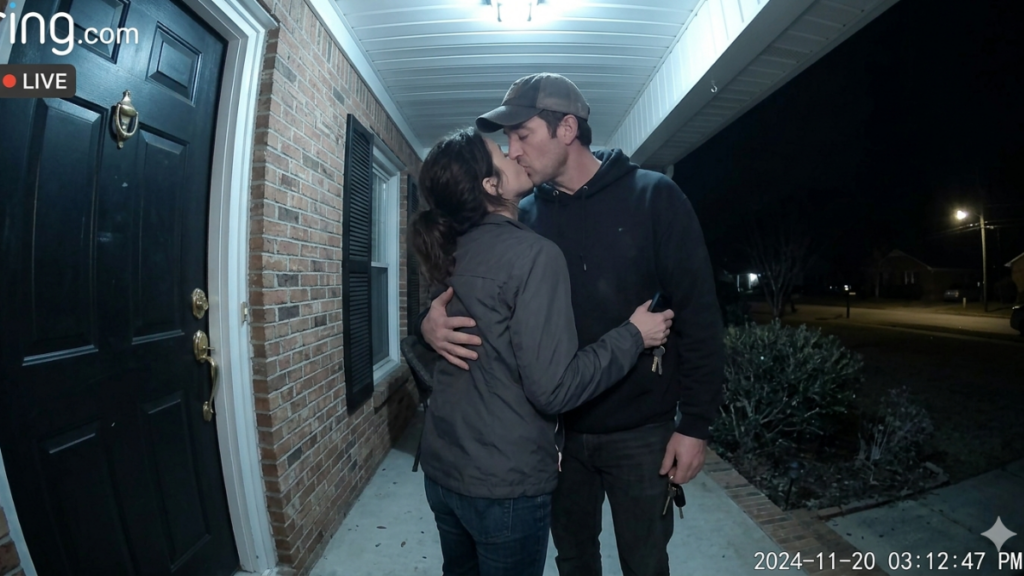
It came around 3:12 PM.

A small alert on her screen.

Motion detected.

She froze.

Didn’t move. 

Didn’t breathe.

“Open it,” I said quietly.

She shook her head.

“Not yet.”

I didn’t argue.

But my stomach tightened.

Because if there was motion…

It meant someone was there.

Watching it happen

She opened the app five minutes later.

I don’t know why she waited. 

Maybe she needed those extra minutes to prepare.

Maybe she was hoping the notification meant nothing.

But it didn’t.

The video started playing.

At first, it was just the empty room.

Then the door opened.

He walked in.

Normal. 

Casual. 

Like any other day.

He dropped his keys on the dresser. 

Took off his jacket.

Nothing unusual.

We both leaned closer.

And then—

He checked his phone.

And smiled.

That smile

I hadn’t seen him smile like that before.

Not wide. 

Not obvious.

Just… soft.

Private.

Like it wasn’t meant for anyone else to see.

My friend didn’t say anything.

But I saw her hands tighten around her phone.

He typed something.

Waited.

Then looked back at the door.

Like he was expecting someone.

The knock

It was faint, but the camera picked it up.

Three soft knocks.

He moved quickly after that.

Too quickly for someone who wasn’t expecting it.

He opened the door.

Stepped aside.

And let someone in.

But the camera didn’t catch her face right away.

Just a figure.

Long hair. 

Light jacket.

Familiar, somehow.

I felt it before I understood it.

That strange sense of recognition you can’t place yet.

Something feels off

They hugged.

Not like friends.

Not like people who hadn’t seen each other in a while.

This was close. 

Comfortable. 

Easy.

Like it had happened many times before.

My friend made a small sound next to me.

Not a cry.

Just… something breaking quietly.

They moved further into the room.

Still no clear view of her face.

But something about her posture…

The way she leaned into him.

It didn’t feel new.

The moment everything slowed down

He said something.

We couldn’t hear it clearly.

But she laughed.

And that’s when my friend went completely still.

“Pause it,” she said.

I did.

“Play that again.”

I rewound a few seconds.

Pressed play.

The laugh came again.

Soft. 

Familiar.

Too familiar.

My friend shook her head.

“No,” she whispered.

Recognition

“Turn it up.”

I increased the volume.

We listened again.

The laugh echoed through the room.

And this time, there was no doubt.

My friend stood up so fast her chair scraped loudly against the floor.

“That’s not possible,” she said.

But it was.

Because I recognized it too.

A name neither of us wanted to say

We didn’t say it right away.

We just looked at each other.

Like if we didn’t speak it, it wouldn’t become real.

But it already was.

The way she laughed.

The way she moved.

The way he looked at her.

It all fit together in a way that made my chest feel tight.

My friend took a step back.

Then another.

“No,” she said again.

But this time, it sounded different.

Not denial.

Fear.

Replaying the truth

We watched the video again.

And again.

Each time, more details stood out.

A bracelet.

A voice.

A small habit with her hands.

Things you wouldn’t notice unless you knew someone well.

And my friend knew her.

Better than anyone.

Because there was only one person it could be.

The realization she couldn’t stop

She sank back into the chair.

Eyes fixed on the screen.

“He wouldn’t…” she started.

But she didn’t finish the sentence.

Because he already had.

We were watching it happen.

In real time.

There was no room left for doubt.

The question that changed everything

She looked at me.

Not crying. Not yelling.

Just… empty.

“What do I do now?”

I didn’t have an answer.

Because this wasn’t just cheating anymore.

This was something else.

Something bigger.

Something that was about to pull in more people than either of us had planned.

And then she said her name

Barely above a whisper.

Like saying it too loud might break something completely.

“My sister.”

The room went quiet in a way I’ve never felt before.

Heavy. 

Final.

Because once it was said, there was no taking it back.

No misunderstanding.

No other explanation.

Just the truth.

Sitting there between us.

What comes next

We didn’t stop the video.

But we stopped reacting to it.

Because the problem had just changed.

This wasn’t just about her husband anymore.

This was about her family.

And what happens when the two collide.

She picked up her phone again.

Closed the app.

And sat there for a long time.

Thinking.

Then she looked at me.

“I’m not confronting them alone,” she said.

Her voice was steady now.

Clear.

“I want everyone to see it.”

And that’s when I realized…

This wasn’t going to stay private for long.

The decision she didn’t take back

She didn’t rush into it.

That’s the part people don’t expect when they hear what happened next.

They think it was anger. 

Impulse. 

A dramatic confrontation.

It wasn’t.

She thought about it all night.

We sat in silence for long stretches. 

Then she would suddenly speak, like she had been arguing with herself in her head.

“If I tell just him, he’ll lie.”

Pause.

“If I tell my parents first, they’ll try to protect her.”

Another pause.

“If I say nothing… I’ll be the one carrying it.”

That was the one that stayed.

By morning, she had made up her mind.

“I’m done carrying it,” she said.

The plan changes

The camera had been about proof.

Now the proof had a different purpose.

She didn’t want a private confession anymore.

She wanted it out in the open.

Not for revenge.

For clarity.

“I don’t want anyone twisting this later,” she said. “No stories. No excuses.”

She picked a day.

Sunday.

Family lunch.

Both sides would be there.

That part wasn’t unusual. 

They did it every few weeks.

What was unusual was what she planned to bring with her.

Inviting everyone

She didn’t tell anyone why.

Just a simple message in the group chat.

“Let’s all meet Sunday. It’s been a while.”

Her husband replied first.

“Sounds good.”

Normal. 

Easy.

Like nothing had happened.

Her sister replied a few minutes later.

“I’ll be there ❤️”

That heart felt different now.

My friend stared at it for a long time.

Then locked her phone.

The wait before the storm

The days leading up to Sunday felt strange.

Too normal.

She went back home like nothing had changed.

Cooked dinner. 

Asked about his day.

He acted the same.

Maybe even a little more attentive.

That part almost made it worse.

“You should see how he looks at me,” she told me once. “Like I’m the only person in the room.”

She didn’t say the rest out loud.

But we both knew.

He looked at her sister that way too.

Keeping the secret

She didn’t confront her sister either.

Not a message. 

Not a hint.

They even spoke on the phone once.

I was there when it happened.

Her sister was laughing about something small. 

Something forgettable.

The same laugh we had heard on the video.

My friend’s face didn’t change.

But her grip on the phone tightened slightly.

When the call ended, she set the phone down very carefully.

Like it might break.

“I want to see her face when she realizes,” she said.

Sunday arrives

I went with her.

She asked me the night before.

“I don’t want to walk in alone.”

So I didn’t let her.

She came over to mine to get ready.

And then we went together.

The house was already full when we got there.

Voices. 

Plates clinking. 

The smell of food.

Everything felt warm.

Normal.

Wrong.

Her husband greeted us first.

A quick kiss on her cheek.

A smile.

Like this was just another Sunday.

Her sister came out of the kitchen a moment later.

Wiped her hands on a towel.

And smiled too.

That same easy, familiar smile.

“Hi,” she said.

My friend smiled back.

Like nothing was broken.

Sitting at the table

We all sat down together.

Her parents. 

His parents. 

A couple of cousins.

It was louder now. 

Conversations overlapping.

Someone poured wine.

Someone told a story.

I watched my friend more than anything else.

She was calm.

Too calm.

She ate a little. 

Nodded at the right moments.

Even laughed once.

If you didn’t know, you wouldn’t know.

The moment she chose

It happened between courses.

A small gap in the noise.

Plates being cleared. 

People shifting in their seats.

She put her glass down.

Not loudly.

Just enough to get attention.

“I want to show you something,” she said.

The table quieted.

Not completely.

But enough.

Her husband looked at her, confused.

Her sister tilted her head slightly.

“What is it?” someone asked.

My friend picked up her phone.

Connected it to the TV.

No warning

She didn’t explain.

She didn’t give context.

She just pressed play.

At first, people didn’t understand what they were watching.

A bedroom.

An empty room.

A few seconds of nothing.

Then the door opened.

Her husband walked in.

Someone chuckled lightly.

“What is this?” one of his cousins said.

No one answered.

Recognition spreads

He saw himself first.

I could tell.

His posture changed.

Just slightly.

Then more.

He leaned forward.

Eyes narrowing.

As if getting closer would somehow change what he was seeing.

It didn’t.

Because a few seconds later—

He smiled at his phone.

That same soft, private smile.

And that’s when the room started to shift.

The second person

The knock came.

Soft.

Clear.

Too clear.

People glanced at each other now.

A quiet confusion settling in.

He opened the door.

Stepped aside.

And let her in.

This time, the camera caught her face almost immediately.

No angle. 

No shadow.

Just… her.

The silence breaks

Someone gasped.

I don’t even know who.

Maybe more than one person.

Her sister froze.

Completely still.

Like her body had stopped listening to her.

My friend didn’t look at her.

She kept her eyes on the screen.

The video kept playing.

The hug.

The closeness.

The way they moved together without hesitation.

There was no explaining it away.

Denial doesn’t last long

“Wait—” her husband started.

But the word didn’t go anywhere.

It just hung there.

Empty.

Because there was nothing he could say that would make the video disappear.

Her sister shook her head.

“No, this isn’t—”

She stopped too.

Because it was.

Everyone could see it.

Two families collide

The room didn’t explode all at once.

It cracked.

Then split.

Voices started rising.

Questions. 

Accusations. 

Names being called.

Her mother stood up so quickly her chair fell backward.

His father started saying something loud and sharp.

I couldn’t even follow all of it.

It was too much.

Too many people trying to process the same impossible thing.

At the same time.

The only person not reacting

Through all of it, my friend stayed seated.

She didn’t raise her voice.

Didn’t argue.

Didn’t cry.

She just watched.

Not the video.

The people.

Her husband trying to speak over everyone.

Her sister shrinking into herself.

Their parents turning on each other.

It was like she was seeing all of them clearly for the first time.

Finally, she speaks

She reached for the remote.

Paused the video.

The room didn’t go quiet right away.

But her voice cut through it.

“Stop.”

It wasn’t loud.

But it worked.

One by one, people fell silent.

She looked at her husband first.

“Do you want to explain?”

He opened his mouth.

Closed it.

Looked at the floor.

That was his answer.

Then her sister

She turned her head.

Slowly.

Met her sister’s eyes.

“How long?”

That was all she asked.

No anger.

No shaking.

Just a question.

Her sister started crying then.

Real crying.

Not quiet.

Not controlled.

“I didn’t mean—” she began.

But that wasn’t an answer.

“How long?” my friend repeated.

“A few months,” she whispered.

The truth lands

A few months.

Not a mistake.

Not a one-time thing.

A pattern.

A choice.

Over and over again.

My friend nodded once.

Like she had just confirmed something she already knew.

What she didn’t do

She didn’t yell.

Didn’t throw anything.

Didn’t demand apologies.

That’s what everyone expected.

You could feel it.

The tension waiting for her to break.

She didn’t.

Instead, she stood up.

Calmly.

Pushed her chair in.

And picked up her bag.

The last thing she said

“I didn’t show this to hurt you,” she said.

Looking at both of them now.

“I showed it so no one could lie about it later.”

She paused.

Just for a second.

“But we’re done.”

Simple.

Clear.

Final.

Walking away

I followed her out.

The noise started again behind us the moment the door closed.

Louder this time.

Angrier.

But it already felt far away.

We walked to the car in silence.

She didn’t rush.

Didn’t look back.

Aftermath

The days after were messy.

Of course they were.

Calls. 

Messages. 

People choosing sides.

Some tried to justify it.

Some blamed one of them more than the other.

Some stayed out of it completely.

Two families that used to sit at the same table stopped speaking.

Just like that.

What stayed with her

But none of that seemed to matter to her as much as I expected.

What stayed with her was quieter.

“I keep thinking about the moment before I pressed play,” she told me later.

“How everything was still… normal.”

She looked down at her hands.

“I think that was the last second of my old life.”

Closure, not revenge

She didn’t go back.

Didn’t check his messages.

Didn’t ask for more explanations.

She already had what she needed.

Not just the truth.

But the clarity that came with it.

“They showed me exactly who they were,” she said.

“And I believe them.”

The part no one sees

People talk about the video.

That’s the part that spreads.

The shocking part.

But that’s not what I remember most.

I remember the quiet before it.

The stillness in her voice.

The way she chose not to break, even when everything around her did.

The ending that isn’t perfect

Things didn’t tie up neatly.

They never do.

There are still people who don’t speak.

Still questions that don’t have clean answers.

Still damage that doesn’t fully go away.

But she sleeps now.

That’s what she told me.

And somehow, that feels like the closest thing to an ending.

One last thought

Sometimes I think back to that first day.

Sitting in her kitchen.

When she asked for my help.

If I had known where it would lead…

I don’t know if I would have said yes.

But I do know this—

Once the truth is seen, it doesn’t go back to hiding.

No matter how much you wish it could.

I Helped My Husband Plan His Family Reunion — Until I Realized None of the Families Knew Each Other

The Idea That Sounded Sweet at First

The idea for the family reunion was Daniel’s.

That alone should have tipped me off that something unusual was happening.

Daniel wasn’t the kind of person who organized large gatherings. In the ten years we had been married, I could count on one hand the number of times he had volunteered to host anything bigger than a casual barbecue.

He preferred smaller things.

Quiet dinners.

A couple of friends watching football.

Nothing that involved coordinating dozens of people at once.

So when he walked into the kitchen one night and announced that he wanted to organize a massive family reunion weekend, I was genuinely surprised.

“A reunion?” I asked.

“Yeah,” he said, leaning against the counter like the idea had just casually occurred to him. “It’s been years since everyone got together.”

“Everyone who?”

“Just… family.”

The answer was vague enough that I laughed.

“Well that narrows it down.”

But Daniel seemed unusually enthusiastic about it.

He had already started sketching out plans.

A rented lake house.

A catered dinner.

Outdoor games for the kids.

Even a group photo at the end of the weekend.

The more he talked about it, the more it started to sound like something genuinely meaningful.

A chance for people to reconnect.

To meet relatives they hadn’t seen in years.

So eventually I agreed to help.

And for the next month, the reunion became our main project.

The Guest List

The first thing we needed was a list of people to invite.

Daniel said he would handle that part.

“Your side of the family?” I asked.

“And some extended relatives,” he said.

“Cousins, that kind of thing.”

That seemed normal.

Daniel came from a large family, and over the years I had heard plenty of stories about relatives scattered across different states.

Some I had met briefly.

Others I only knew through the occasional Christmas card.

So when he started adding names to the spreadsheet, I didn’t question it.

Thirty guests.

Then forty.

Eventually the list reached nearly sixty people.

“Wow,” I said one evening while looking at the numbers.

“Your family’s bigger than I thought.”

Daniel smiled.

“Yeah,” he said casually.

“We’ve got a lot of branches.”

The Lake House

The place we rented for the reunion was perfect.

A large lakefront property with a wide backyard, a long wooden dock, and enough bedrooms to hold a small army of relatives.

Daniel seemed particularly excited about it.

He spent hours planning where everything would go.

The dinner tables.

The grill station.

The fire pit area for late-night conversations.

By the time the weekend arrived, everything was ready.

Food was ordered.

Decorations were up.

The house looked like the setting for a big, joyful family gathering.

And for the first hour after guests began arriving, that’s exactly what it felt like.

The First Strange Moment

The first guests to arrive were a couple with two young kids.

Daniel greeted them warmly at the door.

“Good to see you again,” he said.

They hugged like people who knew each other well.

“Who are they?” I asked after Daniel walked them inside.

“Cousins,” he said.

“On my dad’s side.”

That seemed normal.

The second group arrived about twenty minutes later.

A middle-aged woman and a teenage girl.

Daniel greeted them the same way.

Warmly.

Familiar.

But when the first couple tried to introduce themselves to the newcomers, something strange happened.

The woman looked confused.

“Oh,” she said politely. “I thought we were the only ones coming from Daniel’s side.”

The man laughed.

“Same here.”

I watched the exchange for a moment before brushing it off.

Large families can be complicated.

Not everyone knows everyone else.

That explanation made sense.

At least for the first few hours.

The Guests Who Didn’t Recognize Each Other

By late afternoon the house was nearly full.

Kids were running around the yard.

Adults were chatting near the grill.

Music was playing from a speaker on the deck.

But the longer I watched the crowd, the more something felt… off.

People kept introducing themselves to each other like strangers.

Not distant relatives.

Not cousins who hadn’t seen each other in years.

Complete strangers.

“Which side of the family are you from?” someone asked near the drink table.

“Daniel’s,” the other person said.

“Oh.”

That was usually where the conversation stalled.

Because the next logical question — how they were related to Daniel — never seemed to produce the same answer twice.

The Questions Start

I finally noticed the pattern when I walked past a group of three women talking near the dock.

“So you’re his cousin?” one of them asked.

“Yes.”

“Which aunt?”

“Maria.”

The other two women exchanged a glance.

“Who’s Maria?”

That was when something inside me shifted.

Because I had been married to Daniel long enough to know most of his relatives.

And I had never heard of an Aunt Maria.

The Growing Confusion

As the evening went on, the same conversation kept repeating in different corners of the yard.

People asking each other simple questions.

Where are you from?

How do you know Daniel?

Which side of the family are you on?

And almost every time, the answers seemed to confuse everyone else involved.

One man thought Daniel’s father was named Richard.

Another insisted his father’s name was Michael.

Two different women both claimed to be Daniel’s only sister.

By the time dinner started, the polite smiles had started to fade.

Because everyone in that backyard was slowly realizing the same thing.

They didn’t actually know each other.

The Moment It Became Obvious

Dinner was supposed to be the highlight of the evening.

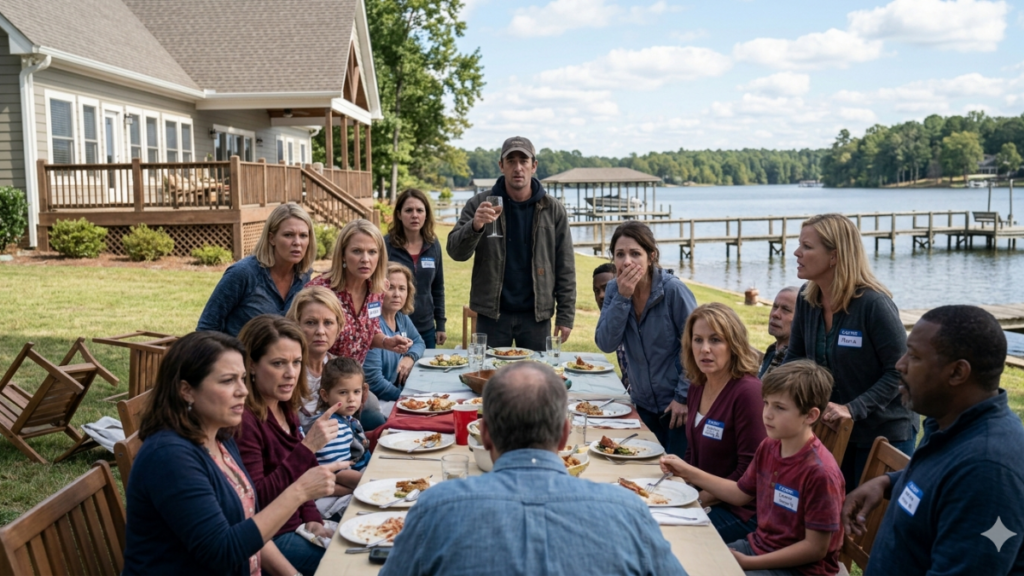
Long tables had been set up across the lawn, covered with white tablecloths and small candles.

Daniel stood up at the front to give a short welcome speech.

“Thank you all for coming,” he said, raising his glass.

“It means a lot to finally have everyone together.”

Everyone clapped politely.

But when people started sitting down, the confusion reached a new level.

Because guests began asking the most basic question of all.

“Which side of the family are you on?”

And this time the answers made something impossible suddenly obvious.

No one at that table had the same story.

The Realization

I stood near the end of the table listening to the conversations unfold.

One woman said she had been married to Daniel for twelve years.

Another woman said she had been with him for eight.

A third said their kids had his last name.

My chest tightened.

Because suddenly the guest list Daniel had given me didn’t look like a large extended family.

It looked like something else entirely.

And when I slowly turned to look at my husband standing at the head of the table…

I realized something terrifying.

None of these families knew about each other.

The Conversation That Started It

At first, the realization didn’t hit everyone at the same time.

It spread slowly across the tables like a ripple moving through water.

Someone asked a question.

Someone else answered it.

Then another person frowned and said something that didn’t match.

I watched it happen from the end of the long dinner table while people compared small pieces of information.

How long they had known Daniel.

Where they lived.

How many kids they had.

The details started overlapping in ways that made less and less sense.

One woman sitting halfway down the table laughed awkwardly.

“Wait… I’m confused,” she said.

“You said you’ve been married to Daniel for twelve years?”

Another woman nodded.

“Yes.”

A third woman looked up from her plate.

“But I’ve been married to him for eight.”

For a moment everyone at the table went quiet.

Because the sentence was strange enough that people assumed they must have misheard it.

Then someone at the far end of the table said something that made the entire conversation stop.

“I’ve been with him for fifteen.”

The Silence

You could almost hear the moment the realization began connecting inside everyone’s head.

Three different women.

Three different timelines.

All claiming the same relationship with the same man.

Across the lawn, a few more conversations were starting to sound just as confused.

“Wait… you said you have two kids with Daniel?”

“Yes.”

“But he told me our son was his only child.”

The air in the backyard changed almost instantly.

The casual, friendly atmosphere that had filled the reunion all afternoon was replaced by something sharper.

Something suspicious.

Something angry.

And suddenly all of those strangers sitting around the same table were looking at each other very differently.

The First Question

The first person to stand up was a woman near the center of the table.

She pushed her chair back slowly and looked toward Daniel, who was still standing near the grill with a drink in his hand.

“Daniel,” she said.

Her voice wasn’t loud.

But it carried across the entire yard.

“Yes?” he said.

She crossed her arms.

“Can you explain something?”

The conversations around the yard began to quiet.

Daniel smiled politely.

“What’s going on?”

The woman gestured toward the table.

“You invited all of us here for a family reunion.”

“That’s right.”

“So why does no one here recognize each other?”

The Moment Everything Broke

Daniel hesitated.

Just slightly.

But it was enough.

Because everyone in that yard had already been piecing together the same story.

And his hesitation confirmed it.

Another woman stood up.

“I think I can answer that,” she said slowly.

She looked around the table at the other women.

“Because we’re not one family.”

The sentence landed like a stone in the middle of the gathering.

Someone near the fire pit laughed nervously.

“What are you talking about?”

The woman pointed directly at Daniel.

“We’re five different families.”

The Chaos Begins

The reaction wasn’t immediate.

For a few seconds the entire backyard stayed quiet.

Like everyone was waiting for Daniel to correct the misunderstanding.

But Daniel didn’t speak.

And that silence told everyone exactly what they needed to know.

The questions came all at once.

“You told me you traveled for work every other week.”

“You said your parents lived in Florida.”

“You told me your ex-wife moved overseas!”

Five different women were standing now.

Some angry.

Some confused.

Some pale with shock.

Children had started looking around nervously as the adults’ voices grew louder.

The First Explosion

One of the women grabbed the stack of reunion name tags sitting on the table.

She flipped through them quickly.

Then she looked up at Daniel with disbelief.

“You put all of our last names on these,” she said.

Daniel didn’t answer.

She turned the name tags so everyone else could see.

Each one had the same format.

“Family of Daniel Carter.”

Except there were five different last names printed underneath.

Five different households.

Five different lives.

The Moment Everyone Understood

It was like watching a room full of puzzle pieces suddenly snap together.

The late-night work trips.

The weekends he said he was visiting relatives.

The holidays he claimed he had to split between family obligations.

Every explanation he had ever given suddenly made sense.

Because he hadn’t been traveling for work.

He had been traveling between families.

The Confrontation

I stood up slowly.

The sound of my chair scraping against the deck made Daniel finally look at me.

His expression wasn’t angry.

Or even defensive.

It was the look of someone who knew the secret was finished.

“How many?” I asked.

My voice sounded calm.

But my hands were shaking.

Daniel looked around the yard.

At the five different groups of people staring at him.

Then he answered quietly.

“Five.”

The word seemed to echo across the backyard.

Five families.

Five separate lives.

Five different sets of children who had believed they were part of a single household.

The Backyard Erupts

The next few minutes were complete chaos.

People stood up.

Voices rose.

Someone knocked over a chair.

Another woman grabbed a drink from the table and threw it across the yard.

Children started crying as adults shouted over each other.

“How long have you been lying to us?”

“Which one of us is the real wife?”

“Do any of these kids even know each other?!”

Phones appeared in people’s hands as relatives began calling other family members.

Some people were demanding explanations.

Others were already talking about lawyers.

The End of the Reunion

Within half an hour the reunion was over.

Cars were leaving the driveway.

Families were gathering their kids and luggage and walking out of the yard in stunned silence.

The lake house that had looked like the perfect setting for a happy family gathering just hours earlier now looked like the aftermath of a storm.

Chairs were scattered across the lawn.

Food sat untouched on the tables.

And five different families were leaving with the same realization.

They had all believed they were the only ones.

The Truth That Couldn’t Stay Hidden

As the last car pulled away from the driveway, Daniel and I stood alone in the backyard.

The quiet felt almost unreal after the chaos that had filled the yard minutes earlier.

“You planned this,” I said slowly.

Daniel didn’t deny it.

“I thought it would be easier this way,” he said.

“Easier?” I repeated.

“Yes.”

He looked around the empty yard.

“At least now everyone knows.”

And as I stared at the mess left behind from the reunion, I realized something.

Daniel had called it a family gathering.

But what he had really done…

Was invite every secret he had been hiding for years to meet each other at the same table.

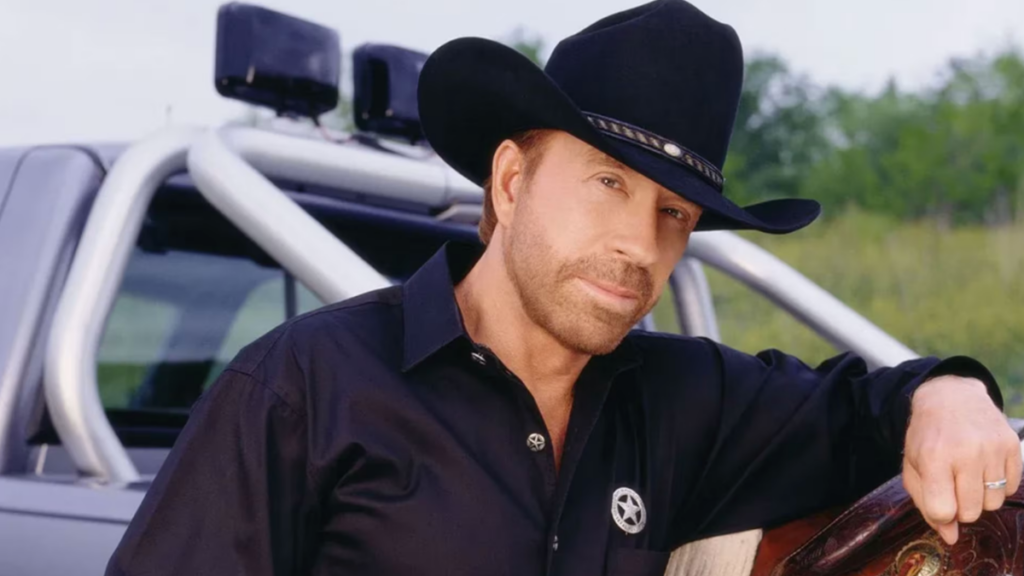
Remembering Chuck Norris: From Action Star to Cultural Phenomenon

Photo Credit: CBS

Chuck Norris Leaves the World at 86

The world mourns a legend. Chuck Norris, the martial artist and action film star, has died at age 86. His family shared the news with deep sadness earlier today.

According to reports, Norris had been hospitalized in Hawaii after experiencing a sudden medical emergency. He died on March 19, 2026, surrounded by his loved ones. His family confirmed the news on Instagram.

In their heartfelt statement, his family wrote, “While we would like to keep the circumstances private, please know that he was surrounded by his family and was at peace.” They described him as a devoted husband, a loving father and grandfather, and a source of inspiration worldwide.

Norris’ passing marks the end of an era in action entertainment. For decades, he personified strength, discipline, and resilience. He began his rise in the 1970s as a martial artist before moving into Hollywood.

His work spanned film and television. Millions came to know him as Walker, Texas Ranger, a character that became part of popular culture and helped define action television in the 1990s.

Fans around the world reacted instantly to the news. Social media posts paid tribute to Norris’ influence, both on screen and in real life. Many shared memories of his films, television roles, and even the iconic “Chuck Norris Facts” that elevated his global presence. Tributes poured in from celebrities, martial artists, and everyday viewers alike. His legacy lived beyond his characters, touching people through strength and humor alike.

Early Life and Rise to Fame

Chuck Norris did not arrive in Hollywood overnight. Born Carlos Ray Norris in Oklahoma on March 10, 1940, he spent part of his youth in poverty. He found his path through martial arts after serving in the United States Air Force in South Korea.

Norris quickly developed skill in multiple disciplines, eventually founding his own style, Chun Kuk Do. He dominated competitive karate, becoming a six‑time undefeated World Professional Middleweight Karate Champion. His martial arts prowess made him a respected figure long before Hollywood recognized him.

His cinematic breakthrough came in 1972, when he fought Bruce Lee on screen in The Way of the Dragon. This appearance introduced him to international audiences and showcased his formidable skill. Through the 1970s and 1980s, he starred in action films like Missing in Action, The Delta Force, and others that defined the era’s cinematic fighting style. His characters were often stoic heroes with precision skills and unfailing moral codes.

In 1993, Norris transitioned to television with Walker, Texas Ranger. The show became a hit, running for eight seasons and turning Norris into a household name. Even after Walker, Norris continued acting, later appearing in films like Agent Recon in the 2020s. His longevity in entertainment reflected both talent and discipline.

A Legend Beloved by Fans Worldwide

Chuck Norris became more than a movie star; he became a cultural touchstone. In the early 2000s, fans created “Chuck Norris Facts,” humorous exaggerations about his toughness and abilities. These memes made him a legend beyond his filmography.

He embraced his meme status, even publishing books that played on these jokes and celebrated his martial arts philosophy. Fans quoted his one‑liners and roundhouse kick themes in movies, video games, and social media.

Even at age 86, Norris remained active and engaged with fans. Just days before his death, he shared a sparring video on Instagram in which he wrote, “I don’t age. I level up.” This clip celebrated his vitality and humor. His ability to remain relevant across generations showed his broad appeal. Older viewers remembered him from Saturday night film marathons and television. Younger fans kept the legend alive through digital culture.

Tributes from athletes, actors, and viewers emphasized how Norris shaped their approach to discipline and determination. Many called him a hero both on and off the screen. Even as jokes about his abilities circulated, those who knew martial arts spoke of his real‑world influence. Fighters from MMA and karate communities highlighted his role in their training journeys.

Family, Values, and Personal Life

Chuck Norris built a life that balanced fame with family and purpose. He married twice and fathered five children, leaving behind a devoted family that shared his journey.

He lived his life with faith and intention, often speaking publicly about purpose and resilience. His family described him as a devoted husband, father, grandfather, brother, and mentor. In their official statement, his family wrote that Norris lived with “faith, purpose, and an unwavering commitment to the people he loved.” They said he inspired millions with his work, discipline, and kindness.

His values extended beyond entertainment into community and charitable work. Norris founded organizations like Kickstart Kids, promoting discipline and confidence in young people through martial arts. Friends and colleagues remembered him not only for his physical strength but for his compassionate heart and guidance. His presence in Hollywood and martial arts communities shaped many careers.

Despite his size as a public figure, Norris prioritized privacy and family. Those close to him spoke of quiet dinners and mentorship moments that defined his character. His legacy lives in both his family’s love and the countless students he helped through martial arts and mentorship programs.

How the World Reacted

News of Chuck Norris’ death spread rapidly across social platforms, news outlets, and fan communities. His iconic status made the announcement global.

Fans shared memories of watching his films and television shows. Many reflected on how his characters shaped their youth. Some remembered learning martial arts because of his influence. Celebrities paid tribute, praising his work ethic and influence. From action stars to fellow martial artists, many expressed admiration for his career.

Even meme culture commemorated his life, with social posts transforming Chuck Norris Facts into expressions of appreciation rather than jokes. Fans celebrated his humor and impact on internet culture. Sports figures and MMA stars shared touching messages about how Norris inspired them as young competitors. Some called him a personal hero.

Television networks replayed classic episodes of Walker, Texas Ranger, and some of his iconic films. Fans revisited his most memorable scenes in tribute. Despite the sadness of loss, many people found comfort in the memory of his strength and kindness. Shared stories of inspiration and resilience became the dominant theme in reactions across media.

Chuck Norris’ Enduring Legacy

Chuck Norris’ life defined the idea of strength with purpose. His journey from martial arts champion to Hollywood star inspired generations.

More than his film roles, he became a symbol of discipline and perseverance. Young athletes and martial artists still reference his training philosophies. His television work brought new audiences into martial arts and encouraged self‑confidence. Walker, Texas Ranger, remains a touchstone for action television fans.

His influence stretched into pop culture through both serious and humorous expression. He embraced his own myth while grounding it in real achievement. Even in death, his life continues to teach lessons about resilience. His final message on social media reminded fans to stay strong and grateful.

Chuck Norris leaves behind a legacy marked by strength, love, and inspiration. People around the world honor him not only for his roles but for who he was. In the many stories shared today, his impact reverberates across generations. What he built in life will continue to shape people long after his passing.

I Went to My Husband’s Funeral — And Met the Man Using His Name

The Funeral Everyone Said Goodbye At

When my husband Daniel died, the entire town showed up to the funeral.

That’s the kind of man he had been. The kind who knew everyone, helped everyone, and somehow always had time for one more favor or one more conversation.

So when the accident happened, people came from everywhere.

Neighbors.

Coworkers.

Friends we hadn’t seen in years.

Even people I barely recognized stood in line to hug me and tell me how sorry they were.

I remember standing beside the casket feeling like the entire world had suddenly slowed down. People kept talking to me, but their voices sounded far away, like I was hearing them through water.

I kept thinking the same thing over and over.

This can’t actually be happening.

But it was.

The police said the car had gone off the road late at night on a rural highway. The impact had been severe enough that the vehicle caught fire before anyone reached it.

By the time emergency crews arrived, there was almost nothing left.

They identified Daniel through dental records.

The official paperwork was quick.

Too quick.

At the time, I thought that was just how tragedies worked.

Now I know it was something else entirely.

Learning How to Be Alone

The months after the funeral felt like living inside someone else’s life.

Every room in the house reminded me of Daniel. His shoes still sat by the front door. His jacket still hung over the back of the kitchen chair.

I couldn’t bring myself to move any of it.

People kept telling me I needed to start over.

Find a new routine.

Maybe even think about moving somewhere else eventually.

But the idea of rebuilding anything felt impossible when everything had been ripped away so suddenly.

So I focused on smaller things.

Paying bills.

Sorting paperwork.

Trying to figure out what life was supposed to look like now.

It wasn’t until six months later that the first crack appeared in the story I thought I knew.

The Message That Shouldn’t Exist

It started with something small.

A notification from our bank.

At first I assumed it was a mistake.

But when I opened the message, I felt my stomach drop.

Because the notification said someone had tried to use Daniel’s debit card.

Not recently.

Yesterday.

For a moment I convinced myself it had to be fraud.

That made sense. Credit card numbers get stolen all the time.

But something about the location listed on the transaction made my chest tighten.

Because the purchase hadn’t happened in another state.

Or even another city.

It had happened fifteen minutes from my house.

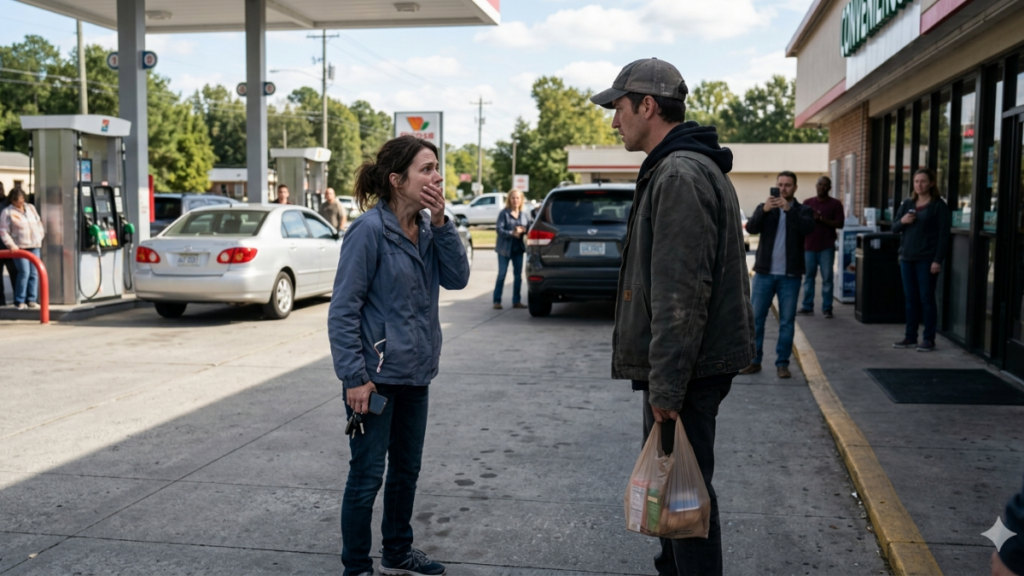
At a gas station Daniel used to stop at all the time.

A Face in the Parking Lot

Two days later, I drove past that same gas station.

And that’s when everything changed.

I wasn’t even thinking about the bank notification anymore. I had just finished running errands and happened to stop at the light across the street.

But when I glanced toward the pumps, something made my heart stutter.

There was a man standing beside a car.

He was tall.

Dark hair.

The same broad shoulders I had leaned against for years.

For a second I actually stopped breathing.

Because from a distance, the man looked exactly like Daniel.

I blinked.

Hard.

The light turned green behind me and someone honked.

I forced myself to keep driving.

It couldn’t be him.

It wasn’t possible.

People imagine things like that when they’re grieving. Everyone says so.

But the feeling that something wasn’t right refused to leave.

The ID That Shouldn’t Exist

That night I sat at the kitchen table staring at the bank notification again.

The transaction had been declined.

But the system had still recorded the attempt.

Which meant someone had physically swiped Daniel’s card.

And there was only one way someone could still have it.

They’d had it before the accident.

My brain kept trying to make sense of that.

Maybe Daniel had lost his wallet weeks before the crash.

Maybe someone had picked it up and just decided to use it now.

That explanation made sense.

Except for one small problem.

The man at the gas station.

The Decision I Shouldn’t Have Made

The next morning, I drove back to the same gas station.

I told myself I was just checking.

Just confirming the man I thought I saw had been a stranger.

But part of me already knew that wasn’t why I was there.

I parked across the street and waited.

For almost an hour nothing happened.

Then a familiar-looking car pulled into the lot.

And a man stepped out of the driver’s seat.

This time I saw his face clearly.

The world tilted sideways.

Because the man standing beside that car looked exactly like the person I had buried six months earlier.

The Moment Everything Broke

My hands were shaking when I got out of the car.

I crossed the street slowly, my heart pounding so hard I could hear it in my ears.

The man was standing at the counter inside the gas station.

When he turned slightly, I saw the profile I had memorized after ten years of marriage.

Same jawline.

Same scar above the eyebrow from when Daniel had fallen off his bike as a teenager.

There was no mistaking it.

I walked straight up behind him.

For a moment I just stood there.

Trying to understand how something this impossible could be happening.

Then I said his name.

“Daniel.”

The man turned around.

And the expression on his face told me everything I needed to know.

Because it wasn’t confusion.

It wasn’t curiosity.

It was the look of someone who had just realized the past had finally caught up with him.

The Moment He Turned Around

For a second, the entire gas station seemed to disappear.

The buzzing lights.

The hum of the refrigerators.

The cashier asking someone behind us if they wanted a receipt.

All of it faded into the background as the man slowly turned to face me.

And suddenly I was staring into the face of the person I had buried six months earlier.

Every detail was the same.

The small scar above his eyebrow from when he crashed his bike in college.

The crooked front tooth he always joked about fixing but never did.

Even the faint line beside his mouth that only appeared when he was nervous.

The only difference was the expression on his face.

Because when Daniel looked at me, it wasn’t the warm smile I had known for ten years.

It was pure panic.

The First Words

Neither of us spoke at first.

He looked like someone trying to calculate a hundred different escape routes at the same time.

Finally he said the only thing he could think of.

“You shouldn’t be here.”

The sentence hit me harder than if he’d slapped me.

Because it confirmed something I had been desperately hoping wasn’t true.

He knew exactly who I was.

And he had never expected to see me again.

My voice came out quieter than I expected.

“You’re dead.”

He glanced quickly around the gas station.

Two customers stood near the coffee machine. The cashier was looking down at the register.

Then Daniel leaned slightly closer.

“Not here,” he muttered.

The Parking Lot

We stepped outside into the bright afternoon sun.

For a moment neither of us said anything.

I could hear cars passing on the road and the low rumble of someone filling their tank a few pumps away.

But the only thing I could focus on was the man standing in front of me.

The man who had supposedly died in a fiery car crash.

The man whose funeral I had cried through while hundreds of people watched.

“How?” I finally asked.

Daniel rubbed his hands over his face like someone trying to wake up from a nightmare.

“It wasn’t supposed to happen like this,” he said.

“That’s not an answer.”

He looked at the ground for a long moment before finally speaking again.

“The accident was staged.”

The Story I Never Saw Coming

For a second I thought I had misheard him.

“You staged your death?” I said.

Daniel nodded slowly.

“The car that crashed wasn’t mine.”

My stomach twisted.

“Then whose body did we bury?”

“There wasn’t one,” he said quietly. “The fire destroyed everything. They identified the remains through dental records.”

“And those records were yours.”

“I switched them.”

The words hung between us like something poisonous.

I felt suddenly cold.

“You let everyone believe you were dead.”

Daniel exhaled slowly.

“I needed to disappear.”

The Life He Had Started Somewhere Else

The explanation came out in fragments.

Money problems.

Debt I had never known about.

A business deal that had collapsed months before the crash.

Daniel had been drowning financially, and instead of telling anyone, he had convinced himself there was only one way out.

Erase the old life.

Start another one somewhere else.

“I was going to leave the country,” he said.

“But things didn’t work out.”

Instead, he had ended up living thirty minutes away under a slightly different name.

Working cash jobs.

Keeping his head down.

Building a new life that didn’t include anyone from the old one.

Anyone except the woman standing in front of him.

The People Who Were Watching

At some point during our conversation, we stopped noticing the other people around us.

But they were noticing us.

Two customers stood near the entrance now, watching.

One of them had pulled out their phone.

And suddenly I realized something Daniel clearly hadn’t considered.

If I could recognize him…

Someone else eventually would too.

The Call

I stepped back and pulled my phone from my pocket.

Daniel saw what I was doing immediately.

“Wait,” he said.

But it was already too late.

I had spent six months grieving a man who had chosen to disappear instead of telling the truth.

Six months answering questions from friends, family, and insurance companies.

Six months trying to figure out how to rebuild a life that had been destroyed overnight.

And now the man responsible was standing in front of me asking me to keep his secret.

My thumb pressed the screen.

When the operator answered, my voice was steady.

“I need to report someone who faked their death.”

The End of the Second Life

Daniel didn’t run.

Maybe he knew it wouldn’t matter.

Maybe he was too exhausted to try.

Ten minutes later, the first police car pulled into the gas station parking lot.

Two officers stepped out.

One of them looked at Daniel.

Then at the ID I had handed them.

Then back at Daniel again.

The expression on his face said everything.

“Sir,” he said slowly, “you’re going to need to come with us.”

Daniel glanced at me one last time.

Not angry.

Not pleading.

Just defeated.

As they placed him in the back of the police car, the reality of what had happened finally settled over the entire parking lot.

The man everyone believed had died months earlier had just been arrested for pretending he was dead.

And suddenly I understood something that hadn’t made sense at the funeral.

The reason the goodbye had always felt unfinished.

Because the truth was…

Daniel hadn’t died that night.

He had simply chosen to disappear.

And now the entire town was about to find out why.

Exposing the Hidden Message in Zendaya’s Press Tour

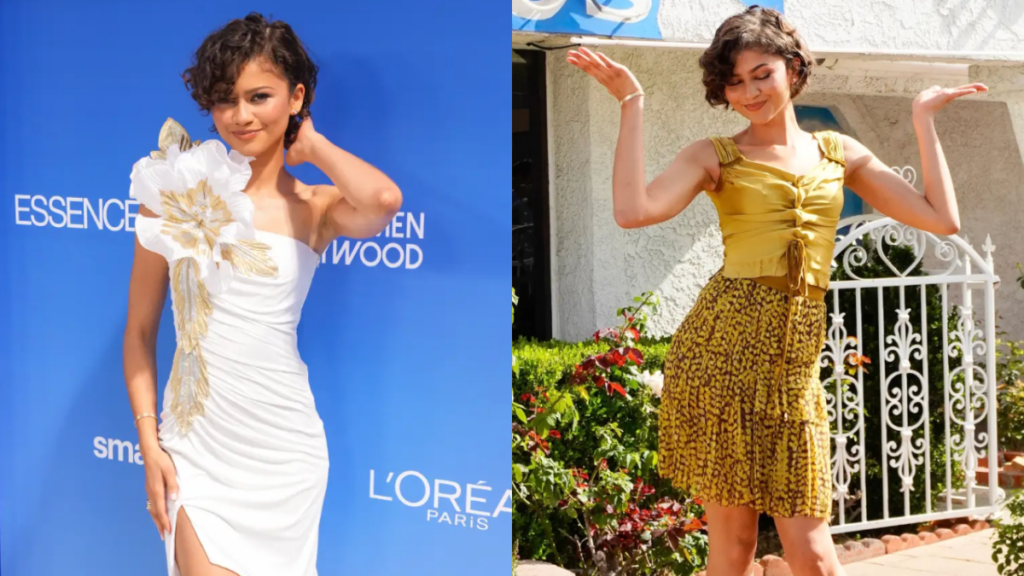
Photo Credit: Chris Pizzello / Invision / AP; Aces / Backgrid

Zendaya’s Press Tour That Sparked Marriage Speculation

Zendaya turned a routine press tour into one of the most talked-about fashion moments of the year. While promoting her film The Drama, she delivered a series of carefully styled looks. Each outfit seemed intentional, polished, and layered with hidden meaning.

Fans quickly noticed a pattern across her appearances. Her wardrobe appeared to follow the traditional wedding rhyme. The phrase includes “something old, something new, something borrowed, something blue.” This theme immediately fueled speculation about her relationship with Tom Holland. The couple has remained private despite years of public interest. Their engagement in late 2024 already attracted significant attention.

During the press tour, Zendaya leaned into the mystery. She never directly confirmed anything, but her choices invited interpretation. Fans began analyzing each outfit for clues. Her longtime stylist, Law Roach, played a central role in crafting the looks. Together, they created a cohesive narrative through fashion. The styling blurred the line between promotion and personal storytelling.

This approach transformed a typical press tour into a cultural moment. It combined celebrity fashion with speculation and intrigue. Every appearance became part of a larger narrative. The result captivated audiences across social media and entertainment news. People followed each look as if it revealed a new piece of a puzzle. This level of engagement highlights Zendaya’s influence in both fashion and pop culture.

The Meaning Behind “Something Old, New, Borrowed, Blue”

Zendaya confirmed that the wedding theme was intentional. She revealed that she and Law Roach planned the concept together. They wanted a creative way to style her press appearances. Her “something old” look carried deep significance. She wore a Vivienne Westwood gown from the 2015 Oscars. That dress already held cultural importance from an earlier moment in her career.

For “something borrowed,” she wore a vintage dress linked to Whitney Houston. The look also connected to Carrie Bradshaw. This layered reference added both nostalgia and symbolism. Her “something new” outfit came from a futuristic Louis Vuitton collection. The design represented forward movement and evolution. It balanced the historical references in her other looks.

Finally, her “something blue” look appeared during a television appearance. She wore a soft blue Alexander McQueen gown. The styling completed the traditional bridal theme. These choices were not random. Each look contributed to a larger story about transformation and identity. The theme connected fashion with personal narrative.

Fans interpreted the styling as a possible confirmation of marriage. The symbolism felt too deliberate to ignore. It suggested that Zendaya might be sharing something without saying it directly. This method reflects a modern approach to celebrity storytelling. Instead of statements, stars use visuals to communicate. Zendaya executed that strategy with precision and creativity.

The Role of Subtle Clues and Public Curiosity

The speculation did not rely on fashion alone. Observers also noticed a gold band on Zendaya’s finger. She wore it alongside her engagement ring during several appearances. That detail intensified the conversation. Fans debated whether the ring signaled a secret wedding. The discussion spread quickly across platforms.

At the same time, Zendaya maintained a playful tone. She joked about AI-generated wedding photos during an interview. She acknowledged the rumors without confirming them. Law Roach added another layer to the mystery. He suggested publicly that “the wedding already happened.” His comment fueled even more speculation.

Despite these hints, neither Zendaya nor Tom Holland confirmed the rumors. They continued to protect their privacy. This silence allowed speculation to grow. Media outlets and fans filled the gap with theories. Each new appearance became evidence in an ongoing narrative. The story evolved in real time.

This dynamic reflects modern celebrity culture. Audiences expect transparency but also enjoy mystery. Zendaya balanced both elements effectively. Her approach kept the conversation alive without providing clear answers. That strategy maintained interest throughout the press tour. It turned speculation into sustained engagement.

Fashion as Storytelling in the Modern Celebrity Era

Zendaya’s press tour demonstrates the power of fashion as communication. She used clothing to tell a story without speaking directly. Each outfit functioned as a visual message.

This approach aligns with her reputation as a fashion icon. She consistently uses red carpet moments to express ideas. Her collaborations with Law Roach often push creative boundaries. The wedding theme added emotional depth to her styling. It connected personal life with professional promotion. This blend created a unique narrative.

Fashion historians often note that clothing reflects cultural moments. Zendaya’s looks captured a moment defined by curiosity and speculation. They turned a press tour into a cultural event. Her method also reflects the influence of social media. Visual storytelling spreads quickly and invites interpretation. Fans become active participants in the narrative.

By using symbolism, Zendaya encouraged that participation. She allowed audiences to decode her choices. This interaction strengthened engagement. The strategy also benefited the promotion of The Drama. The film remained part of the conversation throughout the tour. Fashion became a marketing tool as well as artistic expression.

This approach shows how celebrity influence continues to evolve. Stars no longer rely only on interviews. They communicate through images, styling, and subtle details. Zendaya’s press tour stands as a clear example of that shift. It highlights how modern celebrities shape narratives in creative ways.

The Balance Between Privacy and Public Fascination

Despite intense speculation, Zendaya continues to value privacy. She and Tom Holland rarely share details about their relationship. This choice shapes how their story unfolds publicly. Their relationship began during the filming of the Spider-Man projects. Over time, they became one of Hollywood’s most admired couples.

Their engagement added another layer of public interest. Fans became invested in their personal milestones. However, the couple maintained clear boundaries. The press tour highlighted that balance. Zendaya acknowledged the rumors without confirming them. She controlled the narrative while preserving privacy.

This approach reflects a broader trend among celebrities. Many choose to share selectively rather than fully. They protect personal moments while engaging with fans.

Zendaya’s strategy allowed her to maintain that control. She used fashion to communicate without direct statements. This method kept her personal life protected. At the same time, it satisfied public curiosity. Fans received enough clues to stay engaged. The mystery became part of the appeal.

Ultimately, the question of marriage remains unanswered. The speculation continues without confirmation. That uncertainty keeps the story alive. Zendaya’s press tour achieved more than promotion. It created a lasting cultural moment. It showed how style, storytelling, and privacy can coexist in modern celebrity life.

Miley’s “Terrible Habit” She Picked Up From Dolly Parton

Photo Credit: Dolly Parton / Instagram

How Miley Cyrus Turned Advice Into Action

The story behind the Hannah Montana anniversary special reveals an unexpected creative strategy. Miley Cyrus shared that the project did not begin as an official plan. Instead, it started with a simple idea and a bold approach.

She credited her godmother, Dolly Parton, for that strategy. Parton offered unconventional advice that changed how Cyrus approached her career. She suggested promoting ideas before they fully exist.

Cyrus admitted she followed that advice without hesitation. She began talking about a Hannah Montana anniversary special publicly. At that time, the project had no official backing or development.

This approach created immediate curiosity among fans. People began discussing the possibility of a reunion or celebration. That growing excitement eventually reached Disney executives. The strategy worked because it relied on audience engagement. Cyrus allowed fans to drive the momentum behind the idea. Their enthusiasm turned speculation into demand.

According to reports, this method helped bring the project to life. What started as a concept evolved into a fully produced special. This moment highlights how creative thinking can influence major productions. Cyrus did not wait for approval. She created interest first and let the industry follow.

The Powerful Advice From Dolly Parton

Dolly Parton has long influenced Cyrus both personally and professionally. Their relationship extends beyond family into mentorship. That influence played a key role in this story.

Parton advised Cyrus to promote ideas before they become reality. She believed that visibility creates opportunity. Once people expect something, it becomes harder to ignore.

Cyrus described this advice as a “terrible habit,” but she also called it effective. She embraced the idea and applied it directly to the anniversary concept. She started discussing the special publicly months before any planning began. Fans responded immediately with excitement and nostalgia. This reaction proved that interest already existed.

The strategy also shifted how Disney viewed the idea. Instead of pitching a concept, Cyrus presented proven demand. She showed that audiences already wanted the project. This approach reflects Parton’s long-standing understanding of entertainment. She knows that audience connection drives success. Her advice focuses on creating that connection early.

Cyrus used that lesson to her advantage. She turned a simple idea into a movement fueled by fans. This demonstrates how mentorship can shape major career decisions. The result shows the lasting influence of Parton’s guidance. Her advice did not just inspire Cyrus. It directly helped create a major television event.

From Fan Buzz to a Full Anniversary Special

The transition from idea to production happened quickly once momentum built. Cyrus teased the anniversary concept in interviews and online platforms. Fans responded with overwhelming enthusiasm. That response became a key factor in moving forward. Cyrus gathered reactions and presented them to Disney executives. She argued that the project would succeed based on fan demand.

Executives recognized the opportunity created by that buzz. The company moved forward with developing the special. Production began after months of growing anticipation.

The Hannah Montana anniversary special celebrates the show’s lasting impact. It includes performances, interviews, and nostalgic moments. The project reconnects fans with a defining part of their childhood. The special also features collaborations and guest appearances. These elements add depth and excitement to the celebration. They highlight the show’s wide influence across entertainment.

Cyrus remained deeply involved in shaping the project. She emphasized that the special exists for fans. Every decision focused on honoring their connection to the series.

This journey shows how fan engagement can drive production decisions. It also demonstrates the power of timing and persistence. Cyrus turned a personal idea into a shared cultural event. The project reflects both strategy and emotional connection. It combines business insight with genuine appreciation for fans.

The Enduring Legacy of Hannah Montana

Hannah Montana remains one of Disney Channel’s most influential shows. It premiered in 2006 and quickly became a global phenomenon.

The series followed Miley Stewart, a teenager living a double life as a pop star. This concept resonated with audiences worldwide. It combined humor, music, and relatable themes. The show launched Cyrus into international stardom. It also created a lasting connection between her and the character. Fans continue to associate her with Hannah Montana.

Over time, the series expanded beyond television. It produced music, tours, and a feature film. Its influence reached multiple areas of entertainment. The anniversary special reflects that lasting impact. It revisits iconic moments while introducing new elements. This balance keeps the story relevant for modern audiences.

Cyrus acknowledged that fans still connect deeply with the show. People continue to celebrate its music and characters. This ongoing support helped justify the anniversary project.

The legacy of the series extends across generations. Older fans revisit it for nostalgia, while new viewers discover it for the first time. This enduring appeal makes the special especially meaningful. The show’s success demonstrates the power of storytelling. It created characters and moments that remain culturally significant.

A Lesson in Creativity, Risk, and Reinvention

Cyrus’s approach to the anniversary special reveals a broader lesson about creativity. She took a risk by promoting something that did not exist. That risk ultimately paid off. Her strategy challenged traditional industry methods. Instead of waiting for approval, she created demand first. This reversed the usual process of production.

The success of this approach highlights the importance of confidence. Cyrus believed in the idea and acted on that belief. She trusted that fans would respond positively. Her story also reflects the importance of adaptability. The entertainment industry continues to evolve rapidly. New strategies often emerge from unconventional thinking.

Dolly Parton’s advice played a central role in this outcome. It encouraged Cyrus to think differently and act boldly. That influence shaped the entire project.

The anniversary special represents more than nostalgia. It shows how past success can inspire new opportunities. It also proves that reinvention remains possible at any stage of a career.

Cyrus combined personal history with strategic thinking. She honored her past while creating something new. This balance defines her approach to the project. Ultimately, the story demonstrates the power of ideas. With the right approach, even an unplanned concept can become reality.

Demi Lovato Calls Out Shia LaBeouf

Photo Credit: Dominique Charriau/WireImage; Dave Benett/WireImage

A Disney Debate That Turned Into a Public Callout

A simple pop culture question sparked a much larger conversation across the entertainment world. The debate began when Raven-Symoné shared her Disney Channel “Mount Rushmore.” Her list included herself, Hilary Duff, Shia LaBeouf, and Lee Thompson Young.

Fans quickly reacted to the inclusion of LaBeouf. Many questioned whether he deserved a spot among Disney’s most influential stars. The conversation spread across social media and interviews.

The debate intensified when Demi Lovato shared her response. Lovato agreed with parts of Raven’s list but clearly rejected one name. When asked about LaBeouf, she responded, “I’m okay on that one.” That short statement carried significant weight. It signaled a clear disagreement without needing a lengthy explanation. Fans quickly interpreted it as a subtle but direct callout.

What started as a nostalgic conversation became something more layered. It raised questions about legacy, reputation, and how public figures are remembered. The focus shifted from celebration to critical reflection.

Lovato’s response stood out because of its tone. She did not attack directly, but she made her stance clear. That balance made her comment even more impactful. This moment shows how quickly public debates can evolve. A simple ranking turned into a broader discussion about values and influence. It also revealed how Disney Channel’s legacy still sparks strong opinions today.

Demi Lovato’s Subtle but Firm Rejection

Demi Lovato approached the discussion with a mix of respect and honesty. She acknowledged Raven-Symoné’s influence on Disney Channel. She also agreed that Hilary Duff deserved recognition.

However, her reaction changed when Shia LaBeouf’s name came up. Instead of agreeing, she paused and gave a brief response. She said she would “pass” on including him. That moment became the centerpiece of the entire debate. Lovato did not elaborate on her reasoning. Still, her tone suggested discomfort with honoring him.

Her response reflected a careful approach. She avoided direct criticism but made her position unmistakable. This allowed her to express disagreement without escalating conflict.

Lovato also emphasized the importance of recognizing foundational Disney stars. She credited Raven-Symoné and Hilary Duff for shaping the network’s identity. At the same time, she suggested that not all early stars belong in the same category. Her reaction implied that legacy involves more than just early success. It also involves long-term impact and public perception.

This distinction added depth to her response. She shifted the conversation from nostalgia to accountability. That shift resonated with many fans. Lovato’s comment shows how powerful a few words can be. Her response created space for a larger discussion about who deserves recognition. It also highlighted how public figures evaluate each other’s legacies.

Shia LaBeouf’s Complicated Public Image

Shia LaBeouf built his early fame through Disney Channel’s Even Stevens. His performance earned praise and helped launch his career. Over time, he transitioned into major film roles. However, his public image has become increasingly complicated. Reports have highlighted legal troubles and controversial behavior in recent years. These issues continue to shape how audiences view him.

He also faced serious allegations in the past, including a lawsuit that later reached a settlement. These developments contributed to ongoing public scrutiny.

As a result, his legacy extends beyond his Disney success. It now includes personal controversies that influence public perception. This complexity likely plays a role in debates like this one.

Lovato did not directly mention these issues. Still, her hesitation suggests that reputation matters when defining legacy. Fans also referenced these controversies during the discussion. The situation highlights a broader trend in entertainment. Audiences increasingly consider personal conduct alongside professional achievements. This shift affects how stars are remembered.

LaBeouf’s career remains significant, but his legacy continues to evolve. His early success cannot be separated from later events. That reality complicates his place in nostalgic rankings. This complexity explains why his inclusion sparked such strong reactions. It also shows why Lovato’s response resonated with many people. The debate reflects changing standards in how fame is evaluated.

Generational Perspectives on Disney Channel Icons

The disagreement also reflects a generational divide among Disney Channel stars. Raven-Symoné represents an earlier era of the network. Her perspective focuses on the foundation of Disney programming.

Demi Lovato belongs to a later generation that expanded Disney’s global reach. Her era included artists like Miley Cyrus and Selena Gomez.

Lovato acknowledged that earlier stars helped build the platform. However, she also emphasized the importance of later contributions. She suggested that each era deserves recognition. Instead of choosing one fixed list, she proposed multiple “Mount Rushmores.” Each generation could highlight its most influential figures.

This idea shifts the conversation away from competition. It allows different eras to coexist without conflict. It also reflects how entertainment evolves over time.

Fans often connect most strongly with the stars they grew up watching. This emotional connection shapes their opinions in debates like this. That makes a single definitive list nearly impossible. Lovato’s perspective acknowledges this complexity. She recognizes that influence looks different across generations. Early stars built the network, while later stars expanded its reach.

This approach creates a more inclusive discussion. It values both historical impact and modern relevance. It also reduces the pressure to rank artists against each other. Ultimately, the debate reveals how Disney Channel continues to evolve. Each generation leaves its own mark on the network’s legacy.

A Cultural Conversation About Legacy and Accountability

Demi Lovato’s response turned a lighthearted debate into a meaningful cultural conversation. Her brief comment encouraged deeper reflection on what defines greatness. It raised questions about influence, behavior, and legacy.

The discussion now goes beyond Disney Channel. It reflects broader changes in how society evaluates public figures. Fans increasingly expect accountability alongside talent.

Lovato’s stance highlights this shift. She did not dismiss the past, but she questioned its lasting significance. That perspective resonates in today’s cultural climate. At the same time, Raven-Symoné’s original list still holds value. It represents a specific era and viewpoint. Both perspectives contribute to a more complete understanding of Disney history.

The debate also shows how narratives evolve over time. A star’s legacy is not fixed. It changes as new information and perspectives emerge.

Lovato’s response reflects that reality. She acknowledges the past while considering the present. This balanced approach adds depth to the conversation.

In the end, the discussion is not just about one name. It is about how society chooses to remember its icons. It asks whether influence alone is enough to define greatness. This moment will likely remain part of Disney Channel’s ongoing story. It shows how even nostalgic topics can spark important conversations. And it proves that legacy is always open to interpretation.

I Helped My Husband Look for His Birth Mother — And Found Her in My Family Photos

The Search He Had Been Avoiding for Years

For most of our marriage, Daniel had treated the subject of his biological parents like a locked door he didn’t quite know how to open.

He had been adopted as a baby, something his parents had always been honest about. They had raised him in a house where that fact was never hidden or whispered about. His mom used to say it like it was the most natural thing in the world.

“We chose you,” she would tell him.

And for most of his life, that had been enough.

Daniel loved his parents, and he never seemed particularly curious about the people who had brought him into the world. Every once in a while the topic would come up — usually when someone else mentioned doing a DNA test or trying to find relatives — but he would always shrug and say something like, “Maybe someday.”

Then one evening, almost twelve years into our marriage, something changed.

We were sitting on the couch watching television when he suddenly muted the screen and said, almost casually,

“I think I’m ready to find them.”

The First Clue

The process started slowly.

Because Daniel’s adoption had been closed, the only information we had to work with was a small folder his parents had been given when they brought him home from the hospital.

Inside were a few medical notes, a hospital record, and a single sheet of paper listing the name of the adoption agency that had handled everything.

There was also one other thing.

A handwritten name.

No explanation.

No address.

Just a name.

Margaret Lawson.

Daniel had looked at that piece of paper dozens of times over the years without really thinking about it.

But now, suddenly, it meant something.

“It could be my birth mother,” he said.

Or it could be someone else entirely — a social worker, a relative, even a mistake.

But it was the only lead we had.

So we started there.

When the Name Sparked a Memory

Two weeks later, we were sitting at the kitchen table going through the adoption agency’s online records when Daniel said the name out loud again.

“Margaret Lawson.”

And something strange happened.

For a second, the name felt like it belonged somewhere in the back of my mind.

Not in a dramatic, lightning-strike kind of way.

More like the feeling you get when you hear a song from childhood that you haven’t thought about in years.

Familiar.

But distant.

Daniel didn’t notice my hesitation.

He was busy clicking through an old public records archive.

But I kept staring at the name on the screen.

Margaret Lawson.

Where had I heard it before?

A Memory From Long Ago

The answer didn’t come right away.

It came an hour later, when I was putting away dishes and suddenly remembered something from when I was a kid.

A summer afternoon.

My grandmother’s house.

A group of relatives sitting around a picnic table in the backyard.

And someone mentioning a name I hadn’t thought about in decades.

Margaret.

Not Lawson.

But Margaret.

At the time I had been too young to understand the context, but I remembered the way the adults had lowered their voices slightly when they talked about her.

The way someone had said she had “left town.”

The way my mother had changed the subject.

I dried my hands on a towel and walked back into the kitchen.

“Daniel,” I said slowly.

He looked up from his laptop.

“Yeah?”

“Margaret Lawson…”

He waited.

“Why does that name sound like someone from my family?”

The Photo Albums Come Out

At first we both assumed it was just a coincidence.

Lawson wasn’t exactly the rarest last name in the world.

But the more we talked about it, the more that strange feeling of familiarity refused to go away.

So we did the obvious thing.

We called my mom.

She didn’t recognize the name right away.

But when I mentioned Margaret, something in her voice shifted slightly.

“Why are you asking about her?” she said.

Daniel and I exchanged a glance.

“You know someone named Margaret Lawson?” I asked.

There was a small pause.

Then my mom said something that made the hairs on the back of my neck stand up.

“I knew someone named Margaret Lawson when I was younger.”

Daniel leaned forward.

“Who was she?”

Another pause.

Then my mom sighed.

“She was your aunt.”

The Word That Changed Everything

The sentence didn’t register immediately.

“Wait,” I said. “My aunt Margaret?”

“Yes.”

Daniel and I both sat completely still.

Because if Margaret Lawson was my aunt…

And if Margaret Lawson was also the woman listed in Daniel’s adoption records…

Then there was only one possible explanation.

Daniel slowly turned his laptop toward me.

“Can we see your family photo albums?”

The Picture That Shouldn’t Exist

An hour later we were sitting on the living room floor surrounded by photo albums that hadn’t been opened in years.

Old plastic pages.

Faded photographs.

Family gatherings from decades earlier.

Daniel was flipping through them carefully, studying each face like someone trying to solve a puzzle.

At first everything looked normal.

Then we turned to a page from a family reunion in the late eighties.

And suddenly Daniel froze.

He pointed to a young woman standing near the edge of the photo.

“Who is that?”

I leaned closer.

The woman had my grandmother’s eyes.

And my mother’s smile.

But there was something else about her face that felt strangely familiar.

Something I had seen every day for the last twelve years.

“That’s Aunt Margaret,” I said slowly.

Daniel stared at the picture.

Then he whispered something that made my stomach drop.

“I look like her.”

The Realization That Was Coming

We spent the next ten minutes going through every photo we could find of Margaret.

And the more pictures we saw, the harder it became to ignore what was right in front of us.

The same nose.

The same jawline.

The same way the eyes tilted slightly upward at the corners.

Daniel looked at me.

“Your mom said Margaret left town in the eighties, right?”

I nodded slowly.

“That’s when I was born.”

The room felt suddenly very quiet.

Because the implication of what we were seeing was enormous.

If Margaret Lawson was Daniel’s biological mother…

Then the man I had married wasn’t just connected to my family through me.

He had been connected long before we ever met.

And suddenly I realized something else.

If Margaret was my aunt…

Then that meant Daniel wasn’t just my husband.

He was also something else.

Something neither of us had ever imagined.

And the realization was about to hit both of us at the same time.

The Moment the Room Went Quiet

For several seconds after Daniel said it, neither of us spoke.

It wasn’t because we didn’t understand what the implication was.

It was because we understood it too well.

If Margaret Lawson was Daniel’s biological mother…
and Margaret Lawson was also my aunt…

Then the family tree we thought we knew had just twisted itself into something completely different.

Daniel sat back slowly against the couch.

“So let me get this straight,” he said quietly.

I didn’t answer.

Because I was still staring at the photograph on the floor between us.

The picture had been taken at a summer reunion decades earlier. My grandmother was sitting in the middle of a long picnic table surrounded by cousins and siblings. Off to one side stood Margaret — younger than I had ever known her, wearing oversized sunglasses and laughing at something someone had just said.

And now that Daniel had pointed it out, I couldn’t stop seeing it.

The resemblance.

The same smile.

The same shape of the eyes.

The same slight tilt of the head.

It was like someone had taken a younger version of Daniel and placed him in that photo thirty years before he was born.

My chest tightened.

“I think we need to call my mom again,” I said.

The Question That Changed the Conversation

When my mom answered the phone, she sounded cheerful.

That lasted about three seconds.

“Mom,” I said carefully. “When Aunt Margaret left town… do you remember when that was?”

There was a pause.

“Around 1988, I think,” she said. “Why?”

Daniel and I exchanged another glance.

“That’s the year Daniel was born,” I said.

Another pause.

Longer this time.

Then my mom said something that made my stomach twist.

“Why are you asking that?”

I took a breath.

“Because Daniel’s adoption paperwork lists Margaret Lawson as a contact name.”

Silence.

Not the casual silence of someone thinking.

The heavy, unmistakable silence of someone realizing a secret they thought was buried had just resurfaced.

The Story That Had Been Hidden

When my mom finally spoke again, her voice sounded different.

Quieter.

More careful.

“Margaret had a baby when she was very young,” she said slowly.

I felt the air leave my lungs.

“What?”

“She was only eighteen,” my mom continued. “Her parents made arrangements through an adoption agency before most of the family even knew she was pregnant.”

Daniel leaned forward.

“You’re saying she gave the baby up?”

“Yes.”

“And no one in the family knows who the baby was?” I asked.

Another pause.

Then my mom said something that made the entire situation even stranger.

“No one knew what happened to the child.”

The Puzzle Pieces Fall Together

Daniel stared at the floor for a long moment.

“So my biological mother might actually be your aunt,” he said.

My mom exhaled slowly.

“If the paperwork lists Margaret Lawson… then yes.”

I closed my eyes.

Because the reality of what that meant was starting to settle in.

Daniel hadn’t just been searching for a random biological parent.

He had been searching for someone who had been part of my family all along.

Someone whose name had appeared in childhood stories.

Someone whose photos had been sitting in my parents’ house for decades.

Someone who had disappeared long before I was old enough to ask why.

And now the reason was sitting in my living room.

The Family Call

By that evening, the story had reached the rest of my family.

My older cousin called first.

Then my uncle.

Then two of my aunts.

Every conversation followed the same pattern.

Shock.

Confusion.

A hundred questions nobody could answer yet.

My uncle finally said the thing everyone else was thinking.

“So Daniel might actually be… your cousin?”

The word hung in the air like something fragile.

Because suddenly the relationships we thought we understood were shifting into entirely new shapes.

Daniel’s Reaction

Daniel sat quietly through most of the phone calls.

He wasn’t angry.

He wasn’t even particularly emotional.

He just looked… stunned.

After the last call ended, he finally spoke.

“I spent thirty-five years wondering who my parents were,” he said.

“And the answer was sitting in your family photo albums.”

I nodded slowly.

Neither of us had ever imagined that the search for his biological mother would lead us straight back into my own family history.

Or that the woman he had been searching for his entire life had once stood in the same backyard where we’d had barbecues.

The Final Realization

Later that night, after the phone calls stopped and the house finally went quiet, Daniel picked up the photo of Margaret again.

He studied it for a long time.

“She looks happy here,” he said.

I looked at the picture too.

She did.

Young.

Carefree.

Standing in the middle of a family gathering she would leave not long after that photo was taken.

“Do you want to try to find her?” I asked softly.

Daniel was quiet for a moment.

Then he nodded.

“Yeah,” he said.

“Because if she’s still out there…”

He glanced at the picture one more time.

“…then that means my entire life story just got a lot bigger than I thought it was.”

And for the first time since we started this search, I realized something else.

Finding Daniel’s biological mother wasn’t just going to answer questions.

It was going to rewrite our family history.

I Helped My Husband Look for His Birth Mother — And Found Her in My Family Photos

The Search He Had Been Avoiding for Years

For most of our marriage, Daniel had treated the subject of his biological parents like a locked door he didn’t quite know how to open.

He had been adopted as a baby, something his parents had always been honest about. They had raised him in a house where that fact was never hidden or whispered about. His mom used to say it like it was the most natural thing in the world.

“We chose you,” she would tell him.

And for most of his life, that had been enough.

Daniel loved his parents, and he never seemed particularly curious about the people who had brought him into the world. Every once in a while the topic would come up — usually when someone else mentioned doing a DNA test or trying to find relatives — but he would always shrug and say something like, “Maybe someday.”

Then one evening, almost twelve years into our marriage, something changed.

We were sitting on the couch watching television when he suddenly muted the screen and said, almost casually,

“I think I’m ready to find them.”

The First Clue

The process started slowly.

Because Daniel’s adoption had been closed, the only information we had to work with was a small folder his parents had been given when they brought him home from the hospital.

Inside were a few medical notes, a hospital record, and a single sheet of paper listing the name of the adoption agency that had handled everything.

There was also one other thing.

A handwritten name.

No explanation.

No address.

Just a name.

Margaret Lawson.

Daniel had looked at that piece of paper dozens of times over the years without really thinking about it.

But now, suddenly, it meant something.

“It could be my birth mother,” he said.

Or it could be someone else entirely — a social worker, a relative, even a mistake.

But it was the only lead we had.

So we started there.

When the Name Sparked a Memory

Two weeks later, we were sitting at the kitchen table going through the adoption agency’s online records when Daniel said the name out loud again.

“Margaret Lawson.”

And something strange happened.

For a second, the name felt like it belonged somewhere in the back of my mind.

Not in a dramatic, lightning-strike kind of way.

More like the feeling you get when you hear a song from childhood that you haven’t thought about in years.

Familiar.

But distant.

Daniel didn’t notice my hesitation.

He was busy clicking through an old public records archive.

But I kept staring at the name on the screen.

Margaret Lawson.

Where had I heard it before?

A Memory From Long Ago

The answer didn’t come right away.

It came an hour later, when I was putting away dishes and suddenly remembered something from when I was a kid.

A summer afternoon.

My grandmother’s house.

A group of relatives sitting around a picnic table in the backyard.

And someone mentioning a name I hadn’t thought about in decades.

Margaret.

Not Lawson.

But Margaret.

At the time I had been too young to understand the context, but I remembered the way the adults had lowered their voices slightly when they talked about her.

The way someone had said she had “left town.”

The way my mother had changed the subject.

I dried my hands on a towel and walked back into the kitchen.

“Daniel,” I said slowly.

He looked up from his laptop.

“Yeah?”

“Margaret Lawson…”

He waited.

“Why does that name sound like someone from my family?”

The Photo Albums Come Out

At first we both assumed it was just a coincidence.

Lawson wasn’t exactly the rarest last name in the world.

But the more we talked about it, the more that strange feeling of familiarity refused to go away.

So we did the obvious thing.

We called my mom.

She didn’t recognize the name right away.

But when I mentioned Margaret, something in her voice shifted slightly.

“Why are you asking about her?” she said.

Daniel and I exchanged a glance.

“You know someone named Margaret Lawson?” I asked.

There was a small pause.

Then my mom said something that made the hairs on the back of my neck stand up.

“I knew someone named Margaret Lawson when I was younger.”

Daniel leaned forward.

“Who was she?”

Another pause.

Then my mom sighed.

“She was your aunt.”

The Word That Changed Everything

The sentence didn’t register immediately.

“Wait,” I said. “My aunt Margaret?”

“Yes.”

Daniel and I both sat completely still.

Because if Margaret Lawson was my aunt…

And if Margaret Lawson was also the woman listed in Daniel’s adoption records…

Then there was only one possible explanation.

Daniel slowly turned his laptop toward me.

“Can we see your family photo albums?”

The Picture That Shouldn’t Exist

An hour later we were sitting on the living room floor surrounded by photo albums that hadn’t been opened in years.

Old plastic pages.

Faded photographs.

Family gatherings from decades earlier.

Daniel was flipping through them carefully, studying each face like someone trying to solve a puzzle.

At first everything looked normal.

Then we turned to a page from a family reunion in the late eighties.

And suddenly Daniel froze.

He pointed to a young woman standing near the edge of the photo.

“Who is that?”

I leaned closer.

The woman had my grandmother’s eyes.

And my mother’s smile.

But there was something else about her face that felt strangely familiar.

Something I had seen every day for the last twelve years.

“That’s Aunt Margaret,” I said slowly.

Daniel stared at the picture.

Then he whispered something that made my stomach drop.

“I look like her.”

The Realization That Was Coming

We spent the next ten minutes going through every photo we could find of Margaret.

And the more pictures we saw, the harder it became to ignore what was right in front of us.

The same nose.

The same jawline.

The same way the eyes tilted slightly upward at the corners.

Daniel looked at me.

“Your mom said Margaret left town in the eighties, right?”

I nodded slowly.

“That’s when I was born.”

The room felt suddenly very quiet.

Because the implication of what we were seeing was enormous.

If Margaret Lawson was Daniel’s biological mother…

Then the man I had married wasn’t just connected to my family through me.

He had been connected long before we ever met.

And suddenly I realized something else.

If Margaret was my aunt…

Then that meant Daniel wasn’t just my husband.

He was also something else.

Something neither of us had ever imagined.

And the realization was about to hit both of us at the same time.

The Moment the Room Went Quiet

For several seconds after Daniel said it, neither of us spoke.

It wasn’t because we didn’t understand what the implication was.

It was because we understood it too well.

If Margaret Lawson was Daniel’s biological mother…
and Margaret Lawson was also my aunt…

Then the family tree we thought we knew had just twisted itself into something completely different.

Daniel sat back slowly against the couch.

“So let me get this straight,” he said quietly.

I didn’t answer.

Because I was still staring at the photograph on the floor between us.

The picture had been taken at a summer reunion decades earlier. My grandmother was sitting in the middle of a long picnic table surrounded by cousins and siblings. Off to one side stood Margaret — younger than I had ever known her, wearing oversized sunglasses and laughing at something someone had just said.

And now that Daniel had pointed it out, I couldn’t stop seeing it.

The resemblance.

The same smile.

The same shape of the eyes.

The same slight tilt of the head.

It was like someone had taken a younger version of Daniel and placed him in that photo thirty years before he was born.

My chest tightened.

“I think we need to call my mom again,” I said.

The Question That Changed the Conversation

When my mom answered the phone, she sounded cheerful.

That lasted about three seconds.

“Mom,” I said carefully. “When Aunt Margaret left town… do you remember when that was?”

There was a pause.

“Around 1988, I think,” she said. “Why?”

Daniel and I exchanged another glance.

“That’s the year Daniel was born,” I said.

Another pause.

Longer this time.

Then my mom said something that made my stomach twist.

“Why are you asking that?”

I took a breath.

“Because Daniel’s adoption paperwork lists Margaret Lawson as a contact name.”

Silence.

Not the casual silence of someone thinking.

The heavy, unmistakable silence of someone realizing a secret they thought was buried had just resurfaced.

The Story That Had Been Hidden

When my mom finally spoke again, her voice sounded different.

Quieter.

More careful.

“Margaret had a baby when she was very young,” she said slowly.

I felt the air leave my lungs.

“What?”

“She was only eighteen,” my mom continued. “Her parents made arrangements through an adoption agency before most of the family even knew she was pregnant.”

Daniel leaned forward.

“You’re saying she gave the baby up?”

“Yes.”

“And no one in the family knows who the baby was?” I asked.

Another pause.

Then my mom said something that made the entire situation even stranger.

“No one knew what happened to the child.”

The Puzzle Pieces Fall Together

Daniel stared at the floor for a long moment.

“So my biological mother might actually be your aunt,” he said.

My mom exhaled slowly.

“If the paperwork lists Margaret Lawson… then yes.”

I closed my eyes.

Because the reality of what that meant was starting to settle in.

Daniel hadn’t just been searching for a random biological parent.

He had been searching for someone who had been part of my family all along.

Someone whose name had appeared in childhood stories.

Someone whose photos had been sitting in my parents’ house for decades.

Someone who had disappeared long before I was old enough to ask why.

And now the reason was sitting in my living room.

The Family Call

By that evening, the story had reached the rest of my family.

My older cousin called first.

Then my uncle.

Then two of my aunts.

Every conversation followed the same pattern.

Shock.

Confusion.

A hundred questions nobody could answer yet.

My uncle finally said the thing everyone else was thinking.

“So Daniel might actually be… your cousin?”

The word hung in the air like something fragile.

Because suddenly the relationships we thought we understood were shifting into entirely new shapes.

Daniel’s Reaction

Daniel sat quietly through most of the phone calls.

He wasn’t angry.

He wasn’t even particularly emotional.

He just looked… stunned.

After the last call ended, he finally spoke.

“I spent thirty-five years wondering who my parents were,” he said.

“And the answer was sitting in your family photo albums.”

I nodded slowly.

Neither of us had ever imagined that the search for his biological mother would lead us straight back into my own family history.

Or that the woman he had been searching for his entire life had once stood in the same backyard where we’d had barbecues.

The Final Realization

Later that night, after the phone calls stopped and the house finally went quiet, Daniel picked up the photo of Margaret again.

He studied it for a long time.

“She looks happy here,” he said.

I looked at the picture too.

She did.

Young.

Carefree.

Standing in the middle of a family gathering she would leave not long after that photo was taken.

“Do you want to try to find her?” I asked softly.

Daniel was quiet for a moment.

Then he nodded.

“Yeah,” he said.

“Because if she’s still out there…”

He glanced at the picture one more time.

“…then that means my entire life story just got a lot bigger than I thought it was.”

And for the first time since we started this search, I realized something else.

Finding Daniel’s biological mother wasn’t just going to answer questions.

It was going to rewrite our family history.