
Home Blog Page 12

A Father Believed His Daughter Was Simply Unwell and Growing Weaker Each Day — Until One Early Return Home Revealed What Had Truly Been Happening Inside His Own House

The first time Derek noticed something was wrong, it was the birthday cake.

It sat untouched on the kitchen counter.

Pink frosting.

Tiny white flowers.

A plastic unicorn standing in the center.

Exactly the kind of cake his daughter would normally attack before anyone finished singing.

But six-year-old Maisie just stared at it.

Her small hands folded tightly in her lap.

Not smiling.

Not excited.

Just staring.

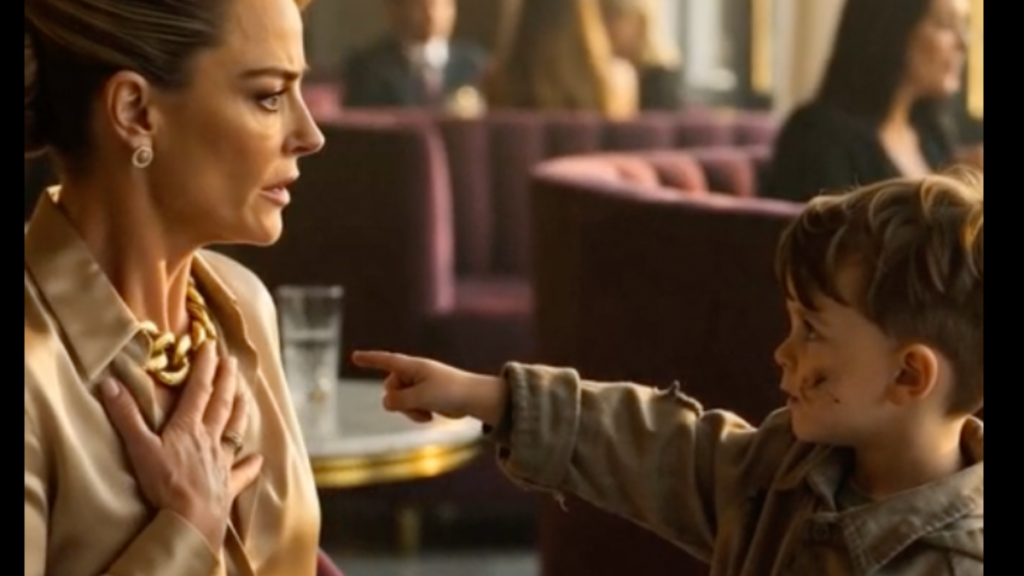
“Sweetheart?” Derek laughed softly. “You don’t like it?”

Maisie looked up.

For a moment, her brown eyes brightened.

Then they flicked toward Claire.

The brightness disappeared instantly.

“No, Daddy. It’s pretty.”

Derek frowned.

Because that wasn’t an answer.

Claire immediately stepped in.

“She isn’t feeling well today.”

Her tone was light.

Casual.

The same tone she used whenever anyone asked about Maisie.

Teachers.

Neighbors.

Family members.

Everyone always got the same answer.

She’s tired.

She’s sensitive.

She’s going through a phase.

She’s still processing grief.

Derek had heard every version.

At first, he’d believed them.

After all, losing a mother at three years old changes a child.

Everyone said so.

The therapists.

The books.

The support groups.

So when Maisie became quieter after Allison died, Derek assumed it was normal.

When she started eating less, he worried.

When she stopped wanting to play with other children, he worried more.

But Claire always had an explanation.

“She needs stability.”

“She gets overwhelmed.”

“She doesn’t do well with sugar.”

“She needs structure.”

And Claire seemed so confident when she said it.

So certain.

The kind of certainty exhausted people desperately cling to.

Especially single fathers trying to hold a broken family together.

Three years earlier, when Allison passed away after a sudden illness, Derek had barely survived the grief.

His real estate company was growing.

Projects were expanding.

Employees depended on him.

Investors depended on him.

And Maisie depended on him most of all.

Then Claire appeared.

Patient.

Organized.

Helpful.

She volunteered at church.

Remembered birthdays.

Brought casseroles when people were sick.

Everyone loved her.

Including Derek.

Eventually.

Now she was his wife.

And from the outside, their life looked perfect.

The beautiful house outside Savannah.

The successful business.

The charming stepmother.

The sweet little girl.

But lately…

something felt off.

Derek couldn’t explain it.

Only feel it.

Like a splinter buried too deep to see.

That night after the birthday party ended, Derek carried gifts upstairs while Claire cleaned the kitchen.

As he passed Maisie’s room, he noticed the light was still on.

He peeked inside.

His daughter sat cross-legged on the floor.

Still wearing her party dress.

Still awake.

A stuffed rabbit rested in her lap.

“Hey, bug.”

Maisie looked up immediately.

A smile appeared.

A real smile.

The kind Derek rarely saw anymore.

“Daddy.”

He sat beside her.

“You should be asleep.”

“I know.”

She leaned against his shoulder.

For a moment neither spoke.

Then Derek noticed how thin she felt.

Again.

He’d noticed it before.

But now it was impossible to ignore.

Her wrists seemed smaller.

Her cheeks less full.

Even her pajamas looked loose.

“Are you eating enough?”

Maisie froze.

The reaction lasted only a second.

But Derek saw it.

Then she forced a tiny smile.

“Yes.”

“Really?”

Another pause.

Then a tiny nod.

“Claire says I eat too much sometimes.”

Something twisted inside Derek’s chest.

“Too much?”

Maisie immediately looked nervous.

Like she’d said something wrong.

Then she lowered her voice.

“Never mind.”

Derek stared.

Because six-year-olds don’t say never mind like that.

Not unless they’re worried.

Then footsteps appeared in the hallway.

Maisie’s body instantly stiffened.

The bedroom door opened.

Claire smiled warmly.

“There you two are.”

The moment she entered, Maisie scooted away from Derek.

The movement was subtle.

But not subtle enough.

Claire looked between them.

Still smiling.

“Bedtime.”

Maisie immediately stood.

No argument.

No complaint.

No hesitation.

And somehow that bothered Derek even more.

Because children weren’t supposed to be that obedient.

Not all the time.

Not when nobody was looking.

As Claire walked Maisie toward the bathroom, Derek noticed something lying beneath the bed.

A piece of paper.

Mostly hidden.

Folded.

Forgotten.

Or maybe hidden on purpose.

After they left, he reached down and picked it up.

At first he thought it was a drawing.

Then he unfolded it.

And felt his stomach drop.

Because it wasn’t a drawing.

It was a list.

Written in careful six-year-old handwriting.

At the top were four words.

Things That Make Claire Mad.

And the first item read:

Telling Daddy the truth.

Derek stared at the paper.

His heart suddenly felt very heavy.

The list was written in purple crayon.

Letters backwards in places.

Words misspelled.

The unmistakable handwriting of a little girl.

But the contents weren’t childish.

They were frightening.

Things That Make Claire Mad.

  1. Telling Daddy the truth.
  2. Asking for Mommy.
  3. Crying at dinner.
  4. Saying my tummy hurts.
  5. Talking to Grandma.

Derek read the list again.

Then again.

His pulse beginning to quicken.

A chill crept up his spine.

Because children didn’t usually write things like this.

At least not six-year-olds.

Then footsteps returned.

Derek quickly folded the paper and slipped it into his pocket.

The bathroom door opened.

Claire appeared first.

Maisie behind her.

The little girl was already rubbing sleep from her eyes.

“Everything okay?” Claire asked.

Derek forced a smile.

“Of course.”

For a moment he thought Claire looked suspicious.

Then she smiled.

The same warm smile everyone loved.

The same smile that suddenly looked different.

The next morning Derek found himself watching.

Listening.

Paying attention in ways he hadn’t before.

Little things.

Tiny things.

The kinds of things easy to miss.

Maisie asking permission before speaking.

Maisie apologizing constantly.

Maisie flinching whenever Claire raised her voice—even slightly.

By lunchtime, Derek felt ridiculous.

Maybe he was overreacting.

Maybe grief had made him paranoid.

Maybe the list was nothing.

Children imagined things.

They exaggerated.

The logical part of him knew that.

Then his mother called.

“Derek.”

Her voice sounded hesitant.

“Can I ask you something?”

“Sure.”

A pause.

Then:

“Why don’t I see Maisie anymore?”

Derek frowned.

“What do you mean?”

Another pause.

Longer this time.

“She used to come over every Wednesday.”

His stomach tightened.

“Claire said you stopped wanting visitors.”

Silence.

Then his mother’s voice changed.

“Derek, I never said that.”

The room went quiet.

Very quiet.

He stared out his office window.

Traffic moving below.

People walking.

Normal life continuing.

Meanwhile something inside him began unraveling.

“She told me you thought Maisie needed routine.”

“No.”

“She said you didn’t want her having sleepovers.”

“No.”

“She said—”

“Derek.”

His mother interrupted softly.

“That’s not true.”

He couldn’t speak.

Because suddenly he remembered something.

Christmas.

Thanksgiving.

Birthdays.

The gradual distance.

The way Claire always seemed to have an explanation.

Always a reason.

Always a conflict.

And somehow everyone slowly disappeared.

Then his mother asked the question that made his blood run cold.

“When was the last time you were alone with your daughter?”

Derek opened his mouth.

Then stopped.

Because he honestly couldn’t remember.

The answer should have been easy.

But it wasn’t.

And somehow that terrified him more than anything.

That afternoon he left work early.

Not because he had evidence.

Not because he had proof.

Because for the first time in months…

he couldn’t shake the feeling that something was very wrong.

The house was quiet when he arrived.

Too quiet.

Claire’s car sat in the driveway.

The curtains were closed.

The front door was locked.

Derek let himself in.

“Claire?”

No answer.

“Maisie?”

Silence.

Then—

A sound.

Faint.

Very faint.

A cough.

Upstairs.

Derek froze.

Because it didn’t sound like a child with a cold.

It sounded weak.

Painfully weak.

He moved toward the staircase.

Slowly.

Listening.

Then he heard Claire’s voice.

Coming from the guest bedroom.

The room nobody used.

“Finish it.”

Silence.

Then Maisie’s tiny voice.

“I don’t want to.”

Claire’s voice hardened instantly.

“You know the rules.”

Derek’s stomach dropped.

He quietly climbed the stairs.

One step.

Then another.

The bedroom door was mostly closed.

Just enough for him to see inside.

And what he saw made his blood run cold.

Maisie sat on a small chair facing the wall.

A notebook balanced on her knees.

A glass of thick green liquid in her hands.

Tears running down her face.

Claire stood over her.

Watching.

Waiting.

Not comforting.

Not helping.

Watching.

Like a prison guard.

Then Claire spoke.

Coldly.

“You will finish every drop.”

Maisie shook her head.

“I feel sick.”

Claire stepped closer.

“You feel sick because you’re weak.”

The little girl started crying.

“Please.”

And then Derek heard the sentence that changed everything.

The sentence Claire thought nobody else would ever hear.

“Your mother made you weak too.”

The glass shattered against the floor.

Claire spun around.

Because Derek was standing in the doorway.

And for the first time since he’d known her…

his wife looked afraid.

The glass shattered against the floor.

Claire spun around.

Because Derek was standing in the doorway.

And for the first time since he’d known her…

his wife looked afraid.

Not surprised.

Afraid.

The room went completely silent.

Green liquid spread across the hardwood floor.

Maisie sat frozen in the chair.

Tears still running down her cheeks.

The notebook slipped from her lap.

Claire recovered first.

She always did.

“Derek.”

Her smile appeared instantly.

Too instantly.

The same practiced smile he’d trusted for three years.

“You’re home early.”

Derek looked at his daughter.

Really looked at her.

The pale skin.

The dark circles beneath her eyes.

The trembling hands.

Then he looked at the chair.

Positioned facing the wall.

Then the notebook.

Then the glass.

“What is this?”

Claire laughed nervously.

“A nutrition exercise.”

The answer sounded ridiculous the moment she said it.

Even she seemed to know it.

Then Derek stepped into the room.

Maisie’s eyes immediately filled with hope.

Pure hope.

The kind children only show when they believe they’re finally safe.

“Daddy.”

The single word nearly broke him.

He crouched beside her.

“Sweetheart.”

His voice cracked.

“When was the last time you ate lunch?”

Maisie looked toward Claire.

Instinctively.

Fearfully.

Then back at her father.

And that hesitation told him everything.

Everything.

Derek slowly stood.

His expression changed.

Claire noticed immediately.

Because suddenly he wasn’t confused anymore.

He wasn’t questioning.

He knew.

Maybe not everything.

But enough.

Then Claire made a mistake.

A huge mistake.

She reached for Maisie’s arm.

Trying to move her behind her.

Trying to control the situation.

And Maisie flinched.

Hard.

Like she’d been struck.

The room froze.

Claire immediately pulled her hand back.

But it was too late.

Way too late.

Because Derek saw it.

The reflex.

The terror.

The conditioning.

And something inside him snapped.

“Don’t.”

His voice was calm.

Dangerously calm.

Claire took a step backward.

“Derek, you’re misunderstanding—”

“Don’t.”

This time louder.

Claire stopped speaking.

Because she’d never heard that tone before.

Then Derek picked up the notebook from the floor.

The one he’d seen earlier.

The one with the list.

His eyes moved across the pages.

Then he turned another.

And another.

And another.

His stomach dropped.

Because there weren’t five items.

There were dozens.

Pages and pages.

Things That Make Claire Mad.

Asking for seconds.

Talking about Mommy.

Telling Daddy my stomach hurts.

Saying I’m hungry.

Asking to call Grandma.

Wetting the bed.

Being sick.

Crying after medicine.

Derek felt physically ill.

Then he reached the last page.

And stopped breathing.

Because this page wasn’t a list.

It was a diary entry.

Written in childish handwriting.

A date.

Three weeks earlier.

The entry read:

Today Claire said Daddy loves her more than me now.

The room blurred.

For a moment Derek couldn’t see.

Couldn’t think.

Couldn’t process what he was reading.

Then he flipped the page.

Another entry.

Today Claire said Mommy left because I was bad.

The world stopped.

Completely.

Because Allison had been dead three years.

And somebody had been poisoning her memory.

Then Derek looked up.

At the woman he married.

The woman he’d trusted with his daughter.

And for the first time…

he realized he didn’t know her at all.

Then Claire did something unexpected.

She started crying.

Big tears.

Convincing tears.

The kind that work on most people.

The kind that had probably worked on Derek before.

“I was trying to help her.”

The words echoed through the room.

Derek just stared.

Then Claire pointed toward Maisie.

“She’s manipulative.”

The room froze.

Because she was talking about a six-year-old.

A six-year-old.

Then Claire continued.

“She lies.”

Another step backward.

Another tear.

“She turns people against me.”

Derek looked at his daughter.

Tiny.

Fragile.

Terrified.

Then back at Claire.

And suddenly the performance wasn’t working anymore.

Because the target was too small.

Too innocent.

Too obviously a child.

Then Maisie whispered something.

So quietly that neither adult almost heard it.

“Daddy?”

Derek immediately knelt beside her.

“What is it?”

The little girl looked terrified.

Like speaking itself was dangerous.

Then she reached beneath the mattress in the corner of the room.

And pulled out a small paper bag.

The room froze.

Because whatever was inside made Claire go completely white.

Not pale.

White.

Then Maisie held it out.

With shaking hands.

And whispered:

“These are the vitamins she makes me take.”

Derek opened the bag.

And immediately felt his blood run cold.

Because the bottle inside didn’t contain vitamins.

And according to the prescription label…

they weren’t prescribed to Maisie at all.

They were prescribed to Claire.

Derek stared at the bottle.

For a moment, his brain refused to process what he was seeing.

The label was clear.

Claire Henderson.

Not Maisie Caldwell.

Claire.

His wife.

The prescription had been filled two weeks ago.

The bottle was half empty.

His hand began shaking.

“What is this?”

Claire immediately stepped forward.

“It’s not what you think.”

The answer came too fast.

Too rehearsed.

Derek looked down again.

Then at the medication name.

He wasn’t a doctor.

But he recognized enough to know one thing.

It wasn’t a vitamin.

It wasn’t a supplement.

And it absolutely wasn’t intended for a six-year-old child.

Then he noticed something else.

The dosage.

His stomach dropped.

Because several pills were missing.

Far more than Claire should have taken herself.

The room went silent.

Then Maisie quietly spoke.

“I don’t like them.”

Derek immediately turned toward her.

His voice softened.

“Sweetheart…”

The little girl started crying.

The kind of crying she’d apparently been holding back for months.

“She says they help me be good.”

The world stopped.

Claire took another step forward.

“She’s confused.”

“Stop talking.”

The words exploded out of Derek before he could stop them.

Claire froze.

Because she’d never heard him raise his voice.

Not once.

Then Maisie looked at him.

Really looked at him.

And suddenly the fear in her eyes began changing.

Into relief.

Tiny.

Fragile.

Relief.

Then she whispered:

“I tried to tell you.”

Derek felt like someone had punched him.

Because he remembered.

So many moments.

Little moments.

The things he’d ignored.

The comments.

The stomach aches.

The exhaustion.

The way she always seemed afraid to speak when Claire entered the room.

Then Maisie reached beneath the mattress again.

Claire lunged forward.

“No!”

Everyone froze.

Because it was the first honest reaction Claire had shown all day.

Panic.

Real panic.

Derek grabbed the second item before she could reach it.

A folder.

Thin.

Worn.

Stuffed with papers.

His stomach twisted.

Then he opened it.

The first page was from Maisie’s preschool.

Attendance reports.

Teacher notes.

Emails.

Derek frowned.

Because according to Claire…

Maisie had missed school because she was constantly sick.

Yet the notes told a different story.

Repeated requests for meetings.

Concerns about weight loss.

Concerns about fatigue.

Concerns about behavioral changes.

Concerns that had apparently never reached him.

The room began spinning.

Then he noticed something.

The emails had responses attached.

Responses sent from his account.

Except he never wrote them.

Never saw them.

Never even knew they existed.

Claire had answered every message.

Using his email.

Deleting them afterward.

The realization hit him like a truck.

Isolation.

Control.

The medicine.

The lies.

The school.

His mother.

Everything.

Then he reached the last page.

And all the color drained from his face.

It was a report from Maisie’s pediatrician.

Six months old.

A recommendation for further testing.

Immediate testing.

The doctor had documented unexplained lethargy.

Weight loss.

Frequent stomach complaints.

The note ended with one sentence highlighted in yellow.

Recommend child not be left unsupervised with current caregiver until evaluation is completed.

Derek stopped breathing.

The report had been addressed directly to him.

But he’d never seen it.

Never once.

Slowly.

Very slowly.

He looked up.

At Claire.

The woman standing in the middle of the room.

The woman he’d brought into his home.

The woman who had spent three years convincing him she was saving his daughter.

Then his phone rang.

Nobody moved.

Nobody spoke.

The screen lit up.

The caller ID made Claire’s face go completely white.

Because it wasn’t a friend.

It wasn’t family.

It wasn’t work.

It was Savannah Children’s Protective Services.

And judging by the expression on Claire’s face…

she already knew exactly why they were calling.

The screen lit up.

The caller ID made Claire’s face go completely white.

Because it wasn’t a friend.

It wasn’t family.

It wasn’t work.

It was Savannah Children’s Protective Services.

And judging by the expression on Claire’s face…

she already knew exactly why they were calling.

Derek answered.

Immediately.

“Hello?”

The room was silent.

The voice on the other end sounded professional.

Careful.

Concerned.

“Mr. Caldwell?”

“Yes.”

“My name is Rebecca Martin. I’m a caseworker with Children’s Protective Services.”

Derek’s stomach dropped.

He looked at Maisie.

Then at Claire.

Then back at the floor.

“How can I help you?”

A pause.

Then:

“We’ve been attempting to contact you for several months.”

The room froze.

Several months.

Derek slowly turned toward Claire.

Her face had lost every bit of color.

The caseworker continued.

“We received multiple reports regarding concerns for your daughter.”

The room felt smaller.

Much smaller.

Derek’s grip tightened on the phone.

“What kind of concerns?”

Another pause.

Then:

“Possible medical neglect. Nutritional concerns. Isolation from family members. Reports from school staff and a physician.”

The room spun.

Because suddenly all the pieces fit together.

The emails.

The doctor.

The school.

His mother.

Every single person had tried to reach him.

And somehow none of them had.

Then the caseworker asked a question.

One simple question.

“Mr. Caldwell, are you currently with your daughter?”

Derek looked at Maisie.

Curled up on the chair.

Terrified.

Tiny.

Far too thin.

“Yes.”

The caseworker exhaled audibly.

A sound of relief.

Actual relief.

Then she quietly said:

“Please don’t leave her alone.”

The room went silent.

Because suddenly this wasn’t suspicion anymore.

This wasn’t concern.

This was urgency.

Then Derek heard movement.

Behind him.

He turned.

Claire was gone.

The bedroom door stood open.

The hallway empty.

For a second nobody moved.

Then Derek heard footsteps.

Fast.

Running.

Toward the stairs.

Claire.

Trying to leave.

Something inside him snapped.

“Stay here.”

He handed the phone to speaker mode and rushed into the hallway.

The front door slammed downstairs.

Derek flew down the staircase.

Taking two steps at a time.

By the time he reached the foyer, Claire was already halfway across the driveway.

Running.

Actually running.

Toward her car.

The sight stunned him.

Because innocent people don’t run.

Not like that.

Then Claire yanked open the driver’s door.

Derek sprinted after her.

“Claire!”

She looked back once.

Only once.

And the expression on her face terrified him.

Not guilt.

Not shame.

Hatred.

Pure hatred.

The kind that had apparently been hiding beneath the smiles for years.

Then she screamed:

“You ruined everything!”

The words echoed through the neighborhood.

Neighbors opened doors.

Curtains shifted.

People began watching.

Claire jumped into the car.

The engine roared to life.

Then she threw the vehicle into reverse.

And almost hit Derek.

The tires screamed.

The car shot backward.

Then sped down the street.

Gone.

The entire chase lasted less than ten seconds.

Derek stood frozen in the driveway.

Breathing hard.

Trying to understand what had just happened.

Then he heard a tiny voice.

“Daddy?”

He spun around.

Maisie stood in the doorway.

Holding her stuffed rabbit.

Looking impossibly small.

And suddenly none of it mattered.

Not Claire.

Not the car.

Not the lies.

Not the police.

Not CPS.

Nothing.

He crossed the yard and dropped to his knees.

Immediately.

Maisie ran into his arms.

The little girl clung to him so tightly it hurt.

And for the first time…

she wasn’t holding back her tears.

She sobbed.

Huge shaking sobs.

Months of fear pouring out all at once.

Derek held her.

Tighter.

And tighter.

Then she whispered something into his shoulder.

Something so quiet he almost didn’t hear it.

“She’s not the first one.”

Derek froze.

The world stopped.

Slowly he pulled back.

“What?”

Maisie’s face crumpled.

Fresh tears appeared.

Then she pointed toward the house.

Toward Claire’s office.

Toward the one room Claire always kept locked.

And whispered:

“The other little girl.”

Every drop of blood drained from Derek’s face.

Because suddenly this story wasn’t over.

Not even close.

Every drop of blood drained from Derek’s face.

Because suddenly this story wasn’t over.

Not even close.

He stared at Maisie.

“The other little girl?”

Maisie nodded.

Slowly.

Tears still rolling down her cheeks.

Derek’s heart began hammering.

“What other little girl?”

The child looked toward the house.

Toward Claire’s office.

The one room she never allowed anyone inside.

Then Maisie whispered:

“The one in the pictures.”

The world stopped.

For a second Derek couldn’t breathe.

Pictures.

What pictures?

Then Maisie grabbed his hand.

“She gets mad if I talk about her.”

A chill ran through his body.

“Daddy…”

Her voice shook.

“Is she okay?”

The question hit him like a truck.

Because whatever this was…

Maisie believed another child had been hurt.

And she was worried about her.

Then Derek stood.

Immediately.

“Come with me.”

The caseworker was still speaking through the phone lying on the porch.

Police had already been dispatched.

They were on the way.

But Derek couldn’t wait.

Not now.

Not after everything he’d discovered.

He picked Maisie up and carried her inside.

Straight toward Claire’s office.

The locked door sat at the end of the hallway.

Ordinary.

Unremarkable.

The same door he’d passed a thousand times.

The same door Claire always kept closed.

“I keep client files in there.”

That was her explanation.

Every time.

And he’d accepted it.

Every time.

Now he felt sick thinking about it.

Derek tried the handle.

Locked.

Of course.

Then Maisie pointed toward a small ceramic vase sitting on a bookshelf nearby.

“The key is there.”

Derek froze.

Because she knew.

She knew exactly where Claire hid it.

Which meant this wasn’t new.

This had been happening for a long time.

He lifted the vase.

A key fell into his hand.

The lock clicked.

The door opened.

And the room beyond made his stomach drop.

The walls were covered with photographs.

Hundreds of them.

Not family photos.

Not vacation photos.

Children.

Little girls.

Everywhere.

Photographs pinned to bulletin boards.

Photographs taped to walls.

Photographs organized in binders.

Derek stopped breathing.

Maisie buried her face in his shoulder.

Because she’d seen it before.

Many times.

Then he noticed something even stranger.

Most of the photos had notes attached.

Handwritten notes.

Ages.

Birthdays.

Medical information.

School names.

Favorite foods.

Family details.

The room looked less like an office.

And more like an obsession.

Then Derek spotted one photograph.

Larger than the others.

Framed.

Displayed on Claire’s desk.

His heart nearly stopped.

Because the little girl looked almost exactly like Maisie.

Same brown eyes.

Same smile.

Same age.

Yet Derek had never seen her before.

Then he noticed the date.

Three years ago.

Just weeks before Claire met him.

A knock echoed from downstairs.

Police.

They’d arrived.

But Derek couldn’t move.

Because sitting beside the photograph was a folder.

And written across the tab in neat black letters were two words:

Project Maisie

The room went silent.

Completely silent.

Slowly Derek opened the folder.

The first page made him physically stagger.

Because it wasn’t about parenting.

Or routines.

Or nutrition.

It was about Allison.

His first wife.

The woman he lost.

The woman Claire never met.

Except apparently…

she had been researching Allison long before they were introduced.

Long before their first date.

Long before they “accidentally” met at church.

Long before everything.

Then Derek turned the page.

And found a photograph.

An old one.

Taken nearly four years ago.

Allison was sitting at a playground.

Maisie was beside her.

Laughing.

Alive.

Happy.

Unaware.

And standing in the background…

watching them…

was Claire.

The picture had been taken almost a year before Allison died.

And underneath it, in Claire’s handwriting, were six words that made Derek’s blood run cold:

Finally found the perfect family.

The photograph slipped from Derek’s fingers.

For a moment, the room spun around him.

Because the date in the corner was unmistakable.

Eleven months before Allison died.

Eleven months before Claire entered their lives.

Eleven months before the first church picnic.

The first coffee.

The first conversation.

The first “chance” meeting.

None of it had been chance.

The realization made him sick.

Then police officers appeared in the doorway.

One look at the walls and their expressions changed immediately.

“Derek…”

One of them stepped forward slowly.

“What exactly are we looking at?”

Derek couldn’t answer.

Because he was still staring at the photograph.

Still staring at Claire.

Standing in the background.

Watching his wife.

Watching his daughter.

Almost smiling.

Then he opened the next page.

And his knees nearly gave out.

It was a timeline.

Detailed.

Meticulous.

Years long.

Every major event in his family’s life documented.

His business expansion.

Their move into the Savannah house.

Maisie’s preschool enrollment.

Allison’s volunteer schedule.

Medical appointments.

Travel plans.

Everything.

The earliest entry was dated nearly five years ago.

Two years before Allison died.

The room fell silent.

Because suddenly this wasn’t obsession.

It was surveillance.

Then one of the officers carefully opened another binder.

His face immediately drained of color.

“Derek.”

The tone made everyone look up.

The binder contained police reports.

Missing child reports.

Dozens of them.

The photographs from the walls.

The girls.

They all had names.

And every one of them had vanished years earlier.

Not recently.

Years earlier.

Then Derek noticed something horrifying.

The girl in the framed photograph.

The one who looked like Maisie.

Her name was Emma.

Missing at age six.

Eight years ago.

Never found.

The room went cold.

Then the officer slowly turned another page.

And froze.

Completely.

“What is it?”

The officer swallowed hard.

Then turned the binder around.

The photograph inside showed a younger Claire.

Much younger.

Standing beside a little girl.

Holding her hand.

Smiling.

Like a mother.

The caption underneath read:

Emma – age 5.

The room stopped.

Because suddenly the missing girl wasn’t random.

She wasn’t a stranger.

She belonged to Claire.

Then came the next page.

A newspaper clipping.

Small.

Yellowed.

Nearly forgotten.

The headline read:

Local Woman Loses Daughter During Park Visit

Claire’s photograph sat beside the article.

Twenty-seven years old.

Crying.

Heartbroken.

Devastated.

The entire city had searched for Emma.

The child was never found.

Then Derek noticed something handwritten beneath the article.

Claire’s handwriting.

The same handwriting from the folder.

The same handwriting from the notes.

The same handwriting that had been poisoning his daughter for years.

Three words.

Three horrifying words.

I found her.

Nobody moved.

Nobody breathed.

Then another officer opened a locked drawer in the desk.

Inside sat dozens of cassette tapes.

Home videos.

Labeled carefully.

Emma.

Emma age 4.

Emma birthday.

Emma Christmas.

Emma school play.

The officer looked sick.

Because suddenly the room wasn’t an office.

It was a shrine.

Then Derek spotted one final folder.

Unlike the others, this one wasn’t labeled with a child’s name.

It had his name.

Derek Caldwell

His hands trembled as he opened it.

The first page was a letter.

Addressed to Claire.

Written by someone else.

A doctor.

The letter was dated six years earlier.

Before Allison died.

Before Claire met him.

Before any of this began.

Derek began reading.

Then stopped breathing.

Because the first sentence read:

Claire, if you are reading this, it means you have stopped treatment again.

The room froze.

Then he continued.

You continue to insist that your daughter Emma survived despite overwhelming evidence to the contrary.

A chill swept through the room.

Your fixation on finding replacement attachments has become increasingly dangerous.

The paper slipped from Derek’s hands.

The officers stared.

The caseworker who had just arrived stared.

Everyone stared.

Because suddenly they understood.

Claire hadn’t chosen Maisie randomly.

She believed Maisie was Emma.

Or a replacement for Emma.

Or something close enough to become an obsession.

Then one of the officers received a call on his radio.

His expression immediately changed.

“What is it?”

The officer looked up.

Completely pale.

Then whispered:

“We found Claire.”

The room froze.

“Where?”

A pause.

Then:

“At Allison’s grave.”

And suddenly every person in the room realized the same thing.

Claire hadn’t run.

She’d gone back to the beginning.

To the woman she believed stood in the way of the family she’d spent years trying to steal.

The room froze.

“At Allison’s grave.”

Nobody moved.

For a moment, Derek simply stared.

Because of all the places Claire could have gone…

she chose there.

The cemetery.

The woman she’d spent years trying to replace.

The woman whose life she’d slowly erased from photographs, stories, and memories.

Then Derek was already moving.

Out the door.

Down the hallway.

Across the lawn.

One of the officers shouted after him.

“Derek, wait!”

He didn’t.

The cemetery sat fifteen minutes away.

And it felt like the longest drive of his life.

Rain had begun falling by the time they arrived.

Gray clouds hung low above Savannah.

Thunder rumbled somewhere in the distance.

The police cars pulled in behind him.

But Derek was already running.

Past rows of headstones.

Past oak trees draped in Spanish moss.

Toward the hill where Allison was buried.

Then he saw her.

Claire.

Kneeling in the grass.

Soaked by rain.

Motionless.

The officers slowed.

Nobody spoke.

Because suddenly she didn’t look dangerous.

She looked broken.

Completely broken.

Then Derek noticed something beside her.

A photograph.

Framed.

Protected in plastic.

The picture of Allison and Maisie from the playground.

The same one from Claire’s office.

The one she’d apparently carried with her.

Then Claire looked up.

And for the first time all day…

she wasn’t pretending.

No smile.

No performance.

No excuses.

Only exhaustion.

“You found the room.”

Derek stopped several feet away.

The rain soaked through his shirt.

“I found everything.”

Claire nodded slowly.

As though she’d expected nothing less.

Then she looked at Allison’s headstone.

And whispered:

“I hated her.”

The officers exchanged glances.

Derek felt cold.

Not because of the rain.

Because she said it so casually.

So honestly.

Then Claire surprised everyone.

“I hated her because she got what I wanted.”

The cemetery fell silent.

Claire’s eyes filled with tears.

Not manipulative tears.

Real ones.

Painful ones.

Then she looked toward the name carved into the stone.

ALLISON CALDWELL

Beloved Wife and Mother

“I spent years trying to save Emma.”

Her voice cracked.

“Years.”

The rain continued falling.

Nobody interrupted.

Then Claire laughed softly.

The saddest laugh Derek had ever heard.

“Eventually everyone stopped searching.”

A pause.

“Everyone except me.”

The officers listened quietly.

Because suddenly this wasn’t a mystery anymore.

It was a tragedy.

Then Claire looked at Derek.

“I saw Allison at a grocery store.”

The room went silent.

“Years ago.”

A pause.

“She was holding Maisie’s hand.”

Another.

“And I couldn’t stop staring.”

Derek felt sick.

Because he already knew where this was going.

Then Claire whispered:

“They looked happy.”

The words shattered.

Like glass.

Like grief.

Like a woman who’d spent years watching life continue without her.

Then she looked down at the photograph.

“I told myself I was just curious.”

The rain ran down her face.

Mixed with tears.

“I told myself I’d leave them alone.”

Another pause.

Then:

“But I kept coming back.”

Nobody spoke.

Because everyone knew the rest.

The watching.

The obsession.

The planning.

The replacement.

Then Claire reached into her coat.

The officers immediately tensed.

But she only removed a folded envelope.

Old.

Worn.

Addressed to Derek.

She held it out.

With trembling hands.

“What is it?”

Claire looked away.

Toward Allison’s grave.

Then whispered:

“The thing I should have given you three years ago.”

Derek took it.

Slowly.

Carefully.

The envelope already felt wrong.

Then he opened it.

And the world stopped.

Because the letter wasn’t from Claire.

It was from Allison.

Written weeks before she died.

Derek’s hands began shaking.

The first line made his knees nearly buckle.

Derek, if you’re reading this, something happened to me before I could tell you the truth.

The rain seemed to disappear.

The cemetery disappeared.

Everything disappeared.

Then he reached the next sentence.

And all the color drained from his face.

Because Allison wrote:

Claire wasn’t a stranger when she approached me.

The world stopped.

Again.

Then came the final twist.

The twist that explained everything.

She was Emma’s biological mother.

Derek stared.

Confused.

Impossible.

Then he kept reading.

And suddenly understood.

Years before Allison met Derek…

she had volunteered at a children’s hospital.

Years before Emma disappeared.

Years before Claire lost her daughter.

And according to Allison’s letter…

Emma had never disappeared from that park.

She had been abducted.

The case had been mishandled.

Evidence had been ignored.

And Allison had spent years quietly helping Claire search.

The two women had known each other.

Trusted each other.

Grieved together.

Until grief eventually turned into obsession.

Then Derek reached the final line of Allison’s letter.

The line that made Claire begin sobbing beside the grave.

If Claire ever finds this letter, tell her I never stopped looking for Emma either.

The cemetery fell silent.

Because suddenly nobody was the villain they thought they were.

Nobody.

There was only loss.

Only grief.

And a little girl named Emma whose fate remained unknown.

Then one of the officers received a call.

He answered.

Listened.

And slowly looked up.

His face completely white.

“What is it?”

The officer swallowed hard.

Then whispered:

“We just got a hit from the national missing persons database.”

Everyone froze.

The rain continued falling.

Then the officer looked directly at Claire.

And said:

“They found Emma.”

The cemetery fell silent.

Because suddenly nobody was the villain they thought they were.

Nobody.

There was only loss.

Only grief.

And a little girl named Emma whose fate remained unknown.

Then one of the officers received a call.

He answered.

Listened.

And slowly looked up.

His face completely white.

“What is it?”

The rain continued falling.

Then the officer looked directly at Claire.

And said:

“They found Emma.”

Nobody moved.

Nobody breathed.

Claire stared.

The words didn’t seem real.

Not after eleven years.

Not after thousands of flyers.

Hundreds of tips.

Countless dead ends.

Not after she’d buried the possibility in her mind a thousand different times.

Then she laughed.

A tiny, broken laugh.

The sound of someone protecting themselves from hope.

“No.”

The officer nodded.

“We believe she’s alive.”

Claire’s knees gave out.

She collapsed into the wet grass.

The photograph slipping from her fingers.

The rain soaking through her clothes.

Nobody helped her up.

Because nobody knew what to do.

Then the officer continued.

“A woman in Colorado submitted DNA through a genealogy database six months ago.”

The cemetery remained silent.

“The match wasn’t immediate.”

A pause.

“Until Emma’s case was digitized last week.”

Claire couldn’t speak.

Couldn’t move.

Couldn’t think.

Then she whispered:

“How?”

The officer swallowed.

Then answered softly.

“We think she was raised under a different name.”

The world stopped.

Because suddenly eleven years wasn’t empty.

Emma had lived.

Grown up.

Gone to school.

Made friends.

Celebrated birthdays.

All while her mother searched.

Then Claire began sobbing.

The kind of sobbing that comes from a wound finally being touched after years.

Then Derek looked down at Allison’s letter.

Still clutched in his hand.

And suddenly understood something.

The story he thought was ending…

had never really been about Claire.

Or Allison.

Or himself.

It had always been about Emma.

Then the officer’s phone rang again.

Everyone froze.

The officer answered.

Listened.

Then looked up.

Completely stunned.

“What now?” another officer asked.

The man swallowed hard.

Then turned toward Claire.

“She’s on her way.”

The cemetery stopped.

“What?”

The officer looked almost as shocked as everyone else.

“The DNA match was confirmed yesterday.”

A pause.

“She got on a plane this morning.”

Claire stared.

Unable to process the words.

Then:

“She knows?”

The officer nodded.

“She knows.”

The rain continued falling.

Nobody noticed anymore.

Then another car appeared at the cemetery entrance.

Not a police car.

Not an official vehicle.

A rideshare.

The driver stopped beside the gate.

The engine shut off.

The door opened.

Everyone turned.

A young woman stepped out.

Twenty-two years old.

Brown hair.

Gray sweater.

Hands shaking.

She looked around the cemetery.

Lost.

Terrified.

Then her eyes landed on Claire.

And the world stopped.

Because despite eleven years…

despite growing up somewhere else…

despite a different name…

she had Claire’s eyes.

Exactly.

The young woman began crying immediately.

Not because she was certain.

Because she wasn’t.

Not completely.

She’d spent twenty-two years believing another family was hers.

Then one DNA test changed everything.

Slowly she walked forward.

Step by step.

The cemetery silent around her.

Claire couldn’t stand.

Couldn’t move.

Couldn’t breathe.

Then the young woman stopped a few feet away.

Tears streaming down her face.

And whispered:

“Mom?”

Claire broke.

Completely.

The years.

The grief.

The obsession.

The guilt.

The searching.

Everything shattered.

Then she threw her arms around the daughter she’d spent eleven years trying to find.

And for the first time since Emma disappeared…

she wasn’t searching anymore.

She was home.

Derek looked down at Allison’s grave.

At the woman who’d tried to help both of them.

At the letter she’d left behind.

Then he smiled through tears.

Because somehow…

even after death…

Allison had still managed to bring a family back together.

And for the first time in years…

the story wasn’t ending with loss.

It was ending with someone finally being found.
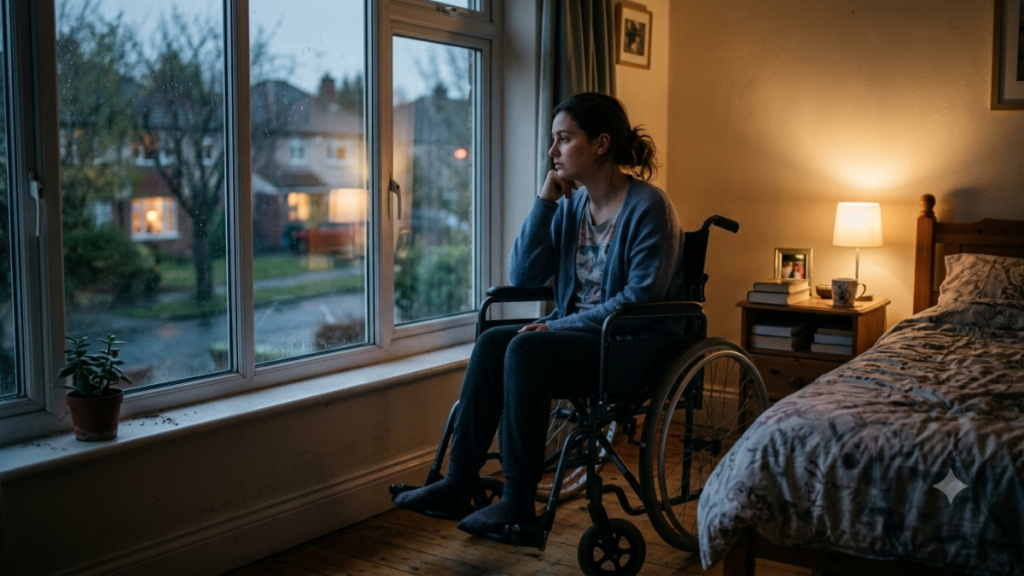
“Let Me Dance With Her,” A Barefoot Boy Said At A Billionaire’s Charity Gala—Not Knowing The Girl In The Wheelchair Hadn’t Stood Up Since The Night Her Mother Left… Until He Whispered, “I Can Help Her Stand”

Three months before the charity gala, Eleanor Whitaker hadn’t left the east wing of Whitaker Manor in twenty-one days.

The staff noticed.

The nurses noticed.

Her father definitely noticed.

But nobody knew what to do about it anymore.

At twenty-three, Eleanor had become a ghost inside her own home.

Not because of her wheelchair.

Not really.

The wheelchair was only what people saw.

The real problem lived somewhere much deeper.

Somewhere nobody could reach.

The sprawling estate overlooked Boston Harbor from a hill lined with ancient oak trees and iron gates. It was beautiful in the way expensive things often are—perfectly maintained, carefully curated, impressive from every angle.

And painfully lonely.

Eleanor spent most mornings in the sunroom.

Most afternoons in the library.

Most evenings staring out the same harbor-facing window her mother used to love.

The pattern never changed.

The conversations never changed.

The silence never changed.

Then one rainy Tuesday afternoon, her father arrived home early.

William Whitaker rarely came home early.

Billion-dollar companies didn’t leave much room for afternoons.

Yet there he was.

Standing in the library doorway.

Watching his daughter pretend to read a book she hadn’t turned a page of in nearly an hour.

“Eleanor.”

She looked up.

Managed a small smile.

“Hi, Dad.”

William crossed the room.

Then sat beside her.

Neither spoke immediately.

Because some silences become familiar after enough years.

Then he finally asked:

“Do you remember what today is?”

Eleanor’s expression changed.

Just slightly.

Then she looked away.

The answer told him everything.

Of course she remembered.

It was impossible not to.

Six years ago.

The exact day.

The exact hour.

The exact moment her mother left.

Not died.

Left.

One suitcase.

One note.

One goodbye.

Then nothing.

No phone calls.

No birthday cards.

No explanation that ever made sense.

Just absence.

The kind that settles into a person and never completely leaves.

William immediately regretted asking.

Because Eleanor’s eyes had already drifted toward the window.

Toward somewhere far away.

Then she quietly said:

“She promised she’d come back.”

The words hit him like they always did.

Because after six years…

his daughter still believed it.

Some part of her anyway.

Then William looked down.

At the blanket covering her legs.

At the wheelchair.

At the life that had frozen the same night her mother disappeared.

The doctors called it trauma.

Conversion disorder.

Psychological paralysis.

A mind protecting itself by shutting something down.

At first everyone thought it would pass.

Then weeks became months.

Months became years.

And eventually people stopped saying things like “when she walks again.”

They started saying “if.”

Then William noticed something.

A sketchbook resting on the side table.

Open.

Eleanor immediately tried to close it.

Too late.

He’d already seen.

A drawing.

Another one.

The same drawing she’d made hundreds of times.

A woman standing beside the ocean.

Walking away.

William’s chest tightened.

Because after six years…

his daughter was still drawing the same goodbye.

Then Eleanor quietly asked:

“Do you think she ever thinks about me?”

The room went silent.

Because some questions don’t have good answers.

And some fathers would rather face bankruptcy than that look in their daughter’s eyes.

Then William smiled.

Not because he felt hopeful.

Because she needed him to.

“Every day.”

Eleanor nodded.

Like she wanted to believe him.

Then looked back out the window.

And neither of them noticed the small flyer tucked beneath the sketchbook.

The flyer that had arrived in the mail that morning.

The one announcing the Whitaker Children’s Foundation Charity Gala.

The event that would bring hundreds of guests together beneath crystal chandeliers.

The event Eleanor had no intention of attending.

And the event where a barefoot boy was already unknowingly walking toward her life.

The event that would bring hundreds of guests together beneath crystal chandeliers.

The event Eleanor had no intention of attending.

And the event where a barefoot boy was already unknowingly walking toward her life.

Three weeks later, Eleanor was still refusing.

“No.”

William sighed.

“Eleanor.”

“No.”

The answer came before he finished the sentence.

The charity gala invitation sat between them on the breakfast table.

Untouched.

Ignored.

Exactly like the dozen before it.

William rubbed his forehead.

The last few years had taught him that pushing rarely worked.

Still.

He had to try.

“It’s one evening.”

Eleanor stared into her coffee.

“I know.”

“Then come.”

Silence.

Then:

“I don’t want people looking at me.”

The words were quiet.

Honest.

Painfully honest.

William’s heart sank.

Because she wasn’t wrong.

People always looked.

Not cruelly.

Not usually.

But they looked.

Some with pity.

Some with curiosity.

Some with that unbearable expression people wear when they think they’re being kind.

Then Eleanor quietly added:

“They always ask the same questions.”

William knew.

How are you feeling?

Are you making progress?

Have you tried this doctor?

This therapist?

This treatment?

Every conversation eventually circled back to the chair.

Never to her.

Always to the chair.

Then Eleanor pushed back from the table.

“I’m tired, Dad.”

The conversation was over.

William watched her wheel herself toward the doorway.

Then she stopped.

Without turning around.

And softly said:

“You don’t have to keep pretending.”

The room went silent.

William froze.

Because he knew exactly what she meant.

Then Eleanor whispered:

“I heard the doctor.”

His stomach dropped.

Three weeks earlier.

A specialist from New York.

One more expert.

One more opinion.

One more hopeful possibility.

William remembered standing in the hallway afterward.

Thinking Eleanor couldn’t hear.

The doctor had been kind.

Gentle.

Professional.

But the message was devastating.

“I don’t think her legs are the problem.”

Then:

“I think she’s waiting for something.”

William closed his eyes.

Because the doctor was right.

Everyone knew he was right.

The question was what.

Then Eleanor quietly finished the thought herself.

“She’s not coming back.”

The words echoed through the dining room.

Then she disappeared down the hallway.

Leaving her father alone.

Again.

That night William sat in his office long after midnight.

The harbor lights shimmered beyond the windows.

Financial reports sat unopened.

Emails unanswered.

Nothing seemed important.

Then his eyes landed on an old photograph.

The picture had been taken eleven years earlier.

A beach vacation.

Eleanor was twelve.

Laughing.

Running through the surf.

Her mother chasing her.

Both barefoot.

Both smiling.

William picked up the frame.

And felt something break inside him.

Because he couldn’t remember the last time he’d seen his daughter laugh like that.

Then he noticed movement outside.

The groundskeeper.

An older man named Frank.

Finishing up for the evening.

Beside him walked a skinny teenage boy William had never seen before.

The kid couldn’t have been older than fourteen.

Dark hair.

Oversized clothes.

No shoes.

The boy was carrying tools.

Helping.

Talking.

Laughing.

William frowned.

Then watched something strange happen.

Frank pointed toward the mansion.

Toward one of the lit windows upstairs.

Eleanor’s window.

The boy looked up.

Studied it.

Then asked something.

Frank answered.

The boy’s smile disappeared.

Then he looked back toward the window.

A long time.

Longer than seemed normal.

Then the two disappeared into the darkness.

William thought nothing of it.

At the time.

But two weeks later…

he would see that same barefoot boy standing beneath a crystal chandelier.

Asking a question that would bring an entire ballroom to a stop.

And before the night was over…

his daughter would hear something she hadn’t heard in six years.

Hope.

Hope.

It arrived in the strangest way possible.

Through a boy who owned almost nothing.

The night of the gala arrived cold and clear.

Boston glittered beneath thousands of lights.

Limousines lined the entrance.

Reporters gathered outside.

Photographers called names.

Inside, the ballroom shimmered beneath layers of crystal chandeliers, because every surface—from the polished marble floors to the towering glass windows—had been designed to reflect wealth, elegance, and a kind of perfection that most people only ever witnessed from a distance.

Guests in tailored tuxedos and flowing evening gowns moved in quiet patterns across the room while soft orchestral music drifted through the air.

At the center of it all sat Eleanor Whitaker.

Beautiful.

Elegant.

And completely alone.

William stood across the room speaking with investors.

But his eyes kept returning to her.

Always.

Because he knew the truth.

Everyone admired Eleanor.

Nobody knew her.

Then the ballroom doors opened.

At first almost nobody noticed.

Then conversations began slowing.

One by one.

Heads turning.

Expressions changing.

A boy stepped inside.

Barefoot.

The same boy William had seen helping the groundskeeper weeks earlier.

His clothes were clean but worn.

His sleeves too long.

His shoes still absent.

And somehow he walked through a room full of billionaires like none of it mattered.

The whispers started immediately.

Security noticed.

Guests noticed.

Everyone noticed.

Except the boy.

Because he wasn’t looking at them.

He was looking at Eleanor.

Straight at Eleanor.

Then he started walking.

Across marble floors.

Past silent tables.

Past shocked faces.

Toward the woman in the wheelchair.

William immediately started moving.

Security too.

But something stopped them.

The look on Eleanor’s face.

Because for the first time all evening…

she looked curious.

Then the boy finally stopped a few feet away.

And neither looked away.

The ballroom held its breath.

Then he spoke.

“May I dance with her?”

A nervous laugh escaped somewhere in the crowd.

Then another.

Then silence.

Because nobody knew whether this was bravery or madness.

William stepped closer.

“Son—”

But Eleanor interrupted.

The first time she’d interrupted anyone all night.

“What’s your name?”

The boy looked at her.

“Samuel.”

“How old are you?”

“Fourteen.”

Eleanor smiled slightly.

“And how exactly do you plan to dance with someone in a wheelchair?”

The room waited.

Samuel didn’t.

He simply answered.

“The same way everybody else does.”

The ballroom fell silent.

Because nobody expected that answer.

Then Samuel tilted his head.

Studying her.

Not the chair.

Her.

Then he quietly asked:

“When was the last time somebody asked if you wanted to dance?”

The question hit harder than anyone expected.

Especially Eleanor.

Because nobody asked.

Not anymore.

They asked how she felt.

How therapy was going.

Whether she was comfortable.

Nobody asked whether she wanted to dance.

Then Samuel did something strange.

He sat down on the floor.

Right there.

In the middle of the ballroom.

Cross-legged.

Bare feet on polished marble.

Ignoring every social rule in existence.

The guests stared.

Horrified.

Fascinated.

Then Samuel smiled.

“You know what I think?”

Eleanor found herself smiling back despite herself.

“What?”

Samuel pointed toward the orchestra.

“I think they’re wasting a perfectly good song.”

A few guests laughed.

The tension cracked slightly.

Then Samuel lowered his voice.

“So what’s the real reason?”

Eleanor frowned.

“The real reason for what?”

He nodded toward the wheelchair.

Then asked the question nobody had dared ask her in years.

“Why’d you stop trying?”

The room froze.

William stopped breathing.

Because suddenly every polite conversation had vanished.

Every careful script.

Every rehearsed sympathy.

Gone.

Then Eleanor’s expression hardened.

Pain flashing across her face.

“You don’t know anything about me.”

Samuel nodded.

“That’s true.”

Then he pointed toward her legs.

“But I know that’s not the reason.”

The ballroom went silent.

Because suddenly even William was listening.

Then Samuel looked directly into Eleanor’s eyes.

And softly asked:

“What happened the night your mother left?”

The world stopped.

Because somehow…

somehow…

the barefoot boy had found the one wound nobody could touch.

And for the first time in six years…

Eleanor started crying.

And for the first time in six years…

Eleanor started crying.

Not quietly.

Not elegantly.

Not the careful tears she’d learned to hide from doctors and therapists and charity guests.

Real tears.

The kind that come from a wound finally being touched.

The ballroom stood frozen.

Nobody moved.

Nobody spoke.

Because somehow the barefoot boy had reached her in less than five minutes.

Something experts had failed to do for years.

Then Eleanor looked away.

Ashamed.

Embarrassed.

Vulnerable.

But Samuel didn’t look uncomfortable.

He didn’t look victorious.

He just waited.

Then Eleanor whispered:

“She promised she’d stay.”

The words barely carried.

Yet somehow everyone heard them.

Then:

“She promised.”

More tears came.

William felt his own eyes burning.

Because this was it.

The thing buried beneath everything else.

Not the wheelchair.

Not the therapy.

Not the diagnosis.

Abandonment.

Then Eleanor laughed bitterly.

A broken little sound.

“I waited by the front window every day for eight months.”

The ballroom remained silent.

Then:

“After school.”

A pause.

“Before bed.”

Another.

“I thought maybe she got lost.”

Samuel listened.

Carefully.

Like every word mattered.

Then Eleanor whispered:

“I thought if I waited long enough…”

Her voice cracked.

And for the first time in six years…

she said the thing she’d never said out loud.

“…she would come back for me.”

The room stopped breathing.

Because suddenly everyone understood.

Not intellectually.

Emotionally.

Then Samuel nodded.

Slowly.

Like he understood too.

Then he surprised everyone.

Including Eleanor.

Because he said:

“My mom left too.”

The ballroom froze.

Eleanor looked up.

Then Samuel shrugged.

Like it wasn’t a secret.

Like it was simply true.

“She left when I was eight.”

Silence.

Then:

“I waited too.”

The room felt smaller.

More intimate.

Then Samuel smiled sadly.

“You know what I learned?”

Eleanor shook her head.

Then he said:

“If somebody makes you stop living after they leave…”

A pause.

Then:

“They’re still controlling your life.”

The words hit her like a train.

Because nobody had ever framed it that way before.

Not once.

Then Samuel pointed toward the dance floor.

Filled with people.

Music.

Life.

Movement.

Then he quietly asked:

“Do you think she’d want this?”

Eleanor looked away.

Toward the wheelchair.

Toward six lost years.

Then Samuel leaned closer.

And whispered:

“I don’t.”

The ballroom remained completely silent.

Then he said the words that would change everything.

“I think she’d be heartbroken.”

The tears returned immediately.

Because Eleanor knew.

Deep down.

She knew.

Then Samuel slowly stood.

Brushing invisible dust from his pants.

Then he extended his hand.

The entire room stared.

William’s pulse raced.

Doctors had warned against false hope.

Against pressure.

Against expectations.

Then Samuel smiled.

Not confidently.

Not dramatically.

Just kindly.

And said:

“Let me help.”

A nervous murmur moved through the crowd.

Then Eleanor looked at his hand.

Then at her father.

William couldn’t speak.

Because this wasn’t his choice.

Not anymore.

Then Eleanor looked back at Samuel.

And whispered:

“I can’t.”

Samuel nodded.

As though he’d expected that answer.

Then he quietly asked:

“Or you’re scared to try?”

The question landed perfectly.

Painfully.

Honestly.

Then Eleanor closed her eyes.

Because she knew.

The doctors knew.

Her father knew.

The truth was she hadn’t really tried in years.

Not truly.

Because failure hurt less than hope.

Then Samuel lowered his hand.

Not disappointed.

Not frustrated.

Just patient.

Then he knelt beside her chair.

And softly said:

“When I was little…”

A pause.

“My grandfather taught me something.”

The ballroom listened.

Then:

“He said sometimes people think they’re trapped because the door’s locked.”

Another pause.

Then:

“But really they’re trapped because they’re afraid to touch the handle.”

The room went silent.

Then Samuel looked up at her.

And whispered:

“Eleanor.”

The way he said her name made everything disappear.

The ballroom.

The guests.

The chair.

Everything.

Then:

“What if the door isn’t locked anymore?”

For a long moment she simply stared at him.

Then something shifted.

Tiny.

Almost invisible.

But real.

Then Eleanor placed one trembling hand into his.

And somewhere across the ballroom…

William Whitaker stopped breathing.

Because for the first time in six years…

his daughter was about to try.

Because for the first time in six years…

his daughter was about to try.

The ballroom disappeared.

The guests disappeared.

The music disappeared.

Everything narrowed to one trembling hand.

One frightened young woman.

And one barefoot boy refusing to let go.

Eleanor stared at Samuel.

Then down at their joined hands.

Fear flooded every corner of her chest.

Not fear of falling.

Not really.

Fear of hope.

Because hope was dangerous.

Hope was what she’d lost six years ago.

Then Samuel quietly said:

“You don’t have to do it alone.”

The words broke something open.

Then Eleanor looked across the room.

At her father.

William stood completely still.

Tears already in his eyes.

Not pushing.

Not begging.

Just believing.

Then Eleanor took a breath.

A shaky one.

Then another.

And slowly…

very slowly…

she moved forward in her chair.

The room held its breath.

Then Samuel placed one hand beneath her elbow.

Steady.

Gentle.

Nothing more.

Then Eleanor pushed down against the armrests.

For a second nothing happened.

The familiar disappointment arrived immediately.

The voice she’d heard for six years.

See?

You can’t.

You never could.

Then she felt Samuel squeeze her hand.

Just once.

Then:

“Again.”

Not demanding.

Not hopeful.

Simply certain.

Then Eleanor tried again.

Every muscle in her body shaking.

Every eye in the ballroom watching.

Then suddenly—

she rose.

Only an inch.

Maybe two.

But she rose.

The room gasped.

Audibly.

Then Eleanor froze.

Completely frozen.

Because for one impossible second…

she wasn’t sitting.

Then panic surged.

Her knees buckled.

She dropped back into the chair.

The moment vanished.

The ballroom exploded into whispers.

But Samuel smiled.

Actually smiled.

Then he said:

“There you are.”

Fresh tears rolled down Eleanor’s face.

Because nobody else seemed to understand.

Not really.

But she did.

She had felt it.

For the first time in six years.

She had felt herself standing.

Then William crossed the ballroom.

Unable to stop himself.

He dropped to one knee beside her chair.

His hands shaking.

“Eleanor.”

His voice broke.

“My God.”

Then Eleanor looked at him.

Crying.

Laughing.

Unable to do either properly.

“Dad…”

Another tear escaped.

“I felt it.”

William completely fell apart.

Because for six years he had spent millions.

Doctors.

Specialists.

Treatments.

Therapists.

Hospitals.

And none of them had given him what a barefoot boy just had.

One moment.

One real moment.

Then Samuel quietly stepped back.

Like the moment belonged to them.

Not him.

Then Eleanor looked up.

“Wait.”

Samuel stopped.

The ballroom fell silent again.

Then Eleanor asked:

“How did you know?”

The question echoed through the room.

Because everyone wanted the answer.

Samuel looked embarrassed.

Then shrugged.

“It happened to my sister.”

The room froze.

Then he continued.

“When our mom left.”

A pause.

“She stopped talking.”

The ballroom remained silent.

Then:

“For almost two years.”

Another.

“Everybody thought something was wrong with her.”

Then Samuel smiled softly.

“They were right.”

The room listened.

Then he finished.

“Her heart was broken.”

The simplicity of it hit everyone.

Then Eleanor whispered:

“What happened?”

Samuel looked down.

Then:

“My grandfather sat beside her every day.”

A pause.

“Until she decided she was tired of missing her own life.”

The ballroom stood completely silent.

Then Samuel added one final thing.

The thing Eleanor would remember forever.

“You’ve spent six years waiting for somebody who already left.”

A pause.

Then:

“But everybody who stayed is still here.”

The words hit her like sunlight after winter.

Because suddenly she saw it.

Her father.

The nurses.

The staff.

The people who never left.

The people she’d stopped seeing while staring at the door.

Then Eleanor looked at William.

And finally understood something.

Her father had been waiting too.

Waiting for her.

Then she wiped away her tears.

Took another breath.

And looked at Samuel.

“Help me again.”

The ballroom stopped breathing.

Then Samuel smiled.

And held out his hand.

One more time.

This time…

Eleanor took it without hesitation.

One more time.

This time…

Eleanor took it without hesitation.

The ballroom stood frozen.

Every guest watching.

Every camera lowered.

Every conversation forgotten.

Then Samuel gently positioned himself beside her.

Not in front.

Not pulling.

Not carrying.

Just beside her.

Like an equal.

Like someone who believed she could do it herself.

Then Eleanor took a breath.

A real breath.

The kind she hadn’t taken in years.

Then she pushed against the armrests.

Her muscles trembled immediately.

Pain shot through her legs.

Fear followed.

Then Samuel quietly said:

“Don’t look down.”

The words caught her attention.

“Why?”

Samuel smiled.

“Because that’s where you’ve been looking for six years.”

The ballroom went silent.

Then he pointed toward the far side of the room.

Toward the orchestra.

Toward the dance floor.

Toward life.

“Look there.”

So she did.

Then she pushed again.

Harder this time.

The chair creaked.

The room held its breath.

Then—

she stood.

Not for a second.

Not for an inch.

She stood.

Actually stood.

The ballroom exploded.

Gasps.

Cries.

Hands covering mouths.

People openly weeping.

But Eleanor barely heard any of it.

Because she was standing.

Her knees shook violently.

Her balance uncertain.

Yet she was standing.

Then William collapsed into a nearby chair.

Tears streaming down his face.

Because after six years…

after every specialist…

every diagnosis…

every failed treatment…

his daughter was standing in front of him.

Then Eleanor took a step.

The room froze again.

One step.

Tiny.

Shaking.

Impossible.

Then another.

Samuel never let go of her hand.

Not once.

Then the orchestra stopped playing altogether.

The musicians simply watched.

Unable to focus on anything else.

Then Eleanor laughed.

A real laugh.

Bright.

Unexpected.

The first one William had heard since she was seventeen years old.

The sound echoed through the ballroom.

And suddenly half the room was crying.

Then Eleanor looked at Samuel.

Actually looked at him.

And whispered:

“What did you do?”

Samuel laughed softly.

“Nothing.”

The answer frustrated her.

“I’ve spent six years in that chair.”

Samuel nodded.

“I know.”

Then:

“So what did you do?”

The boy became quiet.

For a long moment.

Then he answered.

The simplest answer possible.

“I believed you.”

The ballroom fell silent.

Because suddenly everyone understood.

The doctors believed in diagnoses.

The therapists believed in treatment plans.

The guests believed in sympathy.

Samuel believed in her.

Then Eleanor looked down.

At her legs.

At the floor.

At the distance she’d traveled.

And suddenly another realization hit her.

She wasn’t standing because of Samuel.

Not really.

She was standing because she had finally stopped waiting.

Then someone began clapping.

One person.

Then another.

Then twenty.

Then hundreds.

The entire ballroom erupted.

A standing ovation.

People crying openly.

Cheering.

Applauding.

But Eleanor barely noticed.

Because she was looking at her father.

William had tears running freely down his face now.

Then Eleanor slowly crossed the remaining distance.

One shaky step at a time.

Until she reached him.

Then she wrapped both arms around his neck.

The first standing hug they’d shared in six years.

William completely broke.

Holding his daughter as tightly as he could.

Then Eleanor whispered into his shoulder:

“I’m sorry.”

William pulled back.

Confused.

“For what?”

Fresh tears filled her eyes.

Then:

“For leaving you alone too.”

The words shattered him.

Because she finally understood.

He’d lost someone that night too.

Not just a wife.

His daughter.

In a different way.

Then William smiled through tears.

And kissed her forehead.

The same way he had when she was little.

“You came back.”

The ballroom stood silent again.

Listening.

Then Eleanor looked across the room.

Toward Samuel.

The barefoot boy who had walked in with nothing.

Then she frowned.

Because he was leaving.

Quietly.

Without attention.

Without applause.

Without waiting for recognition.

Just walking toward the door.

Then Eleanor called out:

“Samuel.”

The boy stopped.

Turned.

The room followed.

Then Eleanor smiled.

A real smile.

The kind she’d lost years ago.

And asked:

“Would you still like that dance?”

The ballroom erupted.

Samuel laughed.

The orchestra immediately scrambled back into position.

Musicians wiping tears from their eyes.

Then a slow song began.

And beneath the crystal chandeliers…

the billionaire’s daughter and the barefoot boy shared the first dance of her new life.

A New Mother Tried to Live Quietly Under Her In-Laws’ Strict Rules — Until One Unexpected Moment With Her Father Gave Her the Strength to Run

Michael Harrison used to think the silence meant everything was fine.

That was probably the biggest mistake of his life.

For years, he had built things.

Office buildings.

Shopping centers.

Entire neighborhoods.

At forty-two, he owned one of the fastest-growing construction companies in Arizona, employed more than three hundred people, and spent most of his waking hours solving problems that belonged to everyone except himself.

The irony would have made him laugh if it hadn’t hurt so much later.

Because while he was busy fixing everyone else’s problems, his own family was quietly falling apart.

Not all at once.

Slowly.

The way a crack spreads through a foundation.

Small enough to ignore at first.

Dangerous by the time anyone notices.

The first warning came from his daughter.

At the time, it seemed insignificant.

Seven-year-old Emily had always been talkative.

The kind of child who narrated her own breakfast.

Who asked questions in the middle of movies.

Who somehow turned every five-minute car ride into a forty-minute conversation.

Then one day she stopped.

Not completely.

Just enough to notice.

Her stories became shorter.

Her smiles became smaller.

And whenever Michael asked what was wrong, she always gave the same answer.

“Nothing.”

At first he believed her.

Children changed.

They went through phases.

That was normal.

At least that’s what Rebecca told him.

“She’s getting older.”

Rebecca would smile while loading dishes into the dishwasher.

“She’s just becoming more independent.”

Michael wanted to believe that.

It was easier.

Much easier.

Especially because Rebecca seemed so good with the children.

Everyone thought so.

His friends loved her.

His coworkers loved her.

The teachers loved her.

Even strangers seemed drawn to her.

She remembered birthdays.

Volunteered at school events.

Baked cookies for neighbors.

The kind of woman people described as selfless.

The kind of woman nobody would ever suspect.

Including him.

Especially him.

Then came the second warning.

Oliver.

His five-year-old son.

One Saturday morning, Michael found him sitting alone in the backyard.

No toys.

No tablet.

No cartoons.

Just sitting.

Staring at the fence.

“Buddy?”

Oliver looked up.

Immediately nervous.

Like he’d been caught doing something wrong.

“What are you doing?”

The little boy shrugged.

“Waiting.”

“For what?”

Oliver glanced toward the house.

Then lowered his voice.

“For Mommy to stop being upset.”

Michael frowned.

“What do you mean?”

The child instantly looked scared.

Genuinely scared.

Then Rebecca opened the back door.

And Oliver stopped talking.

Just stopped.

Like someone had flipped a switch.

The memory stayed with Michael much longer than he expected.

Not because of what Oliver said.

Because of how quickly he stopped saying it.

Children who feel safe don’t usually do that.

But Michael ignored the feeling.

Work was busy.

Life was busy.

Everything was busy.

And busy people become very good at explaining things away.

Then one Tuesday afternoon, he got a call from Emily’s teacher.

A routine call.

Or at least that’s what he thought.

“Mr. Harrison?”

“Yes?”

The teacher hesitated.

Only for a moment.

Then:

“I wanted to check on Emily.”

Michael smiled.

“Is everything okay?”

Another pause.

Longer this time.

“She’s been spending a lot of time alone lately.”

His smile faded.

The teacher continued carefully.

“She’s a wonderful student.”

A pause.

“But she seems worried.”

Michael’s stomach tightened.

“Worried about what?”

The answer came quietly.

“So far she hasn’t said.”

Then the teacher added something that Michael wouldn’t fully understand until much later.

“Sometimes children carry responsibilities that don’t belong to them.”

The conversation ended a few minutes later.

Yet the comment stayed with him.

Sometimes children carry responsibilities that don’t belong to them.

That night he found Emily asleep on the couch.

Oliver curled against her side.

A blanket draped over both of them.

Michael smiled.

Then he noticed something.

Even asleep, Emily’s arm was wrapped protectively around her little brother.

Like she was guarding him.

The sight should have looked sweet.

Instead it made him uncomfortable.

Because she looked less like a seven-year-old girl.

And more like someone who believed keeping Oliver safe was her job.

He didn’t know it then.

But his daughter had already spent months protecting her brother from something.

And in less than two weeks…

Michael was going to open an old doghouse in the backyard.

And discover just how much she’d been protecting him from.

Michael didn’t know it then.

But his daughter had already spent months protecting her brother from something.

And in less than two weeks…

he was going to open an old doghouse in the backyard.

And discover just how much she’d been protecting him from.

The next warning arrived on a Thursday.

And almost went unnoticed.

Michael was finishing breakfast before work when Emily appeared in the kitchen.

Still wearing pajamas.

Her hair tangled from sleep.

Normally she would have climbed onto his lap.

Asked a hundred questions.

Demanded extra syrup.

Instead she stood quietly beside the refrigerator.

Watching.

Waiting.

Then she asked:

“Dad?”

Michael smiled.

“Yeah, peanut?”

The little girl hesitated.

Then:

“Do grown-ups always tell the truth?”

The question caught him off guard.

He laughed softly.

“Not always.”

Emily looked down.

As if she already knew that answer.

Then she asked:

“What if they’re supposed to?”

Something cold settled in Michael’s stomach.

Before he could answer, Rebecca entered the room.

Coffee mug in hand.

Perfect smile already in place.

The moment she appeared, Emily immediately went quiet.

Again.

Michael noticed.

This time he really noticed.

Then Rebecca wrapped an arm around Emily’s shoulders.

“Ready for school?”

Emily nodded.

No smile.

No excitement.

Just obedience.

The interaction lasted maybe three seconds.

Yet it stayed with Michael all day.

Because his daughter looked nervous around her own mother.

Not angry.

Not annoyed.

Nervous.

That evening he mentioned it.

Casually.

While Rebecca folded laundry.

“Emily seems different lately.”

Rebecca didn’t look up.

“Different how?”

“Quiet.”

Rebecca laughed.

“She’s seven.”

Michael frowned.

“That’s not really an answer.”

Then Rebecca finally looked at him.

Still smiling.

Always smiling.

“She’s becoming more mature.”

The answer sounded reasonable.

Yet somehow it didn’t feel right.

Then she added:

“Honestly, I think you’re overthinking it.”

And because life was busy…

because work was demanding…

because everything seemed normal enough…

Michael let it go.

Again.

Three days later he found a note.

A tiny folded note.

Hidden beneath Oliver’s bed.

At first he thought it was a drawing.

Then he unfolded it.

The paper contained only three words.

Written in shaky child handwriting.

Don’t tell Mommy.

Michael stared.

Then turned it over.

Nothing else.

No explanation.

No context.

Just those three words.

A strange feeling settled into his chest.

Then he heard footsteps.

Rebecca.

Coming upstairs.

Without thinking, he slipped the note into his pocket.

The moment she entered the room, Oliver froze.

Exactly the same way Emily always did.

The same tension.

The same fear.

The same silence.

And suddenly Michael realized something.

It wasn’t just Emily.

It was both children.

Then another memory surfaced.

One he’d ignored.

A month earlier.

The family barbecue.

His sister’s house.

Twenty people laughing.

Swimming.

Eating.

Normal.

Then Emily accidentally spilled lemonade.

Nothing major.

Just a child being a child.

Yet she’d immediately started crying.

Not because she’d spilled it.

Because Rebecca had seen.

At the time Michael thought she was being dramatic.

Now he wasn’t so sure.

Because children aren’t usually terrified of spilled lemonade.

Unless they’re afraid of what comes next.

That night Michael couldn’t sleep.

For the first time in years, he lay awake staring at the ceiling.

Thinking.

Remembering.

Questioning.

Then around 2:00 AM, he heard something.

A sound from the hallway.

Tiny footsteps.

Michael sat up.

The hallway was dark.

Then he saw Emily.

Standing outside his bedroom.

Barefoot.

Holding her stuffed rabbit.

“Emily?”

The little girl jumped.

As though she’d been caught.

Then she whispered:

“Sorry.”

Michael immediately sat up.

“What’s wrong?”

Emily looked toward the staircase.

Toward the first floor.

Toward somewhere beyond his view.

Then she quietly asked:

“Can I stay in here?”

The question hit him like a punch.

Because children ask that question when they’re scared.

Then Michael pulled back the blanket.

“Of course.”

The relief on her face was immediate.

Heartbreaking.

Then she climbed into bed.

Curled beside him.

And fell asleep within minutes.

Like she’d been exhausted.

Like she’d finally felt safe enough to rest.

Michael didn’t sleep at all.

Because for the first time…

he stopped asking whether something was wrong.

And started asking what.

The next morning, Michael canceled a meeting.

Then another.

Something he almost never did.

His assistant sounded concerned.

His project manager sounded confused.

Michael didn’t care.

Because all night he had replayed moments.

Tiny moments.

Hundreds of them.

The way Emily watched doorways.

The way Oliver apologized for everything.

The way both children seemed to relax whenever Rebecca left the room.

None of it felt normal anymore.

Then around noon, his phone rang.

The caller ID showed the elementary school.

Michael answered immediately.

“Hello?”

The school secretary sounded hesitant.

“Mr. Harrison?”

“Yes.”

“We have Emily here.”

Michael’s stomach tightened.

“Is she okay?”

A pause.

Then:

“She’s fine.”

The pause said otherwise.

Then the secretary continued.

“She got into an argument with another student.”

Michael frowned.

That made no sense.

Emily hated conflict.

She cried when cartoon characters argued.

“What happened?”

Another pause.

Then:

“The other child said she wanted to go home after school.”

The room went silent.

Then the secretary quietly added:

“Emily told her she should stay at school as long as possible.”

Michael froze.

Because suddenly he knew.

Instinctively.

Then:

“Did she say why?”

The secretary hesitated.

Then answered.

“She said sometimes home isn’t where you feel safest.”

The world stopped.

Completely.

Michael ended the call fifteen minutes later.

Then sat motionless at his desk.

Because children don’t say things like that accidentally.

Not seven-year-olds.

Not repeatedly.

Then another memory surfaced.

Two months earlier.

Family movie night.

Everyone sitting together.

Oliver had spilled popcorn on the couch.

Rebecca immediately stood.

The room had gone silent.

Not because she yelled.

She didn’t.

Not because she punished him.

She didn’t.

She simply looked at him.

And the little boy started shaking.

At the time Michael thought it was strange.

Now it felt terrifying.

Then his phone buzzed again.

This time it was a text.

From his neighbor.

A retired teacher named Linda.

The message was simple.

Hey Michael, everything okay with the kids?

His stomach dropped.

Then another message arrived.

I saw them outside again today.

The room froze.

Outside.

Again.

Then:

It’s pretty hot out there.

Michael immediately called her.

She answered on the first ring.

“Linda?”

“Oh good.”

She sounded relieved.

Then:

“I wasn’t sure if I should say anything.”

Michael stood.

Already reaching for his keys.

“What are you talking about?”

The answer came quickly.

Like she’d been holding it in.

“The children.”

A pause.

“I’ve seen them sitting beside the doghouse several times this month.”

The world stopped.

Because suddenly the doghouse wasn’t random.

It wasn’t a place they happened to play.

Then Linda continued.

“They usually look like they’re waiting.”

Michael felt cold.

“What do you mean waiting?”

The neighbor sighed.

Then:

“Waiting to be allowed back inside.”

Silence.

Complete silence.

Then Michael whispered:

“What?”

Linda immediately sounded nervous.

“I thought maybe it was a game.”

A pause.

“But they never looked like they were having fun.”

The room spun.

Then she added something that made his blood run cold.

“Your daughter always sits in front of the door.”

Michael stopped breathing.

Because he already knew why.

Then Linda quietly explained:

“Like she’s blocking it.”

The realization hit him instantly.

Not blocking it.

Protecting it.

Protecting whoever was inside.

Oliver.

The room blurred around him.

Then he heard another sentence.

One that would haunt him later.

“I almost came over once.”

Michael gripped the phone tighter.

“Why didn’t you?”

The answer came softly.

“Because Emily saw me.”

A pause.

Then:

“And she shook her head.”

The world stopped.

Because somehow…

his seven-year-old daughter had convinced an adult not to help her.

Then Linda whispered:

“Michael…”

His voice barely worked.

“Yeah?”

The neighbor sounded like she might cry.

Then she said:

“Whatever is happening over there…”

A pause.

A terrible pause.

Then:

“Your little girl thinks it’s her job to keep everyone else safe.”

And for the first time…

Michael left work in the middle of the day.

Not because of a business emergency.

Not because of a crisis.

Because something inside him finally accepted the truth.

His children were afraid.

And somehow…

he had missed it.

When he pulled into the driveway forty minutes later, the house looked normal.

Quiet.

Peaceful.

Exactly the way it always looked.

But then he noticed something.

The back gate was open.

Just slightly.

And somewhere beyond the fence…

he could hear a child crying.

The back gate was open.

Just slightly.

And somewhere beyond the fence…

he could hear a child crying.

Michael was out of the truck before the engine stopped.

The sound came again.

A small sound.

Muffled.

Desperate.

Oliver.

His stomach dropped.

He sprinted across the yard.

Past the patio.

Past the garden.

Toward the old doghouse sitting beneath the mesquite tree.

The crying stopped.

For a moment everything became quiet.

Too quiet.

Then he heard another voice.

Emily.

Soft.

Steady.

Trying to comfort someone.

“It’s okay.”

A pause.

“Don’t cry.”

Another.

“Dad always comes home.”

The words hit Michael like a punch.

Because she sounded like she was trying to convince herself.

Then he reached the doghouse.

And froze.

For a long, suspended moment that seemed to stretch far beyond reason, Michael Harrison did not move, because something deep inside him already understood that whatever waited beyond that small wooden door was going to change everything he thought he knew about his own home.

The late afternoon light spilled unevenly across the backyard, catching on the edges of the weathered doghouse that sat too still, too quiet, as if it had been holding its breath along with him, while a faint, unsettling instinct pressed heavier against his chest with every passing second.

His hand hovered over the latch.

Then he pulled it open.

And the world stopped.

Because inside, curled into a space far too small for even one child, were his children.

Emily sat pressed against the back wall, her thin arms wrapped protectively around Oliver.

Oliver’s face was streaked with tears.

Both children were dirty.

Sweating.

And far too silent.

For a second Michael couldn’t breathe.

Because his mind refused to accept what his eyes were seeing.

Then Emily slowly lifted her head.

Her eyes searched his face.

Uncertain.

Hopeful.

Like she wasn’t completely sure he was really there.

Then she whispered:

“Dad?”

The word shattered him.

Not because she said it.

Because she sounded surprised.

Like she’d been waiting.

Like she’d stopped believing.

Michael immediately dropped to his knees.

“Oh my God.”

His voice broke.

“Oh my God.”

Then he reached inside.

Pulling both children into his arms.

Oliver buried his face against his chest.

Immediately sobbing.

Emily held on just as tightly.

But she wasn’t crying.

Not yet.

She just kept clinging to him.

Like she was afraid he might disappear.

Then Michael looked at her.

Really looked at her.

And noticed something.

There was a bruise on her arm.

Small.

Yellowing.

Several days old.

His stomach dropped.

Then he heard movement.

The sliding glass door opening.

Michael slowly turned.

Rebecca stood on the patio.

Perfect hair.

Perfect makeup.

Perfect smile.

As though nothing was wrong.

As though two children hadn’t just been pulled from a doghouse.

Then she laughed softly.

A tiny dismissive laugh.

“There you are.”

The words echoed through the yard.

Michael stared.

Unable to believe what he was hearing.

Then Rebecca crossed her arms.

“They were supposed to stay there until dinner.”

The world stopped.

Completely.

Because she said it so casually.

Like she was talking about a timeout.

Like this was normal.

Then Emily finally started crying.

The moment Rebecca spoke.

Not before.

Not while trapped.

Not while hiding.

Only now.

And Michael realized something horrifying.

His daughter wasn’t afraid of the doghouse.

She was afraid of Rebecca.

Then Rebecca took a step forward.

And immediately both children flinched.

The sight nearly made Michael sick.

Because the reaction was automatic.

Instinctive.

Learned.

Then Rebecca noticed.

And her smile faltered.

Just for a second.

Then she tried again.

“Michael, you’re overreacting.”

The words echoed across the yard.

Then Emily whispered something.

Something so quietly that Michael almost missed it.

But he heard.

Every word.

“Don’t let her take us back.”

The world stopped.

Because suddenly this wasn’t a misunderstanding.

It wasn’t strict parenting.

It wasn’t discipline.

His children believed they needed rescuing.

And for the first time…

Michael believed them too.

And for the first time…

Michael believed them too.

The backyard fell silent.

The Arizona heat suddenly felt suffocating.

Rebecca stood on the patio.

The children clung to him.

And something fundamental shifted inside Michael Harrison.

Because once you see fear in your children’s eyes…

really see it…

you can never unsee it.

Then Rebecca sighed dramatically.

Like she was the victim.

Like she was the one being inconvenienced.

“Oh, for God’s sake.”

The words landed like a slap.

Then she pointed toward Emily.

“Ask her why they were out there.”

Michael didn’t move.

Didn’t speak.

Rebecca continued anyway.

“She lied.”

Emily immediately buried her face against Michael’s shoulder.

The reaction was instant.

Pure terror.

Then Rebecca folded her arms.

“I told her she needed consequences.”

Michael slowly stood.

Still holding Oliver.

Still keeping Emily behind him.

“What did she lie about?”

Rebecca looked annoyed.

Not concerned.

Not defensive.

Annoyed.

“She told Oliver he didn’t have to listen to me.”

The world stopped.

Because that was it.

That was the crime.

Then Rebecca continued.

“As if she’s his parent.”

Michael stared.

Unable to believe what he was hearing.

Then Emily whispered:

“He was crying.”

Rebecca immediately snapped toward her.

“And now you’re talking back again.”

The little girl physically flinched.

The sight made Michael’s blood run cold.

Then he said something he had never said to his wife before.

“Enough.”

The yard went silent.

Because Rebecca froze.

Actually froze.

Then Michael repeated it.

“Enough.”

The word came out harder this time.

Final.

Then he looked at Emily.

“What happened?”

Rebecca immediately stepped forward.

“I already told you.”

Michael didn’t even look at her.

“What happened, Emily?”

The little girl hesitated.

Her eyes darting between them.

Then she looked down.

And whispered:

“Oliver spilled juice.”

Silence.

Then:

“And Grandma got mad.”

Michael frowned.

Grandma.

Rebecca’s mother.

Then Emily continued.

“She said he ruined everything.”

A pause.

“She started yelling.”

Oliver started crying again.

Immediately.

The memory alone was enough.

Then Emily swallowed.

And kept going.

“Oliver got scared.”

Michael’s stomach tightened.

Then:

“So I took him outside.”

A pause.

“And Grandma told Mommy.”

The world stopped.

Then Emily’s voice grew smaller.

Almost impossible to hear.

“And Mommy said if I wanted to act like his mother…”

Tears filled her eyes.

Then:

“I could stay outside and do my job.”

The backyard went completely silent.

Because suddenly it wasn’t discipline.

It was punishment.

Cruel punishment.

Then Michael looked at Rebecca.

And finally saw something he had somehow missed for years.

Not kindness.

Not patience.

Control.

Everything was about control.

Then the sliding door opened again.

Everyone turned.

Rebecca’s mother stepped onto the patio.

Margaret.

Seventy years old.

Perfectly pressed blouse.

Perfectly styled hair.

The woman who always told Michael how lucky he was to have Rebecca.

Then Margaret took one look at the scene and frowned.

“Oh honestly.”

The words made Michael’s skin crawl.

Then she pointed toward Emily.

“She’s manipulating you.”

The world stopped.

Because Emily immediately shrank behind him.

Then Margaret continued.

“That child has been difficult since she was five.”

Michael stared.

“Difficult?”

Margaret nodded.

Like it was obvious.

“Too emotional.”

A pause.

“Too sensitive.”

Another.

“Always crying.”

Then something unexpected happened.

Emily finally looked up.

Really looked up.

And for the first time…

there wasn’t fear in her eyes.

There was exhaustion.

Then she whispered:

“I cry because you’re mean.”

The yard froze.

Completely froze.

Because seven-year-old Emily had just said the thing nobody else was willing to say.

Then Margaret’s face darkened.

Rebecca stepped forward.

And Michael immediately moved between them.

Instinctively.

Protectively.

The same way Emily had spent months moving between Oliver and everyone else.

Then Rebecca looked at him.

Actually looked at him.

And quietly asked:

“Are you choosing them over me?”

The question stunned him.

Because she genuinely believed that was what was happening.

As though protecting his children was some kind of betrayal.

Then Michael looked down at Emily.

At Oliver.

At the dirt on their clothes.

At the tears still drying on their faces.

Then he looked back at Rebecca.

And for the first time in years…

he answered honestly.

“No.”

The backyard fell silent.

Then:

“I’m choosing what’s right.”

And judging by the look on Rebecca’s face…

nobody had ever chosen that over her before.

And judging by the look on Rebecca’s face…

nobody had ever chosen that over her before.

The silence stretched.

Heavy.

Uncomfortable.

Dangerous.

Then Rebecca laughed.

A short, sharp laugh.

The kind people make when reality doesn’t match the story they’ve been telling themselves.

“You can’t be serious.”

Michael didn’t answer.

Because suddenly he was remembering things.

Too many things.

Every excuse.

Every explanation.

Every moment he’d ignored because trusting his wife felt easier than questioning her.

Then Rebecca looked at the children.

“Go inside.”

Neither child moved.

The reaction was immediate.

Automatic.

Both stayed exactly where they were.

Behind Michael.

Then Rebecca’s face changed.

Only slightly.

But enough.

Enough for Michael to finally see it.

The irritation.

The need for obedience.

The anger when she didn’t get it.

Then she repeated herself.

“Inside.”

Emily grabbed Michael’s hand tighter.

Oliver buried his face in his father’s shirt.

And something inside Michael broke.

Because his children weren’t acting stubborn.

They were acting scared.

Then Margaret stepped forward.

“This is ridiculous.”

Michael turned toward her.

The older woman frowned.

Like she couldn’t understand why everyone was making such a fuss.

Then she pointed toward the doghouse.

“We sat outside when we were children.”

Michael stared.

“In a doghouse?”

Margaret rolled her eyes.

“Younger generations are so dramatic.”

The words made his stomach turn.

Then Emily quietly spoke.

“The door was locked.”

The backyard froze.

Completely.

Margaret’s expression faltered.

Rebecca’s did too.

Only for a second.

But Michael saw it.

Then he slowly looked at the doghouse.

Back at Rebecca.

Then at Emily.

“What did you say?”

The little girl swallowed.

Tears filling her eyes again.

“The door.”

A pause.

“It locks from the outside.”

The world stopped.

Because suddenly this wasn’t sitting outside.

It wasn’t a timeout.

It wasn’t discipline.

Then Michael carried Oliver with one arm and walked directly to the doghouse.

Rebecca immediately stepped forward.

“Michael.”

He ignored her.

The old wooden door hung slightly open.

Then he noticed it.

A metal latch.

Newer than the rest of the structure.

Installed recently.

On the outside.

His stomach dropped.

Then he tested it.

The latch snapped shut.

Solid.

Secure.

A child inside couldn’t open it.

Couldn’t get out.

Couldn’t leave.

The realization hit him like a truck.

Then he turned.

Slowly.

Toward Rebecca.

For the first time all afternoon…

she looked nervous.

Actually nervous.

Then Michael asked the question.

The question he already knew the answer to.

“How many times?”

Rebecca didn’t answer.

Neither did Margaret.

Then Emily quietly whispered:

“A lot.”

The world stopped.

Then:

“Sometimes all day.”

Michael felt sick.

Physically sick.

Then Emily continued.

“The longest was when it rained.”

His knees nearly gave out.

Because he remembered that storm.

Three weeks ago.

The one Linda had texted him about.

Then Oliver finally spoke.

His tiny voice shaking.

“We weren’t allowed to come in until Grandma left.”

The yard fell silent.

Because suddenly Rebecca wasn’t acting alone.

Then Michael looked at Margaret.

Really looked at her.

The woman who always criticized.

Always corrected.

Always controlled.

Then he remembered something.

A conversation from six months earlier.

He’d walked into the kitchen unexpectedly.

Margaret had been speaking to Emily.

Quietly.

Coldly.

He hadn’t heard everything.

Only the end.

“Nobody likes difficult little girls.”

At the time he’d thought it was harsh.

Now it sounded monstrous.

Then his phone rang.

The sound startled everyone.

Michael glanced down.

The screen showed a name.

Linda.

The neighbor.

He answered.

Immediately.

“Linda?”

The older woman’s voice sounded nervous.

“Michael, I didn’t know if I should call.”

His stomach tightened.

“Why?”

A pause.

Then:

“I found something.”

The backyard went silent.

Then Linda continued.

“I was cleaning out my garage.”

Another pause.

“I found one of Emily’s drawings.”

Michael frowned.

A drawing?

Then Linda’s voice broke slightly.

“She threw it over the fence.”

The world stopped.

Because children don’t throw drawings over fences for no reason.

Then Linda added:

“I think you should see it.”

Michael’s pulse raced.

“Why?”

Silence.

Then:

“Because it’s a picture of your family.”

A pause.

A terrible pause.

Then Linda whispered:

“And your wife drew herself standing outside the house.”

The backyard froze.

Because suddenly Emily hadn’t just been drawing pictures.

She’d been trying to tell somebody what was happening.

And nobody had listened.

Because suddenly Emily hadn’t just been drawing pictures.

She’d been trying to tell somebody what was happening.

And nobody had listened.

The backyard fell silent.

Michael could hear his own heartbeat.

Then Linda spoke again.

“I kept it because it worried me.”

A pause.

“I should’ve called sooner.”

Michael looked at Emily.

The little girl immediately looked down.

Like she was ashamed.

The sight nearly broke him.

Because children who are protected don’t feel guilty for asking for help.

Then Michael gently squeezed her hand.

“You did nothing wrong.”

Emily’s eyes immediately filled with tears.

Then Linda continued.

“There’s something written on the back.”

The world stopped.

Because suddenly Michael knew.

Instinctively.

The drawing wasn’t random.

Then he asked:

“What does it say?”

Silence.

Then Linda whispered:

“It says…”

A pause.

“‘Dad doesn’t know.'”

The backyard froze.

Completely froze.

Michael closed his eyes.

Because that was it.

That was the entire tragedy.

Not that he didn’t love his children.

Not that he wouldn’t have protected them.

That he didn’t know.

Then another sentence followed.

Written beneath the first.

Linda’s voice cracked slightly as she read it.

“‘Please tell him.'”

The world stopped.

Because his seven-year-old daughter had literally written a plea for help.

Then thrown it over a fence.

Hoping someone would find it.

Hoping someone would listen.

Hoping someone would tell her father.

Then Michael looked at Rebecca.

And for the first time…

he felt absolutely nothing.

No confusion.

No doubt.

No desire to understand.

Just clarity.

Then he said quietly:

“Pack a bag.”

Rebecca blinked.

“What?”

“Pack a bag.”

The words came out flat.

Cold.

Final.

Then Margaret stepped forward.

“You can’t throw your wife out of her own house.”

Michael slowly turned.

And for the first time in years…

Margaret took a step backward.

Because she saw something she’d never seen before.

A man who was no longer willing to be controlled.

Then Michael answered.

“No.”

A pause.

“You’re both leaving.”

The world stopped.

Rebecca stared.

Margaret stared.

Then Rebecca laughed.

Actually laughed.

“You’re overreacting.”

Michael looked toward the doghouse.

Then toward his children.

Then back at her.

“No.”

His voice didn’t rise.

Didn’t shake.

It was somehow worse.

Then:

“I think I’ve been underreacting for years.”

The silence that followed was deafening.

Then Emily whispered something.

So quietly that only Michael heard it.

“Really?”

He looked down.

The little girl’s eyes were wide.

Uncertain.

Hopeful.

Like she didn’t dare believe him.

Then she asked:

“We don’t have to stay?”

The question shattered everyone.

Even Linda went silent on the phone.

Because no child should ever have to ask permission to feel safe.

Then Michael dropped to one knee.

Immediately.

“No.”

His voice cracked.

“No, sweetheart.”

Tears filled Emily’s eyes.

Then:

“Nobody is putting you back in that doghouse.”

For a moment she simply stared.

Then something happened.

Something Michael would remember for the rest of his life.

The tension left her face.

Not all at once.

Slowly.

Like she’d been carrying something impossibly heavy.

And finally put it down.

Then she burst into tears.

Huge.

Shaking.

Uncontrollable tears.

Months of fear.

Months of responsibility.

Months of protecting Oliver.

All pouring out at once.

Michael pulled both children into his arms.

Holding them tighter than ever.

Then he heard police sirens in the distance.

Growing louder.

Closer.

Because sometime during the call…

Linda had made a decision.

A retired teacher who had spent thirty years protecting children.

A woman who finally realized what she was looking at.

Then her voice came through the phone one last time.

“I already called.”

Michael closed his eyes.

Relief washing through him.

Then Linda added:

“And Michael?”

“Yeah?”

The answer came softly.

Like something she’d needed him to hear.

“You got here in time.”

And for the first time since opening that doghouse…

Michael allowed himself to believe she might be right.

And for the first time since opening that doghouse…

Michael allowed himself to believe she might be right.

The police arrived seven minutes later.

Child Protective Services arrived twelve minutes after that.

The rest of the afternoon blurred together.

Questions.

Photographs.

Statements.

Evidence.

The doghouse.

The latch.

The bruises.

The drawings.

The neighbors.

Everything.

And through it all, Emily never let go of Oliver’s hand.

Not once.

One of the caseworkers noticed.

A woman named Sandra.

Fifty years old.

Gentle eyes.

The kind of person children trusted immediately.

She crouched beside Emily.

“Do you always take care of your brother?”

The little girl looked confused.

Then nodded.

“Of course.”

Sandra smiled softly.

“And who takes care of you?”

The room went silent.

Because Emily didn’t answer.

She just looked down.

Then Michael had to leave the room.

Because suddenly he couldn’t breathe.

That night, Rebecca and Margaret didn’t sleep in the house.

A judge signed an emergency protective order.

The police escorted them away.

And for the first time in months…

the house was quiet.

Not tense.

Not fearful.

Just quiet.

Michael tucked Oliver into bed first.

The little boy fell asleep almost immediately.

Exhaustion finally winning.

Then Michael walked into Emily’s room.

She was sitting cross-legged on her bed.

Wide awake.

A small suitcase beside her.

His heart broke instantly.

“What’s that?”

Emily looked down.

“The things I need.”

Michael sat beside her.

“What for?”

The answer came so naturally that it nearly destroyed him.

“In case we have to leave fast again.”

The room stopped.

Because she said it like she was explaining the weather.

Like it was normal.

Like every child kept an emergency escape bag.

Then Michael slowly opened the suitcase.

Inside were clothes.

Oliver’s favorite stuffed dinosaur.

A flashlight.

Two granola bars.

And a framed photograph.

Michael picked it up.

It was old.

A family photo from two years earlier.

Before everything got bad.

Before the fear.

Before the silence.

Then he noticed something.

The glass was cracked.

The frame worn.

Meaning she’d carried it often.

Then Emily quietly explained:

“So Oliver wouldn’t forget.”

Michael looked at her.

“What?”

The little girl swallowed.

Then whispered:

“What happy looked like.”

The words shattered him.

Completely.

Then Michael pulled her into his arms.

Immediately.

Holding her tighter than he’d ever held anything.

Then he made a promise.

Not a casual promise.

Not a parent promise.

A real one.

“Nobody is ever making you keep a suitcase again.”

Emily didn’t answer.

For a long time.

Then she whispered:

“Really?”

Michael closed his eyes.

“Really.”

Then something unexpected happened.

She reached into the nightstand.

Pulled out a folded piece of paper.

And handed it to him.

“What is it?”

Emily looked nervous.

Then:

“The first one.”

Michael unfolded it.

And felt tears fill his eyes.

Because it wasn’t a drawing.

It was a letter.

Written in careful seven-year-old handwriting.

Addressed to him.

Months old.

The paper creased from being folded and unfolded over and over again.

Then he read the first line.

Dear Dad,

His hands began shaking.

Then:

I don’t think Mommy likes us anymore.

The room blurred.

Then:

I tried being extra good.

Another line.

Oliver tries too.

Then:

I don’t want him to be scared anymore.

Michael wiped at his eyes.

Unable to stop crying now.

Then he reached the final sentence.

The sentence she’d never managed to give him.

If you find this, it means you finally noticed.

The room fell silent.

Because she wasn’t angry.

She wasn’t blaming him.

She was just relieved.

Then Michael looked up.

Emily was watching him carefully.

The way she’d watched everything for months.

Then he smiled through tears.

And said the words she’d been waiting to hear for a very long time.

“I noticed, sweetheart.”

A tiny smile appeared.

The first real smile he’d seen in almost a year.

Then she crawled into his lap.

Just like she used to.

Before she became Oliver’s protector.

Before she became the brave one.

Before she became the little girl carrying everyone else’s fears.

And for the first time in a very long time…

Emily got to be seven again.

The Beast Charged Straight at the Boy… Then Everyone Went Silent

The Beginning

I still remember the heat first.

Not the crowd. 

Not the king. 

Not even the lion.

Just the heat.

It pressed down on the arena like a punishment all by itself. 

The stone seats burned white under the sun, and the air smelled like dust, sweat, and old blood. 

Thousands of people packed the stands shoulder to shoulder, shouting for something terrible to happen.

And in the middle of it all stood a barefoot boy named Elias.

He was twelve years old.

Thin enough that you could see his ribs through the torn cloth hanging from his shoulders. 

Dirt covered his legs. 

One sleeve of his tunic was ripped almost completely off.

But what I noticed first was the scar on his arm.

A crooked stitched line that ran across his forearm like someone had tried to carve something out of him.

At the time, nobody understood why that scar mattered.

A few minutes later, the entire kingdom would.

The Boy Nobody Cared About

The king called him a thief.

That was the story told to the crowd, anyway.

They said palace guards had caught him stealing bread near the temple district. 

They dragged him through the streets in chains while people spit at him from windows.

But even from where I sat high in the arena, something felt wrong.

Real thieves usually cried. 

Begged. 

Promised things.

Elias didn’t.

He just looked tired.

That was what stayed with me.

Not angry. 

Not terrified.

Just exhausted.

Like life had already taken everything from him long before he ever entered that arena.

And then the king stood.

The crowd instantly quieted.

King Valen wore deep purple robes trimmed with gold. 

Even sitting down, he somehow looked massive. 

Cold. 

Untouchable.

He raised one hand toward the boy.

“Let the beast decide whether this street rat deserves mercy.”

The crowd exploded.

People stomped their feet against the stone. 

Some were laughing. 

Others were chanting for blood.

Elias flinched at the noise, but only for a second.

Then he looked toward the giant iron gate across the arena floor.

And that was when I realized something strange.

He already knew what was coming.

The Gate Opened

The sound echoed through the arena.

A long metal groan.

Heavy chains dragging against stone.

Then silence.

The kind that feels wrong.

Even the crowd stopped moving.

The darkness beyond the gate shifted.

At first, all I saw were eyes.

Bright gold.

Low to the ground.

Then the lion stepped forward.

I heard soldiers near the front row curse under their breath.

This wasn’t a normal animal.

It was enormous.

Its fur was black as ash, thick around the neck like smoke frozen into shape. 

Scars covered its body. 

One ear was torn almost completely in half.

And it moved slowly.

Not because it was weak.

Because it knew nothing there could stop it.

The guards along the wall instinctively backed away.

That was when people started screaming again.

The lion suddenly roared so loudly the stone beneath my feet vibrated.

Then it charged.

Waiting For The Impact

Everything happened too fast after that.

Elias threw one arm over his head and dropped to the sand.

The lion sprinted straight toward him.

Every person in the arena stood up at once.

Some people looked excited.

Others looked sick.

But nobody looked away.

The beast leapt.

For one horrible second, its entire shadow swallowed the boy.

Then came the impact.

Sand exploded upward so violently that Elias disappeared completely.

The crowd erupted.

A woman near me covered her mouth.

Someone shouted, “It’s done!”

I remember gripping the edge of the stone seat so hard my fingers hurt.

Because even though I couldn’t see the boy anymore…

Something felt off.

The lion wasn’t moving.

The Silence That Followed

The dust slowly settled.

And Elias was still alive.

At first, nobody reacted.

I don’t think our minds understood what we were seeing.

The lion stood directly above him.

One massive paw buried in the sand beside the boy’s head.

Close enough to crush his skull instantly.

But it hadn’t.

Elias slowly lowered his arm.

He looked up at the beast, shaking so badly he could barely breathe.

The lion stared back at him.

Not wild.

Not angry.

Focused.

Its eyes locked onto the scar across Elias’s arm.

Then the beast lowered its head.

And gently licked the wound.

The entire arena went silent.

Not quiet.

Silent.

Thousands of people frozen at once.

I could hear flags snapping in the wind above the arena walls.

I could hear Elias breathing.

Up in the royal seats, the High Priest suddenly gripped his golden staff so tightly his knuckles turned white.

“No,” he whispered.

Just one word.

But fear filled it.

Real fear.

The Scar

At first, nobody understood.

People looked around in confusion. 

Some thought the lion had been trained. 

Others thought the beast had gone mad.

Then a young page boy near the throne suddenly pointed toward Elias.

His face had gone completely pale.

“That scar…” he shouted.

His voice cracked.

“That scar belongs to the warrior who defeated the Shadow Dragon!”

The arena exploded into whispers.

I felt my stomach drop.

Because everybody knew that story.

Every child in the kingdom grew up hearing it.

Twelve years earlier, Prince Kael — the king’s only son — had ridden north to fight the Shadow Dragon beyond the mountains.

He returned victorious.

But only weeks later, the palace announced his death.

The official story claimed enemies assassinated him alongside his wife and newborn child.

The kingdom mourned for months.

Statues were built.

Songs were written.

And now a starving boy stood in the arena carrying the same scar.

The king rose from his throne so quickly his crown nearly fell.

For the first time in my life…

King Valen looked afraid.

The Story Started Cracking

The lion never left Elias’s side.

Even as guards cautiously approached with spears, the beast kept itself between them and the boy.

The king stared down into the arena without speaking.

Then Elias finally said something.

Very quietly.

“My father had the same scar.”

The crowd leaned forward.

A guard grabbed the boy by the shoulder, but the lion immediately growled so deeply the man stumbled backward.

Elias looked up toward the throne.

“My mother told me he got it fighting a dragon.”

The High Priest stepped forward quickly.

“That child is lying,” he snapped.

Too quickly.

That was the problem.

People noticed.

You could feel it moving through the crowd like wind before a storm.

Doubt.

The king finally raised his hand for silence.

“Bring the boy to the palace,” he ordered.

No execution.

No prison.

No explanation.

Just that.

And somehow, that frightened everyone more.

Inside The Palace Walls

The rumors spread before sunset.

By nightfall, half the kingdom was talking about the boy in the arena.

Some believed he was Prince Kael’s son.

Others believed it was a trick.

But one question kept returning:

Why had the lion recognized him?

Because that lion wasn’t just any beast.

It belonged to the royal bloodline.

The black lions of the arena were raised beneath the palace itself. 

Legends claimed they could sense the blood of the ancient kings.

Most people thought those stories were nonsense.

Until that day.

And then more whispers began.

Old servants started talking quietly in corners.

Guards drank too much wine and mentioned things they shouldn’t.

A nurse who once worked in the palace disappeared overnight.

By morning, people were saying Prince Kael may never have been assassinated at all.

He may have been murdered.

By his own father.

Elias Learns The Truth

Three days after the arena, Elias disappeared from public view.

The palace claimed he was being “questioned.”

Nobody believed that.

Then a servant leaked the truth.

The king had locked Elias inside the eastern tower.

Not as a prisoner.

As a secret.

Because palace healers had examined the boy’s scar closely.

Hidden beneath the stitching was an ancient royal mark burned into the skin.

The same mark given only to direct heirs of the throne.

Elias was Prince Kael’s son.

There was no denying it anymore.

And that was when the kingdom started asking the question nobody had dared ask before:

If the child survived…

What really happened to the prince?

The Night Everything Changed

The answer came from someone nobody expected.

The High Priest.

Five nights after the arena, the palace bells rang after midnight.

People flooded into the streets thinking enemies had attacked the city.

Instead, royal guards dragged the High Priest through the palace gates in chains.

He was screaming.

Not with anger.

With panic.

By sunrise, word spread that he had confessed.

Years earlier, King Valen learned of a prophecy.

It claimed Prince Kael’s bloodline would one day replace him and “cleanse the kingdom of a rotting crown.”

The king became obsessed with it.

Paranoid.

Violent.

The High Priest admitted he helped arrange Kael’s murder to prevent the prophecy from coming true.

But something went wrong that night.

The soldiers killed Kael and his wife.

They believed the newborn child died too.

But one servant escaped with the baby.

Elias.

The same “street rat” the king tried to feed to a beast.

The same child the kingdom thought was dead.

The King’s Last Appearance

The crowd outside the palace grew larger every day.

People demanded answers.

Some demanded executions.

Others demanded Elias be named the true heir immediately.

The king refused to appear publicly.

Until the seventh day.

I was there when he finally stepped onto the palace balcony.

And honestly…

He looked old.

Not royal. 

Not powerful.

Just tired.

Like a man who had spent years running from something that finally caught him.

The crowd screamed questions at him.

He ignored all of them.

Instead, he looked toward the eastern tower where Elias was being kept.

Then he said something nobody expected.

“I loved my son.”

The crowd went quiet.

King Valen gripped the balcony railing hard enough that his hands shook.

“I told myself I was protecting the kingdom.”

For a second, I almost believed he meant it.

Then he looked directly at the crowd.

“But fear turns kings into monsters long before history gives them that name.”

And with that, he walked back inside.

Nobody ever saw him in public again.

The Boy Who Survived

A month later, Elias left the palace.

Not as a prisoner.

Not exactly as a prince either.

He rode through the city beside royal guards while thousands watched in silence.

People expected celebration.

But the mood felt strange.

Heavy.

Because by then everyone understood something uncomfortable:

A kingdom had nearly murdered a child simply because one frightened old man told it to.

Elias looked overwhelmed by all of it.

He wasn’t smiling.

He wasn’t waving.

He just kept staring ahead like he still couldn’t believe he was alive.

The black lion walked behind his horse the entire way through the city.

Nobody dared get close.

What Happened After

King Valen died that winter.

Some said illness.

Some said guilt.

Others believed palace officials quietly removed him before the kingdom turned fully against him.

No official answer was ever given.

The High Priest was imprisoned for the rest of his life.

Most people thought that wasn’t enough.

But Elias refused to order executions.

That surprised many people.

Especially after everything done to him.

Instead, he ordered food sent to the temple districts where abandoned children slept.

He reopened villages destroyed during his grandfather’s rule.

And he banned arena executions entirely.

People called him merciful.

I don’t think mercy was the point.

I think Elias simply knew what it felt like to stand alone while crowds waited for you to die.

The Part I Still Think About

Years have passed since that day in the arena.

But sometimes I still think about the moment before the lion leapt.

That tiny second when Elias covered his head and accepted whatever came next.

He truly believed nobody was coming for him.

No family.

No rescue.

No miracle.

And somehow, that was the moment everything changed.

Not because a beast spared him.

Because the truth finally stopped hiding.

The kingdom saw itself clearly for the first time that day.

Not noble.

Not righteous.

Just afraid.

And sometimes fear is more dangerous than any monster people build stories around.

Even now, travelers still visit the old arena.

Most come asking about the lion.

But the older citizens usually tell a different story.

About a starving boy with a scar on his arm.

A child the kingdom tried to erase.

Who survived long enough for the truth to walk back into the light.

THE LITTLE GIRL KNEELING ON THE DIRTY FLOOR… AND WHAT THE MAN SAW BEHIND HER LEFT HIM SPEECHLESS

The Little Girl Kneeling on the Dirty Floor

I still think about that loaf of bread.

Not because it was expensive. 

It wasn’t.

Not because it was stolen. 

Stores lose things every day.

I think about it because of what happened after.

Because one small moment changed the way I look at people forever.

And because if I hadn’t followed her that afternoon, I probably would’ve gone the rest of my life believing something that wasn’t true.

The Girl Near the Back Shelf

It happened on a Thursday.

Cold rain. 

Gray sky. 

The sun nowhere to be seen.

The kind of afternoon where everyone looks tired before the day has even started.

I was working the late shift at my grocery store. 

Nothing unusual. 

Stocking shelves. 

Helping customers. 

Watching the clock.

Around four o’clock, Martha from register two walked up beside me.

“There’s a kid in the bakery section again,” she whispered.

I barely looked up.

“We get kids in here all the time.”

“No,” she said quietly. “The same one from yesterday.”

That got my attention.

Martha wasn’t dramatic. 

If something bothered her, there was usually a reason.

And I needed to know what that reason was.

I walked toward the bakery section expecting trouble. 

Maybe a group of teenagers messing around.

Instead, I saw a little girl.

Maybe seven years old.

Tiny. 

Thin coat. 

Dark hair hanging in wet pieces around her face.

She was standing near the bottom shelf, staring at the bread like she hadn’t eaten in days.

And maybe she hadn’t.

From the look of her, I wouldn’t be surprised.

That’s how small she was.

For a second, I almost walked away.

Then I noticed her slipping a loaf under her coat.

Fast. 

Careful.

Like she’d done it before.

I Made the Call Too Fast

I stopped her before she reached the door.

My voice came out harder than I meant it to.

“Hey. What’s under your coat?”

She froze instantly.

Didn’t run.

Didn’t argue.

Just stood there staring at the floor.

People started watching. 

You could feel the store getting quiet around us.

Slowly, she pulled out the loaf of bread.

Still warm from the bakery.

One customer muttered something about “kids these days.”

Another shook his head.

The girl still said nothing.

Not one word.

I asked where her parents were.

Nothing.

I asked her name.

Nothing again.

Just silence.

And then I made the mistake I still regret.

I called the police.

The Way She Looked at the Floor

While we waited, she sat near the front office.

Martha brought her water.

She didn’t touch it.

A few customers kept staring at her like she was dangerous.

But the strange thing was… she didn’t look scared about getting caught.

She looked scared about something else.

That feeling started creeping into my stomach slowly.

Like maybe I was missing part of the story.

Officer Daniels arrived about fifteen minutes later. 

Nice guy. 

Calm.

He crouched beside her and spoke gently.

Still nothing.

Not even her name.

Then he asked one simple question.

“Who are you trying to feed?”

The girl’s eyes filled with tears instantly.

But she still didn’t answer.

And that was the moment everything changed for me.

Something Felt Wrong

Officer Daniels asked if the store had security footage.

While he checked the cameras, I stayed near the girl.

She kept looking toward the windows.

Not at the street.

At the alley beside the building.

Over and over again.

Like someone was waiting there.

I finally sat beside her.

“You hungry?” I asked quietly.

A tiny nod.

I couldn’t help it.

I bought her soup from the deli.

She stared at it for almost a full minute before touching it.

But even then, she only ate two spoonfuls.

Then she stopped.

“You can finish it,” I said.

Softly, barely above a whisper, she answered.

“It’s not for me.”

I felt cold all over.

The Alley Behind the Store

Officer Daniels came back holding a printout from the security camera.

“You need to see this,” he said.

The footage showed the girl entering the store alone.

But before that… she’d been outside in the alley for almost twenty minutes.

Kneeling beside something hidden behind the dumpster.

The camera angle was bad. 

Grainy.

You couldn’t fully see what she was doing.

But it looked like she was talking to someone.

Daniels looked at me.

“You said she keeps looking outside?”

I nodded.

Without another word, he headed for the back exit.

And for some reason, I followed him.

I wish I could explain why.

Maybe guilt.

Maybe curiosity.

Maybe I already knew something terrible was waiting back there.

The Dirty Floor

The alley smelled like rain and old garbage.

Water dripped from pipes overhead.

The little girl walked ahead of us slowly after Daniels convinced her to come outside.

Halfway down the alley, she stopped.

Then she dropped to her knees on the dirty concrete.

And pointed behind the dumpster.

At first, I thought it was a pile of blankets.

Then the blankets moved.

Officer Daniels ran forward immediately.

My legs wouldn’t move.

Because hidden behind the dumpster was a woman curled against the wall holding a baby against her chest.

The baby couldn’t have been older than a few months.

The woman looked half-conscious.

And painfully thin.

I heard Daniels call for an ambulance.

But I barely heard anything after that.

Because the little girl crawled beside the woman and tore the bread open with shaking hands.

Like this was normal.

Like she’d done it every day.

The Baby Wasn’t Crying

That’s what scared me most.

The baby was too quiet.

The woman tried to sit up when she saw us, but she couldn’t.

Her lips were cracked from dehydration.

She kept apologizing.

Over and over.

“I told her not to steal,” she whispered.

The girl immediately started crying.

First time since we met her.

“I’m sorry,” she kept saying. “I’m sorry.”

Nobody in that alley looked angry anymore.

Not me.

Not Daniels.

Nobody.

Because suddenly the loaf of bread wasn’t the story anymore.

The story was much more heartbreaking than that.

The Truth Came Out Slowly

The ambulance arrived fast.

The paramedics checked the baby first.

Then the mother.

The little girl never let go of the bread.

One paramedic quietly told me they were severely underfed.

That word stayed with me.

Underfed.

Such a small word for something so awful.

Daniels spoke with the mother while they loaded them into the ambulance.

Turns out they’d been sleeping behind different buildings for almost two weeks.

The woman had left an abusive boyfriend in another city.

No money.

No family nearby.

The shelter downtown was already full.

So they stayed hidden.

Invisible.

At least until hunger forced the little girl into my store.

And suddenly I couldn’t stop thinking about how close I came to sending her away in handcuffs.

Everyone in the Store Went Quiet

When I walked back inside, the entire mood had changed.

People had heard bits and pieces.

Martha was crying near the registers.

One older customer quietly handed me fifty dollars and said, “Use it for them.”

Then another customer did the same.

And another.

Within twenty minutes, people had filled two shopping carts with food, diapers, blankets, formula, soap, everything.

Nobody even discussed it.

They just moved.

Like they all felt the same shame I did.

The same realization.

You never really know what someone is carrying before you judge them.

I Couldn’t Let It Go

Most people went home that night and probably thought the story was over.

But for me, it wasn’t.

I couldn’t sleep.

Every time I closed my eyes, I saw that little girl kneeling on the wet concrete floor.

Protecting her family the only way she knew how.

She should’ve been worried about homework or cartoons or playgrounds.

Instead, she was trying to keep a baby alive.

And I kept replaying my own voice in my head.

“What’s under your coat?”

Sharp. 

Suspicious.

Certain.

I hated how certain I’d been.

I Went to the Hospital

The next morning, I drove to the hospital before work.

Part of me thought maybe they wouldn’t remember me.

Maybe they wouldn’t want to see me.

But when I walked into the room, the little girl recognized me instantly.

And smiled.

That almost broke me more than anything else.

The mother looked embarrassed.

She started apologizing again.

I told her to stop.

“You don’t owe me an apology,” I said.

And I meant it.

Her Name Was Lily

The little girl finally spoke more that day.

Her name was Lily.

The baby’s name was Noah.

She told me Noah cried at night because he was hungry.

That was why she stole the bread.

Not for herself.

For her family.

She said it so simply.

Like it was obvious.

Like anybody would do the same.

And maybe she was right.

The Story Spread Fast

A customer from the store had posted about the situation online.

By the second day, thousands of people had shared it.

Local news stations started calling.

At first, I didn’t want any part of it.

I hated the idea of strangers turning their pain into a headline.

But the hospital social worker told me something important.

“The attention could help them.”

So eventually, the mother agreed to one interview.

No cameras on the children.

No full names.

Just enough to explain what happened.

And people responded immediately.

Donations poured in.

A local landlord offered a small apartment for six months.

Someone covered the furniture.

Another person paid for groceries.

One woman dropped off bags full of children’s clothes with handwritten notes attached.

I watched complete strangers rebuild a family in real time.

And it didn’t feel performative.

It felt human.

But Not Everyone Was Kind

The internet always finds a way to split people apart.

Some comments accused the mother of lying.

Others blamed her for being homeless in the first place.

A few people even said the girl should still have been arrested.

Reading those comments made me sick.

Because those people never saw the alley.

They never saw that child kneeling on cold concrete trying to feed a baby before anyone noticed.

They judged a headline.

I almost judged her too.

That part haunted me most.

The Moment I’ll Never Forget

A week later, Lily came back to the store with her mother.

Clean clothes.

Dry hair.

Color back in her face.

The employees gathered near the bakery when they walked in.

Nobody knew what to say.

Then Lily walked straight to the bread shelf.

For one horrible second, my stomach dropped.

But she just pointed excitedly at a loaf and looked up at her mother.

“Can we buy this one?”

Buy.

Such a tiny word.

Her mother nodded.

Martha started crying again.

Honestly, half the store did.

Even Officer Daniels showed up later with stuffed animals for the kids.

And for the first time since all this started, the store didn’t feel heavy anymore.

It felt warm.

What Stayed With Me

People still bring up that story sometimes.

Usually they focus on the ending.

The donations. 

The apartment. 

The kindness.

And those things mattered.

But that’s not the part that changed me.

What changed me was realizing how easy it is to mistake desperation for dishonesty.

How quickly we decide we understand someone.

One minute, I thought I was stopping a thief.

The next minute, I was standing in an alley realizing a little girl had more courage than most adults I know.

I still work at the same store.

Same shelves.

Same bakery section.

But now when I see someone lingering too long near the food, I pay closer attention.

Not just to what they’re doing.

To why.

Because sometimes the real story is hiding somewhere you almost didn’t bother to look.

And sometimes… it’s kneeling quietly behind a dumpster, trying to keep a family alive.

A Lost Boy Handed Her a Photo… And Her World Changed

The Pin

The evening felt almost fake.

Everything glowed gold under the setting sun. 

People laughed outside rooftop cafés. 

Glasses clinked somewhere above me. 

Music drifted through the shopping district while couples walked slowly past expensive stores with bags hanging from their wrists.

I remember thinking how tired I was.

Not physically. 

Just tired in the way you get when your life looks fine from the outside but feels strangely empty when you go home at night.

I was answering work messages while weaving through the crowd when someone grabbed my purse.

I spun around instantly.

“Hey! Don’t touch me!”

A few people nearby stopped walking.

The little boy jumped backward so fast it almost looked painful. 

He held both hands up immediately like he expected to be hit.

He couldn’t have been older than ten.

His hoodie was too big for him. 

Dirt covered his sneakers. 

His face looked pale under the streetlights that had just started flickering on.

“Excuse me…” he whispered.

I tightened my grip on my bag automatically.

Great. 

Another kid trying to steal something.

“I don’t carry cash,” I said.

But he didn’t ask for money.

He just stared at me with these exhausted little eyes that didn’t belong on a child.

Then slowly, carefully, he opened his hand.

And everything changed.

Inside his palm was a gold leaf-shaped pin with a blue teardrop jewel in the center.

My stomach dropped immediately.

Because I was wearing the exact same pin on my coat.

“You have the same one,” he said softly.

I remember going completely still.

The sounds around me faded. 

The traffic. 

The music. 

The people talking.

All of it disappeared.

“What did you say?”

The boy pointed weakly toward my coat.

“My mom has one too.”

No.

That wasn’t possible.

There were only two of those pins.

My mother had them custom made before she died. 

One for herself. 

One for me. 

I’d never seen another copy in my entire life.

“Where did you get this?” I asked.

The boy swallowed hard before answering.

“My mom said… if I ever got lost… I should find the woman with the matching pin.”

I felt cold even though the sidewalk still held heat from the summer sun.

“What’s your mother’s name?”

He hesitated.

Then quietly said:

“Sophia.”

I think my heart actually stopped for a second.

Sophia was my younger sister.

Sophia, who disappeared eleven years earlier without a trace.

Sophia, who nobody had seen since she was twenty-two years old.

Sophia, whose missing posters I had once taped across half the city until rain destroyed them.

I took a step backward.

“That’s impossible.”

But the boy was already digging through his hoodie pocket.

He pulled out a faded photograph.

My hands shook as I grabbed it.

The photo showed Sophia standing beside him. 

Older. 

Thinner. 

Tired. 

But unmistakably Sophia.

And she looked terrified.

The Sister Who Vanished

People always assume disappearances happen dramatically.

They imagine screams. 

Kidnappings. 

Violent fights.

But Sophia disappeared quietly.

That’s what made it worse.

One day she was there. 

The next day she stopped answering calls. 

Her apartment sat untouched except for a few missing clothes. 

Her toothbrush was still by the sink.

No signs of a struggle.

No goodbye letter.

Nothing.

At first everyone thought she just needed space.

Then days passed.

Then weeks.

Eventually detectives started saying careful things like “adults leave voluntarily sometimes.”

But Sophia wouldn’t have left without telling me.

Not after everything we survived together growing up.

Especially not after our mother died.

We only had each other after that.

Or at least I thought we did.

For years I replayed our final conversation in my head.

She sounded nervous that night. 

Distracted. 

Like she wanted to tell me something but kept stopping herself.

I asked if she was okay.

She said yes too quickly.

Then she told me she loved me before hanging up.

At the time, I didn’t realize that was goodbye.

“Where is she?” I asked the boy.

His face changed instantly.

Fear.

Real fear.

“She told me to run.”

I froze.

“What do you mean?”

Before he could answer, tires screamed beside the sidewalk.

A black SUV stopped hard near the curb.

The boy’s entire body locked up.

“No…” he whispered.

Two men jumped out before the vehicle fully stopped.

“THERE HE IS!”

The boy grabbed my hand so tightly it hurt.

And for the first time in years, I felt genuinely afraid.

Run

I wish I could say I handled the situation calmly.

I didn’t.

One second I was standing there in shock. 

The next second this terrified little boy was pulling me through a crowd while two grown men chased us.

People started yelling as we shoved past café tables.

One of the men shouted something into a phone.

The other pointed directly at us.

My heels hit uneven pavement and nearly snapped under me.

“Who are they?” I gasped.

The boy shook his head violently.

“No time.”

That answer somehow scared me more.

We cut through a narrow alley behind a restaurant. 

Trash bins lined the walls. 

The smell of grease and spoiled food hung in the hot air.

The boy finally stopped beside a locked gate.

He was breathing hard.

“They can’t see me with you.”

“What does that mean?”

He looked close to crying.

“My mom said if they found me… they’d find you too.”

Every instinct told me to walk away.

Call the police. 

Hand him over. 

Go home.

Instead, I crouched down in front of him.

“What’s your name?”

“…Noah.”

“Okay, Noah. I need you to tell me what’s happening.”

He looked toward the alley entrance before speaking.

“My mom hid me.”

“From who?”

He whispered the answer.

“My dad.”

Something about the way he said it made my skin crawl.

Not angry.

Not rebellious.

Terrified.

Then he added something even worse.

“He’s looking for her too.”

The Motel

I took Noah to a motel thirty minutes outside the city.

Not because I trusted him completely.

Because I didn’t know who else to trust.

The police crossed my mind several times during the drive, but every time I looked at Noah in the passenger seat, curled against the door like he expected someone to smash through the windows, I stopped myself.

Children know real fear.

You can tell when it’s fake.

And his wasn’t fake.

He barely touched the sandwich I bought him at a gas station.

Every few minutes he checked the parking lot through the curtains.

Finally, close to midnight, he fell asleep sitting upright against the headboard.

That’s when I looked through the backpack he carried.

I know that sounds terrible.

But by then I needed answers.

Inside were only a few clothes, a toothbrush, and a stack of folded papers held together with a rubber band.

Most were drawings.

Pictures of forests.

Cabins.

A lake.

But near the bottom was an envelope with my name written across it.

Emma.

My chest tightened instantly.

The handwriting was Sophia’s.

I sat on the motel bathroom floor to read it because suddenly my legs felt weak.

The letter started simply.

If Noah found me, it means I ran out of time.

I stared at those words for a long time.

Then I kept reading.

Sophia explained that she met a man shortly before she disappeared.

At first he was charming. 

Protective. 

Wealthy. 

Connected.

Then slowly he became controlling.

He monitored her calls.

Read her messages.

Turned her against friends.

Eventually she realized she was trapped.

When she got pregnant, things became worse.

She tried leaving twice.

Both times he found her.

The third time, she disappeared completely.

That was eleven years ago.

I covered my mouth while reading because I suddenly understood something horrible.

She hadn’t abandoned us.

She’d been hiding.

Then I reached the final page.

And that was the part that truly changed everything.

Because Sophia wrote that Noah’s father wasn’t just dangerous.

He was powerful enough to make people ignore crimes.

Including police.

Including judges.

Including missing persons reports.

At the bottom of the page, Sophia wrote one final sentence.

If he learns Noah reached you, he will come himself.

I looked toward the motel window immediately.

And outside, across the parking lot, sat a black SUV.

The Man From The Photo

I woke Noah up instantly.

His eyes opened wide before I even spoke.

He already knew.

Children living in fear learn fast.

“We need to go,” I whispered.

He didn’t ask questions.

We slipped out through the back exit behind the motel ice machine. 

My heart pounded so loudly I thought someone would hear it.

As we reached my car, headlights suddenly turned on across the parking lot.

The SUV.

Noah grabbed my arm hard enough to hurt.

“That’s him.”

I looked through the windshield.

A man sat in the back seat.

I couldn’t fully see his face.

But I recognized him anyway.

I had seen him once before.

Years ago.

At a charity event Sophia invited me to before she disappeared.

At the time, she introduced him as Daniel.

She acted nervous around him even then.

I remember noticing it.

And ignoring it.

The guilt hit me so hard I almost couldn’t breathe.

How many signs had I missed?

How many chances did I have to ask harder questions?

The SUV doors opened.

We drove away before they could step out.

Noah kept looking behind us the entire drive.

“They won’t stop,” he whispered.

I believed him.

The Recording

The next morning, I finally listened to the voice recorder hidden inside Noah’s backpack.

I almost missed it.

It looked like an old flash drive.

There were dozens of recordings.

Some were just Sophia talking quietly to Noah.

Telling him stories.

Teaching him what to do if she disappeared.

But one recording was different.

I knew it immediately from her voice.

She sounded terrified.

“If anything happens to me,” she said, “Daniel Cross is responsible.”

I stopped breathing.

Because Daniel Cross wasn’t just wealthy.

He was famous.

A businessman. 

Donor. 

Public figure.

The kind of man whose face appeared in magazines beside politicians and celebrities.

Sophia continued speaking through shaky breaths.

“He keeps records of everyone he owns. Payments. Threats. Judges. Police. Everything.”

Then her voice lowered.

“The files are hidden in the lake house.”

My hands started shaking.

Noah sat silently beside me on the motel bed while I replayed the recording twice.

Then he quietly said:

“She told me you’d know where that is.”

And I did.

The Lake House

The cabin appeared in Noah’s drawings for a reason.

I recognized it immediately once we arrived.

Our grandparents owned it years ago before selling the property. 

Daniel must have bought it later.

The place sat isolated beside dark water surrounded by trees.

No nearby houses.

No witnesses.

The kind of place where secrets survive for years.

Inside, the air smelled stale and abandoned.

Dust covered most furniture, but one room upstairs looked recently used.

Noah froze in the doorway.

“He was here.”

I turned slowly toward him.

“How do you know?”

“He leaves the lights on.”

That answer chilled me more than it should have.

Children notice strange details when living with dangerous people.

We searched the house for hours.

Nothing.

Then Noah walked to the fireplace and pointed upward.

“She said bad people hide things where nobody looks.”

Inside the chimney was a waterproof case.

And inside the case were documents, photographs, bank transfers, recordings, and names.

Dozens of names.

Some I recognized from local news.

Some I didn’t.

But every page told the same story.

Daniel Cross controlled people through fear.

And Sophia had spent years collecting proof.

That’s when headlights appeared outside.

Noah looked out the window once.

Then whispered:

“He found us.”

The Exposure

I expected violence.

Instead, Daniel knocked calmly on the front door.

Like a normal visitor.

Like this was all reasonable.

Noah hid upstairs while I stood in the living room trying to breathe normally.

Daniel entered wearing a dark coat despite the summer heat.

Older now. 

Gray at the temples.

Still polished. Controlled.

“Emma,” he said gently. “You look just like your mother.”

Hearing him mention my mother nearly made me sick.

“You ruined Sophia’s life.”

He sighed.

“No. Sophia became unstable.”

The calmness in his voice frightened me more than yelling would have.

He stepped farther inside.

“She took my son.”

“Noah is terrified of you.”

Daniel’s expression barely changed.

“You’ve only heard one version of events.”

Then his eyes shifted toward the staircase.

My blood ran cold.

He knew Noah was there.

“I can protect him,” Daniel continued softly. “But not if people make emotional decisions.”

I realized then that men like him survive because they sound reasonable.

Even while threatening you.

Then he made one mistake.

He looked at the waterproof case sitting open on the table.

And for the first time, he lost composure.

Just for a second.

But it was enough.

Because I finally understood something important.

He wasn’t there for Noah.

He was there for the evidence.

Going Public

We didn’t go to the police first.

I know people will judge that decision.

But Sophia’s recordings made one thing painfully clear: too many people already protected him.

So instead, I contacted a journalist I trusted.

An old college friend.

Within forty-eight hours, the story exploded everywhere.

The recordings.

The financial documents.

The photographs.

The hidden payments.

Everything.

Daniel Cross denied all of it publicly at first.

Then more women came forward.

Then former employees.

Then investigators finally started paying attention.

The black SUVs stopped appearing after that.

At least openly.

But fear doesn’t disappear overnight.

Neither does trauma.

What Sophia Really Wanted

Sophia was eventually found three states away.

Alive.

Weak. 

Exhausted. 

But alive.

When I saw her again, neither of us spoke at first.

We just held each other.

Eleven years disappeared in one moment.

Later that night, after Noah fell asleep between us in the hospital room, I finally asked the question that haunted me for years.

“Why didn’t you tell me?”

Sophia stared quietly at the window.

“Because he would’ve used you too.”

I believed her immediately.

That was the hardest part.

Realizing she disappeared to protect us, not abandon us.

After Everything

People expect endings to feel clean.

This one doesn’t.

Daniel is still fighting charges.

Some people still defend him online.

Noah still wakes up from nightmares sometimes.

Sophia still checks locks twice before bed.

And I still replay that evening in my head more than I probably should.

The shopping district.

The golden sunlight.

That tiny hand grabbing my purse.

Sometimes I think about what would’ve happened if I ignored him.

If I walked away.

If I never looked at the pin in his hand.

One small moment decided everything.

Now Noah lives with Sophia in a small town where nobody knows their names.

I visit constantly.

Last month he asked me something while we sat near the lake behind their new house.

“Do you think Mom’s safe now?”

I looked at Sophia laughing quietly on the porch while sunlight hit her face for the first time in years without fear behind it.

Then I answered honestly.

“I think she finally gets to breathe.”

And somehow, after everything, that felt enough.

The Café Went Silent When the Little Boy Saw Her Necklace

The woman grabbed his arm.

Hard.

Much harder than anyone expected.

The little boy didn’t cry.

Didn’t pull away.

Didn’t even seem surprised.

He simply looked up at her.

Calm.

Watching.

Like he knew something everyone else didn’t.

The luxury café had gone completely silent.

No espresso machines.

No conversations.

No clinking cups.

Nothing.

Just dozens of people staring.

And dozens more filming.

“Where did you see her last?”

the woman whispered.

The boy tilted his head.

“Why?”

The question hit her like a slap.

Because suddenly she realized everyone could see her.

Really see her.

The panic.

The fear.

The desperation.

She immediately released his arm.

Too late.

A woman near the pastry case had already recorded everything.

Including the moment the necklace matched.

The Boy

The toddler looked down at the broken pendant in his hand.

Then back at her.

“You’re hurting.”

The statement surprised everyone.

Because it wasn’t an accusation.

It sounded sad.

The woman stared.

“What?”

The boy shrugged.

“My mom says people get mean when they’re hurting.”

A nervous laugh escaped somewhere in the café.

Because suddenly nobody knew what was happening anymore.

The Necklace

The woman slowly touched the gold chain around her neck.


Twenty years.


She’d worn it for twenty years.

Every day.

Without exception.


The matching piece in the boy’s hand was impossible.


Completely impossible.


Because she buried the other half herself.


Or at least—

she thought she had.


The Manager

The café manager finally stepped forward.


“Ma’am…”


He looked at the child.

Then at her.

Then at the crowd.


“Do you know this boy?”


The answer came too quickly.


“No.”


The boy immediately answered too.


“Yes.”


The entire room froze.


The Photograph

The boy reached into his oversized pocket again.


This time he pulled out a folded photograph.


Old.

Creased.

Protected by clear tape around the edges.


He handed it to the manager.


The manager looked down.

Then froze.


The photograph showed two teenage girls.

Standing on a beach.

Laughing.

Arms around each other.


And around both of their necks—

the necklace.

Still whole.


The manager slowly looked up.


Because one of the girls was clearly the woman standing in front of him.

Twenty years younger.

But unmistakable.


The Other Girl

The second girl looked familiar too.


Not to the manager.


To the woman.


The moment she saw the photograph—

all color drained from her face.


“No.”


The whisper escaped automatically.


“No no no…”


Because the second girl was supposed to be dead.


Emma

The name surfaced before she could stop it.


“Emma.”


The boy smiled.


The first genuine smile he’d shown all day.


“That’s my mommy.”


The café exploded.


Questions.

Gasps.

Phones rising higher.


Because suddenly the story had changed.


This wasn’t about a stolen necklace.

Or a lost child.


It was about a dead woman.


A dead woman with a son.


A son carrying her photograph.


Twenty Years Earlier

Emma and Sophie had been inseparable.


Best friends.

Closer than sisters.


The kind of friendship people assume will last forever.


Then one night changed everything.


A boating accident.

A storm.

A rescue operation.


Only one girl came home.


Sophie.


Everyone believed Emma drowned.


Everyone except Sophie.


The Secret

The woman—Sophie—slowly sank into a chair.


Because she knew something nobody else did.


Something she’d carried for twenty years.


Something she’d never told another person.


Not the police.

Not her husband.

Not her children.

Not anyone.


Because on the night of the accident—

Emma didn’t drown.


Emma survived.


And Sophie had been the last person to see her.


The Promise

The café was so quiet now that people could hear the refrigeration units humming.


The boy climbed into the chair across from Sophie.


Then softly asked:


“Why didn’t you go back?”


Sophie’s heart stopped.


Because suddenly—

this wasn’t a random child.


This wasn’t coincidence.


This wasn’t fate.


The boy knew things.


Things only Emma would know.


The Final Message

The little boy carefully placed the broken pendant on the table.


Then repeated the words exactly as he’d memorized them.


The words his mother made him practice.

Again.

And again.

And again.


Until he got every syllable right.


“Mom said if I found you…”


Sophie began shaking.


Because suddenly she knew.


She knew exactly what was coming.


The boy looked directly into her eyes.


And delivered the message.


“She wants to know why you left her on the island.”


The café went silent.


Not shocked silence.


Horrified silence.


Because suddenly everyone understood.


Emma didn’t disappear during the storm.


She survived it.


And somehow—

Sophie abandoned her there.


The little boy reached into his pocket one final time.


Then placed a sealed envelope on the table.


The front contained only two words.

Written in faded handwriting.


For Sophie.


And judging by the way Sophie was staring at it—

she recognized the handwriting immediately.


Because after twenty years—

Emma had finally come back for an answer.

The envelope sat on the table.

Untouched.

Unopened.

Terrifying.


Sophie stared at it like it might explode.


Because she recognized the handwriting immediately.


Emma.


Not similar.

Not close.

Not maybe.


Emma.


The exact looping letters she’d seen thousands of times growing up.

Notes passed in class.

Birthday cards.

Postcards.

Letters.


Emma.


Dead for twenty years.


Or so everyone believed.


The Boy

The little boy sat quietly across from her.

Swinging his legs beneath the chair.


Completely unaware that he had just destroyed the foundation of her entire life.


Or maybe he was aware.


Children can be surprisingly observant.


Open It

The café manager finally spoke.


“Maybe you should read it.”


Sophie looked up.


Every person in the café was staring.


Waiting.


Watching.


Recording.


But suddenly she didn’t care.


Because after twenty years—

there was only one thing that mattered.


She picked up the envelope.


Her hands trembled so badly she could barely break the seal.


The Letter

Inside sat three pages.

Folded carefully.

Protected.


Like someone had carried them for a very long time.


Sophie unfolded the first page.


Then saw the opening line.


Dear Sophie,

If you’re reading this, then Liam found you.


Sophie glanced toward the little boy.


Liam.


The first thing she’d learned about him.


The Truth

She continued reading.


Before you hate yourself, I need you to finish this letter.


Sophie’s breathing stopped.


Because somehow—

before anything else—

Emma already knew.


She knew exactly what Sophie had spent twenty years carrying.


The Island

The storm had been violent.

Unexpected.


The girls had been seventeen.

Stupid.

Fearless.


The boat overturned miles from shore.


The current dragged them apart.


The waves were enormous.


The water freezing.


And somehow—

they both reached the island.


Alive.


Sophie Remembers

The memory crashed into her.


The rocks.

The rain.

The darkness.


Emma injured.

Badly injured.


A deep cut along her leg.


Unable to walk.


The Rescue

Sophie’s eyes raced down the page.


Because she already knew the part everyone would judge.


The helicopter.


The rescue crew.


The choice.


Emma’s Letter

The next sentence changed everything.


You didn’t leave me.


Sophie’s hands froze.


Because suddenly the story she’d told herself for twenty years was wrong.


What Really Happened

The rescue helicopter had arrived at dawn.


Only one seat remained.


Only enough fuel for one evacuation before weather forced them back.


The crew wanted Sophie.


Not Emma.


Because Emma’s injuries looked survivable.


Sophie’s didn’t.


The Secret

The café listened in complete silence as Sophie continued reading.


Tears running down her face now.


Because she remembered.


The argument.


The screaming.


Emma physically pushing her toward the helicopter.


Emma refusing to go.


Emma insisting.


The Promise

The letter continued.


I made you leave.


A pause.


You fought me.


Another.


You cried.


Another.


You came back.


Sophie stopped breathing.


Because she’d forgotten that part.


Not intentionally.


Trauma had buried it.


The Return

Three days later.


The rescue teams returned.


The island was empty.


Emma was gone.


No body.


No evidence.


Nothing.


Everyone assumed the ocean took her.


Everyone except Sophie.


The Last Line On Page One

Sophie reached the bottom of the page.


Then saw the sentence that changed everything.


The reason I never came home wasn’t the storm.


Her stomach dropped.


Because suddenly—

Emma’s disappearance had nothing to do with the accident.


The Real Mystery

Sophie turned the page.


Her hands shaking.


Then read the first sentence.


And nearly fell out of her chair.


Someone else was already living on the island.


The entire café froze.


Because suddenly the storm wasn’t the story.


It was only the beginning.


Someone else was already living on the island.


Sophie’s eyes raced across the page.


No.


That wasn’t possible.


The island was uninhabited.

Everyone knew that.


The coast guard searched it.

The police searched it.

The rescue teams searched it.


Nothing.


Emma

The letter continued.


At least that’s what everyone thought.


A chill moved through Sophie.


Because suddenly she remembered something.

Something she’d dismissed at the time.


A light.


The night before the rescue helicopter arrived.


Farther inland.


A small light moving through the trees.


Emma had seen it too.


Neither of them mentioned it afterward.


Because they assumed it was part of the rescue effort.


The Cabin

Sophie’s hands shook.


After you left, I passed out.


When I woke up, I wasn’t on the beach anymore.


The café had become completely silent.

Even the baristas had stopped pretending to work.


The Man

The next paragraph made Sophie’s stomach twist.


An old man carried me to a cabin.


A pause.


His name was Walter.


Another.


And he had been hiding on that island for thirty-two years.


Walter

Liam sat quietly.

Watching Sophie read.


Watching her world unravel.


The little boy clearly knew the story.


At least parts of it.


The Fugitive

Emma’s letter continued.


Walter wasn’t a castaway.

He wasn’t stranded.

He wasn’t lost.


He was hiding.


For decades.


From everyone.


The Newspapers

Emma described stacks of old newspapers inside the cabin.

Boxes.

Thousands of them.


All featuring the same headline.


A missing businessman.


A vanished millionaire.


A man who disappeared without explanation.


Walter.


The Choice

Then came the sentence Sophie never expected.


Walter saved my life.


The words blurred.


Because suddenly the mystery wasn’t dark.


It was complicated.


Months

Emma had remained on the island for months.


Recovering.

Healing.

Learning.


Waiting for a chance to leave.


Why Didn’t She Come Home?

Sophie’s eyes finally reached the question she’d carried for twenty years.


The question that mattered more than anything else.


Why?


Why didn’t Emma come home?


Why didn’t she call?


Why didn’t she write?


Why didn’t she tell anyone she was alive?


The Photograph

A folded photograph slipped from between the pages.


Sophie’s hands froze.


She unfolded it.


Then gasped.


Because the picture showed Emma.


Older.

Alive.

Smiling.


Holding a baby.


Liam.


The Son

Sophie’s eyes filled with tears.


Because suddenly—

the impossible became real.


Emma hadn’t died.


Emma had lived an entire life.


The Real Reason

Then Sophie reached the final paragraph on page two.


And finally got her answer.


The reason I never came home wasn’t because I couldn’t.


Her breathing stopped.


It was because somebody was waiting for me.


The café went silent again.


Because suddenly—

Emma hadn’t been trapped.


She’d been afraid.


Very afraid.


The Name

Sophie turned to the final page.


Then saw a name.


A name she recognized immediately.


A name she hadn’t heard in twenty years.


And the moment she saw it—

the blood drained from her face.


Because the person waiting for Emma wasn’t a stranger.


It wasn’t Walter.


It wasn’t anyone from the island.


It was someone from home.


Someone Sophie trusted.


Someone who attended Emma’s funeral.


Someone who cried at her memorial.


Someone who spent twenty years pretending Emma was dead.


The name at the top of the page was:

David Cross.


And sitting across the café—

watching from a corner table the entire time—

was a gray-haired man who had just realized Emma finally told the truth.

David Cross had been sitting in the café the entire time.

Watching.

Listening.

Waiting.


At first nobody noticed him.

Why would they?


He looked ordinary.

A gray-haired man reading a newspaper in the corner.

The kind of person people stop seeing after a few seconds.


Now every eye in the café was locked on him.


Because the moment Sophie read his name—

he stood.


And headed for the exit.


Liam

The little boy reacted first.


“That’s him.”


The statement hit the room like a thunderclap.


David froze.


Not because of Sophie.

Not because of the crowd.


Because of Liam.


The Boy

Slowly, David turned around.


His eyes locked onto the child.


And for one terrifying second—

everyone saw it.


Recognition.


Real recognition.


Not curiosity.

Not confusion.


Recognition.


Sophie

Sophie shoved back her chair.


“What did you do?”


David didn’t answer.


The Letter

Instead, Sophie continued reading.


Her voice shaking now.


Because Emma’s handwriting suddenly looked rushed.

Messier.

More desperate.


As though she’d written the final page quickly.


As though she was afraid she wouldn’t get another chance.


Emma’s Words

David wasn’t supposed to know I survived.


The café fell silent.


But six months after the storm, he found me.


Sophie’s heart stopped.


Because twenty years ago David had been their high school teacher.


The trusted one.

The popular one.

The mentor.


The adult everyone respected.


The Island

Emma described the day David arrived.


Walter’s cabin.

The shoreline.

A small boat approaching.


A familiar face stepping onto the beach.


A face she trusted.


At first.


The Truth

Then came the sentence that changed everything.


The storm wasn’t an accident.


The room exploded.


Questions.

Gasps.

Shouting.


Because suddenly the entire story shifted.


Twenty Years Earlier

The boating trip wasn’t spontaneous.


David organized it.


David suggested the location.


David volunteered to supervise.


David was the last adult to see them before the storm arrived.


Emma

Sophie’s hands shook so violently she could barely hold the paper.


Because memories were surfacing now.


Tiny details.


David insisting on that specific route.


David ignoring weather warnings.


David arguing when another teacher suggested postponing.


Things that seemed meaningless then.


Things that felt horrifying now.


The Real Secret

Emma’s letter continued.


Walter knew who David was.


A pause.


Because Walter wasn’t hiding from the police.


Another.


He was hiding from David.


Dead silence.


Because suddenly the millionaire’s disappearance mattered.


A lot.


Walter

Twenty years before the storm, Walter had been David’s business partner.


Together they’d built a successful company.


Then money disappeared.

Millions of dollars.


Walter tried exposing it.


And then Walter disappeared.


At least publicly.


Sophie Looks Up

Sophie lowered the letter.


Because she finally understood.


Emma wasn’t hiding from the world.


She was hiding from David.


Liam

The little boy climbed down from his chair.


Then walked directly toward David.


The crowd parted.


Nobody stopped him.


The Question

Liam looked up.


“Why were you so mean to my mom?”


The simplicity of the question shattered the room.


Because children reduce complicated evil into simple truth.


David

For the first time all afternoon—

David looked old.


Not dangerous.

Not powerful.


Old.


Like he’d spent twenty years running.


And suddenly realized there was nowhere left to go.


The Last Page

Sophie reached the final paragraph.

The final lines Emma ever wrote.


Then her voice cracked.


Because she already knew.


Somehow she already knew.


Emma’s Final Words

If Liam found you, then I didn’t have enough time to tell you myself.


Sophie’s vision blurred.


Because suddenly this wasn’t about the past anymore.


It was about Emma.


Where was Emma now?


Why send a letter instead of coming herself?


Why send Liam alone?


Then Sophie read the final sentence.

And the café became silent once more.


The doctors say I don’t have much time left.

I need you to finish what I started.


The letter slipped from Sophie’s fingers.


Because after twenty years—

Emma wasn’t dead.


But she was dying.


And somewhere in the city—

Emma was waiting to learn whether Sophie would finally come back for her.

The café erupted.

People talking.

Phones ringing.

Chairs scraping.

Questions flying.


Sophie didn’t hear any of it.


Because there was only one thing she could think about.


Emma.


Alive.


After twenty years.


Alive.


And dying.


The Address

Tucked inside the final page was a handwritten address.


A small hospice center on the edge of the city.


Forty minutes away.


The paper shook in Sophie’s hands.


Because suddenly twenty years didn’t feel long.


They felt stolen.


Liam

The little boy looked up at her.


“Mom said you’d come.”


The statement nearly broke her.


Because Emma had believed.


After everything.

After twenty years.

After all the reasons not to.


Emma still believed Sophie would come.


The Drive

The drive felt endless.


Rain streaked across the windshield.

Traffic lights seemed to last forever.


Liam sat quietly in the passenger seat.

Holding the broken necklace.


Neither of them spoke much.


Because neither of them trusted their voice.


The Hospice

The building was smaller than Sophie expected.


Simple.

Peaceful.


The kind of place built for goodbye.


The realization hit hard.


Too hard.


Room 12

A nurse met them in the hallway.


The moment she saw Liam—

she smiled.


Then she looked at Sophie.


And her expression changed.


Not surprise.


Relief.


She Came

The nurse laughed softly.


“Emma was right.”


Sophie’s throat tightened.


“What do you mean?”


The nurse opened the door.


Then smiled.


“She said you’d come.”


Emma

The room was filled with afternoon sunlight.


Flowers sat near the window.

Photographs covered the shelves.

Drawings from Liam hung on the walls.


And in the bed—

Emma.


Older.

Thinner.

Softer.


But unmistakably Emma.


The same smile.


The same eyes.


The same best friend Sophie had spent twenty years mourning.


Twenty Years

Neither woman spoke.


Not immediately.


Because there aren’t words big enough for twenty years.


Only tears.


And there were plenty of those.


Finally

Emma smiled first.


Of course she did.


She’d always been the brave one.


“You’re late.”


Sophie’s laugh turned into a sob.


Because that was exactly what Emma would say.


The Truth

Hours passed.


Stories.

Memories.

Questions.

Answers.


The missing twenty years slowly filled themselves in.


Emma explained everything.


Walter had protected her.

Helped her recover.

Helped her hide.


David had found her years later.


Threatened her.

Terrified her.


But never managed to control her.


Because Emma eventually escaped.


Built a life.


Built a family.


Built Liam’s world.


The Real Reason

Late that evening, Sophie finally asked.


The question she’d carried for two decades.


“Why didn’t you tell me?”


Emma smiled sadly.


Because she’d known that question was coming.


The Answer

“I wanted to.”


A pause.


“Thousands of times.”


Another.


“But every time I got close…”


Her eyes drifted toward Liam.


“…I was afraid he’d find me again.”


Sophie understood.


Not completely.


But enough.


Enough to stop being angry.


Enough to stop blaming herself.


Enough to stop blaming Emma.


The Necklace

Emma reached toward the bedside table.


Then picked up something wrapped in cloth.


The other half of the necklace.


The matching piece.


The piece Sophie thought she’d buried twenty years ago.


The piece Emma had carried all along.


Together

Emma placed it into Sophie’s hand.


Then gently closed her fingers around it.


“You keep losing things.”


Sophie laughed through tears.


The same joke.

The same stupid joke Emma used to make as a teenager.


Twenty years disappeared.


Just like that.


One Month Later

The funeral was small.


Exactly how Emma wanted.


No speeches.

No headlines.

No drama.


Just people who loved her.


Liam

Afterward, Liam stood beside Sophie holding both halves of the necklace.


The complete chain.

Finally together again.


The way it was always supposed to be.


Years Later

People often asked Liam how he met Sophie.


The story sounded impossible.


A café.

A necklace.

A letter.

A mystery.


Most people assumed parts of it had been exaggerated.


Liam never corrected them.


Because the truth sounded even stranger.


The truth was that one broken necklace reunited two best friends.


The truth was that twenty years of silence couldn’t erase real love.


And the truth was that the woman everyone thought he’d just met—

became family long before he was born.


On Sophie’s dresser sat a framed photograph.


Two teenage girls.

Standing on a beach.

Laughing.

Wearing one necklace.


Together.


Exactly where they belonged.

The End.

Nobody Had Ever Seen the Princess’s Face — Until Her Wedding Day

The Reveal

People still talk about the sound Lord Edmund made when he saw my face.

Not the gasp.

Not the words.

The sound before either of those happened.

Like his body recognized me before his mind did.

Like something dead had suddenly opened its eyes.

I remember every second of it.

The cathedral had been silent before then. 

Hundreds of nobles packed shoulder to shoulder beneath the painted ceiling. 

Gold candles flickering. 

Choir boys standing stiff beside the walls. 

The whole kingdom watching the cursed princess finally marry.

And there I stood in the center of it all with forty pounds of carved wood locked around my head.

No one had ever seen my face.

That was the story they had been given.

The king’s cursed daughter.

The hidden princess.

The girl whose face would ruin men.

By then, most people believed it. 

The older servants especially. 

Fear grows easily when it’s fed long enough.

But fear was never the point.

Control was.

And my father understood that better than anyone.

The Girl Behind the Helmet

The helmet started when I was five.

I still remember the first day they locked it onto me.

At that age, I barely understood what was happening. 

I thought it was punishment for spilling ink on one of my tutor’s books. 

My father stood over me while two royal craftsmen tightened iron hinges beneath my chin.

“It is for your protection,” he said.

That sentence followed me for twenty years.

For your protection.

Everything cruel in the palace was wrapped inside those words.

The helmet itself was polished dark wood. 

Heavy. 

Smooth around the edges. 

A carved veil covering the front with tiny holes to breathe through. 

Inside, it smelled like dust and old varnish.

I could hear people.

I could never fully see them.

And after enough years, people stop seeing you too.

At first, servants still spoke to me normally. 

But that didn’t last long.

One maid asked my father if the curse was truly dangerous.

She disappeared three days later.

After that, nobody asked again.

The Story the Kingdom Believed

The official story changed over the years.

Sometimes the curse came from my mother’s bloodline.

Sometimes from a witch.

Sometimes from God himself.

My father adjusted the details depending on who he needed to frighten.

But one rule always stayed the same:

No man could look upon my face and keep what he loved most.

That line spread across the kingdom like smoke.

Mothers repeated it to children. 

Priests whispered about it in sermons. 

Noblewomen covered their mouths when I passed.

I became less of a person and more of a warning.

And eventually, even I started wondering if maybe they were right.

That’s the strange thing about isolation.

If enough people treat you like a monster, you begin searching yourself for claws.

The Locked Wing

I lived in the eastern wing of the palace alone.

My father called it privacy.

Everyone else called it the cursed quarters.

Only a few servants were allowed inside. 

They left food outside my rooms and avoided touching me directly. 

Some crossed themselves when I walked past.

One servant cried every time she brushed my hair.

I asked her once why.

She said, “Because you sound so normal.”

That stayed with me for years.

As though she expected monsters to speak differently.

Still, there were moments when life almost felt real.

I read constantly. 

History books. 

Poetry. 

Maps of places I would never see. 

I listened to musicians play from behind curtains during royal feasts. 

I learned to recognize people by footsteps alone.

My father visited rarely.

But when he did, the entire palace stiffened.

Even before I understood fear, I understood him.

The First Time I Tried to Escape

I was sixteen when I first tried leaving the palace grounds.

It was raining that night. 

The guards were changing shifts. 

I stole a cloak from a laundry room and covered the helmet beneath its hood.

For twenty minutes, I believed I might actually make it.

I remember how cold the air felt.

Real air.

Not filtered through carved holes in wood.

Then someone grabbed my arm beside the outer gate.

My father himself.

Not angry.

That was the worst part.

He looked calm.

Almost disappointed.

“You embarrass yourself when you behave this way,” he said quietly.

I told him I only wanted to walk outside.

His answer came fast.

“And be seen?”

Like the idea itself disgusted him.

I was locked in darkness for three days after that.

No candles.

No books.

No speaking.

Just silence and the weight of the helmet pressing into my skull while I sat on the floor wondering why my own father feared my face more than death.

Years later, I finally learned the answer.

But not from him.

The Boy in the Stables

I met Thomas when I was nineteen.

He worked in the royal stables. 

Quiet.

Patient. 

The kind of person who spoke carefully instead of loudly.

He was also the first person who treated me like I existed beneath the helmet.

At first, he didn’t know who I was.

I used to walk the palace gardens late at night when few people were awake. 

One evening, he found me struggling with a frightened horse near the lower courtyard.

Instead of panicking, he simply took the reins and asked if I was hurt.

No fear.

No superstition.

Just kindness.

I didn’t realize how starved I was for normal conversation until that moment.

After that, we kept meeting in secret.

Near the stables.

Near the gardens.

Sometimes by the old fountain behind the chapel.

He told me stories about nearby villages. 

About merchants.

About music played in taverns during winter festivals. 

Small things. 

Ordinary things.

I became addicted to listening.

Because ordinary life sounded magical to me.

The Question He Asked

One night, Thomas asked me why I never removed the helmet.

I froze.

Even after years together, no one had asked me directly before.

I told him the story everyone knew.

The curse.

The danger.

The ruined lives.

He listened quietly.

Then he said something that nearly broke me.

“I don’t believe that.”

Just four words.

But they changed everything.

Because deep down, I didn’t believe it either anymore.

Not fully.

And once doubt enters a prison, the walls start cracking.

The Night Everything Changed

A month later, I showed him my face.

Even now, writing those words makes my chest tighten.

We met beside the old watchtower near the forest edge. 

No guards nearby. 

No servants.

Just moonlight and cold air.

I remember my hands shaking so badly I could barely lift the latch.

Thomas stopped me once.

“You don’t have to,” he said.

But I did.

I needed someone to see me.

Not the curse.

Not the story.

Me.

When the wooden visor finally opened, I couldn’t even look at him at first. 

I kept waiting for horror. 

Revulsion. 

Fear.

Instead, he touched my cheek gently and smiled.

That was all.

No curse.

No screaming.

No disaster.

Just a man looking at a woman.

And for one small moment, I understood how badly my father had lied to the entire kingdom.

But freedom inside a palace never stays hidden long.

Someone always sees.

The King’s Wrath

Three days later, Thomas disappeared.

No explanation.

No warning.

I asked servants where he’d gone. 

Nobody answered me directly.

Then I overheard two guards speaking outside my chambers.

“One body wasn’t enough?”

The other laughed nervously.

“He should’ve stayed away from her.”

Body.

Not arrest.

Not exile.

Body.

I felt sick instantly.

That night, I confronted my father for the first time in my life.

I demanded to know where Thomas was.

He looked almost bored.

“You confuse attachment with importance,” he said.

I remember screaming at him then. 

Truly screaming. 

Years of silence pouring out at once.

He waited calmly until I finished.

Then he walked toward me slowly.

“You showed him your face,” he said. “And now he is gone. Perhaps the curse is real after all.”

Even then, part of me nearly believed him again.

That was how deeply he controlled everything.

But there was one detail he didn’t know.

Thomas had told me about a hidden road beyond the northern cliffs.

A road servants sometimes used to smuggle goods without royal taxes.

And suddenly, I understood something terrifying.

If Thomas had tried escaping…

someone would have been sent after him.

The Truth I Was Never Meant to Find

I escaped the palace six months later.

Not bravely.

Not dramatically.

I simply waited until everyone underestimated me enough.

One stormy night, I followed the northern road Thomas once described.

I found blood near the cliffs.

Then pieces of torn royal fabric.

Then, lower down the rocks near the riverbank, I found something else.

A body.

Not Thomas.

One of my father’s guards.

And beside him, half-conscious and freezing in the mud, was a young woman I had never seen before.

She looked up at me with terrified eyes.

Then she whispered:

“Please don’t let them take me back.”

I helped her hide in an abandoned farmhouse nearby. 

It took days before she could fully speak.

When she finally did, my entire life changed.

Because the woman knew my mother.

Not as a queen.

As a prisoner.

My Mother Was Never Sick

The kingdom had been told my mother died from illness shortly after my birth.

That was another lie.

According to the woman hiding in the farmhouse, my mother tried to flee the palace years ago after discovering what kind of man my father truly was.

Cruel. 

Manipulative. 

Violent behind closed doors.

When she threatened to expose him publicly, she disappeared.

And shortly after that, the curse story began.

A hidden daughter.

A dangerous face.

A reason to isolate the child who looked too much like her mother.

My father had not hidden me because I was cursed.

He hid me because my face was proof.

Proof of the woman he destroyed.

And suddenly, every strange thing in my childhood made sense.

The isolation.

The fear.

The helmet.

Not protection.

Containment.

That realization changed me more than freedom ever could.

Because once you understand someone’s lie completely, you stop fearing them.

And I was finally done being afraid.

The Wedding Announcement

I returned to the palace willingly.

That’s the part people never understand.

By then, I knew exactly what my father was.

But I also knew something else.

Men like him collapse hardest when forced into public truth.

Not private truth.

Public truth.

A month after my return, my father announced my engagement to Lord Edmund.

The entire kingdom celebrated.

A hidden princess finally marrying.

A royal mystery ending.

Meanwhile, I nearly laughed the first time I heard Edmund’s name.

Because three years earlier, before he rose in court, Lord Edmund had met a frightened young woman on the northern road during a storm.

A woman without her helmet.

A woman begging for help.

Me.

And after realizing royal guards were searching nearby, he abandoned me beside the cliffs to save himself.

I never forgot his face.

Apparently, he forgot mine.

The Man Who Wanted a Crown

Edmund never cared about me.

That became obvious immediately.

He cared about power. 

Titles.

 Influence.

He spoke to me like someone speaking around furniture.

Even during private dinners, he avoided touching the wooden helmet unless necessary.

But curiosity kept eating at him.

I could feel it.

Every conversation circled back to the same thing.

“What do you actually look like?”

“Is the curse real?”

“Has anyone ever seen you?”

I always answered the same way.

“My father forbids it.”

That only made him more determined.

Especially once he noticed fear in the king whenever the subject appeared.

And for the first time in years, I saw my father losing control of something.

Walking Toward the Cathedral

The morning of the wedding, the servants could barely meet my eyes.

The helmet had been freshly polished. 

My gown weighed almost as much as armor. 

Lace covered my hands.

Outside, church bells echoed through the capital.

I remember thinking how strange it was that my entire life had led to a single iron latch.

One small click.

That was all it would take.

My father rode beside my carriage in silence.

Before we entered the cathedral, he leaned close and said quietly:

“Do not humiliate this family.”

Not protect.

Not survive.

Not be careful.

Humiliate.

Even then, reputation mattered more to him than people.

The Moment He Opened It

The ceremony itself blurred together.

Candles.

Music.

Guests whispering behind jeweled fans.

Edmund standing stiff beside me.

Then came the vows.

My father placed my hand into Edmund’s and said:

“My daughter is now your wife.”

My fingers were shaking.

Not from fear anymore.

From anticipation.

I whispered to Edmund exactly as planned.

“Please… don’t open it in front of them.”

That did it.

I heard arrogance settle into his voice instantly.

“You think I’m spending my wedding night beside a wooden box?”

A few nobles laughed softly.

Then my father stepped forward sharply.

“Do not touch that.”

And there it was.

Fear.

Real fear.

Edmund noticed it too.

That was the moment he decided to open the latch.

Not because of me.

Because powerful men cannot resist forbidden things.

The iron clasp snapped open.

The visor lifted.

And Lord Edmund looked directly into the face of the woman he left to die three years earlier.

The Sound He Made

People remember his gasp.

I remember his whisper.

“No…”

His entire body stumbled backward. 

White as paper.

The cathedral fell silent.

Edmund stared at me like he’d seen a corpse climb from the grave.

Because in his mind, he had.

Then he said the words that destroyed everything.

“You were supposed to be dead.”

Not cursed.

Not monstrous.

Dead.

Hundreds of people heard him.

My father moved immediately, trying to regain control, but it was already too late.

Questions exploded across the cathedral.

Dead?

What did he mean?

How did he know her?

Why was the king hiding her?

And suddenly, after twenty years of silence, nobody in the kingdom could stop asking questions anymore.

The Kingdom Learns the Truth

Everything unraveled quickly after that.

Servants started talking first.

Then guards.

Then old advisors who had stayed quiet for years out of fear.

Once people realized the curse was false, they began revisiting every strange death and disappearance surrounding the palace.

Including my mother’s.

My father tried denying everything.

Then threatening people.

Then bribing them.

But fear only works while people still believe the lie.

And the moment Edmund opened that visor, the lie died in front of the entire kingdom.

My father lost the throne within weeks.

Edmund lost far more than that.

Because the same ambition that led him to abandon me had now exposed him publicly.

Nobody trusted him after the cathedral.

Not the nobles.

Not the court.

Not even himself, I think.

After the Crown Fell

People expect revenge stories to feel satisfying.

They rarely do.

Mostly, they feel quiet afterward.

Empty rooms.

Long meetings.

Paperwork.

Exhaustion.

I spent most of the following year undoing damage left behind by men obsessed with power.

And for the first time in my life, I walked through the palace without a helmet.

That should have felt triumphant.

Sometimes it did.

Other times, it simply felt strange.

Imagine hiding your face for twenty years, then suddenly existing in sunlight like everyone else.

Freedom takes practice too.

What I Still Think About

I still think about Thomas sometimes.

About the stable boy who looked at me like a person before anyone else did.

I never learned exactly what happened to him after he disappeared.

Only fragments.

A horse found near the northern woods.

Blood near the river.

Nothing certain.

Part of me still listens for footsteps when palace corridors grow quiet at night.

Maybe that hope is foolish.

But hope kept me alive once.

And I’ve learned not to hate the things that kept me alive.

The Last Thing My Father Said to Me

I visited my father once after he lost the throne.

He looked smaller without the crown.

Older too.

For a long time, neither of us spoke.

Then he finally asked:

“Was there ever a curse at all?”

I looked at him for a while before answering.

“Yes,” I said.

And for the first time in his life, I think he understood I meant him.

That was the last conversation we ever had.

No More Masks

These days, children in the kingdom still tell stories about the wooden princess.

But the stories changed.

Now they talk about the woman who walked into her own wedding knowing exactly what would happen when the mask came off.

They call it bravery.

Maybe it was.

Personally, I think I was just tired.

Tired of hiding.

Tired of fear.

Tired of men building entire kingdoms out of silence.

Sometimes, late at night, I still run my fingers across the old iron latch they removed from the helmet.

The wood is gone now.

Burned years ago.

But I kept the latch.

A reminder that the smallest things can open the heaviest prisons.

And sometimes all it takes is one person finally seeing your face.

THE GIRL WHO STOLE MILK POWDER

The Night I Followed Her

Rain had been falling for three days straight.

Not the soft kind either. 

This rain hit the city like punishment. 

The streets on the south side were flooded again. 

Gutters overflowed. 

Plastic bags floated through the alleyways like dead fish.

I should not have been there that night.

People like me usually stayed far away from that part of the city. 

My stores were there because rent was cheap and labor was cheaper. 

But I never walked those streets myself.

At least not until the security guard called me personally.

“Sir,” he said quietly over the phone. “We caught a child stealing.”

I almost told him to handle it himself.

Then he added something strange.

“She only took baby formula.”

That made me pause.

I drove there myself through the rain.

Even now, I still do not fully understand why.

Two Cans in Her Arms

The convenience store smelled like wet cardboard and bleach.

The little girl stood near the back office while two employees argued about calling the police. 

She could not have been older than ten.

She was soaked from head to toe.

Her oversized shirt clung to her thin arms. 

Mud covered her legs. 

And pressed tightly against her chest were two cans of formula powder.

Not candy.

Not money.

Not cigarettes.

Formula.

She looked terrified.

The security guard whispered to me, “She tried to run when we stopped her.”

But the strange thing was this:

Even while crying, she never loosened her grip on those cans.

Like letting go would kill someone.

I crouched down slightly.

“You stole these from my store?”

She nodded once.

No excuses.

No fake story.

Just fear.

Then she whispered something that stayed with me long after that night ended.

“Please forgive me. I’ll pay you back when I grow up.”

The employees laughed quietly behind me.

I did not.

Because her eyes were wrong for a thief.

I had spent twenty years building businesses. 

I knew what manipulation looked like. 

I knew how people lied when they wanted money.

But this little girl looked completely exhausted.

Like life had already beaten her down.

And then she said something else.

“My little brothers and sisters are hungry.”

Something inside me shifted after that.

I just did not know it yet.

The Shack at the End of the Alley

I should have let her go.

That would have been the normal thing to do.

Instead, I asked her where she lived.

She hesitated for a long time before finally turning toward the door.

I followed her through the rain.

The employees looked confused, but nobody stopped me.

The deeper we walked into the neighborhood, the quieter things became. 

Streetlights disappeared. 

Most of the buildings looked abandoned.

Water dripped through broken roofs.

People watched us from dark windows.

The girl never looked back at me once.

Then she stopped in front of a collapsing shack made from rusted metal sheets and old wood panels.

I remember staring at it and thinking nobody could possibly live there.

But she pushed the door open.

And I heard coughing inside.

Four Children and No Food

The smell hit me first.

Mold. 

Wet clothes. 

Rotting wood.

The fluorescent light hanging from the ceiling flickered every few seconds. 

Rainwater leaked through holes in the roof into metal bowls on the floor.

Three small children sat together under a torn blanket.

The youngest looked barely old enough to walk.

All of them stared at the formula cans in the girl’s hands like she had returned carrying treasure.

I asked where their parents were.

The little girl stayed quiet.

One of the younger boys answered instead.

“Mommy went away.”

I asked when.

He shrugged.

“A long time ago.”

No anger in his voice.

Just fact.

That bothered me more.

The girl quickly opened one can of formula while trying to avoid looking at me. 

Her hands shook as she mixed powder into cloudy water.

I noticed there was no food anywhere inside the shack.

Nothing.

Not even bread.

I suddenly realized those children had probably been hungry for days.

And somehow the oldest one had decided it was her job to fix it.

At ten years old.

I stood there listening to rain hit the metal roof while the children drank formula from cracked plastic cups.

Nobody spoke.

Then I noticed something else.

There were bruises on the little girl’s arm.

Old ones.

And fresh ones too.

That was the moment I understood this story was much bigger than stolen formula.

Some People Should Never Be Parents

I asked again where their mother was.

This time the girl answered.

“She comes sometimes.”

Her voice stayed flat.

No emotion.

That scared me more than crying would have.

“When?”

“When she needs money.”

The room suddenly felt colder.

I looked around again and noticed empty beer bottles in the corner. 

Cigarette burns marked the wooden table.

But there was no sign of any adult actually caring for those children.

Then the girl quietly added one more sentence.

“She gets angry when we eat her food.”

I remember feeling something sharp rise in my chest.

Not pity.

Anger.

I had grown up poor myself. Not this poor, but enough to know hunger changes people. 

Still, there was something especially cruel about leaving children alone like this.

And somehow expecting them to survive.

The youngest child suddenly started coughing hard.

The girl rushed to hold him.

She did it automatically.

Like a mother would.

That image stayed with me all night.

A child comforting another child while rain leaked through the roof above them.

I went home after midnight.

But I could not sleep.

Because every time I closed my eyes, I saw her holding those formula cans against her chest like they were life itself.

And I realized something disturbing.

Nobody had ever come looking for those children.

Nobody.

I Went Back the Next Day

I told myself I was only going back to deliver food.

That was the excuse I used anyway.

I bought rice, bread, canned soup, medicine, clean clothes, blankets, and enough groceries to fill my car.

When I arrived, the little girl looked terrified again.

Like she thought I had come to punish her.

The younger children hid behind her immediately.

I told her softly, “You do not need to steal anymore.”

She stared at me without speaking.

Then she asked the strangest question.

“Why are you helping us?”

I did not know how to answer.

Because honestly, I was starting to ask myself the same thing.

I had passed homeless people my entire life without stopping. 

I donated money sometimes. 

Signed checks. 

Sponsored charities.

But this felt different.

This felt personal.

And I hated how quickly those children had entered my thoughts.

Especially her.

She watched everything carefully while I unpacked groceries. 

She never smiled. 

Never relaxed.

Like she had learned a long time ago that kindness usually came with conditions.

That realization hurt more than I expected.

Then I heard a loud banging outside.

The little girl froze instantly.

Pure fear crossed her face.

And suddenly every child in the shack went silent.

Their Mother Came Home

The woman stumbled through the door smelling like alcohol and cigarettes.

Her eyes landed on me first.

Then the food.

Then the formula cans.

I watched her expression change almost immediately.

Not embarrassment.

Calculation.

“Well,” she said slowly. “Looks like my daughter found herself a rich man.”

The little girl lowered her head instantly.

I understood everything in one second.

This woman was dangerous.

Not because she screamed.

Not because she hit anyone while I was there.

Because she saw opportunity before she saw her own starving children.

She walked toward me smiling in a way that made my skin crawl.

“You want to help us?” she asked. “We could really use money.”

The little girl quietly whispered, “Mom…”

The woman snapped toward her so fast the child flinched before being touched.

That reflex told me enough.

I left soon after.

But before I walked out, the little girl grabbed my sleeve for half a second.

Very lightly.

Almost like she was afraid to be seen doing it.

Then she whispered something so quietly I barely heard it.

“Please don’t leave us here.”

I still hear that sentence sometimes.

Especially late at night.

I Started Digging

The next morning I made a few calls.

Then a few more.

By the end of the week, I knew far more than I wanted to.

The mother had a long record.

Drug use.

Neglect complaints.

Violence.

Neighbors had reported screaming from the shack for years.

But every investigation somehow disappeared.

No follow-up.

No intervention.

Nothing.

One social worker even admitted to me quietly, “There are too many cases. Children slip through.”

Slip through.

As if they had fallen between couch cushions.

Meanwhile that little girl had become mother, cook, protector, and provider before finishing elementary school.

And nobody had stopped it.

I started visiting regularly after that.

At first the children barely spoke to me.

Then slowly things changed.

The youngest boy began running toward the door when he saw my car.

One of the girls started showing me drawings she made from broken crayons.

But the oldest girl stayed cautious.

Always watching.

Always waiting for something bad to happen.

I realized trust was foreign to her.

And honestly?

That broke my heart more than the poverty itself.

The Bruises Got Worse

One evening I noticed dark marks near her collarbone.

Fresh ones.

I asked quietly what happened.

She immediately said, “I fell.”

Too quickly.

Too rehearsed.

Then I saw the mother sleeping drunk in the corner while the children quietly ate rice beside her.

The little girl kept glancing nervously toward the woman while speaking to me.

Like every word carried danger.

That was the night I made my decision.

I contacted a lawyer.

Then child protection services again.

This time I did not ask politely.

I pushed.

Hard.

And suddenly people started listening.

Funny how quickly systems move when wealthy people become involved.

That realization disgusted me.

Because those children had needed help long before I arrived.

But apparently suffering only mattered once someone important noticed it.

The investigation began quietly.

The mother had no idea.

At least not yet.

But secrets never stay buried for long in neighborhoods like that.

And eventually she found out.

That was when things became dangerous.

She Accused Me of Everything

The mother arrived at one of my stores screaming.

Customers stopped shopping just to watch.

She pointed at me from across the aisle.

“You think you can steal my kids?”

People stared.

Phones came out immediately.

I stayed calm.

Mostly because I noticed something strange.

The little girl was not with her.

None of the children were.

That told me more than the screaming did.

The mother accused me of manipulating her family. 

She claimed I wanted attention. 

Claimed I was using poverty for publicity.

The wild part?

Some people believed her.

Online videos spread quickly.

Complete strangers called me a predator. 

A fake hero. 

A rich man exploiting poor children.

For a few days, my name was everywhere.

And honestly, I almost backed away.

Not because of the insults.

Because I realized public attention could make things worse for the children.

Then the oldest girl appeared at my office unexpectedly.

Alone.

And when she spoke, everything changed.

“Please Don’t Let Her Take Us Back”

She stood near the doorway holding her youngest brother’s hand.

Both looked exhausted.

I asked where their mother was.

“She left yesterday,” the girl whispered.

Then she handed me something.

A school notebook.

Inside were pages filled with dates.

Descriptions.

Records of beatings.

Days without food.

Times the younger children got sick.

The handwriting was small and messy, but detailed.

Ten-year-old children should not document survival like investigators.

I felt sick reading it.

Then I reached the final page.

“If something happens to us, please tell people we tried to be good.”

I had to stop reading after that.

Because suddenly I understood why she wrote everything down.

She thought nobody would believe them otherwise.

And maybe she was right.

The Internet Changed Overnight

The notebook became evidence.

Then the photographs surfaced.

Then neighbors started speaking publicly.

Teachers too.

One by one, people admitted they had suspected abuse for years.

But nobody wanted involvement.

That part angered the public most.

Not just the mother.

The silence around her.

News channels picked up the story within days.

The little girl who stole formula suddenly became national news.

People donated money.

Companies offered support.

Child welfare offices faced investigations.

And through all of it, the girl stayed painfully quiet.

One reporter asked her during an interview, “What did you wish for most?”

She answered without hesitation.

“A lock on the door.”

The studio went silent after that.

Because everyone understood exactly what she meant.

The Day They Left the Shack

The children were finally removed officially two months later.

I was there when social workers packed their things.

There was almost nothing to take.

A few clothes.

Broken toys.

The notebook.

That was about it.

Rain started falling again while they walked away from the shack for the last time.

The oldest girl turned back once.

Not emotional.

Not dramatic.

Just thoughtful.

Then she asked me quietly, “Do you think my mom ever loved us?”

I could not answer immediately.

Because the truth was complicated.

And children deserve better answers than complicated truths.

So I finally told her this instead:

“What happened to you was never your fault.”

She nodded slowly.

Like she had already known that somewhere deep down.

But maybe needed permission to believe it.

Some Endings Stay Messy

The children were placed together with a foster family outside the city.

A good family.

Patient people.

The oldest girl still struggles sometimes. 

Loud noises make her nervous. 

She hides food in drawers even now.

Trauma does not disappear just because life improves.

But she smiles more.

That matters.

As for their mother, she lost custody permanently.

Last I heard, she disappeared into another part of the city.

Sometimes I wonder if she thinks about those children.

Sometimes I wonder if they think about her too.

Probably both.

People online still message me about the story.

Some call me a hero.

I do not feel like one.

Because the truth is uncomfortable.

I only stopped because one little girl stole formula from my store.

That was the thing that finally forced me to look directly at suffering I had ignored for years.

And I still think about how close those children came to disappearing completely.

Not through death.

Through invisibility.

That is what almost happened to them.

The world had simply stopped seeing them.

Until one rainy night when a little girl stood trembling under fluorescent lights, holding two cans of milk powder against her chest like they were the last pieces of hope left on earth.

And in many ways, they were.

The Rich Guests Laughed Until the Boy Opened the Safe

The boy looked up at him with tears burning in his eyes.

“Why?” he whispered. “Because my father left proof you stole his life?”

The ballroom went silent.

Completely silent.

Not a single guest laughed.

Not a single glass moved.

Because Adrian Vale no longer looked amused.

He looked terrified.

The boy saw it immediately.

For years, people had described Adrian as powerful.

Confident.

Untouchable.

But fear strips away masks.

And suddenly Adrian looked like an old man desperately trying to stop something he couldn’t control.

“Step away from the safe,” Adrian said.

His voice was sharp now.

No longer playful.

No longer confident.

The boy tightened his grip on the handle.

“You said if I opened it, I could see what’s inside.”

Adrian took a step forward.

Then another.

“Listen to me.”

“No.”

The answer surprised everyone.

Including the boy.

Because he had spent most of his life being afraid.

Afraid of landlords.

Afraid of hospitals.

Afraid of losing his mother.

Afraid of becoming his father.

But right now, standing in front of the safe, he wasn’t afraid.

Because his father had died for this.

The boy slowly turned the handle.

The heavy metal door swung open.

And something unexpected happened.

There wasn’t money inside.

No diamonds.

No gold.

No treasure.

Just boxes.

Old boxes.

Dozens of them.

The guests exchanged confused looks.

Then the boy spotted a faded envelope sitting on top.

His breath caught.

Because written across the front were two words.

For Ethan.

His name.

His.

The envelope had been waiting all these years.

Adrian lunged forward.

“Don’t touch that!”

Two security guards immediately stepped between him and the safe.

Not because they were protecting the boy.

Because they were confused.

They’d never seen Adrian act like this.

The boy opened the envelope.

Inside was a letter.

And a photograph.

The photograph showed his father.

Younger.

Smiling.

Standing beside Adrian.

Friends.

Not enemies.

Friends.

The room froze.

Because that wasn’t the story everyone knew.

Everyone had been told the father was a thief.

A disgraced employee.

A criminal.

Yet here he was standing shoulder-to-shoulder with Adrian like a brother.

The boy unfolded the letter.

His father’s handwriting stared back at him.

If Ethan is reading this, then Adrian finally got desperate enough to challenge you.

The room went dead silent.

The boy swallowed.

Then continued.

The guests around you have been told I was a thief.

I wasn’t.

A pause.

I built half this estate.

Murmurs spread through the crowd.

Adrian closed his eyes.

Because he knew what came next.

The boy kept reading.

Twenty years ago, Adrian and I discovered something hidden beneath the original house.

Something worth millions.

The ballroom froze.

Millions?

The boy looked up.

Every guest was staring now.

Then he read the next line.

And the room exploded.

The land beneath this estate contains one of the largest freshwater springs in the state.

Adrian’s face drained of color.

Because suddenly everyone understood.

The resorts.

The bottling contracts.

The land purchases.

The wealth.

It wasn’t built from brilliance.

It was built from a discovery.

A discovery two men made together.

The letter continued.

We agreed to share everything equally.

Then Adrian changed his mind.

The crowd turned toward Adrian.

Who suddenly couldn’t look anyone in the eye.

The boy’s voice shook.

But he kept reading.

The day before our contract signing, I was arrested for stealing documents that never existed.

The ballroom erupted into whispers.

Because suddenly the timeline matched.

The arrest.

The firing.

The disgrace.

The fortune Adrian built afterward.

The boy reached the final page.

Then froze.

Because tucked behind the letter was a legal document.

Signed.

Notarized.

Official.

The original ownership agreement.

Fifty percent Adrian Vale.

Fifty percent Ethan’s father.

The room went completely silent.

Because suddenly this wasn’t a sad story.

It was evidence.

Real evidence.

Proof.

Then the boy noticed something else inside the safe.

A second envelope.

Older.

Much older.

Addressed to someone else.

His mother.

The handwriting wasn’t his father’s.

It was Adrian’s.

The old man’s eyes widened immediately.

“No.”

The boy opened it anyway.

And the first sentence made the entire ballroom stop breathing.

If you’re reading this, Elena, then I couldn’t go through with it.

The boy looked up.

Confused.

The guests looked confused.

Everyone except Adrian.

Who suddenly looked like he might collapse.

Because whatever was in that letter…

was apparently worse than stealing a fortune.

And judging by the look on Adrian’s face, it was the real reason Ethan’s father never came home.

The old man’s eyes widened immediately.

“No.”

The boy opened it anyway.

And the first sentence made the entire ballroom stop breathing.

If you’re reading this, Elena, then I couldn’t go through with it.

The room fell silent.

Because suddenly everyone realized something.

The letter wasn’t addressed to Ethan’s mother.

It was addressed to Ethan’s mother.

The same Elena.

The woman waiting in a cold apartment right now.

The woman who had spent years telling her son his father wasn’t a thief.

The woman Adrian clearly knew.

The boy’s hands began shaking.

He kept reading.

I told him I would do it.

I told him I would sign the papers.

I told him nobody would ever know.

A chill ran through the ballroom.

Because suddenly Adrian’s theft wasn’t the biggest secret.

Not even close.

The boy looked up.

Adrian had stopped trying to interrupt.

Stopped trying to grab the letters.

Stopped trying to stop anything.

He just looked tired.

Broken.

Defeated.

The kind of defeated that only comes after carrying a lie for too many years.

The boy continued.

But your husband trusted me.

And I couldn’t look him in the eyes afterward.

The guests exchanged confused looks.

The letter continued.

The arrest wasn’t my idea.

The room froze.

Adrian slowly closed his eyes.

I thought they were only going to scare him.

I thought they wanted him out of the way.

I didn’t know what they planned.

The boy’s heart began pounding.

Because suddenly there was a new word in the story.

They.

Not Adrian.

They.

The same word that appears when someone else is pulling the strings.

Then came the sentence that changed everything.

The men who arranged the arrest worked for your father.

The ballroom exploded.

Not Ethan’s father.

Elena’s father.

The boy stopped reading.

His brain struggling to catch up.

Because suddenly the story made no sense.

His mother’s father?

His grandfather?

The room buzzed with whispers.

Then the boy forced himself to continue.

When your father learned about the spring beneath the property, he decided your husband could never be allowed to own it.

The room went silent again.

The spring.

The fortune.

The land.

The wealth.

Suddenly it all fit.

Elena’s father had been wealthy long before Adrian.

Powerful long before Adrian.

Connected long before Adrian.

The letter continued.

The arrest was supposed to destroy his reputation.

A week later he disappeared.

The boy stopped breathing.

Because nobody had ever used that word.

Disappeared.

Everyone always said died.

Gone.

Passed away.

Never disappeared.

The difference mattered.

A lot.

The guests looked toward Adrian.

Who still hadn’t moved.

Because every word was true.

Then the boy unfolded the final page.

A photograph slipped out.

The image was old.

Grainy.

Taken at night.

Three men standing beside a truck.

One was Adrian.

One was Ethan’s father.

And the third man made the boy’s blood run cold.

Because he recognized him immediately.

Not from real life.

From photographs.

From stories.

From the framed picture his mother kept hidden in her dresser.

His grandfather.

Elena’s father.

The man she hadn’t spoken to in twenty years.

The man she claimed ruined everything.

Then the boy noticed something else.

The date.

The photograph wasn’t twenty years old.

It wasn’t even close.

It had been taken only eight months earlier.

The room froze.

Because Ethan’s father was standing in the picture.

Alive.

The photograph slipped from the boy’s fingers.

Nobody moved.

Nobody breathed.

Because the man everyone believed had died in disgrace twenty years ago…

had been alive less than a year ago.

Then Adrian finally spoke.

His voice was barely above a whisper.

“I tried to tell him.”

The ballroom turned toward him.

Tears filled the old man’s eyes.

Real tears.

Not the tears of a rich man losing money.

The tears of a man losing a secret.

“The night that photo was taken, he came back.”

The room froze.

“He spent twenty years hiding.”

A pause.

“He was collecting evidence.”

Another pause.

“He was building a case.”

The boy stared.

His heart hammering.

Because suddenly his father wasn’t a thief.

He wasn’t dead.

He wasn’t gone.

He had been fighting.

For twenty years.

Then the boy asked the only question that mattered.

“Where is he now?”

Adrian looked at him.

Then at the photograph.

Then toward the safe.

For a long moment he said nothing.

Because the answer was terrible.

Finally he whispered:

“The reason I never opened the safe…”

The room fell silent.

“…is because your father put something inside before he disappeared again.”

The boy slowly turned back toward the open safe.

Because suddenly he realized something.

The boxes weren’t the secret.

The letters weren’t the secret.

The photographs weren’t the secret.

There was one final item hidden in the very back.

A small metal lockbox.

And attached to the top was a note written in his father’s handwriting.

Ethan — Open this on your 12th birthday.

Tomorrow was Ethan’s 12th birthday.

Tomorrow was Ethan’s 12th birthday.

The note trembled in his hands.

For a moment, the entire ballroom disappeared.

The guests.

The safe.

The whispers.

The fortune.

None of it mattered.

Because for the first time in his life, his father felt close enough to touch.

Twelve years.

Twelve birthdays.

Twelve years of wondering why.

And somehow his father had known this moment would come.

The boy carefully lifted the metal lockbox from the safe.

It was heavier than it looked.

Old.

Scratched.

The corners worn smooth from years of handling.

Adrian immediately stepped back.

Not away from Ethan.

Away from the box.

As though he already knew what was inside.

The guests noticed.

And suddenly nobody cared about the spring anymore.

Nobody cared about the money.

Because whatever was inside that box terrified Adrian more than losing his entire fortune.

Ethan looked down.

There was no lock.

Only a latch.

His father wanted him to open it.

He always had.

Slowly, Ethan lifted the lid.

Inside sat three things.

A videotape.

A key.

And a sealed envelope.

The envelope sat on top.

Addressed simply:

My Son.

Ethan’s vision blurred.

His hands shook so badly he nearly dropped it.

For twelve years he had imagined hearing from his father one more time.

Now the words were right there.

Waiting.

He carefully unfolded the letter.

The ballroom held its breath.

Ethan, if you’re reading this, then you opened the safe.

Which means you were brave enough to do what I never could.

Tears filled the boy’s eyes.

The handwriting felt alive somehow.

Like his father was standing beside him.

First, I need you to know something.

I never stopped looking for you.

The room went silent.

Because suddenly this wasn’t about business.

It wasn’t about betrayal.

It was about a father.

A father who lost everything.

Every birthday.

Every Christmas.

Every first day of school.

I knew where you were.

The boy’s breath caught.

I wanted to come home a thousand times.

But if I did, they would have found you.

The word appeared again.

They.

Always they.

Always someone bigger hiding in the shadows.

Ethan continued reading.

Then reached the sentence that changed everything.

Your grandfather never wanted the spring.

The room froze.

Because the spring was supposed to be the reason.

The fortune.

The land.

The betrayal.

The motive.

The entire story.

Apparently it wasn’t.

The spring was just an excuse.

A chill ran through the ballroom.

What he really wanted was underneath it.

The guests exchanged confused looks.

Underneath it?

The letter continued.

The key in this box opens the tunnel beneath the estate.

The room exploded into whispers.

Tunnel?

What tunnel?

Adrian closed his eyes.

Because apparently he already knew.

Ethan looked toward him.

And suddenly understood.

The old man hadn’t been protecting a fortune.

He’d been protecting a secret.

Then Ethan read the next line.

And the entire ballroom went silent again.

Your grandfather wasn’t my enemy.

A pause.

He became my enemy after he found the tunnel.

The boy’s heart pounded.

Because suddenly nothing made sense anymore.

Not the arrest.

Not the safe.

Not the spring.

Not any of it.

Then came the sentence that made Adrian physically sit down.

Twenty-one years ago, workers digging beneath the estate uncovered a hidden bunker.

The room froze.

Inside were records.

Photographs.

Cash.

And evidence connected to twelve missing children.

Nobody moved.

Nobody breathed.

Because suddenly the story had become something much darker.

Much bigger.

The letter continued.

Your grandfather wanted it buried.

I wanted the police involved.

That was the day everything changed.

The room sat in stunned silence.

Because suddenly the spring wasn’t the secret.

The fortune wasn’t the secret.

The safe wasn’t the secret.

The secret was buried beneath all of it.

Then Ethan looked inside the box again.

At the old brass key.

At the videotape.

And finally at a folded map hidden underneath everything else.

The map showed the estate.

The gardens.

The ballroom.

The fountain.

And a red X beneath the wine cellar.

The entrance.

Then he noticed a final note scribbled across the bottom.

Just seven words.

If I’m gone, don’t trust Adrian.

The room turned toward the old man.

Adrian stared at the note.

Then slowly shook his head.

Not angrily.

Sadly.

Because whatever happened next was something he’d apparently feared for years.

Then he whispered the one sentence nobody expected.

“Your father was wrong.”

The ballroom froze.

Adrian looked directly at Ethan.

Tears running openly down his face.

And said:

“Don’t trust me.”

A pause.

A terrible pause.

Then:

“Trust the videotape.”

Because apparently Ethan’s father had left one final message.

And judging by Adrian’s face…

it was going to reveal who really made him disappear twenty years ago.

The ballroom stood frozen.

Hundreds of wealthy guests.

Crystal chandeliers.

Champagne glasses.

Perfect suits.

Nobody moved.

Because suddenly a dusty videotape sitting inside a metal box felt more valuable than everything else in the room combined.

Ethan picked it up carefully.

His father’s handwriting covered the label.

PLAY IMMEDIATELY.

The words felt urgent.

Desperate.

Almost frightened.

Adrian slowly stood.

“I have a VCR.”

The guests exchanged nervous glances.

Because apparently this wasn’t the first time Adrian had seen the tape.

It wasn’t even the first time he’d held it.

He simply never watched it.

And somehow that frightened Ethan even more.

Minutes later, the ballroom lights were dimmed.

An old television was wheeled into the center of the room.

The tape slid inside.

The screen flickered.

Static.

Then a face appeared.

The room gasped.

Ethan’s father.

Older than the photographs.

Thinner.

Tired.

But unmistakably alive.

For a moment Ethan couldn’t breathe.

Because this wasn’t a letter.

This wasn’t handwriting.

This was him.

Moving.

Speaking.

Looking directly into the camera.

“Hello, son.”

The boy immediately started crying.

Across the room, even some of the guests looked away.

Because there is something devastating about a child hearing his father’s voice for the first time.

The man smiled sadly.

“If you’re watching this, then Adrian finally opened the safe.”

A pause.

“And if Adrian opened the safe, then things have become very dangerous.”

The room fell silent.

His father leaned forward.

“First, I need you to know something.”

The image crackled.

Then stabilized.

“I never stole anything.”

Ethan nodded immediately.

He already knew.

But hearing it still mattered.

Then his father continued.

“The story everyone knows is a lie.”

The room froze.

Because apparently the lie went deeper than anyone imagined.

“The missing children weren’t found in the bunker.”

A chill ran through the ballroom.

Wait.

What?

The guests exchanged confused looks.

The man sighed.

As though he hated what came next.

“The children were never missing.”

The room went dead silent.

Even Adrian looked shocked.

Then came the sentence that changed everything.

“They were hidden.”

The television hummed softly.

Nobody moved.

Nobody spoke.

The man continued.

“The bunker wasn’t evidence of old crimes.”

A pause.

“It was evidence of ongoing ones.”

The room froze.

Ongoing.

Present tense.

Not twenty years ago.

Now.

Then the screen changed.

Photographs appeared.

Faces.

Children.

Records.

Documents.

Dates.

Some of the children were listed as missing.

Some were listed as dead.

Some supposedly never existed.

Yet every photograph showed the same thing.

They were alive.

Then Ethan’s father pointed toward one image.

A little girl.

About eight years old.

Dark hair.

Blue sweater.

A familiar face.

Adrian suddenly stumbled backward.

The color vanished from his face.

Because he recognized her.

Everyone could see it.

Then the father spoke again.

“Adrian.”

The old man looked at the television.

Almost afraid.

The man on screen stared directly into the camera.

“As you’re watching this, you’re probably looking at Sophie.”

Adrian’s knees nearly buckled.

The guests gasped.

Because suddenly they realized.

The little girl wasn’t random.

She mattered.

A lot.

Then came the revelation.

“She’s your daughter.”

The ballroom exploded.

People stood.

Glasses dropped.

Someone screamed.

Because Adrian Vale never had children.

Everyone knew that.

Or thought they did.

The image crackled.

Then Ethan’s father continued.

“Your wife never lost the baby.”

The old man froze completely.

“No.”

The word escaped him automatically.

“No.”

But the tape wasn’t finished.

“She hid Sophie after discovering what your business partners were doing.”

The room went silent again.

Because suddenly Adrian wasn’t the villain.

Or at least not the whole villain.

Apparently he’d been manipulated too.

Then Ethan’s father delivered the sentence that made everyone’s blood run cold.

“The people responsible are sitting in that ballroom.”

Dead silence.

The camera zoomed closer.

And for the first time, Ethan noticed something.

His father looked terrified.

Not cautious.

Terrified.

Then he slowly held up a photograph.

A group photo.

Taken at an estate fundraiser.

Twenty years ago.

The guests leaned forward.

Trying to see.

Trying to understand.

Then Ethan’s father pointed at three people in the picture.

Three smiling faces.

Three respected members of society.

Three people currently sitting in the ballroom.

And whispered:

“They’re the reason I disappeared.”

The entire room turned toward the three guests.

Who suddenly looked like they wanted to run.

And for the first time that night, Ethan realized the safe wasn’t the end of the story.

It was the beginning.

The entire room turned toward the three guests.

Who suddenly looked like they wanted to run.

And for the first time that night, Ethan realized the safe wasn’t the end of the story.

It was the beginning.

The camera continued rolling.

His father’s face filled the screen.

Older.

Tired.

But determined.

“If you’re watching this, then those three people know they’re finished.”

The ballroom remained frozen.

Nobody dared move.

Nobody dared speak.

Because the three guests weren’t strangers.

They were pillars of the community.

A judge.

A state senator.

And the chairman of one of the largest charities in the region.

People trusted them.

Admired them.

Respected them.

Now all three looked terrified.

Then Ethan’s father continued.

“The bunker wasn’t where they kept the children.”

A chill swept through the room.

“It was where they kept the records.”

The television crackled softly.

“The children were moved through the tunnel.”

Every eye turned toward the map sitting beside Ethan.

The red X beneath the wine cellar.

The hidden passage.

Suddenly it wasn’t a curiosity.

It was evidence.

Real evidence.

Then the man on screen leaned closer.

“As you’re hearing this, they’re deciding whether to run.”

The judge immediately stood.

The ballroom erupted.

Because everyone saw it.

The panic.

The fear.

The instinct to escape.

Security guards moved before he could reach the door.

The senator sat frozen.

The charity chairman looked ready to collapse.

The tape continued.

“The tunnel leads two miles beneath the estate.”

Gasps filled the room.

Two miles.

Nobody had any idea something that large existed beneath the property.

Then came the next bombshell.

“It doesn’t end here.”

The screen changed.

A blueprint appeared.

The tunnel connected to another property.

Then another.

Then another.

A network.

An entire network.

Beneath multiple estates.

Multiple businesses.

Multiple organizations.

The conspiracy wasn’t local.

It was enormous.

Then Ethan’s father delivered the sentence that changed everything.

“The tunnel ends beneath St. Augustine Children’s Home.”

The room froze.

Because everyone knew the orphanage.

Everyone.

The charity chairman’s face immediately drained of color.

Because he sat on its board.

Then Ethan noticed something.

Adrian wasn’t looking at the blueprint.

He was staring at Sophie.

The photograph of his daughter.

His hands shook.

Twenty years.

Twenty years believing she’d died.

Twenty years of grief.

Twenty years stolen.

Then the tape continued.

“If Adrian is watching this…”

The old man looked up.

The television seemed to stare directly at him.

“Your daughter is alive.”

The room held its breath.

“I found her six months ago.”

Adrian nearly collapsed.

“No.”

The word escaped as a whisper.

Then tears filled his eyes.

Real tears.

Because suddenly hope was more painful than grief.

“She’s hiding under the name Sarah Morgan.”

The room exploded.

A name.

A real name.

Not a mystery.

Not a clue.

A person.

A living person.

Then Ethan’s father smiled sadly.

“The first thing she asked me was whether her father ever stopped looking.”

The old man broke.

Completely.

Years of pride.

Years of guilt.

Years of regret.

Gone.

Because somewhere out there his daughter was alive.

And she thought he abandoned her.

Then the tape reached its final minutes.

The image flickered.

His father looked exhausted now.

Like he knew time was running out.

Then he looked directly into the camera.

Directly at Ethan.

“Son.”

The ballroom disappeared.

Only the screen remained.

“If you’re seeing this, then you’re almost twelve.”

Tears streamed down Ethan’s face.

“I wish I could have watched you grow up.”

A pause.

“I wish I could have taught you baseball.”

Another pause.

“I wish I could have been there.”

The boy could barely breathe.

Then came the sentence he’d waited his entire life to hear.

“I love you.”

The room fell silent.

Because sometimes the simplest words hurt the most.

Then his father reached toward the camera.

As if trying to reach across twenty years.

Then his expression changed.

Suddenly.

Sharply.

Fear.

Real fear.

The man looked past the camera.

Toward something behind him.

Then the tape shook violently.

A loud crash echoed through the speakers.

His father stood abruptly.

The camera tilted.

The image blurred.

Then one final sentence echoed through the ballroom.

Not to Ethan.

Not to Adrian.

To whoever had just entered the room.

“If you’re here, then you found me.”

The screen went black.

The tape ended.

The ballroom sat in stunned silence.

Nobody moved.

Nobody spoke.

Then a voice came from the back of the room.

A trembling voice.

An elderly woman.

One of the guests.

She slowly stood.

Staring at the black screen.

Tears filling her eyes.

And whispered:

“I know where that room is.”

Every head turned.

Because suddenly the tape hadn’t ended with a goodbye.

It had ended with a location.

And for the first time in twenty years…

there was a chance Ethan’s father might not be a mystery anymore. He might be waiting exactly where the tape cut off.

Every head turned.

Because suddenly the tape hadn’t ended with a goodbye.

It had ended with a location.

And for the first time in twenty years…

there was a chance Ethan’s father might not be a mystery anymore.

He might be waiting exactly where the tape cut off.

The elderly woman stood slowly.

Her hands shook.

Not from age.

From fear.

Real fear.

The kind fear people carry when they’ve kept a secret too long.

Adrian recognized her immediately.

“Margaret?”

The woman nodded.

Tears filling her eyes.

“I never wanted this.”

The room fell silent.

Because Margaret wasn’t just another guest.

She had worked at the estate for thirty years.

Longer than almost anyone.

She’d seen everything.

Heard everything.

And apparently remembered more than anyone realized.

Margaret looked at the frozen television screen.

Then at Ethan.

The little boy still clutching his father’s letter.

“I know that room.”

Nobody breathed.

“Where?”

Margaret swallowed hard.

Then pointed toward the map.

Not the tunnel.

Beyond it.

Past the orphanage.

Past the final marked property.

Toward a tiny red dot almost hidden in the corner.

The room froze.

Because nobody had noticed it before.

A cabin.

Deep in the mountains.

Far from everything.

Then Margaret whispered:

“He built it there.”

The ballroom fell silent.

Adrian stepped forward.

“Who did?”

The woman looked at him sadly.

“Your father.”

The room exploded.

Because suddenly the conspiracy stretched back another generation.

Again.

Adrian’s father.

The founder of the estate.

The man everyone remembered as a philanthropist.

A visionary.

A legend.

Apparently something else too.

Margaret continued.

“The cabin wasn’t on any maps.”

A pause.

“He used it when he wanted nobody to find him.”

The judge turned pale.

The senator looked sick.

The charity chairman physically sat down.

Because they recognized the location too.

And that terrified them.

Then Ethan unfolded the map completely.

There.

In the lower corner.

Tiny handwriting.

Almost invisible.

Written by his father.

Last safe place.

The ballroom went silent.

Because suddenly everyone understood.

The tape wasn’t recorded in some random room.

It was recorded there.

At the cabin.

The final hiding place.

Then Ethan noticed something else.

A date.

Scrawled beside the words.

Eight months ago.

His heart stopped.

Eight months.

The photograph with his father and grandfather had been taken eight months ago.

The tape had been recorded eight months ago.

Everything pointed to the same timeline.

The same place.

The same mystery.

Then Adrian spoke.

His voice barely above a whisper.

“If he was there eight months ago…”

Nobody finished the sentence.

Because nobody wanted to.

Hope is dangerous.

Especially after twenty years.

Then the ballroom doors suddenly burst open.

The sound echoed through the estate.

Everyone jumped.

A man rushed inside.

Out of breath.

Covered in dust.

One of the groundskeepers.

His face was white.

Absolutely white.

“Mr. Vale.”

The man couldn’t seem to catch his breath.

“What happened?” Adrian asked.

The groundskeeper looked around the ballroom.

At the safe.

At the map.

At the television.

Then at Ethan.

And suddenly the room felt wrong.

Very wrong.

Because the man looked terrified.

Not surprised.

Terrified.

Finally he managed to speak.

“Someone’s been living in the tunnel.”

The ballroom froze.

Every guest stopped breathing.

The groundskeeper swallowed hard.

“We found food.”

A pause.

“Blankets.”

Another pause.

“Fresh footprints.”

The room exploded.

Because suddenly this wasn’t history.

This wasn’t twenty years ago.

This wasn’t an old mystery.

Someone had been there recently.

Very recently.

Then came the final bombshell.

The groundskeeper pulled a folded newspaper from his pocket.

Today’s newspaper.

The front page still fresh.

Then he pointed toward a handwritten note scrawled across the margin.

The note contained only six words.

Six words written in the exact same handwriting as Ethan’s letters.

Tell Ethan I’m finally coming home.

The groundskeeper pulled a folded newspaper from his pocket.

Today’s newspaper.

The front page still fresh.

Then he pointed toward a handwritten note scrawled across the margin.

The note contained only six words.

Six words written in the exact same handwriting as Ethan’s letters.

Tell Ethan I’m finally coming home.

The ballroom exploded.

People stood.

Shouted.

Cried.

Demanded answers.

But Ethan heard none of it.

Because for the first time in his life, hope felt real.

Not imagined.

Not borrowed.

Real.

His father was alive.

Or had been alive recently enough to leave a message.

The boy’s hands shook so badly he almost dropped the newspaper.

Then Adrian grabbed the map.

“Take me to the tunnel.”

The judge immediately tried to leave.

Security stopped him.

The senator tried to make a phone call.

His phone was confiscated.

The charity chairman simply sat there staring at the floor.

Like a man who knew prison was waiting.

Nobody cared anymore.

Not the guests.

Not Ethan.

Not Adrian.

There was only one thing that mattered now.

Finding his father.

Within minutes, a group descended beneath the estate.

Ethan.

Adrian.

Margaret.

Several police officers.

And the groundskeeper who found the note.

The entrance lay beneath the wine cellar exactly where the map showed.

A hidden stone staircase spiraled into darkness.

The air smelled damp.

Ancient.

Forgotten.

Flashlights illuminated walls nobody had seen in decades.

The deeper they traveled, the stranger things became.

There were signs of recent life everywhere.

Blankets.

Food wrappers.

Lanterns.

Books.

Someone had been living here.

Not hiding.

Living.

Then Ethan spotted something.

A wooden toy horse.

Small.

Hand-carved.

His breath caught.

Because he’d seen it before.

In a photograph.

One his mother kept hidden inside her dresser.

His father’s.

The same toy his father carried as a child.

The room fell silent.

Because suddenly this wasn’t evidence.

It was a trail.

Then another discovery.

A coffee mug.

Still warm.

The police officer touched it.

Then looked up.

Shock on his face.

“Someone was here today.”

The tunnel went silent.

Every heartbeat seemed louder.

Then they reached a steel door.

Massive.

Old.

The final door on the map.

Above it, scratched into the metal, were four words.

THE TRUTH STAYS HERE

Adrian’s face drained of color.

Because he recognized the handwriting.

His father’s.

The founder.

The man whose shadow hung over everything.

The police forced the door open.

The hinges screamed.

Then everyone froze.

The room beyond looked untouched.

A hidden apartment.

A desk.

A bed.

Shelves.

Boxes.

Photographs.

Years of life preserved underground.

But the room was empty.

Recently empty.

Someone had left in a hurry.

Then Ethan saw it.

A notebook sitting on the desk.

Open.

Waiting.

He ran toward it.

The final page had been left exposed intentionally.

The handwriting was unmistakable.

His father’s.

The entry was dated yesterday.

Yesterday.

The room went completely silent as Ethan read aloud.

“Twenty years is a long time to hide.”

“I thought I could stay away forever.”

“I thought it kept them safe.”

“I was wrong.”

The boy’s voice trembled.

Then he reached the next line.

And suddenly the entire room froze.

“Today I finally learned the truth about Adrian.”

Ethan looked up.

The old man stood perfectly still.

Then Ethan continued reading.

“He wasn’t the one who betrayed me.”

The room exploded.

Adrian staggered backward.

Because suddenly twenty years of guilt shattered at once.

The notebook continued.

“He believed the lie just like everyone else.”

A pause.

“The real betrayal came from someone neither of us suspected.”

Every person in the room stopped breathing.

Because after everything…

after the safe…

after the tunnel…

after the missing children…

there was apparently one final villain.

Then Ethan turned the page.

A photograph slipped out.

Face-down.

Old.

Faded.

He picked it up.

Turned it over.

And the entire room went silent.

Because the person standing beside his father wasn’t Adrian.

Wasn’t the judge.

Wasn’t the senator.

Wasn’t the charity chairman.

It was Ethan’s mother.

Elena.

Twenty years younger.

Holding a folder.

Looking terrified.

And written across the back in his father’s handwriting were seven words that changed everything:

She never knew what was inside.

The photograph slipped from Ethan’s fingers.

Face-up on the desk.

The room stared at it.

Nobody spoke.

Nobody moved.

Because after twenty years of secrets, nobody was prepared for this.

Elena.

His mother.

Standing beside his father.

Holding a thick folder against her chest.

Terrified.

And on the back:

She never knew what was inside.

Ethan’s hands shook.

Because suddenly everything he’d believed was unraveling again.

His father had spent twenty years trying to clear his name.

His mother had spent twenty years defending him.

Now apparently both of them had been trapped inside a lie.

Then Ethan noticed something.

The photograph wasn’t alone.

Another picture was stuck behind it.

He carefully separated them.

The second image was taken moments later.

The same room.

The same people.

But this time there was a third person.

The room froze.

Because everyone recognized him immediately.

The founder.

Adrian’s father.

The man everyone thought started all of this.

Yet something felt wrong.

Very wrong.

Because he didn’t look powerful.

He looked frightened.

The kind of frightened that comes when you’ve discovered something you wish you hadn’t.

Then Ethan found another note tucked behind the photograph.

Only one sentence.

Written hastily.

As though his father was running out of time.

We blamed the wrong man for twenty years.

The room went completely silent.

Because suddenly nobody knew anything anymore.

Not Adrian.

Not Margaret.

Not the police.

Not Ethan.

Then Ethan turned the page.

The next journal entry was dated three days ago.

His father’s handwriting had become shakier.

Less controlled.

More urgent.

“I finally opened the last box.”

A chill swept through the room.

The last box?

Then came the next line.

“The founder wasn’t hiding evidence.”

Ethan’s pulse accelerated.

“He was hiding a witness.”

The room exploded.

A witness?

To what?

Then Ethan continued reading.

“The children weren’t being moved through the tunnel.”

“They were being rescued through it.”

Nobody breathed.

Because suddenly the entire story flipped upside down.

The tunnel.

The bunker.

The records.

Everything.

Then came the sentence that made Margaret begin crying.

“The founder spent years secretly moving children out before the network could reach them.”

The old woman covered her mouth.

Because suddenly the man everyone had blamed wasn’t a villain.

He was fighting.

Fighting from the inside.

Then Ethan reached the final paragraph.

And his heart nearly stopped.

“The person behind everything was never in the estate.”

A pause.

“Never in the tunnel.”

Another pause.

“Never in the company.”

The room fell silent.

Because if the villain wasn’t there…

then where?

Then came the final sentence.

The sentence that made every person in the room freeze.

“The person responsible built the orphanage.”

Dead silence.

Because suddenly everyone knew exactly who that meant.

The founder didn’t build St. Augustine Children’s Home.

The judge didn’t.

The senator didn’t.

The charity chairman didn’t.

Only one person had.

A beloved philanthropist.

A national hero.

A woman whose portrait hung in schools, hospitals, and churches.

A woman who had died fifteen years ago.

Or was supposed to have died fifteen years ago.

Margaret looked up.

Her face completely white.

Then whispered:

“No.”

Because she recognized the name immediately.

The same name she’d spent decades hearing praised.

The same name carved into buildings across the state.

The same name nobody would ever suspect.

Then Ethan turned one final page.

A loose piece of paper fell out.

Fresh.

New.

Written yesterday.

The last thing his father ever wrote.

Just three words.

She’s still alive.

The room froze.

Because suddenly this wasn’t a twenty-year-old mystery anymore.

The mastermind wasn’t dead.

The mastermind wasn’t gone.

The mastermind was alive.

And somewhere out there, she had just learned that Ethan’s father had finally uncovered the truth.

Then a phone began ringing.

Not Ethan’s.

Not Adrian’s.

A phone sitting on the desk.

A phone nobody had noticed before.

The screen lit up.

One incoming call.

No number.

Just a name.

MOTHER.

The room froze.

Nobody moved.

Nobody breathed.

The phone continued ringing.

Sitting on the desk.

Alone.

Deep beneath the estate.

In a hidden room that shouldn’t have existed.

The screen glowed softly.

MOTHER

Every person in the room stared at it.

The ringing echoed through the underground apartment.

Once.

Twice.

Three times.

Nobody touched it.

Because suddenly the impossible felt real.

The mastermind.

Alive.

Calling.

Right now.

Then Ethan did something nobody expected.

He answered.

The room stopped.

Completely.

Slowly, he lifted the phone to his ear.

For a second, there was only static.

Then a woman’s voice.

Soft.

Old.

Calm.

“Thomas?”

The room froze.

Because Thomas was his father’s name.

The first time anyone had heard it spoken aloud.

The voice continued.

“I know you’re there.”

Ethan couldn’t breathe.

The woman sounded ordinary.

Not evil.

Not threatening.

Just… ordinary.

Which somehow felt worse.

Then her tone changed.

Slightly.

Barely.

“Or perhaps your son found the room first.”

The room went dead silent.

Because she knew.

She knew exactly who answered.

Then the woman laughed softly.

Not cruelly.

Sadly.

Like someone remembering an old story.

“Hello, Ethan.”

The boy’s blood ran cold.

She knew his name.

Nobody spoke.

Nobody moved.

The voice continued.

“I wondered if you would find this place.”

Ethan looked around the room.

At the journal.

The photographs.

The evidence.

The life his father secretly lived.

Then finally managed to speak.

“Who are you?”

The line went quiet.

For a moment, Ethan thought she wouldn’t answer.

Then:

“My name is Margaret Ashford.”

The room exploded.

Not because Ethan recognized it.

Because everyone else did.

The police officers.

Margaret.

Adrian.

All of them.

Margaret Ashford.

The founder of St. Augustine Children’s Home.

The philanthropist.

The national icon.

The woman supposedly buried fifteen years ago.

Then came the next sentence.

The sentence that shattered everything.

“And I’m your grandmother.”

The room stopped.

Ethan nearly dropped the phone.

“What?”

Nobody moved.

Nobody breathed.

The voice remained calm.

Almost gentle.

“Your mother was my daughter.”

The room went silent.

Because suddenly Elena’s father wasn’t the hidden villain.

Elena’s mother was.

The person nobody investigated.

The person nobody suspected.

The person everybody loved.

Then Ethan remembered the safe.

The letter.

The photograph.

His grandfather.

The arrest.

The lies.

Suddenly it all fit.

The woman on the phone sighed.

“Thomas was always too curious.”

The casual way she said his father’s name made everyone sick.

Like she wasn’t talking about a missing man.

Like she was talking about a disobedient employee.

Then Ethan asked the question everyone wanted answered.

“Where’s my dad?”

Silence.

Long silence.

The longest silence of the night.

Then:

“Closer than you think.”

The room froze.

Ethan gripped the phone tighter.

“What does that mean?”

Another pause.

Then the woman said something that made every person in the room turn toward the back wall.

Toward the bookshelf.

Toward a section nobody had examined.

Because she said:

“Ask Adrian to move the bookcase.”

The room went dead silent.

Adrian slowly stood.

His face completely white.

Because suddenly he remembered something.

Years ago.

His father telling him never to touch that wall.

Never.

Under any circumstances.

Then the voice spoke again.

Calm.

Patient.

Certain.

“Thomas finally found the last room.”

Nobody moved.

Then Adrian walked toward the bookshelf.

His hands trembling.

He pushed.

Nothing.

Then pushed harder.

A hidden latch clicked.

The shelf shifted.

And behind it—

A steel door.

The room froze.

Because the maps never showed a second room.

The journal never mentioned a second room.

Nobody knew it existed.

Then the voice on the phone whispered:

“That’s where I left him.”

The world stopped.

Ethan couldn’t breathe.

The police rushed forward.

The steel door creaked open.

Darkness.

Dust.

Silence.

Then a flashlight beam swept across the room.

And everyone froze.

Because inside sat a man.

Older.

Thinner.

Gray hair.

Eyes closed.

Perfectly still.

For one terrible second, Ethan thought he was dead.

Then the man’s chest rose.

A breath.

Then another.

Alive.

After twenty years.

Alive.

The flashlight shook.

The police officer stepped backward.

Speechless.

Because sitting in that hidden room was the man everyone had spent two decades searching for.

Thomas.

Ethan’s father.

And as the light hit his face, his eyes slowly opened.

The first thing he saw was Ethan.

Standing in the doorway.

Holding the phone.

And the first words he spoke were:

“You got so big.”