

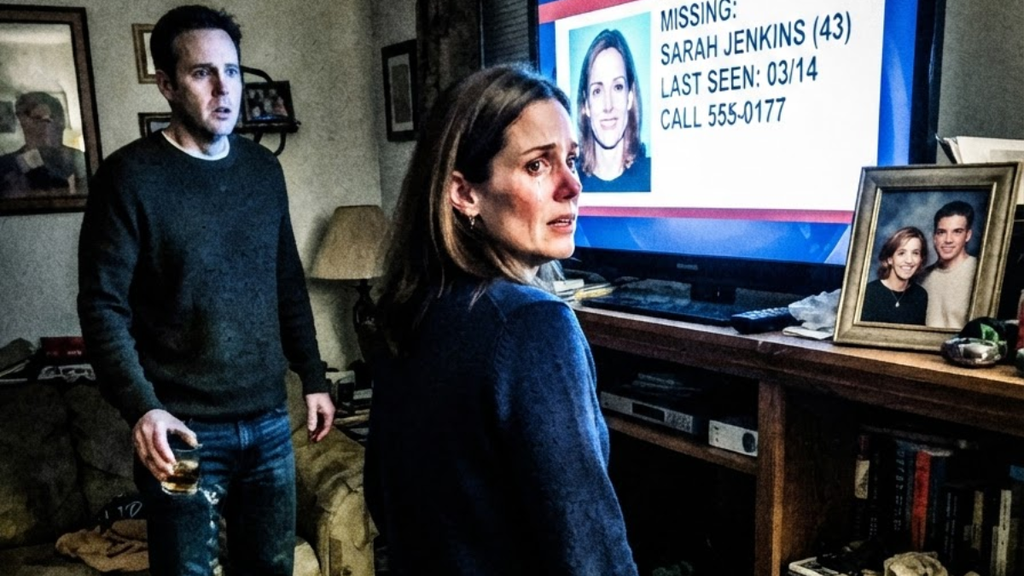
My husband told me his college girlfriend died when they were twenty-one
I knew her name.
I knew how she supposedly died.
I knew he had been devastated.
I knew it was part of the reason he dropped out of college for a semester.
I knew he still hated driving in heavy rain because it reminded him of the night she died.
Her name was Caroline Hayes.
For twenty-seven years, I thought Caroline was dead.
Then her younger sister appeared on television asking for information about Caroline’s disappearance.
Not her death.
Her disappearance.
The appeal was for the thirtieth anniversary of the last time Caroline had been seen alive.
My husband was sitting beside me when it came on.
I watched his face before I even understood what I was hearing.
He went completely white.
My name is Julie.
I am fifty-two.
My husband, Andrew, is fifty-four.
We have been married for twenty-seven years and together for twenty-nine.
We have two children, Samantha, twenty-four, and Noah, twenty-one.
Andrew is an architect.
I am an elementary school librarian.
We live in Pennsylvania now, but Andrew went to college in upstate New York.
That was where he met Caroline.
I knew about her from fairly early in our relationship.
Andrew and I had been dating approximately four months when we had the conversation about serious past relationships.
I told him about my college boyfriend.
He told me about Caroline.
They dated for almost two years.
He loved her.
Then, during their junior year, she died in a car accident.
That was the story.
There were not many details.
Andrew said Caroline had been driving home late at night during a storm.
Her car went off the road.
He said he did not like talking about it.
I respected that.
Over the years, Caroline occasionally came up.
Not constantly.
Enough that she was real to me.
Once, when Samantha was learning to drive, Andrew became unusually upset when she wanted to drive during a thunderstorm.
Afterward, he apologized.
He said:
“Caroline died in weather like that.”
Another time, we passed a bad accident on the highway.
Andrew was quiet for the rest of the drive.
That night, he said seeing wreckage still brought him back to what happened to Caroline.
I never felt threatened by her.
How could I?
She was someone he loved before me who died young.
If anything, I felt tenderness toward that part of him.
I thought losing her had shaped him.
I thought I understood one of the deepest wounds in my husband’s life.
Then, on a Tuesday evening, I learned the wound I had spent twenty-nine years treating carefully was built around a lie.
We were eating dinner in the living room because Noah had come over and there was a basketball game on.
The local news was playing beforehand.
I was barely paying attention.
Then I heard the name.
“Caroline Hayes.”
I looked up.
There was an old photograph on the television.
Young woman.
Dark curly hair.
Wide smile.
I had seen that photograph before.
Andrew had shown it to me once.
It was Caroline.
I expected the segment to be about an old accident.
Maybe some memorial.
Instead, the reporter said:
“Tomorrow marks thirty years since twenty-one-year-old Caroline Hayes vanished from her college campus.”
I stopped chewing.
I looked at Andrew.
His fork was halfway to his mouth.
He did not move.
The reporter continued.
Caroline was last seen leaving a student apartment complex shortly after midnight on November 6, 1996.
Her vehicle was found three days later at a bus station approximately thirty miles away.
There had been no confirmed sightings since.
Her family had never stopped searching.
Then a woman appeared on screen.
She looked like an older version of Caroline.
Her sister.
She said:
“We are asking anyone who knew Caroline in 1996, anyone who saw her that week, or anyone who has information they may have been afraid to share at the time to please come forward.”
My stomach turned.
I looked at Andrew.
He was staring at the television.
Noah said:
“Dad?”
Andrew stood.
He picked up his plate.
He walked into the kitchen.
I followed him.
I asked:
“What the hell was that?”
He put the plate in the sink.
I asked again.
He said:
“I don’t know.”
I said:
“You don’t know why the girlfriend you’ve told me was killed in a car accident is apparently a missing person?”
Noah had followed us.
Andrew looked at him.
Then at me.
He said:
“Can we not do this right now?”
I asked when he suggested we do it.
He said after Noah left.
Noah said:
“I’m not five.”
Andrew told him this had nothing to do with him.
I said:
“It apparently has something to do with your entire life.”
Andrew rubbed his face.
Then he said:
“I was told she died.”
I stared at him.
I asked who told him.
He said:
“Her parents.”
I almost laughed.
I said Caroline’s sister had just appeared on television saying the family had been searching for her for thirty years.
Andrew said:
“I know.”
I asked:
“Then how could her parents have told you she died?”
He did not answer.
Noah asked:
“Dad, did you know she was missing?”
Andrew looked at our son.
Then he said:
“Yes.”
That was the first real answer.
I told Noah I needed to talk to his father alone.
Noah refused at first.
Then Andrew told him to please go home and promised we would explain later.
Noah looked at me.
I nodded.
He left.
The second the door closed, I asked Andrew to start talking.
He sat at the kitchen table.
He looked exhausted.
I had never seen him look that old.
He said:
“Caroline didn’t die in a car accident.”
I said I had figured that out.
He said she disappeared.
I asked whether he knew that when we met.
Yes.
I asked why he told me she died.
He said:
“Because that’s what I believed.”
I asked whether he believed she was literally dead or whether he had decided she was probably dead.
He said:
“Both.”
I told him those were not the same thing.
He knew.
Then I asked what actually happened.
Andrew met Caroline their sophomore year.
They dated for approximately twenty months.
By the fall of junior year, the relationship was bad.
Not abusive, according to Andrew.
Just intense.
They fought constantly.
Caroline wanted more independence.
Andrew was jealous.
Caroline had become close to a group of people Andrew disliked.
They broke up and reconciled repeatedly.
I asked whether they were together when she disappeared.
He said:
“Technically no.”
They had broken up approximately two weeks earlier.
I asked when he last saw her.
Andrew looked down.
Then he said:
“The night she disappeared.”
I felt cold.
The news report had said Caroline was last seen leaving an apartment complex.
I asked whether that was his apartment.
No.
It belonged to his friend, Michael.
There had been a small party.
Andrew was there.
Caroline showed up around ten.
I asked why.
She knew everyone.
It was not unusual.
Andrew said they avoided each other at first.
Then Caroline started drinking.
So did he.
Eventually they argued.
I asked about what.
Their breakup.
Caroline had started seeing someone else.
Andrew believed she had been seeing him before they broke up.
I asked who.
Andrew said:
“His name was Jason Reed.”
I asked whether Jason was at the party.
Yes.
I asked whether that was why they fought.
Partly.
Andrew confronted Caroline.
Caroline told him her relationship with Jason was none of his business.
Andrew said something cruel.
She slapped him.
People separated them.
I asked whether police knew about the argument.
Yes.
Andrew had been interviewed.
I asked whether he was ever considered a suspect.
He hesitated.
Then:
“Yes.”
I sat down.
I asked how seriously.
Very.
He was the recent ex-boyfriend.
They had a public argument hours before she vanished.
He had no solid alibi for part of the night.
I asked what that meant.
Andrew left the party around 11:30.
Caroline left approximately forty minutes later.
Andrew said he walked back to his dorm.
His roommate was away.
Nobody saw him until approximately eight the next morning.
I asked whether police believed him.
Not entirely.
They searched his room.
His car.
His parents’ house.
They questioned him repeatedly.
Nothing tied him to Caroline’s disappearance.
I asked about the car accident.
Andrew said:
“That came later.”
I asked how much later.
Approximately a year.
I told him to explain.
Caroline’s car was found at the bus station.
There was no obvious evidence of violence.
Her coat was inside.
So were several cassette tapes and a textbook.
Her wallet was missing.
Her bank account was never used again.
Police initially considered the possibility she left voluntarily.
Her family rejected it.
Caroline was close to her younger sister.
She had plans.
She had left clothes, photographs, personal items.
Over time, investigators increasingly suspected foul play.
Andrew became obsessed.
He followed every update.
He called Caroline’s family.
Her parents hated him.
I asked why.
They knew about the volatile breakup.
They knew police had questioned him.
Caroline had apparently told her mother that Andrew was controlling.
I asked whether he had been.
He said:
“Yes.”
That answer came quickly.
He said he was twenty-one and insecure and jealous.
He checked where Caroline was.
He got angry when she went out without him.
He called repeatedly if she did not answer.
He once waited outside a class because she had ignored him all morning.
He said he was ashamed of it.
I asked whether he ever hit her.
No.
Threatened her?
He said:
“Not the way you’re asking.”
I asked what that meant.
During their final argument at the party, Andrew told Caroline:
“If you walk out with him, don’t ever come back to me.”
I said that was not a threat.
Andrew said there was another comment.
Caroline told him he needed to leave her alone.
He said:
“You’ll regret treating me like this.”
I asked whether he meant he would hurt her.
No.
He meant she would regret ending the relationship.
But after she disappeared, the sentence sounded different.
People at the party heard it.
Police heard about it.
Caroline’s parents heard about it.
For months, Andrew thought he might be arrested.
I asked why he was not.
No evidence.
Then approximately nine months after Caroline disappeared, Andrew received a letter.
I asked from whom.
Caroline.
I stared at him.
He said:
“At least I thought it was.”
The envelope was postmarked in Arizona.
No return address.
The letter was handwritten.
Short.
It said:
Andrew, I need you to stop looking for me. I am alive. I left because I needed to get away from everything, including you. Please tell my family I am safe, but do not tell them where this came from. I will contact them when I am ready. If you ever loved me, let me go.
I asked whether he still had it.
No.
I asked what he did with it.
He gave it to police.
That surprised me.
They tested it.
The handwriting looked similar to Caroline’s but was not conclusive.
No usable fingerprints.
The postmark was real.
Police in Arizona found no trace of her.
I asked whether her family believed the letter.
No.
Her mother said Caroline would never contact Andrew before contacting her sister.
Andrew agreed.
But he wanted to believe it.
Then another letter arrived approximately three months later.
This one was different.
I asked what it said.
Andrew took a long time answering.
Then:
You got what you wanted. She’s gone. Stop pretending you’re looking for her.
I felt sick.
I asked who sent that.
He did not know.
No signature.
Postmarked in New York.
He gave that one to police too.
I asked why any of this resulted in him telling me Caroline died.
Andrew said approximately four months after the second letter, he received a phone call.
A man said he was calling on behalf of Caroline’s family.
He told Andrew that Caroline’s remains had been found in another state.
The family did not want Andrew at the funeral.
They did not want him contacting them.
They wanted him to leave them alone permanently.
I stared at him.
I asked whether he verified it.
He said:
“No.”
I could not believe it.
I asked whether there was a news story.
He said he stopped following the case.
I asked whether he called police.
No.
Her parents?
No.
Her sister?
No.
I asked why.
He said:
“Because I was relieved.”
That answer stunned me more than almost anything else.
I asked what he meant.
He said:
“Not that she was dead.”
He had spent more than a year wondering whether Caroline was alive somewhere because of him.
Whether she ran because of him.
Whether someone killed her.
Whether police would arrest him.
Whether she would suddenly appear.
Whether another letter would arrive.
The phone call gave him an ending.
A horrible ending.
But an ending.
He believed it because he wanted the uncertainty to stop.
Then, several months later, Andrew transferred schools.
A year after that, he met me.
When I asked about his serious college girlfriend, saying “she disappeared and police thought I might have killed her” felt impossible.
So he said she died.
I asked whether he knew at any point during our marriage that Caroline was still officially missing.
Andrew said:
“Yes.”
I stood up.
That changed everything.
I asked when he found out.
He said approximately eight years after we married.
The internet had become more useful.
One night he searched Caroline’s name.
He found a missing-person page.
Her case was still open.
Her family was still looking.
I asked what he did.
Nothing.
I asked whether he realized the phone call had been a lie.
Yes.
I asked whether he told me.
No.
I asked whether he contacted police.
No.
I asked whether he contacted Caroline’s family.
No.
I asked whether he did anything at all.
He closed the browser.
I asked why.
He said:
“I had a wife. A daughter. A son. A career. I didn’t know what reopening it would do.”
I stared at him.
I said:
“Reopening what? She was still missing. It was already open.”
He started crying.
I did not care.
Not then.
I asked how many times over the years he checked.
He admitted he searched Caroline’s name every few years.
He knew there had been anniversary appeals.
He knew her parents eventually divorced.
He knew her father died without knowing what happened to her.
He knew her mother was still alive.
He knew Caroline’s sister had become the public face of the search.
He knew all of it.
And every time I mentioned Caroline, he continued referring to her as someone who had died in a car accident.
I asked why he invented the car accident specifically.
Andrew said he needed something ordinary.
Something nobody would question.
Something that explained why he hated discussing it.
I said:
“You used a dead woman who wasn’t dead to build yourself a tragic backstory.”
He said:
“I know how it sounds.”
I told him it sounded exactly like what he did.
Then I asked whether the police still considered him a suspect.
He did not know.
I asked whether they had contacted him since the nineties.
He hesitated.
That was becoming the sound of another lie.
I asked:
“When?”
Seven years earlier.
A detective called him.
I asked whether I knew.
No.
Andrew had told me he was going to New York for an architecture conference.
There was a conference.
He attended one day.
Then he drove three hours to the town where Caroline disappeared and met with investigators.
I asked why they contacted him.
The case had been reassigned.
They were reinterviewing people.
I asked what Andrew told them.
Most of the truth.
I asked what he left out.
The second letter.
I stared at him.
Police knew about it originally.
But apparently part of the old case file had been damaged in a basement flood years earlier.
Some documents survived.
Some did not.
The new detective asked Andrew whether he remembered receiving any communications after Caroline vanished.
Andrew mentioned the Arizona letter.
Not the anonymous one.
I asked why.
He said because the second letter scared him.
I asked what he thought it meant.
He said:
“I thought someone believed I did something to her.”
I said maybe someone knew he did.
Andrew looked at me.
I asked:
“Did you?”
He said no.
I asked again.
He said:
“I did not hurt Caroline.”
I believed he believed that.
I was no longer sure what that meant.
Then I asked something that had been bothering me.
Who knew Andrew had been searching for Caroline?
Who knew enough to call him and falsely claim her remains had been found?
He said he had wondered about that for years.
I asked whether he recognized the caller’s voice.
No.
I asked whether the caller knew details.
Yes.
He knew Andrew had been told not to contact the Hayes family.
He knew Caroline’s parents disliked him.
He knew Andrew had been questioned.
That information was not entirely secret, but it was not something a random person would necessarily know.
I asked who Andrew suspected.
He said:
“Jason.”
Caroline’s new boyfriend.
I asked what happened to Jason after she disappeared.
He left school.
I asked when.
Three weeks later.
I stared at Andrew.
Why?
Jason told people his father was sick.
Was he?
Andrew did not know.
I asked whether Jason was investigated.
Yes.
But apparently he had an alibi.
I asked what it was.
Jason said he left the party with Caroline.
That surprised me.
The news report said Caroline left the apartment complex after midnight.
Andrew had said she left approximately forty minutes after him.
Jason left with her.
According to Jason, they argued in the parking lot.
Caroline told him she wanted to be alone.
Jason walked back inside.
Several people remembered seeing him again around 12:45.
He stayed until after two.
I asked who saw him.
Andrew listed three people.
One name stood out.
Michael.
The friend whose apartment hosted the party.
I asked whether Andrew still knew Michael.
No.
They had not spoken in approximately twenty years.
I asked whether Michael had ever contacted him about Caroline.
Andrew said:
“Once.”
When?
Approximately six years after she disappeared.
Michael called Andrew unexpectedly.
He asked whether Andrew had ever heard from Caroline.
Andrew said no.
Michael said:
“Good.”
I asked what that meant.
Andrew said he asked the same thing.
Michael claimed he meant it was probably better not to keep getting dragged back into the case.
Then Michael asked whether Andrew still had the anonymous letter.
Andrew said police had it.
Michael became quiet.
I asked whether that struck Andrew as strange.
Yes.
I asked whether he told investigators about that conversation.
No.
I felt like I was losing my mind.
Every answer created another thing he had decided not to tell someone.
I asked where Michael lived now.
Andrew did not know.
I searched his name.
There were too many results.
Then Andrew gave me his middle name.
I found him.
Michael Bennett.
Fifty-four.
Colorado.
I clicked through photographs.
I asked whether that was him.
Andrew said yes.
Then I found something else.
Michael was friends online with Jason Reed.
Thirty years later.
I turned the screen toward Andrew.
He looked surprised.
I asked whether Michael and Jason had been friends in college.
Not really.
They knew each other through Caroline.
I asked whether Andrew had ever known they stayed in touch.
No.
Then I found Jason.
He lived in Colorado too.
Twenty-seven minutes from Michael.
I said:
“That’s interesting.”
Andrew did not answer.
I kept searching.
Jason had moved to Colorado in 1997.
The same year Caroline disappeared.
Michael moved there in 2001.
That did not prove anything.
But I was beginning to understand why missing-person families spend decades staring at ordinary details until every coincidence feels radioactive.
I asked Andrew whether Caroline had ever mentioned Colorado.
His face changed.
I said:
“What?”
He told me Caroline wanted to move there.
She loved mountains.
She talked about transferring to the University of Colorado.
I asked whether Jason knew.
Of course.
I asked whether Michael knew.
Probably.
Then Andrew said something else.
Approximately a month before Caroline disappeared, she asked Andrew if he would give her money.
I asked how much.
Two thousand dollars.
That was a lot for college students in 1996.
I asked why.
She would not say.
Andrew refused.
He thought she wanted money to travel with Jason.
They fought.
I asked whether she asked anyone else.
He did not know.
I asked whether she had money when she disappeared.
Police believed she had approximately $600 in her checking account.
Her ATM card was never used.
But cash could have been separate.
Then I asked:
“What did Caroline mean when she said she needed to get away from everything, including you?”
Andrew said that was exactly why he believed the Arizona letter might be genuine.
Caroline had talked about leaving.
Not disappearing forever.
But leaving school.
Leaving New York.
Starting over somewhere else.
I asked whether she had problems beyond Andrew.
Yes.
Her relationship with her parents was difficult.
Her father was controlling.
She was failing two classes.
She had recently learned something about Michael.
I stopped.
“What about Michael?”
Andrew said he did not know.
Caroline called him approximately a week before she disappeared.
They were technically broken up, but she was upset.
She said:
“Michael isn’t who we thought he was.”
Andrew asked what she meant.
Caroline refused to explain.
She told him:
“Just don’t trust him with anything important.”
I asked whether Andrew told police.
Yes.
That was in his original statement.
I asked what investigators found.
Nothing that Andrew knew.
Michael denied knowing what Caroline meant.
I asked whether Andrew ever asked Michael afterward.
Once.
Michael laughed.
He said Caroline had been angry because he told Jason she had kissed someone else.
Andrew accepted that.
I asked whether he believed it now.
“No.”
I asked what he thought Caroline had discovered.
Andrew said he had no idea.
Then his phone rang.
It was Samantha.
She had apparently spoken to Noah.
I looked at Andrew.
I told him to answer.
He did.
Samantha immediately asked:
“Dad, why is Noah telling me your dead girlfriend isn’t dead?”
Andrew closed his eyes.
That was how our children found out.
Not elegantly.
Not carefully.
There was no way to make it elegant.
We told them enough.
Caroline was missing.
Andrew had lied.
He had been questioned.
He had known for years the case remained open.
We did not tell them every detail.
Samantha asked the obvious question.
“Did Dad do something?”
I said:
“I don’t know.”
Andrew looked at me.
That hurt him.
I could tell.
But I was not going to reassure our daughter with certainty I no longer possessed.
Andrew said:
“I did not hurt Caroline.”
Samantha asked why he lied then.
He said:
“Because I was ashamed and scared.”
She said:
“For thirty years?”
Nobody had an answer.
The next morning, I called the number shown at the end of the missing-person appeal.
Andrew was standing in the kitchen.
He knew what I was doing.
I told the person who answered that my husband had known Caroline Hayes in college and had information he believed might be relevant.
They transferred me to an investigator.
I handed Andrew the phone.
He talked for approximately twenty minutes.
He told them about the anonymous letter.
The phone call claiming Caroline had died.
Michael’s later phone call.
Michael and Jason both living in Colorado.
The investigator was particularly interested in the anonymous letter.
Andrew said police had the original in 1997.
The investigator asked him to describe it.
Andrew did.
Then there was a long silence.
The investigator asked:
“Are you sure it said, ‘You got what you wanted’?”
Andrew said yes.
Another pause.
Then the investigator asked:
“Did it say anything else?”
Andrew looked at me.
He said:
“No.”
The investigator asked again.
Andrew said he did not think so.
Then the investigator said something I could not hear.
Andrew’s face changed.
He sat down.
He said:
“Where did you find that?”
I mouthed:
“What?”
Andrew held up a hand.
He listened.
Then he said:
“I need to come in.”
After he hung up, I asked what happened.
He said investigators had found a photocopy of the anonymous letter in a box of old evidence.
Not the original.
A photocopy.
There was another line on it.
A line Andrew had completely forgotten.
Or claimed he had.
After:
You got what you wanted. She’s gone. Stop pretending you’re looking for her.
It said:
You should have let her leave when she asked you to.
I asked what that meant.
Andrew looked terrified.
He said:
“I don’t know.”
I asked whether Caroline had asked him to let her leave.
He said no.
Then he stopped.
I waited.
He said:
“There was one night.”
Approximately three weeks before she disappeared.
Caroline came to Andrew’s dorm room.
She was crying.
She said she needed his car.
I asked why.
She wanted to go somewhere.
She refused to say where.
Andrew thought she was being dramatic.
He refused.
Caroline said:
“Please, Andrew. I need to leave tonight.”
He asked whether she was in danger.
She said:
“Maybe.”
I asked what he did.
He made her stay.
Not physically.
He talked her out of going.
He told her she was upset.
He told her to sleep.
He said whatever problem she had could wait until morning.
She stayed in his room that night.
The next morning, she acted embarrassed.
She told him to forget it.
He did.
I asked who knew about that conversation.
Andrew said:
“No one.”
I said somebody did.
Because someone wrote:
You should have let her leave when she asked you to.
Andrew stared at me.
Then he said:
“Unless Caroline wrote it.”
That possibility changed everything.
If Caroline wrote the anonymous letter, she was alive more than a year after she disappeared.
But if she wrote it, why accuse Andrew of getting what he wanted?
Why tell him to stop pretending to look?
Why not contact her family?
And why had someone later called Andrew and falsely told him she was dead?
Andrew went to New York two days later.
I went with him.
Not into the interview.
I sat in the hotel.
He spent nearly six hours with investigators.
When he returned, he told me they believed the anonymous letter might not have been written by Caroline.
The wording mattered.
So did the postmark.
It had been mailed from the same county where Michael’s parents lived.
I asked whether police knew that in 1997.
Apparently yes.
But there had been no way to prove who mailed it.
Then investigators told Andrew something they had never told him before.
Michael had also received a letter.
Approximately five months after Caroline disappeared.
It was unsigned.
It said:
She made her choice. Stop looking.
Michael told police he threw it away.
Jason claimed he received nothing.
I asked whether investigators believed the letters were connected.
They did now.
Then Andrew told me the part that made my stomach drop.
The police had recently reexamined photographs from Caroline’s dorm room using higher-quality scans.
There was a photograph of Caroline with several friends at a lake.
Michael.
Jason.
Two women.
Caroline.
On the back, in Caroline’s handwriting, she had written everyone’s names.
Next to Michael’s name, she added:
Ask him about Sarah.
I asked who Sarah was.
Andrew said:
“No one knew.”
Then investigators searched old university records.
There had been a student named Sarah Whitmore.
She attended the same college.
She disappeared in 1994.
Two years before Caroline.
I had never heard of her.
Andrew had not either.
Sarah was nineteen.
She left school halfway through spring semester.
Her family believed she ran away.
There was never a major missing-person investigation because Sarah called her mother several weeks later and said she was fine.
I asked whether she ever came back.
No.
I asked whether anyone saw her again.
Not according to what Andrew had been told.
I asked what Michael had to do with her.
They dated.
Briefly.
Before Andrew knew him.
I felt the room tilt.
Two young women.
Same college.
Both connected to Michael.
Both disappeared.
One supposedly called home afterward.
The other supposedly sent letters.
I asked Andrew whether investigators thought Michael killed them.
He said they had not said that.
Then I asked the question that mattered more.
“Did Caroline know something happened to Sarah?”
Andrew said:
“I think that’s what she was trying to tell me.”
The next development came less than a week later.
And it did not come from police.
It came from Caroline herself.
At least that was what the email claimed.
Andrew received it at his work address.
Subject line:
Please don’t give this to Julie until you read it.
He showed it to me without opening it.
That was the first genuinely good decision he had made since this began.
I told him to call the investigator.
He did.
Police told him not to respond.
They came to our house.
They opened the email with us.
It contained four sentences.
Andrew, I saw the appeal.
I know you’re talking now.
You were right about one thing all those years ago: I should have told you the truth.
But if you want to know why everyone thought I was dead, ask Michael what happened at Lake Marston.
There was no signature.
Andrew whispered:
“Lake Marston.”
I asked what it was.
The lake in the photograph.
The one with Caroline.
Michael.
Jason.
And the handwritten note on the back:
Ask him about Sarah.
Investigators traced what they could.
The email had been deliberately routed to conceal its origin.
It could have been Caroline.
It could have been someone pretending to be her.
Then police searched Lake Marston.
Not because of the email alone.
Because when they went back through old interviews, they discovered Michael had lied about something.
He told police in 1996 that he had not been to Lake Marston since sophomore year.
Photographs showed otherwise.
So did a receipt recovered from Caroline’s old belongings.
Three days before she disappeared, Caroline bought gas at a station less than two miles from the lake.
Investigators searched a wooded area near an old access road.
They found a car.
Not Caroline’s.
It had been down an embankment, heavily overgrown and partially buried in debris.
The vehicle had been reported stolen in 1994.
The registered owner had no connection to Caroline.
But police found human remains inside.
They were not Caroline.
They were Sarah Whitmore.
The girl everyone believed had run away.
The girl who supposedly called her mother and said she was fine.
The girl Michael dated two years before Caroline disappeared.
And suddenly, the question was no longer whether my husband had lied about a missing college girlfriend.
It was why Caroline had apparently discovered another missing woman was dead three days before she vanished herself.
And why, thirty years later, someone who knew exactly what Caroline had uncovered was still watching closely enough to know that Andrew had finally started talking.
The identification of Sarah’s remains was not released publicly for almost three weeks.
That was deliberate.
Police wanted time to reinterview people before anyone knew exactly what had been found.
Andrew was told not to contact Michael or Jason.
He did not.
I checked.
I hate admitting that.
Before this, I had never checked my husband’s phone.
Now I found myself noticing when he carried it upstairs.
When it buzzed.
When he took a call outside.
Twenty-nine years of trust had become something I inspected.
Andrew noticed.
He never complained.
During those three weeks, investigators learned that the phone call Sarah supposedly made to her mother in 1994 had never been independently verified.
Sarah’s mother was dead.
Her father was dead.
Her older brother remembered the call.
His mother answered.
She cried.
Then she told the family Sarah was alive and did not want to come home.
That was enough in 1994.
Sarah was nineteen.
Adults were allowed to disappear.
Police closed the missing-person report.
Nobody traced the call.
Nobody demanded Sarah appear in person.
Her family spent years believing she chose not to return.
That made me think about Caroline.
The Arizona letter.
The anonymous letter.
The phone call telling Andrew she was dead.
Every time one of these women disappeared, someone provided just enough communication afterward to muddy what had happened.
Not proof.
Just enough uncertainty.
Then investigators arrested Michael.
Not for Caroline.
For Sarah.
The news broke on a Friday morning.
Michael Bennett, fifty-four, had been charged in connection with Sarah Whitmore’s death.
Details were limited.
The probable-cause documents said new forensic evidence connected him to the stolen vehicle.
I asked Andrew what that meant.
He did not know.
Jason was not arrested.
Police searched both men’s homes.
They searched a storage unit belonging to Michael.
They seized electronics.
The missing-person appeal for Caroline suddenly became national news.
And then something happened I had not expected.
People started contacting Andrew.
Old classmates.
Former friends.
People he had not spoken to in decades.
Some wanted gossip.
Some wanted to ask whether he had known.
Some remembered Caroline.
One woman named Tracy called him crying.
Andrew put her on speaker because by then he was trying very hard not to have private conversations about any of this.
Tracy had lived down the hall from Caroline.
She said:
“I should have told them.”
Andrew asked what.
Tracy said approximately a week before Caroline disappeared, Caroline asked if she could keep a duffel bag in Tracy’s room.
Tracy agreed.
Caroline said it was temporary.
After Caroline vanished, Tracy completely forgot about it.
That sounded impossible to me.
Then Tracy explained that the dorm emptied into chaos.
Police.
Parents.
Students leaving for Thanksgiving.
Caroline’s belongings were eventually packed up by her family.
Tracy found the duffel in the back of her closet months later.
She opened it.
There were clothes.
Approximately $1,800 in cash.
A road atlas.
Toiletries.
A photograph of Sarah.
And a bus schedule.
Tracy panicked.
She called Michael.
Not police.
Michael.
I asked why.
Tracy said Michael had been one of their closest friends.
He came over.
He looked through the bag.
Then he told Tracy the police already knew Caroline had been planning to leave.
He said giving them the bag would only cause more pain for her parents.
Tracy asked what to do with it.
Michael took it.
Andrew said:
“You gave him Caroline’s bag?”
Tracy started crying.
She said she was twenty.
She trusted him.
She assumed Michael would turn it over to police if it mattered.
I asked whether she ever followed up.
Once.
Michael said he gave it to Caroline’s father.
That was a lie.
Caroline’s family had never received it.
I asked whether Tracy had told investigators now.
Yes.
That was why she was calling Andrew.
She wanted to know if Caroline had ever told him she planned to leave.
Andrew said yes.
Once.
The night she asked for his car.
Tracy said:
“She was scared of Michael.”
Everything went quiet.
Andrew asked how she knew.
Tracy said Caroline told her.
Not that Michael had hurt her.
That he had done something to Sarah.
Caroline did not know exactly what.
She had discovered Sarah existed because she found an old photograph in Michael’s apartment.
She asked who Sarah was.
Michael said an ex-girlfriend who transferred.
Later Caroline mentioned Sarah to someone else who remembered that Sarah had not transferred.
She had vanished.
That started Caroline digging.
She found Sarah’s family.
She called Sarah’s mother.
The mother told her about the phone call saying Sarah was alive.
Caroline apparently became convinced something was wrong with that call.
I asked why.
Tracy said Caroline learned Sarah had been terrified of driving.
That detail seemed irrelevant.
Then she explained.
Sarah’s mother said during the call, Sarah claimed she had driven west with friends.
Sarah did not have a driver’s license.
She had never driven.
Caroline thought whoever made the call either was not Sarah or had been coached badly.
I asked whether Sarah’s mother recognized her daughter’s voice.
Tracy did not know.
Then Andrew said:
“Lake Marston.”
Tracy became quiet.
Andrew asked whether Caroline went there.
Tracy said yes.
Three days before she disappeared.
Caroline took Jason with her.
That was new.
Andrew asked why Jason.
Because she trusted him.
That was apparently part of why Caroline and Andrew’s relationship ended.
Jason was not simply the new guy.
Caroline had begun confiding in him about Michael.
Jason helped her investigate Sarah.
I asked what they found at the lake.
Tracy did not know.
Caroline came back terrified.
She told Tracy:
“We found where it happened.”
I asked whether she said what “it” was.
No.
Then Caroline started packing.
That was the duffel.
She planned to leave campus.
She told Tracy she needed a few days somewhere Michael could not find her.
I asked why she did not go to police.
Tracy said:
“She wanted proof.”
That sentence made me furious.
Not at Caroline.
At the entire idea.
A twenty-one-year-old woman believed she needed to solve another woman’s disappearance before authorities would take her fear seriously.
Maybe she was right.
Maybe she was wrong.
Either way, she tried.
I asked whether Jason knew Caroline planned to leave.
Yes.
He was supposed to help her.
Then why did Caroline ask Andrew for his car three weeks earlier?
Tracy did not know.
The timelines did not line up perfectly.
Maybe Caroline had been frightened longer than anyone realized.
Maybe she tried to leave once, backed out, then made a real plan later.
Andrew asked Tracy the question I was thinking.
“Why didn’t you tell police any of this?”
Tracy cried harder.
She said she did tell them some of it.
She told them Caroline was afraid of Michael.
She told them about Sarah.
She did not tell them about the duffel because by the time she found it, Michael had convinced her the family knew.
Then years passed.
The longer she waited, the worse admitting it became.
I looked at Andrew.
He looked at me.
Neither of us needed to say anything.
It was the same disease.
Different secret.
Same excuse.
I waited too long.
Now telling the truth will make me look guilty.
So I will wait longer.
Then longer becomes years.
Years become decades.
Andrew asked Tracy whether she knew anything about the anonymous letter he received.
No.
The call claiming Caroline was dead?
No.
The email?
She had heard about it from investigators but knew nothing.
Before hanging up, Tracy said:
“I don’t think Caroline is dead.”
I asked why.
Tracy said:
“Because she was planning to disappear before she disappeared.”
That stayed with me.
There were two possibilities.
Someone harmed Caroline.
Or Caroline succeeded.
Maybe the disappearance itself had been the plan.
The abandoned car at the bus station.
The cash.
The duffel.
The road atlas.
The Arizona letter.
Maybe Caroline escaped.
Then what was the anonymous letter?
What was the fake death call?
And why had she never contacted her family?
Andrew said there was something about Caroline I needed to understand.
She could be incredibly stubborn.
If she decided something was dangerous, she did not necessarily explain.
She acted.
I asked whether she would let her family think she was dead for thirty years.
He said:
“No.”
Then he corrected himself.
“I don’t think so.”
Approximately two weeks after Michael’s arrest, investigators contacted Andrew again.
They wanted him to look at photographs.
We drove back to New York.
This time they allowed me into part of the meeting.
An investigator placed six photographs on the table.
All were women.
Different ages.
Different hair.
Different settings.
I did not immediately understand.
Then I realized they were asking Andrew whether any could be Caroline.
The photographs had been taken over decades.
Security cameras.
Driver’s license photos.
A wedding photograph.
Something that looked like a newspaper clipping.
Andrew studied them.
He rejected the first.
Second.
Third.
Then he reached the fourth.
His hand stopped.
The woman looked approximately thirty-five.
Blonde hair.
Different eyebrows.
Heavier than Caroline had been.
She was standing outside what looked like a library.
Andrew stared.
Then:
“Maybe.”
The investigator asked what he recognized.
Andrew pointed to her hand.
Caroline had broken her left pinky playing volleyball as a teenager.
It healed crooked.
The woman’s finger appeared slightly bent.
That was not enough.
Then Andrew pointed to her ear.
Caroline had a small notch at the top of her right ear.
Childhood injury.
The woman did too.
I asked where the photograph came from.
The investigator would only say New Mexico.
Year 2010.
Fourteen years after Caroline disappeared.
Andrew looked like he might be sick.
Then they showed him the sixth photograph.
A woman approximately fifty.
Gray beginning in dark hair.
Walking through an airport.
Andrew immediately said:
“That’s her.”
The investigator asked how sure.
He said:
“I don’t know.”
Then he cried.
He kept staring at the photograph.
I looked too.
I had only known Caroline as twenty-one.
Photographs freeze missing people.
They do not age.
Seeing a possible fifty-year-old Caroline felt almost obscene.
She looked ordinary.
Alive.
Carrying a tote bag.
The photograph was from 2025.
One year earlier.
I asked where.
Denver.
Colorado.
The same state where Michael and Jason lived.
I thought that had to mean something sinister.
The investigator told me not necessarily.
The image came from a facial-recognition lead generated after the anniversary appeal.
They had not confirmed the woman’s identity.
They were pursuing it.
I asked whether the email had come from Colorado.
They would not say.
Andrew asked whether Jason knew about the photographs.
No answer.
Then the investigator asked Andrew something strange.
“Did Caroline ever use the name Mara?”
Andrew said no.
“What about Marie?”
No.
“Claire?”
No.
I asked why.
They would not explain.
We drove home.
Andrew barely spoke.
Approximately four hours into the drive, he said:
“If she’s alive, I’m going to hate her.”
I looked at him.
He immediately said:
“I know how awful that sounds.”
I asked why.
He said because he had spent thirty years believing something terrible happened to her.
Her mother had spent thirty years.
Her sister.
Everyone.
If Caroline simply chose not to tell them she was alive, he did not know how to understand that.
I said:
“You managed.”
He looked at me.
I told him he had spent twenty-one years knowing she was still missing while telling his wife she died in a car accident.
He said that was different.
I asked:
“How?”
He did not answer.
Three days later, Caroline’s sister Melissa called our house.
I had never spoken to her.
She asked for Andrew.
He put her on speaker.
Melissa said investigators had told her Andrew was cooperating.
Then she said:
“I know you lied to Julie.”
Andrew looked at me.
He said yes.
Melissa said:
“Good.”
He seemed confused.
She clarified.
“Good that she knows. I’m tired of everybody deciding what women are allowed to know because the truth is uncomfortable.”
I liked her immediately.
Then she asked Andrew about the night Caroline asked for his car.
He told her.
Melissa became quiet.
Then she said:
“She called me that night.”
Andrew had not known.
Caroline called her sister from Andrew’s dorm room.
Melissa was sixteen.
Caroline told her she might be going away for a little while.
Melissa asked where.
Caroline said:
“Somewhere safe.”
Melissa thought she meant staying with a friend.
Then Caroline said something Melissa had never told police.
Not because she deliberately hid it.
Because at sixteen it had not made sense.
Caroline said:
“If anybody tells you I ran away because of Andrew, don’t believe them.”
Andrew started crying.
Melissa continued.
“She said you were being an asshole, but you weren’t the reason.”
That sounded so specific and so twenty-one that I almost laughed.
Andrew did.
Through tears.
Melissa said Caroline told her:
“Michael did something bad.”
Then:
“Jason knows.”
I asked whether Melissa told investigators now.
Yes.
I asked why she had never told them thirty years earlier.
She had told her parents Caroline mentioned Michael.
Her parents assumed she meant relationship drama.
Melissa herself did not understand.
By the time Sarah’s name surfaced, years had passed.
Then Melissa asked Andrew:
“Did Caroline ever tell you she was pregnant?”
Silence.
Andrew said no.
I felt my stomach drop.
Melissa said Caroline was approximately seven weeks pregnant when she disappeared.
I looked at Andrew.
He looked genuinely shocked.
Melissa said only she and Caroline knew.
Caroline had taken two tests.
She had not told their parents.
Melissa did not know who the father was.
Andrew whispered:
“Jason.”
Melissa said:
“Maybe.”
I asked whether Andrew could have been the father.
He looked at me.
Then he said yes.
He and Caroline had slept together approximately a month before she disappeared, during one of their brief reconciliations.
Jason could also have been the father.
Melissa said Caroline did not know.
That added another layer to why she might have wanted to leave.
But Melissa insisted pregnancy was not the primary reason.
Caroline was already afraid of Michael.
She had already been asking about Sarah.
Then Melissa said:
“She told me she had something that could put Michael in prison.”
I asked what.
Melissa did not know.
Maybe something from Lake Marston.
Maybe something Michael told her.
Maybe something she found.
Then Andrew asked whether Melissa believed Caroline was alive.
There was a long pause.
Melissa said:
“I didn’t yesterday.”
Apparently investigators had shown the family the same photographs.
Caroline’s mother had identified the airport woman immediately.
Not maybe.
Not possibly.
She said:
“That’s my daughter.”
I asked whether the woman had been located.
Not yet.
Then Melissa said something else.
The possible Caroline in the 2010 New Mexico photograph had been identified under the name Claire Morgan.
There was no birth record matching Claire Morgan’s claimed birth date.
The driver’s license application had relied on documentation that investigators now believed might have been fraudulent.
Claire Morgan disappeared from public records in 2014.
The airport image from 2025 was connected to a woman traveling under another name.
Marie Keller.
Marie Keller had a New Mexico address.
No obvious connection to Caroline.
Except one.
Her emergency contact was Jason Reed.
Andrew stood so quickly his chair fell backward.
I asked Melissa to repeat it.
She did.
Jason.
The man Caroline had supposedly started dating before she disappeared.
The man who helped her investigate Sarah.
The man who left college three weeks after Caroline vanished.
The man who moved to Colorado.
The man who remained friends with Michael for thirty years.
The man police had always believed was at the party during the critical hours.
Jason was listed as emergency contact for a woman investigators believed might be Caroline.
Andrew said:
“He knows where she is.”
Melissa said:
“Yes.”
Then I asked the obvious question.
“If Jason has been helping Caroline hide for thirty years, why is he still friends with Michael?”
Melissa said:
“That’s what we’re trying to understand.”
We did not have to wait long.
Jason was interviewed the next morning.
By that evening, investigators knew where Caroline was.
She was alive.
Fifty-one years old.
Living in New Mexico.
Under another name.
She had been alive the entire time.
I cannot explain what that did to Andrew.
He laughed.
Then cried.
Then vomited.
Then sat on the bathroom floor.
He kept saying:
“She is alive.”
I did not know whether to comfort him.
So I sat outside the bathroom door.
Caroline spoke to her mother first.
Then Melissa.
Those conversations were private.
They should be.
Two days later, Caroline agreed to speak to investigators in person.
She was not arrested.
That mattered.
She had committed some offenses over the years related to false identification, but authorities were primarily interested in Sarah’s death and Michael.
Then Caroline asked to speak to Andrew.
Not alone.
She specifically said:
“His wife should be there.”
So, thirty years after Caroline disappeared and twenty-nine years after I began dating the man who told me she was dead, I sat beside my husband on a video call with the woman whose ghost had been living in my marriage.
Caroline looked like the airport photograph.
Older.
Obviously.
But I could see the twenty-one-year-old from the pictures.
She looked at Andrew.
For a long time, neither spoke.
Then Caroline said:
“You got old.”
Andrew laughed.
He said:
“So did you.”
Caroline said:
“Apparently.”
Then she looked at me.
“Julie?”
I said yes.
She said:
“I’m sorry.”
I asked for what.
She said:
“For being dead in your marriage when I wasn’t dead.”
That sentence nearly broke me.
I asked whether she knew Andrew told me she died.
No.
She learned only after investigators contacted her.
She said:
“That sounds like Andrew.”
He flinched.
Caroline smiled slightly.
Not kindly.
Not cruelly.
Like someone recognizing an old flaw.
Then Andrew asked:
“Why?”
Caroline knew what he meant.
Why disappear?
Why thirty years?
Why let everyone believe she might be dead?
She said:
“Because Sarah tried to leave and Michael found her.”
Then she told us.
Sarah had dated Michael in 1994.
Their relationship became controlling.
Sarah tried to break up.
Michael stalked her.
One night, Sarah threatened to report him for stealing.
I asked stealing what.
Prescription medication.
Michael had been taking pills from his mother’s medicine cabinet and selling them on campus.
Sarah knew.
She also knew about forged checks.
Michael panicked.
They argued near Lake Marston.
Sarah tried to leave in the stolen car.
Michael got into the passenger side.
There was a struggle.
The car went down the embankment.
Sarah was badly injured.
Michael could have called for help.
He did not.
He left her.
She died inside the car.
Michael later told Jason.
I asked why.
Because Jason was Michael’s closest friend at the time.
Jason helped him.
Not move the body.
Not push the car.
But create the story.
Jason was the one who called Sarah’s mother.
I felt sick.
He impersonated someone from a pay phone and played a recording.
Sarah’s voice.
Michael had an answering-machine tape where Sarah said:
“Mom, I’m fine.”
The words came from an old message.
Jason played enough to convince Sarah’s mother she was hearing her daughter.
Then he spoke briefly, pretending to be a friend Sarah was traveling with.
Sarah’s mother wanted Sarah back on the phone.
Jason said the connection was bad.
Then he hung up.
It was primitive.
It was sloppy.
It worked.
Caroline discovered the truth two years later.
Not because Michael confessed.
Because she found Sarah’s photograph and started asking questions.
Jason eventually broke.
He told Caroline what happened.
I asked why Caroline did not go directly to police.
She intended to.
But she wanted to find the car first.
She did.
Three days before she disappeared, she and Jason went to Lake Marston.
Jason showed her approximately where it happened.
They found the embankment.
They could see part of the vehicle through the trees.
Caroline took photographs.
She put the film somewhere safe.
Then Michael found out.
Jason told him.
I stared at the screen.
“Jason told Michael?”
Caroline nodded.
Jason panicked.
He had helped cover up Sarah’s death.
If Caroline went to police, Jason believed he would go to prison too.
So he told Michael Caroline knew.
Michael confronted her.
He threatened her.
Not directly with death.
With Andrew.
With her family.
With Jason.
He told Caroline that if she went to police, he would say Andrew killed Sarah.
I asked how that could possibly work.
Caroline said Michael had Andrew’s fingerprints on items he could place near the lake.
That sounded absurd.
Then she explained.
Andrew had borrowed Michael’s camping gear repeatedly.
Michael said he could plant something.
Maybe police would believe him.
Maybe they would not.
The point was to terrify a twenty-one-year-old.
It worked.
Caroline already knew Andrew was under scrutiny because of their breakup.
She knew how easy it was for people to believe the jealous ex-boyfriend was dangerous.
She became convinced Michael could redirect suspicion toward Andrew.
That was why she asked Andrew for his car.
She wanted to leave campus before Michael knew she had found Sarah.
Andrew talked her out of it.
The next morning she decided she needed a better plan.
She packed the duffel.
She collected cash.
She arranged to leave with Jason.
I asked why she trusted Jason after he had helped Michael.
Caroline said:
“I shouldn’t have.”
The night she disappeared, Jason told her Michael was at the party.
He said it was safe to leave.
They walked out together.
Then Jason told Caroline he could not go through with the plan.
He wanted her to give Michael the film and forget everything.
Caroline refused.
They argued.
Jason went back inside.
That part of his original story was mostly true.
Caroline left alone.
She took a taxi.
Not her car.
She went to a motel.
The next morning, she took a bus.
Her car was moved later.
By Jason.
I asked why.
To make police believe Caroline had driven to the bus station herself.
Jason thought that would support the runaway theory.
I asked where Caroline went.
Arizona.
The first letter to Andrew really was from her.
I looked at Andrew.
He closed his eyes.
Caroline said:
“I wrote it.”
She had been alive.
She had asked him to stop looking.
Andrew asked why she contacted him before her family.
She said because she was afraid her family’s phones might be watched.
By Michael.
That sounds paranoid now.
At twenty-one, after discovering a dead woman in a car because Michael had left her there, it did not feel paranoid.
Caroline wanted Andrew to tell her family she was alive without giving them information they could accidentally reveal.
I asked why she did not trust police.
Because Jason told her Michael had friends who knew officers.
That was probably exaggerated.
Again, fear does not require accurate information.
Then I asked about the anonymous letter.
Caroline said:
“I didn’t write that.”
Michael did.
Investigators now believed the same.
The letter was meant to frighten Andrew and make him stop looking.
Michael knew about the night Caroline asked Andrew for his car because Jason told him.
That was how the writer knew she had asked Andrew to let her leave.
I asked about the phone call claiming Caroline was dead.
Michael again.
Caroline did not know about it until now.
Andrew said:
“You disappeared and then he convinced me you were dead.”
Caroline said:
“Yes.”
Andrew asked why she never corrected it.
She said:
“I didn’t know.”
Then he asked the question that had been waiting for thirty years.
“Why didn’t you come home?”
Caroline started crying.
She said she almost did.
Many times.
But then Jason contacted her.
He found her in Arizona.
He told her Michael was still looking.
Jason said Michael believed Caroline had copies of the photographs from the lake.
She did.
She had mailed them to herself under a different name.
Jason begged her not to surface.
He said Michael would destroy all of them.
Caroline moved.
New Mexico.
Then Nevada.
Back to New Mexico.
She worked cash jobs.
She changed names.
Years passed.
Then Michael’s life stabilized.
So did Jason’s.
Caroline began realizing nobody was actively searching for her anymore except her family.
I asked why that did not make her come forward.
She looked ashamed.
“Because by then I had done something unforgivable.”
She had allowed her mother and sister to grieve for years.
The longer she waited, the harder returning became.
She told herself she would come back when Michael was arrested.
Michael was never arrested.
She told herself when her mother was older.
Then her father died.
Caroline watched his obituary online.
She nearly called.
She did not.
She said:
“After that, I didn’t know how to walk back into their lives and explain that I’d been alive while Dad died thinking I might be in a ditch somewhere.”
I understood the psychology.
I hated it.
Both could be true.
Andrew asked about Jason.
Why was Jason her emergency contact?
Caroline said because Jason had never fully left her life.
For thirty years, he lived between guilt and fear.
He helped her get documents.
Money.
Housing.
He occasionally warned her when Michael was suspicious.
Then he would disappear for years.
He stayed friendly with Michael because Michael believed Jason was still loyal.
Jason believed that was the only way to know whether Michael was looking for Caroline.
I asked whether Caroline trusted Jason.
She said:
“No.”
Then:
“But he was the only person who knew both versions of my life.”
That sounded painfully familiar.
Andrew had been something similar for me.
The keeper of two realities.
Caroline told us the 2025 airport photograph was real.
She had flown to Denver to see Jason.
She wanted to finally go to police.
Jason talked her out of it again.
Then the thirtieth-anniversary appeal aired.
Caroline watched Melissa on television.
Her mother appeared.
Her mother was eighty.
Caroline said:
“I realized if I waited any longer, I was going to do to my mother what I had already done to my father.”
So she sent Andrew the email.
I asked why Andrew.
Why not police?
Why not Melissa?
Caroline looked at him.
“Because Andrew always needed somebody to force him to do the thing he already knew he should do.”
I almost laughed.
Andrew did not.
She was right.
She knew him at twenty-one.
I knew him at fifty-four.
Apparently that part had not changed.
Caroline sent the email knowing Andrew would panic.
She hoped he would contact police.
He already had.
That accelerated everything.
Then I asked about the pregnancy.
Caroline looked surprised.
Melissa had apparently told investigators but had not yet discussed it with her.
Andrew asked:
“Was it mine?”
Caroline looked at him for a long time.
Then she said:
“I don’t know.”
She miscarried approximately six weeks after leaving.
Alone.
In a motel in Arizona.
She never knew whether Andrew or Jason was the father.
Andrew cried.
Caroline did too.
I sat there listening to my husband and the woman I had believed was dead mourn a pregnancy from thirty years earlier that neither had known how to name.
It was one of the strangest moments of my life.
I did not feel jealous.
There was nothing to be jealous of.
It was grief.
Old and new at the same time.
Eventually the call ended.
Caroline said she was going to see her mother in person.
She was terrified.
I told her she should be.
She laughed.
Then she said:
“I like you.”
I said:
“You don’t know me.”
She said:
“I know.”
Then she looked at Andrew.
“Apparently neither did you.”
I could not argue.
The investigation into Sarah is ongoing.
Michael has been charged.
Jason is cooperating.
Whether he will face charges for what he did thirty years ago is not something I know enough about to predict.
Caroline has turned over the photographs she took at Lake Marston.
She had kept them all these years.
They show the car down the embankment.
They show enough of Sarah’s belongings to establish Caroline had found it in 1996.
They also show Jason standing near the site.
He apparently did not realize Caroline photographed him.
That was part of why she kept them.
Proof that she was not imagining what she knew.
Caroline’s reunion with her mother was not beautiful.
At least not initially.
Melissa told us later.
Her mother slapped her.
Then hugged her.
Then slapped her again.
Then screamed for almost an hour.
Caroline let her.
Her mother asked why she had not called.
Caroline explained.
Her mother said:
“For thirty years?”
There is no explanation big enough for thirty years.
Eventually they sat together.
That is where they are now.
Sitting together.
Trying to understand what relationship can exist after something like this.
I understand that better than I wish I did.
Andrew and I separated approximately two weeks after the video call.
He moved into a furnished apartment.
I did not throw him out in some dramatic scene.
I told him I needed to know what my life felt like without constantly checking whether the person beside me was editing reality.
He understood.
Our children are struggling.
Samantha is angrier than Noah.
She says her father made us mourn someone who was not ours to mourn.
Noah sees more of the frightened twenty-something Andrew had been.
I fall somewhere between them.
I do not think Andrew is a monster.
I do not think he hurt Caroline.
I believe he loved her.
I believe her disappearance traumatized him.
I believe receiving that fake phone call claiming she was dead gave him an ending he desperately needed.
If the lie had ended there, I might understand.
But it did not.
Eight years into our marriage, Andrew learned Caroline was still missing.
That was the moment the story changed for me.
He had a choice.
He could have told me.
He could have called investigators.
He could have called Caroline’s family.
Instead, he closed the browser.
Then he repeated the lie for more than twenty years.
When cold-case investigators contacted him, he hid part of the story again.
When Caroline’s name appeared on television, his first instinct was still to tell me I had the wrong person.
That is not trauma alone.
That is a habit.
A way of surviving uncomfortable truths by deciding other people are better off without them.
Andrew says he understands that.
He is in therapy.
He has apologized to me without asking me to forgive him.
That helps.
Caroline sent me an email last week.
Not Andrew.
Me.
She said she had been thinking about something I told her during the video call.
I had said I was angry because Andrew let me build compassion around a tragedy that did not exist.
Caroline wrote:
The tragedy existed. He just gave you the wrong one.
I read that several times.
She was right.
A young woman did disappear.
Her family did suffer.
Andrew did lose someone.
He just turned uncertainty into death because death was easier to explain.
Then he made up the car accident because an accident was easier than telling his future wife:
My girlfriend vanished.
Police suspected me.
I do not know what happened.
Someone sent me strange letters.
I am terrified she left because of me.
I am terrified she did not leave at all.
That would have required vulnerability.
A car accident required sympathy.
I think that distinction will decide whether our marriage survives.
Not Caroline.
Not Sarah.
Not Michael.
Not what happened in 1996.
Whether Andrew can finally stop replacing difficult truths with easier stories.
Last weekend, I went to our house to get some winter clothes from the attic.
Andrew was there because we are still figuring out logistics.
I found an old box from when we were dating.
Photographs.
Ticket stubs.
Birthday cards.
At the bottom was a card I wrote him for our first anniversary.
I had forgotten it.
Inside, twenty-eight-year-old me had written:
I know you’ve lost people you loved before. I hope you know you never have to hide the sad parts of yourself from me.
I sat on the attic floor and cried.
Andrew found me.
He saw the card.
He knew.
He sat several feet away.
He did not touch me.
After a while he said:
“I wish I’d believed you.”
I told him:
“I wish you’d given me the chance.”
That is where we are.
I do not know whether we will divorce.
I do not know whether Caroline will ever have anything resembling a normal relationship with her family.
I do not know what will happen to Michael.
I do not know what consequences Jason will face.
I do know where Sarah is now.
Her family buried her last month.
I watched the service online because it was streamed publicly.
I did not know her.
Neither did Andrew.
But somehow Sarah was the first domino in a chain that ran through thirty years of our lives.
At the end of the service, her brother spoke.
He said their mother died believing Sarah chose to leave them.
He said he was grateful to finally know that she did not.
That sentence destroyed me.
Because so much of this story was people being given the wrong explanation for somebody’s absence.
Sarah’s family was told she ran away.
Caroline’s family wondered whether she was murdered.
Andrew was told Caroline died.
I was told she died in a car accident.
Michael told everyone whatever version kept them from looking in the right direction.
Jason told himself silence was protecting Caroline.
Caroline told herself silence was protecting her family.
Andrew told himself silence was protecting me.
Everyone kept replacing the truth with a story they thought would be easier for somebody else to live with.
None of those stories were easier.
They were only quieter.
A few nights ago, the missing-person appeal came on again.
This time it was an update.
Caroline Hayes had been located alive.
The reporter said she had voluntarily contacted authorities and asked for privacy while reconnecting with her family.
They showed the same college photograph.
Caroline at twenty-one.
Dark curls.
Wide smile.
The woman my husband told me died before I ever met him.
Then they showed Sarah.
Nineteen.
Finally identified.
Finally brought home.
I watched the entire segment.
Andrew was not beside me this time.
When it ended, I thought about the first night Caroline appeared on my television.
I had looked at my husband’s face and watched all the color disappear.
For a few seconds, I had believed I was watching a man discover that someone he thought was dead had somehow survived.
I know better now.
I was watching a man realize that the truth he had spent twenty-nine years outrunning had finally found the one place he could not hide it.
Our living room.
Right in front of his wife.
And all it took was a missing woman’s sister going on television and asking the people who had been afraid to tell the truth thirty years ago to finally start talking.
