

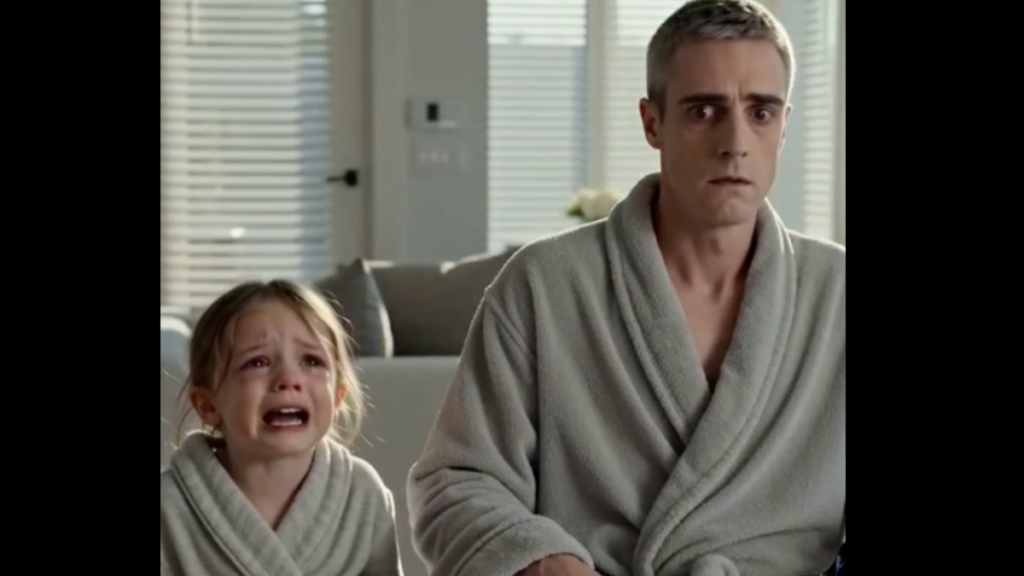
Grant Ellison used to believe that trust was one of the simplest things in the world.
You gave it to people who earned it.
You protected it carefully.
And once someone proved worthy of it, you stopped looking over your shoulder.
For most of his life, that belief had served him well.
It helped him build a successful development company throughout the Pacific Northwest. It helped him maintain business partnerships that lasted decades. It helped him navigate friendships, investments, and every major decision that came with becoming one of Oregon’s most respected real estate developers.
Then the accident happened.
And everything changed.
The morning of the accident began like hundreds of others before it.
Grant arrived at the construction site shortly after seven, carrying a coffee in one hand and blueprints in the other. Rain had fallen throughout the night, leaving the steel framework slick with moisture. Crews were already moving across the property, preparing for another long day.
At forty-five years old, Grant still preferred walking every project personally. His executives often teased him about it.
“You could review all of this from the office,” his operations manager liked to say.
Grant always gave the same answer.
“And miss all the mistakes?”
That morning was no different.
Until a piece of equipment malfunctioned.
Years later, Grant would remember certain details with painful clarity. The sound of metal grinding. Someone shouting his name. The sudden feeling that the ground beneath him wasn’t where it was supposed to be.
Then darkness.
When he woke up in the hospital, his younger sister Brooke was crying beside the bed.
His first question wasn’t about himself.
It was about work.
His second question was about whether anyone else had been injured.
Only after those answers came did he finally ask what everyone had been dreading.
“Can I move my legs?”
The silence that followed told him everything.
The doctors were careful. They always were.
There were discussions about spinal trauma, inflammation, nerve damage, rehabilitation plans, and long-term recovery possibilities. Nobody wanted to make promises. Nobody wanted to take away hope either.
The result was months of uncertainty.
Months that slowly became a year.
At first, Grant approached rehabilitation the same way he approached everything else.
Like a problem.
A challenge.
Something that could be solved through discipline.
If the therapists recommended two hours of exercises, he did three.
If they suggested a routine, he followed it exactly.
If specialists recommended travel for consultations, he boarded planes the next day.
Everyone admired his determination.
But determination didn’t seem to matter.
Instead of improving, he plateaued.
Then he began declining.
The changes were subtle at first.
Fatigue.
Mental fog.
Tremors in his hands.
Difficulty concentrating.
Some days he struggled to finish conversations without losing his train of thought.
Other days he slept twelve or thirteen hours and still woke exhausted.
Every specialist had a theory.
Every specialist had a different explanation.
Complications.
Medication interactions.
Stress.
Depression.
Secondary neurological symptoms.
Recovery wasn’t linear, they reminded him.
Healing took time.
Grant wanted desperately to believe them.
Because the alternative was terrifying.
The only person who never seemed concerned was Celeste Rowan.
Grant met Celeste during his second month of rehabilitation.
She wasn’t a doctor.
She wasn’t a therapist.
She volunteered at the recovery center several days a week, helping patients who didn’t have family nearby.
At least that was how they met.
Over time she became much more than that.
She brought him books when he was too frustrated to watch television.
She stayed during difficult therapy sessions.
She listened when he wanted to talk and sat quietly when he didn’t.
When friends stopped visiting as frequently and business associates returned to their own lives, Celeste remained.
Six months later she moved into the house.
Three months after that they became engaged.
Everyone loved her.
The nurses loved her.
The house staff loved her.
Grant’s friends loved her.
Even his eight-year-old daughter Ava seemed comfortable around her.
And after everything Grant had lost, having someone willing to stay felt like a miracle.
By the time the second year of recovery began, Celeste handled nearly everything.
Medication schedules.
Doctor appointments.
Meal planning.
Physical therapy coordination.
Visitors.
Household routines.
Every morning she personally prepared breakfast.
Always the same.
Eggs.
Toast.
Fresh fruit.
And a glass of orange juice she called his “strength drink.”
“It’s packed with nutrients,” she would tell him with a smile. “You need every advantage you can get.”
Grant never questioned it.
Why would he?
He trusted her completely.
What he didn’t know was that one person in the house had started paying attention to things nobody else noticed.
And unlike the adults around him, eight-year-old Ava hadn’t learned how to ignore her instincts.
Three days before everything fell apart, she saw Celeste standing alone in the kitchen before sunrise.
And what she watched that morning would eventually make her refuse to let her father drink another drop of orange juice.
Three days before everything changed, Ava woke up before sunrise.
It wasn’t unusual.
Ever since her father’s accident, sleep had become unpredictable. Some nights she slept soundly. Other nights she woke up and wandered the house, unable to settle her thoughts.
On this particular morning, the house was still dark.
The grandfather clock in the hallway had just struck six.
Ava padded barefoot down the stairs clutching the stuffed rabbit she’d owned since she was four years old. She planned to sneak into the kitchen, grab a banana, and return upstairs before anyone noticed she was awake.
Instead, she stopped halfway down the hallway.
Someone was already in the kitchen.
Celeste.
At first Ava thought nothing of it.
Celeste was almost always awake before everyone else.
But then she noticed something strange.
Celeste wasn’t making breakfast.
She was standing completely still beside the kitchen island, looking toward the doorway every few seconds as though she wanted to make sure nobody was watching.
Ava instinctively stepped behind the corner.
Not because she thought she was doing anything wrong.
Because children naturally hide when they think they’re about to be told to go back to bed.
From her spot in the hallway, Ava watched Celeste open a cabinet above the refrigerator.
A cabinet that nobody else ever seemed to use.
Celeste reached inside and removed a small brown bottle.
Not one of the medication bottles from her father’s room.
Not one of the vitamins lined up on the kitchen counter.
Something different.
The bottle fit entirely inside her hand.
Celeste unscrewed the cap.
Tilted it carefully.
And added several drops into a glass of orange juice.
Then she stirred it.
Put the bottle away.
And continued making breakfast.
The entire thing took less than thirty seconds.
Ava frowned.
It looked strange.
But not necessarily bad.
She considered asking about it.
Then decided she was probably overthinking it.
So she quietly returned upstairs.
By breakfast, she’d nearly forgotten what she’d seen.
Until later that morning.
Her father fell asleep during a movie.
Again.
That happened a lot lately.
He would start watching something with her, seem interested for fifteen or twenty minutes, then drift off without warning.
Ava hated it.
Not because she was angry.
Because she missed the old version of him.
The version that used to build blanket forts in the living room and stay awake through entire Disney movies.
The version that remembered every character’s name.
The version that laughed more.
The version that seemed stronger.
That afternoon he slept through lunch.
The following day he slept through part of a physical therapy session.
The day after that he forgot the name of Ava’s teacher.
It wasn’t the first time something like that had happened.
But lately it seemed to happen constantly.
And without realizing it, Ava began paying attention.
Children are often better observers than adults.
Adults explain things.
Children simply notice them.
She noticed that her father seemed most alert before breakfast.
She noticed that he became tired afterward.
She noticed that his hands shook more in the afternoons.
She noticed that the strange bottle appeared every morning.
Always before breakfast.
Always before the orange juice.
Two mornings later, she decided to test a theory.
At least as much of a theory as an eight-year-old could have.
Instead of going downstairs after waking up, she hid on the landing overlooking the kitchen.
And waited.
At exactly six-ten, Celeste entered.
At exactly six-thirteen, she opened the cabinet.
At exactly six-fourteen, she added something from the brown bottle into the orange juice.
Again.
Ava’s stomach tightened.
That afternoon she approached Celeste while helping set the table.
“What are the drops for?”
The question seemed innocent enough.
But the reaction wasn’t.
For just a second, Celeste froze.
The pause was tiny.
So small most adults would never have noticed.
Ava noticed.
Then Celeste smiled.
“Oh, those?”
“Yeah.”
“Just vitamins.”
Ava looked toward the kitchen.
“Why don’t they come in the vitamin bottles?”
The smile stayed on Celeste’s face.
But something about it felt different.
“They’re special supplements.”
“Oh.”
“Doctor recommended.”
Ava nodded.
But she didn’t entirely believe her.
Because she’d spent enough time around doctors over the last two years to know something important.
Doctors usually put labels on things.
And she had never seen a label on the brown bottle.
That night, she sat beside her father while he read through paperwork in the living room.
At least he was trying to read.
He kept losing his place.
After several minutes he rubbed his eyes.
“You okay, Daddy?”
Grant smiled tiredly.
“Just a little worn out.”
“You’ve been worn out for a really long time.”
The words slipped out before she could stop them.
For a moment, something flickered across his face.
Sadness.
Then he reached over and squeezed her hand.
“I’m working on it.”
Ava nodded.
But later, lying in bed, she found herself staring at the ceiling.
Thinking about the bottle.
Thinking about the juice.
Thinking about how her father always seemed worse instead of better.
And for the first time, a possibility began forming in her mind.
A scary one.
What if the juice wasn’t helping him?
What if it was the reason he never got better?
The thought sounded ridiculous.
Impossible.
She knew that.
But once it appeared, she couldn’t make it go away.
And the next morning, when she saw Celeste carrying the breakfast tray toward her father’s room, Ava made a decision.
This time, she wasn’t going to watch quietly.
Ava was waiting outside the dining room when Celeste rolled the breakfast tray down the hallway.
The tray looked exactly like it always did.
Eggs.
Toast.
Fruit.
And the glass of orange juice positioned neatly beside the plate.
Celeste smiled when she saw her.
“Good morning.”
Ava didn’t smile back.
“Morning.”
For a second, Celeste seemed surprised by the tone.
Then she continued walking.
Ava followed.
The closer they got to her father’s room, the faster her heart seemed to beat.
Because now that she was actually doing this, she wasn’t entirely sure what her plan was.
What if she was wrong?
What if it really was vitamins?
What if she got Celeste in trouble for nothing?
The thought made her hesitate.
Then they entered the room.
Grant was already awake.
His wheelchair sat beside the window overlooking the gardens.
A book rested on his lap.
The same page he’d apparently been reading for ten minutes.
“There’s my favorite girl,” he said when he saw Ava.
She smiled.
Then immediately looked at the juice.
The glass seemed ordinary.
Completely ordinary.
Which somehow made it worse.
Because bad things weren’t supposed to look normal.
Were they?
Celeste placed the tray on the bedside table.
“Breakfast is served.”
Grant reached automatically for the juice.
The same way he did every morning.
The same way he’d done for over a year.
Then Ava moved.
Before she could talk herself out of it.
Before she could reconsider.
Before fear could win.
She slapped the glass out of his hand.
Orange juice exploded across the hardwood floor.
The crystal shattered against the wall.
The room fell completely silent.
Nobody moved.
Nobody spoke.
Grant stared at the mess.
Then at Ava.
Shock written across his face.
“Ava?”
The little girl pointed at the puddle.
Her eyes already filling with tears.
“Don’t drink it.”
The words came out as a whisper.
Celeste shot to her feet.
“Ava!”
The sharpness in her voice made everyone freeze.
Because Celeste never raised her voice.
Never.
The silence that followed felt enormous.
Then Grant looked from one of them to the other.
“What is happening?”
Ava started crying.
Not dramatic crying.
Scared crying.
The kind that comes when a child has carried something alone for too long.
“The bottle.”
Grant frowned.
“What bottle?”
“The secret bottle.”
For the first time since he’d known her, Celeste looked genuinely unsettled.
It lasted less than a second.
But Grant saw it.
And once he saw it, he couldn’t unsee it.
“What bottle?” he asked again.
This time looking directly at Celeste.
She recovered immediately.
“Ava’s confused.”
No answer.
Just a dismissal.
Grant noticed that too.
Then he looked back at his daughter.
“What bottle, sweetheart?”
Ava pointed toward the kitchen.
“The one she puts in your juice.”
The room became very still.
Grant’s stomach tightened.
Not because he believed it.
Because suddenly he realized he’d never asked.
Never once.
Not in over a year.
He’d simply trusted.
“Celeste?”
She laughed softly.
A little too quickly.
“Ava saw me adding supplements.”
“Supplements?”
“Yes.”
Grant kept watching her.
“Which supplements?”
For the first time, Celeste hesitated.
Only for a second.
But it was enough.
The pause felt wrong.
Then she smiled.
“The recovery blend from Dr. Harrison.”
Grant frowned.
Because Dr. Harrison had retired eight months ago.
And suddenly another realization hit him.
He had never actually seen the bottle.
Not once.
Not in an entire year.
The supplements always appeared in the juice.
Never separately.
Never discussed.
Never shown.
A tiny knot began forming in his chest.
Then he looked at Ava.
“How long have you known about this?”
“I saw it.”
“When?”
“Lots of mornings.”
The knot tightened.
Then Grant turned back toward Celeste.
“Show me the bottle.”
The smile disappeared.
Just slightly.
Then returned.
“Grant, this is ridiculous.”
“Show me.”
“You’re letting an eight-year-old—”
“Show me the bottle.”
His voice wasn’t loud.
It didn’t need to be.
For the first time in months, it sounded like the old Grant Ellison.
The man who closed billion-dollar deals.
The man who asked questions until he got answers.
The man who didn’t accept deflection.
Something flickered across Celeste’s face.
Not anger.
Not frustration.
Calculation.
Then she nodded.
“Fine.”
She left the room.
The moment she disappeared into the hallway, Grant looked at Ava.
The little girl was shaking.
Actually shaking.
Then he reached for her hand.
“Sweetheart.”
She looked up.
Tears running down her cheeks.
“What if I’m wrong?”
The question broke his heart.
Because suddenly he understood.
She wasn’t trying to cause trouble.
She was terrified.
Terrified of being wrong.
Terrified of being right.
Then he squeezed her hand.
“If you’re worried enough to tell me, then I’m glad you did.”
Ava nodded.
Then buried her face against his shoulder.
Minutes passed.
Then more minutes.
Longer than it should have taken to retrieve a bottle from a cabinet.
Grant noticed.
So did Ava.
And by the time Celeste finally returned…
carrying a small brown bottle in her hand…
Grant already knew something was very, very wrong.
Because the label had been torn off.
Completely.
And when he asked why…
Celeste didn’t answer immediately.
Instead, for the first time since the accident, she looked afraid.
The next morning, Celeste was gone.
Not gone from the room.
Gone from the house.
Her closet had been emptied.
Her car was missing.
Her phone had been disconnected.
The staff hadn’t seen her leave.
The security gate logs showed her vehicle departing shortly after midnight.
She hadn’t left a note.
She hadn’t called.
She hadn’t even attempted to explain.
For Grant, that was the moment everything changed.
Until then, a small part of him had still hoped there was some misunderstanding.
Some explanation.
Some reason the sedative had ended up in the juice.
But innocent people usually stay and answer questions.
They don’t disappear overnight.
Within hours, his attorney had assembled a team to review everything related to Grant’s care over the previous two years.
Medical records.
Prescription histories.
Household expenses.
Security footage.
Emails.
Text messages.
Nothing was excluded.
At first, they expected to find evidence of poor judgment or an unauthorized medication.
What they found instead was far more disturbing.
The first discovery came from a locked desk drawer in the guest suite that Celeste had been using as a home office.
Inside were several prescription bottles issued under different names.
None of the names belonged to Grant.
None belonged to Celeste.
Investigators eventually determined the medications had been obtained fraudulently.
Several contained compounds nearly identical to what had been found in Grant’s orange juice.
Then came the financial records.
Over the previous eighteen months, Grant had gradually signed documents granting Celeste increasing authority over his affairs.
Nothing had seemed unusual at the time.
She coordinated appointments.
Managed household operations.
Handled much of his daily care.
Viewed individually, each document appeared reasonable.
Viewed together, they painted a very different picture.
Power of attorney drafts.
Trust amendments.
Ownership restructuring paperwork.
Account access requests.
The further investigators dug, the more concerned they became.
One investigator finally looked up from the stack of documents.
“If these had all been finalized,” he said carefully, “she would have controlled nearly every aspect of your personal finances.”
Grant sat silently.
Across the room, Ava colored at the conference table.
Completely unaware of how close things might have come to ending very differently.
Then another specialist reviewed years of medical records.
The findings stunned everyone.
Grant’s recovery had not simply stalled.
Objective measurements showed multiple periods where his strength and cognitive function improved significantly.
Those gains repeatedly disappeared after returning home.
At the time, doctors attributed the setbacks to the unpredictable nature of neurological recovery.
Now they saw a different possibility.
The pattern closely matched prolonged exposure to sedative medication.
In other words, Grant may never have been declining naturally at all.
He may have been recovering.
Then getting pushed backward again and again.
The realization left him physically ill.
For nearly two years, he had blamed himself.
He wondered whether he wasn’t trying hard enough.
Whether he lacked discipline.
Whether he’d somehow failed at recovery.
Entire nights had been spent staring at ceilings, wondering why his body refused to cooperate.
Now an eight-year-old girl had revealed what dozens of specialists missed.
Because Ava wasn’t studying charts.
She wasn’t reviewing test results.
She wasn’t analyzing medical data.
She was simply watching her father.
She noticed he felt better before breakfast.
She noticed he got worse afterward.
And unlike every adult around him, she trusted what she saw.
A week later, Grant rolled his wheelchair into Ava’s bedroom and found her reading on the floor.
She looked up immediately.
“Did they find out what was wrong?”
Grant sat quietly for a moment.
Then smiled.
“Yeah.”
Ava closed her book.
“What was it?”
Grant looked at his daughter.
The little girl who had refused to ignore a feeling everyone else would’ve dismissed.
“The juice wasn’t helping me.”
Ava’s face immediately fell.
“I knew it.”
The words came out quietly.
Not proudly.
Sadly.
As if she’d been hoping she was wrong.
Grant reached over and squeezed her hand.
“You saved me.”
Ava shook her head.
“No, I didn’t.”
“Yeah,” Grant said softly. “You really did.”
For the first time in years, the future felt different.
Not easy.
Not certain.
But possible.
And for a man who had spent two years believing he was slowly losing himself, possibility felt like the greatest gift anyone could have received.
It just happened to come from an eight-year-old girl who loved him enough to knock a glass of orange juice out of his hand.
The police became involved two weeks later.
Not because Grant wanted revenge.
Because the evidence kept growing.
Every time investigators uncovered one answer, three more questions appeared.
The most troubling discovery came from a series of emails recovered from an old laptop found in a storage closet.
The messages weren’t addressed to Grant.
They weren’t even addressed to anyone in Oregon.
They were conversations between Celeste and a man living in Arizona.
A man she had spoken to hundreds of times over the previous two years.
At first the messages seemed harmless.
Then investigators reached the older ones.
The messages written shortly after Grant’s accident.
One email stopped everyone cold.
He’s more vulnerable than I expected.
Another appeared three weeks later.
The daughter is the only complication.
Grant had to stop reading after that one.
Not because he couldn’t.
Because he suddenly felt sick.
The daughter.
Not Ava.
The daughter.
As if his child was nothing more than an obstacle.
Nothing more than a problem to manage.
For the first time since Celeste disappeared, anger finally arrived.
Real anger.
The kind that settles deep.
The kind that doesn’t leave quickly.
Meanwhile, something remarkable was happening.
Without the mysterious substance in his system, Grant began improving.
Not overnight.
Not dramatically.
But consistently.
The tremors became less frequent.
His concentration improved.
He stayed awake through entire conversations.
For the first time in nearly two years, he finished a book.
Then another.
Then a third.
His physical therapists noticed the changes immediately.
“You seem different,” one of them said during a session.
Grant laughed.
“I feel different.”
The therapist reviewed his latest measurements.
Then looked up.
“I don’t think you realize how different.”
Three months later, Grant managed something he hadn’t done since the accident.
He stood.
Only for twelve seconds.
Only with assistance.
But he stood.
When it happened, Ava started crying.
The therapist started crying.
Grant started crying.
Nobody even tried pretending otherwise.
Twelve seconds.
To most people, it would’ve seemed insignificant.
To them, it felt like a miracle.
That night, Ava sat beside him on the back patio.
The sun was setting over the gardens.
Orange light stretched across the lawn.
For a while neither spoke.
Then Ava asked the question she’d been carrying for months.
“Did Celeste ever love us?”
Grant wasn’t expecting it.
The question hit harder than anything the investigators had uncovered.
Because there wasn’t a simple answer.
He thought about the cookies they’d baked together.
The bedtime stories.
The school recitals.
The scraped knees Celeste had bandaged.
The nights she’d sat beside his hospital bed.
Then he thought about the emails.
The lies.
The bottle.
The deception.
Finally, he answered honestly.
“I don’t know.”
Ava looked down.
Grant gently squeezed her hand.
“But I know something else.”
“What?”
“I know you do.”
Ava frowned.
“What do I do?”
“You love people.”
The little girl seemed confused.
“Everybody loves people.”
Grant smiled.
“No.”
A pause.
“Not like you.”
Another pause.
“You loved me enough to say something when everyone else thought everything was fine.”
Ava stared out toward the garden.
Then quietly said, “I was scared.”
“I know.”
“I thought maybe I was wrong.”
Grant nodded.
“I know that too.”
A year later, investigators finally located Celeste.
She was living under a different name in Nevada.
The criminal case moved forward.
The financial fraud charges were substantial.
The evidence was overwhelming.
But by then, Grant found he cared less about the outcome than he expected.
Because his life had stopped being about what she’d taken.
It had become about what he still had.
A future.
A daughter.
A recovery that was finally moving forward.
On the second anniversary of the day Ava knocked the juice from his hand, Grant hosted a small family dinner.
Nothing extravagant.
Just close friends, relatives, and the people who had helped them through the hardest chapter of their lives.
Near the end of the evening, Grant tapped his glass gently.
The room grew quiet.
Then he looked toward Ava.
Now ten years old.
Still observant.
Still stubborn.
Still brave.
“There was a time,” he said, “when I thought the strongest person in this family was me.”
Laughter moved through the room.
Grant smiled.
“Turns out I was wrong.”
Ava immediately groaned.
“Dad…”
The room laughed again.
But Grant wasn’t joking.
Not really.
He looked at his daughter.
Then said the one thing he hoped she would remember for the rest of her life.
“The strongest person in this family was the one who noticed something nobody else did and had the courage to speak up.”
Ava’s cheeks turned bright red.
She buried her face in her hands.
Everyone applauded.
And as Grant looked around the table, he realized something.
The thing that ultimately saved him wasn’t a doctor.
Or a lawyer.
Or an investigator.
It wasn’t money.
Or influence.
Or power.
It was an eight-year-old girl who trusted her instincts when every adult around her ignored them.
And because she did, her father got his life back.
The last secret appeared inside Ava’s old playroom.
Not because investigators found it.
Because Ava did.
Three weeks after Celeste was arrested, Grant finally asked the staff to clear out the rooms she had used.
Most of her belongings were already gone.
Clothes.
Files.
Medication bottles.
The obvious things.
But Ava noticed something nobody else did.
A loose panel behind the bookshelf.
Inside was a small envelope.
And inside the envelope was a copy of a document Grant had never seen.
A signed draft of a future trust amendment.
His signature had been forged.
Ava stood beside him while the attorney reviewed it.
Grant didn’t speak for a long time.
Because the document made one thing painfully clear.
Celeste hadn’t just been trying to weaken him.
She had been preparing to erase his control entirely.
His company.
His estate.
Even decisions involving Ava.
All of it had been quietly moving toward her hands.
The attorney finally looked up.
“This would never have held up under close review,” he said.
Grant stared at the forged signature.
“But if I had kept declining…”
The attorney didn’t finish the sentence.
He didn’t need to.
If Grant had continued getting weaker, foggier, more dependent, Celeste might have convinced everyone around him that he was no longer capable of managing his own life.
And the worst part was that people may have believed her.
Because they already had.
For nearly two years.
That night, Grant found Ava sitting on the stairs outside his room.
She looked smaller than usual.
“You okay?” he asked.
Ava hugged her knees.
“I keep thinking about what would’ve happened if I didn’t see the bottle.”
Grant moved beside her carefully.
Then he took her hand.
“But you did.”
She looked up at him.
“But what if I hadn’t?”
Grant’s throat tightened.
Then he answered as gently as he could.
“Then someone else would have found the truth eventually.”
Ava didn’t seem convinced.
So he added the real answer.
“But I’m very grateful it was you.”
Tears filled her eyes.
“I don’t want to be scared in our house anymore.”
That sentence broke him more than the forged document.
Because houses are supposed to be safe.
Especially for children.
Grant pulled her close.
“Then we change the house.”
And they did.
Not the walls.
Not the furniture.
The feeling.
The routines disappeared.
No more silent breakfasts.
No more sealed-off rooms.
No more people deciding what Grant needed without asking him.
Doctors came directly through the front door.
Therapists spoke to him, not around him.
Ava ate breakfast beside him every morning.
And the orange juice never came back.
Six months later, Grant stood again.
This time for almost a full minute.
Ava counted every second out loud.
By forty, she was crying.
By fifty, everyone was.
By sixty, Grant laughed for the first time in what felt like years.
Not because standing fixed everything.
It didn’t.
But because for the first time since the accident, his body finally felt like it belonged to him again.
A year later, Celeste was sentenced.
Grant didn’t attend.
He didn’t need to.
The courtroom belonged to the past.
His life was somewhere else now.
It was in the therapy room.
It was in the garden.
It was at the kitchen table with Ava, where she still watched everything, but no longer with fear.
On the anniversary of the day she knocked the glass from his hand, Grant poured two cups of apple cider.
Ava wrinkled her nose.
“No orange juice?”
Grant smiled.
“Never again.”
She laughed.
A real laugh.
Then he raised his cup.
“To the bravest person I know.”
Ava rolled her eyes.
“Dad.”
“I mean it.”
She looked down, embarrassed.
Grant waited until she looked back up.
Then he said the words he had been carrying for a long time.
“You trusted yourself when everyone else trusted the wrong person.”
Ava’s smile faded slightly.
Then she nodded.
Grant touched his cup to hers.
“And because of that, I got my life back.”
Years later, people would ask Grant what saved him.
Some expected him to say medicine.
Others expected him to say money.
Some thought it was the investigation, or the lawyers, or the doctors who finally found the pattern.
Grant always gave the same answer.
“My daughter noticed.”
Then he would smile.
Because sometimes the truth doesn’t arrive loudly.
Sometimes it comes from the quietest person in the room.
A little girl.
A glass of orange juice.
And one small voice brave enough to say no.
