

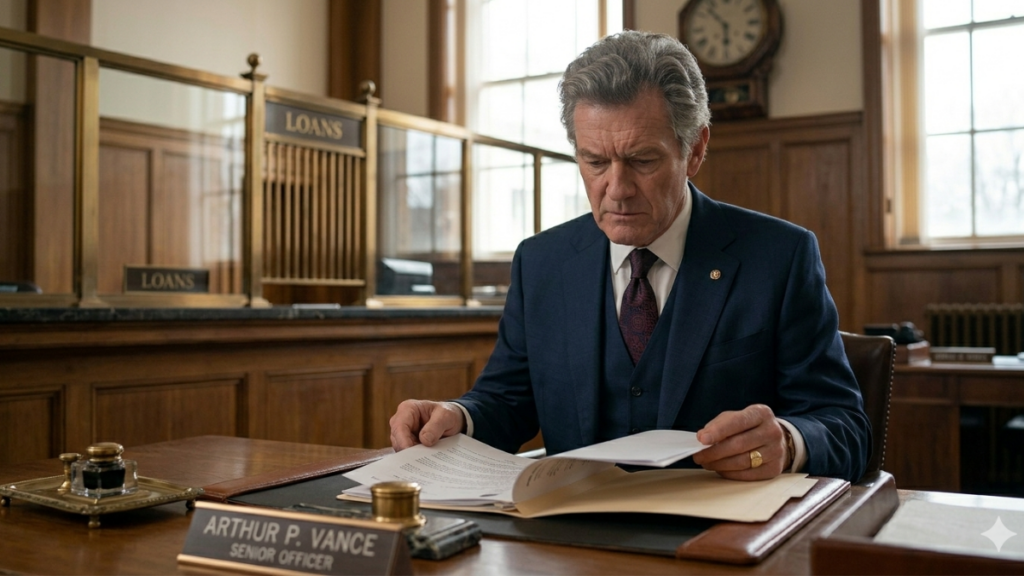
Mr. Whitaker stepped out of his office and stopped so abruptly that the conversation around him died instantly.
The man was a legend in Chicago finance.
Eighty years old.
Founder of North State Financial.
Billionaire many times over.
The kind of person senators waited to meet.
Yet the moment he saw Noah Carter standing there in his faded gray hoodie, the color drained from his face.
“Robert?”
The word escaped him before he could stop it.
The room froze.
Noah blinked.
“My grandpa was Robert.”
The old man’s hands trembled.
Actually trembled.
Nobody in the room had ever seen that happen before.
Not once.
Then Whitaker looked at the folder clutched in Noah’s hands.
And his expression changed completely.
“What do you have there?”
Noah swallowed.
“The things Grandpa told me to bring.”
Silence.
Absolute silence.
Whitaker stared at the folder for several long seconds.
Then slowly stepped forward.
“Come with me.”
The lobby erupted immediately.
Questions.
Whispers.
Confusion.
The old banker ignored all of it.
He simply placed a hand on Noah’s shoulder and guided him toward his office.
The massive oak doors closed behind them.
Outside, the billionaires and executives pressed closer to the glass walls, desperate to see what was happening.
Inside, Whitaker sat across from Noah.
Neither spoke for a moment.
Then the old banker asked quietly:
“When did Robert pass?”
“Three days ago.”
Whitaker lowered his head.
The sadness on his face looked genuine.
Deep.
Old.
“He was my best friend.”
Noah blinked.
“Really?”
Whitaker laughed softly.
“Long before either of us had any money.”
The answer surprised Noah.
Because his grandfather never talked much about himself.
Not really.
To Noah, Grandpa Robert had simply been Grandpa.
The man who fixed bicycles.
Made pancakes.
Told stories.
And somehow always knew the right thing to say.
Then Whitaker nodded toward the folder.
“Show me.”
Noah opened it carefully.
The contents seemed ordinary.
A few documents.
Several old photographs.
A brass key.
The faded note.
Nothing that looked important.
Yet the moment Whitaker saw the key, his hands started shaking again.
“No.”
The whisper barely escaped.
Noah frowned.
“What?”
Whitaker picked up the key.
Staring.
Remembering.
Then he looked at Noah.
“Do you know what this is?”
Noah shook his head.
“No.”
The old banker smiled sadly.
“Of course not.”
Then he leaned back in his chair.
And for the first time in decades, allowed himself to revisit a memory.
Sixty-two years earlier.
Two young men.
Robert Carter and James Whitaker.
Twenty years old.
Broke.
Hungry.
Ambitious.
Sharing a one-room apartment above a laundromat.
Dreaming about futures neither could afford.
One night, after yet another failed business venture, they made a promise.
A ridiculous promise.
The kind young men make when they think they have forever.
If either one became successful, they would never leave the other behind.
Never.
No matter what.
Then life happened.
James Whitaker founded a financial company.
The company exploded.
Success followed.
Money followed.
Power followed.
Meanwhile Robert…
Robert disappeared.
Not completely.
Just quietly.
He stopped chasing wealth.
Stopped chasing status.
Stopped chasing everything.
Instead he got married.
Started a family.
Worked ordinary jobs.
Lived an ordinary life.
Whitaker never understood it.
Not until much later.
Not until he realized Robert was happier than he was.
Far happier.
Then Whitaker looked at Noah.
“Your grandfather saved my life.”
The words stunned him.
“What?”
Whitaker nodded.
“Twice.”
The old man opened a drawer.
Removed a photograph.
Two young men standing beside an old pickup truck.
One was clearly Whitaker.
The other…
Grandpa.
Young.
Strong.
Laughing.
Noah stared.
Because he’d never seen him like that before.
Then Whitaker pointed to the brass key.
“That key opens a safe deposit box.”
Noah frowned.
“What’s inside?”
Whitaker smiled.
“The reason you’re here.”
The room seemed to grow quieter.
Then the old banker stood.
“Come on.”
Twenty minutes later, they entered the private vault beneath North State Financial.
The place looked more like a fortress than a bank.
Steel.
Concrete.
Armed security.
Layers of protection.
Whitaker led Noah through multiple checkpoints.
Until they reached a single deposit box.
Number 1147.
The old banker stared at it.
Then at the brass key.
Then at Noah.
“Your grandfather left strict instructions.”
“What instructions?”
Whitaker smiled.
“He said only you could open it.”
Noah swallowed.
Suddenly nervous.
Then he inserted the key.
Turned it.
And heard the lock click.
The box slid open.
Inside sat only one item.
A sealed envelope.
The front read:
For Noah Carter.
The handwriting was unmistakable.
Grandpa’s.
Noah’s chest tightened.
Slowly, he opened it.
The letter inside was several pages long.
The first line made him immediately start crying.
Hello, Noah.
If you’re reading this, then I finally ran out of time.
Whitaker quietly looked away.
Giving the boy privacy.
But Noah kept reading.
Your mother will tell you I wasn’t wealthy.
She’s right.
At least in the way most people measure wealth.
A tear rolled down Noah’s cheek.
The letter continued.
When James became successful, he offered me everything. Partnerships. Investments. Opportunities.
I said no.
Not because I didn’t love him.
Because I wanted something else.
The words blurred through tears.
I wanted family dinners.
I wanted baseball games.
I wanted birthdays.
I wanted to know my grandchildren.
The vault became silent.
Painfully silent.
And then came the sentence that changed everything.
Most people spend their lives trying to become rich.
I spent mine trying to become yours.
Noah broke.
Completely.
Then he reached the final page.
And froze.
“What?”
Whitaker immediately looked up.
Noah stared at the paper.
Unable to process what he was reading.
“What is it?”
The boy looked up slowly.
“Grandpa left me something.”
Whitaker laughed softly.
“I’m sure he did.”
“No.”
Noah swallowed.
“He left me half.”
The smile disappeared from Whitaker’s face.
“Half of what?”
Noah handed him the letter.
The old banker read.
Then sat down.
Hard.
Because suddenly his hands were trembling again.
More than before.
Much more.
The room went silent.
Whitaker reread the page.
Then a third time.
Then finally looked at Noah.
The boy stared back.
Confused.
“What does it mean?”
The old banker laughed.
A stunned laugh.
An emotional laugh.
The kind that escapes when reality stops making sense.
Then he whispered:
“It means your grandfather secretly owned half of North State Financial.”
The world stopped.
Noah blinked.
“What?”
Whitaker nodded.
Tears forming in his own eyes now.
“Sixty-two years ago, Robert invested twenty dollars.”
The old banker smiled through the tears.
“The only twenty dollars he had.”
Noah stared.
“Twenty?”
Whitaker nodded.
“He became my silent partner.”
The vault felt suddenly smaller.
“Then why didn’t he use the money?”
Whitaker laughed again.
Because only Robert Carter would ask for wealth and then ignore it for sixty years.
“Because he never wanted it.”
The answer came softly.
“He only wanted one thing.”
“What?”
Whitaker looked directly at Noah.
“You.”
The old banker pointed to the final paragraph.
Noah looked down.
Then read.
I promised myself I would never touch this money unless my family truly needed it.
We never did.
Because love made us richer than any bank account ever could.
But now it’s yours.
Use it wisely.
Help people.
Stay kind.
And remember:
Don’t let money make you small.
By the time Noah finished reading, neither he nor Whitaker had dry eyes.
Outside the vault, the billionaires still waited.
The executives still whispered.
The people who laughed at the kid in the faded hoodie still expected a joke.
Instead, an hour later, they watched James Whitaker emerge from the elevator beside Noah Carter.
The entire lobby fell silent.
Because the old banker looked emotional.
Almost shaken.
Then Whitaker turned toward the crowd.
Toward the people who had smirked.
Toward the people who never bothered to learn the boy’s name.
And announced:
“Ladies and gentlemen, I’d like you to meet my new business partner.”
The room froze.
Nobody laughed now.
Not when they learned the truth.
Not when they learned the boy in the faded hoodie had just become one of the wealthiest people in Chicago.
But Noah barely noticed.
Because in his pocket sat a worn letter.
And in his heart sat something worth infinitely more.
The certainty that his grandfather’s greatest gift was never the fortune.
It was the life he’d chosen instead.
The announcement made headlines before noon.
By sunset, every news station in Chicago had some version of the same story.
MYSTERY BOY IN HOODIE INHERITS BILLION-DOLLAR STAKE.
FINANCIAL HEIR SHOCKS ELITE INVESTORS.
THE SILENT PARTNER NO ONE KNEW EXISTED.
Reporters camped outside North State Financial.
Cameras followed Noah and his mother.
Commentators debated whether a child should control such wealth.
And for the first time in his life, Noah wished people would stop looking at him.
Because all he really wanted was his grandfather back.
That night, he sat alone on the fire escape outside his apartment.
The city lights stretched endlessly around him.
In his hands rested the photograph of young Robert Carter and James Whitaker.
Two friends.
Two very different lives.
Yet somehow both successful.
The fire escape door creaked open.
His mother stepped outside.
Emily sat beside him.
Neither spoke for a moment.
Then she smiled softly.
“You okay?”
Noah shrugged.
“Not really.”
She nodded.
“I figured.”
The city hummed below them.
Cars.
Sirens.
Life continuing.
“How much is it?”
The question had been bothering him all day.
Emily laughed.
“A lot.”
“How much?”
She hesitated.
Then answered honestly.
“More money than our family could spend in several lifetimes.”
Noah stared at the skyline.
“That seems ridiculous.”
His mother smiled.
“Your grandfather would’ve said the same thing.”
That made him laugh.
Then cry.
Then laugh again.
Because it was true.
Grandpa Robert would have rolled his eyes at every news headline.
Every television interview.
Every discussion about billions.
Then he would’ve asked if Noah wanted pancakes.
The next week became a blur.
Lawyers.
Meetings.
Accountants.
Interviews.
Trust agreements.
Everyone wanted something.
Everyone.
Some wanted access.
Some wanted favors.
Some wanted attention.
And some wanted money.
Especially money.
Then one afternoon, Noah sat in Whitaker’s office overlooking the city.
The old banker watched him carefully.
“You seem unhappy.”
Noah looked up.
“Am I supposed to be happy?”
Whitaker considered that.
Then shook his head.
“No.”
The honesty surprised him.
Whitaker smiled.
“Your grandfather would’ve hated this circus.”
That earned another laugh.
“Definitely.”
Then the old man opened a drawer.
Removed a leather notebook.
And handed it to Noah.
“What is it?”
“Your grandfather’s.”
Noah froze.
“What?”
Whitaker nodded.
“He left it with me twenty years ago.”
His pulse accelerated.
“Why?”
The old banker smiled sadly.
“He said you’d need it someday.”
Noah opened the notebook.
The pages were filled with handwritten notes.
Observations.
Thoughts.
Lessons.
Stories.
Grandpa’s voice seemed to jump off every page.
Then one entry caught his attention.
If Noah ever reads this, it means I’m gone.
The words immediately blurred.
Noah swallowed hard.
Then continued.
Money attracts people.
Character reveals them.
Watch carefully.
The next several pages contained advice.
Not about investing.
Not about business.
About people.
Who to trust.
Who not to trust.
How to stay grounded.
How to remain kind.
Then he reached an entry written only six months earlier.
And his breath caught.
There was a list.
Names.
Dozens of names.
“What is this?”
Whitaker looked over.
Then smiled.
“The real inheritance.”
Noah frowned.
The names meant nothing to him.
“What do you mean?”
Whitaker pointed.
“Read them.”
Noah did.
A retired teacher.
A mechanic.
A widow.
A librarian.
A firefighter.
Ordinary people.
Then he noticed something.
Each name had notes beside it.
Helped pay rent after your grandmother got sick.
Fixed my truck for free.
Bought your mother school supplies.
Brought food after surgery.
Visited every Christmas.
Noah looked up.
Confused.
Whitaker’s eyes softened.
“Those are the people who helped your grandfather.”
The realization hit slowly.
Then all at once.
The fortune.
The company.
The shares.
None of that was first on the list.
People were.
Always people.
Then Noah reached the final page.
A single sentence sat alone in the center.
If you’re lucky enough to have more than you need, become the answer to someone else’s prayer.
Noah closed the notebook.
Silent.
Thinking.
Then he looked out at the city.
Millions of people.
Millions of stories.
Millions of struggles.
And suddenly he knew exactly what his grandfather wanted him to do.
Three months later, the headlines returned.
But they weren’t about inheritance anymore.
THE CARTER FOUNDATION OPENS FIRST COMMUNITY CENTER.
CHICAGO BOY FUNDS SCHOOL LUNCH PROGRAMS.
ANONYMOUS DONATIONS ERASE MEDICAL DEBT FOR 400 FAMILIES.
The projects kept growing.
Scholarships.
Housing assistance.
Food programs.
After-school centers.
Every time reporters asked why, Noah gave the same answer.
“My grandfather taught me.”
Eventually people stopped talking about the money.
They started talking about the impact.
And that would’ve made Robert Carter happiest of all.
One year after the visit to North State Financial, Noah stood beside his grandfather’s grave.
The autumn air smelled like rain.
Just like the day the letter arrived.
Whitaker stood nearby.
So did Emily.
Neither interrupted.
Noah placed a small brass key against the headstone.
The same key.
The one that started everything.
Then he smiled.
“Hey, Grandpa.”
The wind rustled through the trees.
“I figured out what to do.”
For a moment, he imagined the old man smiling.
Proud.
Not because of the money.
Because of the choice.
Then Noah looked at the city skyline in the distance.
At the towers.
The banks.
The fortunes.
And finally understood what Robert Carter had known all along.
Being rich wasn’t about what you kept.
It was about what remained after you were gone.
And judging by the thousands of lives his grandfather had touched without ever becoming famous…
Robert Carter had died one of the richest men in the world.
Five years later, nobody recognized Noah Carter anymore.
At least not the way they used to.
The faded hoodie was gone.
He was taller now.
Sixteen.
Confident.
Still quiet.
Still thoughtful.
Still carrying the same notebook everywhere he went.
The one his grandfather left behind.
The Carter Foundation had grown beyond anything anyone imagined.
Scholarships funded thousands of students.
Community centers operated across three states.
Medical debt programs had helped more than fifty thousand families.
Every reporter called Noah a prodigy.
Every business magazine called him a visionary.
Every television host wanted to know the secret.
The answer disappointed most of them.
Because it wasn’t complicated.
It wasn’t revolutionary.
And it definitely wasn’t business genius.
One afternoon, Noah stood at a ribbon-cutting ceremony for a new youth center on the south side of Chicago.
The building buzzed with excitement.
Children ran through hallways.
Parents smiled.
Teachers toured classrooms.
Everything felt alive.
Then a young employee approached him.
“There’s someone asking to see you.”
Noah glanced up.
“Who?”
The woman smiled.
“He says you’ll remember him.”
Curious, Noah followed her toward the lobby.
A man stood near the entrance.
Mid-thirties.
Work boots.
Paint-stained jeans.
Nervous expression.
Noah didn’t recognize him.
Apparently the man noticed.
“It’s okay.”
He laughed awkwardly.
“You were too young.”
Noah frowned.
The man reached into his wallet.
Then removed an old photograph.
The moment Noah saw it, he froze.
It showed a small grocery store.
A much younger version of his mother.
And him.
Age seven.
Holding a carton of milk.
The memory hit instantly.
The winter after Grandma died.
The month the power got shut off twice.
The week his mother cried because she didn’t know how they’d afford groceries.
The man smiled.
“My father owned that store.”
Noah’s heart tightened.
Slowly.
Painfully.
Because he remembered.
One night, when they couldn’t pay.
The store owner told them the register was broken.
Told them everything was free.
Told them not to worry.
Even though everybody knew he was lying.
Even though everybody knew he paid for it himself.
The man swallowed.
“My dad passed away last year.”
Noah’s chest tightened.
“I didn’t know.”
The man nodded.
Then smiled.
“But before he died, he told me something.”
The lobby became quiet.
“He said if I ever got the chance to meet Noah Carter, I should tell him not to feel guilty.”
Noah blinked.
“Guilty?”
The man nodded.
“He said you always looked embarrassed when he helped.”
The memory made Noah laugh.
Because it was true.
Then the man continued.
“My father said helping your family was one of the best investments he ever made.”
The words landed heavily.
Because suddenly Noah understood.
The grocery store owner.
The mechanic.
The teacher.
The widow.
All those names in Grandpa’s notebook.
None of them had helped because they expected repayment.
They helped because somebody needed it.
The same lesson Robert Carter spent a lifetime teaching.
The man reached into his jacket.
Then handed Noah a folded piece of paper.
“What’s this?”
“My father’s final note.”
Noah opened it.
Only one sentence was written inside.
Your grandfather was right.
Kindness always comes back.
For a moment, Noah couldn’t speak.
Then he folded the note carefully.
Placed it inside Robert’s notebook.
And smiled.
That night, long after everyone left, Noah drove alone to Green Hollow Cemetery.
The stars glowed overhead.
The city lights shimmered in the distance.
And Robert Carter’s headstone sat exactly where it always had.
Simple.
Modest.
Unimpressive.
Just the way he’d wanted.
Noah sat in the grass.
Opened the notebook.
Then added one final page.
Grandpa,
You were right about everything.
The money wasn’t the inheritance.
The company wasn’t the inheritance.
The inheritance was the people.
The lessons.
The kindness.
The promise.
I understand now.
He paused.
Looking at the familiar handwriting scattered throughout the notebook.
Then wrote one final line.
I won’t let money make me small.
A breeze moved through the trees.
Soft.
Gentle.
Almost familiar.
Noah closed the notebook.
Looked up at the stars.
And smiled.
Because for the first time, he realized something.
His grandfather hadn’t left him a fortune.
He’d left him a mission.
And unlike the money, that inheritance would never run out.
Ten years later, the story returned to where it began.
A rainy October afternoon.
A gray sky over Chicago.
And a child standing in the lobby of North State Financial Tower.
The security guards barely noticed her at first.
She couldn’t have been older than eleven.
Her coat was too large.
Her shoes were worn.
And she clutched a plastic folder against her chest.
The girl approached the concierge desk.
“Excuse me.”
The receptionist smiled politely.
“Yes?”
The girl swallowed.
“I need to see Mr. Carter.”
The receptionist paused.
“Do you have an appointment?”
The child shook her head.
“No.”
A few executives nearby exchanged amused looks.
Some things never changed.
Then the girl opened her folder.
Removed a yellowed piece of paper.
And said:
“My grandmother told me to bring this if I ever got into trouble.”
The receptionist glanced at the paper.
Then froze.
Because across the top, in familiar handwriting, were three words:
For Noah Carter
Twenty minutes later, Noah stepped out of a board meeting.
Thirty-three years old now.
Still carrying his grandfather’s notebook.
Still refusing private jets.
Still wearing the same inexpensive watch he’d owned for years.
The executives followed behind him.
Curious.
Confused.
Wondering why their chairman had abruptly ended a billion-dollar meeting.
Then Noah saw the girl.
And immediately recognized the paper in her hands.
Not the paper itself.
The handwriting.
His grandfather’s handwriting.
The room fell silent.
“What’s your name?”
The girl stood.
“Natalie.”
“Who gave you that?”
“My grandma.”
Noah’s heart skipped.
“What’s her name?”
The answer made him smile instantly.
“Margaret Dawson.”
The retired teacher.
One of the names from the notebook.
One of the people who had helped his family when they had nothing.
One of Grandpa Robert’s people.
Noah laughed softly.
Of course.
Of course it was one of them.
“What can I do for you?”
The girl’s eyes filled with tears.
“My grandma’s sick.”
The room became quiet.
“She keeps saying you’ll know what to do.”
Noah looked at the letter.
Then at the frightened child.
Then around the lobby.
At the marble floors.
The expensive suits.
The executives.
The billionaires.
And suddenly he remembered standing in that exact spot decades earlier.
A scared kid in a faded hoodie.
Holding a folder.
Trying to keep a promise.
The memory hit so clearly that it almost felt like yesterday.
Then Noah smiled.
The same smile Robert Carter used to give him.
Warm.
Certain.
Safe.
“You know,” he said, kneeling to her level, “my grandfather used to say something.”
The girl wiped her eyes.
“What?”
Noah glanced toward the city skyline beyond the glass windows.
Then back at her.
“He said if you’re lucky enough to have more than you need, become the answer to someone else’s prayer.”
The child’s lip trembled.
Noah stood.
“Let’s go help your grandmother.”
As they walked toward the elevators, one of the younger executives watched in confusion.
“Who was that?”
An older board member smiled.
“A very important client.”
The executive frowned.
“I’ve never heard of her.”
The board member looked toward the elevator doors as they closed.
Then smiled again.
“You don’t understand.”
“No?”
The older man shook his head.
“That’s how the Carter fortune works.”
The executive looked confused.
“What does that mean?”
The board member glanced toward a framed photograph hanging in the lobby.
A picture of an elderly man with kind eyes and a warm smile.
Robert Carter.
Founder of nothing.
Owner of almost everything.
Loved by everyone who mattered.
“It means,” the board member said quietly, “that every favor eventually comes home.”
And somewhere, Noah liked to imagine, his grandfather was smiling.
Because the promise he’d made beside a hospital bed all those years ago was still being kept.
One person at a time.
Twenty years later, Noah Carter became the oldest man in the room.
The realization surprised him.
Not because of his age.
Because it felt like it happened overnight.
One day he was the kid in the faded hoodie.
The next he was standing at podiums while younger people called him “sir.”
Life had a way of moving quietly until suddenly it hadn’t.
The Carter Foundation now operated in seventeen states.
Millions of people had received scholarships.
Medical debt had been erased for hundreds of thousands.
Entire neighborhoods had been rebuilt.
Yet Noah rarely talked about any of it.
Whenever someone praised him, he always gave the same answer.
“It wasn’t my idea.”
And technically, it wasn’t.
The idea belonged to a man named Robert Carter.
A man who never wanted his name on buildings.
Never wanted statues.
Never wanted recognition.
Just people.
Always people.
One spring afternoon, Noah received a call from North State Financial.
The voice on the other end sounded nervous.
“Mr. Carter?”
“Yes?”
“There’s someone here asking for you.”
Noah smiled.
The receptionist laughed softly.
“You already know what I’m about to say, don’t you?”
“Does the person have a folder?”
A pause.
Then:
“Yes.”
Noah laughed.
“I’m on my way.”
Some traditions deserved protecting.
Twenty minutes later he entered the familiar lobby.
Different furniture.
Different technology.
Different faces.
But the same building.
The same marble floors.
The same place where his life changed decades ago.
Near the front desk stood a teenage boy.
Thin.
Nervous.
Holding a folder so tightly his knuckles were white.
Noah immediately recognized the look.
Fear.
Hope.
Determination.
The same combination he’d carried when he first entered those doors.
The boy looked up.
“Mr. Carter?”
“That’s me.”
The teenager swallowed.
“My grandfather told me to find you.”
The words made Noah smile.
Because of course they did.
Always the grandparents.
Always.
“What was his name?”
“Frank Morales.”
Noah froze.
Then laughed.
A deep laugh.
An emotional one.
Frank Morales.
The mechanic.
The man from the notebook who repaired his mother’s car for free when they couldn’t afford groceries and rent in the same month.
“Frank.”
The memory rushed back instantly.
“How is he?”
The boy lowered his eyes.
“He passed away.”
The smile faded.
Of course.
Time was doing what time always did.
Taking people.
Leaving memories.
Creating responsibility.
Then the teenager handed him a letter.
The envelope was old.
Yellowed.
The handwriting wasn’t Robert’s.
It belonged to Frank.
Noah opened it.
And immediately smiled.
Only Frank would’ve written something this blunt.
Noah,
If my grandson is standing in front of you, it means life punched him in the mouth.
Help him if you can.
If you can’t, tell him to quit whining and get back to work.
Frank.
Noah laughed so hard tears appeared in his eyes.
The boy looked confused.
“What?”
“That’s exactly how he talked.”
The teenager smiled for the first time.
Then Noah looked at him carefully.
Really looked.
And suddenly he understood.
The folder.
The letter.
The nervousness.
This wasn’t about money.
It never was.
“What’s your name?”
“Gabriel.”
“Okay, Gabriel.”
The boy waited.
“So what’s wrong?”
The answer came quietly.
“My mom’s sick.”
There it was.
The real reason.
Always.
Not greed.
Not ambition.
Love.
People only carried old letters across cities when love was involved.
Then Gabriel added:
“I don’t know what to do.”
Noah felt something tighten in his chest.
Because suddenly he wasn’t looking at Gabriel anymore.
He was looking at himself.
Age eleven.
Scared.
Lost.
Holding a folder.
Wondering if anyone would listen.
Then Noah placed a hand on the boy’s shoulder.
The same way Whitaker once placed a hand on his.
“Good.”
Gabriel blinked.
“What?”
“Because I do.”
The boy’s eyes immediately filled with tears.
And just like that, the cycle continued.
Again.
The way it always had.
Years later, after Noah’s own hair had turned gray, a journalist finally asked the question everyone wondered.
The interview took place in a simple office overlooking Lake Michigan.
Noah was seventy-two.
Older than Robert had been when he first wrote the notebook.
The reporter leaned forward.
“You’ve given away billions of dollars.”
Noah shrugged.
“Apparently.”
The reporter laughed.
“Why?”
Noah looked out the window.
Toward the city.
Toward the neighborhoods.
Toward the people.
Then smiled.
Because the answer had never changed.
Not once.
“My grandfather told me not to let money make me small.”
The reporter smiled.
“I’ve heard you say that before.”
Noah nodded.
“Then you’ve already got the answer.”
Years later, after Noah Carter passed away peacefully in his sleep, thousands attended his memorial.
Teachers.
Students.
Doctors.
Construction workers.
Single parents.
Business leaders.
Children who were now adults.
Adults who had once been children.
The crowd stretched for blocks.
Many had never met him personally.
Yet somehow all of them knew him.
Because somewhere along the way, a scholarship arrived.
Or a debt disappeared.
Or a community center opened.
Or someone showed up when they needed help.
At the end of the service, Noah’s granddaughter stepped to the podium.
She held something familiar.
A worn notebook.
Robert Carter’s notebook.
The same one.
Its pages now filled with three generations of handwriting.
Robert’s.
Noah’s.
And others.
Thousands of names.
Thousands of stories.
Thousands of promises kept.
The granddaughter smiled through tears.
Then read the final entry Noah had written before his death.
If you’re reading this, then it’s your turn now.
Don’t worry about the money.
The money was never the point.
Find people.
Help them.
Listen.
Remember names.
Keep promises.
And if a frightened kid ever walks through a door carrying an old letter…
Make sure somebody believes them.
The room fell silent.
Then slowly, people began to smile.
Because everyone understood.
The real inheritance was never hidden in a vault.
Never stored in a bank.
Never measured in dollars.
It lived inside every person who chose kindness after receiving it.
And as long as even one person kept passing it forward, Robert Carter’s twenty-dollar investment would keep growing forever.
Not in wealth.
In people.
Exactly the way he’d planned.
