

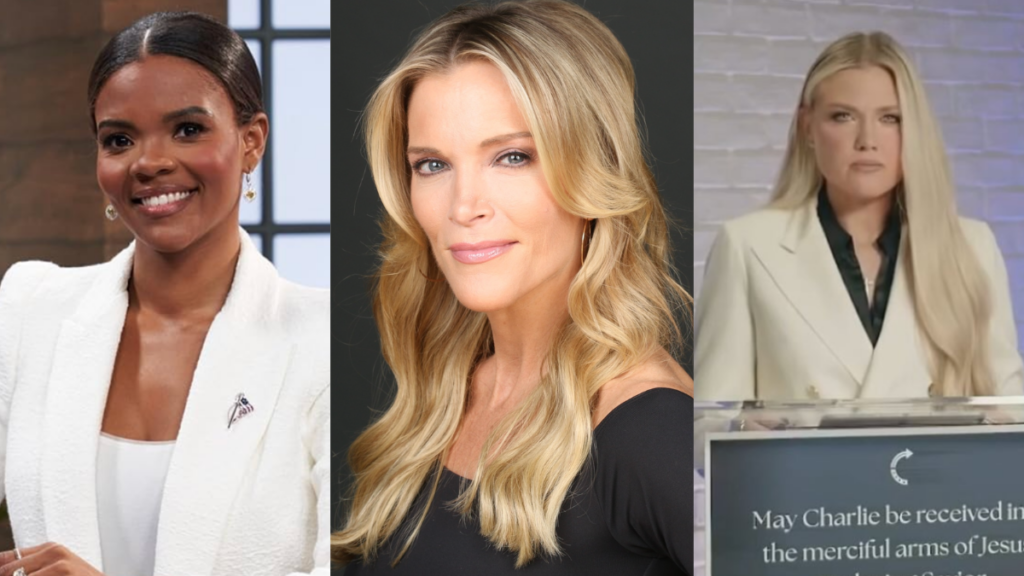
Photo Credit: Candace Owens; Megyn Kelly / Facebook; theannienelson / Instagram
The Rumor That Sparked a Response
On February 24, 2026, journalist Megyn Kelly publicly addressed a circulating rumor about her involvement in a controversial new series. The rumor claimed she secretly helped Candace Owens with her investigative project, Bride of Charlie, which focuses on Erika Kirk, the widow of the slain conservative activist Charlie Kirk.
The speculation grew after the trailer for Bride of Charlie went viral online. Some social media users alleged that Kelly had previewed early edits and offered legal guidance to Owens’ production team. These claims quickly gained traction as viewers struggled to understand Kelly’s role, if any, in the project.
Kelly chose to respond directly to these rumors on her SiriusXM program, The Megyn Kelly Show. She issued a firm denial about any behind-the-scenes involvement. Kelly emphasized that she did not produce or advise on the series at any point.
The controversy reflected broader tensions within conservative media, where personalities often collide over sensitive topics. Online chatter turned speculative for days after the trailer’s release. Some users pushed narratives without verifiable evidence.
Kelly’s denial did more than refute speculation. It highlighted how quickly rumors can spread when politics and media intersect. Her response helped clarify her stance and offered transparency to viewers.
Context Behind the Bride of Charlie Series
The Bride of Charlie investigative series stems from a controversial moment in conservative politics. In 2025, Charlie Kirk, founder of Turning Point USA, was fatally shot while speaking at an outdoor event. The tragedy shocked many in the political world and sparked widespread discussion.
The first trailer for Bride of Charlie appeared online in February 2026. It showed snippets of the events surrounding Charlie’s death and then shifted focus to Erika Kirk’s new leadership role at Turning Point USA. Owens, the series’ creator, has said that she wants to examine Erika’s rise and the unanswered questions born from that tragic night.
However, not everyone saw the series as a straightforward documentary. Critics said the title and tone felt sensationalist. Some commentators said it crossed a line by spotlighting a grieving widow. Others felt that the project raised legitimate questions about decisions made after Charlie’s death.
Social media reaction ranged from supportive to sharply critical. Some users backed Owens for pushing difficult topics. Others accused her of exploiting tragedy for views. Many commentators saw the response as reflective of broader tensions in conservative media today.
The Bride of Charlie series quickly became more than a documentary. It became symbolic of infighting within political circles and online debates about responsibility, narrative, and respect.
Kelly’s Clarification and Public Position
Megyn Kelly chose not to condemn Candace Owens outright during her response on SiriusXM. Instead, she focused on clarifying her non-involvement. Kelly said she did not help with editing, research, or legal advice for the controversial trailer.
She explained that her comments on the series have remained about content and tone rather than production. Kelly said she believes in free speech and understands the complexity of investigative media. She refused to endorse claims she felt lacked full context.
Kelly also addressed online speculation linking her to the series. She stated that unfounded rumors can distort public opinion and harm reputations. Her remarks encouraged audiences to differentiate between verifiable involvement and conjecture.
Her refusal to escalate criticism indicated a strategic choice. Instead of denouncing Owens’ motives, she stayed focused on defining her role — or lack thereof.
Kelly’s measured response contrasted with the viral claims. Her tone suggested she wants substantive conversation rather than sensational narratives about digital rumors.
In doing so, Kelly positioned herself as a media professional emphasizing clarity and truth over speculation. Her response helped calm some online chatter, even if debate continued.
The Wider Backlash and Political Fallout
The Bride of Charlie trailer didn’t just stir rumors about Kelly’s involvement. It also triggered broader backlash across conservative communities. Many traditional right-wing commentators publicly criticized the series.
Figures like Ben Shapiro and Dan Bongino condemned Owens’ approach, calling it divisive. Critics said the series could harm Erika Kirk and her family during an already painful period. They argued that taking on a grieving widow in such a public forum felt cruel.
Social media saw intense debate about whether the documentary crossed ethical lines. Some users labeled Owens’ work as exploitative. Meaghan McCain, for example, expressed empathy for Erika and criticized the series publicly. Others defended Owens, arguing that her work focused on transparency and accountability, not personal attack.
The backlash also reflected deeper splits within conservative media itself. Some voices supported Owens’ right to question narratives. Others said her strategies fueled division rather than unity.
Regardless of where individuals stood, the conversation underscored how political commentary can rapidly polarize public opinion. The Bride of Charlie project became a flashpoint — not just for its subject matter but also for how figures within the same ideological sphere relate to one another.
These debates highlighted tension between free speech and empathy, especially when political and personal tragedy intersect.
Lessons and What Comes Next
The controversy surrounding Kelly, Owens, and the Bride of Charlie series highlights how quickly rumors can escalate without evidence. Megyn Kelly’s denial clarified her position and shows why transparency matters in journalism.
The situation also showed how political media ecosystems can fuel speculation. People often jump to connect public figures to controversial projects regardless of facts. Kelly’s response urged audiences to focus on evidence, not hearsay. Her stance reminded listeners to consider the difference between commentary and production.
Candace Owens’ series remains set to launch, drawing attention from supporters and critics alike. Whether it will bridge divides or deepen them remains unclear, but public interest in its release continues to grow.
Meanwhile, Erika Kirk and her family have drawn empathy from many who find the project insensitive. Others argue that probing public figures and their actions should remain fair game, especially in documentary formats.
At its core, this episode underscores the importance of fact-checking and measured dialogue. Rumors can distort narratives, but clear communication can counter misinformation.
As the Bride of Charlie series debuts, audiences will likely continue debating its merits, intentions, and ethical boundaries. Time will tell how the controversy evolves.