

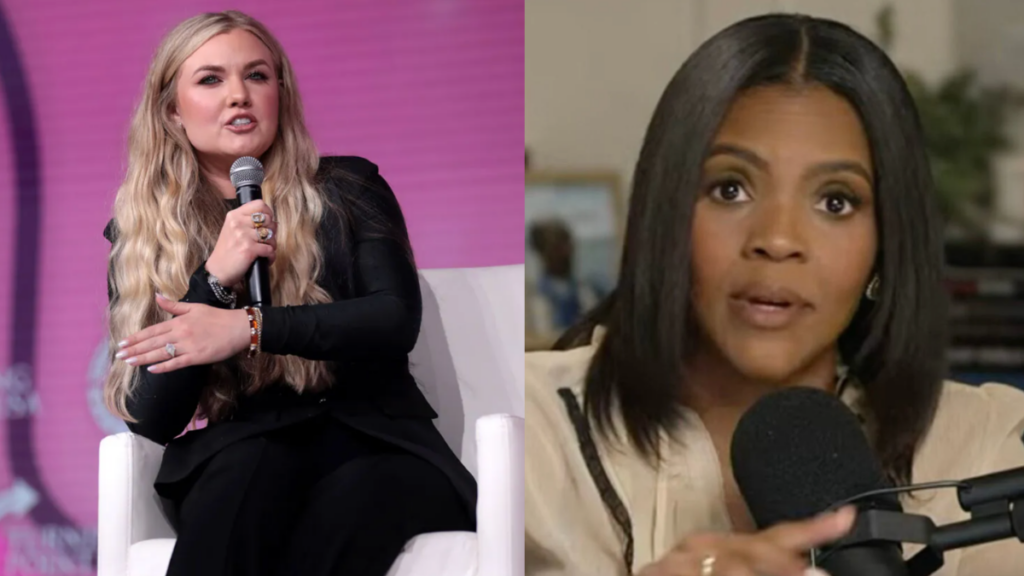
Photo Credit: Gage Skidmore; Candace Owens / Youtube
Candace Owens Announces New Series Targeting Erika Kirk
Conservative commentator Candace Owens recently announced a new investigative series that targets Erika Kirk. The project follows the assassination of Charlie Kirk, Erika’s husband, at a public event. Owens shared a trailer for the series titled Bride of Charlie on X (formerly Twitter). The teaser begins with clips about Charlie’s death before shifting to scenes focusing on Erika Kirk. It also includes commentary about her purported connections to critics and international interests, drawing widespread attention and controversy.
Critics immediately reacted to the announcement online with alarm and outrage. Many social media users condemned the project as exploitative toward a grieving widow. Others suggested that the series could harm Erika’s wellbeing and public reputation. The provocative framing of the teaser trailer sparked debates across political communities on platforms like X. High-profile conservative commentators also weighed in with harsh criticism shortly after the announcement.
The controversy grew as critics described Owens’ approach as crossing moral boundaries. Some accused her of targeting Erika Kirk with unverified insinuations rather than credible reporting. Mutual friends and former allies of Charlie Kirk also expressed disbelief that Owens would pursue this line of inquiry. Many people suggested that a focus on personal tragedy was inappropriate for public spectacle. Their remarks quickly spread across social media outlets and news stories alike.
Some observers applauded Owens for her boldness and willingness to challenge narratives. They defended the series as an attempt to seek truth and transparency about Charlie Kirk’s final days. Others argued Owens would face backlash regardless of her intentions because of the emotional context surrounding the story. The response worldwide showed how polarizing discussions about influential public figures can become. This moment underscores deep divisions within conservative media and online communities.
Public Backlash Intensifies on Social Media
After Owens unveiled her new project, criticism of her approach intensified quickly. Social media users around the world expressed disgust that she would center a series on a grieving widow. Many accused Owens of exploiting tragedy for attention and influence. They argued that the tone and presentation of the trailer felt predatory rather than investigative. This broad condemnation emerged within hours of the trailer’s publication.
Prominent voices on the right and center condemned the series. Some commentators called the project “evil” and said Owens had crossed a line. Others said that her tactics betrayed not only Erika but also the broader conservative movement. Those voices pointed out that attacking a woman whose spouse was recently killed felt cruel. This consensus came from varied corners of the political spectrum, not just opposing commentators.
Supporters of Owens met the backlash with defenses of her work. They argued that her project posed necessary questions rather than spreading misinformation. Some claimed that public figures must expect scrutiny even in times of grief. A smaller group defended Owens by asserting that controversial approaches drive engagement and attention. These defenders suggested that criticism stemmed from disagreement rather than ethical concern.
The division displayed how social media amplifies controversy rapidly. One message thread alone contained dozens of incendiary comments criticizing Owens by name. Another group of users argued that silence from influential figures about the project made them complicit. People called out silence from other conservative leaders, demanding outspoken opposition. The intensity of reaction shows how personal tragedy and public discourse can collide loudly online.
Conservative Voices Weigh In on the Controversy
The backlash against Candace Owens’ series was not limited to general social media users. Well-known conservative commentators also shared their opinions about the move. Some allies of Charlie Kirk expressed strong disgust publicly. They framed Owens’ actions as a betrayal of trust and decorum. This internal criticism highlights fractures within the broader conservative community.
One commentator asked what Charlie Kirk would think about Owens moving forward with the project. The question implied that loyalty to a friend and colleague should have prevented such targeting. Others pondered why people who once aligned with Kirk remained silent in response. This silence itself became a focal point of criticism. Those commentators said public figures owed a responsibility to defend Kirk’s family.
Another notable voice described the controversy as revealing deeper problems within the right-wing media world. She argued that Owens’ behavior showed a lack of empathy toward someone grieving a personal loss. Critics described the project as gratuitous and sensationalist rather than constructive. These commentators asserted that political dialogue must respect human dignity. Their remarks underscored a broader discussion on ethical boundaries in media coverage.
Amid this discourse, a few conservative commentators still defended Owens’ decision. They praised her tenacity in questioning official accounts and narratives surrounding Charlie’s death. Some suggested that no topic should be off limits if pursuing truthful reporting. This defense echoed a firmly held belief in robust debate and inquiry. It also reflected deep divides about the acceptable bounds of political media in turbulent times.
Broader Context of the Feud Between Owens and Kirk
The controversy over the new series cannot be viewed in isolation from the longer feud between Candace Owens and Erika Kirk. Their public differences precede the latest announcement by several months. Owens has previously aired strong criticism of Kirk’s leadership and public behavior. At one point, they even agreed to a private meeting to discuss tensions. That meeting occurred months ago but did not resolve disagreements fully.
Earlier confrontations included allegations and public sparring about organizational decisions, narrative control, and conspiracy theories. Owens approached some topics with unverified theories that generated further controversy. Those claims, while disputed, fueled broader dialogue and skepticism about motives. Some outside observers saw that exchange as a turning point in how the feud escalated. The build-up set the stage for the current media clash over Owens’ new series.
Even before this most recent announcement, some conservatives expressed discomfort with how publicly the feud unfolded. Critics said that airing disputes online detracted from any unified purpose within shared political circles. Others defended Owens, saying that transparency and open discussion serve a vital democratic function. These conflicting perspectives shaped the context in which the backlash emerged. Both sides felt justified in championing their approach.
This long history shows how personal relationships and public commentary can become entangled. Rivalries that begin as private disagreements often spill into the broader public world. In this case, disagreements over narrative, leadership, and credibility helped form a backdrop to the latest uproar. Understanding this context helps explain why reactions were so intense.
What the Fallout Means for Media and Public Discourse
The controversy around Candace Owens’ documentary series highlights major issues in how media navigates personal tragedy. Many critics said that framing a grieving widow as a subject of investigation crossed ethical lines. These critics pointed out that empathy should guide public discourse in times of personal loss. Others argued that media should tell stories without fear, even when subjects are sensitive. The debate underscores tensions between compassion and journalism.
Public reactions also reveal how social media amplifies outrage quickly and broadly. Users from varied political backgrounds participated in the discussion within hours. Hashtags calling the project exploitative trended, and commentators shared impassioned statements. Influential voices on both sides added fuel to the online conversation. This dynamic shows the speed with which controversies shape public perception today.
The situation also poses questions about accountability in conservative media spaces. Some commentators criticized silence from well-known figures who have historically aligned with Charlie Kirk. They questioned why some influencers did not publicly defend Erika Kirk. This issue widened debates about responsibility and community solidarity. Whether that conversation reshapes alliances remains to be seen.
At the same time, defenders of Owens argue that no topic should be off limits. They suggest that inquiry into public figures is part of a healthy media ecosystem. This perspective prioritizes transparency and fearless questioning. Supporters see controversy as an inevitable result of challenging powerful institutions and narratives. The debate marks another chapter in evolving standards for political media.
Ultimately, the furor surrounding Bride of Charlie shows how deeply personal stories intersect with public media. It reveals how audiences react when tragedy and politics collide. The controversy is likely to continue as more people engage with discussions about media ethics, respect, and free speech.