

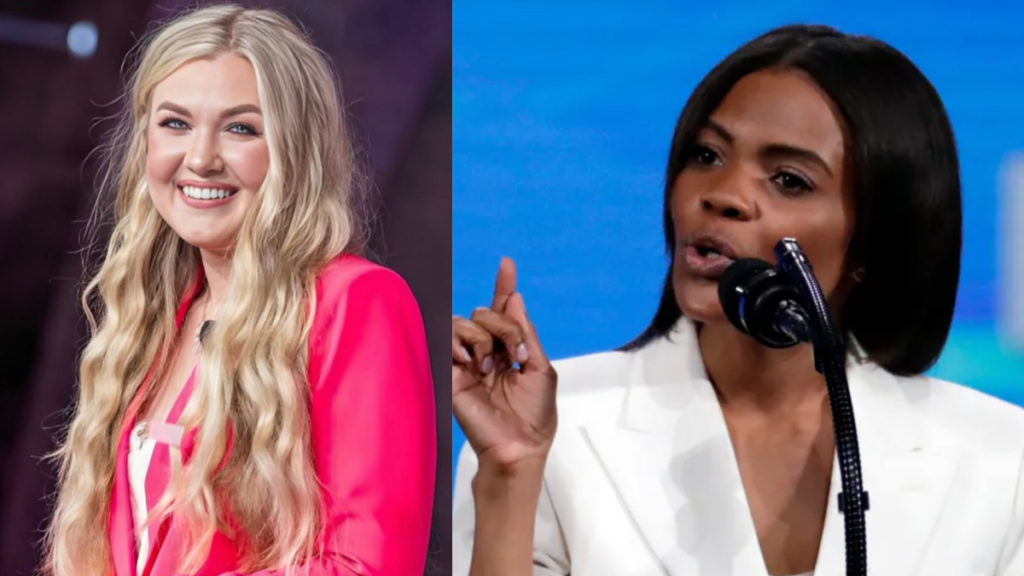
Photo Credit: realmichaelsolakiewicz / Instagram; Michael Conroy/AP Photo
The Viral Funeral Video That Ignited a Controversy
Candace Owens, a prominent conservative commentator, reignited controversy over a widely shared funeral video this week. The video captures Erika Kirk standing near the open casket of her late husband, Charlie Kirk, and kissing his hand. Owens called the clip “not normal” and criticized how it was recorded and shared publicly. Critics and supporters alike have weighed in across social platforms and media. This online debate highlights deep divisions within the conservative movement after a tragic event.
The clip resurfaced when influencer Zach Costello reposted it, stirring immediate online reaction. Costello’s caption invited debate on whether public footage of funerals should ever circulate. Owens interpreted the video as insensitive, especially because it appeared to involve a Turning Point USA staff member rather than a personal friend. Reports indicate she believes a former fundraising leader filmed the emotional moment. Her supporters argue she raised valid privacy concerns.
Owens’s remarks have not gone unanswered. Some users dismissed her take as cold or disrespectful to genuine grief. Other online commentators painted the clash as part of broader tensions between Owens and Turning Point USA. These disputes have emerged in the wake of Charlie Kirk’s assassination at Utah Valley University last year. Tyler Robinson, 22, now faces charges in the killing.
While the video is at the center of the debate, it also reflects wider disagreements inside conservative media. Owens and some former allies of Kirk have criticized Turning Point USA’s leadership and post-assassination decisions. Others see Owens’s focus as distracting from healing and unity efforts after a loss that shook conservative activists nationwide.
The result is a wave of arguments that extend far beyond the original video. Observers across politics and social media continue to debate both decorum at funerals and the intentions behind sharing emotional footage. As the exchange continues, the story shows how personal moments can quickly become public flashpoints in today’s media environment.
Who Are Candace Owens and Erika Kirk?
To understand the controversy, it helps to know the key figures involved. Candace Owens is an American political commentator, author, and conservative activist. She first gained attention for her pro-conservative commentary and opposition to identity politics. Over time, Owens has amassed millions of followers across social media platforms.
Owens previously served as communications director for Turning Point USA, a conservative youth organization. She left that role years before Charlie Kirk’s assassination. However, she still holds influence in conservative media through her podcasts and social videos. Her outspoken approach often sparks disagreement even among commentators on her own side of the political spectrum.
Erika Kirk, in contrast, became a public figure after her husband’s death. She took over as CEO of Turning Point USA after Charlie Kirk’s assassination in September 2025. The tragic event occurred while Charlie spoke at Utah Valley University and drew national attention to both the group and its founder.
Erika’s role in running Turning Point has drawn mixed reactions from conservative commentators. Some applaud her leadership and resilience. Others, like Owens, have criticized decisions made by the organization under her direction. That dynamic has contributed to the broader online dispute.
The personal loss experienced by Erika Kirk adds emotional weight to the controversy. While some see Owens’s comments as accountability, others view them as escalating tension during a period of national grief. This conflict reflects deeper ideological and interpersonal fissures within political media circles.
Owens’s Claims and Turning Point USA’s Response
Candace Owens has publicly questioned how Turning Point USA has handled internal matters after Charlie Kirk’s death. One of her major claims centers on who filmed the viral funeral footage. Owens says the video wasn’t taken by a close personal friend of Erika’s. She believes it was recorded by someone linked to the non-profit. That claim ignited further debate about privacy and respect for the grieving.
Owens has also criticized Turning Point USA for other decisions related to Kirk’s legacy. She has speculated about possible motives behind organizational choices and highlighted what she sees as inconsistencies in messaging. Her commentary challenges both the leadership and direction of the group she once supported.
Some independent reports say Owens believes staff changes and the sharing of sensitive footage suggest a lack of judgment within the organization. She has called for deeper transparency and accountability. Owens’s supporters argue that her willingness to confront these issues shows courage.
Turning Point USA has not uniformly responded to every allegation. Some representatives have pushed back, describing Owens’s claims as mischaracterizations or distortions of internal events. Meanwhile, others have tried to defuse tensions by emphasizing unity and respect for Kirk’s memory.
The contrasting narratives highlight how public controversy can deepen rifts when emotions are raw. What began with a single video has grown into a broader debate over organizational culture, public grieving, and media strategy within high-profile political movements.
The Broader Aftermath and Public Reaction
Public reaction to Owens’s remarks and the viral funeral video has been fierce. Many conservatives have weighed in on social media, with some supporting Owens’s demand for decorum and others pushing back against her criticism. This disagreement reflects deeper divides in political communication culture.
Some commentators argue that televised or recorded moments of grief should remain private. They say sharing such footage can feel exploitative or disrespectful to the family involved. Others counter that public figures and their families often operate under different expectations of transparency. These debates touch on larger questions about privacy rights in the digital age.
Within conservative media, the controversy has also spurred intense discussion about alliances and shared values. Owens’s outspoken critiques have at times isolated her from some former allies who find her tone or approach too confrontational. These conversations are happening in podcasts, forums, and cable news segments.
The conflict also shows how quickly personal moments can morph into political flashpoints. A single piece of footage can trigger extensive commentary, reinterpretation, and ideological positioning. And when the individuals involved are major public figures, the feedback loop is amplified across platforms.
Ultimately, the dispute highlights how grief, politics, and public expression intersect in today’s media landscape. Whether one agrees with Owens or not, her remarks have spurred conversation about ethics, respect, and the responsibilities of public discourse.
What This Means for Future Conservative Discourse
The feud involving Candace Owens and Turning Point USA illustrates challenges in modern conservative discourse. Commentators must balance critique with respect for personal loss and community healing. This tension plays out daily in online spaces and media appearances.
Owens’s influence remains strong, but her confrontational style continues to divide opinion. Some conservatives support her boldness, while others see it as unnecessary escalation. The debate over the funeral video demonstrates how sensitive topics can quickly become symbolic battlegrounds.
Turning Point USA’s future will likely involve navigating internal criticism as well as external perception. As the organization continues to shape political youth engagement, its leadership decisions and public relations strategies will stay in the spotlight. These moments will test loyalty and unity among supporters.
The public’s response also shows how video and social media now play central roles in political culture. Visual moments can trigger intense debate and influence broader narratives far beyond their original context. As a result, political figures and observers must tread carefully when responding to emotionally charged content.
Overall, this episode underscores a broader truth: personal loss, public discourse, and political identity now overlap more than ever. Whether this leads to deeper understanding or further division remains to be seen. But it will continue to shape how political critics and movements communicate in an increasingly interconnected world.