

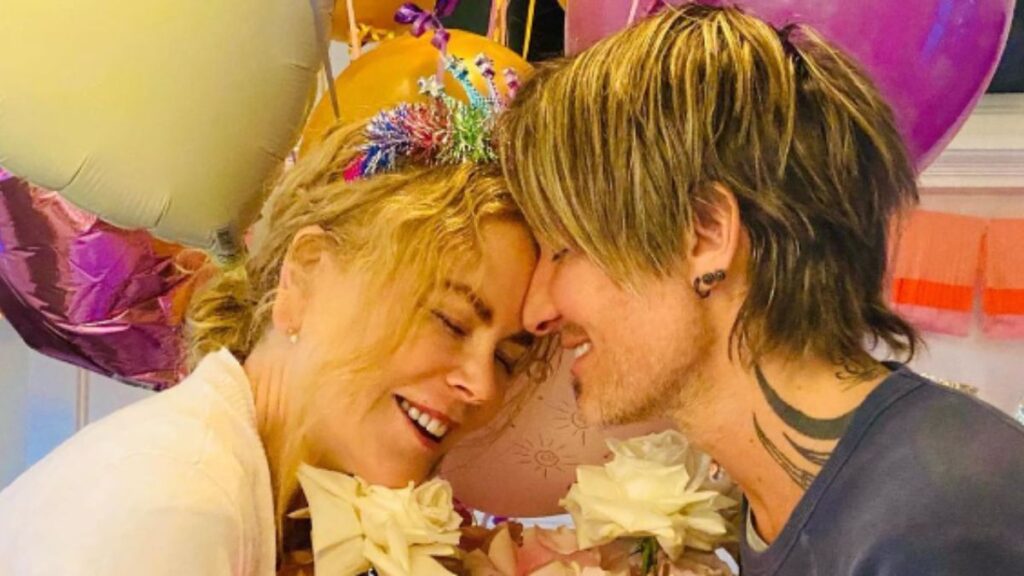
Nicole Kidman and Keith Urban were one of Hollywood’s most enduring celebrity couples. They married in June 2006 after meeting the year prior, and for nearly two decades appeared publicly committed, supportive of each other’s careers and shared their lives across major film and music events.
However, on September 30 2025, Kidman officially filed for divorce in Nashville‑area court, citing “irreconcilable differences.” While the filing itself was shock for many fans, insiders suggest the separation had been in progress for several months: the couple reportedly had been living apart since early summer, and Urban quietly arranged his own residence.
The twist lies in how the story developed: sources say Kidman was not the instigator of the breakup but rather was blindsided by Urban’s decision, and that she fought to save the marriage even as the end approached. One outlet describes the divorce as “turning dramatic” with Kidman feeling “hurt and betrayed.”
What started as a strong partnership – the Oscar‑winning actress and the Grammy‑winning musician – now represents a complex chapter of separation, custody negotiations, and public perception. The initial shock is giving way to questions: Why now? What changed? And how will this impact both of their personal and professional lives going forward.
The Underlying Dynamics: Career, Distance & Hidden Fault Lines
On the surface, there was little in the way of public scandal between Kidman and Urban. But beneath that veneer, several factors emerged that may have eroded the foundation of their marriage.
First, career demands and geographic distance played a significant role. Kidman’s acting commitments often took her overseas, while Urban’s touring schedule kept him on the road for long stretches. Several reports point to this as a major stressor: one source said, “Keith never sees Nicole, either she’s filming or he is on tour.” The pattern of being physically apart for extended periods appears to have weakened their connection.
Second, hints of emotional disruption surfaced in recent interviews and cover stories. Notably, a Vogue cover writer reflected that during an August 2025 interview with Kidman, she sensed turbulence: Kidman said, “How many times do you have to be taught that you think you know where your life is going, and then it isn’t going in that direction?” These words, in hindsight, appear prescient.
Third, rumors of betrayal and involvement of a third party unsettled the narrative. While official statements remain discreet, one insider said the writing was on the wall when Urban “quietly moved out” and the speculation of “another woman” circulated. Though unconfirmed, the rumors added fuel to the “twist” aspect of the divorce – the idea that the end was not simply a mutual drift, but a turning point coming from one side.
From a structural perspective, their divorce filings also reveal surprising details: the parenting plan, for example, reportedly grants Kidman primary residential custody of their daughters — with them spending 306 days a year with her vs. 59 days with Urban. The agreement also appears to show each party keeping their own assets, and support obligations waived — suggesting significant prior planning or prenup arrangements.
Taken together, these dynamics paint a portrait of a marriage stressed by time, separation, and shifting priorities. Kidman, now 58, appears to be moving forward with professional focus (“I’ve been here before… I know how to handle this now,” she said in a recent interview). The twist is that what seemed strong turned fragile, and that the public part of the story is only the surface.
Reframing Life After: Identity, Resilience & What’s Next
With the divorce filing now public, attention naturally shifts to what comes next for Nicole Kidman — her identity, her work, her role as mother, and how she rebuilds from here.
Public Identity and Self‑Reckoning
Kidman has spoken candidly about how life’s unexpected turns have shaped her. In the interview cited above she said:
“There’s something to knowing that no matter how painful, or how difficult, or how devastating something is, there is a way through.” (IJR)
That comment signals a woman reflecting on change, survival, and self‑reinvention. For someone whose public image has been tied to glamour, talent and stability, confronting a dissolution of this magnitude invites a shift in self‑narrative.
Motherhood and Stability for Children
In the divorce documents, the parenting plan emphasizes both parents acting in a “loving, stable, consistent and nurturing relationship with the child” even though they are divorced. Kidman has two daughters with Urban — Sunday Rose (17) and Faith Margaret (14) — and two older children from her previous marriage to Tom Cruise. Her role as mother now becomes even more central: she is quoted as saying her children “give me the purpose of being their protector and their guide.” (The shift from wife and partner to primary resident parent signals a pivot in her day‑to‑day life and priorities.
Career and Reinvention
Kidman isn’t pausing professionally. Amid the personal upheaval, she has new projects lined up, including an upcoming legal thriller series produced by A24 and featuring Elle Fanning. \ The very fact she is stepping into fresh acting and producing terrain suggests she is channeling the change into creative momentum rather than retreat. Her public appearance at Paris Fashion Week, debuting new “divorce bangs” and walking with her daughters by her side, underscores a transformation — style, presence and now a narrative of new beginnings.
Navigating Public Perception and Personal Healing
Divorce for celebrities isn’t just personal — it’s spectacle. But Kidman appears intent on controlling the narrative, embracing honesty and vulnerability. One article described her as “feeling very grateful and not dwelling on what’s ended” while focusing on what’s ahead. The twist here is that the ending of one long‑term relationship may be the launch point for a new chapter — not simply sadness, but transition.
In a broader sense, this also touches on themes many people can relate to (though outside the spotlight): change, separation, self‑renewal. The optics of glamorous divorce aside, the underlying human story is universal.
Final Thoughts
Nicole Kidman and Keith Urban’s split after 19 years of marriage came as a shock to many, but for those who looked closer, the signs were there — divergent careers, physical distance, emotional drift. The twist in this story is not just the end of a celebrity union, but the combination of factors that brought it about: career demands, emotional misalignment, rumors of betrayal, and a proactive transition by Kidman into a different stage of life.
What matters now is not merely that they are divorcing, but how Kidman will navigate the aftermath — as mother, as actress, as individual. Her remarks and actions suggest she is bracing for renewal: emotionally, professionally, stylistically. Her children remain central, and her career remains active. In short, the divorce might mark an ending, yes — but also a pivot.
For fans of Kidman and followers of celebrity culture, this story offers more than salacious headlines. It offers a micro‑cosm of change, resilience and transformation. The twist — that a pair long viewed as stable quietly pulled apart — reminds us that behind public appearances lives complexity, and that even longstanding unions can unravel under pressure.
If you like, I can pull together a timeline of key events in their relationship + split, or create a “What this means for celebrity marriages” piece drawing parallels to other high‑profile splits. Would you like me to do that?