

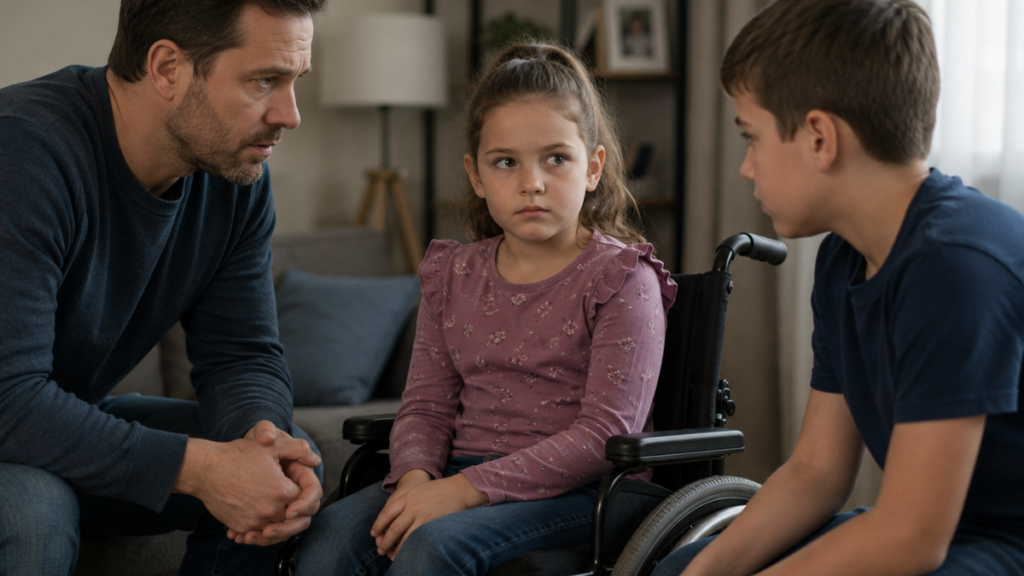
Three years before the boy appeared at the gate, Lila Mercer was impossible to catch.
Not because she was particularly fast.
Because she cheated.
Every game of tag ended the same way.
Nathaniel Mercer would pretend to chase her through the enormous backyard behind their Darien mansion while Lila shrieked with laughter and changed directions every three seconds.
She cut through flower beds.
Ran behind trees.
Darted under picnic tables.
And whenever Nathaniel finally got close enough to catch her, she’d immediately declare some new rule that made her safe.
“You can’t tag me if I’m touching a tree!”
“That’s not a rule.”
“It is now!”
Then she’d take off running again.
Nathaniel always claimed he let her win.
His wife, Caroline, never believed him.
“She’s six years old,” she’d laugh.
“She’s very strategic.”
“She’s cheating.”
“That’s strategy.”
Then Lila would collapse into giggles and declare herself champion of the world.
Those were the moments Nathaniel missed most.
Not birthdays.
Not vacations.
Not holidays.
The ordinary afternoons.
The random Tuesdays.
The little pieces of life you assume will happen forever.
Until they don’t.
The accident happened on a Tuesday.
It was always strange to Nathaniel how life-changing events never announce themselves.
Nobody wakes up thinking:
Today is the day everything breaks.
The morning had been completely normal.
Lila had spilled orange juice.
Nathaniel had taken a work call.
Caroline had laughed at both of them.
Then a distracted driver crossed the center line.
And the future split into two separate lives.
The life before.
And the life after.
Nathaniel remembered almost nothing about the collision itself.
Only fragments.
Twisted metal.
Sirens.
Rain.
Someone shouting.
Then hospitals.
Endless hospitals.
White walls.
Machines.
Doctors.
Waiting rooms that all smelled exactly the same.
Then came the words.
The words that followed them home.
Spinal injury.
Nerve damage.
Uncertain prognosis.
Long-term limitations.
Nathaniel hated those words.
Especially the last one.
Limitations.
Because limitations were for people who quit.
And Nathaniel Mercer had never quit anything in his life.
By thirty-eight, he’d built one of the largest commercial real estate firms in Connecticut.
Every obstacle he’d ever encountered had eventually surrendered to persistence, intelligence, or money.
Usually all three.
Then Lila got hurt.
And for the first time in his life, none of those things mattered.
The specialists came first.
Connecticut.
New York.
Boston.
Philadelphia.
Then came the experimental treatments.
The rehabilitation centers.
The consultations.
The second opinions.
The third opinions.
The fourth opinions.
Nathaniel paid for everything.
Private jets.
Elite surgeons.
Cutting-edge therapies.
If someone claimed they might help his daughter, he wrote the check.
Then eighteen months passed.
And Lila still couldn’t walk.
The hardest part wasn’t the wheelchair.
It was watching hope leave her.
Slowly.
Quietly.
A little at a time.
One evening, nearly two years after the accident, Nathaniel found her sitting beside the floor-to-ceiling windows overlooking the backyard.
The same backyard where she’d once spent entire afternoons running.
The wheelchair faced the glass.
The sunset painted everything gold.
Lila sat completely still.
Just watching.
Nathaniel pulled a chair beside her.
Neither spoke for a while.
Then he followed her gaze.
A group of neighborhood children were playing tag.
Running.
Laughing.
Exactly the way Lila used to.
Then she quietly asked:
“Dad?”
His chest tightened immediately.
“Yeah, sweetheart?”
A pause.
Then:
“Do you think they remember?”
Nathaniel frowned.
“Who?”
Lila looked down at her legs.
The answer nearly destroyed him.
“My feet.”
Silence.
Then:
“Do you think they remember how to run?”
Nathaniel couldn’t answer.
Because there was no answer.
Not an honest one.
So instead he wrapped an arm around her shoulders.
And sat beside her until the sun disappeared.
That night he didn’t sleep.
Not even for a minute.
Because he couldn’t stop thinking about the question.
Do you think they remember?
The next morning brought another specialist appointment.
Another drive.
Another evaluation.
Another chance to hear things he didn’t want to hear.
Nathaniel dressed automatically.
Navy suit.
White shirt.
Coffee he barely tasted.
The usual routine.
Then Lila rolled into the kitchen wearing her favorite blue dress.
The sky dress.
The one she insisted made her feel brave.
Nathaniel smiled.
“You look beautiful.”
Lila smiled back.
The practiced smile.
The one children learn when they spend too much time around worried adults.
“Ready?”
She shrugged.
“If you think it will help.”
The answer hurt.
Because two years earlier she would’ve been excited.
Hopeful.
Now she was simply being cooperative.
Then they headed toward the driveway.
And that’s when Nathaniel noticed the boy.
He stood beside the front gate.
Thin.
Dark-haired.
Wearing a faded gray hoodie despite the warm weather.
He couldn’t have been older than ten.
At first Nathaniel assumed he was lost.
Then he noticed something strange.
The boy wasn’t looking at the house.
Or the cars.
Or the grounds.
He was looking directly at Lila.
Not with curiosity.
Not with pity.
Recognition.
The realization immediately put Nathaniel on edge.
He moved slightly closer to his daughter.
Instinctive.
Protective.
Then the boy stepped forward.
Slowly.
Respectfully.
“Sir?”
Nathaniel stopped.
“What is it?”
The boy looked nervous.
But not intimidated.
Just determined.
Then he glanced at Lila’s wheelchair.
And said something that instantly made Nathaniel angry.
“I think I can help her.”
Nathaniel almost laughed.
Not because it was funny.
Because he’d heard it before.
Hundreds of times.
Miracle treatments.
Special supplements.
Alternative therapies.
Strangers with theories.
Hope sellers.
All of them convinced they’d discovered something the world’s best doctors somehow missed.
Then Nathaniel opened the SUV door.
“We’re late.”
The boy didn’t move.
Didn’t argue.
Didn’t raise his voice.
He simply said:
“My grandmother sent me.”
Nathaniel paused.
Against his will.
Then:
“Why?”
The boy swallowed.
Then pointed toward Lila’s feet.
“I think her body remembers.”
The words hit Nathaniel like a physical blow.
Because they were almost identical to the question Lila asked the night before.
Do you think they remember?
Then Lila spoke for the first time.
Softly.
Curiously.
“What does that mean?”
The boy looked at her.
And smiled.
A small, genuine smile.
Then:
“It means I don’t think they’re gone.”
For the first time in months…
Nathaniel saw something change in his daughter’s face.
Not happiness.
Not excitement.
Interest.
Real interest.
And suddenly, despite every logical reason not to…
he found himself listening.
Nathaniel Mercer hated hope.
Not because he was cynical.
Because hope had become expensive.
Over the last two years, it had arrived in dozens of forms.
Doctors.
Specialists.
Researchers.
Therapists.
Every single one promising possibility.
Every single one eventually leaving behind disappointment.
Hope was easy to sell when you weren’t the person paying the emotional cost.
So when a ten-year-old boy standing outside his gate started talking about Lila’s legs remembering something…
every protective instinct inside Nathaniel immediately activated.
Then he reached for the SUV door.
“We’re leaving.”
The boy nodded.
As though he’d expected that answer.
Then quietly said:
“My grandmother said you would.”
Nathaniel paused.
Again.
Then frowned.
“What exactly did your grandmother say?”
The boy shifted nervously.
Then:
“That rich people trust experts.”
The answer caught Nathaniel off guard.
Then:
“And poor people trust what they see.”
Silence.
Then:
“She said sometimes both are right.”
Lila smiled.
A tiny smile.
The first genuine one Nathaniel had seen all morning.
Then she looked up at him.
“Dad.”
Dangerous word.
Because there was a specific tone children use when they’re about to ask for something.
Then:
“Can we listen?”
Nathaniel sighed.
Immediately.
Because he already knew he was losing this argument.
Then he checked his watch.
The appointment.
The schedule.
Everything.
Then looked down at his daughter.
At the little girl who hadn’t shown genuine curiosity about anything related to recovery in months.
Then:
“Five minutes.”
The boy nodded.
As if five minutes was all he’d ever needed.
His name was Eli.
They learned that while standing in the driveway.
He lived almost two miles away.
His grandmother raised him.
His parents were gone.
Nathaniel didn’t ask for details.
The boy didn’t offer them.
Then Eli pointed toward a small canvas bag hanging from his shoulder.
“My grandmother sent this.”
Nathaniel folded his arms.
Already skeptical.
Then:
“What’s in it?”
“A basin.”
The answer was so strange that Nathaniel actually laughed.
Then:
“A basin.”
Eli nodded.
“And towels.”
Then:
“That’s it?”
The boy looked confused.
Then:
“Mostly.”
Nathaniel rubbed a hand across his face.
Because somehow the situation was becoming less believable.
Not more.
Then Lila spoke.
“What does a basin do?”
Eli looked at her.
Not at the wheelchair.
Not at her legs.
Her.
Then:
“Nothing.”
The answer surprised everyone.
Then:
“The water does.”
Nathaniel immediately shook his head.
“No.”
The word came out sharper than intended.
Then:
“No warm water is fixing a spinal injury.”
Eli nodded.
“Probably not.”
Nathaniel blinked.
Then:
“What?”
The boy shrugged.
Then:
“I didn’t say it would.”
Silence.
Then:
“I just said I wanted to see something.”
For the first time, Nathaniel noticed something important.
Eli wasn’t acting like someone selling a miracle.
He wasn’t making promises.
He wasn’t claiming certainty.
He simply seemed interested.
Curious.
Like he was trying to solve a puzzle.
Then:
“What exactly do you think you’re going to see?”
The boy looked down.
Then:
“My grandfather used to help people after accidents.”
That got Nathaniel’s attention.
Then:
“He wasn’t a doctor.”
A pause.
Then:
“But he worked with injured people.”
Another.
Then:
“He always said the body tells the truth if you stop arguing with it.”
The sentence sounded ridiculous.
And yet…
something about the way Eli said it made it difficult to dismiss.
Then he added:
“He told me about your daughter.”
The driveway went silent.
Immediately.
Nathaniel felt every muscle in his body tighten.
Then:
“You knew my daughter?”
Eli shook his head.
“No.”
Then:
“My grandfather did.”
The world stopped.
Because nobody had mentioned that.
Not once.
Then Nathaniel slowly asked:
“How?”
Eli hesitated.
For the first time all morning.
Then:
“He was there.”
Silence.
Then:
“Where?”
The boy swallowed.
Then pointed toward Lila.
Toward the wheelchair.
Toward the thing that had changed all their lives.
Then:
“The accident.”
Nathaniel froze.
The air seemed to disappear from the driveway.
Then:
“What did you just say?”
Eli immediately looked nervous.
Like he realized he’d revealed something he wasn’t supposed to.
Then:
“My grandfather worked on the road crew.”
Another pause.
Then:
“He never stopped talking about her.”
Lila sat completely still.
Then Nathaniel slowly lowered himself onto the edge of the SUV.
Because suddenly nothing felt routine anymore.
Then:
“What exactly did he say?”
Eli looked toward the ground.
Then quietly answered.
“He said everybody was looking at the wrong thing.”
The words landed heavily.
Then:
“What does that mean?”
The boy shook his head.
Then:
“I don’t know.”
A pause.
Then:
“He died last year.”
Silence.
Then:
“But before he died, he kept saying the same thing.”
Nathaniel stared.
Then:
“What thing?”
Eli looked directly at Lila.
Then spoke the sentence that would replay in Nathaniel’s mind for months afterward.
“He said her feet knew something nobody else did.”
The driveway became completely silent.
Then Lila whispered:
“My feet?”
Eli nodded.
Then:
“That’s why I came.”
For a long moment nobody moved.
Then Nathaniel looked at his daughter.
The specialist appointment suddenly felt very far away.
Then he looked at the boy.
At the faded hoodie.
The worn sneakers.
The nervous expression.
Nothing about him looked important.
Nothing about him looked extraordinary.
And yet…
for the first time in two years…
Nathaniel felt something he hadn’t allowed himself to feel in a very long time.
Not hope.
Not yet.
Curiosity.
And sometimes curiosity is where hope begins.
Then he exhaled slowly.
And said the words that changed everything.
“Show me the basin.”
“Show me the basin.”
The words surprised everyone.
Especially Nathaniel.
Because ten minutes earlier he would’ve laughed at the suggestion.
Now he found himself following a ten-year-old boy through his own backyard.
Lila rolled beside him.
Watching Eli carefully.
Not because she believed him.
Because she wanted to.
And after two years of disappointment, wanting to believe something was almost as rare as believing it.
Eli led them toward a shaded corner of the patio.
Then set down the canvas bag.
Everything about him remained calm.
No dramatic speeches.
No promises.
No grand claims.
Just a quiet certainty that made Nathaniel increasingly uneasy.
Then Eli removed a small metal basin.
Old.
Scratched.
Ordinary.
Then two towels.
Then a thermos.
Nathaniel folded his arms.
This was ridiculous.
Absolutely ridiculous.
Then Eli unscrewed the thermos.
Steam drifted upward.
Warm water.
Nothing more.
Nothing less.
Then he carefully poured it into the basin.
The water settled.
Still.
Quiet.
Normal.
Then Eli turned toward Lila.
And for the first time seemed nervous.
Not about Nathaniel.
About her.
Then:
“Can I ask you something?”
Lila nodded.
Then:
“When was the last time you felt your feet?”
Nathaniel immediately tensed.
Because the question wasn’t simple.
Nothing about those two years had been simple.
Then Lila thought for a moment.
Then shrugged.
“I don’t know.”
A pause.
Then:
“Sometimes I feel things.”
Another pause.
Then:
“Sometimes I don’t.”
Eli nodded slowly.
Like he’d expected that answer.
Then:
“What kinds of things?”
Lila looked down.
Thinking.
Then:
“Cold.”
Another pause.
Then:
“Sometimes pressure.”
Then she frowned.
Then:
“And sometimes…”
The little girl hesitated.
Then:
“It feels like they’re asleep.”
Eli immediately looked up.
Fast.
Too fast.
Then:
“Asleep?”
Lila nodded.
Then:
“Like when your arm gets pins and needles.”
Nathaniel froze.
Because nobody had asked that question before.
Not exactly that way.
The doctors always asked about pain.
Mobility.
Sensation.
Clinical things.
Nobody ever asked a six-year-old what it felt like.
Then Eli slowly lowered himself onto the ground.
Cross-legged.
Thinking.
Really thinking.
Then he looked at Nathaniel.
Then:
“What did the doctors say?”
The question immediately irritated him.
Because there wasn’t a short answer.
There were years of answers.
Then:
“They said the damage is permanent.”
Eli nodded.
Then:
“All of them?”
Nathaniel frowned.
Then:
“Most of them.”
The boy looked down at the basin.
Then:
“My grandfather hated the word permanent.”
Silence.
Then:
“He said people use it when they stop looking.”
Nathaniel felt something tighten in his chest.
Because that sounded exactly like something he’d spent years refusing to think.
Then Eli looked at Lila.
Then:
“Can I try something?”
The little girl immediately nodded.
Nathaniel immediately said:
“Depends.”
Both children looked at him.
Then:
“Nothing weird.”
Eli blinked.
Then:
“It’s water.”
Nathaniel couldn’t help it.
He laughed.
A real laugh.
The first one he’d had all morning.
Then:
“Fair point.”
Then Eli carefully reached toward Lila’s shoe.
And stopped.
Waiting.
Asking permission without words.
Then Lila looked at her father.
Nathaniel hesitated.
Every instinct told him to say no.
Protect her.
Leave.
Go to the specialist.
Stay in the world that made sense.
But another part of him…
A small exhausted part.
Wanted to know why a dead road worker had spent years thinking about his daughter.
Then he nodded.
Once.
Slowly.
Then Eli removed her shoe.
Followed by her sock.
Then the other.
Lila’s small feet rested motionless on the wheelchair supports.
The sight never got easier.
Never.
Then Eli gently lowered one foot toward the basin.
The moment her skin touched the water…
Lila gasped.
Not dramatically.
Not loudly.
Just enough.
Then she laughed.
A tiny surprised laugh.
Then:
“It’s warm.”
Nathaniel immediately froze.
Because her reaction had been instantaneous.
No delay.
No uncertainty.
Then:
“You felt that?”
Lila looked confused.
Then:
“Yeah.”
The answer sounded obvious.
Then she looked down.
Wiggling slightly.
Then laughed again.
“It’s tickly.”
The world stopped.
Nathaniel dropped into a crouch beside her wheelchair.
Heart pounding.
Then:
“What did you say?”
Lila smiled.
Then:
“It tickles.”
Eli said nothing.
Not a word.
He just watched.
Then Nathaniel felt something strange.
Fear.
Not hope.
Fear.
Because if this meant something…
Everything might change.
And if it meant nothing…
Then he’d have to watch hope die again.
Then Eli quietly asked:
“Lila?”
The little girl looked down at him.
Then:
“Can you try something for me?”
She nodded.
Then Eli pointed toward the water.
Then:
“Don’t think about your legs.”
Nathaniel frowned.
Then:
“What?”
Eli ignored him.
Still focused on Lila.
Then:
“Think about running.”
The patio went silent.
Completely silent.
Because suddenly nobody was talking about therapy.
Or medicine.
Or injury.
Then:
“What?”
Lila smiled sadly.
Then:
“I can’t.”
Eli shook his head.
Then:
“Not now.”
A pause.
Then:
“Before.”
Another pause.
Then:
“The backyard.”
Lila froze.
Then:
“Tag.”
Nathaniel’s breath caught.
Then Eli smiled.
Then:
“Tell me what happened when your dad chased you.”
Lila stared at the water.
Then the corner of her mouth lifted.
Then:
“I cheated.”
Nathaniel laughed despite himself.
Then:
“You absolutely cheated.”
The little girl giggled.
Then:
“I touched trees.”
Then:
“And benches.”
Then:
“And I made up rules.”
Eli nodded.
Then:
“What happened next?”
Lila’s smile widened.
Then:
“I ran.”
The patio fell silent.
Then Eli gently asked:
“What did it feel like?”
For the first time…
Nathaniel saw something change.
Not physically.
Emotionally.
Lila closed her eyes.
And remembered.
Really remembered.
The backyard.
The laughter.
The running.
The feeling of movement.
The feeling she’d spent two years trying not to miss.
Then a tear slid down her cheek.
Then another.
Then she whispered:
“I miss it.”
And that’s when Nathaniel saw it.
A movement so small he almost convinced himself he imagined it.
A twitch.
At the edge of her left foot.
Then another.
Slightly stronger.
Then Eli’s eyes widened.
Not with surprise.
Recognition.
As if he’d been waiting for exactly that.
Then Nathaniel stared.
Unable to breathe.
Unable to move.
Because for the first time since the accident…
something was happening.
And nobody understood why.
Because for the first time since the accident…
something was happening.
And nobody understood why.
Nathaniel blinked.
Once.
Twice.
Trying to determine whether he’d actually seen it.
Then he looked down again.
Lila’s foot rested in the warm water.
Still.
Completely still.
Then—
A tiny movement.
A curl.
So slight it would’ve been invisible if he hadn’t been staring directly at it.
The air left his lungs.
Immediately.
Then:
“Lila.”
His voice cracked.
The little girl opened her eyes.
Then:
“What?”
Nathaniel pointed.
Unable to form words.
Then:
“Your foot.”
Lila looked down.
Confused.
Then Eli quietly said:
“Try thinking about the game again.”
The little girl frowned.
Then:
“What game?”
“Tag.”
A pause.
Then:
“The tree.”
The smile returned instantly.
Then:
“The big maple.”
Eli nodded.
Then:
“Run to it.”
Nathaniel almost interrupted.
Run to it?
What kind of instruction was that?
But before he could say anything…
Lila closed her eyes again.
Then she smiled.
A real smile.
Not the brave one.
Not the polite one.
The old one.
The one from before.
Then her left toes moved.
Clearly.
Undeniably.
The patio froze.
Nathaniel dropped to both knees.
Hard.
Pain shot through them.
He didn’t feel it.
Then:
“No.”
The word escaped him.
Not denial.
Shock.
Then:
“No, no…”
His eyes filled instantly.
Then:
“Lila.”
The little girl stared.
Then looked at her foot.
Then looked back at him.
Then:
“Dad?”
Nathaniel grabbed the armrest of the wheelchair to steady himself.
Because his hands were shaking.
Violently.
Then:
“Do it again.”
The words came out as a whisper.
Then Lila concentrated.
The smile faded.
The effort returned.
Then nothing happened.
The silence felt enormous.
Then she tried again.
Harder.
Then her toes curled.
Stronger.
Longer.
This time everyone saw it.
Then Lila gasped.
Then:
“I did that.”
Nathaniel couldn’t answer.
Because tears were running down his face.
Then:
“I did that!”
The second time she said it, she sounded younger.
Six years old again.
Excited.
Hopeful.
Alive.
Then she looked down at her foot like she’d just discovered magic.
Then she laughed.
And immediately started crying.
At the same time.
Then:
“Dad.”
The word shattered him.
Then:
“I felt it.”
The patio disappeared.
The mansion disappeared.
The specialists disappeared.
Two years disappeared.
Everything narrowed to one moment.
One movement.
One impossible little curl of toes.
Then Nathaniel wrapped both arms around his daughter.
Holding her so tightly he was afraid she’d break.
Then:
“It’s okay.”
His voice trembled.
Then:
“It’s okay.”
He wasn’t sure whether he was talking to her or himself.
Then he looked up.
Toward Eli.
The boy sat exactly where he’d been.
No celebration.
No victory.
Just watching.
Then Nathaniel slowly stood.
Then:
“How?”
Eli looked uncomfortable.
Then:
“I don’t know.”
The answer frustrated him immediately.
Then:
“What do you mean you don’t know?”
The boy pointed toward the basin.
Then:
“It wasn’t the water.”
Silence.
Then:
“It was never the water.”
Nathaniel stared.
Then:
“Then what was it?”
Eli hesitated.
For the first time all morning.
Then:
“My grandfather thought…”
He stopped.
Then shook his head.
Then:
“It doesn’t matter.”
The answer immediately made Nathaniel suspicious.
Then:
“Tell me.”
Eli looked down.
Toward his worn sneakers.
Then:
“He thought the accident wasn’t what everybody said.”
The world stopped.
Completely.
Then:
“What?”
The boy swallowed.
Then:
“He thought they missed something.”
A pause.
Then:
“He spent years talking about it.”
Nathaniel’s pulse quickened.
Then:
“What exactly did he think?”
Eli opened his mouth.
Closed it.
Then looked toward the mansion.
Then toward the road.
Then back at Nathaniel.
And suddenly he seemed afraid.
Actually afraid.
Then:
“My grandmother told me not to talk about it.”
The sentence landed heavily.
Then:
“Why?”
Eli didn’t answer immediately.
Then finally:
“Because somebody already got angry when Grandpa asked questions.”
The patio fell silent.
Then Nathaniel stared.
Because suddenly this wasn’t about a boy.
Or warm water.
Or toe movement.
This was about the accident.
The accident that had destroyed his daughter’s life.
Then:
“Who got angry?”
Eli’s expression changed.
Then:
“The people who paid for everything.”
Nathaniel froze.
Then:
“What people?”
The boy looked directly at him.
Then spoke six words that made the entire morning feel different.
“My grandfather worked for your family.”
Silence.
Then:
“What?”
Eli nodded.
Then:
“He worked for your father.”
Nathaniel’s heart stopped.
Because his father had been dead for four years.
And because the road where Lila’s accident happened…
was part of a development project originally owned by the Mercer family.
A project Nathaniel had inherited.
A project he barely thought about anymore.
Then Eli reached into his hoodie.
And pulled out a folded envelope.
Old.
Yellowed.
Protected.
Carried for a very long time.
Then he handed it over.
Nathaniel stared at it.
Then at the boy.
Then back at the envelope.
And suddenly the little movement in the basin didn’t feel like the biggest thing that had happened that morning anymore.
Because written across the front in fading blue ink were seven words:
For Nathaniel Mercer, if anything happens.
And underneath…
in handwriting Nathaniel recognized immediately…
was his father’s signature.
And underneath…
in handwriting Nathaniel recognized immediately…
was his father’s signature.
For a moment he couldn’t move.
Couldn’t breathe.
Couldn’t think.
Because there are some things you never expect to see again.
And his father’s handwriting was one of them.
Then Lila looked between them.
Confused.
Still emotional from the movement in her foot.
Then:
“Dad?”
Nathaniel barely heard her.
His eyes remained locked on the envelope.
The paper was old.
Very old.
The corners were worn soft from years of handling.
Someone had carried it.
Protected it.
Saved it.
For a long time.
Then Nathaniel carefully turned it over.
The seal had already been broken.
Then he looked up at Eli.
“Where did you get this?”
The boy swallowed.
Then:
“My grandfather.”
Silence.
Then:
“He told Grandma to keep it.”
Another pause.
Then:
“He said if anything ever happened to him…”
The boy looked down.
Then:
“To find you.”
Nathaniel’s chest tightened.
Because suddenly he wasn’t looking at a random boy anymore.
He was looking at a messenger.
Then:
“Why didn’t anyone bring this before?”
Eli hesitated.
Then:
“Grandma was scared.”
The answer came quickly.
Honestly.
Then:
“Scared of what?”
The boy’s expression changed.
Then:
“The same thing Grandpa was scared of.”
The patio felt colder.
Then Nathaniel slowly unfolded the letter.
The paper crackled.
Old.
Fragile.
Then his father’s handwriting filled the page.
And the very first sentence made his stomach drop.
Nathaniel, if you’re reading this, then Richard was right.
Nathaniel froze.
Richard.
Richard Alvarez.
A name he hadn’t heard in years.
Then suddenly he remembered.
A construction foreman.
Worked for Mercer Development for almost two decades.
Reliable.
Quiet.
Respected.
Then Eli quietly spoke.
“My grandfather.”
Nathaniel looked up sharply.
Then back at the letter.
Then continued reading.
Richard came to me three separate times after the accident.
Three times.
Each time he insisted something didn’t make sense.
Nathaniel felt his pulse quicken.
Then read faster.
He believed the injury happened after the collision, not during it.
I told him the investigators already reviewed everything.
He told me investigators don’t always know where to look.
I dismissed him.
The patio disappeared.
Everything except the words.
Then:
A month later Richard returned with photographs.
Measurements.
Questions I couldn’t answer.
I should have listened more carefully.
Nathaniel stopped breathing.
Then continued.
There was equipment moved before documentation was completed.
Records altered to avoid liability delays.
Nothing criminal that I could prove.
Nothing deliberate.
But enough uncertainty that I could never completely dismiss Richard’s concerns.
Nathaniel felt the ground disappear beneath him.
Then:
If he is right, then a child’s future was shaped by mistakes nobody wanted to revisit.
The world went silent.
Then Lila quietly asked:
“Dad?”
He looked up.
Immediately.
Then saw her face.
Worried.
Confused.
Watching him.
Then he folded the letter.
Carefully.
Because suddenly none of this was about money.
Or lawsuits.
Or development projects.
It was about her.
Always her.
Then:
“It’s okay.”
His voice sounded strange.
Even to him.
Then he looked at Eli.
Then:
“Your grandfather kept investigating?”
The boy nodded.
Then:
“Until the day he died.”
Silence.
Then:
“He filled notebooks.”
Another pause.
Then:
“He thought everybody gave up.”
Nathaniel closed his eyes.
Because Richard hadn’t given up.
The doctors had.
The investigators had.
The company had.
Maybe even Nathaniel had.
But Richard hadn’t.
Then Eli reached back into the canvas bag.
And pulled out something else.
A small stack of notebooks.
Five of them.
Each worn.
Each filled with notes.
Then Nathaniel stared.
Then:
“These are his?”
The boy nodded.
Then:
“Everything.”
Another pause.
Then:
“Grandma said they belong to you now.”
Nathaniel carefully accepted them.
The weight surprised him.
Not physically.
Emotionally.
Because somewhere inside those pages…
might be answers.
Answers nobody bothered finding.
Then Lila suddenly spoke.
Softly.
Then:
“Dad.”
Nathaniel immediately turned.
Then she pointed toward the basin.
Toward the water.
Toward her feet.
Then:
“Look.”
His heart stopped.
Because her left foot moved.
Not a twitch.
Not this time.
A deliberate movement.
Small.
But intentional.
Then another.
Then Lila gasped.
Then laughed.
Then immediately covered her mouth.
As if she was afraid the movement might disappear if she celebrated too loudly.
Then Nathaniel dropped beside her wheelchair.
Again.
Then:
“Sweetheart…”
Tears filled his eyes.
Then:
“Can you do it again?”
Lila concentrated.
The patio became silent.
Then her toes curled.
Slowly.
Clearly.
Then Nathaniel started crying.
Completely.
Because for two years…
he’d spent millions of dollars trying to find hope.
And somehow hope arrived carrying worn notebooks in a canvas bag.
Then Lila looked at Eli.
Then smiled.
Then:
“Thank you.”
The boy immediately looked embarrassed.
Then:
“It wasn’t me.”
Lila frowned.
Then:
“Yes it was.”
Eli shook his head.
Then pointed toward the notebooks.
Then quietly said:
“No.”
A pause.
Then:
“It was Grandpa.”
For a moment nobody spoke.
Then Nathaniel looked toward the letter again.
Toward the name.
Richard Alvarez.
A man he’d barely remembered that morning.
A man who apparently spent years fighting for a little girl who wasn’t even his granddaughter.
Then Nathaniel made a decision.
Immediately.
Without hesitation.
He looked at the specialist appointment reminder still sitting on the passenger seat of the SUV.
Then crumpled it.
Then tossed it aside.
Eli blinked.
Then:
“What are you doing?”
Nathaniel looked at the notebooks.
Then at the letter.
Then at his daughter.
Then:
“We’re not going to that appointment.”
Silence.
Then:
“What?”
Nathaniel stood.
For the first time all day, completely certain of something.
Then:
“We’re going to find out what Richard discovered.”
Because suddenly he understood.
The toe movement wasn’t the miracle.
The toe movement was the clue.
And somewhere inside those notebooks…
was the truth about what really happened to Lila.
A truth that had been waiting nearly two years for someone to finally listen.
A truth that had been waiting nearly two years for someone to finally listen.
Nathaniel didn’t sleep that night.
Not for a single minute.
The notebooks sat spread across his office desk.
Five worn journals.
Thousands of handwritten notes.
Dates.
Measurements.
Sketches.
Observations.
Questions.
Richard Alvarez had documented everything.
And the deeper Nathaniel read…
the more unsettled he became.
Because Richard wasn’t guessing.
He wasn’t chasing conspiracies.
He was following evidence.
Page after page.
Methodically.
Obsessively.
The way a man does when something refuses to leave him alone.
Then shortly after midnight, Nathaniel found the first photograph.
Tucked between two pages.
Folded carefully.
Protected.
He immediately recognized the scene.
The accident site.
Rain.
Emergency vehicles.
Construction equipment.
Chaos.
Then he noticed something strange.
Richard had circled an area near the shoulder of the road.
Three times.
In red ink.
Then beneath the photo he’d written:
Not here.
Nathaniel frowned.
Then turned the page.
Another photograph.
Same area.
Different angle.
Again:
Not here.
Then another.
And another.
Then finally:
Look beyond the impact.
The words sent a chill through him.
Because Richard clearly wasn’t focused on the collision.
He was focused on something afterward.
Then Nathaniel kept reading.
And around two in the morning…
he found the entry that changed everything.
April 17
Everybody keeps measuring the wrong damage.
The vehicle impact was severe, but it does not explain the secondary positioning.
The child was moved twice before stabilization.
Nobody wants to discuss it.
Nathaniel froze.
Then read it again.
Then again.
Moved twice.
The phrase echoed through his head.
Then he flipped pages faster.
Searching.
Then found another.
April 24
Spoke to medic. Different story than official report.
Spoke to operator. Different story than medic.
Somebody is wrong.
Then another.
May 3
The equipment shift occurred after extraction.
Everyone insists it is unrelated.
I disagree.
Nathaniel leaned back in his chair.
Heart pounding.
Because suddenly this wasn’t about hope.
It wasn’t even about recovery.
It was about truth.
Then he looked at the clock.
2:17 AM.
Then immediately picked up the phone.
By eight o’clock the next morning, he was sitting across from Dr. Samantha Rhodes.
One of the neurologists who had reviewed Lila’s original case.
The notebooks sat on the desk between them.
Dr. Rhodes had already spent nearly an hour reading.
Now she looked pale.
Genuinely pale.
Then she slowly removed her glasses.
And stared at the photographs.
Then:
“Where did you get these?”
Nathaniel pointed toward the notebooks.
Then:
“A construction foreman.”
Silence.
Then:
“He spent two years investigating.”
Dr. Rhodes looked down again.
Then:
“My God.”
The words immediately caught Nathaniel’s attention.
Then:
“What?”
She turned another page.
Then another.
Then finally pointed toward a series of measurements.
Then:
“These should have been reviewed.”
The room went silent.
Then:
“What does that mean?”
Dr. Rhodes looked directly at him.
Then:
“It means somebody may have stopped asking questions too early.”
The exact phrase Richard had been repeating for years.
Then Nathaniel felt his pulse quicken.
Then:
“Can these notes help her?”
Dr. Rhodes didn’t answer immediately.
Then finally:
“I don’t know.”
A pause.
Then:
“But I know something else.”
Nathaniel leaned forward.
Then:
“What?”
The doctor pointed toward Lila’s newest scan.
Then toward Richard’s diagrams.
Then:
“They match.”
The world stopped.
Then:
“What?”
Dr. Rhodes nodded.
Then:
“The area he was concerned about…”
A pause.
Then:
“It’s the same area producing the new activity.”
Nathaniel stared.
Unable to speak.
Then:
“You mean—”
She nodded.
Then:
“I think Richard was right.”
The room fell completely silent.
Then she continued.
Slowly.
Carefully.
Then:
“I think everyone became focused on the injury they could see.”
A pause.
Then:
“And ignored the injury they couldn’t.”
Nathaniel closed his eyes.
Because for the first time…
someone was saying it.
Out loud.
Then Dr. Rhodes looked toward the doorway.
Toward where Lila sat in the waiting room.
Drawing pictures.
Completely unaware that adults were finally catching up to what her body had been trying to say.
Then:
“I want more testing.”
Nathaniel immediately nodded.
Then:
“Whatever she needs.”
The doctor smiled.
Then:
“I thought you’d say that.”
Three weeks later…
Lila stood inside a rehabilitation pool.
Warm water surrounded her legs.
Therapists stood nearby.
Doctors observed from the deck.
Nathaniel watched from the edge.
Trying not to breathe too loudly.
Because every appointment felt important now.
Every session mattered.
Then one therapist smiled.
Then:
“Lila.”
The little girl looked up.
Then:
“Yeah?”
The therapist pointed downward.
Then:
“Push.”
Lila frowned.
Then:
“Push what?”
The therapist grinned.
Then:
“The water.”
The room laughed.
Even Lila.
Then she concentrated.
Hard.
Then something happened.
Not dramatic.
Not sudden.
But real.
Her right leg moved.
Forward.
A few inches.
Then stopped.
The pool deck fell silent.
Then Lila looked down.
Then back up.
Then:
“Did I do that?”
The therapist smiled.
Tears already forming.
Then:
“You did.”
Lila stared.
Then laughed.
Then cried.
Then laughed again.
Unable to decide which emotion fit.
Then Nathaniel turned away.
Because his daughter had just moved her leg.
And suddenly the future looked different.
Not guaranteed.
Not perfect.
But different.
And for the first time in nearly two years…
different felt wonderful.
That evening, after everyone else had gone home…
Nathaniel drove to the small house where Eli and his grandmother lived.
The notebooks sat on the passenger seat.
The letter beside them.
When the front door opened, an elderly woman appeared.
Small.
Gray-haired.
Kind eyes.
Then Nathaniel immediately knew.
This was the woman Richard had loved.
Then she looked at the notebooks.
Then smiled sadly.
Then:
“You found what he wanted you to find.”
Nathaniel nodded.
Unable to trust his voice.
Then:
“He never stopped fighting for her.”
The woman looked toward the sky.
Then quietly answered:
“No.”
A pause.
Then:
“He said if enough people gave up…”
Tears filled her eyes.
Then:
“Somebody had to keep believing.”
Nathaniel stood there for a long moment.
Then finally whispered:
“He saved her.”
The elderly woman smiled.
Then gently shook her head.
Then:
“No.”
A pause.
Then she looked toward the house.
Toward where Eli was watching from the hallway.
Then:
“They saved each other.”
And for the first time…
Nathaniel thought she might be right.
For the next six months…
the Mercer house changed.
Not dramatically.
Not all at once.
But little by little.
The way spring arrives after a brutal winter.
One day you notice a flower.
The next day a tree.
Then suddenly everything looks different.
Lila’s recovery followed that pattern.
Tiny victories.
One after another.
The kind most people would never notice.
But her family noticed all of them.
The first time she moved her ankle without being asked.
The first time she correctly identified pressure on every toe.
The first time she stood in the therapy pool for nearly a minute.
The first time she accidentally kicked a floating toy.
That one made her laugh so hard she nearly fell over.
Then there were setbacks.
Of course there were.
Recovery never follows a straight line.
Some weeks felt incredible.
Others felt impossible.
Some therapy sessions ended with celebration.
Others ended with tears.
One afternoon Lila became so frustrated she refused to continue.
She sat in the middle of the rehabilitation room with her arms crossed.
Her wheelchair parked nearby.
The parallel bars waiting.
The therapists watching patiently.
Then:
“I’m done.”
Nobody answered immediately.
Then one therapist smiled.
“You mean for today?”
Lila shook her head.
Then:
“Forever.”
The room fell silent.
Then Nathaniel crossed the room.
Knelt beside her.
Then:
“That’s a pretty big decision.”
Lila glared.
Then:
“It’s too hard.”
The words broke his heart because they were true.
It was hard.
Painfully hard.
Then Nathaniel nodded.
Then:
“You’re right.”
Lila blinked.
The answer surprised her.
Then:
“It is hard.”
A pause.
Then:
“The hardest thing you’ve ever done.”
Another.
Then:
“And you’ve already done six months of it.”
The little girl looked away.
Then:
“I don’t want to do six more.”
Nathaniel smiled softly.
Then:
“Good.”
She frowned.
Then:
“What?”
Then:
“Don’t do six more.”
The room waited.
Then Nathaniel gently tapped her chest.
Then:
“Do today.”
Silence.
Then:
“Tomorrow we’ll worry about tomorrow.”
Lila stared at him.
Then rolled her eyes dramatically.
A skill she’d inherited from him.
Then:
“That’s annoying.”
Nathaniel laughed.
Then:
“Probably.”
Five minutes later she was back between the parallel bars.
Trying again.
Meanwhile…
Nathaniel couldn’t stop thinking about Richard Alvarez.
The man had been dead for more than a year.
Yet somehow his presence seemed everywhere.
The notebooks.
The photographs.
The questions.
The persistence.
The refusal to quit.
Then one evening Nathaniel found himself sitting across from Eli at a small diner.
Just the two of them.
A place halfway between their homes.
Eli had ordered pancakes.
Nathaniel had barely touched his coffee.
Then finally he asked:
“Why did your grandfather care so much?”
The boy looked down at his plate.
Then:
“Because of my mom.”
Silence.
Then Nathaniel frowned.
Because that was the first time Eli had ever mentioned her.
Then:
“What about your mom?”
The boy hesitated.
Then:
“She got hurt when I was little.”
A pause.
Then:
“Not the same way.”
Another.
Then:
“But people stopped listening.”
Nathaniel felt something tighten in his chest.
Then:
“Did she recover?”
Eli stared out the window.
Then quietly answered:
“No.”
The diner became very still.
Then:
“Grandpa always said that was the day he learned something.”
Nathaniel waited.
Then:
“What?”
Eli looked back at him.
Then:
“That adults get tired.”
A pause.
Then:
“They stop asking questions.”
Another.
Then:
“They accept answers because they’re exhausted.”
Nathaniel sat silently.
Because he knew exactly what Richard meant.
Then Eli added:
“Grandpa said kids deserve one person who never gets tired.”
The words stayed with Nathaniel for a very long time.
Eight months after the basin of warm water…
something happened.
Something nobody expected.
Not even the doctors.
It happened on a Saturday morning.
The weather was perfect.
Warm.
Clear.
Bright.
Nathaniel sat on the back patio answering emails.
Lila was nearby.
Practicing with a walker.
Something she had started doing for short periods.
The physical therapist had warned them not to rush.
Not to force progress.
Not to chase milestones.
Then Lila stopped.
Completely.
Nathaniel looked up.
Immediately concerned.
Then:
“Everything okay?”
The little girl didn’t answer.
She was staring toward the backyard.
Toward the huge maple tree.
The same one she’d used during games of tag years earlier.
Then she quietly said:
“Dad.”
Nathaniel set down his phone.
Then:
“Yeah?”
Lila pointed.
Toward the tree.
Then:
“I want to get there.”
His heart immediately started pounding.
Then:
“What do you mean?”
The little girl looked at him.
Then:
“I want to walk there.”
Silence.
Then:
“Today.”
Nathaniel almost said no.
The therapist would’ve said no.
The doctors would’ve said no.
But then he saw something.
Not recklessness.
Determination.
The same determination she’d had before the accident.
The same stubbornness that used to make her invent rules during tag.
Then he smiled.
Then:
“Okay.”
Lila blinked.
Then:
“Really?”
Nathaniel stood.
Walked beside her.
Then:
“Really.”
The maple tree stood forty feet away.
Forty feet.
It might as well have been forty miles.
Then Lila took her first step.
Slow.
Careful.
Then another.
Then another.
The walker creaked.
Her legs trembled.
Sweat appeared on her forehead.
But she kept moving.
One step.
Then another.
Then another.
Nathaniel walked beside her the entire time.
Not touching.
Just there.
Then halfway across the yard…
Lila started crying.
Not because she was hurt.
Because she was scared.
Then:
“Dad.”
Nathaniel immediately moved closer.
Then:
“What?”
The little girl looked at the tree.
Then:
“I don’t think I can.”
The old fear.
The old doubt.
Still living inside her.
Then Nathaniel pointed toward the trunk.
Then:
“Do you remember what used to happen there?”
Lila sniffled.
Then nodded.
Then:
“Tag.”
A pause.
Then:
“I cheated.”
Nathaniel laughed.
Then:
“You absolutely cheated.”
The little girl smiled through tears.
Then took another step.
And another.
And another.
Until finally…
after two years…
after hospitals and specialists and wheelchairs and therapy and pain and setbacks and questions…
Lila reached the tree.
The same tree.
The exact same one.
Then she touched the bark.
Placed her palm against it.
And started sobbing.
Nathaniel wrapped his arms around her immediately.
Holding her while she cried.
Holding her while he cried.
Then Lila looked up.
Through tears.
Then smiled.
A huge smile.
Then whispered:
“Safe.”
The word hit him like a truck.
Because years ago touching the tree made her safe during tag.
And somehow…
after everything…
she remembered.
And so did her feet.
Three months later…
the entire story came full circle.
On a bright autumn afternoon, Lila stood without assistance at a ceremony honoring Richard Alvarez.
The town had organized it quietly.
A small plaque.
A small crowd.
Nothing extravagant.
Just gratitude.
The kind Richard would’ve preferred.
Eli stood beside his grandmother.
Nathaniel stood beside Lila.
Then the mayor finished speaking.
The applause faded.
And Lila asked for the microphone.
Everyone looked surprised.
Including Nathaniel.
Then the little girl took a deep breath.
And said:
“When everybody else stopped looking…”
Her voice trembled.
Then steadied.
Then:
“Richard didn’t.”
Silence.
Then:
“And because he didn’t…”
A tear rolled down her cheek.
Then she smiled.
Then:
“I get to stand here.”
The crowd started crying immediately.
Most of them didn’t even try to hide it.
Then Lila looked toward Eli.
Then:
“Thank you for bringing him back to us.”
Eli immediately turned red.
Embarrassed.
Exactly as Richard would’ve been.
Then Nathaniel looked toward the sky.
And for the first time in years…
he felt peace.
Because sometimes the people who change a life aren’t the richest.
Or the most powerful.
Or the most celebrated.
Sometimes they’re simply the ones who refuse to stop caring.
And in the end…
that was what saved Lila Mercer.
Not a miracle.
Not luck.
Not money.
Just one man who kept asking questions.
And one boy who made sure those questions were finally heard.
