

What the Clinton Depositions Actually Are (and Why They Matter)
When the House Committee on Oversight and Government Reform released videotaped depositions of Bill Clinton and Hillary Clinton connected to its Epstein-focused inquiry, the immediate reaction online was predictable: clips, hot takes, and a rush to declare “gotcha” moments before most people watched anything end-to-end.
But stripped of the viral editing and partisan framing, the depositions are something more mundane—and more consequential—than internet theater: recorded sworn testimony captured in a setting that is both controlled and inherently political. Unlike a prime-time hearing, a deposition is often long, repetitive, and built around establishing a record: names, dates, relationships, and what a witness did or did not know at the time. That’s why, even when no single line “breaks” the story, depositions can still shape it.
The Oversight Committee’s public framing is that releasing the footage adds transparency to its broader effort to scrutinize who enabled, ignored, or financially supported Jeffrey Epstein and his network. In practice, the release also accomplishes a second objective: it allows lawmakers and media outlets to highlight moments they believe resonate—whether those moments relate to a witness’s tone, memory gaps, or sharp exchanges with members.
The timing and context matter, too. Reporting indicates the Clintons had resisted cooperating at first but ultimately complied after pressure and escalating committee threats. That backdrop fuels two competing narratives at once:
- Narrative A (committee allies): powerful people don’t want questions asked; video proves accountability.
- Narrative B (committee critics): the process is selective and performative, aimed at generating clips rather than facts.
If you’re trying to write or talk about this responsibly, the key is to separate what’s being investigated from what’s proven. The deposition record (as described by multiple outlets) centers on: how Bill Clinton met Epstein, the nature of their contact, whether Clinton knew of Epstein’s crimes, and Hillary Clinton’s claimed lack of contact with Epstein and limited acquaintance with Ghislaine Maxwell.
Bill Clinton’s Testimony: Distance, Definitions, and the “I Didn’t Know” Core
Across coverage, the spine of Bill Clinton’s deposition is consistent: he portrays his Epstein association as philanthropy-adjacent and time-bounded, and he emphasizes that he did not know about Epstein’s criminal conduct while they had contact.
How Clinton says the relationship began
According to Reuters (and echoed elsewhere), Clinton testified that he was introduced to Epstein through Larry Summers, describing Epstein as someone interested in supporting Clinton’s post-presidency foundation work—particularly travel logistics connected to global health initiatives. Clinton acknowledged using Epstein’s plane for international travel related to foundation activities.
“I cut ties” and when
Clinton’s timeline claim—reported repeatedly—is that he cut ties around 2003, well before Epstein’s later legal crises became widely known.
The most talked-about admissions
A few points from reported testimony consistently drive headlines because they’re concrete and visual:
- Clinton acknowledged flights on Epstein’s jet (framed as foundation-related travel).
- He denied sexual activity tied to Epstein or Maxwell, but Reuters reports he did describe receiving a neck massage from a woman later identified as an Epstein abuse survivor.
- He stated he was unaware of Epstein’s criminal behavior, and also said he did not know about reported visits Epstein made to the White House.
Those details matter because they illustrate how these stories often move: not through new proof of crimes by famous figures, but through evidence of proximity and access—planes, introductions, social settings—and the credibility battle over what that proximity meant.
The Trump comment that went everywhere
Reuters also reports Clinton testified that Donald Trump once mentioned having “some great times” with Epstein—described as a remark from a golf-tournament conversation in the early 2000s—and that Clinton said Trump did not indicate anything inappropriate at the time.
It’s a headline magnet because it connects two presidents to the same disgraced figure in a single sound bite. But it’s also a good example of why depositions can be tricky: witnesses may repeat others’ statements without firsthand knowledge of what those statements imply. The deposition record, as reported, doesn’t convert that line into proof of criminal conduct; it’s simply one more data point in the web of elite associations.
The sober takeaway from Clinton’s testimony, based on available reporting, is that he is attempting to anchor his Epstein connection to a narrow window (early 2000s), a functional purpose (foundation travel), and a lack of knowledge about crimes—while acknowledging that the association, in hindsight, looks terrible.
Hillary Clinton’s Deposition: “I Didn’t Know Him,” the Photo Leak Blow-Up, and the Politics of Process
Hillary Clinton’s deposition, as described in multiple reports, plays out on two tracks at the same time: substance (what she says she knew about Epstein) and procedure (her anger at how the deposition was handled, including an incident involving a photo).
The core claim: no meaningful connection to Epstein
Hillary Clinton’s central position in these accounts is straightforward: she said she never knowingly met Jeffrey Epstein and had no relevant knowledge of his criminal activity. Reuters similarly notes she testified she did not recall ever meeting Epstein.
The flashpoint: “I am done!”
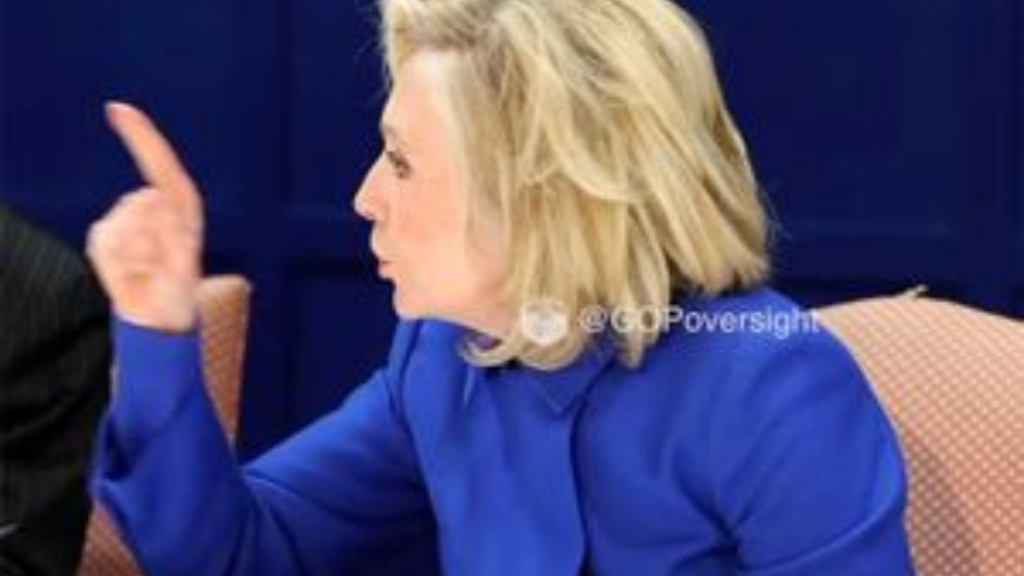
The moment that traveled fastest wasn’t a revelation about Epstein—it was a confrontation about an unauthorized photo and the way the proceeding was being run. People reports Clinton became angry after learning a photo from the deposition had been shared publicly and said, “I am done,” threatening to leave. The Guardian also notes she reacted strongly to learning a representative had shared an unauthorized photo and threatened to end her participation.
If you’re writing “hot take” commentary, it’s tempting to treat that as mere drama. But it’s also a window into the modern reality of congressional investigations: witnesses increasingly assume the room is not just a room—it’s content production. And once everyone believes clips are the point, the incentives shift for everyone involved.
The bigger question critics raise: why these witnesses, why this structure?
Coverage (including The Washington Post) notes criticism that the committee’s approach appears selective and politically motivated, with questions about who is and isn’t being pursued as aggressively. Hillary Clinton, per The Guardian, criticized the process and the lack of public, formal hearings.
What’s “new” here?
Based on the reporting above, the videos don’t appear to deliver a single definitive bombshell. Instead, they consolidate a familiar set of facts and claims in a sworn format: how introductions happened, what travel occurred, when ties allegedly ended, and repeated denials of knowledge of crimes.
And that may be the real point: depositions rarely produce cinematic reveals. They produce a record—and that record becomes the battlefield.
