

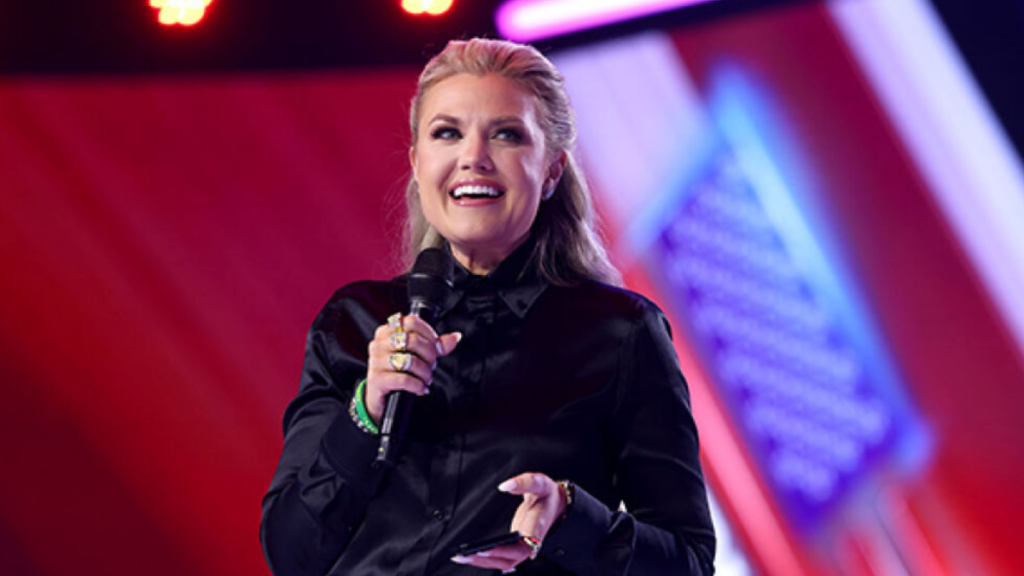
Photo Credit: Gage Skidmore/Flickr
Erika Kirk’s Absence at the Turning Point USA Halftime Show
Erika Kirk did not appear during the Turning Point USA All-American Halftime Show on February 8, 2026. Turning Point USA organized the event to run concurrently with the Super Bowl LX halftime performance. This alternative halftime show aimed to offer a conservative-leaning broadcast focused on faith, family, and patriotism. Artists like Kid Rock, Brantley Gilbert, Lee Brice, and Gabby Barrett performed for viewers. The show also featured a tribute to Erika’s late husband, Charlie Kirk, the group’s founder.
Organizers planned the “All-American Halftime Show” after the NFL announced Bad Bunny as the official Super Bowl halftime act. Turning Point USA said the performance would uphold traditional American values that its audience cherishes. Erika Kirk’s absence surprised many viewers and commentators. She did not take the stage or speak during the live broadcast. Many expected her to introduce artists or share a personal message.
Instead, Turning Point USA aired a slideshow honoring Charlie Kirk’s life and work. Images of Charlie and his family appeared on screen during the tribute segment. A voiceover from Charlie reinforced his values of faith, family, and service. This moment offered emotional resonance for the show’s target audience. Still, Erika’s decision not to be physically present ignited discussion and speculation.
In social posts after the event, Erika praised the performance and triumphs of the night. She highlighted her belief that Charlie would have “absolutely loved it.” She thanked the artists and team for believing in the show’s mission. Her post reiterated her commitment to conservative cultural causes. Many viewers reacted strongly to the absence of her physical presence.
Turning Point USA’s Strategy and Its Cultural Role
Turning Point USA, a conservative nonprofit with strong influence in political culture, organized the All-American Halftime Show. The group formed in 2012 and gained wide attention for its national youth outreach. Charlie Kirk co-founded it and became a central public face of the organization. When Charlie died in 2025, Erika Kirk assumed leadership. She has since guided Turning Point USA’s events and priorities.
For the Super Bowl, organizers intended the alternative halftime show as a cultural counterprogramming choice. Turning Point USA positioned the event as pro-American and pro-faith compared to the NFL’s selection. They called it a celebration of heritage and belief systems often echoed by conservative audiences. This attempt reflected the organization’s long focus on cultural discussions rather than purely political battles.
Organizers believed fans would appreciate country and rock influences more than the mainstream halftime show lineup. They hoped to create an event that resonated with viewers who felt alienated by pop culture trends. Performing artists included notable names with strong fan bases in conservative communities. Whether that lineup could rival the actual Super Bowl halftime show depended on audience curiosity.
Turning Point USA also invested in messaging that referenced Charlie’s legacy. They presented the show as a tribute to his life and values. Photos, voiceovers, and emotional moments reinforced this theme. Many supporters praised the sincerity of that tribute. Yet critics saw it as a strategic branding move rather than pure homage.
Even before the performance, Turning Point USA claimed that the event upheld freedom of expression. Coverage across media highlighted its role as a cultural statement. But some saw the timing and framing as politically motivated. This controversy illustrated how deeply entertainment and politics now intertwine in national events.
Reactions to the Halftime Show’s Execution
Afterward, many fans and critics weighed in on the Turning Point USA halftime show’s execution. Some conservative audiences praised the choice of artists and patriotic themes. They viewed the show as a refreshing alternative to mainstream music entertainment. Others, however, expressed disappointment with its overall impact.
Notably, critics in entertainment circles found the production lacked polish. Reviews described issues such as pre-recorded segments and lapses in live performance quality. Compared with the official Super Bowl halftime show, the contrast was stark. Bad Bunny’s performance drew vastly larger live viewership and media attention. The official show garnered over 135 million viewers worldwide. In contrast, Turning Point USA’s broadcast averaged about 6.1 million simultaneous viewers.
Public commentary ranged from praise to ridicule. Some artists openly criticized the initiative on social platforms. Others mocked aspects of the performance during and after the event. Online conversations often highlighted production quality more than political goals.
On conservative outlets, the show received defense. Turning Point USA claimed success and announced plans for future events. Organizers also emphasized the mission over comparison with mainstream broadcasts. They said success measured more in values upheld than viewer totals.
The mixed reception pointed to a divide in cultural expectations around large-scale entertainment. Some audiences want traditional themes, while others prioritize artistry and spectacle. Still, the event sparked widespread online debate and commentary. It became one of the most talked-about moments linked to Super Bowl LX coverage.
Erika Kirk’s Public Response and Social Media Reaction
After the show, Erika Kirk shared her thoughts with supporters on social media platforms. She thanked viewers and talked about the event’s meaning. In her posts, she said “Charlie would’ve absolutely loved it.” She expressed immense pride in the team and performers. She also reiterated her belief in conservative cultural values.
Her public message emphasized unity around faith and nation. She wrote that it’s “okay to love Jesus and your country.” Erika’s response reflected her leadership role within Turning Point USA. Yet not all social media reaction supported her views.
Some users mocked the event’s scale and performance quality. Others criticized Erika’s absence from the live stage. Comments often blended entertainment opinions with political commentary. Critics argued Turning Point USA inflated results or overhyped impact. Some analysts claimed viewership reports may not match actual engagement numbers.
Supporters defended Erika’s right to lead and advocate her message. They praised her for continuing Charlie’s legacy with courage. Others highlighted the show’s emotional tribute to family and values. Many regional and national conversations ensued online.
These exchanges illustrated how entertainment intersects deeply with cultural and political identity. People debated both the performance itself and Erika’s leadership role. The halftime show became a lens through which Americans discussed broader issues. It revealed ongoing tensions in national storytelling and values.
The Legacy and What Comes Next
The Turning Point USA All-American Halftime Show added a unique chapter to Super Bowl history. Though it did not eclipse the official halftime performance, it made waves in cultural debates.
Turning Point USA touted the program as successful. They pointed to millions of online views across platforms. The organization also announced plans to return for the 2027 Super Bowl. Yet the future of these events depends on audience interest and cultural appetite.
Erika Kirk, now at the helm of Turning Point USA, has signaled she will continue promoting conservative arts and values. How this direction affects broader entertainment and politics remains uncertain. Some pundits expect future shows to evolve and expand. Others predict continued debate over relevance and impact.
One lasting effect may be how alternative broadcasts shape future cultural programming. The Turning Point USA halftime show proved there’s an appetite for different kinds of events. Whether that appetite leads to mainstream influence has yet to be seen.
For now, Erika Kirk’s leadership and Turning Point USA’s cultural ambitions stand at a crossroads. Their actions will likely influence how politics and entertainment intertwine on major stages. As audiences digest the 2026 Super Bowl events, debates over identity and values continue. The legacy of this unique halftime show is just beginning to unfold.